

News
Katsina gov queries district heads who shunned Sallah celebration
Katsina gov queries district heads who shunned Sallah celebration
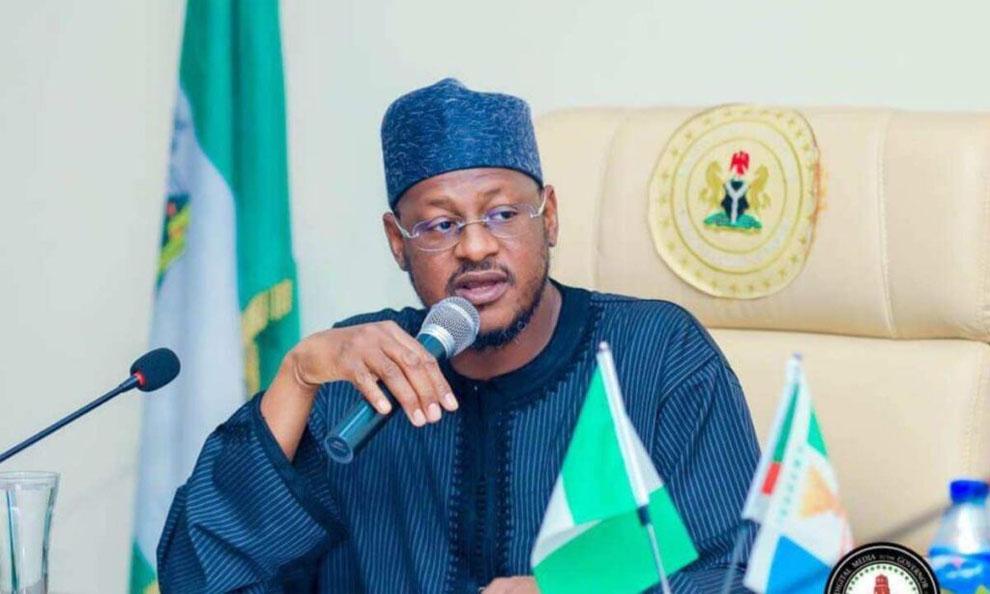
Governor Dikko Radda of Katsina State has demanded an explanation from the Katsina Emirate Council for the non participation of some District Heads in the 2024 Eid-el Kabir Sallah celebration.
This is contained in the letter to the emirate council, which was signed by the Director, Administration and Supply, Office of the Secretary to the State Government, Sani Rabiu, dated June 27, 2024.
The letter, which was addressed to the Secretary, Katsina Emirate Council, was received on Friday.
It was titled: ‘Re: Sanarwar Hawan Sallah Babba” (Re: Information on Eid-el Kabir celebration)’.
The letter read: “I am directed to refer to your letter on the above underlined subject matter dated June 7, 2024.
“And convey the directive of His Excellency, the governor, for you to provide reasons for non participation of some District Heads in the 2024 Eid-el Kabir Hawan Sallah celebration.
“Grateful for your prompt response as always, please.”
READ ALSO:
- Ecuador reach Copa quarters as Mexico exit
- Blogger Verydarkman granted bail hours after arrest
- Sexual intercourse with minors under 13 attracts life jail – Delta PPRO
The Governor’s Director-General on Media, Mr. Maiwada Danmallam said the matter was purely an administrative issue with no underlying motives as being misrepresented and discussed out of context in the social media.
He said, “Comments alluding to any conflict between the government and the Katsina emirate are built on baseless assumptions and conclusions.
”They are clearly intended to distract the government with trivialities given the absence of more cogent reasons to interrogate governance in the state.”
Danmallam said that the state government has the supervising authority over the two Emirates of Daura and Katsina.
“In line with this authority, it’s expected that the government will seek clarifications when and if necessary to ensure full compliance with government’s policies and directives.
“Not necessarily in a conflict situation but to ensure optimum accountability and efficiency as generally required of other MDAs by His Excellency, Governor Radda.
“Assuredly, the Katsina State Government is enjoying a cordial relationship with the two Emirates of Katsina and Daura.
“Any idea of conflict between the state government and any of the two emirates is a figment of the imagination of some conflict entrepreneurs,” the director-general explained.
Katsina gov queries district heads who shunned Sallah celebration




News
Tinubu Orders EFCC to Unfreeze Osun Govt Accounts, Says Timing ‘Embarrassing’
Tinubu Orders EFCC to Unfreeze Osun Govt Accounts, Says Timing ‘Embarrassing’
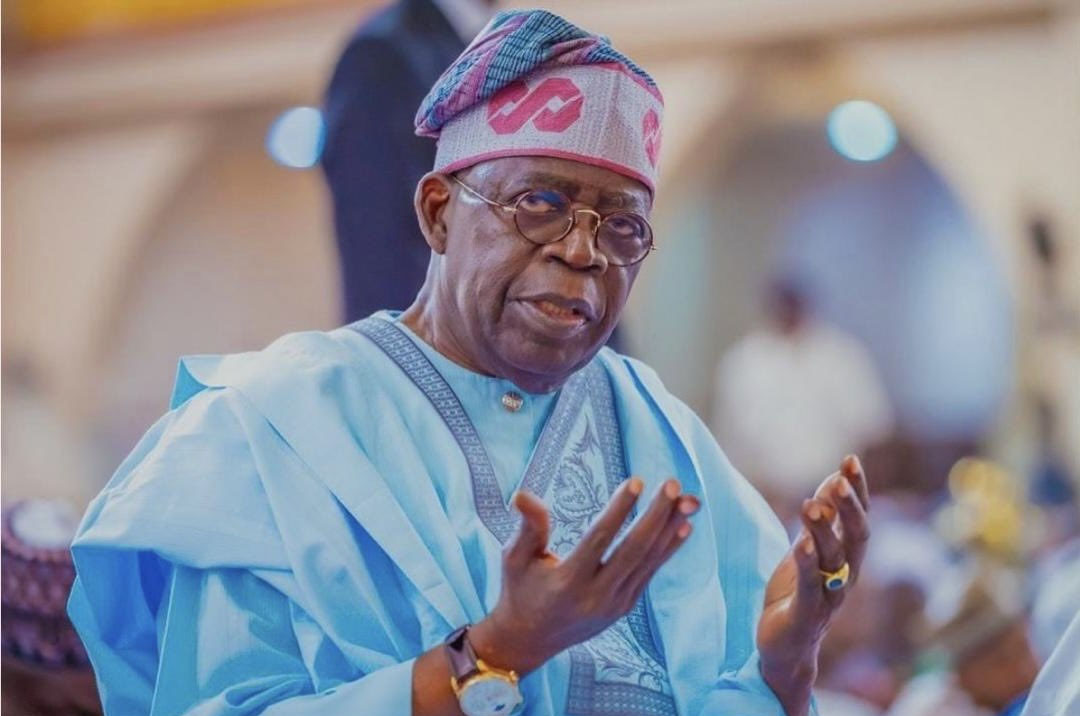
President Bola Ahmed Tinubu has directed the Economic and Financial Crimes Commission (EFCC) to immediately vacate the court order freezing the bank accounts of the Osun State Government, describing the timing of the action as “deeply embarrassing” and capable of undermining confidence in the state’s forthcoming governorship election.
In a personally signed statement issued on Thursday, the President said he became aware that the EFCC had obtained a court order on August 5, 2026, freezing the accounts of the Osun State Government. While he did not question the EFCC’s legal powers or operational independence, he expressed strong reservations about the timing of the action. “I must state that I feel deeply embarrassed not by the EFCC’s exercise of its mandate backed by a court order, but by the timing of the agency’s action,” Tinubu said. He explained that every action taken by a federal institution is often attributed to him as President, regardless of whether he had prior knowledge of such action.
The President reaffirmed his long-standing policy of allowing anti-corruption agencies and other law enforcement institutions to operate independently, professionally and without political interference. “Since assuming office, I have consistently maintained that anti-corruption and law enforcement agencies must be allowed to discharge their statutory responsibilities independently, professionally, without fear or favour, or political interference,” Tinubu said. He noted that he had deliberately refrained from directing or interfering in the operational activities of the EFCC and other investigative agencies because he believes that strong democratic institutions operating within the rule of law are essential to good governance.
READ ALSO:
- Osun Account Freeze: Atiku Accuses Tinubu of Weaponising State Institutions Against Opposition
- Former Finance Minister Kemi Adeosun Loses Husband, Niyi Adeosun
- 176 Kwara Abductees Regain Freedom After Six Months in Captivity
Tinubu explained that although he was yet to receive a full briefing on the circumstances that prompted the EFCC to seek the court order, the proximity of the action to the Osun governorship election necessitated presidential intervention. “Osun State is only a few days away from its gubernatorial election. Therefore, nothing ought to be done to give an impression that the EFCC or indeed any other agency of the federal government is being used to interfere with the election,” the President stated. He said preserving public confidence in the integrity, credibility and fairness of the democratic process outweighed every other consideration. “Based on the foregoing premise, I am duty-bound to issue a directive on this issue in consonance with the overriding public interest in preserving public confidence and the integrity, credibility, and fairness of our democratic process,” Tinubu added.
The EFCC had earlier defended its decision to freeze the account, stating that the action was triggered by suspicious movement of funds amid an ongoing investigation into the alleged fraudulent handling of about N11 billion in Ecology Funds, Intervention Funds, and Federal Account Allocation Committee (FAAC) allocations. The commission’s Director of Public Affairs, Wilson Uwujaren, explained that the restriction was placed on a single account, not all accounts of the Osun State Government. He noted that the EFCC has the legal authority under Section 34 of the EFCC Act and Section 7, Subsection 6 of the Money Laundering (Prohibition) Act 2022 to impose a temporary restriction for up to 72 hours before seeking a court order. “The restriction order can last within 72 hours before we can come with a court order if we need to provide a court order,” Uwujaren said. He maintained that the action was not politically motivated despite the timing ahead of the Osun governorship election.
The President ordered the anti-graft agency to immediately return to court to vacate the freezing order and discontinue all proceedings instituted against the Osun State Government in relation to the matter. “Accordingly, I have directed the EFCC to immediately proceed to the court to vacate the order and discontinue whatever action it has instituted against the Osun State Government in this regard,” the President said. The directive follows widespread reactions to the freezing of the Osun State Government’s accounts, with opposition parties, lawyers and civil society organisations expressing concern that the move could affect governance and raise questions about political interference ahead of the governorship election. The Osun State governorship election is scheduled to hold on August 15, 2026, making the controversy over the account freeze a major issue in the political landscape of the state.
Tinubu Orders EFCC to Unfreeze Osun Govt Accounts, Says Timing ‘Embarrassing’
News
EFCC Defends Osun Account Freeze Amid N11bn Fraud Probe, Adeleke Vows Legal Battle
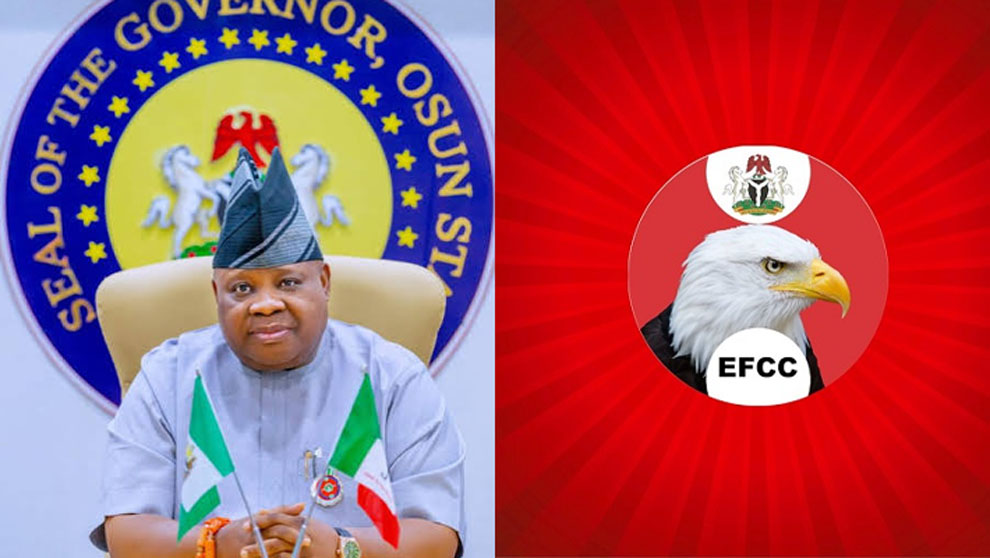
EFCC Defends Osun Account Freeze Amid N11bn Fraud Probe, Adeleke Vows Legal Battle
The Economic and Financial Crimes Commission (EFCC) has confirmed freezing Osun State Government accounts, citing an ongoing N11 billion fraud investigation and suspicious transfers detected days before the governorship election. Governor Ademola Adeleke has rejected the action as unconstitutional and vowed to challenge it in court, while the Nigerian Bar Association has also faulted the agency’s move.
The Economic and Financial Crimes Commission (EFCC) has publicly defended its decision to freeze the bank accounts of the Osun State Government, insisting the action was a preventive measure to safeguard public funds and was not politically motivated. The anti-graft agency confirmed that it directed First Bank to place a “Post No Debit” (PND) order on the state government’s statutory allocation account, effectively halting all withdrawals. This development comes just ten days before the state’s governorship election scheduled for August 15, 2026, sparking fierce political backlash and raising concerns about the timing and legality of the intervention. In a statement issued on August 5, 2026, by the EFCC’s Head of Media and Publicity, Dele Oyewale, the Commission revealed that it has been investigating the Osun State Government since March 2026 over the alleged fraudulent handling of Ecology Funds, Intervention Funds, and Federal Account Allocation Committee (FAAC) allocations totaling approximately N11 billion. The statement disclosed that several state officials, including the Accountant General of the state, had already been questioned as part of the ongoing probe, demonstrating the depth and seriousness of the investigation.
According to the EFCC, the investigation alone would not have warranted freezing the account. However, the Commission said it was forced to act after detecting what it described as “precipitate and unwarranted” movement of funds beginning on August 2, 2026. Investigators observed large transfers of money from the state government’s accounts into various corporate entities deemed suspicious, prompting the swift intervention to halt further transactions. The agency maintained that it could not stand idly by while public funds were allegedly being diverted, emphasizing that the action was part of its statutory responsibility to protect public resources. “The Commission noticed huge transfers of funds into different corporate entities and had to swiftly halt the trend by freezing the accounts from which such heavy funds are being moved,” the EFCC statement read. The agency further explained that the freeze was a temporary measure designed to preserve the integrity of the investigation and prevent further dissipation of public funds.
READ ALSO:
- Super Falcons Thrash Egypt 6-2, Book WAFCON Quarter-Final Date with Cameroon
- Two Rifles, Live Ammunition Recovered as FCT Police Storm Bandits’ Hideout
- Police Launch Investigation as Three Children Die at Anambra Native Doctor’s Residence
Responding to accusations that the move was politically motivated and aimed at influencing the upcoming governorship election, the EFCC insisted that its actions were independent of the electoral process. While acknowledging the imminent election, the Commission argued that it could not use the political calendar as an excuse to neglect its legal duties and allow potential financial crimes to go unchecked. “It will be uncharitable for the Commission to allow an excuse of an upcoming election to fold its arms to perform its legally-assigned functions,” the EFCC stated. The anti-graft agency also revealed that it is monitoring the finances of several other states across Nigeria, emphasizing that Osun is not being singled out for political reasons. This assertion was aimed at countering claims that the EFCC was being used as a tool for political persecution ahead of the gubernatorial poll. “The Commission has always pointed out that it is non-partisan and non-sectarian but always working in the overall interests of Nigerians. The Osun State Government account was frozen to save public funds from being looted,” the statement added. The EFCC urged the public to disregard what it described as false narratives and attempts to discredit its operations, calling on citizens to support its efforts in combating corruption and financial crimes.
However, the EFCC’s explanation has done little to appease the Osun State Government, which has described the account freeze as unconstitutional and a threat to democracy. Governor Ademola Adeleke criticized the EFCC for acting without a court order and vowed to challenge the decision in court, setting the stage for a legal showdown between the state and the federal anti-graft agency. “This action was taken without any court order. We are supposed to be in a democracy, where the Rule of Law must always prevail. We will therefore not accept a situation where federal agencies trample on the constitutional rights of subnational governments,” Adeleke said during a press conference in Osogbo. The governor’s strong words reflected the deep frustration within his administration over what they perceive as executive overreach and political interference.
The governor further alleged that the account freeze was part of a coordinated campaign of intimidation against his administration, orchestrated by political opponents ahead of the August 15 governorship poll. He claimed that the state had experienced months of disruption to local government administration, police raids, and harassment of political supporters, with over 60 members of his party arrested and detained without charges. These allegations, if true, paint a troubling picture of political tension in the state as the election approaches. Adeleke has since instructed the state Attorney-General, Oluwole Jimi-Bada, to initiate legal proceedings against the EFCC at the Federal High Court in Osogbo. The Attorney-General argued that while the commission has the authority to investigate financial records, it cannot freeze a state government’s accounts without first obtaining a court order, which the EFCC failed to secure. “EFCC can investigate the accounts, but it can’t freeze the accounts without an order of court,” Jimi-Bada said. He warned that the restriction could hamper the government’s ability to meet its obligations and administer the state effectively, potentially affecting the payment of salaries and the delivery of essential services to citizens.
The Nigerian Bar Association (NBA) has also faulted the EFCC over the account freeze, stating that the anti-graft agency lacks the constitutional power to impose a blanket restriction on a state’s finances without due legal process. NBA President, Afam Osigwe (SAN), warned that any directive restricting withdrawals from accounts belonging to a state government would effectively cripple governance and amount to an abuse of power. “No government agency or any person has the right or the power to restrict withdrawals from the account of any state because, first of all, the order has the effect of grounding the activities of a government,” Osigwe said. He maintained that any decision to freeze the account of an individual or government institution must be supported by sufficient legal grounds and a valid court order, emphasizing the importance of judicial oversight in such matters.
Other Senior Advocates of Nigeria also weighed in on the controversy, offering diverse legal perspectives on the issue. Isiaka Olagunju (SAN) described the freezing of the bank account as a serious violation of the 1999 Constitution and contrary to the principles of federalism, arguing that states should not be subjected to such unilateral actions by federal agencies. However, Professor Damilola Olawuyi (SAN) defended the use of account freezing as a recognized preventive tool in tackling economic and financial crimes, provided it is exercised within the limits of the law. He cautioned that such powers “should not be used as a cudgel to settle political scores,” highlighting the need for balance between anti-corruption efforts and the protection of constitutional rights. Wolemi Esan (SAN) explained that the EFCC could place a temporary stop order on a suspected account for up to 72 hours without first obtaining a court order under Section 7(6) of the Money Laundering (Prevention and Prohibition) Act, but any restriction beyond that period must be backed by judicial authorization. This legal nuance adds complexity to the ongoing dispute, as both sides present arguments rooted in different interpretations of the law.
The controversy has also drawn reactions from civil society organizations, with some calling for restraint and due process while others support the EFCC’s proactive stance against corruption. The situation remains fluid, with the legal challenge and the upcoming election adding layers of political and legal uncertainty.
EFCC Defends Osun Account Freeze Amid N11bn Fraud Probe, Adeleke Vows Legal Battle
News
Army Arrests Two Soldiers for Acting as Bouncers at TikToker Peller’s Lavish Lagos Wedding

Army Arrests Two Soldiers for Acting as Bouncers at TikToker Peller’s Lavish Lagos Wedding
The Nigerian Army has arrested two serving soldiers over their alleged involvement in providing unauthorised private security at the lavish wedding ceremony of popular TikTok personality Habeeb Hamzat, known as Peller, and fellow content creator Jarvis in Lekki, Lagos State. Military sources confirmed that the arrests followed credible intelligence indicating that the soldiers participated in an illegal deployment during the star-studded event held over the weekend. The two personnel were apprehended on Tuesday morning as investigations commenced into the incident. The arrested soldiers have been identified as Private Onasanya Ifeoluwa, with service number 23NA/85/10007, and Private Ukpai Onyinyechi, with service number 23NA/85/7885. Both are attached to the 81 Division Medical Services and Hospital (81DMSH) in Obalende, Lagos.
The arrests came after videos from the high-profile wedding circulated widely on social media, showing uniformed military personnel providing security services and controlling access to parts of the venue. One widely shared clip allegedly showed a soldier acting as a personal bouncer for TikTok personality Ivanna, escorting her through the crowded venue. The footage triggered widespread criticism online, with many Nigerians questioning why serving military personnel were allegedly deployed to a private social event involving influencers and celebrities. The Nigerian Army has repeatedly maintained that serving personnel are prohibited from undertaking unauthorised private security duties or participating in illegal deployments without official approval. A military source stated: “Following credible intelligence on the involvement of Nigerian Army personnel in illegal deployment during popular social influencer’s wedding known as Peller at Lekki, Lagos, the Group arrested the personnel. Preliminary investigation is ongoing to establish the extent of their involvement and identify other personnel connected with the incident.”
READ ALSO:
- Canada Deports 205 Nigerians, 10,607 Illegal Immigrants in June Crackdown
- 2027: Sultan of Sokoto Dismisses Claims of Backing Tinubu’s Re-election
- Why I Rejected Tinubu, Buhari’s Offers to Join APC — Fayose
Peller and Jarvis’ wedding, held on August 1, 2026, attracted several prominent entertainers, social media influencers, and content creators. The couple, who have built a massive following through TikTok livestreams and relationship content, had about 400 guests expected to wear the wedding Aso Ebi, with the eight-yard version priced at ₦700,000. Videos from the ceremony dominated social media platforms, with large crowds of fans and guests in attendance. The event became one of the most talked-about celebrity occasions of the weekend, but controversy soon followed after clips surfaced showing men in military uniforms managing access to parts of the venue and escorting some attendees.
The Nigerian Army is now investigating whether the soldiers acted on their own, received unofficial instructions, or were involved through another channel. The military has reiterated its commitment to professionalism and discipline, stating that any personnel found to have violated regulations will be sanctioned in accordance with the Armed Forces Act. Military sources said the soldiers would face disciplinary proceedings if the ongoing investigation establishes that they breached military regulations. The Army emphasised that military uniforms, weapons, and official authority must never be used for personal gain or private commercial engagements. At the time of this report, there is no indication that Peller or the event organisers are under investigation, and neither party has publicly reacted to the development. The focus of the military inquiry remains on the conduct of the soldiers and whether any superior officer or other authority approved their participation.
Army Arrests Two Soldiers for Acting as Bouncers at TikToker Peller’s Lavish Lagos Wedding
-

 metro1 day ago
Troops arrest four suspected Boko Haram, ISWAP suppliers, intercept 20 relatives
-

 Education3 days ago
UNIOSUN ranks third among state universities in latest Webometrics ranking
-

 Opinion2 days ago
WHO WILL SPEAK FOR WASILAT? WHEN TRADITION BECOMES HUMILIATION, JUSTICE MUST SPEAK
-
 News1 day ago
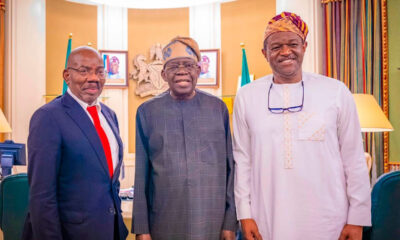
Tinubu Meets Jim Ovia, NELFUND CEO at Aso Rock as Student Loans Hit ₦303bn
-
metro2 days ago
TikToker undergoes cleansing after filming Oloolu procession in Ibadan
-
 Education1 day ago
BREAKING: 61.54% Pass Rate as WAEC Releases 2026 WASSCE Results – How to Check Results
-
 Politics3 days ago
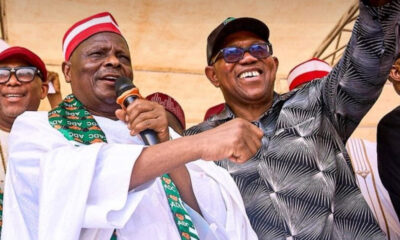
Power Struggle Threatens Peter Obi-Kwankwaso Alliance Ahead of 2027 Polls
-

 metro3 days ago
NiDCOM confirms release of Nigerian girls detained in Mauritius