

News
Updated: Azman Air sacks official, apologises to minister, NCAA DG
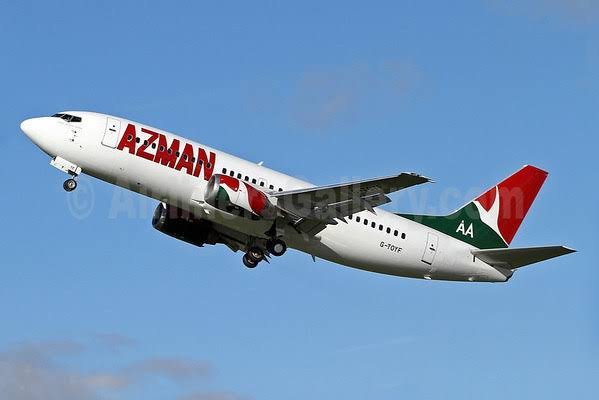
Azman Air has sacked its acting Head of Maintenance, Zakaria Al-Najjar, and appointed Peter Vungmo to replace him.
The airline has also apologised to the Minister of Aviation, Hadi Sirika, and the Director-General of the Nigeria Civil Aviation Authority, Captain Musa Nuhu, over reported false allegations made by Al-Najjar against the DG.
The airline announced this in a statement, adding that Al-Najjar was relieved of his position due to a “recent development in the airline”.
The statement was signed by the airline’s Admin and Human Resources Manager, Magaji Misau,
The airline is facing suspension by the NCAA over safety concerns.
“Further to the recent development in the airline, management directed to notify you of its decision to relieve you from your appointment as acting head of maintenance, with effect from today, April 4, 2021,” the statement read.
The airline also appointed Sunusi Mahi as a flight safety officer to replace Tijjani Shaddad who resigned recently, while Eyas Adwan was promoted from cabin services training manager to Azman Air training manager.
Azman Air noted that it had commenced the enactment of corrective action plan (CAP) on the management area of its audits.
In a 19-page audited report dated April 2, Musa Nuhu, NCAA director-general, said the regulator found several unsafe practices in the airline’s operation.
The report noted that the airline was indebted to the NCAA to the tune of N1.54 billion over non-remittance of five per cent of the ticket sales charge and cargo sales charge.
“Azman Air Ltd was found to violate Section 12 (1) of the Civil Aviation Act, 2006 as regards to non-remittance of five per cent TSC/CSC,” the report read.
“This is evidenced by the airline being indebted to the authority to the tune N1,545,262,120.31 as at December 2020.
“Azman Air Ltd was found to be in violation of Nig.CARs 18.12.6 as regards signing an agreement with the authority for direct debit. This is evidenced by the delay in signing of the Direct Debit Tripartite Agreement with NCAA.”
The regulator accused the airline of failing to submit its financial health report for several months despite reminders.
It said the last submission was in July 2020, adding that during the audit, Azman Air submitted reports for December 2020 and January 2021.
The NCAA also accused Azman’s chief pilot of incompetence, adding that the airline’s director of maintenance failed to ensure that approved maintenance control manual procedures are effectively implemented.
In another statement by the airline’s Accountable Manager, Muhammad Hadi Abdulmunaf, which was released Tuesday night, Azman apologised to the NCAA boss and the minister for embarrassing them with its recent publication.
The airline said it had established that the letter containing the false allegations actually came from an official of the airline, to management’s disappointment.
The statement read in part, “On March 21, 2021, we issued a press statement expressing our surprise and shock at a publication credited to us in which the integrity and reputation of the Director General of the NCAA, Capt. Musa Nuhu, came under attack as a result of the decision taken by the regulator to suspend our operations based on safety considerations.
”In the said press release, we denied management’s knowledge and approval for such careless and unfortunate allegations made against the person of the DG but promised to conduct internal investigations as to the source/s of the allegations.
”We have now conducted in-house investigations which led to accusations and counter accusations amongst our staff as to who did it.
”We have established that, at least, it came from one of them; hence our disappointment with ourselves.”








News
Akpabio Under Fire as Senators Move to Secure His Return as Senate President in 2027
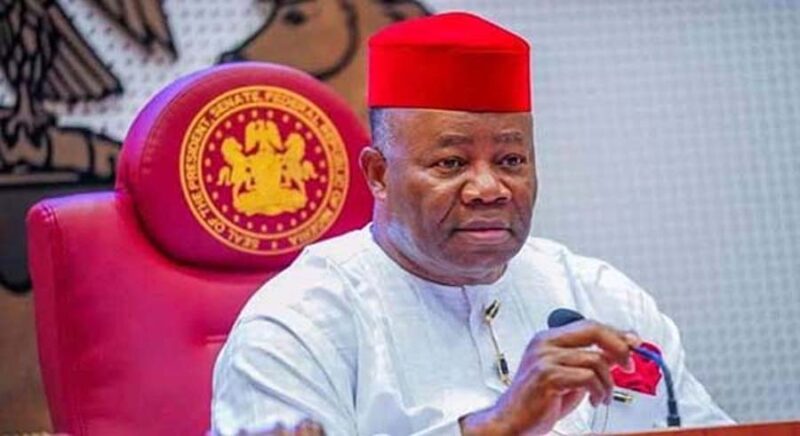
Senate President Godswill Akpabio is facing growing criticism over efforts to secure another term in office, following a controversial move by the current Senate to endorse the return of its leadership in the 11th National Assembly.
The controversy erupted after senators declared that there was “no vacancy” in the Senate presidency, a position critics have described as undemocratic and an attempt to influence the leadership of a future legislature before Nigerians elect a new National Assembly.
The development has intensified political discussions ahead of the 2027 general elections, with questions being raised about the independence of the legislature, the authority of incoming senators and the growing contest for control of the Senate.
At its sitting on Thursday, October 15, 2026, the Senate backed Akpabio’s return as Senate President in the next National Assembly, which is expected to be inaugurated in June 2027.
The motion was moved by Senate Chief Whip Tahir Monguno and seconded by Senator Cyril Fasuyi. It received majority support through a voice vote.
The resolution also endorsed Deputy Senate President Barau Jibrin and other principal officers for another term, subject to their re-election into the Senate.
However, the move has drawn objections from critics who argue that the leadership of the 11th Senate should be determined by the lawmakers elected into the chamber, rather than through a resolution adopted by the outgoing Senate.
READ ALSO:
- Lamine Yamal Shines as Barcelona Thrash Real Betis 5-2
- Tinubu Scraps Recruitment Waiver Requirement for Federal Universities
- FG Begins Rollout of 3,700 Telecom Towers to Connect 20m Nigerians
One of the critics, identified as Epelle in reports, described the move as an affront to democratic principles, arguing that the Senate presidency was not a hereditary position that could be reserved for an incumbent.
Epelle maintained that the office must be contested and decided by senators in accordance with the rules and democratic procedures governing the National Assembly.
The Legislative Advocacy Network (LAN) has also opposed the move. Its coordinator, Benjamin Joseph, argued that the leadership of the next National Assembly should emerge from considerations such as legislative performance, institutional independence and public confidence, rather than political loyalty or the desire to retain existing officeholders.
The criticism centres on whether the current Senate can legitimately declare its leadership positions effectively reserved before the next general election and the inauguration of a new legislature.
Although the resolution signals support for Akpabio within the current Senate, it does not automatically guarantee his return. The next Senate will have its own membership, and its elected members will determine who occupies the offices of Senate President and Deputy Senate President.
Akpabio has meanwhile stepped up efforts to secure political backing for his second-term ambition. At the inauguration of the APC Presidential Campaign Council, he appealed to President Bola Ahmed Tinubu to support his bid to return as Senate President in 2027.
His appeal has added another dimension to the debate over the influence of the Presidency and the ruling All Progressives Congress (APC) in determining the leadership of the National Assembly.
Akpabio has also warned governors against seeking other political offices while still occupying their current positions. The remarks were widely interpreted as a warning directed at Imo State Governor Hope Uzodimma, who is seeking election to represent Imo West Senatorial District in 2027.
Uzodimma’s senatorial ambition has fuelled speculation about a possible contest for the Senate presidency if he wins a seat in the next National Assembly. Reports have also highlighted opposition from Federal Capital Territory Minister Nyesom Wike, who has said he would not support Uzodimma’s reported ambition to lead the Senate.
The emerging rivalry underscores the political calculations surrounding the next Senate leadership, particularly within the APC, where support from party leaders and influential political figures could shape negotiations but cannot replace the formal choice of senators.
For Akpabio, securing another term will depend not only on his political alliances but also on winning re-election to the Senate and obtaining the support of enough senators-elect when the 11th National Assembly convenes.
The backlash over the “no vacancy” resolution has therefore placed the question of Senate leadership in 2027 at the centre of a wider debate about legislative independence, internal democracy and the right of a new parliament to choose its own presiding officers.
As the election approaches, the contest is likely to intensify, with Akpabio’s supporters seeking to consolidate their position and critics insisting that the next Senate presidency must be decided by the lawmakers elected to serve in the 11th National Assembly.
Akpabio Under Fire as Senators Move to Secure His Return as Senate President in 2027
News
2027: ADC Faction Disowns Atiku, Rejects G-100 Alliance Amid Party Crisis
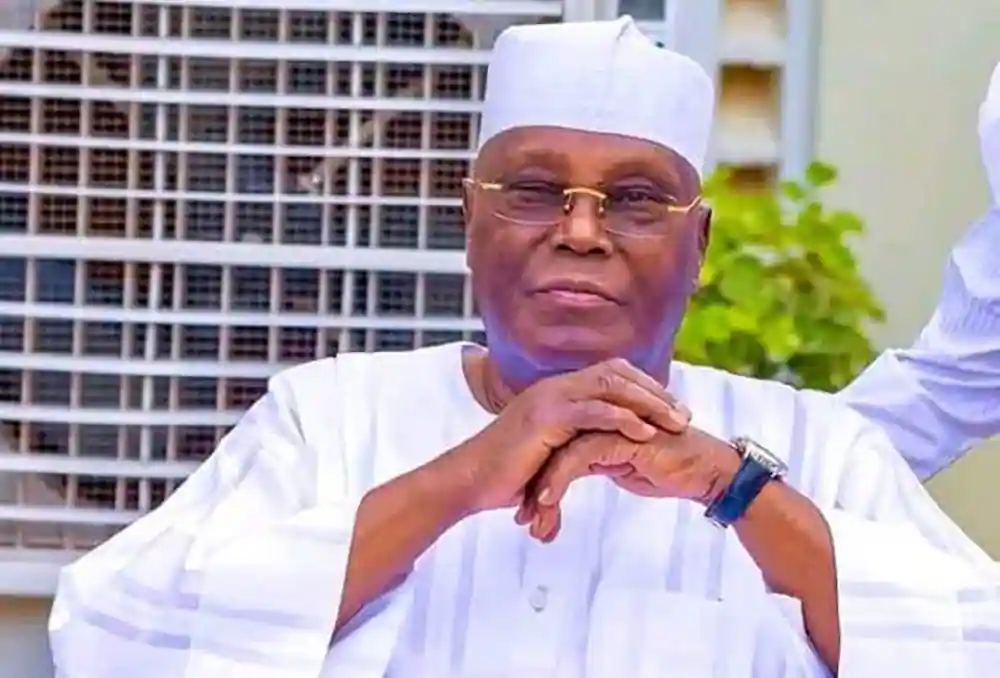
ABUJA — A fresh leadership dispute has emerged within the African Democratic Congress (ADC) after a faction led by Nafiu Bala Gombe disowned former Vice-President Atiku Abubakar as its presidential candidate for the 2027 general elections and rejected any alliance with the G-100 opposition coalition.
The faction insisted that it would not allow its political platform to be used to advance arrangements it had not authorised, warning Atiku and individuals associated with the G-100 against presenting him as its flagbearer.
In a statement, Gombe accused some elements within the G-100 coalition and Atiku of allegedly attempting to pressure the faction into a political alliance or merger ahead of the elections.
He maintained that the faction would protect the party’s identity, organisational structure and political independence rather than surrender its platform to the ambitions of individual politicians.
“The African Democratic Congress is NOT, and will NOT, be in any alliance, merger, or coalition with any political party ahead of the 2027 general elections,” the faction declared.
Gombe also issued a direct warning to Atiku, urging the former vice-president to stop presenting himself as the faction’s presidential candidate or speaking on its behalf.
The development comes amid continuing divisions over the leadership and direction of the ADC as opposition politicians explore ways to challenge the ruling All Progressives Congress (APC) in 2027.
READ ALSO:
- Omoda, Jaecoo Storm Europe as Global Sales Surge 123% to 73,421
- 16-Year-Old Girl Recounts Horror of Hookup Encounter, Says Man Threatened Her With Knife, Acid
- Ex-Super Eagles Coach Westerhof Battles Colon Cancer in Critical Condition, Wife Seeks Help
The G-100 initiative has been involved in discussions aimed at improving cooperation among opposition forces, including proposals for a common platform or a single presidential candidate capable of mounting a stronger challenge to the ruling party.
However, the discussions have encountered resistance from political figures unwilling to abandon their presidential ambitions in favour of a consensus candidate.
Atiku’s position within the ADC has also become a point of contention between rival factions. While the Gombe-led group rejects his candidacy, the faction led by former Senate President David Mark has recognised him as its presidential candidate.
The ADC’s publicly available announcements previously stated that Atiku won its presidential primary and that his name, alongside that of former Rivers State governor Rotimi Amaechi as running mate, was submitted to the Independent National Electoral Commission (INEC).
The competing claims underscore the importance of distinguishing the Gombe faction’s position from that of the rival ADC leadership. The latest statement does not, by itself, establish that the entire party has withdrawn its endorsement of Atiku.
Meanwhile, the ADC’s National Publicity Secretary, Bolaji Abdullahi, said the party’s discussions facilitated by the G-100 were focused on electoral cooperation rather than necessarily producing a single presidential candidate.
The clarification highlights the differences between efforts to coordinate opposition parties and proposals requiring individual candidates to withdraw from the presidential race.
For Atiku, who is seeking another opportunity to contest Nigeria’s highest political office, the controversy presents an additional challenge as opposition groups negotiate their strategies ahead of the 2027 elections.
The dispute also raises questions about the ADC’s ability to maintain unity while managing rival leadership claims, coalition negotiations and competing political interests.
With the election approaching, the resolution of the party’s internal disagreements could prove significant to its preparations and its prospects of presenting a united opposition front.
For now, the Gombe-led faction has maintained that it will pursue its political objectives independently and will not accept an alliance or candidate arrangement it considers unauthorised.
2027: ADC Faction Disowns Atiku, Rejects G-100 Alliance Amid Party Crisis
News
16-Year-Old Girl Recounts Horror of Hookup Encounter, Says Man Threatened Her With Knife, Acid

16-Year-Old Girl Recounts Horror of Hookup Encounter, Says Man Threatened Her With Knife, Acid
A 16-year-old girl, identified as Christiana, has recounted a frightening experience during a purported hookup encounter, alleging that a man she met produced a knife and a bottle of acid before asking her to choose between the two.
The teenager narrated her experience during an interview with Sahara TV, in a video reportedly shared by online news platform Newsvista.
According to Christiana, her involvement in the hookup business began after a woman allegedly approached her with a promise of helping her secure employment. She claimed, however, that the arrangement led her into a potentially life-threatening situation.
Recounting the incident, the teenager said the encounter took a frightening turn at about 1 a.m. when the man allegedly brought out a knife and acid.
“He brought out a knife and acid at 1 a.m. and told me to choose one,” she said.
Her account has raised concerns about the risks confronting minors who may be lured into exploitative situations through promises of employment or other opportunities.
Christiana’s narration also highlights concerns about the vulnerability of young girls who may be exposed to violence and exploitation by adults who take advantage of their circumstances.
The circumstances surrounding the alleged incident, including the location where it occurred, how the teenager escaped and the identity of the man involved, were not established in the account provided.
READ ALSO:
- Ex-Super Eagles Coach Westerhof Battles Colon Cancer in Critical Condition, Wife Seeks Help
- NRC Denies Ticket Racketeering, Says Abuja-Kaduna Rail Demand Exceeds Seats by 10-Fold
- FG Draws Red Line on Fuel Subsidy, Warns of Naira Crisis if Reforms Are Reversed
It was also unclear whether the woman Christiana accused of introducing her to the arrangement had been identified or whether the police had begun investigating the allegations.
The interview has generated reactions on social media, with calls for the circumstances surrounding the teenager’s experience to be investigated and for those responsible, if identified and found culpable, to be held accountable.
The incident underscores the importance of protecting minors from exploitation and ensuring that allegations of threats and violence against children are promptly reported to the appropriate authorities.
Parents, guardians and child-protection advocates have repeatedly stressed the need to provide young people with safe channels to seek employment and assistance, while encouraging them to report suspicious approaches and potentially dangerous encounters.
However, the allegations require independent verification, and no conclusion can be drawn about the identities or culpability of those involved without further investigation.
As of the time of writing, no official statement from law enforcement concerning the specific incident was available in the information provided.
16-Year-Old Girl Recounts Horror of Hookup Encounter, Says Man Threatened Her With Knife, Acid
-

 metro2 days ago
₦130m Toyota Tundra Wrecked: Lagos Dealer Questions Police Over Suspect’s Release
-

 News2 days ago
₦200m Fake Alcohol Packaging Uncovered as NAFDAC Raids Aba Market
-

 metro1 day ago
Suspended Archbishop Ibezim Drags Anglican Primate to Court, Challenges Six-Month Leave
-

 Sports2 days ago
Real Madrid Demand Tebas’ Exit After Explosive Nazi Propaganda Row
-
 metro3 days ago
Former Senator Bello Mandiya Found Dead in Bathroom Three Days After Fall
-

 Entertainment2 days ago
ToluwaniSings’ Final Hours: Aide Reveals Desperate Search Across 8 Hospitals
-

 metro1 day ago
Imodi-Ijebu Muslim Community Bets on 20 Chiefs to Drive Education, Economic Growth
-
 Politics2 days ago
2027: Kwankwaso Signals Fuel Subsidy Comeback as NDC Vows to Crash Petrol Prices