

metro
JUST IN: Police arrest 13 suspects as protesters vandalise property in Kano

JUST IN: Police arrest 13 suspects as protesters vandalise property in Kano
The police in Kano have arrested 13 suspects for vandalising vehicles at the Kano State High Court premises.
The Commissioner of Police in the state, Salma Dogo said the suspects were apprehended at the court premises while carrying out the act.
He said a proactive security measure is being implemented to ensure the safety of residents both within and outside the metropolis.
READ ALSO:
- Man recruited into ‘no protest’ group makes U-turn, laments on live TV (VIDEO)
- Two men arrested in Lagos with huge ammunition
- Protest turned violent in Kano, one killed, filling station, NCC complex burnt down
“The police, in collaboration with other security agencies, are conducting intensive patrols to guarantee the safety of residents.
“We urge residents to cooperate with security personnel by providing intelligence information on any individual or groups found in possession of dangerous weapons.
“This collaboration aims to maintain law and order in the state,” Dogo said.
JUST IN: Police arrest 13 suspects as protesters vandalise property in Kano









metro
Illegal Gun Factories: Why Nigeria Cannot Stop Arms Proliferation
Illegal Gun Factories: Why Nigeria Cannot Stop Arms Proliferation
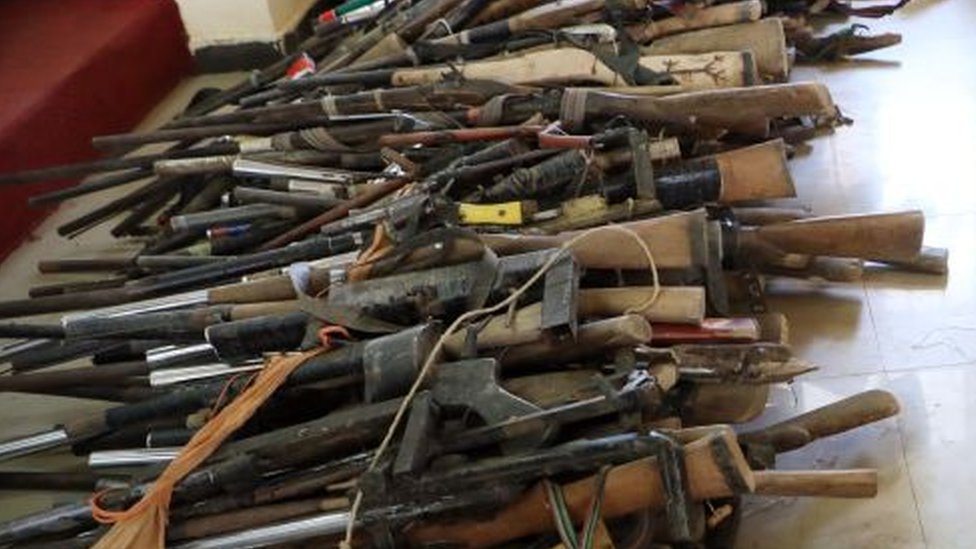
The discovery of another clandestine firearms manufacturing workshop in Kaduna State has once again exposed a disturbing dimension of Nigeria’s worsening security crisis: the underground industry supplying weapons to the criminal networks and armed groups responsible for violence across the country.
Operatives of the National Drug Law Enforcement Agency (NDLEA), acting on intelligence, recently uncovered the facility at Sabon Garin Kangin, in Igabi Local Government Area of Kaduna State, arresting a 45-year-old suspect, Sagiru Musa, and recovering 17 locally manufactured Dane guns, two pistols, 25 gun pipes and other equipment used in illegal firearms production.
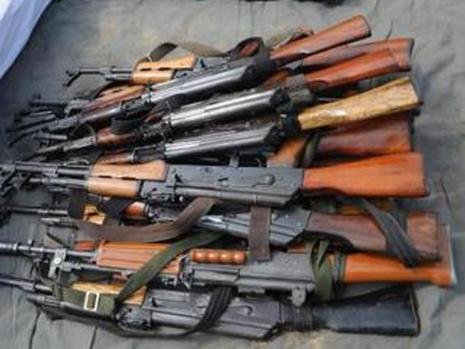
The operation came amid other security discoveries involving live AK-47 ammunition and substantial quantities of illicit drugs. NDLEA Chairman, Brigadier-General Mohamed Buba Marwa (retd.), has repeatedly drawn attention to the connection between drug trafficking, substance abuse and violent criminal activities.
While the Kaduna operation deserves commendation, its significance extends beyond the weapons recovered and the suspect arrested. It raises a more troubling question: why do illegal firearms manufacturing facilities continue to emerge despite years of security raids, arrests and weapons seizures?
The answer lies in a pattern that has repeatedly surfaced across Kaduna, Plateau and other parts of the North-Central region. These discoveries are not isolated incidents but evidence of an underground arms economy sustained by insecurity, criminal demand, economic desperation and weaknesses in law enforcement.
In September 2023, troops of Operation Safe Haven uncovered a major illegal firearms manufacturing facility in Kafanchan, Jema’a Local Government Area of Kaduna State. The operation led to the recovery of locally fabricated weapons, military-grade rifles, pistols, revolvers, ammunition and equipment used in manufacturing firearms. Investigations reportedly revealed that the facility had supplied weapons to customers in Kaduna and neighbouring Plateau State for several years.
In July 2025, another operation in Giroji Village, Makarfi Local Government Area of Kaduna State, resulted in the arrest of four suspects, two of whom were reportedly caught actively fabricating firearms.
Plateau State has equally witnessed repeated discoveries of illegal weapons manufacturing facilities, particularly around Vom in Jos South, Heipang in Barkin Ladi and Mangu. Operations in these communities have yielded locally fabricated Dane guns, pistols, unfinished AK-47 components and other weapons manufacturing equipment.
A March 2026 investigation further highlighted the scale of the problem, reporting that Plateau accounted for seven of approximately 18 reported raids on illegal gun factories nationwide since 2019, the highest number attributed to any state in the investigation.
The situation became even more revealing in June 2026 when senior military officers of Operation Enduring Peace disclosed that some arrested firearms fabricators initially claimed they were manufacturing weapons for communal self-defence but later admitted selling them to Fulani militias because the buyers offered higher prices.
That disclosure exposes the commercial character of the illegal arms trade. It demonstrates how weapons produced under the justification of community protection can eventually find their way into the hands of groups whose activities may threaten the very communities they claim to defend.
Indeed, most of these illegal facilities are not sophisticated industrial factories. They are often ordinary workshops operated by blacksmiths, welders and other skilled artisans who have diverted their technical abilities towards producing firearms. Iron pipes, gas cylinders, filing machines, welding sets and other readily available materials can be converted into instruments of violence.
The skills themselves are not the problem. Blacksmithing and metalworking remain legitimate occupations that support livelihoods and local economic activities. The danger emerges when these skills are redirected towards illegal weapons production and connected to an expanding network of buyers, distributors and criminal intermediaries.
Demand remains the principal driving force. Banditry, kidnapping, communal violence, armed militias and the growing perception of inadequate security have created a market for locally manufactured firearms. In communities repeatedly exposed to attacks, some residents may see acquiring weapons as a necessary means of protecting themselves and their families.
But this creates a dangerous cycle. Weapons purchased for protection can be sold, stolen, captured or diverted into criminal networks. The market does not distinguish between those who claim to be defending their communities and those seeking to attack others. It responds to money, opportunity and demand.
Economic desperation also plays a significant role. For unemployed youths and struggling artisans, illegal weapons production may appear more financially rewarding than legitimate metalwork. When criminal buyers are willing to pay higher prices, the temptation to abandon lawful production for an illegal but lucrative business becomes stronger.
This is why repeated security raids, although necessary, have not provided a lasting solution. Arresting a manufacturer and dismantling a workshop may disrupt production temporarily, but it does not automatically eliminate the customers, financiers, distributors and wider networks sustaining the business. Another workshop can emerge elsewhere, often with different operators but serving the same market.
The security response must therefore move beyond the announcement of arrests and recovered weapons. Nigerians deserve to know what happens to suspects after their arrest, whether investigations lead to prosecution, how many convictions are secured and whether the wider criminal networks behind the facilities are successfully dismantled.
Without transparent prosecution and sustained investigations, the deterrent effect of security operations may remain limited. Arrests that do not lead to credible trials can deepen public cynicism and create the impression that illegal weapons manufacturing is a business that can be resumed once the immediate security pressure subsides.
The problem also raises a fundamental question about the authority and responsibility of the Nigerian state. German sociologist Max Weber famously defined the state by its successful claim to the monopoly of the legitimate use of physical force within a given territory. The principle suggests that the responsibility for maintaining security and regulating the legitimate use of force rests primarily with the state.
Where private individuals and organised groups increasingly manufacture and circulate firearms outside the law, that authority comes under serious pressure.
It is important, however, not to dismiss the fears of communities that have repeatedly suffered attacks. Residents who feel abandoned by the authorities may regard locally acquired firearms as instruments of survival rather than criminal enterprise. Their concerns deserve attention, particularly where longstanding communal grievances and insecurity have remained unresolved.
Nevertheless, uncontrolled private weapons production cannot become an alternative security arrangement. What begins as an attempt at self-defence can escalate into an arms race, reprisals and further bloodshed. A society in which competing groups independently manufacture and acquire weapons risks deepening the insecurity it seeks to escape.
Nigeria must therefore confront both the supply and demand sides of the illegal arms economy. Security agencies should strengthen intelligence gathering, investigate the financial and distribution networks behind illegal firearms production and ensure that those responsible are prosecuted. Investigations must not stop with workshop operators when evidence points to financiers, suppliers and major buyers.
At the same time, the government needs a clearer regulatory framework for traditional metalworking activities. Legitimate artisans should not be criminalised because of the illegal activities of a few, but appropriate licensing, monitoring and inspection mechanisms could help identify suspicious production activities. Such measures should be accompanied by vocational support and alternative livelihood programmes for vulnerable artisans and unemployed youths.
More importantly, the government must address the insecurity creating the demand for these weapons. Communities cannot be expected to abandon the desire for self-protection if attacks, kidnappings and communal violence continue without effective intervention. Security agencies must improve protection for vulnerable communities, while governments must ensure that victims receive justice and perpetrators are held accountable.
Inter-agency cooperation must also become more systematic. The NDLEA, police, military, Department of State Services and other relevant institutions need to share intelligence and investigate the connections between illicit drugs, arms trafficking, organised crime and violent groups. The relationship between drugs and weapons trafficking should not be treated as an occasional discovery but as part of a broader criminal economy requiring coordinated intervention.
Ultimately, the latest discovery in Kaduna should not be celebrated merely as another successful raid. It should serve as a reminder that Nigeria’s firearms proliferation problem remains unresolved. Security agencies have demonstrated that they can locate and dismantle illegal manufacturing facilities. The greater challenge is preventing new ones from emerging.
The country’s security crisis is not sustained by gunmen alone. Behind the violence is an underground economy that manufactures, finances, distributes and supplies the weapons used against innocent citizens. Until that economy is dismantled and the conditions sustaining it are addressed, every successful raid will remain a temporary victory against a problem that continues to regenerate.
Nigeria must move beyond counting recovered guns and arrested suspects to confronting the networks, economic incentives and governance failures that keep the illegal arms trade alive. That is the difference between winning individual security operations and securing the country.
Illegal Gun Factories: Why Nigeria Cannot Stop Arms Proliferation
metro
Gombe: Three Killed, 13 Injured as Alleged Military Shooting Sparks Outcry
Gombe: Three Killed, 13 Injured as Alleged Military Shooting Sparks Outcry
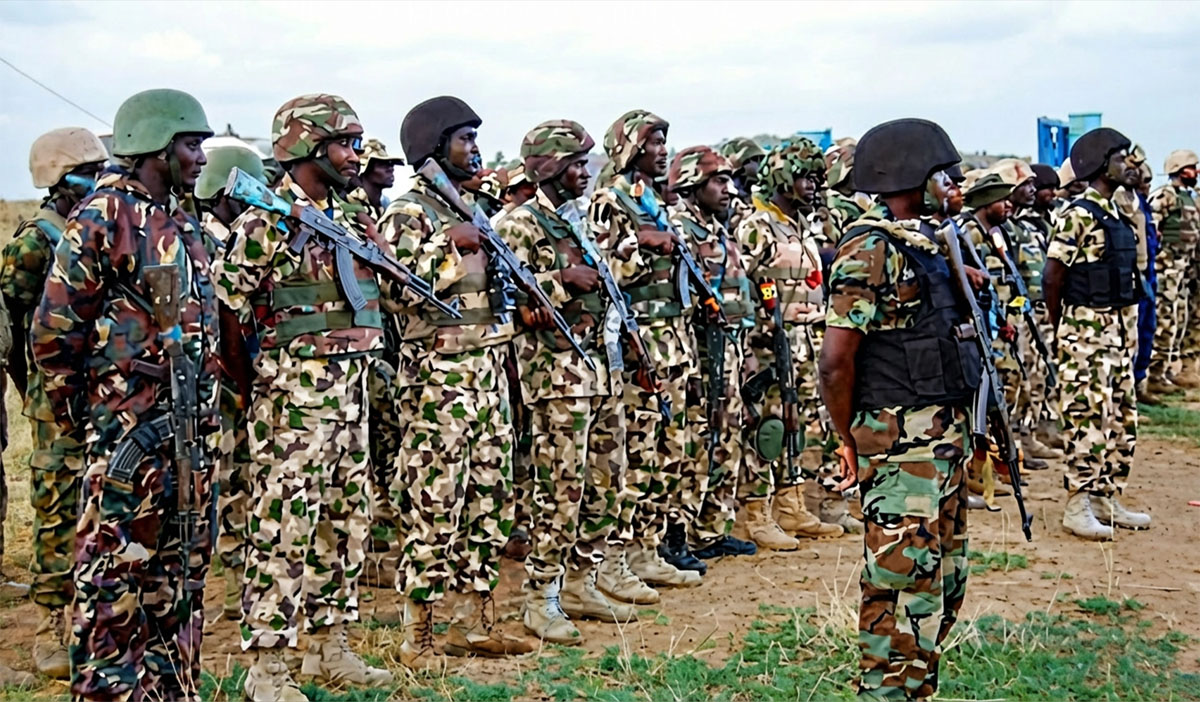
Three people have reportedly been killed and 13 others injured following an alleged shooting involving personnel of the Nigerian Air Force (NAF) and residents of Lawanti community in Akko Local Government Area of Gombe State.
The incident reportedly occurred on Friday night, November 20, 2026, following a confrontation over the alleged theft of armoured cables linked to a nearby military installation.
According to accounts by residents, trouble started when Air Force personnel attempted to arrest some youths suspected of stealing the cables. The situation reportedly escalated after the youths resisted the arrest, leading to a confrontation and the blockage of the Gombe-Bauchi highway.
A resident, Idris Lawanti, told Daily Trust that local authorities, led by the Chairman of Akko North Local Council Development Area, Bello Sulaiman, intervened and initially restored calm.
However, another resident alleged that military personnel later returned to the community and opened fire, resulting in the deaths and injuries.
A preliminary report by Yusuf Musa Danbayo, Senior Special Assistant to Governor Muhammadu Inuwa Yahaya on Security and Intergovernmental Affairs, confirmed the casualty figures but stressed that the circumstances surrounding the incident were still being verified by security and medical authorities.
The report identified the three deceased persons as Yayaji Alhaji Abdul Kura, Hamma Magaji, 35, and Inna Anttu Umar Bello.
READ ALSO:
- Jimmy Odukoya Sues Sister, Church Trustees Over Removal as Senior Pastor
- UNILAG Gets 10 CNG Buses as FG Expands Campus Transport Scheme to 60 Institutions
- Military Kills 21 ISWAP Fighters in Borno Airstrikes, 26 Surrender
Abdul Kura reportedly died from gunshot injuries, while Magaji was said to have died following an alleged beating. Umar Bello reportedly died from shock during the incident.
The 13 injured persons include Sale Abubakar, 30; Usman Garba, 25; Adamu Abubakar, 19; Sani Abubakar, 19; Jafar Abdul’mutallaf, 19; Usman Muhammad, 19; Kabiru Sani, 19; Kawu Maikfi, 44; Mohammed Abubakar, 20; Gidado Ibrahim, 24; Musa Yusuf, 20; Abba Adamu, 19; and Paul Simple.
Twelve of the injured persons are receiving treatment at the Federal Teaching Hospital, Gombe, while Simple was taken to Cottage Hospital, Amada, over an alleged beating.
One of the victims, Sale Abubakar, was reportedly moved to the theatre for emergency surgery.
The incident has triggered calls for an independent investigation and accountability from residents and concerned community members.
A resident, El Lawanti, in a Facebook post titled, “A Strong Call for Justice for Lawanti Community,” appealed to the Federal Government, Nigerian Air Force authorities and the National Human Rights Commission to investigate the incident.
He called for justice for the deceased, urgent medical attention for the injured and accountability for anyone found responsible for unlawful actions. He also appealed for support and compensation for affected families in accordance with the law.
Another resident, Al-Mustapha Bello Hassan, also urged the Federal and Gombe State Governments to establish the circumstances surrounding the confrontation and ensure that the victims receive adequate assistance.
Reacting to the incident, Governor Muhammadu Inuwa Yahaya expressed concern over the reported deaths and injuries, describing the development as distressing.
In a statement issued on Saturday by the Director-General of Press Affairs, Government House, Gombe, Ismaila Uba Misilli, the governor extended his condolences to the bereaved families and wished the injured persons a speedy recovery.
Yahaya condemned the incident and appealed to residents of Lawanti and neighbouring communities to remain calm and avoid actions capable of worsening tensions.
As part of the government’s response, he dispatched a high-powered delegation led by the Secretary to the State Government, Professor Ibrahim Abubakar Njodi, to visit the affected community, assess the situation, sympathise with the families and engage relevant stakeholders.
The governor also ordered a thorough, impartial and transparent investigation to establish what happened and determine appropriate measures in accordance with the law.
He assured residents that the state government would work with relevant security agencies to address their concerns, monitor the condition of the injured and provide necessary support to affected families.
The governor further urged traditional rulers, religious leaders and community stakeholders to help maintain peace and prevent the spread of misinformation.
As of the time of reporting, the circumstances surrounding the alleged shooting had not been independently established, and the Nigerian Air Force had not publicly provided its account of the incident.
The investigation ordered by the Gombe State Government is expected to establish the sequence of events, determine the involvement of security personnel and clarify responsibility for the deaths and injuries.
Gombe: Three Killed, 13 Injured as Alleged Military Shooting Sparks Outcry
metro
Jimmy Odukoya Sues Sister, Church Trustees Over Removal as Senior Pastor
Jimmy Odukoya Sues Sister, Church Trustees Over Removal as Senior Pastor
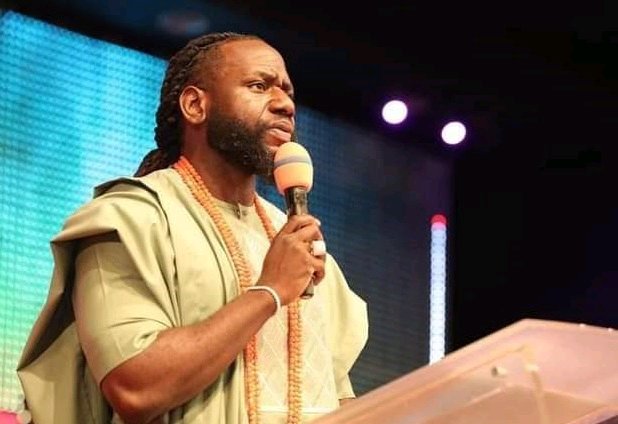
Pastor Jimmy Odukoya has filed a lawsuit at the Federal High Court in Lagos against his sister, Pastor Tolu Odukoya-Ijogun, and seven other church figures, challenging his removal as Senior Pastor of the Fountain of Life Church.
Odukoya is asking the court to declare his removal illegal, in a fresh legal battle that has further deepened the leadership crisis at the church founded by his late father, Pastor Taiwo Odukoya.
The suit, marked FHC/LAG/CS/1568/2026, was reportedly filed on Friday, November 20, 2026.
The respondents named in the action are Tolu Odukoya-Ijogun, Biodun Balogun, Biodun Awosika, Rotimi Okpaise, Tobi Enuha, Gbenga Onabanjo, Fred Ohiani and Akin Osinbajo.
The legal action follows a decision by a group identifying itself as the church’s Board of Trustees to withdraw recognition of Jimmy as Senior Pastor, citing a previously undisclosed video in which the late founder reportedly outlined his preferred succession arrangement.
According to the trustees, the video was recorded in December 2021, with Jimmy himself allegedly recording his father’s instructions. They claimed that Pastor Taiwo Odukoya named Pastor Kunle Areogun as his preferred successor, while assigning Jimmy supporting responsibilities in administration and leadership of the church’s youth ministry.
The trustees said the recording was not presented when Jimmy was appointed Senior Pastor in September 2023 and only came to their attention in late December 2025.
They subsequently argued that his appointment did not reflect the late founder’s wishes and announced his removal from office.
READ ALSO:
- UNILAG Gets 10 CNG Buses as FG Expands Campus Transport Scheme to 60 Institutions
- Military Kills 21 ISWAP Fighters in Borno Airstrikes, 26 Surrender
- Doctor Shortage: FG Increases Medical Student Admissions by 140%
Jimmy, however, has rejected the decision, insisting that his appointment was unanimously approved by the Board of Trustees in September 2023 and that no constitutionally valid decision has removed him.
He has also accused his sisters of supporting efforts to undermine his leadership and alleged that they were involved in making the succession video public.
The dispute has exposed disagreements within the church over the interpretation of its constitution, the authority of its trustees, succession arrangements and control of its governing structure.
In a related development, the church’s incorporated trustees had approached the Lagos State High Court, which on November 18 granted an interim order restraining Jimmy from presenting himself as the church’s Senior Pastor and spiritual head or interfering with its activities and governance.
Justice O. O. Adewunmi-Oshin made the order following an ex parte application by the trustees. The order is to remain in force pending compliance with the court’s pre-action protocol.
However, the court expressly preserved Jimmy’s right to apply to have the order set aside or respond to the substantive claims. The matter was adjourned until December 1, 2026.
The trustees subsequently announced Pastor Rotimi Okpaise as interim spiritual and administrative leader, adding another dimension to the disagreement over who has authority to direct the church’s affairs.
The controversy has also involved disagreements over the chairmanship of the Board of Trustees, allegations concerning church funds and objections by the opposing trustees to Jimmy’s recent remarriage.
Jimmy’s latest suit at the Federal High Court represents a separate legal challenge to the removal dispute, while the interim restraint was issued in proceedings before the Lagos State High Court.
The outcome of the court proceedings could have significant implications for the leadership, governance and succession arrangements of the Fountain of Life Church.
Jimmy Odukoya Sues Sister, Church Trustees Over Removal as Senior Pastor
-
 metro2 days ago
FG’s ₦100,000 Family Grant: Eligibility, How to Apply and Payment Procedure Revealed
-
 Sports2 days ago
Ex-Super Eagles Captain Segun Odegbami Survives Death as Three Assailants Machete Him in Abeokuta Home
-

 Business3 days ago
NNPCL, MRS, Other Marketers Slash Petrol Prices Across Nigeria As Motorists Get Fresh Relief
-

 metro2 days ago
Cleveland Girl, 11, Gets 7-Year Juvenile Sentence Over Rape, Attempted Murder of 5-Year-Old
-
 News3 days ago
Agunbiade Proposes Council of Grand Chief Imams for Yorubaland, Edo, Delta
-
 metro1 day ago
Hoodlums Descend on Tinubu’s Praise Singer Rarara at Abuja Mosque, Tear His Clothes
-

 metro3 days ago
‘My Wife and I Are Parallel’: Peter Obi Makes Candid Revelation About Margaret’s Spending Habits
-

 metro2 days ago
Honesty Cost Lagos Taxi Driver His Job, Marriage After Returning ₦21,000 Passenger Left in His Cab