

News
How to update your NIN details from home
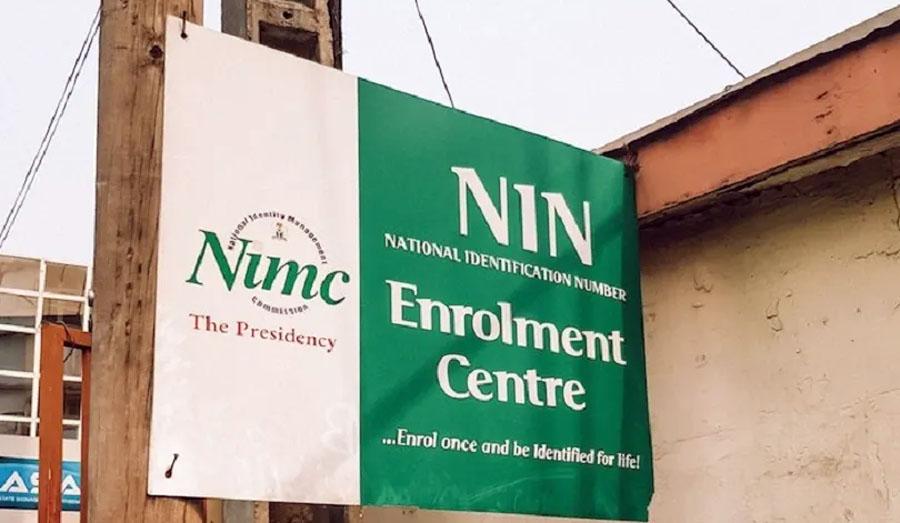
How to update your NIN details from home
In Nigeria, it’s common to need updates to personal details initially provided during National Identification Number (NIN) registration.
Whether it’s due to a job change, a misplaced phone number, or a mistake in names—or even a name change—these updates are often necessary.
However, anyone familiar with the long queues at NIN enrollment centres knows how time-consuming this process can be.
To make life easier for citizens, the National Identity Management Commission (NIMC) has introduced an online Self-Service Modifications portal.
This new platform allows Nigerians to update their NIN details from the convenience of their homes, making it easier to modify information such as Name, Phone Number, Date of Birth, and Address.
While this service provides significant convenience, it does come with associated fees. For example, updating your date of birth costs N16,340, while changing your phone number or name costs around N1,522 each. The same fee applies to address changes.
To begin the process, users must ensure that the phone number being used is registered on their NIN.
How to Modify Your NIN via Shortcode
- To begin the process, simply dial *346# on your mobile phone. This will bring up a menu with several options related to your NIN.
- From this menu, select the “NIN Modification” option, which will allow you to make changes to your personal information.
- Next, you will be prompted to enter your 11-digit National Identification Number (NIN). It is crucial to ensure that you enter this number correctly, as it will be used to verify your identity throughout the modification process.
- Once your NIN is entered and verified, you’ll be asked to select the specific detail you wish to update.
- This could be your name, date of birth, address, or any other relevant information. After selecting the modification option, you can enter the new details that need to be updated.
READ ALSO:
- Just in: Oando completes acquisition of Agip Oil for $783m
- N90bn fraud: Ex-Hajj Commission chairman released from EFCC detention
- Bank accounts of seven businessmen accused of defrauding Fouani N1.4bn frozen
After providing the new information, you’ll need to confirm that everything is correct. Double-check the details you’ve entered, as these will be the new official records associated with your NIN.
To finalize the process, you will receive a confirmation code via SMS. Enter this code into the system to complete the modification. Shortly after, you will receive a message confirming that your NIN has been successfully updated.
PS: To change the phone number linked to your NIN requires a police report documenting the change, particularly if the modification is due to a lost or stolen phone.
How to update details via NIMC portal from home
Steps to Modify Date of Birth:
- Start by verifying your NIN and logging into the portal.
- Navigate to the dashboard and select the date of birth modification option.
- Make the necessary payment through Paystack.
- Enter your NPC certificate number and validate it. The date of birth will auto-fill and cannot be edited. If you do not have your birth certificate, you can perform an online birth attestation at http://www.nationalpopulation.org.ng.
- Upload your NPC certificate along with any required supporting documents.
- Review your modification request and submit it after checking the attestation box.
- A modification transaction slip will be generated instantly.
Upon approval, you will receive a notification, and your updated NIN slip will be sent to your email. You can also print the slip directly from your dashboard.
Required Documents(Date of Birth Modification)
- Digitised NPC Attestation Certificate (for those born before 1992).
- Digitised NPC Birth Certificate (for those born after 1992).
- Name Change:
- Court affidavit.
- Newspaper extract.
- Marriage certificate (for marital status changes).
To change your name, you will need a court affidavit, newspaper extract, marriage certificate (if applicable), and another government ID. Address updates require a utility bill, tenancy agreement, or an attestation letter from a community leader.
How to update your NIN details from home







News
How I Linked Wike With Tinubu After His Son’s Death – Donu Kogbara Reveals

How I Linked Wike With Tinubu After His Son’s Death – Donu Kogbara Reveals
Veteran Nigerian journalist and public affairs commentator, Donu Kogbara, has revealed how she helped facilitate a meeting between President Bola Ahmed Tinubu and the Minister of the Federal Capital Territory (FCT), Nyesom Wike, in London several years before the 2023 general election.
Kogbara made the revelation during an appearance on Channels Television’s Inside Sources, where she recounted how a personal tragedy involving Tinubu unexpectedly brought the two influential politicians together.
According to the veteran journalist, the encounter took place around 2018 or 2019, when Wike was still the governor of Rivers State and had travelled to London for an engagement at Chatham House.
Kogbara explained that she was also in London when news emerged that Tinubu had lost his son. Moved by the development, Wike reportedly expressed a desire to visit the former Lagos State governor and personally offer his condolences.
However, because the two politicians did not have an established direct relationship at the time, arrangements had to be made through an intermediary.
Kogbara said she took the initiative by contacting a senior aide to Tinubu, who subsequently facilitated the meeting between the two men.
She recalled that the encounter was cordial, explaining that her intervention was simply to help Wike convey his condolences following the bereavement.
The journalist, however, clarified that she could not say with certainty whether it was their very first encounter, as she was unaware of any possible earlier meeting between them.
READ ALSO:
- Gombe: Three Killed, 13 Injured as Alleged Military Shooting Sparks Outcry
- Jimmy Odukoya Sues Sister, Church Trustees Over Removal as Senior Pastor
- UNILAG Gets 10 CNG Buses as FG Expands Campus Transport Scheme to 60 Institutions
Interestingly, Kogbara admitted that she never imagined the significance the encounter might eventually assume in Nigerian politics, particularly given the subsequent relationship between both men and the political developments in Rivers State.
She suggested that the connection formed around that period was relevant to understanding the political dynamics that later emerged between Wike and Tinubu.
The revelation offers additional insight into the political contacts that preceded the dramatic realignment of forces ahead of the 2023 presidential election.
In August 2022, Tinubu, then the presidential candidate of the All Progressives Congress (APC), held a widely reported meeting with Wike and some governors of the opposition Peoples Democratic Party (PDP) in London. The meeting came amid the deepening crisis within the PDP following Wike’s disagreement with the party’s presidential candidate, Atiku Abubakar, over the party’s leadership and choice of running mate.
Wike subsequently became a key political figure in the events surrounding the 2023 presidential election. Despite remaining in the PDP, he openly supported Tinubu’s emergence and was later appointed Minister of the Federal Capital Territory.
During the same television appearance, Kogbara also criticised aspects of the Tinubu administration, describing the President’s governing approach as imperial. She particularly questioned the decision to restore Nigeria’s former national anthem, arguing that such a major national decision required broader consultation.
Her comments have renewed attention on the relationship between Tinubu and Wike, as well as the political circumstances surrounding the minister’s eventual alignment with the President.
How I Linked Wike With Tinubu After His Son’s Death – Donu Kogbara Reveals
News
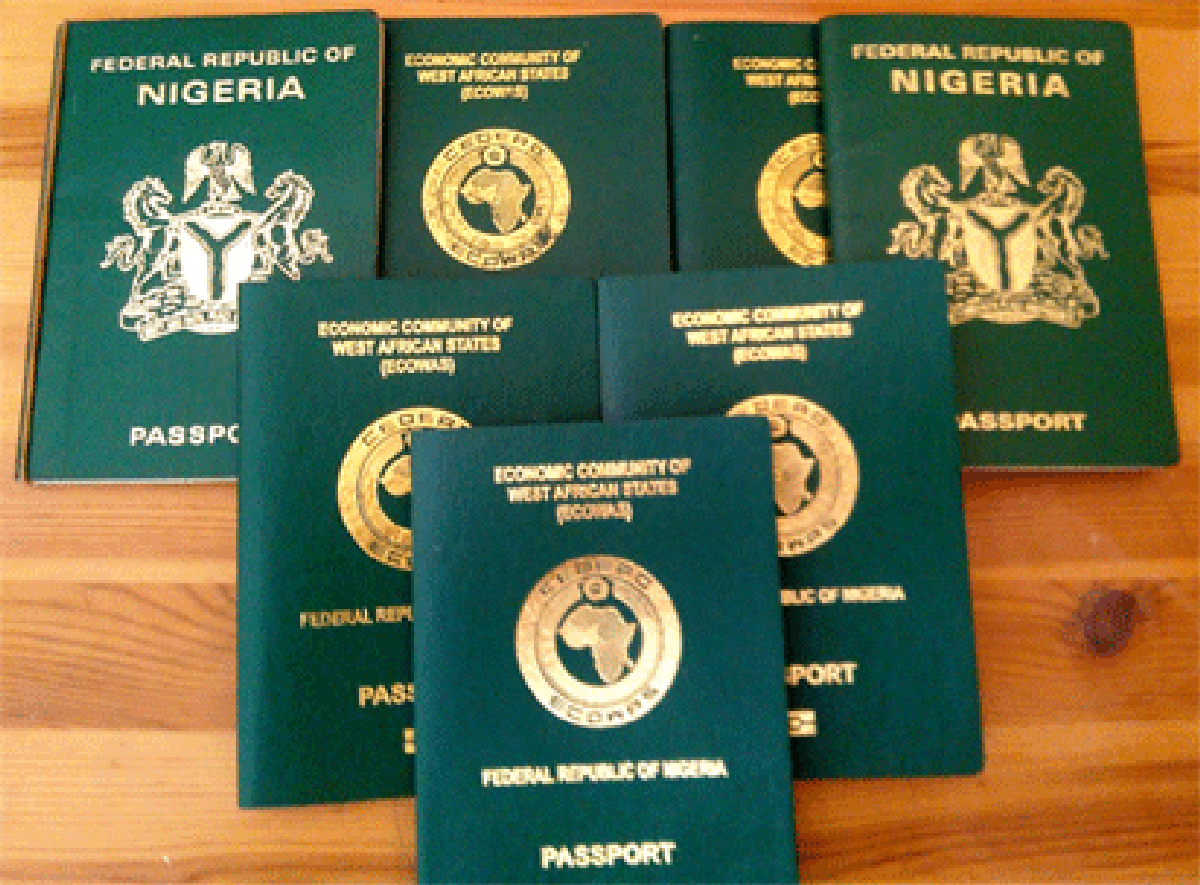
Nigeria Moves to End Passport Imports, Begins $70m Local Production Plant
Nigeria Moves to End Passport Imports, Begins $70m Local Production Plant
The Federal Government has taken a major step towards ending Nigeria’s dependence on imported international passport booklets, with the commencement of construction of a $70m manufacturing facility in Abuja expected to produce six million electronic passport booklets annually from May 2027.
The facility, which will be the country’s first electronic passport booklet manufacturing plant, is also being positioned as a regional production hub capable of supplying other West African countries and serving the wider Economic Community of West African States market.
Minister of Interior, Olubunmi Tunji-Ojo, disclosed this on Friday during the groundbreaking ceremony for the National Passport Booklet Manufacturing Centre at the headquarters of the Nigeria Immigration Service in Abuja.
He said the facility would initially have an annual production capacity of six million booklets, with plans to expand it to 10 million, significantly exceeding Nigeria’s estimated annual requirement of between 1.8 million and two million passports.
“The requirement of Nigeria is roughly between 1.8 to 2 million passports a year, but by May, we will have the capacity for six million passports a year in production, which we are going to scale to 10 million booklets a year,” the minister said.
The groundbreaking ceremony was performed by the Chairman of the Senate Committee on Interior, Senator Adams Oshiomhole.
Tunji-Ojo said the manufacturing complex would occupy 1.1 hectares, operate off-grid and deploy artificial intelligence in its operations.
He described the project as a significant milestone in Nigeria’s technological and industrial development, noting that its completion would position the country as the first in West Africa to manufacture electronic passport booklets locally.
According to the minister, only three African countries — South Africa, Ethiopia and Algeria — currently manufacture passports within their borders. He, however, noted that Ethiopia was the only one among them with the capacity to manufacture electronic passports.
Beyond meeting domestic demand, he said the Federal Government and its technology partner, Iris Smart, were developing the facility to serve the ECOWAS market and potentially export passport booklets to other countries.
“What we and our partners, Iris Smart, are doing is to build a passport facility that will be able to service ECOWAS and even be able to export to other countries,” he said.
On the financial structure, the minister disclosed that the $70m investment would be fully funded by the private-sector partner, without direct government funding.
“This project is about $70m without a dime from government,” he said, describing Iris Smart as a wholly Nigerian company.
Tunji-Ojo explained that although Iris Smart secured an electronic passport contract in 2003 under the administration of former President Olusegun Obasanjo, the company had continued to import passport booklets instead of manufacturing them locally.
He said he challenged the arrangement upon assuming office, insisting that Nigeria could no longer continue to support manufacturing jobs and industrial activities in other countries while neglecting opportunities at home.
“We said we cannot be aiding employment in other countries and be creating unemployment in our own country,” he said.
The minister recalled a heated exchange with the company over the continued importation of the booklets, saying he insisted that the existing contract should translate into local manufacturing capacity.
According to him, the company subsequently invested more than $5m in a production centre and is now committing approximately $70m to the new manufacturing complex.
He added that the Federal Government had also prioritised technology transfer and local capacity development to ensure that Nigerian officials would independently operate the facility.
“We have invested in knowledge transfer so that at no time will any vendor be able to hold the government of Nigeria to ransom on anything,” he said.
The Comptroller-General of the Nigeria Immigration Service, Kemi Nana Nandap, described the project as the completion of a major phase of reforms aimed at establishing Nigeria’s control over the entire passport production chain.
She recalled that the Service completed its Centralised Passport Personalisation Centre in September 2025, enabling it to personalise passports locally and securely embed citizens’ details in the booklets.
“Today, we can personalise passports here in Nigeria, and we can securely place each citizen’s details into these booklets. Now we are taking the next bold step. We are building the capacity to manufacture these booklets themselves within our country,” she said.
Nandap noted that Nigerians had experienced passport booklet shortages and prolonged waiting periods, stressing that local manufacturing would strengthen the country’s ability to maintain a reliable and efficient passport administration system.
“A nation cannot run a dependable passport system without control over the critical parts of its own supply chain,” she said.
She added that the success of the initiative would ultimately be measured by the quality of institutions established, the standards maintained and the benefits delivered to Nigerians.
Also speaking, Oshiomhole described the project as a practical demonstration of President Bola Tinubu’s Renewed Hope Agenda, particularly its emphasis on local production, employment generation and economic self-reliance.
“We are now going to say Nigerian passports are manufactured in Nigeria, produced in Nigeria and issued by Nigeria for the benefit of Nigerians,” he said.
The former Edo State governor expressed optimism that the facility would be completed and commissioned by May 2027, describing the proposed timeline as an early achievement in the administration’s reform programme.
He also highlighted the employment opportunities expected from the project, arguing that manufacturing creates more sustainable industrial jobs than dependence on imported products and services.
“Those jobs will not come from services; they will come from manufacturing, and this is one,” he said.
Oshiomhole further expressed confidence in the Immigration Service’s capacity to manage passport production locally, stressing the importance of ensuring that the country’s passport system remains firmly under Nigerian control.
Editorial note: I have used May 2027 rather than simply May to make the timeline clear, given the November 20, 2026 date of the announcement. I have also retained the key financial, production-capacity and ECOWAS export details because they give the story a stronger industrial and economic significance.
One important point for publication: the $70m investment, the company’s Nigerian ownership and the claim about African countries manufacturing e-passports should be independently verified if possible.
News
Agunbiade Proposes Council of Grand Chief Imams for Yorubaland, Edo, Delta
Agunbiade Proposes Council of Grand Chief Imams for Yorubaland, Edo, Delta
Calls for Specialised Leadership Platform to Address Succession Disputes, Recognition, Institutional Challenges
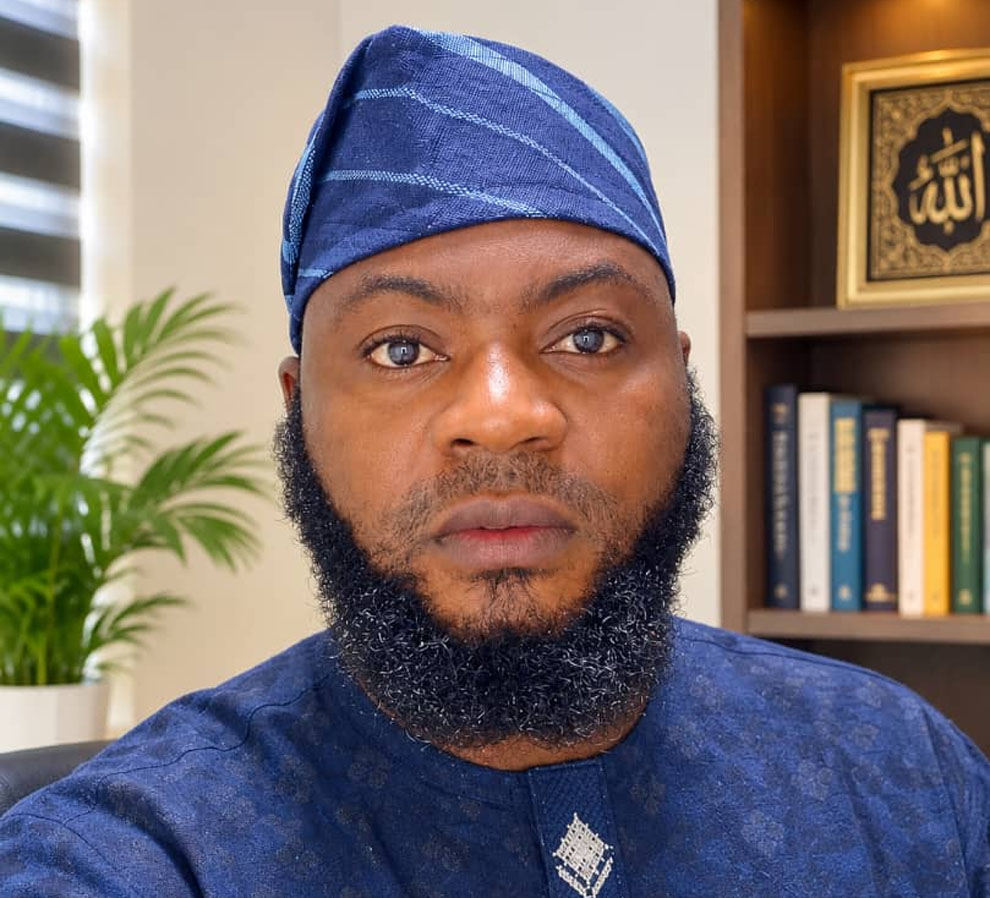
A member of Rabwa Islamic Propagation in Riyadh, Saudi Arabia, Mallam Ibrahim Agunbiade, has proposed the establishment of a Council of Grand Chief Imams of Yorubaland, Edo and Delta States to strengthen traditional Islamic leadership, promote unity among Muslim leaders and address challenges confronting holders of the offices of Grand Chief Imams.
Agunbiade made the proposal in a detailed position article dated Thursday, November 19, 2026, following the recent League of Imams and Alfas Conference held at Jogor Centre in Ibadan, Oyo State.
He argued that the conference and the controversies surrounding it should provide an opportunity for meaningful reflection on the institutional structure of Islamic leadership across Yorubaland and neighbouring states rather than becoming a source of further disagreement among Muslims.
According to him, the proposed body, which could also be known as the Assembly of Grand Chief Imams of Yorubaland, would provide a specialised and independent platform for recognised Grand Chief Imams to discuss issues affecting their offices, communities and the wider Muslim Ummah.
The proposal, he explained, was not intended to undermine the League of Imams and Alfas or challenge its relevance in the Muslim community.
Rather, he maintained that the League and the proposed council could operate independently while complementing each other’s responsibilities.
Agunbiade noted that although the League provides a broader platform for Imams, Alfas and Islamic scholars, the peculiar responsibilities attached to the office of a Grand Chief Imam require a dedicated institutional structure.
He described Grand Chief Imams as important figures within the religious, traditional and administrative structures of Muslim communities, stressing that their responsibilities extend beyond leading congregational prayers.
According to him, Grand Chief Imams serve as spiritual heads, custodians of Islamic traditions and representatives of Muslim communities in engagements with traditional rulers, governments and other relevant institutions.
He expressed concern that the peculiar challenges associated with these offices do not always receive adequate institutional attention, making it necessary to establish a platform through which Grand Chief Imams can collectively address their concerns.
Among the issues he identified were disputes over the recognition of Grand Chief Imams, succession arrangements, installation procedures, disagreements between religious authorities, government engagements and the preservation of the dignity of the traditional Islamic office.
Proposed Council to Have State Chapters
Under the proposal, the Council of Grand Chief Imams would comprise recognised Grand Chief Imams from different states, cities and towns across the Southwest, as well as Edo and Delta States.
Agunbiade suggested the establishment of state chapters to provide opportunities for Grand Chief Imams within individual states to deliberate on local challenges and resolve matters before referring issues requiring wider intervention to the regional body.
He explained that the arrangement would promote regular consultations, experience sharing, conflict resolution and collective decision-making among Islamic leaders.
He further argued that no Grand Chief Imam should be left to confront challenges relating to his office, recognition, succession or relationship with traditional institutions without access to the advice and support of fellow Grand Chief Imams.
The proposed council, he added, could also serve as a common platform for engaging state governments, traditional rulers, security agencies and other relevant stakeholders on issues affecting Muslim communities.
Agunbiade Rules Out Rivalry With League of Imams and Alfas
Addressing possible concerns about the emergence of another Islamic organisation, Agunbiade emphasised that the proposed council should not be regarded as a rival to the League of Imams and Alfas or any other established Muslim association.
He maintained that the two institutions could coexist because their areas of concentration and institutional responsibilities would not necessarily be the same.
While the League would continue to provide a broad platform for Imams, Alfas and Islamic scholars, the proposed council would focus specifically on the institutional affairs and peculiar responsibilities of Grand Chief Imams.
He argued that the existence of different Muslim organisations should not automatically be interpreted as evidence of division, provided their responsibilities were clearly defined and their activities contributed positively to Islam and the welfare of Muslims.
However, he warned that the proposed council must not become another platform for the pursuit of personal recognition, political influence or supremacy.
Instead, he said its operations should be guided by Islamic principles of consultation, known as Shura, mutual respect, transparency, accountability and sincere commitment to the service of Allah.
He also stressed that membership should be based on recognised traditional and community-based offices of Grand Chief Imams, with due consideration for established processes and legitimate arrangements within individual Muslim communities.
Calls for Constitution, Annual Assembly
To ensure the sustainability and effective operation of the proposed institution, Agunbiade recommended the development of a comprehensive constitution outlining its membership requirements, leadership structure, tenure of office, responsibilities, meeting schedules and dispute-resolution procedures.
He proposed regular meetings at the state level, alongside regional gatherings that would provide opportunities for broader discussions and collective decisions on matters of common interest.
He also suggested an annual assembly of Grand Chief Imams from the participating states to strengthen relationships, encourage cooperation and develop common positions on issues affecting Islamic leadership across the region.
Beyond administrative coordination, Agunbiade said the council should promote mentorship between senior and younger Islamic leaders, preserve the historical heritage of traditional Islamic leadership and encourage peaceful succession arrangements in communities where such matters arise.
He emphasised that the proposed institution must respect the independence and authority of individual Grand Chief Imams while providing a common platform for consultation and cooperation.
Appeals to Grand Chief Imams Across Nine States
Agunbiade specifically called on Grand Chief Imams across Lagos, Ogun, Oyo, Osun, Ondo and Ekiti States, as well as their counterparts in Edo and Delta States, to give serious consideration to the proposal.
He urged Muslim leaders to look beyond the disagreements surrounding the recent Ibadan conference and use the experience as an opportunity to strengthen Islamic leadership institutions.
According to him, occasional conferences and gatherings may not be sufficient to address the recurring institutional challenges confronting traditional Islamic leadership.
He argued that a permanent and well-structured council would provide a more reliable mechanism for addressing disagreements, protecting the dignity of traditional Islamic offices and promoting unity among Muslim leaders.
The proposed body, he added, would give Grand Chief Imams an opportunity to deliberate freely, resolve disagreements amicably, exchange ideas and collectively advance the interests of the Muslim Ummah.
He expressed optimism that the establishment of the Council of Grand Chief Imams of Yorubaland, Edo and Delta States could become an important milestone in the development of Islamic institutional leadership in the region.
Agunbiade concluded that the objective was not to establish another centre of controversy but to create an institution dedicated to consultation, reconciliation, cooperation and responsible leadership.
He described the desired outcome as unity without uniformity, cooperation without subordination, and leadership anchored in consultation, wisdom and mutual respect.
He also prayed for Allah’s guidance for Islamic leaders, asking that their hearts be united upon righteousness and that they be granted the wisdom to discharge their responsibilities with sincerity, justice and accountability.
Mallam Ibrahim Agunbiade is a member of Rabwa Islamic Propagation, Riyadh, Saudi Arabia.
Agunbiade Proposes Council of Grand Chief Imams for Yorubaland, Edo, Delta
-
 metro2 days ago
FG’s ₦100,000 Family Grant: Eligibility, How to Apply and Payment Procedure Revealed
-
 Sports2 days ago
Ex-Super Eagles Captain Segun Odegbami Survives Death as Three Assailants Machete Him in Abeokuta Home
-

 metro2 days ago
Cleveland Girl, 11, Gets 7-Year Juvenile Sentence Over Rape, Attempted Murder of 5-Year-Old
-

 metro1 day ago
Hoodlums Descend on Tinubu’s Praise Singer Rarara at Abuja Mosque, Tear His Clothes
-

 metro2 days ago
Honesty Cost Lagos Taxi Driver His Job, Marriage After Returning ₦21,000 Passenger Left in His Cab
-

 metro2 days ago
Bandits Storm Rival Kidnappers’ Hideout, Free Abducted Victims in Shocking Video
-

 Politics2 days ago
Tinubu Personally Asked Me to Fight Governor’s Impeachment, Warned Democracy Could Collapse – Olanipekun
-

 Politics2 days ago
Just in: Court Sacks Ribadu, Orders INEC to Restore Suleiman as Adamawa ADC Candidate