

News
Parents panic as schools resume amid rising food, fuel, electricity costs

Parents panic as schools resume amid rising food, fuel, electricity costs
Many parents across the country not really happy as schools resume nationwide after the holiday.
They are worried about how to raise the children’s school fees amid rising cost of foods, other goods and services.
They complain that unlike in the previous seasons when provisions would have been made ahead of the school resumption, the unexpected rise in fuel price, electricity tariff and other essential things including food did not provide any respite to make such advance arrangements.
In an interview with the News Agency of Nigeria (NAN) on Sunday, some parents expressed their frustration as they prepared for the new academic session amid economic hardship.
Mr Chimuze Eze, a banker, said that last year’s increase in school-related expenses had continued this year, worsening the situation.
“Last year, we experienced an increase in school fees; transportation to schools was almost doubled. Now, we are also faced with the same challenge.
“The recent increase in the price of petrol will impact on transportation, and just like every other thing, it is a ripple effect.
” It is going to affect food prices, tuition fees, everything will go up,” Eze said.
According to him, in the next few days, when students and pupils are going back to school, it will be a really tough time for the parents.
“To be honest, we are not looking forward to those tough days. We just hope that something happens urgently,” he said.
Jessica Nana, a mother of two, decried the high cost of preparing her children for school.
READ ALSO:
- Man electrocuted while attempting to vandalise transformer in Lagos
- High electricity will kill businesses – APC chieftain, Igbokwe, claims to spend N20,000 daily
- Many states to experience 3-day thunderstorms, rains from Monday – NiMet
“Things are very hard. My children are going to resume school next week, and I can not boast of getting everything they need,” she said.
Nana noted that the cost of school fees and transportation had surged, making it harder for parents to cope.
“The bus fare is now very high. We are hoping that the price of things will come down. If not, it is going to affect school resumption because everything has tripled.
”We are praying and hoping that things will get better,” she said.
Mr Joseph Okoh, a businessman, said that he had to move his children to a cheaper school that was affordable for him.
” I have to take this decision so that I can meet up with other essentials of life that have also doubled.
“The cost of transportation and feeding alone is high. It is almost impossible to provide proper meals these days.
” Things are more expensive than before, and I only hope that things will get better soon,” Okoh said.
Mrs Funmilayo Ade, a resident of Nyanya, said that the financial burden on parents was now more pronounced.
“It has been hard for us because no matter how much we save; it is never enough.
” We are hoping to get enough money to buy necessary things for schools’ resumption and then another increase in fuel price which further worsened the situation,” she said.
Ade appealed to the Federal Government to look into the fuel price, which had multiplier effect on the economy, and act on it to save Nigerians.
Parents panic as schools resume amid rising food, fuel, electricity costs











News
IPOB Reaches Out to Hausa, Northern Groups in Fresh Push for Biafra Referendum
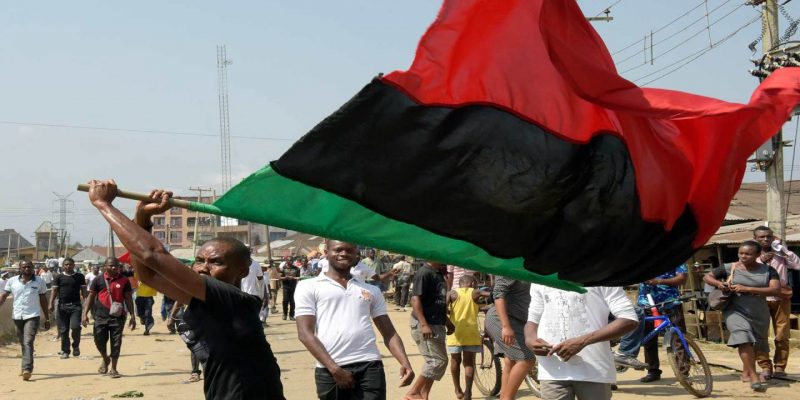
The Indigenous People of Biafra (IPOB) has declared solidarity with the Hausa people and other northern ethnic nationalities, insisting that their pursuit of political freedom and self-determination does not conflict with its campaign for an independent Biafran state.
The separatist group made its position known in a statement issued on Friday, October 16, 2026, by its Media and Publicity Secretary, Emma Powerful, on the directive of its Directorate of State.
IPOB said its declaration followed what it described as a solidarity statement by northern youths and the Northern Nigeria Rescue Movement (NNRM). It welcomed the reported development, arguing that communities across Nigeria could cooperate on shared concerns, including insecurity, poverty, political marginalisation and the need for accountable governance.
However, the extent of support for the reported declaration among northern youths and the wider Hausa population has not been independently established.
The group, whose leader Nnamdi Kanu remains in detention, maintained that the quest for Biafran independence should not be interpreted as hostility towards the Hausa people or other ethnic nationalities.
“Onyendu’s message is clear, consistent, and universal: the pursuit of freedom for one people must never be interpreted as hatred for another,” Powerful said.
IPOB argued that the political aspirations of the Biafran people and the Hausa nation could coexist, insisting that one community should not be expected to surrender its identity or political interests for another to achieve its objectives.
“The freedom of Biafrans and the emancipation of the Hausa nation are not mutually exclusive aspirations. No people should have to remain subordinate for another people to be free,” the statement added.
The organisation also rejected what it described as attempts to portray Kanu and the Biafran movement as enemies of northern communities. It alleged that ethnic and religious divisions had been used to prevent Nigerians from recognising shared concerns about governance and economic hardship.
READ ALSO:
- MURIC Warns EFCC Over Atiku Probe, Says Timing Could Heighten Political Tension
- ToluwaniSings’ Final Hours: Aide Reveals Desperate Search Across 8 Hospitals
- Real Madrid Demand Tebas’ Exit After Explosive Nazi Propaganda Row
According to IPOB, Kanu had repeatedly discussed the political aspirations of the Hausa people during broadcasts on Radio Biafra, including what the group described as the need for greater political agency, cultural confidence and historical dignity.
The organisation said ordinary Nigerians across different regions faced challenges that should not automatically be blamed on particular ethnic groups. It called for broader discussions about the political arrangements governing the country and whether they adequately reflect the interests of its diverse communities.
A central element of the statement was IPOB’s renewed demand for an internationally supervised referendum on self-determination. The group argued that ethnic nationalities should have a democratic opportunity to determine their political future, including consideration of regional autonomy, voluntary federations or other governance arrangements.
IPOB listed the Hausa, Kanuri, Tiv, Berom, Nupe, Igala, Jukun, Angas, Bachama, Idoma, Zuru, Ebira, Gbagyi, Tangale and Borgu communities among the groups whose aspirations it said deserved recognition.
The organisation maintained that the size of an ethnic group should not determine its political rights or its ability to influence decisions affecting its future.
“Population density does not dictate human dignity,” the statement said.
IPOB also cited the 2014 National Conference, convened under former President Goodluck Jonathan, arguing that its discussions on restructuring and regional autonomy could provide useful reference points for debates about Nigeria’s political future.
The group further invoked former President Olusegun Obasanjo’s criticism of governance structures inherited from colonial rule, saying African countries should develop political systems suited to their circumstances.
It urged other ethnic nationalities to participate in discussions about self-determination, political representation and constitutional restructuring, saying it was willing to work with communities pursuing what it described as freedom, peace and mutual respect.
“Freedom is the most precious gift Almighty God gave to humanity, and no human being or artificial colonial arrangement should deny any people that right,” the statement said.
The declaration comes amid continuing debate over Nigeria’s unity, separatist movements, regional autonomy and the country’s constitutional structure. IPOB has campaigned for the independence of Biafra, a proposed state associated principally with the South-East, while the Nigerian government has opposed the separatist campaign and proscribed the organisation.
Although IPOB has framed its latest statement as an appeal for solidarity among ethnic nationalities, its position does not establish that the Hausa people or other northern communities have collectively endorsed the group’s objectives. Further clarification from the NNRM and the northern groups reportedly involved would be needed to establish the precise terms of their declaration and whether any formal cooperation has been agreed.
For now, IPOB says its message is that the pursuit of Biafran independence should not be interpreted as opposition to the Hausa or other ethnic communities. It is calling for wider engagement on how Nigeria’s diverse nationalities can address their political concerns and determine their preferred future within or outside existing governance arrangements.
IPOB Reaches Out to Hausa, Northern Groups in Fresh Push for Biafra Referendum
News
₦200m Fake Alcohol Packaging Uncovered as NAFDAC Raids Aba Market
₦200m Fake Alcohol Packaging Uncovered as NAFDAC Raids Aba Market
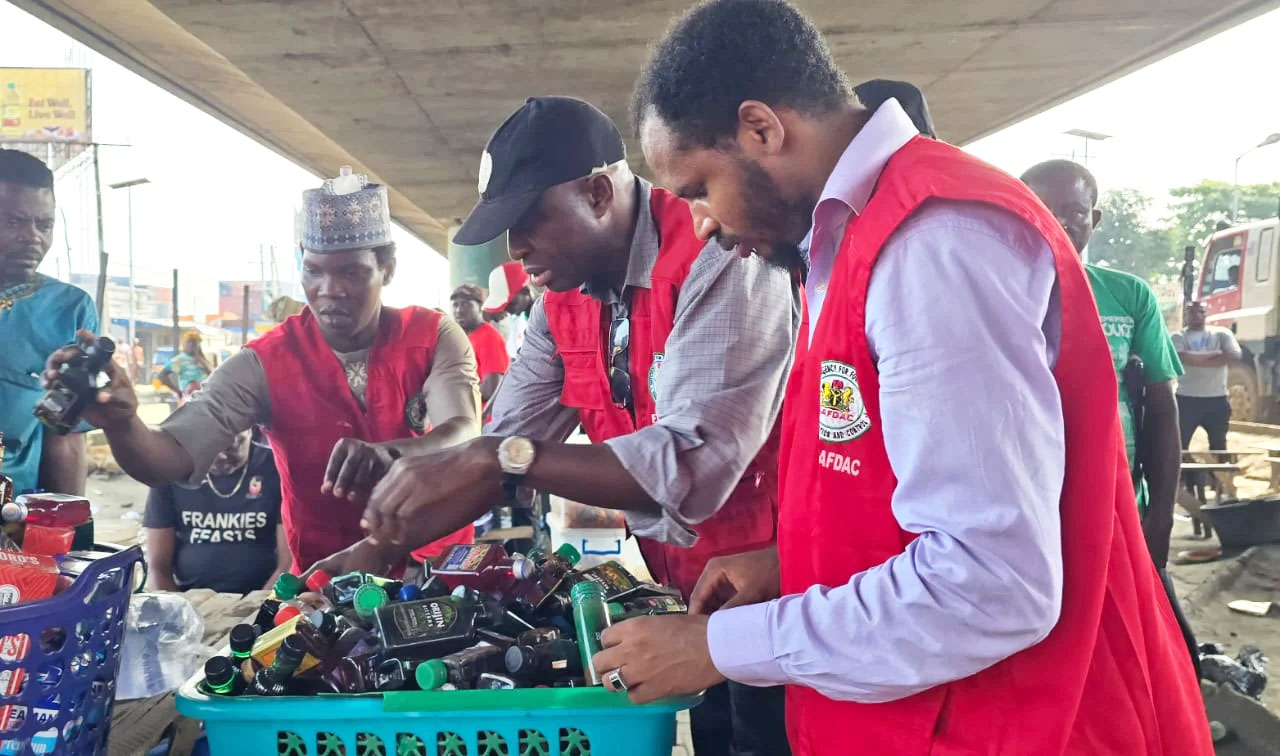
The National Agency for Food and Drug Administration and Control (NAFDAC) has uncovered counterfeit packaging materials bearing the names of popular alcoholic beverage brands, including Jameson and Glenfiddich, during a raid on five shops at Old Court Road Market in Aba, Abia State.
The agency said the seized materials were worth more than ₦200 million, raising concerns about the production and distribution of counterfeit packaging that could be used to make fake products appear genuine.
The operation targeted shops suspected of producing and supplying counterfeit packaging materials for alcoholic beverages and other consumer products. NAFDAC said its Investigation and Enforcement operatives carried out the raid following credible intelligence.
In a statement shared on Wednesday, October 14, the agency disclosed that the operation uncovered fake labels, corks, packs and outer packaging materials bearing the names of several well-known brands.
Apart from Jameson and Glenfiddich, the recovered materials reportedly carried the names of Four Cousins, Lord’s Dry Gin, Imperial Blue, Goya Oil, Chelsea, Squadron and Seaman’s Aromatic Schnapps.
The agency estimated the value of the counterfeit packaging materials at more than ₦200 million. However, its disclosure focused on packaging materials bearing the brands’ names and did not establish that finished bottles of all the affected brands were recovered during the operation.
NAFDAC said its enforcement team encountered threats and resistance from some traders during the raid, making it difficult to evacuate the seized materials. The owners of the five shops were reportedly absent when the operatives arrived.
READ ALSO:
- ₦130m Toyota Tundra Wrecked: Lagos Dealer Questions Police Over Suspect’s Release
- Fani-Kayode Counters Keyamo, Defends Atiku Over Nigeria Airways Collapse
- Former Senator Bello Mandiya Found Dead in Bathroom Three Days After Fall
To prevent interference with the materials left behind, the agency said the affected premises were placed on hold while steps were taken to secure them. NAFDAC subsequently invited the chairman of the market union, who reportedly pledged to ensure the security of the premises and assist in identifying and presenting the shop owners to the authorities.
The agency did not publicly identify the owners of the affected shops in its account of the operation. The identities of the individuals behind the suspected counterfeiting activity, the sources of the materials and their intended destinations remain unclear.
The seizure has renewed concerns about the risks posed by counterfeit packaging in Nigeria’s alcoholic beverage market. Fake labels, bottle closures and outer packaging can make it difficult for consumers to distinguish genuine products from counterfeit goods, particularly when imitation packaging closely resembles that of established brands.
Where such materials are used to package adulterated or unregulated drinks, consumers may have no reliable way of determining the contents or the conditions under which the products were manufactured. The consumption of counterfeit or adulterated alcoholic beverages can expose people to dangerous substances and serious health complications.
NAFDAC has previously conducted enforcement operations against suspected counterfeit beverage production in Aba. In December 2023, the agency announced a separate operation at Eziukwu Market, also known as Cemetery Market, targeting shops allegedly used to produce counterfeit and adulterated beverages and other consumer goods.
The agency reported that the earlier operation involved more than 240 shops and resulted in the destruction of over 1,500 cartons of fake and substandard products, with the confiscated and destroyed goods valued at approximately ₦750 million. That operation was separate from the latest raid at Old Court Road Market.
NAFDAC is responsible for regulating the manufacture, importation, exportation, distribution, advertisement and sale of regulated products in Nigeria, including food, medicines and beverages. Through its Investigation and Enforcement Directorate, the agency conducts operations against counterfeit, adulterated, substandard and unregistered products.
The latest seizure highlights the importance of enforcement efforts targeting not only fake finished products but also the packaging materials that can facilitate counterfeiting. Consumers are advised to purchase alcoholic beverages from reputable retailers and remain alert to suspicious packaging, broken seals, unusual product appearances and prices that are significantly lower than normal.
However, the presence of a familiar label alone does not establish that a drink is genuine. Effective regulatory oversight, supply-chain monitoring and product traceability remain important safeguards against counterfeit goods.
NAFDAC said steps were being taken to secure the affected premises and identify the shop owners. The full extent of the suspected counterfeiting operation, including whether the recovered materials had already been used to package fake products, has not been established in the information released by the agency.
₦200m Fake Alcohol Packaging Uncovered as NAFDAC Raids Aba Market
News
Osun Orders Weekly Sanitation, Directs Businesses to Clean Premises Every Thursday
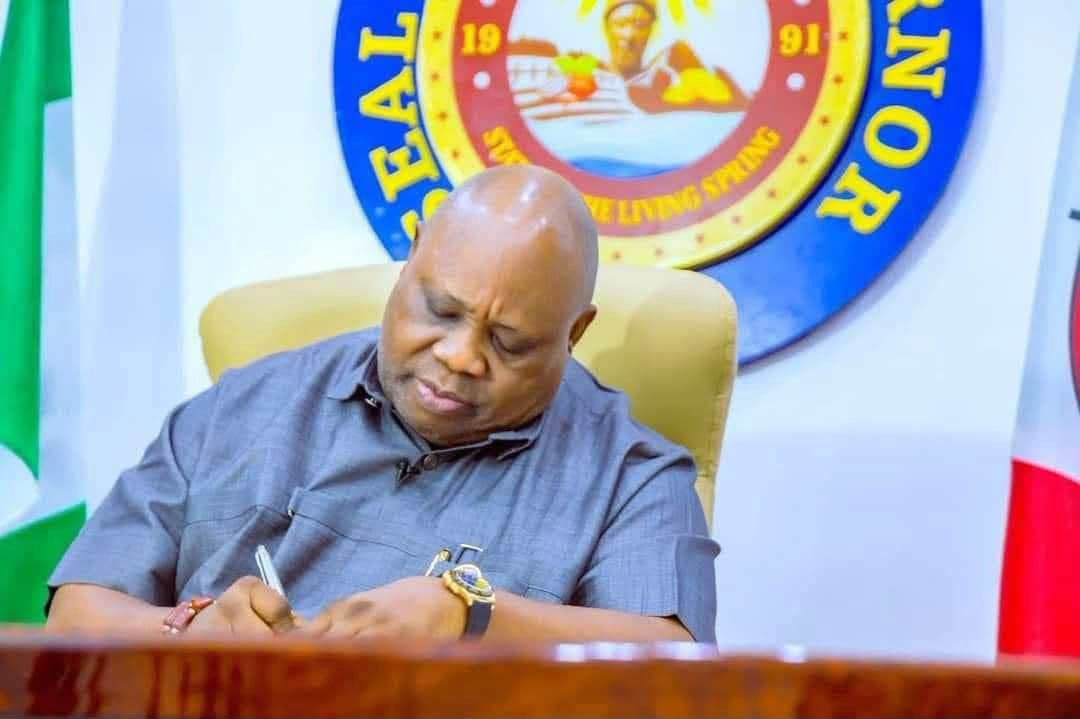
Osun Orders Weekly Sanitation, Directs Businesses to Clean Premises Every Thursday
OSOGBO — The Osun State Government has introduced a weekly environmental sanitation exercise, directing traders, shop owners, artisans and other business operators to clean their premises every Thursday between 8am and 10am.
The directive, which takes immediate effect, is aimed at curbing indiscriminate refuse disposal, enforcing environmental regulations and preventing disease outbreaks across the state.
The government announced the measure in a press release dated October 14, 2026, issued by the Office of the Head of Service, Office of the Governor, Osogbo.
According to the statement, the state government recently constituted an Environmental Sanitation Task Force to tackle the dumping of refuse and other forms of environmental infractions in unauthorised locations.
Under the new arrangement, Thursdays have been designated as Environmental Sanitation Day, during which markets, shops, malls, offices and other business premises are expected to be cleaned.
The government directed market operators, shop owners, artisans and owners of business premises to be physically present during the exercise to ensure that their surroundings are properly cleaned and the directive is fully implemented.
The two-hour exercise is expected to promote environmental responsibility among residents and business operators while addressing poor waste disposal practices that could pose health risks to the public.
The government also clarified the role of law enforcement agents who would be present during the sanitation exercise, saying their deployment was intended to support the clean-up effort rather than arrest offenders.
It stressed that the presence of enforcement personnel was meant to complement the efforts of market operators, shop owners and other business stakeholders in maintaining a clean environment.
The government urged residents and business operators to cooperate with the Environmental Sanitation Task Force to ensure the success of the initiative.
The measure forms part of the state’s efforts to improve public hygiene, maintain cleaner communities and reduce the risk of diseases associated with poor environmental sanitation.
Business owners and other affected stakeholders are expected to comply with the directive every Thursday between 8am and 10am, beginning immediately.
Osun Orders Weekly Sanitation, Directs Businesses to Clean Premises Every Thursday
-

 metro9 hours ago
₦130m Toyota Tundra Wrecked: Lagos Dealer Questions Police Over Suspect’s Release
-

 metro2 days ago
Money Rituals: Four Arrested in Kwara Over Suspected Human Parts
-

 News2 days ago
2027 Elections: INEC Reveals Why Pantami, Adebutu, Others Were Excluded
-

 metro2 days ago
Osogbo Cultism Crackdown: Six Suspects Arrested as Police Recover Drugs, Charms
-

 Politics3 days ago
2027: Tompolo Unveils 57 Tinubu Campaign Vehicles, Warns Lagosians Against 2023 Repeat
-

 Politics2 days ago
2027: Adeleke’s Camp Promises 1.5 Million Votes for Tinubu in Osun
-

 metro1 day ago
Borno Woman Jailed Two Years for Sexual Exploitation of 16-Year-Old Girl
-

 News3 days ago
Shell Exits Nigeria’s Gas Distribution Business, Sells Stake to Vaaris Energy