

International
Israeli strike in Gaza humanitarian zone kills 40

Israeli strike in Gaza humanitarian zone kills 40
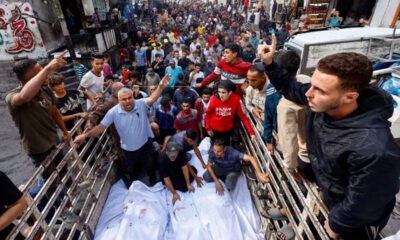
CAIRO: Gaza’s civil defense agency said Tuesday that an Israeli strike on a humanitarian zone in the south of the Palestinian territory killed 40 people and wounded 60 others, with the Israeli army saying it had targeted a Hamas command center in the area.
The strike hit Al-Mawasi — in Gaza’s main southern city of Khan Yunis — which was designated a safe zone by the Israeli military early in the war, with tens of thousands of displaced Palestinians seeking refuge there.
However, Israel’s military has occasionally carried out operations in and around the area, including a strike in July that it said killed Hamas military chief Mohammed Deif, and which Gaza health authorities said killed more than 90 people.
Gaza civil defense official Mohammed Al-Mughair told AFP early Tuesday that “40 martyrs and 60 injured were recovered and transferred” to nearby hospitals following the overnight strike.
“Our crews are still working to recover 15 missing people as a result of targeting the tents of the displaced in Mawasi, Khan Yunis,” Mughair added.
In a separate statement, civil defense spokesman Mahmoud Basal said that people sheltering in the camp had not been warned of the strike, adding a shortage of tools and equipment was hindering rescue operations.
“More than 20 to 40 tents were completely damaged,” he said, adding the strike left behind “three deep craters.”
“There are entire families who disappeared under the sand in the Mawasi Khan Yunis massacre.”
READ ALSO:
- LP crisis: Aisha Yesufu replies Abure, calls him shameless liar
- Tension in Borno as inmates escape after severe flooding
- One killed in Ukraine drone attacks on Russia
The Israeli military said in a statement early Tuesday that its aircraft had “struck significant Hamas terrorists who were operating within a command and control center embedded inside the Humanitarian Area in Khan Yunis.”
“The terrorist organizations in the Gaza Strip continue to systematically abuse civilian and humanitarian infrastructure, including the designated Humanitarian Area, to carry out terrorist activity against the State of Israel and IDF troops,” it added.
Hamas said in a statement on Tuesday that claims its fighters were present at the scene of the strike were “a blatant lie.”
Over the course of the war, Israel has repeatedly accused Hamas of using civilians as human shields, an accusation the group denies.
Hamas’s October 7 attack on Israel that sparked the war in Gaza resulted in the deaths of 1,205 people, mostly civilians, including some hostages killed in captivity, official Israeli figures show.
Militants seized 251 hostages during the attack, 97 of whom are still held in Gaza, including 33 the Israeli military says are dead.
Israel’s retaliatory offensive in the Gaza Strip has so far killed at least 40,988 people, according to the health ministry in the Hamas-run territory.
The UN human rights office says most of the dead are women and children.
The vast majority of Gaza’s 2.4 million people have been displaced at least once during nearly a year of war, according to the United Nations.
From 1,200 inhabitants per square kilometer before the war, the Al-Mawasi humanitarian zone now houses “between 30,000 and 34,000 people per square kilometer,” and its protected area shrank from 50 square kilometers to 41, the UN has calculated.
The United States, Qatar and Egypt have been mediating in efforts to forge a ceasefire and hostage-prisoner exchange deal between Israel and Hamas, but talks remain stalled.
Hamas is demanding a complete Israeli withdrawal from Gaza as part of any deal, but Israel insists troops must remain along the Gaza-Egypt border.
Israeli strike in Gaza humanitarian zone kills 40
ARAB NEWS





International
More Than 1,000 Migrants Rescued Off West Africa in One Week
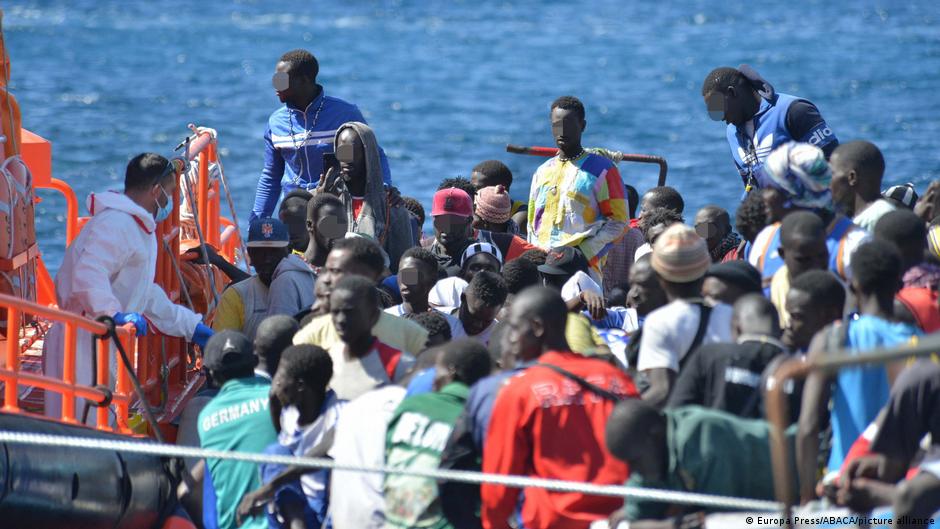
More than 1,000 migrants attempting to reach Spain’s Canary Islands have been rescued from the Atlantic Ocean after seven boats reportedly broke down during the dangerous journey from West Africa.
International
UN Adopts New World Map Showing Africa Bigger, US Smaller in Landmark 2026 Vote
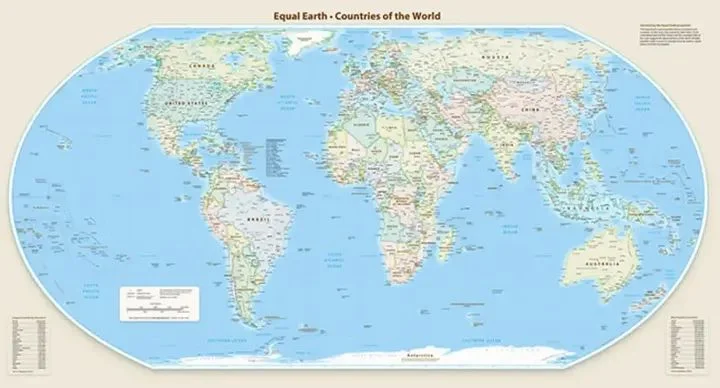
UN Adopts New World Map Showing Africa Bigger, US Smaller in Landmark 2026 Vote
The United Nations General Assembly has approved a historic resolution encouraging countries to adopt a new world map that more accurately reflects the true size of continents — a move that makes Africa appear significantly larger while shrinking North America and Europe. The United States was the only nation to vote against it.
On September 4, 2026, the UN General Assembly passed the resolution with 164 votes in favour, 6 abstentions, and just one opposed — the United States. The six countries that abstained were Ukraine, Moldova, Georgia, Serbia, Lithuania, and Estonia. The resolution, spearheaded by the West African nation of Togo and backed by the African Union, encourages governments, schools, and technology companies to phase out the centuries-old Mercator projection in favour of the Equal Earth projection developed in 2018. Togo’s Foreign Minister Robert Dussey, who presented the resolution, declared: “A fair world begins with a fair map.”
The resolution seeks to correct a distortion that has shaped global perceptions for over 450 years. The Mercator projection was created in 1569 by Flemish cartographer Gerardus Mercator specifically for maritime navigation. While it preserves accurate angles and directions, it severely distorts land area proportions: regions near the poles appear much larger than they actually are, while equatorial regions appear smaller. The most glaring example of this distortion is the comparison between Africa and Greenland. On a standard Mercator map, the two landmasses appear roughly the same size. In reality, Africa is 14 times larger than Greenland — Africa covers about 30.3 million square kilometres, while Greenland covers just 2.1 million. Advocacy groups point out that Africa could contain the United States, China, India, Japan, Mexico, and most of Europe within its area and still have space left.
READ ALSO:
- Kneeling to Propose Is Why Western Marriages Fail — Pete Edochie Sparks Fresh Debate
- US Strikes Three Iranian Oil Tankers in Retaliation for Missile Attack on Navy Ships
- Ondo Tragedy: 3 Siblings, Including Twins, Found Dead Near River on Family Farm
The Equal Earth projection, developed by cartographers Bojan Savric, Bernhard Jenny, and Tom Patterson in 2018, preserves the relative surface areas of continents while maintaining recognisable shapes. Under this new projection, Africa appears in its true massive scale — dramatically larger than in the familiar Mercator map. North America and Europe, by contrast, appear noticeably smaller. “Equal Earth preserves the relative surface areas of continents and, as much as possible, shows their shapes as they appear on a globe,” cartographer Bojan Savric told AFP in 2025. “Correcting the map means restoring to continents in the minds of people the reality of the true dimensions,” said Togo’s Foreign Minister Robert Dussey. He stressed that the campaign is “not directed against any nation, region, or civilization” but serves a “universal goal: to promote knowledge based on scientific rigour, respect for truth, and the equal dignity of peoples.”
American representatives dismissed the resolution as a distraction from pressing global issues. Speaking before the vote, US representative Yaryna Ferencevych argued that “such resolutions and the ideological agenda they promote hinder the work of this institution and lead to a decline in its credibility.” She urged member states to reject the text and focus instead on “genuine issues of international peace, prosperity, or good relations between nations.” Despite the US objection, the resolution passed overwhelmingly. It carries no legal force and does not mandate the replacement of existing maps — rather, it encourages institutions to educate the public on the limitations of flat maps and to adopt more accurate representations. The resolution “in no way challenges the use of the Mercator projection for maritime and aerial navigation, for which it remains fully suited,” the Togolese ministry said in a statement.
African leaders hailed the vote as a significant victory for continental representation. The African Union Mission to the UN welcomed the resolution as a “significant step towards ensuring that the map of the world reflects Africa’s true scale and place in the world.” Togo’s Dussey announced that Togo would become the first country to replace its geography textbooks with the new maps by the end of 2026, and the nation plans to engage with African Union members and other supporters to promote adoption globally. France, a co-sponsor of the resolution, expressed strong support. Foreign Minister Jean-Noël Barrot said in a speech at the Sorbonne: “Changing the map obviously won’t change the world… but correcting a distorted representation is itself an act of truth.” The advocacy group “Unfiltered Africa,” which promotes the Equal Earth map, welcomed the UN decision, stating: “We hope to see accurate maps in schools, textbooks, newsrooms, businesses, and the digital platforms used by billions of people every day.”
UN Adopts New World Map Showing Africa Bigger, US Smaller in Landmark 2026 Vote
International
US Strikes Three Iranian Oil Tankers in Retaliation for Missile Attack on Navy Ships
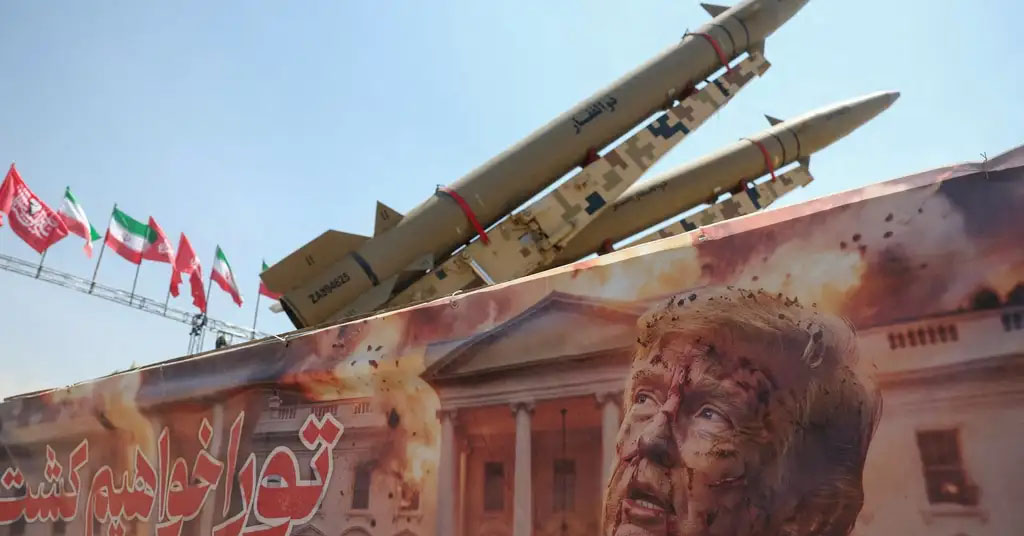
US Strikes Three Iranian Oil Tankers in Retaliation for Missile Attack on Navy Ships
Tensions in the Gulf of Oman escalated dramatically on September 5, 2026, as the United States military struck and disabled three Iranian crude oil carriers, following missile and drone attacks by Iran’s Islamic Revolutionary Guard Corps (IRGC) on U.S. Navy warships patrolling regional waters.
The confrontation began when the Islamic Revolutionary Guard Corps (IRGC) launched ballistic missiles toward two U.S. Navy warships operating in the region. According to U.S. Central Command (CENTCOM), an American aircraft carrier and a guided-missile destroyer successfully evaded multiple Iranian attacks, with no American personnel harmed. The IRGC claimed, however, that its missiles struck and damaged both vessels, forcing them to withdraw from the area.
In response to what it described as “unprovoked” Iranian attacks, CENTCOM forces permanently disabled two Iranian crude oil carriers—the M/T Downy off the coast of Kharg Island and the M/T Stark 1 near Jask. American forces also completely destroyed the unladen crude oil carrier M/T Kylo, also known as the “Noxen,” in the Gulf of Oman, striking it at multiple critical locations after the crew was directed to abandon ship. The U.S. military later released video footage showing the vessel sinking into the Gulf of Oman.
READ ALSO:
- Ondo Tragedy: 3 Siblings, Including Twins, Found Dead Near River on Family Farm
- Three killed, 20 injured in Ife-Ilesa Expressway crash
- Kano Political Earthquake: Kwankwaso Loyalists Dump NDC, Defect to APC in Major 2027 Blow
According to CENTCOM, the three tankers were part of a multibillion-dollar Iranian “shadow network” allegedly used to finance the IRGC and its regional proxy groups. The command noted that Iran has no means to defend these vessels. CENTCOM Commander Adm. Brad Cooper issued a stark warning to the IRGC, stating: “Let the message to the IRGC be clear: If you shoot at two of our ships, we will impose an even higher economic cost —taking out three of yours. We will not hesitate to defend American forces, and if necessary, destroy Iran’s limited and exposed oil fleet.”
U.S. Secretary of War Pete Hegseth also issued a direct warning to Tehran via social media: “It’s simple: if Iran shoots at US ships, we will destroy (and sink) their oil tankers. All they have to do is not shoot at @USNavy. Iran’s oil tanker fleet is defenceless — Iran has no navy or air force. Our planes, ships & subs can strike them all.” The strikes marked the first reported U.S. attacks on Iranian oil tankers in the Persian Gulf since the beginning of the conflict, adding a new dimension to the confrontation and raising concerns over the security of Iran’s maritime energy infrastructure.
Iran’s Foreign Ministry strongly condemned the U.S. attacks, describing them as “illegal and irresponsible” and a continuation of U.S. military aggression, naval blockade, and economic warfare against Iran. The ministry stated that the actions constituted a violation of Article 2(4) of the United Nations Charter, a war crime, and a threat to international peace and security, adding that the consequences would rest with the United States and its allies. A senior Iranian military official, Brigadier General Habibollah Sayyari, said Iran had withstood attacks despite facing an adversary with extensive technological and military capabilities, describing the conflict as a test of will and endurance. The IRGC warned that continued U.S. military action would draw “heavier” responses from Iran’s armed forces.
Following the attacks, the U.S. Embassy in Bahrain issued a security alert urging American citizens in Bahrain and across the region to exercise heightened vigilance and prepare for possible flight cancellations, airspace closures, and other travel disruptions amid heightened regional tensions.
The latest clashes have cast new doubt on the already fragile ceasefire between the U.S. and Iran, which had been announced on April 8, 2026, through Pakistani mediation. The U.S. has maintained its naval blockade of Iranian ports since April 13, with CENTCOM stating that more than 70 oil tankers are currently being prevented from entering or leaving Iranian ports, with the capacity to transport over 166 million barrels of Iranian oil worth an estimated $13 billion. As both sides accuse each other of violations and vow further retaliation, the risk of a wider military escalation remains high.
US Strikes Three Iranian Oil Tankers in Retaliation for Missile Attack on Navy Ships
-
 metro3 days ago
APC rally: Suspected thugs attack journalists, smash Radio Nigeria vehicle in Kano
-

 Education2 days ago
FG Opens N2.5bn Grant Window For 50 Student Innovators Under “Next Moonshot Initiative”
-
 Politics2 days ago
Peter Obi, Others Challenging Tinubu Cannot Transform Nigeria — Datti Baba-Ahmed
-
 Politics3 days ago
Kano Political Earthquake: Kwankwaso Loyalists Dump NDC, Defect to APC in Major 2027 Blow
-

 Entertainment3 days ago
Wizkid Mocks Davido’s Family Wealth: “Rich and Empty” — Afrobeats Feud Escalates
-

 Auto2 days ago
Kaduna to Lead Govt Patronage of Local Vehicles as Sani Unveils Peugeot 5008
-

 metro2 days ago
Socialite Igho ‘Tiny’ Ubiribo Dies After Penis Enlargement Surgery
-

 Politics2 days ago
Demystifying the Political Monolith: Wike’s ‘See Finish’ Doctrine and Nigeria’s New Political Calculus