

International
Burning oil tanker towed from Yemen after Houthi attacks
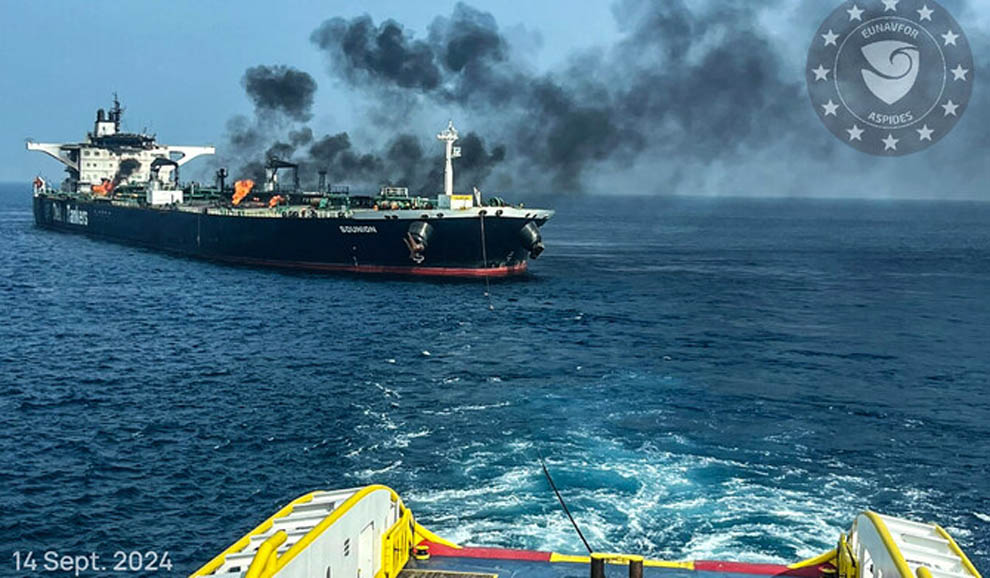
Burning oil tanker towed from Yemen after Houthi attacks
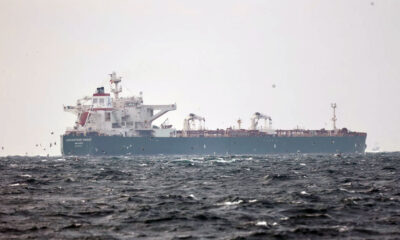
DUBAI, United Arab Emirates: Salvagers successfully towed a Greek-flagged oil tanker ablaze for weeks after attacks by Yemen’s Houthis to a safe area without any oil spill, a European Union naval mission said Monday.
The Sounion reached waters away from Yemen as the Houthis meanwhile claimed that they shot down another American-made MQ-9 Reaper drone, with video circulating online showing what appeared to be a surface-to-air missile strike and flaming wreckage strewn across the ground.
The two events show the challenges still looming for the world as it tries to mitigate a monthslong campaign by the militia over the Israel-Hamas war raging in the Gaza Strip. While the militia allowed the Sounion to be moved, they continue to threaten ships moving through the Red Sea, a waterway that once saw $1 trillion in goods move through it a year.
The EU naval mission, known as Operation Aspides, issued a statement via the social platform X announcing the ship had been moved.
The Sounion “has been successfully towed to a safe area without any oil spill,” the EU mission said. “While private stakeholders complete the salvage operation, Aspides will continue to monitor the situation.”
The Houthis had no immediate comment and it wasn’t clear where the vessel was, though it likely was taken north away from Yemen. Salvagers still need to offload some 1 million barrels of crude oil aboard the Sounion, which officials feared could leak into the Red Sea, killing marine life and damaging corals in the waterway.
Meanwhile, the US military said it was aware of the Houthis’ claimed downing of a drone over the country’s southwestern Dhamar province, without elaborating.
READ ALSO:
- Why I’ll work against Obi as running mate – Aisha Yesufu
- Putin orders third increase in Russian troops after Ukraine invasion
- We no longer recognise Abure as Labour Party chairman – INEC
The Houthis have exaggerated claims in the past in their ongoing campaign targeting shipping in the Red Sea over the Israel-Hamas war. However, the online video bolstered the claim, particularly after two recent claims by the Houthis included no evidence.
Other videos showed armed Houthi members gathered around the flaming wreckage, a propeller similar to those used by the armed drone visible in the flames. One attempted to pick up a piece of the metal before dropping it due to the heat.
Brig. Gen. Yahya Saree, a Houthi military spokesperson, identified the drone as an MQ-9, without elaborating on how he came to the determination. He said it was the third downed by the group in a week, though the other two claims did not include similar video or other evidence. The US military similarly has not acknowledged losing any aircraft.
Saree said the Houthis used a locally produced missile. However, Iran has armed the militia with a surface-to-air missile known as the 358 for years. Iran denies arming the Houthis, though Tehran-manufactured weaponry has been found on the battlefield and in seaborne shipments heading to Yemen despite a United Nations arms embargo.
Reapers, which cost around $30 million apiece, can fly at altitudes up to 50,000 feet (15,240 meters) and have an endurance of up to 24 hours before needing to land. The aircraft have been flown by both the US military and the CIA over Yemen for years.
The Houthis have targeted more than 80 merchant vessels with missiles and drones since the war in Gaza started in October. They seized one vessel and sank two in the campaign that has also killed four sailors. Other missiles and drones have either been intercepted by a US-led coalition in the Red Sea or failed to reach their targets, which have included Western military vessels as well.
The Houthis maintain that they target ships linked to Israel, the US or the UK to force an end to Israel’s campaign against Hamas in Gaza. However, many of the ships attacked have little or no connection to the conflict, including some bound for Iran.
The Houthis also published footage Monday of what they have claimed was a hypersonic missile that they used to attack Israel on Sunday. Parts of the missile landed in an open area in central Israel and triggered air raid sirens at its international airport, but injured no one. Israeli Prime Minister Benjamin Netanyahu has threatened to retaliate over the attack the Houthis launched with the Palestine 2 missile.
Burning oil tanker towed from Yemen after Houthi attacks
ARAB NEWS






International
Ninth Body Discovered in South Africa: Nigeria Issues Urgent Safety Alert to Nationals

Ninth Body Discovered in South Africa: Nigeria Issues Urgent Safety Alert to Nationals
Police cordon off Kempton Park and post a $56,000 combined bounty as the Nigerian Consulate warns citizens to exercise heightened vigilance.
South African police recovered the body of a ninth woman on Thursday along a roadside in Dawn Park, intensifying public alarm and prompting the Nigerian Consulate-General in Johannesburg to issue an emergency safety advisory to its citizens.
In response to the discoveries, law enforcement teams placed Kempton Park in the Ekurhuleni municipality under lockdown and established roadblocks to inspect vehicles and restrict suspect movement.
Deputy Police Chief Tebello Mosikili declared during a press conference that authorities will deploy specialized investigative units to track down those responsible.
To accelerate breakthroughs, police offered a 400,000 rand ($25,000) reward for credible tips, while South Africa’s Democratic Alliance provided an additional $31,000, establishing a combined bounty of $56,000.
Detectives are now evaluating forensic evidence to determine whether one perpetrator committed the murders or whether independent offenders copied earlier attacks.
Meanwhile, the Nigerian Consulate-General urged Nigerian residents, especially women and young people who commute, exercise, or study around Ekurhuleni, to take deliberate personal precautions.
The mission advised community members to travel in groups, stay clear of isolated trails, and share real-time travel details with trusted family members.
Furthermore, diplomatic officials emphasized that safety precautions must not shift the burden of crime prevention onto women, calling on South African authorities to ensure thorough investigations and justice for every victim.
Ninth Body Discovered in South Africa: Nigeria Issues Urgent Safety Alert to Nationals
Health
Fiji Declares National HIV Emergency as Diagnoses Surge Sixteenfold
Fiji Declares National HIV Emergency as Diagnoses Surge Sixteenfold
Authorities launch a multi-agency public health campaign to expand free testing, treatment, and harm-reduction services
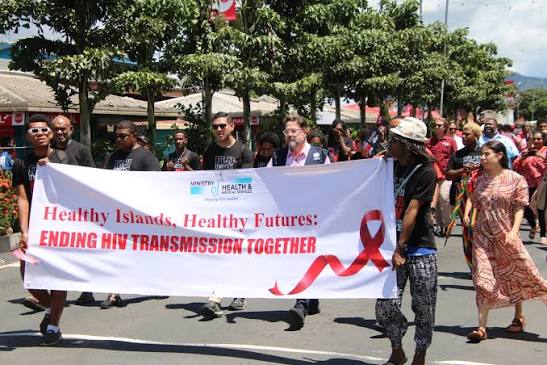
Fiji has announced a nationwide health response to address a significant rise in HIV cases and ensure that all residents can access essential medical care.
On Wednesday, Health Minister Dr. Atonio Lalabalavu shared the emergency declaration, explaining that national agencies are joining forces to provide rapid medical support, expand testing, and protect community well-being across the islands.
Official reports indicate that about one in every 60 adults in Fiji currently lives with HIV, following an increase in new infections over recent years. Health specialists explain that the virus spreads primarily through intimate sexual contact and shared needles among individuals using illicit substances.
Additionally, routine screenings revealed that two out of every 100 expecting mothers carry the virus, highlighting an urgent need for early maternal healthcare to protect newborns from infection.
To safeguard public health, authorities are delivering free daily treatments, distributing protective preventive medications, and setting up clean needle programs to stop infections before they start.
Furthermore, global partners, including Australia, New Zealand, India, and United Nations health bodies are providing financial resources and medical supplies to back the local effort.
By encouraging open community conversations and delivering accessible healthcare without judgment, health workers aim to ensure that everyone receives the care and dignity they deserve.
Fiji Declares National HIV Emergency as Diagnoses Surge Sixteenfold
International
Kim Yo-jong: Only ‘Idiots’ Think North Korea Will Give Up Nuclear Weapons

-

 International2 days ago
Islamic Council Condemns Attempted Attack on Holy City of Mecca
-

 metro3 days ago
Lagos Power Outage: Ikeja Electric Blames TCN as Businesses, Homes Groan
-

 News2 days ago
Keep Politics Out of My Office — Ogbomoso Grand Chief Imam Warns Politicians, Bloggers
-

 metro2 days ago
Niger Mosque Abductions: Terrorists Execute 30 of 500 Captive Muslim Worshippers
-

 Entertainment2 days ago
BREAKING: Olu Jacobs Dies at 84, Atiku Mourns Cultural Icon
-

 International3 days ago
US Court Blocks Trump Visa Rule Limiting Stay of Foreign Students, Journalists
-
 metro3 days ago
Fatal NURTW Leadership Clash in Osun Leaves Two Dead; State Orders Park Shut Down
-
 Business1 day ago
Fuel Prices Climb to ₦1,500 per Litre Across Nigeria, Sparking Calls for Urgent Action