

metro
FG will tackle oil theft with drones, satellite surveillance deployment – Lokpobiri

FG will tackle oil theft with drones, satellite surveillance deployment – Lokpobiri
The Minister of State for Petroleum Resources (Oil), Senator Heineken Lokpobiri, yesterday said the federal government would deploy new technologies like drones and satellite surveillance to halt massive oil theft in the Niger Delta.
Lokpobiri also called for greater commitment from industry players to Nigeria’s ambitious plan to increase crude oil production by over one million barrels per day within the next 24 months, saying the federal government was ready to host the headquarters of the $5 billion Africa Energy Bank (AEB), following the country’s successful bid in July 2024.
Addressing a gathering of the Oil Producers Trade Section (OPTS), a group of oil firms operating in Nigeria, at the Cross Industry Group (CIG) meeting in Istanbul, Turkey, at the weekend, Lokpobiri also restated that oil field bid winners must explore or relinquish them.
The minister’s spokesperson, Nneamaka Okafor, said in a statement that Lokpobiri’s remarks were part of a strategic plan to navigate the challenges and opportunities in Nigeria’s petroleum industry presented to the producers.
Underscoring the sector’s central role in Nigeria’s economy, which the minister said provides around 85 per cent of government revenue as well as serves as a vital source of foreign exchange, the minister said there was the need for the oil sector to remain resilient.
He acknowledged the persistent security challenges in the Niger Delta but reported ongoing efforts to protect Nigeria’s oil infrastructure through enhanced security measures.
Aside from engaging communities and encouraging partnerships to foster local ownership of critical assets, Lokpobiri stated that other efforts include increased military support, particularly from the Nigerian Navy and the Joint Task Force (JTF).
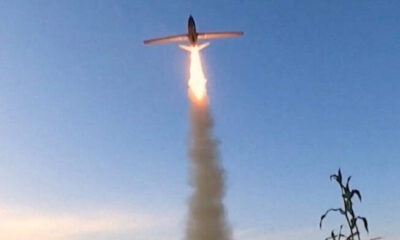
“The government has also implemented technology-driven solutions, including drone and satellite surveillance to enhance the security framework and detect potential threats to the industry,” the minister said.
The minister outlined Nigeria’s dual approach to energy transition to ensure the future of its petroleum industry by focusing on maximising crude oil production and adapting to a cleaner energy transition.
“In the short-term, our focus remains on increasing revenue from crude oil production,” Lokpobiri stated.
He stressed that the government recognised the urgency of cost reduction, highlighting the government’s measures aimed at streamlining operations, particularly upstream activities, to remain competitive in the global market.
The minister said: “The world is moving toward cleaner energy, and Nigeria must be part of that transition. The government has prioritised natural gas as a cleaner alternative while actively exploring renewable energy options to diversify Nigeria’s energy mix.”
READ ALSO:
- Guinea military leader promotes self to Army General
- Tragedy in Ebonyi, man, two sons killed in farm
- Bobrisky denies N15m bribery audio link, released by EFCC
He listed part of the bouquet of reforms and incentives to revitalise Nigeria’s oil and gas sector as the Value Added Tax (VAT) modification order 2024 and the tax incentives order for deep offshore oil and gas production.
Lokpobiri told the gathering that the Nigerian government was focused on reducing contracting costs and timelines and has therefore mandated that the procurement cycle be streamlined to six months.
In addition, he highlighted the government’s commitment to the Nigerian Oil and Gas Industry Content Development (NOGICD) Act, which promotes local content.
The minister emphasised that the government’s recent initiative to launch bid rounds for 31 oil and gas blocks will be a cornerstone of Nigeria’s strategic development.
“Each block has been meticulously selected for its potential to boost reserves and stimulate economic growth. In line with international best practices, barriers to entry have been reduced through signature bonuses to attract a wider range of investors, with strict enforcement of Nigeria’s ‘drill or drop’ policy,” he added.
Lokpobiri called for greater commitment from industry players to support Nigeria’s ambitious plan to increase oil production by over 1 million barrels per day within the next 24 months.
“We cannot afford to hold valuable fields in perpetuity. It’s either you put them to work or relinquish them. The era of renewing licenses without development is over,” he reiterated.
Meanwhile, the federal government has confirmed its readiness to host the headquarters of the $5 billion Africa Energy Bank (AEB), following the country’s successful bid in July 2024.
Preparations are underway to ensure a seamless operational launch of the Bank in the first quarter of 2025, the minister said in a separate statement.
Lokpobiri spoke at the 46th Ordinary Session of the Ministerial Council of the African Petroleum Producers’ Organisation (APPO) held in Yaoundé, Cameroon.
While speaking to the ministers of the 18 APPO member-states, Lokpobiri expressed Nigeria’s enthusiasm for the project, stating: “We are prepared to host the AEB, and our dedication to enhancing funding for Africa’s energy sector remains unwavering.”
One of the bank’s missions is to bridge financing gaps within Africa’s oil and gas industry, facilitating advancements in energy infrastructure across the continent.
Lokpobiri emphasised that the federal government under President Bola Tinubu’s leadership, has taken significant steps to lay the groundwork for the bank’s strategic objectives.
“Our commitment is underscored by Nigeria’s contribution of $69.1 million in equity funding to the bank, which demonstrates our leadership role in supporting critical energy initiatives on the continent,” he noted.
Beyond financial contributions, Nigeria, he said, has also formally signed and ratified the AEB establishment agreement and charter, a development that APPO has praised as a significant leap toward establishing the bank.
With the treaty now in effect, the legal and operational framework is set, paving the way for the AEB’s launch and enabling it to advance its objectives of enhancing energy security on the continent, the minister added.
“I urge all member countries to expedite their subscription and payment of their allocated shares to the AEB. Together, we can achieve remarkable advancements in our energy sectors and establish ourselves as a continental energy hub,” the minister added.
FG will tackle oil theft with drones, satellite surveillance deployment – Lokpobiri







metro
Police Detain ASP After Bullet Kills Girl, Injures Another in Lagos

The Lagos State Police Command has detained an Assistant Superintendent of Police (ASP), Omotayo Olajide, after a bullet discharged from his firearm during a police operation in Ajegunle killed a young girl and injured another.
The incident occurred on Thursday, November 5, 2026, between 9:30 pm and 10 pm in the Nosamu area of Ajegunle, Lagos State, during a police response to a violent clash between two rival groups.
The police identified the deceased girl as Omole Taiwo, while the second victim is receiving medical treatment and is reportedly in stable condition.
According to the command, preliminary investigations showed that officers were deployed following a distress call over a clash between rival groups known as the Nosamu Boys and Alayabiagba Boys.
The groups were reportedly engaged in a violent confrontation over toll collection and allegedly armed with cutlasses and other dangerous weapons.
During the operation, ASP Olajide discharged his firearm, and the bullet struck the two girls.
READ ALSO:
- ‘Stop Blaming Us’, APC Tells Atiku, ADC Over Court Judgment
- Atiku to Tinubu: You Cannot Use Courts to Escape Nigerians’ Verdict
- University Funding Crisis: States Beg FG to Take Over Cash-Strapped Institutions
Both victims were immediately rushed to Ajeromi General Hospital for medical attention. However, Taiwo was later transferred to the Lagos State University Teaching Hospital (LASUTH), Ikeja, where she eventually died.
The police said the officer had been disarmed and detained, while the case had been transferred to the State Criminal Investigation Department (SCID) for further investigation.
In a statement issued on Saturday, the command’s spokesperson, SP Abimbola Adebisi, said the investigation would establish the circumstances surrounding the shooting and determine the appropriate legal and disciplinary action.
The Commissioner of Police, Lagos State Command, Tijani Fatai, also visited the family of the deceased to express his condolences.
Fatai assured the bereaved family that the investigation would be thorough, adding that no police officer found culpable would be shielded.
The police have yet to establish whether the officer deliberately fired at the rival groups, whether the girls were caught in the line of fire or whether the firearm was discharged unintentionally.
The incident has renewed concerns over civilian safety during police operations and the need for accountability whenever security personnel use firearms in public places.
Police Detain ASP After Bullet Kills Girl, Injures Another in Lagos
metro
How Bandits Killed Two, Abducted 18 in Kaduna Village Raid

How Bandits Killed Two, Abducted 18 in Kaduna Village Raid
Two residents have been killed while at least 18 others, including women and children, were abducted after armed bandits attacked Akwando community in Kuturmi, Kachia Local Government Area of Kaduna State.
The attack reportedly occurred around midnight on Wednesday, November 4, 2026, when the gunmen stormed the community and launched an assault on residents in their homes.
A resident, who spoke on condition of anonymity, said the attackers killed two people before taking several villagers away to an unknown destination.
A security source familiar with the incident also confirmed the attack, telling Daily Trust that 18 residents were abducted while two people were killed.
“Yes, 18 villagers were abducted but two people were killed,” the source reportedly said.
The attack has heightened concerns over the worsening security situation in communities across the Kuturmi area, where residents have repeatedly suffered bandit attacks, killings and mass abductions.
The attackers had reportedly not contacted the families of the abducted residents or made any ransom demands as of the time the incident was reported.
READ ALSO:
- Nasarawa Murder: Two Arrested as Police Recover Burnt Body from Dry Well
- Kunle Afod Breaks Silence on Marriage Crisis, Cheating Allegations, Sex Toys
- NDLEA Arraigns Two Mexicans, Four Nigerians Over Secret Meth Lab in Oyo Forest
The deceased were identified as Irimiya Galadima, 41, and Benjamin Danlami, 32, by the Kuturmi Unity Development Association (KUDA).
However, the association gave a higher figure of 20 abducted residents, releasing their names in a statement jointly signed by its President, Dr Joseph Ariko, and Publicity Secretary, Manasseh Samuel Akwando.
Those listed include Usman Galadima, La’a’zarus Genesis, Madalin Markus, Happy Stephen, Lovet Ishaya, Afiniki Irimeya, Amina Ahmadu, Miracle Genesis, Hellen Irimeya and Musa Genesis.
Others are Janet Irimeya, Gloria Markus, Zila Stephen, Alis Ahmadu, Haske Ahmadu, Great Isiac, Hanatu Irimeya, Desmon Ishaya, Siam Shagari and Nansy Genesis.
The association expressed concern over repeated attacks on communities in Kuturmi land, recalling that an Easter Sunday attack on Ariko community reportedly killed five people at the scene, while another 17 victims subsequently died in captivity.
It also cited an attack on Awon community, where two people were reportedly killed and 11 others abducted.
According to KUDA, five of the abducted residents regained their freedom on November 3, but one reportedly died the following day. Another victim escaped, while five others died in captivity.
The association said the recurring attacks had forced residents to abandon their homes and farmlands, disrupted economic activities and created widespread fear across affected communities.
It further alleged that armed groups had restricted residents’ access to their ancestral lands, demanding levies before allowing them to cultivate their farms or harvest agricultural produce.
KUDA appealed to the Federal Government and the Kaduna State Government to urgently deploy adequately equipped security personnel to Akwando, Ariko, Awon and other vulnerable communities.
It also called for coordinated security operations to rescue the abducted residents, the establishment of permanent security posts, regular patrols and effective early-warning systems.
Meanwhile, some residents of Babban Saura PW in Millennium City, Chikun Local Government Area of Kaduna State, abducted since October 1, were still being held captive.
Among them are Hafsat Sikiru and her son, Abdulsalam. Her husband and the boy’s father, Sikiru Shuaibu, was reportedly killed while attempting to protect his family during the attack.
Their continued captivity comes despite the recent rescue of eight kidnap victims by security operatives during a forest operation. One of those rescued was a pregnant woman abducted from her residence in Millennium City on October 6.
Kaduna State Police Command spokesperson, Mansir Hassan, could not be reached for comment on the Akwando attack, while the state Ministry of Internal Security and Home Affairs had yet to issue an official statement at the time of reporting.
How Bandits Killed Two, Abducted 18 in Kaduna Village Raid
metro
Church Growth Is Not About Numbers’: Bishop Smith Champions Training for Small Churches

‘Church Growth Is Not About Numbers’: Bishop Smith Champions Training for Small Churches
Concerned about the leadership challenges confronting independent and grassroots churches, Bishop James G. Smith, a veteran missionary with nearly three decades of international experience, is stepping up efforts to strengthen smaller congregations through ministerial training, mentorship and leadership development.
Smith, founder of Life and Power Global Ministry, Liberia, and owner of St. James Revival Assemblies, said the initiative was designed to equip church leaders with the spiritual knowledge, administrative skills and institutional capacity required to build sustainable ministries, regardless of their congregation’s size.
He made this known at a two-day ministers’ conference organised by his ministry on October 23 and 24, 2026, at Foursquare Gospel Church, Iba Housing Estate, Lagos.
The conference, tagged “Strength for the Journey of Ministry,” with the theme “Raising Strong and Effective Church,” brought together pastors, bishops, church leaders and ministers for spiritual enrichment, leadership development and capacity-building.
Smith disclosed that the initiative attracted representatives of about 68 churches and ministries, while the event report documented 64 participants.
Explaining the motivation behind the programme, the cleric said many independent and grassroots churches struggle with inadequate mentorship, weak administrative structures and limited access to the resources available to larger denominations.
Originally from Delta State, Smith spent 11 years pastoring in Nigeria before relocating to Liberia for missionary work about 29 years ago. His ministry has since focused on church planting, evangelism, leadership development and training ministers, with plans to extend the initiative to more countries.
He expressed concern that smaller congregations sometimes struggle to retain their members and maintain their identity, particularly when larger churches establish a presence in their communities.
However, he argued that the true strength of a church should not be determined by its numerical strength, physical structures or financial resources, but by the spiritual maturity of its members, the quality of its leadership and its commitment to evangelism.
“We are all working for one God, one purpose, one kingdom. All of the churches, whether a small church, grassroots church or giant church, we are all doing the same thing,” he said.
Smith therefore called for greater cooperation among Christian leaders, insisting that the growth of the Church required collective commitment rather than competition among congregations.
Discipleship, the foundation of sustainable growth
A central message of the conference was the need for churches to move beyond attracting worshippers to deliberately nurturing spiritually mature believers capable of sustaining their ministries.
Smith maintained that bringing people into the church was only the beginning of the responsibility of Christian leadership, stressing that members must receive proper biblical instruction, mentorship and practical guidance to enable them to contribute meaningfully to the growth of their congregations.
Drawing lessons from the ministry of Jesus Christ and His disciples, he urged pastors to invest in developing committed believers who could reproduce the values and teachings of Christianity across generations.
“If you have three members, and you disciple them, you have a church. If you have 20 members, and the 20 members are properly discipled, they can turn the city upside down,” he said.
He warned that large congregations without effective discipleship programmes risk producing spiritually immature members who could easily become vulnerable to misleading teachings.
The cleric also advocated functional leadership structures and administrative systems that would ensure continuity in church operations, even when the presiding pastor was unavailable.
Accountability, integrity in church administration
On church administration, Smith stressed the importance of transparency, integrity and accountability, particularly in the management of financial contributions and other resources.
He said church leaders must ensure that donations made for specific projects were used for their intended purposes, while members should be adequately informed about how church funds were managed.
“If the people give their money for a particular purpose, that purpose should be achieved,” he emphasised.
He equally urged ministers to demonstrate discipline in time management, programme coordination and their relationships with members, noting that effective leadership required both spiritual commitment and sound administrative practices.
Beyond administration, Smith highlighted the importance of prayer, evangelism, biblical teaching, fasting and spiritual preparedness in equipping ministers for the challenges of contemporary society.
Speaking on “The Necessity of Power in the Last Days,” he referenced Ephesians 6:10 and 2 Corinthians 10:3, encouraging ministers to remain spiritually grounded and steadfast in confronting the challenges of their calling.
He emphasised the need for a consistent relationship with God through prayer and the study of His Word, while cautioning against elevating personal convictions, traditions and preferences into doctrines unsupported by Scripture.
The bishop also reminded ministers that their physical well-being was important to effective service, urging them to get adequate rest and seek medical attention whenever necessary.
Christian leaders, ministers endorse initiative
The conference attracted several Christian leaders, including Rev. Dr. Mike Adeleke, PFN Chairman of Ojo Province; Bishop Vincent Paye Bagnoon; Apostle Veronica Ujah; Apostle Dr. Eddo Sylvanus of Foursquare Gospel Church, Iba Housing Estate; Pastor Iboro Promise Freedom; Bishop Kingsley Azuka of City of Priests Mega Church; Bishop-Elect James Esuku; and international gospel artist Praise Eddo.
Other ministers and church workers also participated in the programme.
Smith expressed appreciation to the host pastor, Apostle Dr. Eddo Sylvanus, for providing the venue and supporting the conference, as well as the facilitators and participants whose contributions enriched the sessions.
Speaking with journalists, Apostle Mrs. Dorcas Okonye Azuka of City of Priests Mega Church commended the initiative and encouraged female ministers to maintain humility in their homes and create sufficient time for their families.
She stressed the need for women in ministry to strike a healthy balance between their spiritual responsibilities and family commitments.
Similarly, Bishop-Elect James Esuku addressed concerns about transactional approaches to Christianity and perceptions that the power of God was diminishing.
He maintained that God’s ways remained unchanged, urging Christians to develop personal relationships with Him rather than allow the misconduct of some individuals to undermine their faith.
Expanding the grassroots ministry network
Smith also expressed concern about religious teachings that promise quick success without adequately emphasising discipline, diligence, repentance and commitment to God’s Kingdom.
Reflecting on his return to Nigeria after years of missionary service abroad, he called for balanced Christian teachings that promote spiritual maturity, responsible living and genuine commitment to faith.
He particularly urged Nigerian youths to deepen their relationship with God and participate actively in church activities.
The Lagos conference, he explained, was part of a broader effort to reach grassroots churches and ministers across different locations.
According to him, the initiative had earlier taken him to Bayelsa and Port Harcourt in 2026, while another ministers’ conference was being planned for Lekki, Lagos, in March 2027.
The long-term ambition, he said, was to establish a network of ministers who could share knowledge, exchange experiences, strengthen their congregations and collectively contribute to the development of Christianity.
For Smith, the campaign goes beyond organising religious gatherings. It is an effort to build a stronger foundation for grassroots Christianity through properly trained ministers, accountable leadership, sustainable administrative structures and effective discipleship.
His central message is that the future strength of the Church will depend less on the size of its congregations and more on the quality, spiritual maturity, integrity and preparedness of the people leading and sustaining them.

Bishop James Smith at the middle, with Officials of PFN IBA estate,at the Ministers conference in Lagos, Nigeria.
-

 News3 days ago
Omoda and Jaecoo Race Past 1.4m Sales, Expand Push into AI, Electrification
-

 International3 days ago
Abdul El-Sayed, Seven Other Muslims Make History In US Midterm Elections
-

 metro2 days ago
₦50,000 Relief Fund: FG Reveals Criteria for Selecting Beneficiaries
-
 News2 days ago
Sultan Honours MURIC Founder Ishaq Akintola for Decades of Religious Rights Advocacy
-
 News1 day ago
ADC Heads to Appeal, Insists Mark, Aregbesola Remain Party Leaders Despite Court Ruling
-

 Politics2 days ago
Trouble in ADC as Momodu, South-West Leaders Raise Alarm Over Atiku Campaign
-

 Business3 days ago
EFCC, NMDPRA Raid Chinese-Linked Illegal Refinery in Ogun, Uncover 90,000-Litre Underground Tanks
-

 metro1 day ago
NNPCL Slashes Petrol Price By Up To ₦80, Sells At ₦1,325 Per Litre In Abuja