

metro
Housing not FG priority, says HDAN, decries 2025’s N88bn allocation

Housing not FG priority, says HDAN, decries 2025’s N88bn allocation
The Housing Development Advocacy Network (HDAN) has criticised the Federal Government’s allocation of N88.14 billion to the Federal Ministry of Housing and Urban Development in the 2025 budget.
It described it as a clear indication that affordable housing for poor citizens was not on the priority list of the present government.
This is contained in a statement released in Abuja by the HDAN Executive Director, Festus Adebayo, expressing disappointment at the situation.
He said the budget allocation was grossly inadequate to tackle the country’s estimated 28 million-unit housing shortfall.
Adebayo noted that such insufficient funding undermined the government’s Renewed Hope Agenda aimed to deliver 20,000 housing units annually.
He called for a substantial budgetary increase to N500 billion and above, citing the average cost of N6 million to N10 milion per housing unit required to meet the presidential deliverable.
“Unlike other sectors, budgetary provision for housing is retrievable when houses are sold. The money comes back to the government after creating jobs and boosting economic development.
“At least 70% of the expenditure can be recovered, even if the houses are subsidised,” Adebayo noted.
He compared the housing sector’s potential for economic returns with other ministries such as Works, Education, and Transportation, where allocations are typically sunk costs with no direct financial recovery.
Adebayo urged President Bola Tinubu to show greater commitment to the housing sector by addressing the poor allocation in the budget.
“Government needs to match its talk on housing with action. The Renewed Hope for Housing will not be realized if the Ministry of Housing continues to be starved of funds,” he warned, adding that the reduced budget down from ₦99 billion last year to ₦88 billion this year, does not reflect a serious approach to tackling Nigeria’s housing crisis.
The HDAN leader also criticised the lack of provision for key initiatives such as the Family Homes Fund Limited, Federal Housing Authority, calling for a more conducive environment for them to thrive.
He however commended the government’s establishment of the MOFI Real Estate Investment Fund, expected to launch in 2025.
“HDAN will be at the forefront to ensure that MOFI’s mandate is achieved and that Nigerians benefit from these initiatives,” he added.
The housing ministry’s allocation was highlighted as disproportionate compared to other ministries. For example, the Ministry of Works received over N926 billion, the Ministry of Water Resources and Sanitation N114 billion, and the Ministry of Power N531 billion. Adebayo questioned why a sector with significant economic and social benefits had continued to be underfunded.
“This disparity underscores a lack of prioritization of housing, which is a critical need for Nigerians,” he said.
HDAN also called on the National Assembly to urgently intervene and ensure an increase in the allocation for housing and urban development in the 2025 budget.
Adebayo said this critical adjustment, before the budget’s final passage to Mr. President would demonstrate a strong legislative commitment to addressing Nigeria’s severe housing deficit.
He recommended alternative approaches, including rental housing schemes with ownership options, partially completed housing units to lower initial costs, and site-and-service schemes that could provide infrastructure, enabling citizens to build at their own pace.
He also stressed the importance of engaging professionals in policy implementation and maintaining public buildings to ensure sustainability.
Adebayo urged policymakers to prioritise the housing sector in the 2025 budget, calling for deliberate and systematic planning to reduce the housing deficit.
“If we plan to build 20,000 units this year, we should aim to double that next year. A deliberate and systematic approach is needed to reduce the housing deficit consistently,” he said.
He called for improved oversight to ensure that allocated funds are effectively utilised, delivering the promised housing units within the specified timeframe.
According to the statement, the HDAN is a nonprofit organisation dedicated to advancing affordable housing in Africa and it has continued to champion innovative solutions to the housing crisis.
“With a diverse membership of over 5,000 professionals from the housing and construction industry, HDAN remains at the forefront of efforts to make housing accessible and sustainable for all Nigerians,” it stated.




metro
Dogo Gide Throws Spanner in Islamic State’s Expansion Plans, Forces Terrorists to Retreat in North-West Nigeria
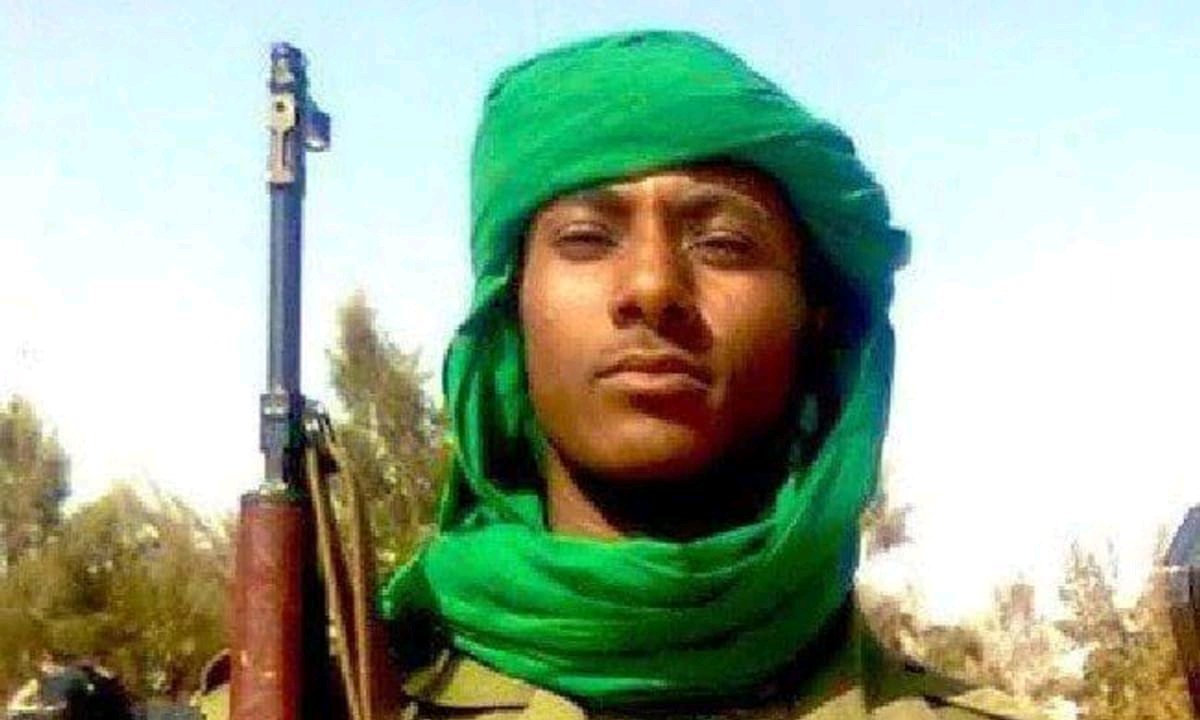
Dogo Gide Throws Spanner in Islamic State’s Expansion Plans, Forces Terrorists to Retreat in North-West Nigeria
A notorious Nigerian bandit kingpin, Dogo Gide, has reportedly emerged as a major obstacle to the expansion of the Islamic State Sahel Province (ISSP) in north-western Nigeria, after confronting the terror group over attempts to establish control in territories dominated by armed bandit groups.
The development represents another significant dimension of the increasingly complicated security situation in northern Nigeria, where criminal bandit groups and internationally affiliated terrorist organisations are competing for territorial influence, recruits and control of local communities.
According to a report published by Daily Post on Wednesday, November 4, 2026, security analyst Brant Philip disclosed that Dogo Gide had frustrated the Islamic State’s expansion efforts following a confrontation with its fighters around the middle of 2026.
Philip, in an analysis shared on X, reportedly explained that ISSP had spent the past two years attempting to establish stronger relationships with armed groups operating across Sokoto, Zamfara and Niger states.
The organisation reportedly approached several bandit groups, seeking to persuade their members to abandon their existing criminal networks, embrace its extremist ideology and become part of its wider terrorist campaign.
While some groups in Zamfara and Sokoto reportedly accepted the overtures and joined the Islamic State’s network, others resisted the attempts to bring them under its control.
Philip further disclosed that ISSP fighters had defeated several bandit groups in northern Zamfara, subsequently taking over their camps, weapons and vehicles.
However, the group’s expansion reportedly encountered a formidable challenge when its fighters came into confrontation with Dogo Gide, one of the most influential bandit warlords operating in north-western Nigeria.
According to the analyst, Gide’s resistance presented one of the most significant obstacles to the Islamic State’s efforts to extend its influence into the region.
Dogo Gide’s confrontation with ISSP is particularly significant given his previous associations with jihadist groups operating in Nigeria.
A January 2026 research publication by the Combating Terrorism Center (CTC) at the United States Military Academy, West Point, examined the complicated relationship between powerful bandit leaders and jihadist organisations seeking to expand their influence in Nigeria.
The study, titled Kachallas and Kinship: Understanding Jihadi Expansion and Diffusion in Nigeria, identified Dogo Gide as an influential warlord whose relationship with extremist groups had historically been opportunistic rather than based on firm ideological commitment.
Researchers explained that Gide had previously maintained relationships with jihadist factions, including Ansaru and the faction led by Sadiku, while using such associations to strengthen his influence among fellow bandits and in his dealings with local communities.
However, the relationship eventually deteriorated as the jihadist groups attempted to extend their authority over territories controlled by his fighters.
The research documented confrontations between Gide’s group and Ansaru in 2024, as well as clashes with Sadiku’s faction in early 2025.
According to accounts cited by the researchers, the jihadists wanted Gide to embrace their ideology and surrender control of his territory, but he rejected the demands, insisting that outsiders could not take over areas controlled by local armed groups.
The study further explained that Gide had become increasingly determined to protect his territorial influence against jihadist encroachment.
The Islamic State Sahel Province is an affiliate of the global Islamic State terrorist organisation, with its traditional operational strongholds across parts of Mali, Niger and Burkina Faso.
However, the group has increasingly sought to extend its activities into north-western Nigeria, exploiting insecurity, weak border controls and existing networks of armed groups.
Security assessments by the Centre for Strategic and International Studies (CSIS) have also identified the growing activities of ISSP in Nigeria, particularly through its connections with militant networks operating around the Niger-Nigeria border.
The group’s activities have raised concerns about the possible convergence of Sahel-based terrorist organisations and Nigeria’s longstanding banditry crisis.
Research by the Combating Terrorism Center has similarly highlighted how jihadist organisations attempt to establish relationships with local armed groups to gain access to territory, recruits, resources and logistical support.
However, the researchers cautioned that powerful bandit leaders are not necessarily willing to surrender their independence or territorial authority to foreign or externally based extremist organisations.
The reported confrontation involving Dogo Gide illustrates the complex relationship between banditry and terrorism in Nigeria’s north-west.
Although both criminal bandits and jihadist organisations engage in armed violence, kidnapping and attacks on communities, their objectives and interests are not necessarily identical.
For powerful warlords such as Gide, maintaining territorial control and influence over local armed networks remains a major consideration.
Consequently, attempts by jihadist organisations to impose ideological authority or absorb independent bandit groups can trigger violent resistance.
Nevertheless, resistance from powerful bandit leaders does not automatically eliminate the threat posed by jihadist organisations.
The January 2026 West Point study specifically cautioned that although Dogo Gide has the capacity to complicate jihadist expansion in core bandit territories, extremist networks could continue establishing themselves in other parts of western Nigeria.
For Nigeria’s security agencies, the emerging situation presents another challenge in the fight against insecurity: confronting criminal banditry while preventing internationally affiliated terrorist organisations from exploiting existing armed networks to establish deeper roots in the country.
The reported confrontation between Dogo Gide and ISSP therefore underscores an important reality: the battle for influence in north-western Nigeria is no longer simply between security forces and bandits, but increasingly involves competing armed organisations seeking control of the region.
Dogo Gide Throws Spanner in Islamic State’s Expansion Plans, Forces Terrorists to Retreat in North-West Nigeria
metro
₦50,000 Relief Fund: FG Reveals Criteria for Selecting Beneficiaries
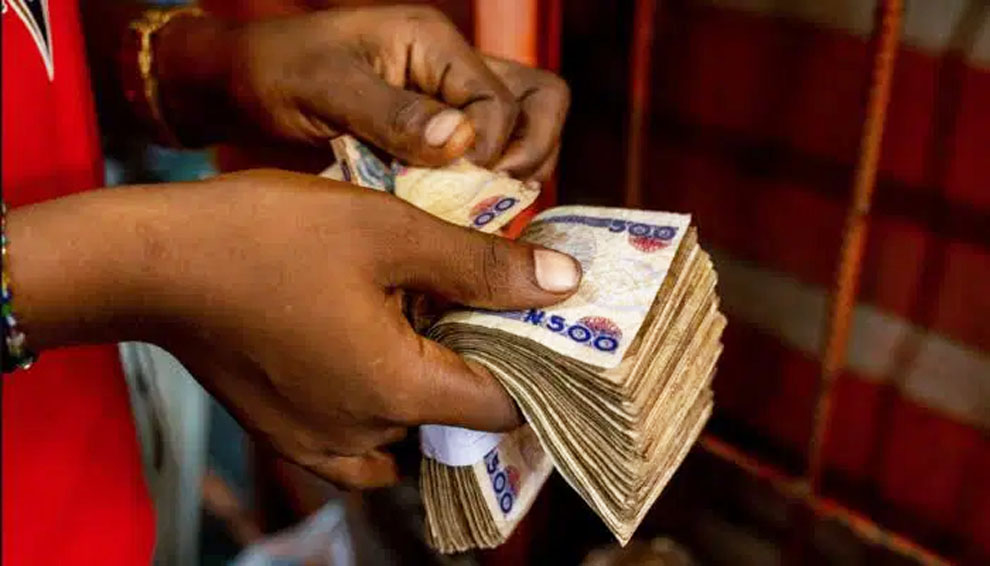
₦50,000 Relief Fund: FG Reveals Criteria for Selecting Beneficiaries
The Federal Government has explained how beneficiaries will be selected for its ₦50,000 cash relief programme, clarifying that the intervention is targeted at poor and vulnerable households identified through verified national identity records and the National Social Register (NSR).
The programme, known as the National Emergency Relief and Stabilisation Intervention (NERSI), is being implemented by the Federal Ministry of Humanitarian Affairs and Poverty Reduction to provide financial support to households struggling with rising living costs.
Under the initiative, selected beneficiaries will receive a one-off grant of ₦50,000 directly into mobile wallets operated by approved payment providers.
According to the government, the selection process involves screening information from verified national identity records and the National Social Register to identify households that meet the programme’s vulnerability requirements.
The National Social Register is a database of poor and vulnerable households across the country, while national identity records are used to verify the identities of prospective beneficiaries.
The government said the exercise is based on need and is designed to cover Nigerians across the six geopolitical zones, irrespective of their religion, ethnicity or political affiliation.
READ ALSO:
- Iran Unveils ‘We Will Kill Trump’ Billboard in Tehran Amid Rising Tensions With US
- Tinubu’s Re-election: Osun APC Leaders Reject Oyebamiji-Led Campaign Council
- Tragedy: Spanish Footballer Jesús de Miguel Dies at 30 After On-Field Collision
However, it stressed that inclusion in the relevant databases does not automatically mean that everyone will receive the payment in the first phase, as disbursement will be carried out in batches.
The government also clarified that there is no public application process for the ₦50,000 grant. Individuals cannot independently register or pay to be included in the beneficiary list, and no official or intermediary is authorised to sell access to the programme.
How selected beneficiaries will receive the ₦50,000
The Federal Government outlined a four-step process through which selected Nigerians will access the financial support.
First, beneficiaries will receive an SMS notification from one of the five approved payment providers: ALAT by Wema Bank, MoMo PSB, NairaGram, OPay or Moniepoint.
Recipients will then be required to confirm their willingness to participate by following the instructions in the message. The government said payment will not be made without the beneficiary’s consent.
After confirmation, a mobile wallet will be opened and linked to the beneficiary’s phone number and National Identification Number (NIN).
The sum of ₦50,000 will subsequently be credited to the wallet, after which the recipient can withdraw the money through a Point of Sale (POS) agent, access it at a bank where applicable, or spend it directly from the wallet.
The government said beneficiaries do not need a smartphone or internet connection to access the funds, as the approved providers have USSD options that work on basic mobile phones.
The designated codes include 94523# for ALAT, 6710# for MoMo PSB, 72600# for NairaGram, 95520# for OPay and 557327# for Moniepoint.
Beneficiaries are expected to follow the instructions sent by their respective providers.
FG warns Nigerians against fraud
The government has warned Nigerians to be wary of fraudsters seeking to exploit the relief programme by demanding money or sensitive personal information.
It emphasised that participation in the programme, acceptance of the grant and receipt of the ₦50,000 payment are free.
According to the official guidelines, genuine notifications will come from the approved payment providers and will not ask recipients to pay a fee, disclose their Personal Identification Number (PIN), share a One-Time Password (OTP), or click suspicious links.
The government urged Nigerians never to disclose their PINs, OTPs or passwords to anyone, including payment agents or individuals claiming to be programme officials.
It also warned that anyone offering to add a person to the beneficiary list, speed up payment or release the grant in exchange for money is attempting to defraud them.
Beneficiaries who are unsure about the authenticity of a message have been advised to contact the programme’s official helpline on 0700-022-2222.
Why some Nigerians may not have received the money
The government explained that the payments are being made in phases, meaning selected beneficiaries will not necessarily receive their notifications at the same time.
It also clarified that the programme is supporting a limited number of households in each phase, so not everyone will be selected immediately.
Those who have not received an SMS should therefore not automatically conclude that they have been excluded from every future phase.
The Federal Government said the full ₦50,000 grant would be credited to selected beneficiaries without deductions. The money is a grant, not a loan, and recipients are not required to repay it.
The intervention is part of the government’s efforts to provide direct financial assistance to vulnerable households amid continuing economic pressures.
₦50,000 Relief Fund: FG Reveals Criteria for Selecting Beneficiaries
metro
Bandits Demand Over ₦100m Ransom for 15 Abducted Islamiya Students in Niger

Bandits Demand Over ₦100m Ransom for 15 Abducted Islamiya Students in Niger
Suspected bandits who abducted 15 students of an Islamiya school in Niger State have reportedly demanded more than ₦100 million for their release, heightening fears over the safety of the children and prompting fresh calls for urgent government intervention.
The victims were reportedly kidnapped while assisting their teacher, Malam Aminu Bako, in harvesting maize on his farm in Tungan-Bako village, Rafi Local Government Area of Niger State, during the weekend.
The teacher disclosed that the armed men had contacted community leaders to communicate their ransom demand, leaving parents and residents increasingly worried about the fate of the abducted children.
According to reports, the kidnappers initially believed the victims were students of government-owned schools. However, a parent, identified as Malam Adamu, said community representatives informed the abductors that the children attended an Islamiya school.
Adamu explained that the bandits had demanded more than ₦100 million before being informed about the actual identity of the school.
The teacher, who confirmed the ransom demand, also appealed to the Federal Government and Niger State Government to urgently intervene and ensure the safe return of the students.
Bako expressed concern that the children might be facing harsh conditions in captivity, revealing that information gathered through local vigilantes suggested they were still being held somewhere within Niger State.
According to him, the students were reportedly locked inside an isolated building guarded by heavily armed men.
“We heard that they were still within Niger State, locked in a building, probably without food. We are worried; we want the authorities to come to our aid to rescue them,” he said.
The teacher maintained that the situation required urgent intervention by the military and other security agencies, warning that community vigilantes might not have the capacity to confront the heavily armed kidnappers.
He also expressed dissatisfaction with what he described as the limited government presence since the incident, saying the affected families and school management had largely been left to depend on local vigilantes for information and assistance.
Bako disclosed that the acting chairman of Rafi Local Government Area and the Divisional Police Officer were the only government officials who had visited the community following the abduction.
He said the absence of further engagement from the state government had increased anxiety among parents, who had continued to approach him for updates on their children’s whereabouts and safety.
“We are also worried that nobody has visited us from the state government, at least to give us hope that something is being done to ensure their release,” he added.
The teacher consequently appealed to the authorities to demonstrate greater commitment towards securing the students’ freedom, stressing that the community needed more than assurances.
Meanwhile, the Niger State Police Command has confirmed the abduction, although its preliminary account differed slightly from the number of victims identified by the teacher.
The Police Public Relations Officer, SP Wasiu Abiodun, said suspected bandits invaded Tungan-Bako village and abducted some people working on a farm.
According to him, preliminary police information indicated that about 14 of the victims were Islamiya school students who had accompanied their instructor to harvest maize.
Abiodun, however, assured that joint security operations were ongoing to rescue the abducted persons.
The police assurance came amid concerns from residents, who maintained that local vigilantes were the only security personnel visibly involved in efforts to trace the abductors.
The Commissioner for Homeland Security in Niger State, Justin Maurice Magaji, was reportedly unavailable for comments when contacted, as he was attending a State Executive Council meeting.
The teacher subsequently released the names of the 15 students reportedly taken away by the bandits.
They are Hassana Isah, Aliya Ahmad, Hajara Musa, Hauwa’u Abubakar, Halima Yahaya, Asma’u Jamilu, Radiya Salisu, Aminatu Salisu, Aisha Bello, Rahinatu Sani, Aminatu Alhassan, Nafisa Ayuba, Bilkisu Adamu, Salaha Abdullahi and Hajara Salisu.
The reported discrepancy between the 15 names released by the teacher and the 14 Islamiya students mentioned in the police account has also raised questions about the exact number of victims.
The latest development has renewed concerns over the persistent activities of armed bandits in parts of Niger State, particularly attacks targeting rural communities and vulnerable residents.
For the families of the abducted students, however, the immediate priority remains the safe return of their children.
They are calling on the Federal Government, Niger State Government and security agencies to intensify rescue operations and ensure that the children are reunited with their families without further delay.
Bandits Demand Over ₦100m Ransom for 15 Abducted Islamiya Students in Niger
-
 Politics3 days ago
APC Dumps Adeleke’s Campaign Structure, Unveils Separate 168-Member Council in Osun
-

 metro3 days ago
Three Homeless Men Shot Dead in Midnight Attack at Lagos Bus Stop
-

 Sports3 days ago
Super Falcons Receive $100,000 Each as Tinubu Finally Fulfils WAFCON Pledge
-

 metro3 days ago
Oyo Boxer Stabbed to Death with Broken Bottle After Street Fight in Ibadan
-

 International2 days ago
Iran Unveils ‘We Will Kill Trump’ Billboard in Tehran Amid Rising Tensions With US
-

 International3 days ago
US Strikes Iran’s Qeshm Island as Tensions Escalate Around Strait of Hormuz
-

 Entertainment3 days ago
Ned Nwoko Breaks Silence on Regina Daniels’ Health, Warns Bloggers Over Fake Reports
-

 metro3 days ago
Terrorists Kill Five Police Officers in Deadly Convoy Ambush on Sokoto-Zamfara Highway