
International
Indonesian ambassador to Nigeria in alleged sex scandal
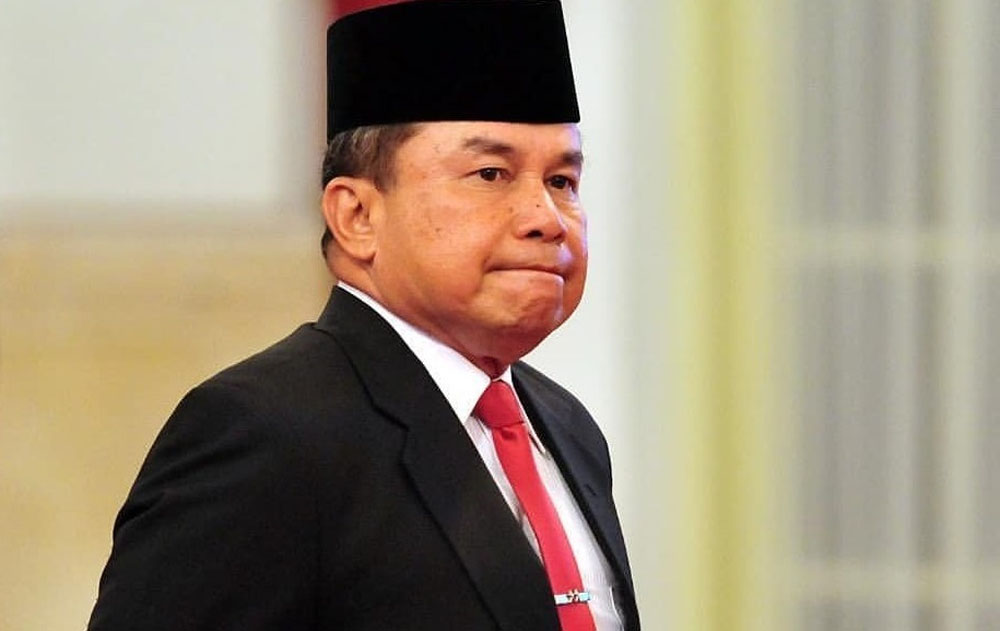
Indonesian ambassador to Nigeria in alleged sex scandal
Usra Hendra Harahap, Indonesia’s Ambassador to Nigeria, is under investigation following allegations of sexual harassment by a former staff member at the Indonesian Embassy in Abuja.
Jakarta Globe reports that the allegations, outlined in a petition by the victim’s legal team, claim that the incident occurred on February 7 during official duties.
The victim, whose identity remains confidential for privacy reasons, described the encounter as traumatic and has since returned to Jakarta to seek counselling and support.
A psychological evaluation conducted by Indonesia’s Foreign Affairs Ministry reportedly diagnosed the victim with severe Post-Traumatic Stress Disorder (PTSD), anxiety, and depression.
READ ALSO:
- Tinubu: Governors most important link to Nigeria’s development
- Georgia judge found dead in courtroom, suicide suspected
- This is my worst year, S’Eagles keeper Nwabali says, announcing mother’s death after father passing
She also alleged retaliation, including unjustified termination and excessive scrutiny in her role at the embassy.
The victim’s legal representatives have called for an independent investigation, the reversal of her termination, and compensation for damages suffered.
Roy Soemirat, a spokesperson for the Ministry of Foreign Affairs in Indonesia, confirmed that the Ministry is taking the allegations seriously.
“We are thoroughly examining the reports, ensuring that the investigation follows all legal guidelines,” he said in a statement on Wednesday.
The Ministry has also extended psychological support to the victim and reiterated its commitment to addressing sexual violence within its diplomatic ranks.
Indonesian ambassador to Nigeria in alleged sex scandal







International
TRUMP SAYS IRAN DEAL ‘ALL SIGNED’ AS STRAIT OF HORMUZ PARTIALLY REOPENS

TRUMP SAYS IRAN DEAL ‘ALL SIGNED’ AS STRAIT OF HORMUZ PARTIALLY REOPENS
President Donald Trump on Monday announced that a landmark agreement between the United States and Iran has been finalized, declaring that the deal is “all signed” and that the strategically important Strait of Hormuz has already been partially reopened to maritime traffic.
Speaking to reporters on the sidelines of the G7 Summit, Trump said the agreement would pave the way for the full reopening of the vital shipping route by the end of the week.
“The deal’s all signed. And the strait is already partially opened. On Friday, it’ll be completely open,” Trump stated.
The development marks a significant breakthrough in efforts to ease tensions in the Middle East following months of heightened security concerns and disruptions to international shipping through the Strait of Hormuz, one of the world’s most critical oil transit chokepoints.
According to U.S. officials, the agreement, described as a memorandum of understanding between Washington and Tehran, was digitally signed on Sunday. Vice President JD Vance confirmed that both parties had completed the signing process ahead of a formal ceremony expected to take place in Geneva later this week.
While details of the accord have not yet been made public, reports indicate that the agreement includes measures to restore navigation through the Strait of Hormuz, reduce military tensions in the region, and establish a framework for renewed negotiations over Iran’s nuclear programme.
Trump said the full text of the agreement would be released following the formal signing ceremony.
The announcement was welcomed by global energy markets, with crude oil prices falling amid expectations that shipping activities through the Strait of Hormuz would gradually return to normal levels.
However, security experts cautioned that a complete restoration of maritime operations could take time. Officials familiar with the situation noted that demining operations and security assessments remain ongoing, meaning full commercial traffic may not resume immediately despite the political agreement.
The Strait of Hormuz is a vital waterway connecting the Persian Gulf to the Gulf of Oman and the Arabian Sea. Roughly one-fifth of the world’s oil supply passes through the narrow channel, making its stability crucial to global energy security.
The agreement is expected to be closely scrutinized by lawmakers, regional allies, and international observers as further details emerge in the coming days.
TRUMP SAYS IRAN DEAL ‘ALL SIGNED’ AS STRAIT OF HORMUZ PARTIALLY REOPENS
International
UK Announces Social Media Ban for Children Under 16

UK Announces Social Media Ban for Children Under 16
The United Kingdom has announced plans to introduce one of the world’s toughest online safety measures, with Prime Minister Keir Starmer confirming that children under the age of 16 will be banned from accessing major social media platforms.
The proposed legislation, expected to be presented to Parliament later this year, will prohibit under-16s from using platforms such as TikTok, Instagram, Snapchat, Facebook, YouTube, and X. The government says the move is aimed at protecting children from harmful content, online predators, cyberbullying, and addictive digital features that negatively impact mental health.
Announcing the policy on Monday, Starmer said social media platforms are increasingly “making children unhappy” and exposing them to content that is both dangerous and deliberately designed to keep young users engaged for extended periods.
According to the British government, the ban is expected to take effect in spring 2027 if approved by lawmakers. Officials say technology companies will be required to implement robust age-verification systems to prevent underage users from accessing restricted platforms.
While the restrictions will apply to most major social networking services, messaging applications such as WhatsApp and Signal will remain exempt from the ban. Authorities argue that these services primarily facilitate direct communication rather than content-driven engagement.
READ ALSO:
- Ogun APC Unveils Kudirat Adegunwa-Balogun as Yayi’s Running Mate for 2027 Governorship Election
- BREAKING: Court Orders Deregistration of ADC, Four Other Political Parties
- BREAKING: Kenneth Okonkwo Withdraws Support for Atiku
In addition to social media restrictions, the UK government plans to introduce tougher regulations for gaming services and livestreaming platforms that allow children to interact with strangers online. Starmer emphasized that children should not be exposed to unknown adults through digital platforms without adequate safeguards, indicating that further measures are being developed to limit such interactions. Officials have described the planned reforms as “world-leading,” with additional details expected to be unveiled in July.
The government is also considering a range of extra protections for young internet users. These include overnight social media curfews for minors, mandatory breaks from infinite scrolling features, and stricter default privacy settings for teenagers. Officials say the proposals are intended to reduce excessive screen time and minimize exposure to potentially harmful online content. The reforms follow a government-led consultation in which British teenagers tested social media bans and app time limits, helping shape the final policy framework.
Starmer acknowledged that the UK’s approach was partly inspired by Australia, which became the first country to implement a nationwide social media ban for under-16s. However, British officials insist that the UK’s proposals go further by extending restrictions to gaming platforms, livestreaming services, and potentially certain AI-powered companion chatbots that may pose risks to children.
The announcement has generated debate within the technology industry. A spokesperson for YouTube warned that a blanket ban could push children toward less-regulated online services, potentially creating new safety concerns. Other industry stakeholders have questioned how age-verification requirements will be enforced and whether teenagers will find ways to circumvent the restrictions.
Despite the criticism, the government remains committed to the policy, arguing that stronger intervention is necessary to protect children in an increasingly digital world. Supporters of the proposal say the ban could help tackle growing concerns about mental health issues, online addiction, cyberbullying, and harmful content exposure among young people.
If approved, the legislation would position the UK among the global leaders in regulating children’s online activity and could influence similar policy discussions in other countries.
UK Announces Social Media Ban for Children Under 16
International
US, Iran Set to Sign Peace Deal June 19 in Switzerland as Hostilities Cease
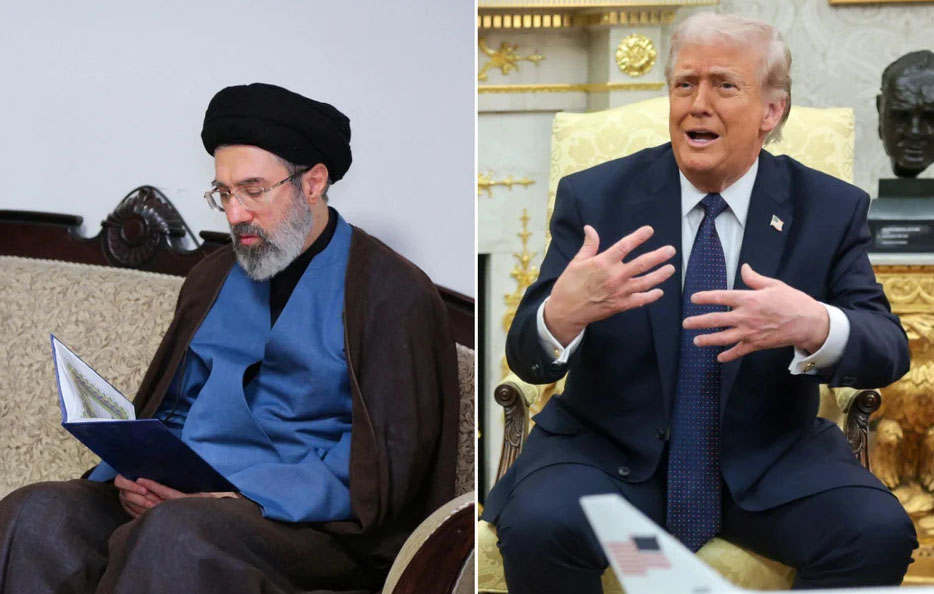
US, Iran Set to Sign Peace Deal June 19 in Switzerland as Hostilities Cease
GENEVA, Switzerland — In a landmark diplomatic breakthrough, the United States and Iran have reached a historic peace agreement aimed at ending nearly four months of military confrontation that threatened to destabilize the entire Middle East. The formal signing ceremony is scheduled to take place on Friday, June 19, 2026, in Switzerland, following intensive mediation efforts led by Pakistan with support from Qatar, Saudi Arabia, and Türkiye.
The agreement, structured as a Memorandum of Understanding (MoU) , is expected to establish an immediate and permanent cessation of military operations on all fronts, including in Lebanon, once signed. It also provides for the reopening of the strategic Strait of Hormuz, a vital chokepoint for global oil supplies, and sets the stage for a 60-day negotiation period to address outstanding issues, including Iran’s nuclear programme and comprehensive sanctions relief.
Pakistani Prime Minister Shehbaz Sharif announced the breakthrough on social media, confirming that both nations had agreed to a peace framework following weeks of intense back-channel diplomacy. Shortly thereafter, US President Donald Trump confirmed the deal on his Truth Social platform, writing: “The Deal with the Islamic Republic of Iran is now complete. Congratulations to all! I hereby fully authorize the toll free opening of the Strait of Hormuz, and, simultaneously herewith, authorize the immediate removal of the United States Naval blockade. Ships of the World, start your engines. Let the oil flow.” The actual signing, however, awaits the formal ceremony on June 19.
The final draft of the memorandum covers a wide range of critical issues that had kept the region on edge for months. Under the pending agreement, Iran is expected to immediately reopen the Strait of Hormuz to all commercial vessels upon signing. In return, the United States will lift its naval blockade on Iranian ports, with implementation to be completed within 30 days of the signing. The waterway, which handles a substantial share of the world’s oil exports, will be restored to full commercial traffic. News of the anticipated reopening has already prompted a decline in global oil prices as markets react positively to expectations of improved regional stability.
Both sides are expected to declare the immediate and permanent termination of military operations on all fronts, including in Lebanon, where Iranian-backed Hezbollah forces had been engaged in cross-border clashes with Israeli forces. The ceasefire is expected to be unconditional and take effect immediately upon signing.
READ ALSO:
- Police Foil Kidnap Attempt, Rescue Nine Victims on Katsina–Kankara Road
- Edo Gov Okpebholo Orders Probe Into Benin Vegetable Market Kidnapping
- Late Gen. Rabe’s Son Denies Claim Father Had Diabetes, Says Mother Still in Captivity
The United States has agreed not to impose any new sanctions on Iran until a final deal is reached. Additionally, the US will waive oil sanctions on Iran for a specified period, allowing Tehran to sell oil and receive revenue. Most significantly, the US has agreed to release approximately $25 billion of Iran’s frozen assets, to be delivered through a combination of direct cash transfers, cooperation among regional countries, and financial credit lines. A separate reconstruction and development plan for Iran is to be defined within the 60-day negotiation window that follows the signing.
The nuclear question — perhaps the most sensitive issue in US-Iran relations — has been addressed in a phased manner. Tehran has agreed that it will neither produce nor acquire nuclear weapons. Pending a final agreement, Iran will maintain the nuclear status quo, including refraining from enriching uranium and not expanding nuclear facilities. The United States, for its part, has agreed that Tehran will be permitted to dilute its highly enriched uranium stockpile inside Iran, with a specific mechanism to be discussed during the 60-day negotiation period after the June 19 signing.
Despite the celebratory announcements, significant differences in how the two sides interpret the agreement have already emerged — raising questions about the durability of the peace framework. Iranian Deputy Foreign Minister Kazem Gharibabadi confirmed that a final text had been agreed upon and would be signed in Switzerland on June 19. However, he emphasized that Iran’s entry into the 60-day negotiation period is conditional upon US fulfilment of its initial commitments — specifically, ending all hostilities, lifting the naval blockade, and releasing frozen Iranian assets. “This memorandum of understanding does not mean trusting the enemy,” Gharibabadi said. “We will monitor the implementation of US commitments.” On the nuclear issue, Iranian media reported that Tehran has not accepted any new nuclear obligations under the agreement, with nuclear issues to be addressed only during the 60-day negotiation period following the signing ceremony. A Trump administration official, however, offered a markedly different interpretation, stating that the draft agreement includes the removal and destruction of Iran’s nuclear materials and the dismantling of its nuclear program, with sanctions relief tied to verified compliance by Tehran. This discrepancy suggests that the 60-day technical negotiation period, far from being a mere formality, could become a contentious battleground where the true contours of the deal are fought out.
The international community has largely welcomed the deal, while some observers have expressed skepticism about its long-term viability. In a joint statement, the leaders of France, Britain, Germany, and Italy congratulated the United States, Iran, Pakistan, Qatar, and other mediators on the “diplomatic breakthrough.” “This is a moment of opportunity to restore regional stability and stabilise the global economy,” the statement read. “It is now vital that the detailed negotiations are concluded and this agreement is implemented rapidly and comprehensively. We are ready to support that effort.” The European leaders stressed that Iran must never acquire a nuclear weapon and said they were “prepared to lift relevant sanctions in response to clear, verifiable steps by Iran on its nuclear programme.” UN Secretary-General Antonio Guterres hailed the deal as a “critical step” towards resolving the war in the Middle East, expressing hope that the parties would build on this new momentum. Turkish Foreign Minister Hakan Fidan said the agreement “constitutes an important milestone on the path to establishing lasting peace and stability in the region.”
READ ALSO:
- Abdulsalami Reveals Why Ojukwu Rejected Gowon as Nigeria’s Leader
- How Abacha’s ‘Kitchen Cabinet’ Tried to Oust Me, Pushed for Babangida’s Arrest — Abdulsalami
- Grand Chief Imam of Oyo Land Celebrates Ambassador Victor Adeleke, Praises His Service, Humility
Not everyone has greeted the deal with enthusiasm. Some political figures in both the United States and Israel have expressed caution, questioning whether the agreement can withstand future challenges. Ben Rhodes, who served as a speechwriter during the Obama administration’s 2015 nuclear negotiations with Iran, said the new deal leaves an emboldened Iranian regime at great cost to the world. “This deal reopens a body of water that was open before the war and begins a nuclear negotiation far narrower than what Trump was seeking before the war,” he wrote on X. Former Republican congressman Adam Kinzinger, a longtime Trump critic, wrote on social media: “Iran is now rich and will control the strait while selling their oil on the open market. I was critical of Obama’s deal, but this makes that look amazing in comparison.”
Israel, which was not party to the negotiations, has expressed deep concerns about the deal’s implications for its security. Prime Minister Benjamin Netanyahu’s government has publicly supported efforts to end hostilities between Washington and Tehran but warned that certain terms of the agreement could undermine Israeli security. Israeli officials have expressed concern that Iran may be receiving significant concessions without making sufficient commitments on its nuclear activities. There are also questions about whether Hezbollah-related issues in Lebanon have been adequately addressed. Israel has maintained that its confrontation with Hezbollah is separate from the US-Iran arrangement and that it reserves the right to act in its own defense. Reports have emerged of growing tensions between Trump and Netanyahu, with Trump reportedly criticizing Israeli airstrikes in Beirut that occurred while the United States and Iran were nearing a peace agreement — strikes that nearly derailed the negotiations in their final hours.
The anticipated reopening of the Strait of Hormuz is viewed as one of the most significant aspects of the pending agreement. The waterway is a critical route for global energy supplies, handling approximately 20% of the world’s oil exports. News of the breakthrough has already prompted a decline in oil prices as markets react positively to expectations of improved regional stability and increased supply. Asian stocks have moved higher amid expectations that energy exports through the Strait of Hormuz could gradually resume once the agreement is signed. Shipping and logistics companies, which had been forced to reroute vessels around the Cape of Good Hope at significant cost, have already begun planning for the resumption of normal transit through the waterway pending the June 19 signing.
While the agreement marks a significant step towards peace, several complex issues remain unresolved. Negotiators are expected to spend the coming weeks after the signing discussing Iran’s nuclear activities, including the future of its centrifuges and heavy water reactor; comprehensive sanctions relief, including the scope and timeline for lifting UN and EU sanctions; the verification and monitoring regime to ensure Iranian compliance; the mechanism for diluting Iran’s enriched uranium stockpile inside the country; and a reconstruction and development plan for Iran’s economy. The 60-day technical negotiation period is scheduled to begin after the June 19 signing ceremony, though Iran has insisted that it will only enter these talks after verifying that the United States has fulfilled its initial commitments regarding ending hostilities, lifting the blockade, and releasing frozen assets. Iranian Deputy Foreign Minister Kazem Gharibabadi has repeatedly emphasized that entering into 60 days of negotiations is conditional upon the fulfilment of these commitments by the United States. This conditionality means that any delay or perceived non-compliance by Washington between the signing and the start of talks could unravel the entire framework before substantive negotiations even begin.
All eyes now turn to Switzerland, where on Friday, June 19, 2026, the formal signing ceremony is expected to take place. Further details will likely emerge once both parties officially endorse the agreement and the full text of the memorandum of understanding is made public.
US, Iran Set to Sign Peace Deal June 19 in Switzerland as Hostilities Cease
-
 metro3 days ago
Kidnapped Retired Major General Rabe Abubakar Dies in Bandits’ Captivity
-

 Politics19 hours ago
BREAKING: Court Orders Deregistration of ADC, Four Other Political Parties
-
 Politics3 days ago
BREAKING: Atiku Picks Amaechi As Running Mate For 2027 Presidential Election
-

 Opinion3 days ago
Death of Retired General in Captivity Sparks Fresh Concerns Over Nigeria’s Security Crisis
-
 Politics17 hours ago
BREAKING: Kenneth Okonkwo Withdraws Support for Atiku
-

 metro3 days ago
Terror on a Dark Night: How Security Guard Allegedly Rapes Teen at Gunpoint in Ogun
-

 News4 hours ago
Shot by Bandits, Saved by Soldiers: Dramatic Rescue of General’s Wife in Katsina
-
 metro2 days ago
General Rabe’s Death: Tinubu Vows No Negotiation With Terrorists