

International
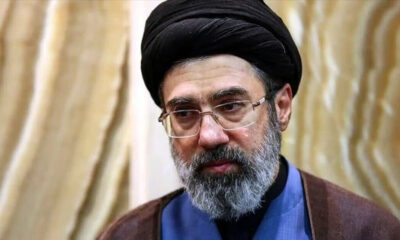
Trump may be sentenced Jan 10 in hush money case
Trump may be sentenced Jan 10 in hush money case
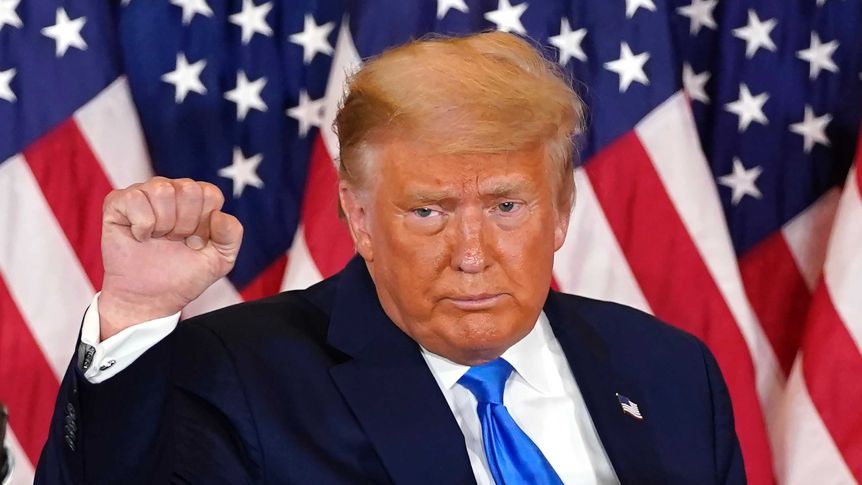
A judge has ordered that Donald Trump will be sentenced on 10 January in his hush-money case in New York – less than two weeks before he is set to be sworn in as president.
New York Justice Juan Merchan signalled he would not sentence Trump to jail time, probation or a fine, but instead give him an “unconditional discharge”, and wrote in his order that the president-elect could appear in person or virtually for the hearing.
Trump had attempted to use his presidential election victory to have the case against him dismissed.
The president-elect has posted on social media dismissing the judge’s order as an “illegitimate political attack” and calling the case “nothing but a rigged charade”.
Trump was convicted in May of 34 felony counts of falsifying business records related to a $130,000 (£105,000) payment to adult-film star Stormy Daniels.
The charges related to attempts to cover up reimbursements to his ex-lawyer, Michael Cohen, who in the final days of the 2016 election campaign paid off the adult-film star to remain silent about an alleged sexual encounter with Trump.
The president-elect has denied all wrongdoing and pleaded not guilty, arguing the case was an attempt to harm his 2024 presidential campaign.
READ ALSO:
- Petrol price may crash to N500/litre, say marketers
- Wike: I won’t apologise to Odili, didn’t turn Rivers to personal estate
- Yar’Adua stopped refinery sale to Dangote over due process, paltry amount – Falana replies Obasanjo
In the post on his Truth Social platform on Saturday Trump said the judge’s sentencing order “goes against our Constitution and, if allowed to stand, would be the end of the Presidency as we know it”.
Trump’s spokesperson Steven Cheung earlier called the order part of a “witch hunt”.
“President Trump must be allowed to continue the presidential transition process and to execute the vital duties of the presidency, unobstructed by the remains of this or any remnants of the witch hunts,” Cheung said.
“There should be no sentencing, and President Trump will continue fighting against these hoaxes until they are all dead.”
In his latest motion against the case, Trump had argued the case would hang over him during his presidency and impede his ability to govern.
Justice Merchan said he had been advised of several measures he could employ that could assuage Trump’s concerns about being distracted by a criminal case while serving as president that fell short of the “extreme remedy” of overturning the jury’s verdict.
READ ALSO:
- Saudi company SALIC to buy out Olam’s stake in Olam Agri
- Lakurawa terrorists attack Kebbi community, kill 2 policemen, rustle 200 cows
- Youths beat Osun monarch for appointing Imam on disputed community
His options included delaying the sentencing until Trump, 78, leaves the White House in 2029, or guaranteeing a sentence that would not involve prison time.
Trump had initially, and unsuccessfully, argued the case against him ran afoul of a Supreme Court ruling on presidential immunity.
In July, the country’s top court ruled that presidents have broad immunity from criminal prosecution for “official actions” they take while in office.
However, last month Justice Merchan ruled Trump’s hush money conviction was valid.
Trump is currently set to be the first convicted felon to serve in the White House.
He may attempt to appeal against the conviction after the sentencing.
While falsifying business records is punishable by up to four years in prison in the US, there is no minimum sentence and incarceration is not required.
Even before his election victory, legal experts thought it was unlikely Trump would face jail time given his age and his legal record.
Trump has also been charged in three other state and federal criminal cases: one involving classified documents and two relating to his alleged efforts to overturn his loss in the election of 2020.
The president-elect was initially scheduled to be sentenced on 26 November, but Justice Merchan pushed the date back after Trump won the presidential election.
Trump may be sentenced Jan 10 in hush money case
BBC








International
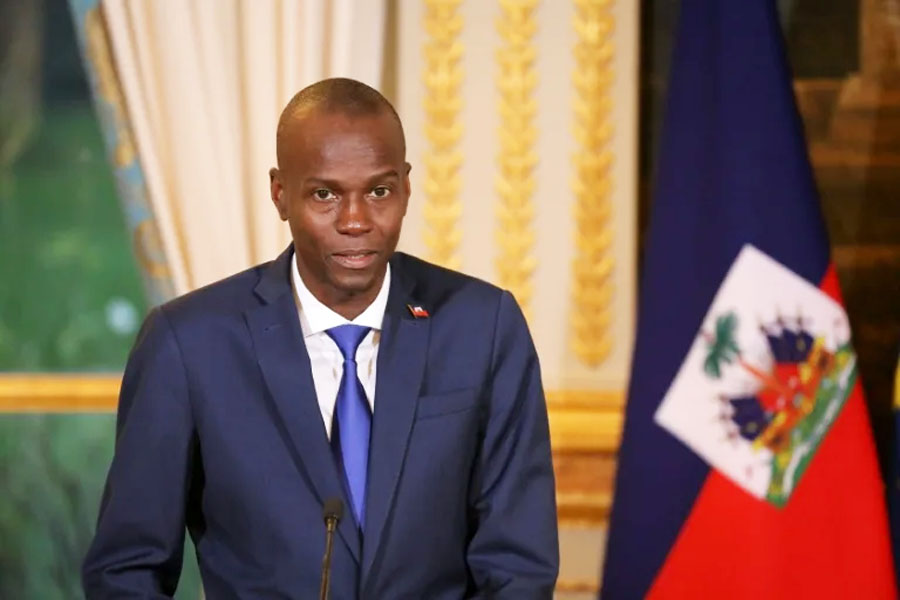
18 Suspects Transferred to US Over 2021 Killing of Haitian President Moïse
18 Suspects Transferred to US Over 2021 Killing of Haitian President Moïse
Eighteen suspects accused of involvement in the 2021 assassination of former Haitian President Jovenel Moise have been transferred from Haiti to the United States to face trial.
US officials said the suspects were transported to Florida on Sunday, as American authorities continue their prosecution of people allegedly connected to the plot.
Federal prosecutor Jason Reding Quinones said the suspects were flown from Haiti on a military aircraft to face proceedings in the Southern District of Florida.
He said US authorities had so far indicted 30 people in connection with the assassination and warned that the prosecutions were not over.
Among those transferred was Joseph Felix Badio, a former anti-corruption official with Haiti’s Ministry of Justice who has been identified as a major suspect in the investigation.
Haitian government and police sources said the other suspects included Colombian nationals who were allegedly part of the group involved in the operation.
READ ALSO:
- My Heart Has Always Been Home With You — Tinubu’s Powerful Message to Oluremi at 66
- Tinubu’s UNGA Absence Fuels Questions Over Planned Trump Meeting
- Messi Fires Stunning 75th Career Free-Kick to Reach 930 Goals in Inter Miami Draw
Colombian Nationals Among Suspects
Colombia’s Foreign Ministry confirmed that 17 of its citizens had been transferred from Haiti to the United States.
The ministry said the Colombian government was monitoring the development but had not participated in the decision or process that led to the transfer.
Moise was killed at his private residence in Port-au-Prince on July 7, 2021. Investigators said a group of about 20 Colombian military-trained mercenaries had been hired in connection with the operation.
The president’s security detail came under scrutiny after failing to prevent the attack.
In May, four men were convicted in a Miami federal court over charges connected to the plot, including conspiracy to kill or kidnap Moise and providing material support for the operation. They could face life imprisonment.
US prosecutors said the men were linked to CTU Security, a Florida-based private security company, and had allegedly been attracted by the prospect of lucrative contracts after Moise was removed from power.
The assassination plunged Haiti further into political and security turmoil. The country has since struggled with gang violence and remains without a president, while preparations continue for elections scheduled for December, subject to security conditions.
18 Suspects Transferred to US Over 2021 Killing of Haitian President Moïse
International
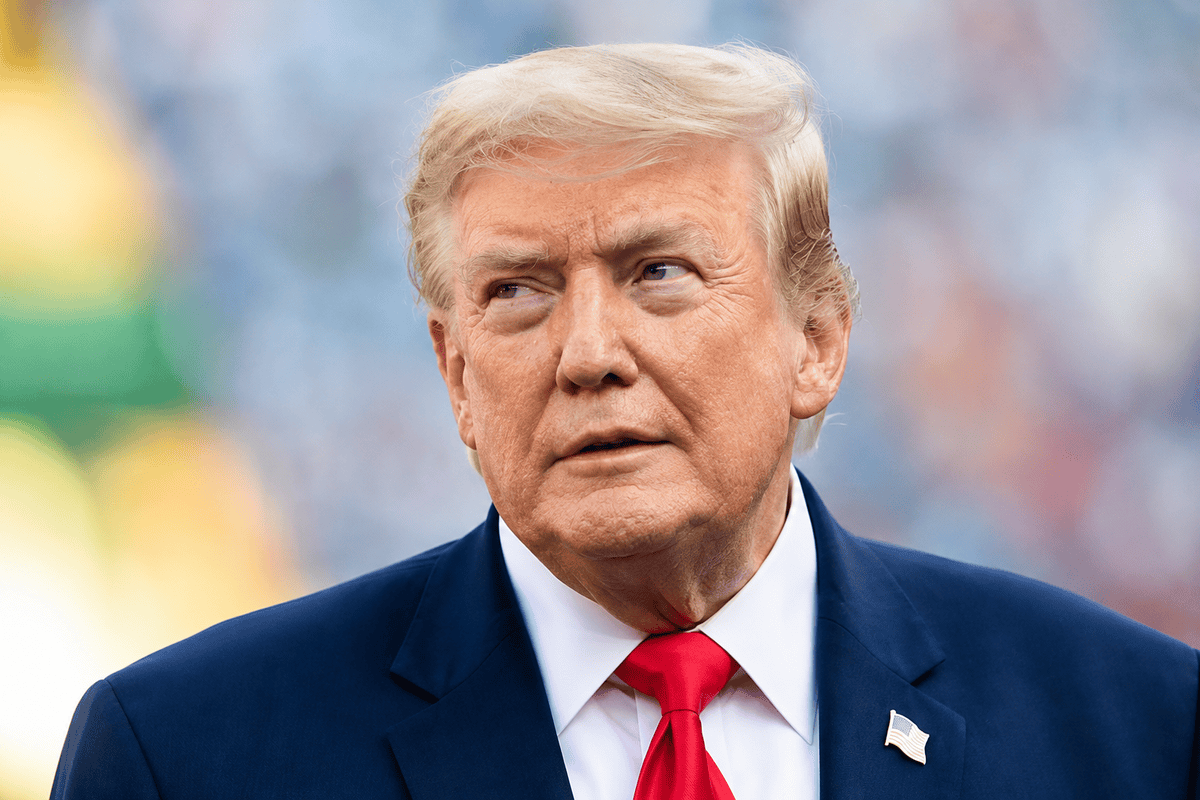
Trump Bans CNN, MS NOW, Politico From White House Over ‘Fake News’
Trump Bans CNN, MS NOW, Politico From White House Over ‘Fake News’
WASHINGTON — United States President Donald Trump has announced restrictions barring CNN, MS NOW and Politico from the White House, accusing the three media organisations of repeatedly publishing what he described as “fake news” about his administration.
Trump announced the decision on Friday, September 18, 2026, in a post on his Truth Social platform, declaring that the restrictions were effective immediately.
The president accused the organisations of reporting what he called “fiction and lies” about him, his administration and the United States, while warning that other media outlets could also face similar restrictions.
The announcement has opened another confrontation between the Trump administration and the American media, with press-freedom advocates and journalists raising questions about the constitutional limits of presidential control over access to the White House.
The dispute also escalated on Saturday after journalists working for MS NOW were denied entry to the White House grounds, providing the clearest indication that the administration had begun enforcing at least part of Trump’s announced restrictions.
Trump, speaking to reporters in the Oval Office after making the announcement, defended the decision and said the three organisations had engaged in what he regarded as deliberately negative coverage of his administration.
“They’re fake news,” Trump said when asked about the decision, adding that other media organisations could also be affected if they continued with what he described as unfair reporting.
Trump did not identify a single report that prompted the action. Instead, he pointed to what he characterised as the organisations’ overall coverage of his presidency.
He also criticised other major American news organisations, including The New York Times and The Washington Post, suggesting that additional outlets could face restrictions.
However, no ban on either newspaper was immediately announced.
The White House action initially created uncertainty because journalists from the three targeted organisations remained on the White House grounds after Trump’s announcement on Friday.
READ ALSO:
- Jetour Unleashes F700 Hybrid Pickup as Abuja Experience Begins Tuesday
- “She Wanted to Stay Single”: Rema Opens Up About Rejection That Inspired Hit Song ‘Oh No’
- Ronaldo Included in Portugal’s Nations League Squad as Jorge Jesus Begins New Era
CNN journalists were still working from the network’s White House workspace, while CNN also had personnel involved in the television pool covering Vice President JD Vance.
The situation changed on Saturday when MS NOW journalists were denied access to the White House grounds.
The development raised fresh questions about whether the administration intended to apply the restrictions to physical access, press credentials, White House workspaces, presidential events and media pools, or all forms of coverage from the presidential complex.
It was not immediately clear whether CNN journalists had also been denied entry on Saturday, while Politico journalists are generally not based at the White House during weekends.
Trump was spending the weekend at Camp David, the presidential retreat in Maryland.
The president’s action has drawn a strong response from the affected organisations.
CNN rejected the move and said it stood behind its White House reporting team. The network maintained that journalists should be able to report from the White House without government interference and indicated that it would challenge any formal restriction that violated its constitutional protections.
Politico also rejected the president’s allegations and said it would continue covering the Trump administration and future administrations.
The organisation said it would defend its First Amendment rights against attempts to restrict its access to government officials and presidential activities.
MS NOW also condemned the restriction after its journalists were denied entry, saying it would pursue available measures to protect its constitutional rights and the public’s access to information about government activities.
The White House Correspondents’ Association also criticised the administration’s decision.
The association argued that freedom of the press should not depend on whether a president agrees with the coverage produced by a particular news organisation or approves of questions asked by its journalists.
The controversy has also attracted the attention of major press-freedom organisations, which have warned that excluding news organisations because of dissatisfaction with their reporting could raise serious constitutional questions.
The First Amendment protects freedom of the press in the United States, although the government also has authority to regulate access to secure government facilities.
The central legal question is therefore likely to concern whether the White House can selectively exclude particular news organisations because the administration objects to their reporting or perceived editorial position.
The latest dispute follows an earlier confrontation between the Trump administration and the Associated Press over White House access.
In 2025, the White House restricted AP journalists from certain presidential events after the news organisation declined to adopt Trump’s preferred name, “Gulf of America”, for the body of water traditionally known as the Gulf of Mexico.
The AP challenged the restrictions in court, turning the dispute into a wider legal battle over presidential control of press access.
Trump has also had a previous major confrontation with CNN over White House access.
During his first presidency, the White House revoked CNN correspondent Jim Acosta’s press credentials following a contentious exchange between Acosta and Trump at a November 2018 press conference.
CNN challenged the decision in court, and a federal judge temporarily ordered the restoration of Acosta’s access. The White House later restored his credentials permanently.
The latest dispute is therefore occurring against the background of several years of tension between Trump and major American news organisations.
Trump has repeatedly criticised media outlets whose reporting he considers unfair or inaccurate, while journalists and press-freedom groups have argued that government officials should not determine access to the presidency according to whether they approve of news coverage.
Another issue raised by Trump’s latest announcement is the absence of specific reports identified by the president as the basis for the restrictions.
Rather than pointing to one article or broadcast, Trump referred broadly to what he described as the organisations’ continued publication of negative and false reports.
The president also raised the issue of government spending on Politico subscriptions while defending his decision.
Politico has rejected suggestions that its government subscriptions amounted to improper financial support, arguing that such claims were misleading.
Trump’s warning that other media organisations could also be targeted has added another dimension to the dispute.
The president has suggested that additional outlets could be excluded from the White House if he believes they continue to engage in what he considers unfair reporting.
That possibility has heightened concerns among journalists about the future of White House press access and whether the administration could establish different levels of access for media organisations based on their editorial coverage.
The immediate focus, however, is on how the restrictions against CNN, MS NOW and Politico will be implemented.
Questions remain over whether the administration will issue formal rules covering press credentials, presidential events, White House workspaces and press pools.
The organisations affected have indicated that they intend to continue covering the Trump administration and defend their rights to do so.
The confrontation could consequently develop into another major legal battle over the relationship between the White House and the American press, with the outcome potentially affecting how journalists gain access to the presidency.
For now, the denial of entry to MS NOW journalists represents a significant development from Friday’s announcement, when the precise scope of the proposed ban remained unclear.
The unfolding dispute places White House press access, media freedom and First Amendment protections at the centre of another major confrontation between President Trump and the American news media.
Trump Bans CNN, MS NOW, Politico From White House Over ‘Fake News’
International
Asian Games Organisers Apologise After Blunder Broadcasts North Korean Anthem for South Korea
Asian Games Organisers Apologise After Blunder Broadcasts North Korean Anthem for South Korea
A mistaken stadium audio track following South Korea’s 5-0 hockey win over Bangladesh triggers protests amid wider logistical issues in Japan.
Organisers of the Asian Games in Japan issued a formal apology on Friday after mistakenly playing the North Korean national anthem for South Korea’s men’s hockey team.
The embarrassing mix-up occurred shortly after South Korea secured a commanding 5-0 victory over Bangladesh, leaving players standing perplexed on the pitch as the wrong national anthem echoed through the stadium speakers.
Following the initial blunder, venue operators played the national anthem of Bangladesh before finally broadcasting South Korea’s proper anthem, prompting a stadium announcer to issue an immediate apology over the public address system.
However, South Korea coach Min Tae-seok condemned the oversight as an inexcusable operational failure. Min stated that while tournament officials blamed an individual operator for selecting the wrong audio file, an international competition must never tolerate errors of such sensitive political magnitude.
Furthermore, the anthem blunder compounds wider operational difficulties facing Japanese host venues ahead of Saturday’s official opening ceremony. Several delegations have voiced strong frustration over logistical arrangements, with visiting teams reporting airport delays lasting up to six hours.
In addition, members of South Korea’s basketball squad published videos showing water pouring from broken pipes into their athlete village rooms, intensifying pressure on local organisers to resolve village infrastructure and technical coordination before mainstream competitions begin.
Asian Games Organisers Apologise After Blunder Broadcasts North Korean Anthem for South Korea
-
 International3 days ago
BREAKING: Bloodbath at Pakistan Mosque as Suicide Blast Kills 21, Injures 103
-

 Politics3 days ago
Yayi Ancestry Row: Stepmother Sets Record Straight as Legal Battle Looms
-
 metro2 days ago
Niger Miners’ Deaths: Families Demand Compensation, Justice for Victims
-

 Sports3 days ago
Falconets Thrash England 3-0, Face Colombia in U-20 World Cup Quarter-Finals
-
 metro3 days ago
Tinubu Orders Full Probe Into 37 Miners’ Deaths in NSCDC Custody
-

 Auto3 days ago
Replace Fuel Subsidy With Vehicle Credit to Drive Mobility, Jobs,LCCI, Ilekuba tell FG
-

 metro3 days ago
Nigeria Wins $3.38bn Mambilla Arbitration Battle As ICC Rejects Sunrise Claims
-
 metro2 days ago
Mambilla: ICC Raises Questions Over $500,000 Payment to Atiku’s Former Wife