

metro
Apprehension over abduction of Imo chief priest

Mr Reginald Ejiogu, Chief Priest of Ala Owerri, in the Owerri Municipal Council of Imo State, was on Saturday abducted.
The incident which reportedly happened on Church Christ road by Ihugba Street in Owerri has thrown the who city into confusion.
The chief priest was said to have been kidnapped alongside a village chairman of Umunwagbara in Owerri Municipal council.
Imo Police Public Relations Officer, PPRO, Micheal Abattam, said he should be given time to confirm the story.
The tension has enveloped the Owerri municipal council as villagers were running about to know the next line of action.

metro
Osun NURTW Takes Adeleke Govt to Court Over Planned Park Management System
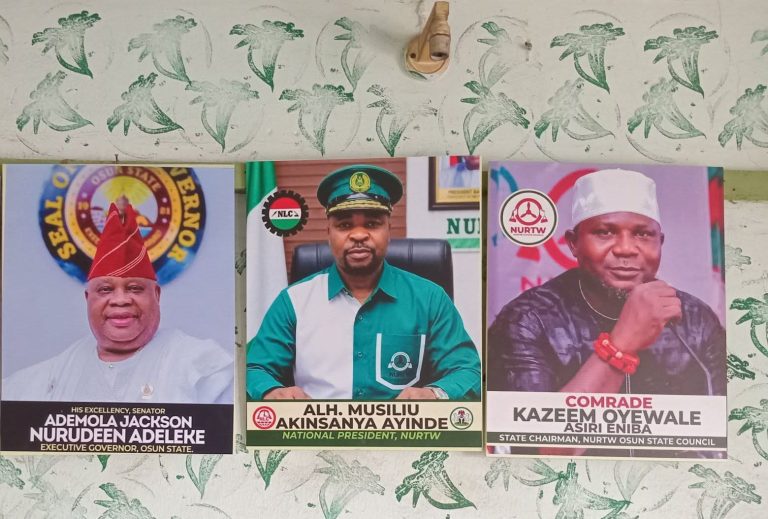
Osun NURTW Takes Adeleke Govt to Court Over Planned Park Management System
By Newstrends Reporter
OSOGBO – The leadership crisis between the National Union of Road Transport Workers (NURTW), Osun State Council, and the state government has taken a fresh turn as the union has dragged Governor Ademola Adeleke’s administration before the State High Court over its proposed motor park management system.
The union is challenging the legality of the government’s plan to introduce a new management arrangement for motor parks across the state, arguing that the move could undermine its existing operational rights and violate relevant legal provisions.
The suit, instituted by the NURTW Osun State Council, is seeking judicial intervention to determine whether the state government has the legal authority to restructure motor park administration without complying with established statutory procedures.
The union is led by its State Chairman, Comrade Kazem Oyewale, popularly known as Asiri Eniba, alongside other executive members.
According to information contained in the suit, the union is contesting the proposed arrangement on grounds bordering on its constitutional right to freedom of association and the legality of the government’s intended changes to the existing park management structure.
The development signals an escalating confrontation between the transport union and the Adeleke administration over who should control the management and administration of motor parks in Osun.
NURTW Seeks Court Order to Stop Implementation
The union is reportedly seeking an injunction restraining the state government from implementing the proposed park management arrangement pending the determination of the substantive suit.
At the centre of the dispute is the government’s proposed restructuring of motor park administration, which the union believes could affect its established role in the state’s transport sector.
The disagreement also raises questions about the extent of state governments’ powers to regulate motor park operations, particularly where established transport unions are involved.
The defendants in the suit include Governor Ademola Adeleke and the Osun State Government.
Government Yet to React
As of the time of filing this report, the Osun State Government had not issued an official response to the lawsuit.
However, the proposed park management arrangement has been presented as part of efforts to improve transport administration, strengthen revenue collection and enhance commuter safety.
The court is expected to consider the legal arguments presented by both sides as the dispute progresses.
The outcome could have wider implications for the relationship between state governments and transport unions, particularly over the administration, control and revenue generation of motor parks.
Osun NURTW Takes Adeleke Govt to Court Over Planned Park Management System
metro
Traffickers Target Schoolchildren With Fake Scholarships, Jobs, Private Photo Threats – NAPTIP
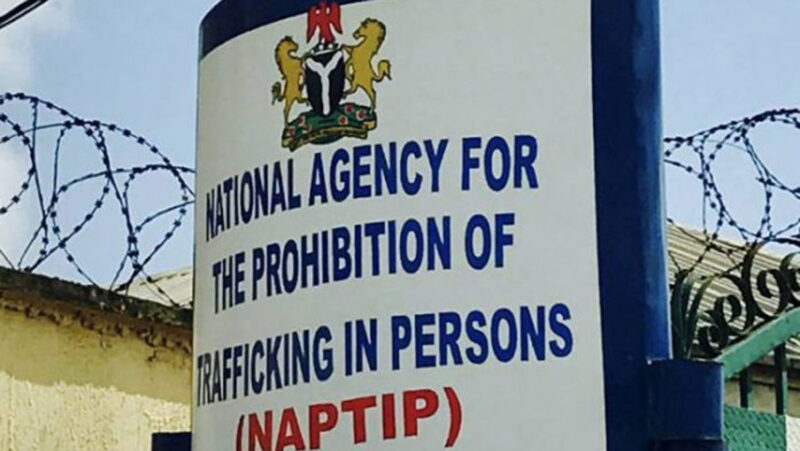
The National Agency for the Prohibition of Trafficking in Persons (NAPTIP) has raised concerns over the growing use of digital platforms by human traffickers and sexual predators to groom, manipulate and exploit vulnerable people, particularly children.
The agency warned that traffickers increasingly exploit online relationships, emotional vulnerability and threats to expose private photographs to force victims into sexual exploitation, financial extortion and other forms of abuse.
The warning comes amid growing concerns about online sexual exploitation, sextortion and the use of social media to recruit victims into organised trafficking networks.
NAPTIP has identified digital platforms as an increasingly important tool used by criminal networks to establish contact with unsuspecting individuals, gain their trust and eventually subject them to exploitation.
In a related warning issued in November, the agency’s Head of Press and Public Relations, Vincent Adekoye, disclosed that trafficking networks were targeting people through social interactions, fraudulent job advertisements and online relationships.
He explained that some suspected traffickers approach potential victims in social environments, including gyms and recreational centres, presenting themselves as helpful individuals before obtaining their telephone numbers and building relationships.
According to him, the criminals sometimes make late-night calls, offer assistance during emergencies and gradually create emotional dependence as part of their recruitment strategy.
The clubs were established under the School Anti-Trafficking Education and Advocacy Project (STEAP), implemented by the International Centre for Migration Policy Development (ICMPD) in partnership with NAPTIP and relevant state institutions.
READ ALSO:
- After-Sales Support Will Define Future of Nigeria’s Auto Industry – Carloha Marketing Chief
- Sowore Says ‘Half-Dead’ Tinubu Should Be Taken to Old People’s Home
- Panic as CNG Bus Explodes on Lagos-Ibadan Expressway, 17 Rescued, One Severely Burnt
Speaking at the event, Tonia Mgbemeje, Assistant Director of the Legal and Prosecution Unit at NAPTIP’s Benin Zonal Command, said traffickers no longer needed to meet their victims physically before recruiting them for exploitation.
She explained that criminals could establish relationships with children through social media platforms such as Facebook and Instagram, gradually gain their confidence and eventually manipulate them into dangerous situations.
According to Mgbemeje, some traffickers threaten to circulate victims’ private photographs online after persuading them to share such images.
She warned that children could be deceived with promises of attractive employment opportunities, scholarships and better living conditions abroad.
The NAPTIP official also identified demands for secrecy from parents, teachers and guardians as a major warning sign, urging students to question suspicious offers and seek assistance from trusted adults.
She stressed that children should never allow anyone they meet online to pressure them into keeping relationships, travel arrangements or financial offers secret from their families.
Mgbemeje described prevention as a major component of the agency’s anti-trafficking strategy, explaining that school-based sensitisation would help children recognise recruitment tactics before they became victims.
She said the newly inaugurated clubs would empower students to identify suspicious activities, educate their classmates and serve as advocates against human trafficking within their schools and communities.
Also speaking, Daniella Ige, Junior Project Officer of ICMPD in Edo State, said the project was being expanded to cover 37 schools across three phases.
She explained that the first phase covered 10 schools, the second included 15 schools, while the current phase covered another 12 schools.
The project initially targeted 50 schools, with approximately 30 students expected to participate in each club, translating to a target of 1,500 student advocates.
Ige said the initiative would also extend beyond schools to churches, markets and communities through parent-teacher associations to improve public awareness of human trafficking.
She added that students would be encouraged to organise debates, address fellow learners during assemblies and lead peer-to-peer sensitisation campaigns.
The Head of Programme and Research at the Edo State Migration Agency, Ernest Osarenkhoe, urged the students to become advocates for safe migration and help discourage irregular migration.
He warned against the belief that visas could simply be purchased, explaining that legitimate travel documents must be obtained through appropriate channels.
Similarly, Mercy Isibor, STEAP Desk Officer at the Edo State Ministry of Education, urged students to share the knowledge gained through the programme with their colleagues and communities.
Representing the Commissioner for Education, Washington Usifo, she said the state’s investment in education could be undermined if children remained vulnerable to trafficking and exploitation.
She encouraged students to report suspicious approaches to teachers, guidance counsellors, club coordinators and school principals rather than remain silent.
The Vice-Principal of Umagbae Secondary School, Philomena Ogbewe, commended the organisers, describing the programme as beneficial to students and teachers.
The School Anti-Trafficking Education and Advocacy Project is supported by the Government of the Netherlands and seeks to prevent human trafficking among school-age children through education, awareness campaigns and community engagement.
Its activities cover Edo, Delta, Ogun, Benue and Enugu states.
Traffickers Target Schoolchildren With Fake Scholarships, Jobs, Private Photo Threats – NAPTIP
metro
Panic as CNG Bus Explodes on Lagos-Ibadan Expressway, 17 Rescued, One Severely Burnt

Seventeen people have been rescued after a Compressed Natural Gas (CNG)-powered commercial bus exploded and burst into flames along the Lagos-Ibadan Expressway, leaving one passenger with severe burn injuries.
The incident occurred on Wednesday, November 11, 2026, at Berger Bus Stop, along the Lagos-bound section of the expressway, triggering panic among commuters and other motorists.
According to the Lagos State Traffic Management Authority (LASTMA), the vehicle was a fully loaded Toyota Hiace bus with registration number EKY 798 YK.
The bus, carrying 18 occupants, including the driver, was travelling from the Mowe-Ibafo axis towards Lagos when it reportedly caught fire following a gas explosion.
LASTMA officials who responded to the emergency rescued 17 occupants, including the driver, without injuries.
However, one male passenger seated at the rear of the vehicle sustained severe burns in the incident.
READ ALSO:
- Nigerian Pastor, 68, Dies Mid-Air While Returning From US Vacation
- Osun Lawmaker Drags Fadahunsi to Court, Seeks Ban From 2027 Election Over Alleged Incitement
- Iran Accuses US of Threatening Nuclear Scientists With $20m Reward
The injured passenger was evacuated by LASTMA personnel and taken to the Lagos State Trauma and Emergency Centre, Toll Gate, for urgent medical treatment.
The Lagos State Fire and Rescue Service also responded to the incident, deploying firefighting equipment to extinguish the flames and prevent the fire from spreading to other vehicles and nearby areas.
Police officers from the Ojodu Police Division provided security at the scene, maintained order and supported the emergency response.
Commending the emergency responders, LASTMA General Manager, Olalekan Bakare-Oki, praised the agency’s personnel for their swift intervention, courage and professionalism, which helped save the lives of 17 occupants.
He also acknowledged the cooperation between LASTMA, the Lagos State Fire and Rescue Service and the Nigeria Police Force during the rescue operation.
Bakare-Oki urged commercial transport operators, particularly those using CNG-powered vehicles, to prioritise regular professional inspections and proper vehicle maintenance.
He emphasised the need to comply with prescribed safety standards, especially those relating to gas storage systems and fuel delivery components, to reduce the risk of explosions and other fire-related emergencies.
The incident has renewed concerns about the safety of CNG-powered commercial vehicles and the need for strict adherence to maintenance requirements as Nigeria increasingly promotes natural gas as an alternative fuel for transportation.
Panic as CNG Bus Explodes on Lagos-Ibadan Expressway, 17 Rescued, One Severely Burnt
-

 metro2 days ago
Fayose Petitions IGP, Threatens Lawsuit Over Rape, Torture Allegations
-

 Politics2 days ago
ADC Raises Alarm as Court Delays Release of Lifu’s Judgment Despite Payment
-

 metro2 days ago
‘Miracle’ Turns Sour as Visiting Pastor Vanishes with Congregants’ Phones During Crusade in Edo
-
 News1 day ago
Despite Tegbe’s 72-Hour Promise, Nigerians Still Battle Power Outages
-

 Auto2 days ago
Four-day Abuja International Motor Fair begins tomorrow Nov 10
-

 Politics3 days ago
ADC Crisis: Aregbesola Heads to Appeal Court, Challenges Judgment Nullifying Mark-Led Leadership
-

 Railway2 days ago
Tinubu Targets December 3 Inauguration for Kaduna-Kano Rail Project as Construction Hits 90%
-

 Auto2 days ago
Seven Drivers Emerge for Todays Naija Driver Challenge Grand Finale in Lagos