

metro
Baby Among Over 80 Migrants Dead After Boat Drifts for 27 Days Near Canary Islands

Baby Among Over 80 Migrants Dead After Boat Drifts for 27 Days Near Canary Islands
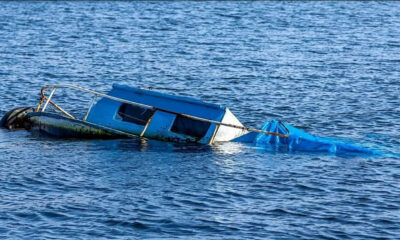
A horrific tragedy has unfolded in the Atlantic Ocean, where more than 80 migrants, including a baby, are feared dead after a boat carrying at least 127 people was rescued off Spain’s Canary Islands following 27 days adrift at sea. Spanish Maritime Rescue teams located the vessel approximately 65 nautical miles (120 kilometers) southwest of Gran Canaria on Wednesday afternoon using a surveillance aircraft. The rescue vessel Guardamar Urania reached the stricken craft around midnight, finding 44 survivors and five bodies on board. The discovery of the vessel, with its grim cargo of death and survival, has once again brought into sharp focus the immense human cost of irregular migration along one of the world’s most dangerous maritime routes.
The survivors, all men from sub-Saharan Africa, were described as disoriented, severely dehydrated, and suffering from the effects of drinking seawater. Many collapsed or vomited upon reaching land, their bodies pushed to the absolute limits of human endurance after nearly four weeks without adequate food or fresh water. Three survivors in critical condition were airlifted by helicopter to Hospital Doctor Negrín and Hospital Insular, while the remaining 41 were transported by sea to the port of Arguineguin on Gran Canaria. Three more survivors were subsequently taken to hospitals, bringing the total number hospitalized to six. The Spanish Red Cross, which is caring for the survivors, reported that they came from Mali or Senegal and that some were underage. According to José Antonio Rodríguez Verona, a Red Cross spokesperson in the Canaries, the survivors reported being stranded at sea for “many, many days,” having run out of provisions and fallen ill from drinking seawater—a desperate measure that often leads to fatal dehydration and organ failure.
READ ALSO:
- Man Faces Treasonable Felony Charge Over Alleged Destruction of Tinubu Campaign Billboards
- Oyo Police Arrest Six Over Alleged Production, Circulation Of €8,900 Counterfeit Currency
- LSSC Boss Meets Teen Squash Star Over Viral Video, Promises Action on LG Hurdle
Tragically, due to rough sea conditions—including 20-knot winds and waves reaching 2.5 meters—rescue teams were unable to recover the five bodies found on the boat and were forced to leave them behind. The vessel was left adrift after the rescue operation, its dead passengers still aboard, a haunting reminder of the perils of the Atlantic crossing. The decision to leave the bodies behind was not taken lightly, but the safety of rescue personnel and the precarious state of the vessel made any recovery attempt too dangerous. The dead remain at sea, their final resting place the same unforgiving waters that claimed their lives.
The migrant rights group Caminando Fronteras (Walking Borders), founded by human rights activist Helena Maleno Garzón, has reported that at least 83 people died during the voyage, including three women and a baby. The NGO compiles its data based on testimonies from migrants’ families and survivors, often providing the only comprehensive picture of tragedies that unfold far from land and out of official view. Survivors told aid workers that more than 100 people had originally been on board, including women and a baby, but as people died during the journey, their bodies were tossed into the ocean until survivors no longer had the strength to do so. The exact death toll remains difficult to verify independently, but the scale of the tragedy is undeniable, with 83 lives lost out of 127 who embarked on the journey.
The vessel is believed to have departed from The Gambia on August 7, according to Spain’s Civil Guard, which confirmed that markings on the boat’s hull matched a vessel reported missing from the West African nation. The boat is reported to have carried 127 or 128 people when it left, including four women and a baby. The journey from West Africa to the Canary Islands typically takes about a week under favorable conditions, but this vessel spent 27 days at sea, blown far off course by strong currents and poor weather. For nearly a month, the passengers endured starvation, dehydration, exposure to the elements, and the psychological torment of watching fellow travelers die one by one. The fact that 44 people survived at all is a testament to the human will to live, but it also underscores the sheer randomness of survival in such desperate circumstances.
This tragedy serves as a grim reminder of the immense dangers of the Atlantic route from West Africa to the Canary Islands, one of the deadliest migration routes in the world. Thousands of migrants attempt the perilous journey each year, often spending weeks at sea in overcrowded, flimsy boats, facing rough seas, strong currents, dehydration, and starvation. The route has claimed thousands of lives in recent years, yet the flow of migrants continues, driven by poverty, conflict, and the hope of a better life in Europe. Despite a 57% drop in arrivals to the islands so far in 2026, with only 5,163 migrants reaching the Canaries from January to August, the human cost remains devastating. In a report released in June, Caminando Fronteras said that a total of 1,317 migrants died while attempting to reach Spain during the first five months of 2026, with 635 losing their lives on the Atlantic route to the Canary Islands. These figures represent not just statistics but individual human beings—fathers, mothers, children, and babies—each with dreams and hopes that were extinguished by the unforgiving sea.
Canary Islands regional leader Fernando Clavijo condemned the loss of life, stating on social media: “It is intolerable that lives continue to be lost. The Canaries cannot get used to or accept as normal the fact that the Atlantic continues to be a death trap”. Clavijo added that the incident highlighted the need for a better state migration policy, saying: “We cannot continue managing migration from crisis to crisis. We are talking about lives and dignity”. His words reflect growing frustration among regional authorities who are often left to deal with the humanitarian consequences of a migration crisis that has no easy solutions. The tragedy has reignited calls for the European Union and Spanish national government to develop more comprehensive and humane migration policies that address the root causes of irregular migration while providing safe and legal pathways for those seeking refuge.
Baby Among Over 80 Migrants Dead After Boat Drifts for 27 Days Near Canary Islands





metro
SERAP Sues INEC Over ₦126bn Electoral Funds, Demands Full Accountability
SERAP Sues INEC Over ₦126bn Electoral Funds, Demands Full Accountability
The Socio-Economic Rights and Accountability Project (SERAP) has sued the Independent National Electoral Commission (INEC) over its alleged failure to account for more than ₦126.46 billion allocated for electoral operations, asking the Federal High Court in Abuja to compel the commission to disclose how the public funds were spent.
The lawsuit, filed last week and marked FHC/ABJ/CS/2507/2026, followed findings attributed to the Auditor-General of the Federation’s 2023 audited report, published on August 7, 2026. The reported irregularities relate mainly to transactions carried out in 2022, with some extending into 2023.
SERAP is seeking a court order compelling INEC to provide a detailed financial and documentary account of the funds, including the amounts released and paid, the beneficiaries, the contractors involved and the beneficial owners of the companies that received the payments.
The organisation also wants the commission to provide evidence that the goods and services covered by the transactions were delivered, explain how the electoral materials were used and disclose their present location and condition.
According to SERAP, the money was intended for the procurement of ballot boxes, electoral devices, sensitive election materials, result sheets, vehicles and accreditation equipment, as well as audit services, consultancy, digital archiving and other electoral operations.
The organisation said the Auditor-General’s report raised concerns about several transactions, including more than ₦112.15 billion allegedly paid for ballot boxes, electoral devices and other materials without competitive bidding or a Certificate of No Objection from the Bureau of Public Procurement (BPP).
READ ALSO:
- Akpabio Under Fire as Senators Move to Secure His Return as Senate President in 2027
- Lamine Yamal Shines as Barcelona Thrash Real Betis 5-2
- Tinubu Scraps Recruitment Waiver Requirement for Federal Universities
SERAP said the audit findings indicated that there was no evidence that the items had been procured. It also cited concerns that contracts were awarded to companies whose competence, experience, operational capacity, addresses and factory locations were reportedly unknown.
The Auditor-General reportedly raised the possibility that the funds had been diverted and recommended their recovery. However, the allegations remain subject to verification and do not, by themselves, establish that the entire amount was stolen.
Another transaction highlighted by SERAP involved approximately ₦1.06 billion allegedly paid for Toyota Prado TXL 2021-model vehicles without the required advertisement, competitive bidding, bid evaluation or procurement clearance.
The organisation also cited more than ₦3.13 billion allegedly paid to four contractors for ballot guides, sensitive materials and result sheets before the contracts were awarded. According to SERAP, the audit raised questions about the transactions and the possibility that the money had been diverted.
A further ₦9.24 billion was reportedly paid under 22 contracts covering similar goods and services. SERAP said the Auditor-General questioned whether the contracts had been split to circumvent procurement rules and whether payments had been made for items that were not supplied.
Other transactions cited in the lawsuit included ₦129.37 million paid to 19 accounting firms for financial audit services without sufficient supporting evidence, more than ₦504 million for accreditation devices under questioned procurement arrangements, and about ₦235.1 million paid to contractors for sleeping mats and digital archiving.
SERAP wants INEC to provide documentary and physical evidence showing that the electoral materials covered by the disputed payments were actually procured. It is also asking the court to compel the commission to identify the contractors, suppliers, consultants and public officials who authorised or processed the transactions.
The organisation further wants INEC to ensure that electoral equipment and other public assets covered by the audit findings are not disposed of, transferred, destroyed or written off in ways that could frustrate investigations, transparency or the recovery of public funds.
SERAP argued that Nigerians have a right to know how money appropriated for elections was managed, particularly as the country prepares for the 2027 general elections.
It maintained that transparency in electoral spending is necessary to protect public confidence in INEC and ensure that funds allocated for credible elections are used for their intended purposes.
The organisation cited provisions of the 1999 Constitution, as amended, national anti-corruption laws and Nigeria’s obligations under the United Nations Convention against Corruption in support of its demand for accountability.
The suit was filed on SERAP’s behalf by lawyers Kolawole Oluwadare, Kehinde Oyewumi and Andrew Nwankwo.
No hearing date had been announced as of Sunday, October 18, 2026.
The case follows an earlier demand by SERAP in September, when the organisation gave INEC seven days to explain the expenditure and called for investigations into transactions flagged by the Auditor-General.
The latest legal action seeks to compel the electoral commission to provide the requested information through a court order.
SERAP Sues INEC Over ₦126bn Electoral Funds, Demands Full Accountability
metro
Borno Highway Blast: Soldiers Killed as Military Vehicle Hits Landmine
Borno Highway Blast: Soldiers Killed as Military Vehicle Hits Landmine
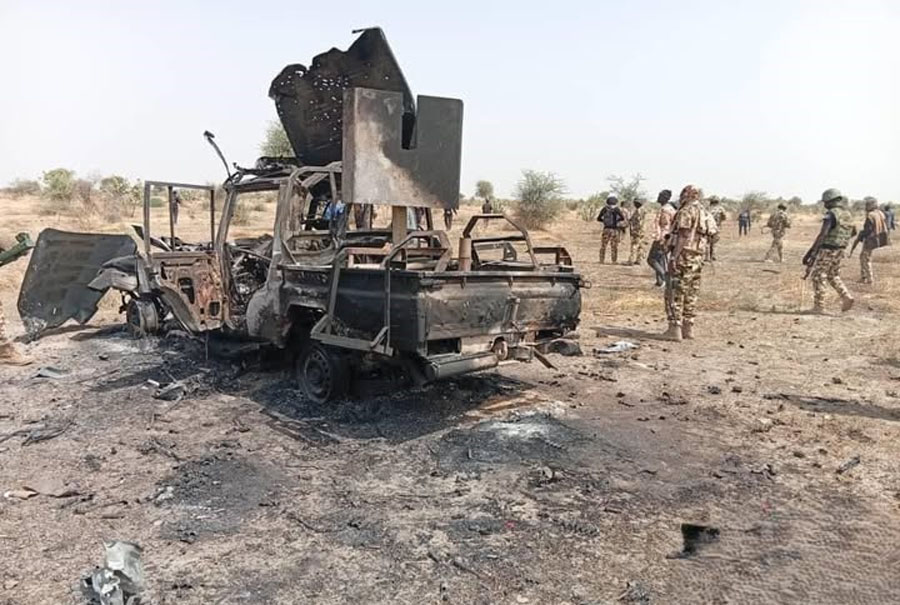
At least eight Nigerian soldiers have been killed after a military patrol vehicle struck a landmine along a highway in Borno State, north-east Nigeria.
The incident occurred on Saturday in Kinuba village, about 25 kilometres from Gamboru, near Nigeria’s border with Cameroon, according to defence sources cited by AFP.
The soldiers were reportedly travelling along the highway while inspecting members of an anti-insurgency militia involved in clearing thick vegetation beside the road when their vehicle ran over the explosive.
The blast killed all eight soldiers aboard the vehicle, while a militia member supervising the vegetation-clearing operation sustained shrapnel injuries.
READ ALSO:
- Kano: Soldiers Kill Two Kidnappers, Rescue Victim, Recover ₦10m
- Oyo Baby Trafficking Scandal: Mother, Doctor Arrested Over Alleged ₦2m Sale of Infant
- Nairobi Mother Says Husband Abandoned Her During Childbirth, Paid Dowry for Another Woman
A member of the militia, Ibrahim Liman, said the explosive had been planted on the dusty road and detonated remotely.
The attack was blamed on the Islamic State West Africa Province (ISWAP), an armed group that operates in the region and has repeatedly targeted security personnel and civilians.
The highway attack came amid renewed violence in Borno, where insurgents have continued to target military formations and patrols despite ongoing counter-insurgency operations.
The incident also occurred on the day the Chief of Army Staff, Lieutenant General Waidi Shaibu, visited Maiduguri, the state capital, following a separate attack on a military base that reportedly killed 15 soldiers and five members of the Civilian Joint Task Force.
ISWAP and its rival, Boko Haram, have increasingly used improvised explosive devices and landmines against military convoys and other road users in the North-East.
The latest incident underscores the continuing security risks along major highways in Borno, where thick vegetation can provide cover for insurgents to plant explosives and launch attacks on passing vehicles.
Borno Highway Blast: Soldiers Killed as Military Vehicle Hits Landmine
metro
Okonjo-Iweala: My Mother Was Kidnapped After I Uncovered $2.4bn Subsidy Fraud
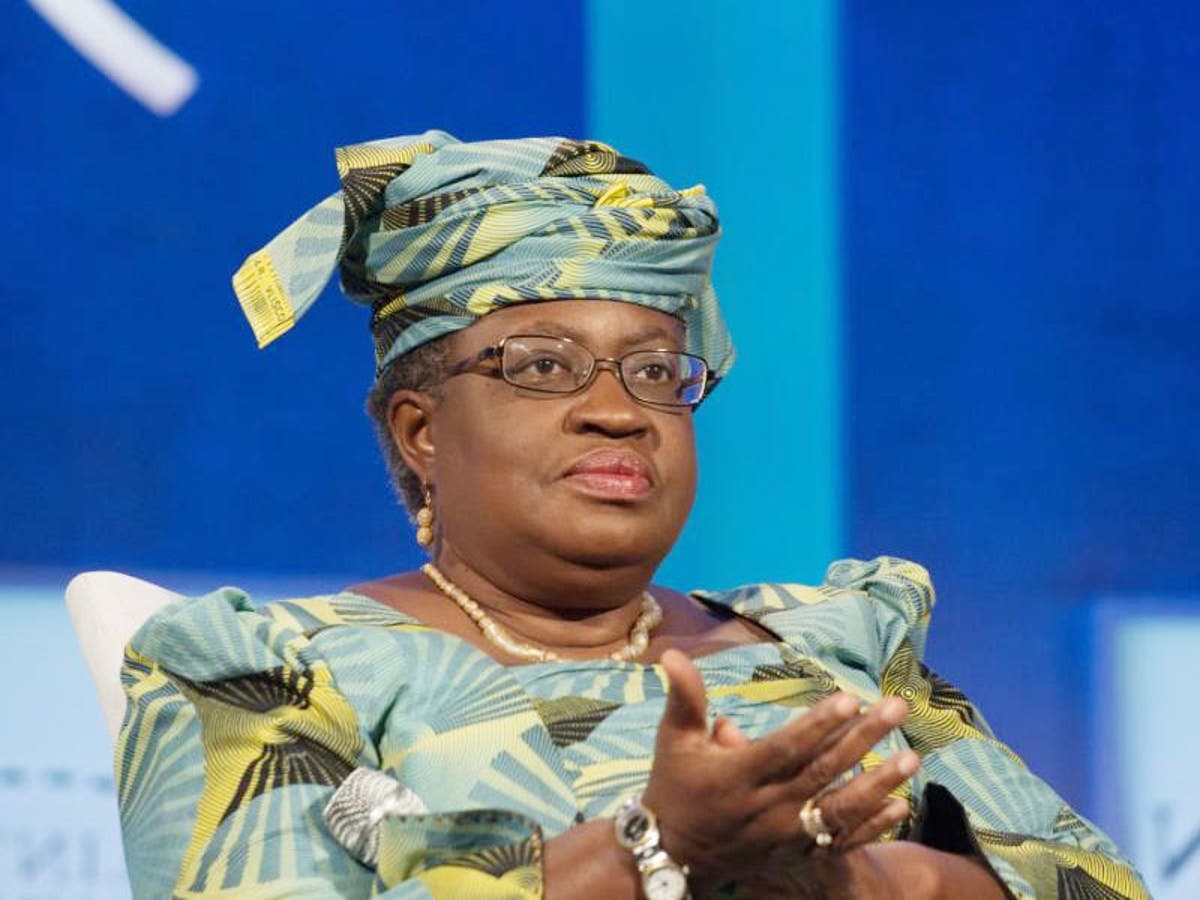
Okonjo-Iweala: My Mother Was Kidnapped After I Uncovered $2.4bn Subsidy Fraud
Ngozi Okonjo-Iweala, Director-General of the World Trade Organisation (WTO), has recounted how her efforts to expose an alleged $2.4 billion fuel subsidy fraud in Nigeria were followed by threats and the kidnapping of her mother in 2012.
Okonjo-Iweala, who was Nigeria’s finance minister under former President Goodluck Jonathan, said the kidnappers demanded that she resign from office and leave the country before her mother, Kamene Okonjo, would be released.
She said the abduction, which occurred in December 2012, subjected her family to five days of anguish and forced her to confront a painful choice between her public responsibilities and her mother’s safety.
According to her account, the crisis followed an investigation into suspicious claims submitted under Nigeria’s fuel subsidy programme. The investigation reportedly uncovered about $2.4 billion in fraudulent claims, prompting the government to withhold payments on the disputed transactions.
Okonjo-Iweala said she had raised concerns about the figures with the president and requested an audit of the accounts. After approval was granted, the review uncovered what she described as substantial fraud.
READ ALSO:
- Kano: Soldiers Kill Two Kidnappers, Rescue Victim, Recover ₦10m
- Oyo Baby Trafficking Scandal: Mother, Doctor Arrested Over Alleged ₦2m Sale of Infant
- Nairobi Mother Says Husband Abandoned Her During Childbirth, Paid Dowry for Another Woman
The former minister said the refusal to pay the disputed claims was followed by threats against her, before her mother was abducted from her home in Ogwashi-Uku, Delta State.
The kidnappers reportedly sought to pressure her into abandoning her position in government, making her resignation a condition for her mother’s release.
Okonjo-Iweala said the experience was devastating, admitting that she considered leaving office because her mother’s life was more important to her than her position.
She recalled that her father, the late Professor Chukwuka Okonjo, encouraged her not to surrender to blackmail and urged her to continue her work.
Her mother eventually escaped after spending five days in captivity, bringing the ordeal to an end.
The incident exposed the personal risks associated with efforts to investigate alleged financial abuses in Nigeria’s petroleum subsidy system, which had long been dogged by questions over payments to fuel importers and the verification of claims.
Okonjo-Iweala later became the first woman and first African to lead the WTO, taking office as Director-General in March 2021.
Okonjo-Iweala: My Mother Was Kidnapped After I Uncovered $2.4bn Subsidy Fraud
-

 metro3 days ago
₦130m Toyota Tundra Wrecked: Lagos Dealer Questions Police Over Suspect’s Release
-

 News3 days ago
₦200m Fake Alcohol Packaging Uncovered as NAFDAC Raids Aba Market
-

 metro2 days ago
Suspended Archbishop Ibezim Drags Anglican Primate to Court, Challenges Six-Month Leave
-

 Sports2 days ago
Real Madrid Demand Tebas’ Exit After Explosive Nazi Propaganda Row
-

 Entertainment2 days ago
ToluwaniSings’ Final Hours: Aide Reveals Desperate Search Across 8 Hospitals
-
 Education3 days ago
Nigerian Universities Producing Certificate Holders, Not Problem-Solvers, Says Ojuolape
-

 metro2 days ago
Imodi-Ijebu Muslim Community Bets on 20 Chiefs to Drive Education, Economic Growth
-

 Politics2 days ago
2027: Kwankwaso Signals Fuel Subsidy Comeback as NDC Vows to Crash Petrol Prices