

metro
Bello Turji Boasts of Killing Soldiers as Army Confirms Sokoto Weapons Camp

Bello Turji Boasts of Killing Soldiers as Army Confirms Sokoto Weapons Camp
- Security tensions escalate across eastern Sokoto following deadly IED attack, with intelligence reports indicating Turji’s fighters are conducting military-style drills with newly acquired weapons
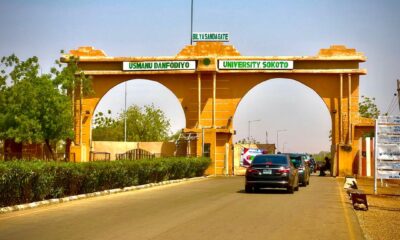
SOKOTO, Nigeria — Notorious bandit leader Bello Turji has surfaced in a video claiming victory over security personnel following a deadly incident involving troops in Sokoto State. The development comes after an improvised explosive device (IED) reportedly detonated on a military vehicle conveying soldiers to the Bargaja community in Isa Local Government Area, killing at least two personnel and injuring several others.
The soldiers were said to be heading to the community in response to a distress call after bandits attacked the area in the early hours of Saturday. Residents said armed men stormed the village between 12:30 a.m. and 3:00 a.m., firing gunshots and forcing residents to seek assistance from security operatives. One resident, who requested anonymity, alleged that the attackers planted the explosive device along the Isa-Bargaja road before the troops arrived.
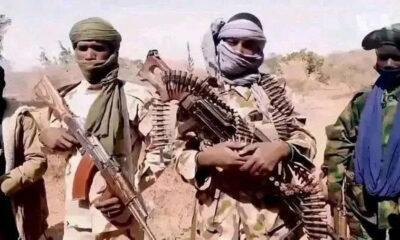
In the video released after the incident, Turji expressed satisfaction over the reported deaths of some of those he described as his enemies. “We thank Allah for allowing us to witness this Saturday, June 20. After thanking Allah, in this country of ours, Nigeria, especially in some areas where we have been facing constant challenges,” he said. “God willing, Allah has granted us victory over those who have been rustling our livestock and killing our innocent brothers in some local government areas including Isa, Zamfara, Sokoto State, Sabon Birni and other local government areas around. Allah granted us victory over these people carrying out operations against us and taking away our livestock. We have succeeded in killing some of them, and we have successfully recovered our livestock from their hands.”
The claims made in the video and related social media posts could not be independently verified at the time of filing this report.
READ ALSO:
- Islamic Teacher Lynched, Body Set Ablaze in Kaduna Over False Child Theft Accusation
- Trump Predicts Starmer’s Resignation, Blames UK PM’s Immigration, Energy Policies
- Dangote: My Goal Is to Industrialise Africa, Not Accumulate Wealth
Meanwhile, concerns over security in the region have intensified following allegations that Turji is expanding his operational capacity and acquiring additional weapons. The concerns were raised by Basharu Altine Guyawa Isa, Sokoto State Coordinator of the Movement for Social Justice and Good Governance, who made the claims in a Facebook post and subsequent video.
According to Basharu, fighters loyal to Turji, including Illa Manawa and Bomi, believed to be Turji’s younger brother, recently gathered in communities stretching from Bingabale Kudu through Bafarawa East to Bargaja along the Sokoto-Zamfara border. He alleged that the group was conducting military-style drills and weapons training with newly acquired arms, some of which were reportedly used during recent clashes with security personnel operating in the area.
Basharu further claimed that intelligence reports suggested the weapons were part of a recent shipment obtained by the group. The activist also alleged that fighters with suspected links to Boko Haram had moved into the area to provide training and strengthen Turji’s ranks with advanced combat skills. He said the activities were taking place in communities located along the border between Sokoto and Zamfara states.
In addition, Basharu claimed that information from sources in Binchi indicated that a night-vision device allegedly purchased by Turji formed part of the equipment recently delivered to his camp. He also linked the acquisition and movement of the weapons to Kachalla Haru Dole and Kachalla Ibrahim Chimo, whom he described as commanders operating major bandit camps beyond the Maradun River. According to him, both men played key roles in facilitating the delivery of the weapons to Turji’s network.
The activist further alleged that emerging intelligence pointed to a growing alliance between Chimo and Turji, which he said could be aimed at expanding their influence across eastern parts of Sokoto State. He warned that the alleged collaboration might be part of preparations for coordinated attacks on the headquarters of five local government areas before the height of the rainy season.
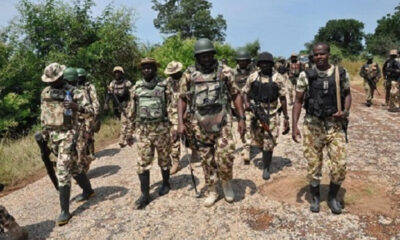
Significantly, the Nigerian Army has confirmed that it is aware of the intelligence reports regarding weapons training and tactical drills allegedly being conducted by Turji and his loyalists in parts of Isa Local Government Area . The Acting Deputy Director, Army Public Relations, 8 Division, Lt. Col. Osoba Olaniyi, assured that the military is actively assessing the situation and implementing appropriate security measures . Security sources further alleged that the exercises involve armed fighters loyal to Turji, including close associates such as Illa Manawa and Dodo, reportedly his younger brother . Preliminary assessments suggest the weapons may form part of a recent supply delivered to the group, raising concerns over an increase in firepower among armed gangs operating in the region .
The alleged drills are reportedly taking place in remote border communities linking Sokoto and Zamfara States, an area that has remained difficult to secure despite ongoing military operations under the campaign known as Operation Fansan Yamma . Investigators have further linked suspected commanders such as Kachalla Haru Dole and Kachalla Ibrahim Chimo to arms movement and coordination across the region .
Hours after making the allegations, Basharu shared another video on Facebook which he claimed showed some of the newly acquired weapons in Turji’s possession. In an accompanying post, he alleged that the footage was released by Turji on June 20, 2026, and displayed some of the weapons referenced in his earlier claims. He also alleged that Turji used the recording to showcase what he described as successful operations against security personnel along the Isa-Bargaja corridor.
Efforts to obtain official reactions from the Sokoto State Police Command were unsuccessful. Calls, text messages, and WhatsApp messages sent to the command’s spokesperson, DSP Ahmad Rufai, were not answered as of the time this report was filed.
The continued violence has taken a heavy toll on rural communities across the North-west, where residents have repeatedly abandoned their farms because of attacks, kidnappings, and demands for protection levies by armed groups. The renewed insecurity comes at a critical period in the farming season, raising concerns among residents and humanitarian organisations about food production and livelihoods in areas already affected by years of conflict.
Bello Turji Boasts of Killing Soldiers as Army Confirms Sokoto Weapons Camp







metro
Police Detain ASP After Bullet Kills Girl, Injures Another in Lagos
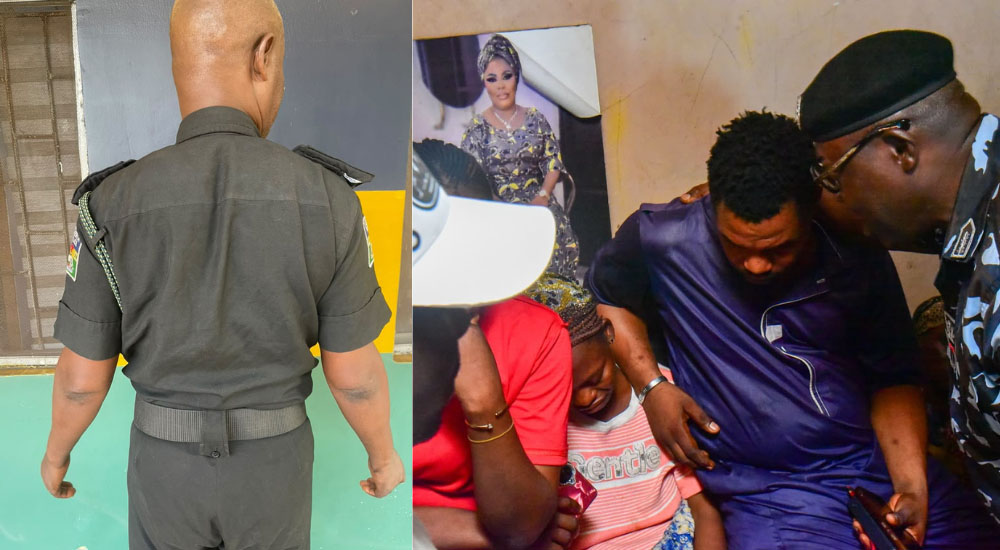
The Lagos State Police Command has detained an Assistant Superintendent of Police (ASP), Omotayo Olajide, after a bullet discharged from his firearm during a police operation in Ajegunle killed a young girl and injured another.
The incident occurred on Thursday, November 5, 2026, between 9:30 pm and 10 pm in the Nosamu area of Ajegunle, Lagos State, during a police response to a violent clash between two rival groups.
The police identified the deceased girl as Omole Taiwo, while the second victim is receiving medical treatment and is reportedly in stable condition.
According to the command, preliminary investigations showed that officers were deployed following a distress call over a clash between rival groups known as the Nosamu Boys and Alayabiagba Boys.
The groups were reportedly engaged in a violent confrontation over toll collection and allegedly armed with cutlasses and other dangerous weapons.
During the operation, ASP Olajide discharged his firearm, and the bullet struck the two girls.
READ ALSO:
- ‘Stop Blaming Us’, APC Tells Atiku, ADC Over Court Judgment
- Atiku to Tinubu: You Cannot Use Courts to Escape Nigerians’ Verdict
- University Funding Crisis: States Beg FG to Take Over Cash-Strapped Institutions
Both victims were immediately rushed to Ajeromi General Hospital for medical attention. However, Taiwo was later transferred to the Lagos State University Teaching Hospital (LASUTH), Ikeja, where she eventually died.
The police said the officer had been disarmed and detained, while the case had been transferred to the State Criminal Investigation Department (SCID) for further investigation.
In a statement issued on Saturday, the command’s spokesperson, SP Abimbola Adebisi, said the investigation would establish the circumstances surrounding the shooting and determine the appropriate legal and disciplinary action.
The Commissioner of Police, Lagos State Command, Tijani Fatai, also visited the family of the deceased to express his condolences.
Fatai assured the bereaved family that the investigation would be thorough, adding that no police officer found culpable would be shielded.
The police have yet to establish whether the officer deliberately fired at the rival groups, whether the girls were caught in the line of fire or whether the firearm was discharged unintentionally.
The incident has renewed concerns over civilian safety during police operations and the need for accountability whenever security personnel use firearms in public places.
Police Detain ASP After Bullet Kills Girl, Injures Another in Lagos
metro
How Bandits Killed Two, Abducted 18 in Kaduna Village Raid

How Bandits Killed Two, Abducted 18 in Kaduna Village Raid
Two residents have been killed while at least 18 others, including women and children, were abducted after armed bandits attacked Akwando community in Kuturmi, Kachia Local Government Area of Kaduna State.
The attack reportedly occurred around midnight on Wednesday, November 4, 2026, when the gunmen stormed the community and launched an assault on residents in their homes.
A resident, who spoke on condition of anonymity, said the attackers killed two people before taking several villagers away to an unknown destination.
A security source familiar with the incident also confirmed the attack, telling Daily Trust that 18 residents were abducted while two people were killed.
“Yes, 18 villagers were abducted but two people were killed,” the source reportedly said.
The attack has heightened concerns over the worsening security situation in communities across the Kuturmi area, where residents have repeatedly suffered bandit attacks, killings and mass abductions.
The attackers had reportedly not contacted the families of the abducted residents or made any ransom demands as of the time the incident was reported.
READ ALSO:
- Nasarawa Murder: Two Arrested as Police Recover Burnt Body from Dry Well
- Kunle Afod Breaks Silence on Marriage Crisis, Cheating Allegations, Sex Toys
- NDLEA Arraigns Two Mexicans, Four Nigerians Over Secret Meth Lab in Oyo Forest
The deceased were identified as Irimiya Galadima, 41, and Benjamin Danlami, 32, by the Kuturmi Unity Development Association (KUDA).
However, the association gave a higher figure of 20 abducted residents, releasing their names in a statement jointly signed by its President, Dr Joseph Ariko, and Publicity Secretary, Manasseh Samuel Akwando.
Those listed include Usman Galadima, La’a’zarus Genesis, Madalin Markus, Happy Stephen, Lovet Ishaya, Afiniki Irimeya, Amina Ahmadu, Miracle Genesis, Hellen Irimeya and Musa Genesis.
Others are Janet Irimeya, Gloria Markus, Zila Stephen, Alis Ahmadu, Haske Ahmadu, Great Isiac, Hanatu Irimeya, Desmon Ishaya, Siam Shagari and Nansy Genesis.
The association expressed concern over repeated attacks on communities in Kuturmi land, recalling that an Easter Sunday attack on Ariko community reportedly killed five people at the scene, while another 17 victims subsequently died in captivity.
It also cited an attack on Awon community, where two people were reportedly killed and 11 others abducted.
According to KUDA, five of the abducted residents regained their freedom on November 3, but one reportedly died the following day. Another victim escaped, while five others died in captivity.
The association said the recurring attacks had forced residents to abandon their homes and farmlands, disrupted economic activities and created widespread fear across affected communities.
It further alleged that armed groups had restricted residents’ access to their ancestral lands, demanding levies before allowing them to cultivate their farms or harvest agricultural produce.
KUDA appealed to the Federal Government and the Kaduna State Government to urgently deploy adequately equipped security personnel to Akwando, Ariko, Awon and other vulnerable communities.
It also called for coordinated security operations to rescue the abducted residents, the establishment of permanent security posts, regular patrols and effective early-warning systems.
Meanwhile, some residents of Babban Saura PW in Millennium City, Chikun Local Government Area of Kaduna State, abducted since October 1, were still being held captive.
Among them are Hafsat Sikiru and her son, Abdulsalam. Her husband and the boy’s father, Sikiru Shuaibu, was reportedly killed while attempting to protect his family during the attack.
Their continued captivity comes despite the recent rescue of eight kidnap victims by security operatives during a forest operation. One of those rescued was a pregnant woman abducted from her residence in Millennium City on October 6.
Kaduna State Police Command spokesperson, Mansir Hassan, could not be reached for comment on the Akwando attack, while the state Ministry of Internal Security and Home Affairs had yet to issue an official statement at the time of reporting.
How Bandits Killed Two, Abducted 18 in Kaduna Village Raid
metro
Church Growth Is Not About Numbers’: Bishop Smith Champions Training for Small Churches

‘Church Growth Is Not About Numbers’: Bishop Smith Champions Training for Small Churches
Concerned about the leadership challenges confronting independent and grassroots churches, Bishop James G. Smith, a veteran missionary with nearly three decades of international experience, is stepping up efforts to strengthen smaller congregations through ministerial training, mentorship and leadership development.
Smith, founder of Life and Power Global Ministry, Liberia, and owner of St. James Revival Assemblies, said the initiative was designed to equip church leaders with the spiritual knowledge, administrative skills and institutional capacity required to build sustainable ministries, regardless of their congregation’s size.
He made this known at a two-day ministers’ conference organised by his ministry on October 23 and 24, 2026, at Foursquare Gospel Church, Iba Housing Estate, Lagos.
The conference, tagged “Strength for the Journey of Ministry,” with the theme “Raising Strong and Effective Church,” brought together pastors, bishops, church leaders and ministers for spiritual enrichment, leadership development and capacity-building.
Smith disclosed that the initiative attracted representatives of about 68 churches and ministries, while the event report documented 64 participants.
Explaining the motivation behind the programme, the cleric said many independent and grassroots churches struggle with inadequate mentorship, weak administrative structures and limited access to the resources available to larger denominations.
Originally from Delta State, Smith spent 11 years pastoring in Nigeria before relocating to Liberia for missionary work about 29 years ago. His ministry has since focused on church planting, evangelism, leadership development and training ministers, with plans to extend the initiative to more countries.
He expressed concern that smaller congregations sometimes struggle to retain their members and maintain their identity, particularly when larger churches establish a presence in their communities.
However, he argued that the true strength of a church should not be determined by its numerical strength, physical structures or financial resources, but by the spiritual maturity of its members, the quality of its leadership and its commitment to evangelism.
“We are all working for one God, one purpose, one kingdom. All of the churches, whether a small church, grassroots church or giant church, we are all doing the same thing,” he said.
Smith therefore called for greater cooperation among Christian leaders, insisting that the growth of the Church required collective commitment rather than competition among congregations.
Discipleship, the foundation of sustainable growth
A central message of the conference was the need for churches to move beyond attracting worshippers to deliberately nurturing spiritually mature believers capable of sustaining their ministries.
Smith maintained that bringing people into the church was only the beginning of the responsibility of Christian leadership, stressing that members must receive proper biblical instruction, mentorship and practical guidance to enable them to contribute meaningfully to the growth of their congregations.
Drawing lessons from the ministry of Jesus Christ and His disciples, he urged pastors to invest in developing committed believers who could reproduce the values and teachings of Christianity across generations.
“If you have three members, and you disciple them, you have a church. If you have 20 members, and the 20 members are properly discipled, they can turn the city upside down,” he said.
He warned that large congregations without effective discipleship programmes risk producing spiritually immature members who could easily become vulnerable to misleading teachings.
The cleric also advocated functional leadership structures and administrative systems that would ensure continuity in church operations, even when the presiding pastor was unavailable.
Accountability, integrity in church administration
On church administration, Smith stressed the importance of transparency, integrity and accountability, particularly in the management of financial contributions and other resources.
He said church leaders must ensure that donations made for specific projects were used for their intended purposes, while members should be adequately informed about how church funds were managed.
“If the people give their money for a particular purpose, that purpose should be achieved,” he emphasised.
He equally urged ministers to demonstrate discipline in time management, programme coordination and their relationships with members, noting that effective leadership required both spiritual commitment and sound administrative practices.
Beyond administration, Smith highlighted the importance of prayer, evangelism, biblical teaching, fasting and spiritual preparedness in equipping ministers for the challenges of contemporary society.
Speaking on “The Necessity of Power in the Last Days,” he referenced Ephesians 6:10 and 2 Corinthians 10:3, encouraging ministers to remain spiritually grounded and steadfast in confronting the challenges of their calling.
He emphasised the need for a consistent relationship with God through prayer and the study of His Word, while cautioning against elevating personal convictions, traditions and preferences into doctrines unsupported by Scripture.
The bishop also reminded ministers that their physical well-being was important to effective service, urging them to get adequate rest and seek medical attention whenever necessary.
Christian leaders, ministers endorse initiative
The conference attracted several Christian leaders, including Rev. Dr. Mike Adeleke, PFN Chairman of Ojo Province; Bishop Vincent Paye Bagnoon; Apostle Veronica Ujah; Apostle Dr. Eddo Sylvanus of Foursquare Gospel Church, Iba Housing Estate; Pastor Iboro Promise Freedom; Bishop Kingsley Azuka of City of Priests Mega Church; Bishop-Elect James Esuku; and international gospel artist Praise Eddo.
Other ministers and church workers also participated in the programme.
Smith expressed appreciation to the host pastor, Apostle Dr. Eddo Sylvanus, for providing the venue and supporting the conference, as well as the facilitators and participants whose contributions enriched the sessions.
Speaking with journalists, Apostle Mrs. Dorcas Okonye Azuka of City of Priests Mega Church commended the initiative and encouraged female ministers to maintain humility in their homes and create sufficient time for their families.
She stressed the need for women in ministry to strike a healthy balance between their spiritual responsibilities and family commitments.
Similarly, Bishop-Elect James Esuku addressed concerns about transactional approaches to Christianity and perceptions that the power of God was diminishing.
He maintained that God’s ways remained unchanged, urging Christians to develop personal relationships with Him rather than allow the misconduct of some individuals to undermine their faith.
Expanding the grassroots ministry network
Smith also expressed concern about religious teachings that promise quick success without adequately emphasising discipline, diligence, repentance and commitment to God’s Kingdom.
Reflecting on his return to Nigeria after years of missionary service abroad, he called for balanced Christian teachings that promote spiritual maturity, responsible living and genuine commitment to faith.
He particularly urged Nigerian youths to deepen their relationship with God and participate actively in church activities.
The Lagos conference, he explained, was part of a broader effort to reach grassroots churches and ministers across different locations.
According to him, the initiative had earlier taken him to Bayelsa and Port Harcourt in 2026, while another ministers’ conference was being planned for Lekki, Lagos, in March 2027.
The long-term ambition, he said, was to establish a network of ministers who could share knowledge, exchange experiences, strengthen their congregations and collectively contribute to the development of Christianity.
For Smith, the campaign goes beyond organising religious gatherings. It is an effort to build a stronger foundation for grassroots Christianity through properly trained ministers, accountable leadership, sustainable administrative structures and effective discipleship.
His central message is that the future strength of the Church will depend less on the size of its congregations and more on the quality, spiritual maturity, integrity and preparedness of the people leading and sustaining them.

Bishop James Smith at the middle, with Officials of PFN IBA estate,at the Ministers conference in Lagos, Nigeria.
-
 metro3 days ago
Bandits Demand Over ₦100m Ransom for 15 Abducted Islamiya Students in Niger
-

 News3 days ago
Omoda and Jaecoo Race Past 1.4m Sales, Expand Push into AI, Electrification
-

 International3 days ago
Abdul El-Sayed, Seven Other Muslims Make History In US Midterm Elections
-

 Politics3 days ago
Appeal Court Upholds INEC’s Recognition of Wike-Backed PDP Leadership, Dismisses Turaki Faction’s Suit
-

 News3 days ago
National Assembly Fires State Police Bill to Tinubu as 29 States Defy Status Quo
-

 metro2 days ago
₦50,000 Relief Fund: FG Reveals Criteria for Selecting Beneficiaries
-
 News2 days ago
Sultan Honours MURIC Founder Ishaq Akintola for Decades of Religious Rights Advocacy
-

 Politics2 days ago
Trouble in ADC as Momodu, South-West Leaders Raise Alarm Over Atiku Campaign