

metro
Blame security agencies for inability to track kidnappers, others — NCC

Blame security agencies for inability to track kidnappers, others — NCC
Many times, people have wondered how the kidnappers and other bandits who are causing untold mayhem in the country, manage to get away, even after they are captured on videos, recorded on other devices and most of all when they make contact with their victims’ families.
Senate President of the Nigerian Association of Nigerian Students, NANS, Henry Okunomo has expressed deep worry that in this age of tech advancement and the height Nigeria has attained in technological development, kidnappers could make contact with a victim’s families without being rounded up by security agents the next minute.
A worried Okunomo who appeared on television recently to discuss the issue of his abducted colleagues, appeared frustrated and clearly expressed dissatisfaction with the way security agencies are handling the matter.
He said: “I am not satisfied with the way security agencies are going about the matter. The government cannot tell me there is no other way this kidnapping thing can be nipped in the bud. After all, there are several measures already in place, why are they not working?”
The measures Okunomo was referring to, included the SIM card registration which the Nigerian Communications Commission, NCC carried out in 2011; the Nigerian Identity Number, NIN enrolment, which the National Identity Management Commission, NIMC began in 2015; the NIN-SIM Registration exercise which the Federal government carried out in 2020, involving the NCC, NIMC and the Central Bank of Nigeria, CBN; and even the NigComSat-1R Communications satellite which the country shot into the orbit since 2012.
READ ALSO:
- Farooq Kperogi: The 18-year-old age limit for school certificate
- CNG: Give auto firms with capacity maximum support, LSM urges govt
- JUST IN : Police commission promotes eight CPs, 676 other senior officers (See list)
These measures, according to the government, were mainly to improve National Security by strengthening the capacity of Law Enforcement Agencies to tackle criminal use of mobile phones by checkmating activities of criminals. They were also to help simplify verification process and thus enable more secure transactions and interactions using mobile devices boosting confidence and participation in the digital economy; and also to improve governance and service delivery by providing accurate data for policymaking, facilitate secure access to E-government services online, as well as aiding in the implementation of social programs
However, despite all these measures, bandits, and kidnappers operate recklessly. Victims’ accounts at different times suggest that either the measures are not effective or someone in a position of taking action is complicit in the crimes.
In Zamfara State, a kidnap victim, Mallam Yushau Jangeme, was reported to have said security agents in his village, Jangeme, did nothing to trace the telephone calls of the bandits who kidnapped him. According to the publication, Jangeme said, at the time bandits kidnapped seven people in his village and he was contacted to bring ransom before they could be freed.
According to him, when he got to the forest to give kidnappers N1.4m out of N3m demanded, they detained him, saying he must bring the remaining N1.6m. All these happened irrespective of him having made available the phone numbers of his kidnappers to security agents before heading into the bush.
Everywhere, the story is the same. A public affairs commentator, Mr Chike Ogbu, who also expressed dissatisfaction with the way security agents are handling the case of the abducted medical students, said he could not understand the sense of SIM registration or its link with NIN when people could make ransom calls and not getting arrested with all the data that were supposed to accrue from the registrations.













metro
Oyo Kidnapping Murders: Ansaru Suspects Push Back in Court, Demand Private Lawyer Before Facing Fresh Charges
Oyo Kidnapping Murders: Ansaru Suspects Push Back in Court, Demand Private Lawyer Before Facing Fresh Charges
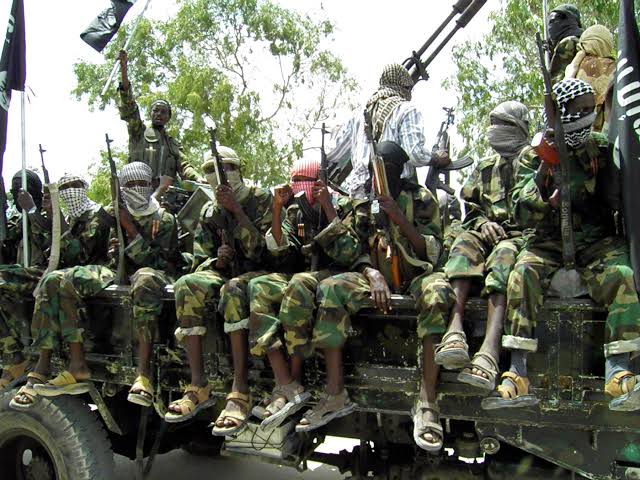
A planned judicial showdown over a deadly school raid in Oyo State took an unexpected turn Wednesday when five accused Ansaru militants refused government legal aid, forcing a 24-hour delay in their trial.
The suspects, identified under several battlefield aliases including Abu Bara’a, Isah Adam, Abu Khalifa, Abu Yunusa Bin Musa, and Abu Itisar, stand accused of orchestrating the May 15 terror raid in Oriire, where pupils and their teachers were seized, and two captives were murdered.
READ ALSO:
- Kara Bridge Repairs, Multiple Crashes Trigger 14-Hour Gridlock on Lagos-Ibadan Expressway
- 2027: Court Gives Atiku Seven Days to Serve Tinubu Through APC in Eligibility Suit
- 2027: Northern Students Back Tinubu, Pledge Campus-to-Campus Mobilisation
- Benue: Two Police Officers Killed as Gunmen Ambush DPO’s Convoy in Ayilamo
When the Federal High Court prepared to read the DSS’s amended six-count charge sheet, court-appointed counsel Akilaluyel Shettima stood to represent the men. However, lead defendant Mahmud Muhammad abruptly interjected, informing Justice Salim Ibrahim that the group would not proceed without their chosen attorney, Bala Dakum.
Rather than force the arraignment, government prosecutor Rotimi Oyedepo, SAN, conceded the point on fundamental rights grounds, affirming that a defendant’s choice of legal defense remains a non-negotiable constitutional protection.
Following the concession, Justice Ibrahim adjourned the session until September 17, ordering the secret police to provide the five men immediate access to Dakum so their defense can be finalized ahead of the fresh plea.
Oyo Kidnapping Murders: Ansaru Suspects Push Back in Court, Demand Private Lawyer Before Facing Fresh Charges
metro
Benue: Two Police Officers Killed as Gunmen Ambush DPO’s Convoy in Ayilamo
Benue: Two Police Officers Killed as Gunmen Ambush DPO’s Convoy in Ayilamo
Two newly deployed Mobile Police officers have been killed after suspected armed herders ambushed the convoy of the Divisional Police Officer (DPO) of Ayilamo Police Division in Logo Local Government Area of Benue State.
The attack occurred at about 6pm on Monday, September 14, 2026, as the DPO was returning to Ayilamo from Makurdi, where he had travelled on official duty.
The Benue State Police Command confirmed that two officers in the DPO’s entourage were killed in the ambush. Their identities had not been publicly released as of the latest reports.
The latest incident occurred just four days after another deadly attack on Ayilamo in which four Mobile Police officers and seven civilians were killed, according to the police.
The earlier attack began at about 6:12pm on Thursday, September 10, when suspected armed bandits invaded the community. Police Mobile Force personnel, tactical teams and conventional police officers responded and engaged the attackers in a gun battle that lasted about seven hours.
The police said the security personnel eventually repelled the attackers, forcing them to withdraw into surrounding forests in the early hours of September 11. The bodies of the four slain officers and seven civilians were subsequently recovered.
READ ALSO:
- Kara Bridge Repairs, Multiple Crashes Trigger 14-Hour Gridlock on Lagos-Ibadan Expressway
- 2027: Court Gives Atiku Seven Days to Serve Tinubu Through APC in Eligibility Suit
- 2027: Northern Students Back Tinubu, Pledge Campus-to-Campus Mobilisation
The four officers killed in that earlier attack were identified as Paul Ina, Mohammed Yusuf, Oge Ikechukwu and Edeh Andrew.
Residents gave a different account of the attackers, with some alleging that a large number of suspected armed herders entered the community from the direction of Alufu Road in neighbouring Taraba State. They also reported shootings and the burning of houses during the assault.
The police, however, have generally referred to the attackers as suspected armed bandits, while the identities and affiliations of those responsible have not been conclusively established.
The latest ambush brings the number of police officers killed in attacks around Ayilamo within four days to six, based on the police-confirmed casualties from the two incidents.
Residents have expressed concern over the presence of armed men in forests and abandoned settlements around Tombo Council Ward, where Ayilamo is located.
The repeated violence has renewed concerns about the safety of residents and security personnel in Logo Local Government Area, particularly communities located close to forested areas and routes vulnerable to armed ambushes.
The Ayilamo Police Station was upgraded to a divisional headquarters in August 2025 as part of efforts to strengthen police response in vulnerable communities across Benue.
Despite the upgrade and increased security presence, Ayilamo has continued to experience deadly attacks, highlighting the security challenges confronting communities in the area.
The Benue Police Command had earlier announced the deployment of additional tactical personnel following the September 10 attack. The command also said it was working with other security agencies to strengthen operations and protect residents in affected communities.
There was also a development concerning the welfare of police families following the recent deaths.
On Tuesday, September 15, the Benue State Police Command presented insurance cheques to families of police officers who had died in the line of duty.
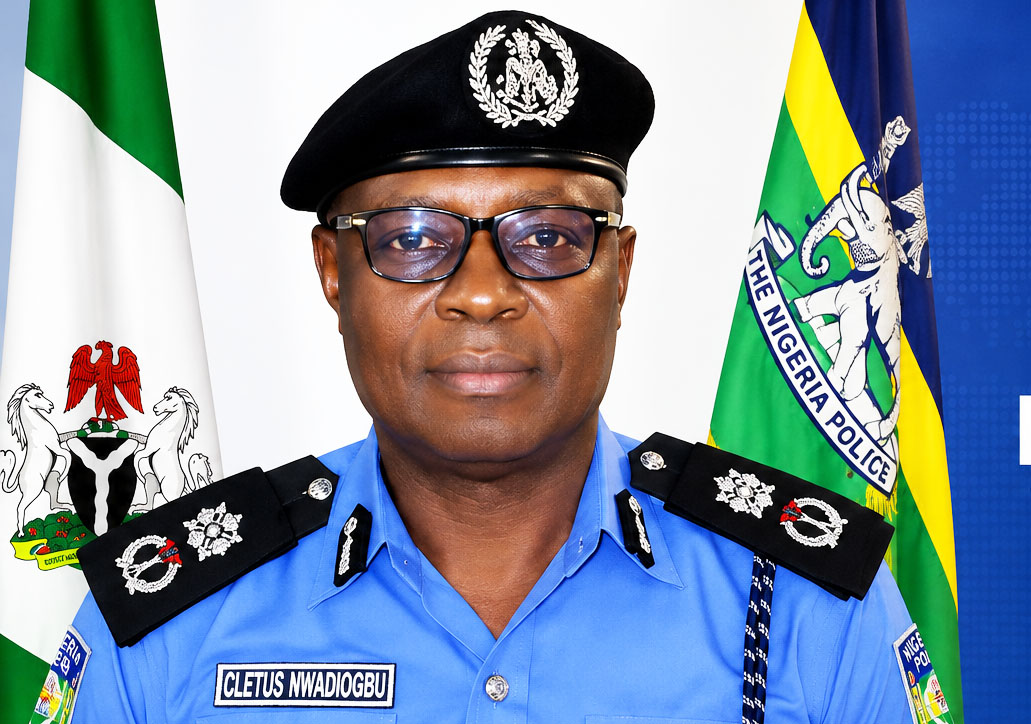
Commissioner of Police Cletus Nwadiogbu, while presenting the cheques in Makurdi, conveyed the condolences of Inspector-General of Police Olatunji Disu to the bereaved families.
He said the financial benefits could not replace the lives lost but were intended to provide some relief and support, particularly for the welfare of the officers’ children.
Meanwhile, authorities have not publicly announced the identities of those responsible for the latest ambush or disclosed arrests directly connected to the September 14 attack.
There have, however, been arrests linked to the earlier September 10 Ayilamo attack. Governor Hyacinth Alia recently commended the Department of State Services (DSS) over the arrest of three suspects allegedly connected with that attack.
The arrests relate to the earlier incident and do not by themselves establish that the same suspects carried out the latest ambush.
The two attacks within four days have increased pressure on security agencies to intensify surveillance and operations around Ayilamo and surrounding forested areas.
The latest killings have also highlighted the risks faced by police officers deployed to conflict-prone and remote communities, where armed groups can exploit difficult terrain and isolated settlements.
The investigation into the latest Benue attack is expected to focus on identifying the attackers, establishing how the DPO’s convoy was ambushed and preventing further attacks on security personnel and civilians in Logo LGA.
Benue: Two Police Officers Killed as Gunmen Ambush DPO’s Convoy in Ayilamo
International
Pope Leo XIV Warns Against Letting AI Make Human Decisions

Pope Leo XIV Warns Against Letting AI Make Human Decisions
The rapid advancement of artificial intelligence has prompted a fresh warning from Pope Leo XIV, who says some decisions should never be handed over to algorithms.
The Pope made the remarks at his weekly audience in St Peter’s Square, where he addressed thousands of faithful and reflected on the impact of technology on modern human interaction.
While acknowledging that AI, social media and other forms of technological development can reduce barriers and connect people across great distances, he said they also carry a risk of making human relationships increasingly virtual.
His particular concern was the possibility that society could become accustomed to allowing algorithms to determine matters that should instead be guided by human conscience.
“Ensuring that social relationships have real substance and personal depth” is one way the Christian community seeks to respond to this challenge, he said.
The comments come amid broader concerns about the direction of AI development. Recent security incidents, along with the growing ability of some AI systems to improve their own performance without human intervention, have intensified debate about the technology.
Another major question is whether companies and organisations within the AI sector are capable of regulating themselves effectively as the technology becomes more powerful.
The Pope has previously made AI a major focus of his public interventions. His first major document, the May encyclical “Magnifica Humanitas”, urged efforts to prevent AI from becoming a force that dominates humanity.
The Holy See has also become more active in calls for international rules governing AI, grounding its position in the protection of human dignity. Its initiatives have extended to discussions involving nuclear technology, culture and artistic creation.
The latest warning places the Vatican’s concerns within a wider debate over how humanity should balance the benefits of increasingly powerful AI with the need to keep important decisions under human control.
Pope Leo XIV Warns Against Letting AI Make Human Decisions
-

 Politics2 days ago
2027: Northern Lecturers Back Tinubu, ASUU Disowns Endorsement
-

 metro3 days ago
Mother ‘sold daughter’s abuse videos for $300’: Nigeria child pornography case shocks nation
-

 metro2 days ago
Police Arrest Mother Over Alleged Brutal Abuse of 7-Year-Old Girl in Anambra
-

 News3 days ago
Adeleke Orders Arrests After Associate Ajagungbade Is Reportedly Killed in Ife
-

 News3 days ago
Petrol Subsidy: Presidency Rejects Atiku’s Plan, Says No Going Back
-

 Sports1 day ago
‘I Was Never the Chosen One’ — Dembele Responds to Mbappe
-

 Education3 days ago
JAMB Takes Over HND Admissions in Polytechnics, Health Institutions Nationwide
-

 News2 days ago
Nwifuru Dismisses Cubana Chief Priest as ‘Attention-Seeker’