

metro
BREAKING: FG Unveils 10 Measures to Cushion Fuel Price, Inflation Pressures
BREAKING: FG Unveils 10 Measures to Cushion Fuel Price, Inflation Pressures
The Federal Government has announced a 10-point intervention package aimed at cushioning the impact of rising petrol prices, transportation costs and inflation on households and businesses while maintaining its broader economic reform programme.
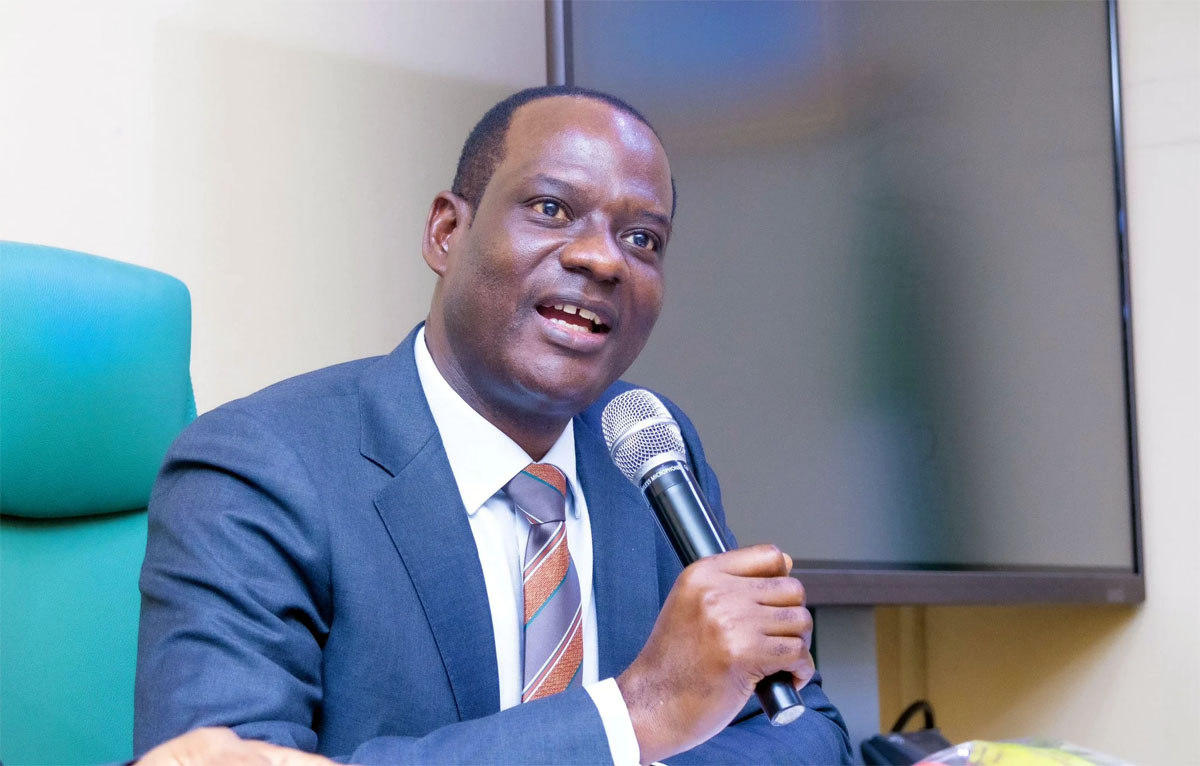
Minister of Finance and Coordinating Minister of the Economy, Taiwo Oyedele, announced the measures on Thursday during a media briefing in Abuja, acknowledging that Nigerians were still facing significant pressure despite various reforms introduced by the administration.
Oyedele said the interventions include a 30-day petrol discount at NNPC stations, forward sales of crude oil to domestic refineries, a proposed ₦1,350-per-litre modulation on petrol landing costs, faster deployment of Compressed Natural Gas (CNG) vehicles, removal of selected levies, targeted support for vulnerable households and small businesses, and the establishment of a National Strategic Fuel Reserve.
He stressed, however, that the measures should not be interpreted as a return to the former petrol subsidy regime, which he said created significant fiscal and market distortions.
“To be perfectly clear, none of these measures restore a blanket subsidy. To do so would amount to creating longer-term harm for a short-term cure,” Oyedele said.
According to him, the government’s objective is to provide immediate relief while protecting consumers from sharp price movements without recreating the long-term fiscal burden associated with fuel subsidies.
The first intervention is a 30-day discount on petrol sold through NNPC Limited retail stations, with public transport operators expected to receive priority.
Oyedele said the measure was designed to provide immediate relief to transport operators and commuters affected by rising fuel costs.
“It is not a subsidy. Government is just saying we sell to you at a discount,” he explained.
READ ALSO:
- 2027: ADC Vows to Collate, Share Polling-Unit Results Despite INEC Warning
- FBI Raids Ghana Scam Centre, Detains Over 130 in $10m Fraud Probe
- Court Grants Alleged Fake JAMB Registrar N50m Bail, Sets Strict Conditions
The minister did not immediately disclose the exact amount of the discount or a single nationwide pump price that would apply during the 30-day period.
The second measure involves forward sales of crude oil to domestic refineries as crude production increases and previously committed volumes become available.
Oyedele said the arrangement would provide domestic refiners with greater certainty over crude supply and reduce their exposure to sudden movements in international crude prices.
Under the proposed arrangement, the government could agree to sell crude to refiners at a predetermined price for a specified period, enabling them to plan their operations and manage costs more effectively.
“If you can sell your crude forward, we sell to the refiners for the next six months. We are selling you crude at $80 per barrel, for example. That preserves your budget, provides certainty to the refiners and price stability to the consumer,” he said.
The third intervention is a price-modulation mechanism under which the government is negotiating a ceiling of ₦1,350 per litre on the landing or ex-gantry cost of petrol.
The objective is to prevent domestic petrol prices from responding immediately to every movement in international crude prices or the foreign-exchange market.
Under the proposed mechanism, when the actual cost rises above the agreed ceiling, refiners and importers would initially absorb the difference and recover it when market conditions improve.
Oyedele stressed that the arrangement was neither a subsidy nor conventional price control but a mechanism designed to smooth out price movements.
He explained that greater price stability would be preferable to sharp increases followed by uncertain reductions.
The proposed ceiling would be reviewed monthly, with relevant calculations and data expected to be published to promote transparency.
The ₦1,350 figure is therefore a proposed landing-cost or ex-gantry ceiling, rather than a declaration that petrol will sell at ₦1,350 per litre at every filling station nationwide.
The fourth intervention focuses on reducing dependence on petrol through CNG and other alternative energy sources.
Oyedele said more than 120,000 vehicles were already operating on CNG, supported by more than 400 conversion centres, 96 refuelling stations and 18 unified CNG stations.
READ ALSO:
- NESREA to Honour Lagos Baale After Dramatic Rescue of Endangered Sea Turtle
- How Six Members of a Family Were Murdered in Oyo
- World Bank Raises Nigeria Growth Forecast, Demands More Jobs, Poverty Reduction
He added that the government had deployed hundreds of CNG buses, with commuters in areas where the buses operate benefiting from fare reductions of between 30 and 50 per cent.
The government has also removed taxes on electric vehicles and solar equipment and reduced import duties on vehicles as part of efforts to encourage the adoption of cheaper and cleaner alternatives to petrol.
According to Oyedele, Nigeria Customs Service data showed that imports of CNG-powered vehicles, including tricycles, electric vehicles and renewable-energy equipment, had more than doubled since May 2023.
He said the government had also granted tax and duty waivers worth more than ₦100 billion within the first nine months of the current intervention period.
The fifth measure involves the removal of levies and charges that increase transportation and logistics costs.
Oyedele said the Federal Government was working with state governments under the new tax laws to eliminate unnecessary charges that ultimately raise the cost of moving people and goods.
The government also plans to strengthen cash transfers to vulnerable households and provide subsidised credit to small businesses and consumers facing higher operating and living costs.
The sixth intervention is an accelerated nationwide CNG infrastructure rollout.
Oyedele said the Federal Government would work with state governments to expand CNG deployment and urged transport operators to pass the savings from cheaper fuel on to passengers through lower fares.
The government wants the initiative to gradually reduce dependence on petrol while giving commuters access to cheaper transportation.
The seventh measure is the proposed introduction of an excess-profit tax on operators found to be taking undue advantage of prevailing market conditions at the expense of consumers.
Oyedele said proceeds from the proposed measure could be used to cushion the impact of food prices through transport support or vouchers targeted at vulnerable urban households and wage earners.
“We will collect it from them and give to the vulnerable people,” he said.
The minister added that the Federal Government would work with the National Assembly on enhanced tax relief for low-income earners under the 2027 Finance Bill.
The eighth intervention targets regulatory costs and red tape that increase the cost of doing business and are eventually passed on to consumers through higher prices.
Oyedele said the government had commenced discussions with regulatory agencies to identify unnecessary costs and processes that could be eliminated.
READ ALSO:
- Flood Submerges Enugu Road, Strands School Children, Passengers
- US Proposes $70,000 OPT Fee for Nigerians, Other Foreign Students
- EFCC Re-Arraigns Two Over Alleged £110,000 Money Laundering, ₦500m Fraud
The ninth measure is the establishment of a National Strategic Fuel Reserve to protect households and businesses from supply disruptions, artificial scarcity and excessive price volatility.
According to Oyedele, refined petroleum products would be released into the market under clear and publicly published rules whenever global disruptions, hoarding or other factors threatened supply and price stability.
He stressed that the reserve would not be used to fix petrol prices or subsidise the product.
“This is not a subsidy, and it does not fix prices. Rather, it secures supplies and reduces price volatility,” he said.
The reserve is expected to strengthen Nigeria’s energy security, reduce the risk of artificial scarcity and provide a buffer during periods of major supply disruption.
The 10th intervention focuses on traffic management and logistics, particularly in major urban centres.
Oyedele said traffic management agencies would be expected to improve traffic flow to reduce fuel consumption and transportation costs.
He also cited the recently launched digital addressing system as part of efforts to make logistics more efficient and reduce the cost of moving goods and services.
Beyond the 10 measures, Oyedele said the government was continuing other interventions aimed at reducing pressure on household energy and food costs.
He said the government continued to support electricity for vulnerable consumers and was also working to improve gas and fertiliser supply for producers.
Oyedele said the Federal Government had granted a full waiver of taxes and duties on petrol worth more than ₦3.3 trillion up to September 30, 2026, as part of measures to reduce the cost burden on consumers.
He said the government’s approach was broadly consistent with international responses to energy-price shocks, which increasingly favour targeted support, tax adjustments, improved energy efficiency and supply security over broad-based subsidies.
The minister acknowledged that the measures already implemented had not completely eliminated the pressure on households.
“We recognise that these measures, important as they are, do not fully relieve the pressure households feel today,” he said.
Oyedele nevertheless maintained that returning to a blanket petrol subsidy would not provide a sustainable solution, arguing that Nigeria had previously experienced fuel scarcity, smuggling, currency pressures and significant fiscal difficulties under the system.
“Because fuel is real, I will not dismiss it. The cost of reform came at a price, and many households are still bearing it,” he said.
He added that the government was working on a broader package of fiscal measures aimed at bringing inflation down to single digits sustainably in the near term.
Further details of the fiscal package, he said, would be released in the coming months.
The latest measures come as petrol prices remain a major driver of transportation and household costs, with changes in global crude prices, exchange rates, refinery pricing and distribution expenses continuing to affect the domestic market.
The government says it will continue to monitor developments in the energy market and introduce further interventions where necessary, while avoiding policies that could recreate the long-term fiscal pressures associated with petrol subsidies.
Oyedele said the ultimate objective was to combine immediate relief with structural reforms that would reduce Nigeria’s vulnerability to energy-price shocks, lower transportation costs, strengthen domestic refining and improve energy security.
He said the Federal Government remained committed to ensuring that the benefits of the economic reforms translated into tangible improvements in the living conditions of Nigerians.
BREAKING: FG Unveils 10 Measures to Cushion Fuel Price, Inflation Pressures









metro
Chibok Girl Escapes After Eight Years in Boko Haram Captivity, Reveals 20 Classmates Still Held
Chibok Girl Escapes After Eight Years in Boko Haram Captivity, Reveals 20 Classmates Still Held
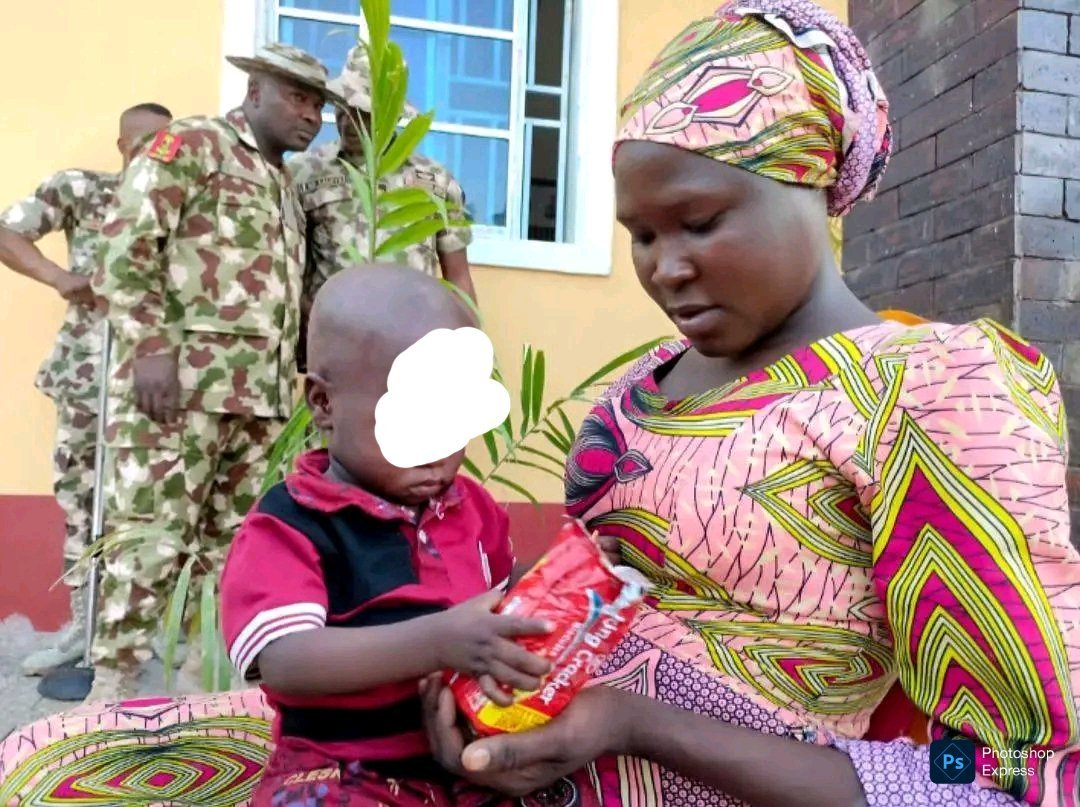
MAIDUGURI, Borno State — After spending eight harrowing years in Boko Haram captivity, a Chibok schoolgirl, Mary Dauda, has recounted how she outsmarted her captors and escaped from their hideout in the dreaded Sambisa Forest alongside her young child.
Mary, who was 18 when Boko Haram insurgents abducted 276 schoolgirls from Government Girls Secondary School (GGSS), Chibok, in April 2014, regained her freedom through a carefully planned escape that involved deceiving her captor and undertaking a dangerous journey towards Nigerian military positions.
Her escape has also renewed hopes for the recovery of other abducted Chibok schoolgirls, as she disclosed that more than 20 of her former classmates are still alive in captivity at the Gazuwa camp inside Sambisa Forest.
Mary said her decision to escape was particularly risky because the insurgents had repeatedly threatened to track down and kill anyone caught attempting to flee.
How Mary Outwitted Her Captors
Recounting the circumstances surrounding her escape, Mary explained that her opportunity came when she obtained permission from her captor, identified as Malam Ahmed, to visit a fellow Chibok woman living in Ngoshe town.
She was reportedly granted a one-week pass, which she used to execute her plan to escape from the insurgents’ territory.
Upon arriving in Ngoshe, Mary approached another Chibok woman, hoping they could undertake the dangerous journey to freedom together. However, the woman declined the offer, explaining that she was under strict surveillance by her insurgent husband following an earlier unsuccessful attempt to escape.
Undeterred by the setback, Mary decided to continue alone, despite the danger of being discovered by the insurgents.
During her journey, she encountered an elderly man who agreed to help guide her out of the insurgents’ enclave. However, because travelling during the day could expose them to detection by armed militants, the man advised her to wait until nightfall.
At about 8:00 p.m., he led her to the outskirts of Ngoshe and instructed her to remain hidden overnight before continuing her journey towards safety at daybreak.
Nigerian Soldiers Initially Suspected Suicide Bombing
Carrying her baby, Mary resumed her journey at dawn and headed towards positions occupied by Nigerian troops.
However, her arrival near the military perimeter initially triggered suspicion among the soldiers, who feared she could be a suicide bomber deployed by Boko Haram.
After maintaining a safe distance, Mary explained who she was and narrated her experience in captivity.
The soldiers subsequently verified her identity, took her and her child into protective custody and moved them to safety.
Her escape marked the end of eight years of captivity, during which she endured the harsh conditions imposed on abducted women and girls by the insurgents.
Over 20 Chibok Girls Still Alive in Captivity
In a particularly significant revelation, Mary and another rescued Chibok schoolgirl, Hauwa Joseph, disclosed that more than 20 of their former classmates are still alive in Boko Haram captivity.
The two women were reportedly rescued during military clearance operations around the Bama and Gwoza axis of Borno State.
According to their account, the remaining abductees are being held at the Gazuwa camp inside Sambisa Forest.
Mary expressed appreciation to the Nigerian military for securing her freedom but appealed to the Federal Government and security authorities not to abandon the other girls still trapped in the insurgents’ stronghold.
She urged the military to intensify operations aimed at rescuing the remaining captives and reuniting them with their families.
Military Confirms Identities of Rescued Chibok Girls
The Theatre Commander of the North-East Joint Task Force, Operation Hadin Kai, Major General Christopher Musa, confirmed the identities of Mary Dauda and Hauwa Joseph after their details were checked against the official register of missing Chibok schoolgirls.
He attributed their emergence from captivity to sustained military pressure on Boko Haram and Islamic State West Africa Province (ISWAP) fighters across Sambisa Forest, the Mandara Mountains and the Lake Chad Basin.
Musa said ongoing military operations under Operation Lake and Desert Sanity had disrupted insurgent supply routes and weakened their established strongholds, forcing some fighters out of previously entrenched positions.
The General Officer Commanding (GOC) 7 Division of the Nigerian Army, Major General Waidi Shuaibu, also disclosed that the rescued women and their children had undergone comprehensive medical assessments and received necessary medical attention.
He explained that arrangements were being made for their formal handover to relevant government authorities for rehabilitation, support and eventual reunification with their families.
A Painful Reminder of the Chibok Abduction
The latest rescue comes more than 12 years after the April 2014 abduction that shocked Nigeria and attracted international condemnation, triggering the global #BringBackOurGirls campaign.
Although several of the abducted schoolgirls have regained their freedom through military operations, escapes and negotiations, many others remain unaccounted for.
Mary’s account offers a fresh glimpse into the lives of women and girls still held by Boko Haram while reinforcing calls for sustained military operations to secure their release.
For the families who have spent years waiting for their daughters, the revelation that more than 20 Chibok schoolgirls are reportedly still alive in Sambisa Forest represents both a painful reminder of their prolonged ordeal and a renewed reason to hope for their return.
Chibok Girl Escapes After Eight Years in Boko Haram Captivity, Reveals 20 Classmates Still Held
metro
70-Year-Old Woman Survives 60-Foot Well Plunge in Lagos
70-Year-Old Woman Survives 60-Foot Well Plunge in Lagos
LAGOS, Nigeria — Residents of Oworonshoki in the Kosofe Local Government Area of Lagos State were thrown into panic on Sunday, November 22, following the dramatic rescue of a 70-year-old woman who survived a terrifying fall into a 60-foot-deep well.
The elderly woman reportedly plunged into the deep well accidentally, triggering an emergency rescue operation as residents rallied to save her from what could have been a fatal accident.
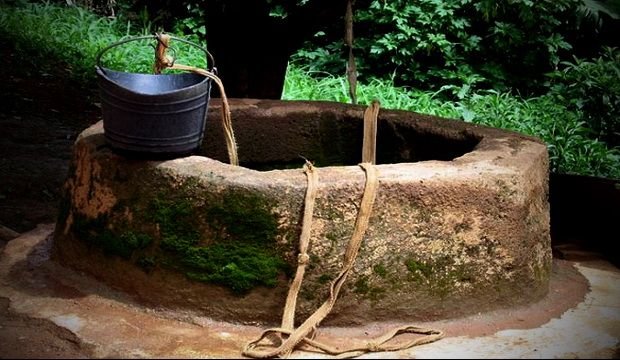
According to a report by *Vanguard*, the septuagenarian was eventually brought out alive after rescuers worked to pull her out of the deep, concrete-lined shaft.
Footage from the rescue scene showed the frightening depth of the well, with heavy ropes lowered into its dark interior as efforts were made to retrieve the trapped woman.
The operation attracted attention from residents of the densely populated community, who watched anxiously as rescuers battled to bring the elderly woman to safety.
Against the odds, the rescue operation ended successfully, with the 70-year-old woman emerging alive from the 60-foot-deep well.
Her survival has been described as remarkable, considering the potentially fatal consequences of falling into such a deep shaft, particularly for someone of her age.
Although details surrounding the circumstances of the accident and the woman’s condition after the rescue were not immediately available, the incident has once again highlighted the dangers posed by uncovered or inadequately secured wells in residential communities.
The successful rescue brought an end to the frightening incident, leaving residents relieved that what could have turned into a tragedy ended with the woman being pulled out alive.
70-Year-Old Woman Survives 60-Foot Well Plunge in Lagos
metro
Terrorists Kill Muslim Worshippers, Village Head, Wife in Niger Attack, Burn Palace

Terrorists Kill Muslim Worshippers, Village Head, Wife in Niger Attack, Burn Palace
MINNA, Niger State — Terrorists have reportedly killed several Muslim worshippers, a village head and his wife during coordinated attacks on two communities in Borgu Local Government Area of Niger State, setting the traditional ruler’s palace ablaze and abducting an unspecified number of residents.
The deadly attacks, which occurred on Saturday, November 21, 2026, targeted Lumman-Ba’are and neighbouring Gada-Oli, also known as Gadan Oli, leaving several residents dead, homes destroyed and many others fleeing for safety.
The first assault reportedly occurred at about 5:00 a.m. when heavily armed gunmen stormed Lumman-Ba’are and opened fire on Muslim worshippers observing their early morning prayers.
The attackers reportedly shot dead the village head and his wife before setting the traditional ruler’s palace on fire. Several other residents were also killed, while an unspecified number of people were abducted.
A community source disclosed that the attackers struck while residents were gathered for their obligatory dawn prayers, shooting indiscriminately at people in the community.
The source put the death toll at 11, adding that children were among those killed in the attack. The incident reportedly triggered panic, forcing scores of residents to abandon their homes and flee to neighbouring communities for safety.
The violence reportedly spread to Gada-Oli later in the afternoon, around 2:00 p.m., when the gunmen launched another assault on the neighbouring community.
According to local accounts, the attackers struck while Muslim residents were observing their afternoon prayers, opening fire on worshippers and other villagers without regard for age or gender.
Several houses were reportedly set ablaze during the afternoon raid, although the exact number of people killed or injured in the attack had yet to be established as of the time of filing this report.
Following the attacks, the bodies of the slain village head and his wife were evacuated to New Bussa, the administrative headquarters of Borgu Local Government Area, where they were subsequently buried.
Confirming the Lumman-Ba’are attack, the spokesperson for the Niger State Police Command, SP Wasiu Abiodun, said the police received a distress report about the invasion at approximately 5:00 a.m. on Saturday.
Abiodun, however, gave an initial casualty figure of five, lower than the 11 deaths reported by community sources.
In a statement, the police spokesperson said: “On 21/11/2026 at about 5:00 a.m., a report received indicated that suspected armed men invaded Lumman-Ba’are village, Borgu LGA, and attacked the community, while about five persons reportedly lost their lives during the attack.”
He explained that joint security teams had been deployed to the affected community to restore normalcy and track down those responsible for the killings.
“Joint security teams have been deployed to the location, and efforts to apprehend the suspected perpetrators are ongoing. Further developments will be communicated,” Abiodun stated.
However, the police had yet to provide further details on the reported afternoon attack on Gada-Oli, the alleged burning of several houses or the number of residents abducted during the coordinated raids.
The discrepancy between the casualty figures provided by community sources and the police also leaves the actual death toll uncertain, as security authorities continue efforts to establish the full extent of the attacks.
Terrorists Kill Muslim Worshippers, Village Head, Wife in Niger Attack, Burn Palace
-

 metro2 days ago
FG’s ₦100,000 Family Grant: Eligibility, How to Apply and Payment Procedure Revealed
-

 Sports2 days ago
Ex-Super Eagles Captain Segun Odegbami Survives Death as Three Assailants Machete Him in Abeokuta Home
-

 metro2 days ago
Cleveland Girl, 11, Gets 7-Year Juvenile Sentence Over Rape, Attempted Murder of 5-Year-Old
-

 metro2 days ago
Hoodlums Descend on Tinubu’s Praise Singer Rarara at Abuja Mosque, Tear His Clothes
-

 metro2 days ago
Honesty Cost Lagos Taxi Driver His Job, Marriage After Returning ₦21,000 Passenger Left in His Cab
-

 metro2 days ago
Bandits Storm Rival Kidnappers’ Hideout, Free Abducted Victims in Shocking Video
-

 Politics2 days ago
Tinubu Personally Asked Me to Fight Governor’s Impeachment, Warned Democracy Could Collapse – Olanipekun
-

 Politics2 days ago
Just in: Court Sacks Ribadu, Orders INEC to Restore Suleiman as Adamawa ADC Candidate