
News
Breaking : Senate summons NNPC GMD, Kyari over Petroleum Industry Bill

THE Senate has summoned the Group Managing Director of the Nigerian National Petroleum Corporation, NNPC, Mele Kyari to appear before it tomorrow to brief the lawmakers on the the controversial Petroleum Industry Bill, PIB.
Disclosing this on Wednesday during plenary, President of the Senate, Senator Ahmad Lawan said that the NNPC boss has been invited to address the Senators on the technical and financial details of the Bill before the consideration of the report tomorrow.
According to Lawan, the briefing will allow for Senators who are not members of the Joint Committee on Petroleum Resources, Down stream, Petroleum, Upstream and Gas Resources to get abreast with more information.
The Senate will tomorrow consider the report of the Joint Committee on the controversial Petroleum Industry Bill, PIB.
This was disclosed after the Report of the Joint Committee on Petroleum ( Downstream) Petroleum ( Upstream) and Gas Resources Petroleum Industry Bill, 2021 ( SB. 510) was laid by the Chairman, Senator Sabo Mohammed, All Progressives Congress, APC, Jigawa – West.
Recall that Lawan had mandated that all the Senators must get the copies of the report and that it will be considered tomorrow.
He, therefore asked the Joint Committee to provide lawmakers with copies of the bill ahead of its consideration to enable them study its content.
Lawan had said: “Let me use the opportunity to thank our Joint Committee for working so hard, selflessly and patriotically to produce the report on the Petroleum Industry Bill.
“This report, a copy each, must be made available to each and every Senator today, this afternoon.
“I don’t know how the Committee would arrange it, but every Senator must have a copy today.
“[And] we would be considering the report on Thursday.
“So, we have today, tomorrow until the beginning of Thursday to look at the report, so that when we consider it, we will be doing so on the basis of what we have been able to read from this very important report.”
Recall that Lawan had last month assured that the controversial Petroleum Industry Bill, PIB 2020 will be passed before the end of this month.
Lawan had assured that as Nigeria begins a new year, 2021, the controversial Petroleum Industry Bill 2020(SB)510 will be passed by end of the first quarter of the year.
The President of the Senate who spoke shortly after a closed-door session with the Security Chiefs had said that before that date, “we expect that our committees will still be working particularly the Joint Committee working on the Petroleum Industry Bill (PIB).
“We expect that the joint committee will be presenting its report to the Senate as soon as we resume. It is still our desire and determination to pass the PIB before the end of May.”
Also recall that the PIB scaled second reading October 2020 and after debate on the its general principles, the bill was referred to the Committees on Petroleum Upstream, Downstream, and Gas for reports in eight weeks.
Pending since 2007, the PIB which is an executive bill seeks, among others, to promote the competitive and liberalised downstream sector of the petroleum industry as well as the development of fuel and chemical industries.
Also recall that the President of the Senate who had said that the ninth National Assembly would make the passage of PIB part of its legacies, also assured that the National Assembly would pass the bill in good time without compromising proper scrutiny.
The new PIB is said to be important, especially as it aims at the restructuring as well as transparency and accountability in the oil and gas industry.
Specifically, Section 54(1, 2 and3 ) states among others that, “the Minister (of Petroleum) and the Minister of Finance shall determine the assets, interests, and liabilities of NNPC to be transferred to NNPC Limited or its subsidiaries and upon the identification, the minister shall cause such assets, interests, and liabilities to be transferred to NNPC Limited.
“Assets, interests, and liabilities of NNPC not transferred to NNPC Limited or its subsidiary under subsection 1 of this section shall remain the assets, interests, and liabilities of NNPC until they become extinguished or transferred to the government.”


News
Hajia Sofuratu Seghosime Emerges ICAN President-Elect

Hajia Sofuratu Seghosime Emerges ICAN President-Elect
The emergence of Hajia Sofuratu Seghosime as the 62nd President-Elect of the Institute of Chartered Accountants of Nigeria (ICAN) has continued to draw widespread commendation across Nigeria’s financial and regulatory institutions, with stakeholders describing her elevation as a reflection of decades of professional excellence in taxation, governance, and public service.
Her election has been particularly celebrated within the Nigerian Revenue Service (formerly Federal Inland Revenue Service), where she spent a significant part of her career, rising through the ranks over 26 years to become Coordinating Director for Compliance and Enforcement.
With over 40 years of experience spanning public service and private consultancy, Seghosime’s emergence is widely seen as a natural progression for a seasoned tax administrator and financial expert whose contributions have shaped Nigeria’s fiscal and regulatory landscape.
She currently serves as the Chief Executive Officer of Quebaan Professional Services, where she leads advisory work across taxation, auditing, corporate governance, financial management, strategy, and dispute resolution, supporting both public and private sector organisations in meeting regulatory and compliance obligations.
Seghosime’s professional journey within ICAN has also been marked by steady progression. Since joining the Council of the institute in 2014, she has held several strategic roles, contributing to policy formulation, professional development, and institutional governance within Nigeria’s accounting profession.
READ ALSO:
- ADC Expels Nafiu Bala, Leke Abejide, Ratifies David Mark-Led Leadership
- Yul Edochie Slams ADC Leaders, Says Opposition Chieftains “Achieved Nothing” while in govt
- Rising Debt, Oil Shock Could Trigger Global Slowdown, IMF Warns
Beyond ICAN, she is a Fellow of the Chartered Institute of Taxation of Nigeria (CITN), a member of the Chartered Institute of Arbitrators, and an alumnus of the National Institute for Policy and Strategic Studies (NIPSS), Kuru, underscoring her multidisciplinary expertise in taxation, dispute resolution, and national policy.
Her influence also extends to key national and international platforms. She currently serves as a Commissioner on the Tax Appeal Tribunal and previously contributed to standard-setting as a member of the Nigerian Accounting Standards Board, now the Financial Reporting Council of Nigeria. She has also represented Nigeria in global tax discussions at the Organisation for Economic Co-operation and Development (OECD) and the Commonwealth Association of Tax Administrators.
Industry stakeholders say her experience in both domestic tax administration and international fiscal engagement positions her to strengthen ICAN’s role in shaping financial accountability and governance standards in Nigeria.
Reacting to her emergence, Otunba Tobi Abiola, a senior official of the Nigerian Revenue Service overseeing Ogun, Oyo, and Osun States, described her election as a victory for integrity, professionalism, and ethical leadership.
He praised Seghosime as a leader of “high wisdom” whose career reflects competence, transparency, and a deep commitment to public service, adding that her leadership is expected to drive reforms and strengthen institutional credibility within ICAN.
Abiola noted that her ability to balance tradition with innovation, coupled with her dedication to mentorship and inclusive leadership, would play a crucial role in advancing the accounting profession and fostering collaboration across sectors.
Observers within Nigeria’s financial ecosystem believe her presidency could come at a critical time when issues of tax compliance, public finance transparency, and corporate governance remain central to economic reforms and investor confidence.
Her election is also being viewed as a milestone for gender representation in leadership within Nigeria’s professional bodies, with many noting that her rise could inspire more women to pursue leadership roles in finance, accounting, and public administration.
As she prepares to assume office, expectations are high that Seghosime will leverage her extensive experience to strengthen ICAN’s regulatory influence, promote ethical standards, and support Nigeria’s broader economic and fiscal reforms.
Hajia Sofuratu Seghosime Emerges ICAN President-Elect
News
2026 JAMB UTME: Over 2.2 Million Candidates Face Stricter Rules, CBT Reforms Begin
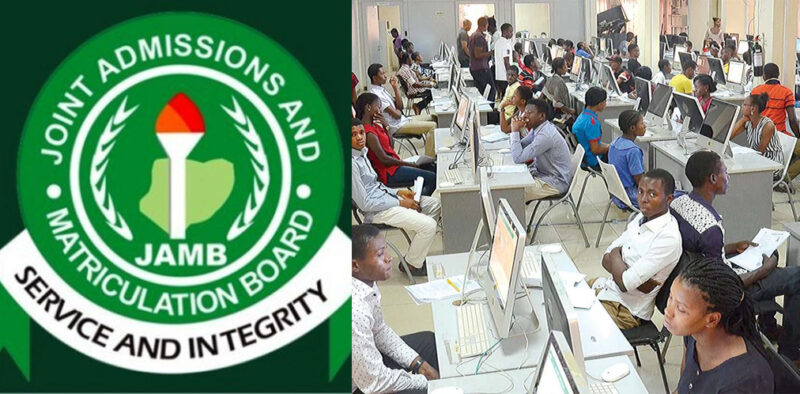
2026 JAMB UTME: Over 2.2 Million Candidates Face Stricter Rules, CBT Reforms Begin
The 2026 Unified Tertiary Matriculation Examination (UTME) conducted by the Joint Admissions and Matriculation Board (JAMB) is shaping up to be one of the most tightly regulated and highly subscribed examinations in Nigeria’s education history, with over 2.2 million candidates expected to participate nationwide.
The examination, which serves as the primary gateway into universities, polytechnics, and colleges of education, is scheduled to hold between April 16 and April 22–25, 2026, across nearly 1,000 accredited Computer-Based Test (CBT) centres across the country.
Massive candidate turnout pushes CBT expansion
With candidate numbers rising yearly, JAMB has expanded its CBT operations by distributing candidates across multiple daily sessions to reduce congestion and improve efficiency.
The board continues to emphasize that the UTME remains a fully computer-based examination, lasting approximately two hours, with candidates tested across four subjects depending on their chosen field of study.
Education stakeholders note that the rising number of candidates reflects increased demand for tertiary education, even as institutions struggle with limited admission capacity.
Revised reporting time for candidates
One of the most notable adjustments for the 2026 examination is the revised reporting time for candidates.
Candidates assigned to the first session are now expected to arrive by 7:00 a.m., with examinations starting at 8:30 a.m. and ending by 10:30 a.m.
READ ALSO:
- 2027: Pro-Jonathan Group Launches Campaign Urging Goodluck Jonathan to Run
- 2027: Kwara APC Stakeholders Back Bolarinwa as Kwara South Gains Political Momentum
- Victoria Inyama Says Female Circumcision Is Evil But Helped Her Sexual Discipline
This adjustment, according to examination officials, was introduced following public concerns over early-morning movement risks faced by teenagers during previous examination cycles.
Authorities clarified that candidates are not required to reprint examination slips, as previously issued documents remain valid for the 2026 UTME.
Stricter monitoring and crackdown on malpractice
In line with ongoing reforms, JAMB has intensified efforts to curb examination malpractice and technical lapses across CBT centres.
Reports indicate that about 23 CBT centres were delisted following poor performance during mock assessments, while some technical staff and operators have faced sanctions for failing to meet required standards.
The board has also strengthened its monitoring systems, with enhanced surveillance and compliance checks at examination centres nationwide to ensure transparency and fairness.
Candidates have been warned against bringing prohibited items into examination halls, with strict penalties attached to any violation.
CBT reforms and operational improvements
Recent related reforms introduced by JAMB include tighter accreditation standards for CBT centres and improved real-time monitoring systems aimed at reducing technical disruptions experienced in previous years.
Education analysts say these measures are part of broader efforts to restore public confidence in the UTME process following past complaints about system glitches and irregularities.
Mandatory requirements for candidates
JAMB has reiterated key instructions that all candidates must follow strictly to avoid disqualification.
Candidates are required to print their examination slips, which contain vital details such as exam date, venue, and time.
They are also expected to arrive early and locate their assigned centres ahead of time to avoid last-minute confusion or transportation challenges.
Authorities have warned that late arrival or failure to comply with examination instructions could result in automatic disqualification.
Disability inclusion and equal opportunity support
In a notable development, JAMB has expanded its Equal Opportunity Group programme to support candidates living with disabilities.
The initiative provides tailored assistance, including modified exam conditions and additional support systems designed to ensure fairness and equal access for all candidates.
Education stakeholders have described the initiative as a significant step toward inclusive education and equal participation in national examinations.
Growing significance of the UTME
The UTME remains Nigeria’s most important tertiary admission examination, determining entry into higher institutions for millions of candidates annually.
The 2026 edition stands out due to its record participation, tighter regulatory framework, and increased operational reforms aimed at improving credibility and efficiency.
Conclusion
The 2026 JAMB UTME is defined by scale, stricter oversight, and major operational reforms. For candidates, success will depend not only on academic preparation but also on strict compliance with examination rules, especially regarding timing, documentation, and conduct.
As the examination approaches, candidates are advised to prepare adequately, follow official guidelines, and ensure early arrival at their designated centres to avoid disqualification.
2026 JAMB UTME: Over 2.2 Million Candidates Face Stricter Rules, CBT Reforms Begin
News
MURIC Urges Security Agencies to Protect JAMB Candidates, Exam Centres Nationwide

MURIC Urges Security Agencies to Protect JAMB Candidates, Exam Centres Nationwide
The Muslim Rights Concern (MURIC) has called on security agencies in Nigeria to ensure maximum protection for candidates and officials participating in the forthcoming Joint Admissions and Matriculation Board (JAMB) examinations scheduled to begin on April 16, 2026.
In a press statement issued on Tuesday, April 14, 2026, the Islamic human rights organisation stressed the need for heightened security measures across all examination centres nationwide, citing growing insecurity in several parts of the country.
The statement, signed by the Executive Director of MURIC, Professor Ishaq Akintola, urged the Nigeria Police Force, the Nigerian Army, and the Nigeria Security and Civil Defence Corps (NSCDC) to collaborate effectively in safeguarding candidates and examination personnel throughout the examination period.
According to the group, the appeal became necessary due to rising security concerns in parts of northern Nigeria, where banditry, communal tensions, and violent attacks have continued to threaten public safety.
READ ALSO:
- Court Grants Bail to El-Rufai in ICPC Corruption Case
- Bauchi Governor Presents Over 114 Vehicles to Emirs, District Heads
- Bandits Kill 3, Abduct 5 in Fresh Attacks on Kogi Communities
MURIC specifically raised concerns about states such as Plateau, Borno, Katsina, Sokoto, and Kwara, warning that some of these areas remain vulnerable to attacks and mass abductions, particularly targeting young students and examination candidates.
The organisation warned that candidates travelling to and from examination centres could be at risk in volatile locations and called for “special attention” to ensure their safety before, during, and after the examinations.
It further urged security agencies to remain vigilant, noting that “eternal vigilance is the price of freedom,” and emphasised the need for proactive intelligence gathering and rapid response mechanisms to prevent any disruption of the exercise.
MURIC also highlighted the importance of securing examination venues themselves, stressing that any attack on candidates or officials would have far-reaching consequences on education and national development.
The group reiterated its commitment to advocating for peaceful coexistence and safety for all citizens, especially young Nigerians pursuing education.
The JAMB examination, conducted annually by the Joint Admissions and Matriculation Board, is a critical gateway for admission into tertiary institutions across the country, with hundreds of thousands of candidates expected to participate nationwide.
Security agencies are yet to issue a formal response to the appeal, but authorities have previously assured Nigerians of adequate protection during national examinations and other major public exercises.
MURIC Urges Security Agencies to Protect JAMB Candidates, Exam Centres Nationwide

-

 metro3 days ago
BREAKING: Troops Arrest 15-Year-Old Linked to Killing of Gen Braimah in Borno
-

 metro3 days ago
Fayose Warns Makinde May Query Olubadan Over Absence at Ibadan Coronation Event
-
 metro3 days ago
Zulum Defends NAF Airstrike, Says Jilli Market Closed Five Years Ago
-
 metro23 hours ago
Arise News Yet to Confirm Reported Suspension of Rufai Oseni
-

 metro3 days ago
Police Arrest Suspect Over Fake Job Interview Robbery in Magodo
-

 metro1 day ago
Fresh Boko Haram Attack Leaves Colonel, Six Soldiers Dead in Borno
-

 International2 days ago
Trump Sparks Global Outrage After Calling Pope Leo XIV “Weak, Terrible”
-

 News2 days ago
FG Opens Application for Second Cohort of TVET Programme to Tackle Unemployment