

Africa
BREAKING: Tinubu breaks silence over military coup in Gabon

BREAKING: Tinubu breaks silence over military coup in Gabon
President Bola Tinubu on Wednesday, condemned the military takeover in Gabon.
Tinubu equally expressed his deep concern over the political situation and the socio-political stability in that country.
Tinubu’s reaction came hours after a group of Gabonese military officers appeared on television Wednesday announcing they were “putting an end to the current regime” and cancelling an election that, according to official results, President Ali Bongo Ondimba won.
Spokesman for the President, Ajuri Ngelale, while speaking with journalists, also expressed Tinubu’s belief that the rule of law and a faithful recourse to a constitutional resolution of electoral disputes must not be allowed to perish in Africa.
READ ALSO:
-
N854m mass wedding: Kano buys beddings, food items for 1,800 intending couples
-
Designer of Nigeria’s flag Taiwo Akinkunmi dies at 87
-
Gabon coup: Bongo’s son arrested for treason
“President Bola Ahmed Tinubu is watching developments in Gabon very closely with deep concern for the country’s sociopolitical stability and the seeming autocratic contagion apparently spreading across different regions of our beloved continent
“The President, as a man who has made significant personal sacrifices in his own life, in the cause of advancing and defending democracy, has all of the unwavering belief that power belongs in the hands of Africa’s great people, and not in the barrel of a loaded gun,” he said.
Ngelale added that Tinubu affirmed that “the rule of law and a faithful recourse to constitutional resolutions and instruments of electoral dispute resolution must not at any time be allowed to perish from our great continent”.
According to him, the President is “working very closely and continuing to communicate with other heads of state in the African Union towards a comprehensive consensus on the next steps forward with respect to how the crisis in Gabon will play out into how the continent will respond to the contagion of autocracy we are seeing spread across the continent”
BREAKING: Tinubu breaks silence over military coup in Gabon
(Punch)












Africa
South Africa: Two Women Arrested Over Alleged Rape, Kidnap of E-Hailing Driver
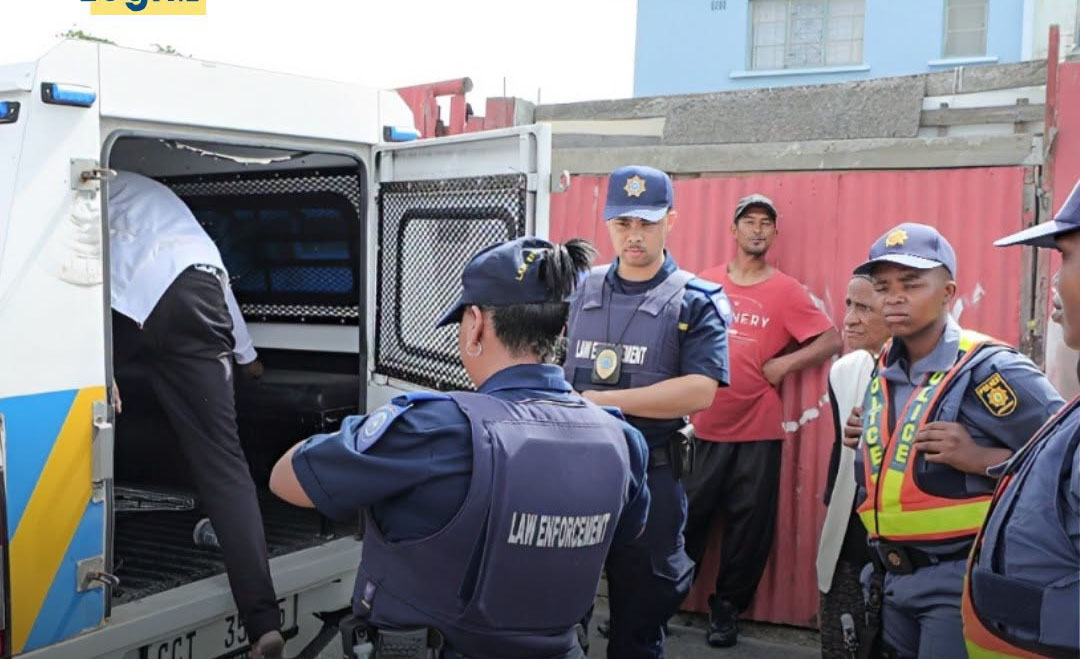
South Africa: Two Women Arrested Over Alleged Rape, Kidnap of E-Hailing Driver
South African police have arrested five suspects, including two women and a teenager, after a 25-year-old e-hailing driver was allegedly kidnapped, sexually assaulted and held for ransom in Cape Town.
The incident occurred in the Steenberg area of Cape Town on Saturday, September 12, 2026, after the driver reportedly went to meet a woman he had previously connected with through his e-hailing business.
Police said the driver’s brother alerted authorities after the suspects allegedly contacted him and demanded R4,000 in cash for the driver’s release.
Following the report, Steenberg police launched an investigation and used a vehicle tracking device to establish the driver’s location.
The tracking information led officers to Southampton Road in Heathfield, where they found and rescued the 25-year-old driver.
According to police, the victim had met one of the female suspects about a week before the incident through his e-hailing business.
The two reportedly exchanged telephone numbers and remained in contact for several days before arranging to meet.
Police allege that when the driver went to meet the woman on Saturday, he was instead kidnapped by the group and taken to another location.
The two female suspects allegedly sexually assaulted the driver while the other suspects were involved in holding him captive.
The five suspects arrested comprise two women aged 23 and 34, two men aged 42 and 48, and a 16-year-old boy.
The teenager is the youngest of the suspects arrested in connection with the case.
The arrests followed the alleged ransom demand made to the victim’s brother. After receiving the report, police acted on information from the vehicle tracking system and were able to locate the driver and bring him to safety.
READ ALSO:
- Four-Storey Building Collapses in Enugu, Workers Trapped Inside
- 27-Year Wait Ends as Construction Begins on New Dutse Emir’s Palace
- Mother ‘sold daughter’s abuse videos for $300’: Nigeria child pornography case shocks nation
The suspects are expected to appear before the Wynberg Magistrate’s Court on Monday, September 14, 2026, where they are expected to face charges relating to the alleged kidnapping and rape.
The case has drawn attention to the safety challenges confronting e-hailing drivers, who regularly meet passengers, customers and other contacts at different locations, sometimes without knowing the people they are meeting.
The incident also highlights the fact that men can be victims of rape and sexual violence. Sexual assault can affect people of any gender, and the circumstances of an alleged attack should be treated with the same seriousness regardless of whether the victim is male or female.
However, the suspects have not been convicted of any offence. The allegations against them will be tested before the court, and they remain entitled to due process under South African law.
Police have not disclosed further details about the alleged sexual assault or indicated whether additional arrests are expected.
Investigations are continuing as authorities work to establish the full circumstances surrounding the alleged kidnapping, sexual assault and ransom demand.
The incident comes amid broader concerns about the safety of e-hailing operators in Cape Town and other parts of South Africa, with driver associations and operators repeatedly calling for stronger measures to protect drivers from attacks and criminal activities while carrying out their work.
South Africa: Two Women Arrested Over Alleged Rape, Kidnap of E-Hailing Driver
Africa
Murder of Nigerian Bishop in South Africa Sparks Outcry Over Unsolved Killings

Murder of Nigerian Bishop in South Africa Sparks Outcry Over Unsolved Killings
Family and community leaders rally for justice after 58-year-old cleric from Ekiti is assassinated in his Johannesburg residence.
To his congregation and loved ones, Nigerian clergyman Bishop Taiwo Michael Fakunle was a pillar of faith and moral guidance. But that sanctuary was violently shattered inside his Kensington home in Johannesburg when two gunmen forced their way inside and opened fire at point-blank range.
Hit more than seven times, the 58-year-old Ekiti native died at the scene, sending shockwaves across the Nigerian expatriate community and turning deep grief into a collective cry for justice.
Leading the push for accountability, the Nigerian Citizens Association South Africa (NICASA) voiced the community’s sorrow and growing frustration with violent crime.
READ ALSO:
- Jetour T2 PHEV Storms Abuja as Jetour Steps Up Nigeria Expansion
- Obi Explains Why He Won’t Step Down for Atiku in 2027
- ASUU Threatens Nationwide Strike Over Unpaid Salaries, Unimplemented Agreement
Association leaders stressed that Bishop Fakunle’s family, church, and compatriots deserve clear answers rather than empty reassurances.
Urging South African investigators to act with speed and transparency, the group warned authorities against letting the tragedy become another forgotten statistic in an endless stack of unsolved homicides.
As detectives at Jeppe Police Station proceed with the murder inquiry, community heads are calling for robust oversight from Nigerian diplomats while urging the public to exercise restraint.
Despite the intense anger surrounding the brazen attack, leaders emphasized that justice must be pursued through legitimate legal channels.
As mourners across South Africa and Nigeria remember the slain bishop, their message to investigators remains clear: the community will not look away until those responsible are brought before a judge.
Murder of Nigerian Bishop in South Africa Sparks Outcry Over Unsolved Killings
Africa
Court Sentences TV Presenter, 11 Others to Death Over Narcotics Network

Court Sentences TV Presenter, 11 Others to Death Over Narcotics Network
A Cairo criminal court has sentenced Egyptian television presenter Sarah Khalifa and 11 other defendants to death by hanging after convicting them of forming an organized criminal gang involved in manufacturing and trafficking narcotics, as well as possessing unlicensed firearms and ammunition.
The court also sentenced nine defendants to life imprisonment and acquitted seven others, bringing the total number of defendants in the case to 28.
Khalifa, 39, is best known for presenting the crime-focused programme Mission Impossible on the private channel al-Mehwar. She also owns a plastic surgery clinic and a production company that specialises in organising parties and events. She has 2.5 million followers on her Instagram account. Khalifa was arrested in Cairo in April 2025 in connection with the investigation. An arrest warrant was issued on April 17, 2025, and she told prosecutors she was arrested that day, while the formal seizure report was dated April 19.
The Public Prosecution charged Khalifa and 27 other defendants with forming an organized criminal group specializing in importing raw materials used in the manufacture of synthetic narcotics, to produce and traffic the drugs, as well as possessing unlicensed firearms and ammunition. According to the prosecution’s investigations, members of the group divided roles among themselves, with some responsible for importing raw materials, others for manufacturing the drugs, and others for distributing them. The group used a residential property to store the materials and manufacture the drugs. Prosecutors alleged that Khalifa provided funds for the operation and travelled abroad to meet two of the alleged leaders and help coordinate their activities with other members of the group. The case was referred to the criminal court with 28 defendants. The prosecution also ordered the defendants’ assets and bank accounts to be placed under precautionary measures and ordered the continued detention of those in custody. Two defendants who remain at large were placed on travel bans and watch lists.
READ ALSO:
- Kneeling to Propose Is Why Western Marriages Fail — Pete Edochie Sparks Fresh Debate
- US Strikes Three Iranian Oil Tankers in Retaliation for Missile Attack on Navy Ships
- Ondo Tragedy: 3 Siblings, Including Twins, Found Dead Near River on Family Farm
The prosecution presented evidence from 20 witnesses, as well as technical and digital evidence, including messages, photographs, and videos that the prosecution said documented the defendants’ alleged criminal activities. Authorities reportedly seized more than 750 kilograms of narcotics and raw materials, and discovered two apartments used as laboratories, as well as unlicensed firearms and ammunition.
Khalifa has consistently denied the charges against her. According to the state-run Akhbar al-Youm newspaper, when asked by a judge about her alleged role during a court appearance last September, Khalifa stated she had never seen any drugs until she was photographed with them inside the anti-narcotics authority offices. In a post on X following the sentencing, she declared: “I’ve never smoked a cigarette in my life. I swear to God, I’m innocent.” In a separate case, the court also sentenced Khalifa and others to five years in prison over the kidnapping and assault of a young man.
The death sentence was confirmed only after the court obtained a religious opinion from the Grand Mufti of Egypt, a legal requirement in capital cases. The Mufti’s opinion is advisory and not binding on the court. Despite the verdict, Khalifa’s lawyer has stated that she will appeal the death sentence. The verdict is subject to appeal before the Court of Cassation, the country’s highest court for criminal cases.
Egypt applies the death penalty for premeditated murder, terrorism, some rape offenses, and drug trafficking. Human rights groups have raised concerns about the use of the death penalty in Egypt. According to a 2025 report by Amnesty International, there were 492 death sentences issued in the country that year, 23 of which were carried out. The Egyptian Commission for Rights and Freedoms reported that 541 death sentences were issued in Egypt in 2025. The defendants were found guilty of drug trafficking and rape, “crimes that did not amount to ‘intentional killing’ to which the use of the death penalty must be restricted under international law and standards,” the Amnesty International report said.
Court Sentences TV Presenter, 11 Others to Death Over Narcotics Network
-

 metro3 days ago
Niger Mosque Abductions: Terrorists Execute 30 of 500 Captive Muslim Worshippers
-

 Business2 days ago
Fuel Prices Climb to ₦1,500 per Litre Across Nigeria, Sparking Calls for Urgent Action
-

 News3 days ago
Blue Line Rail, Hospitals Get Boost as Lagos Approves ₦200bn Bond and Budget Reordering
-

 News2 days ago
OAU Investigates Death of Final-Year Student as Police Begin Probe
-
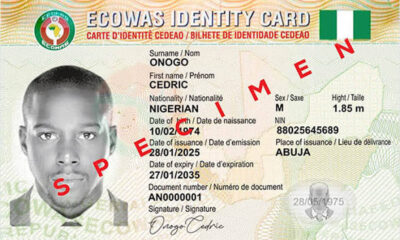
 News1 day ago
ECOWAS Biometric Card Expands as Seven Countries Begin Rollout
-

 Interview2 days ago
He Does Not Lose Elections”: Abdulmumin Jibrin Predicts 65% Landslide for Tinubu in 2027
-
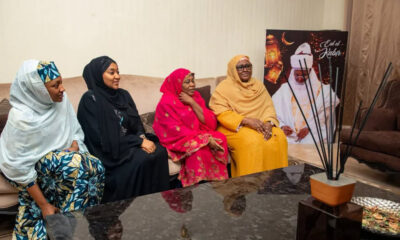
 Politics2 days ago
Aisha Buhari Visits Atiku Amid Opposition Coalition Activities
-

 metro3 days ago
US-Based Nigerian Lawyers Disbarred: Full List of Fraud, Theft and Misconduct Cases