

Health
Breakthrough: Doctors develop vaccine to prevent breast cancer

…IT is currently being tested on 10 volunteers in a clinical trial.
…The trial will be expanded to 50 volunteers in the next phase, he added.
Breast cancer is among the most common cancer types among women not only in the US but across the world, including Türkiye, he said.
“We think that this vaccine will prevent the progression of breast cancer in the human body,” Soran said.
“The most important thing that the research group, including myself, has achieved is that a vaccine that has been developed and tested in a laboratory for years is now moving to clinical trial,” the Turkish professor said.
Volunteers will be monitored for the next five years, he said, adding that the vaccine will be approved for commercial use only after it is declared safe to use in larger clinical trials.
Deadliest cancer type after lung cancer
Breast cancer is the second-most deadliest cancer after lung cancer among women, Soran said.
Around 360,000 women are expected to be diagnosed with breast cancer in the US in 2023, he said, adding that only 16% of them will get an early diagnosis.
“If the vaccine enters into force at this very phase, then we think we can prevent the disease from progressing in the bodies of at least a great part of those 360,000 women,” he said.
READ ALSO:
- Chicago varsity clerk behind graduation certificate anomalies – Tinubu
-
NAF to take delivery of 18 attack helicopters – CAS
-
JUST IN : Appeal Court dismisses Kano gov’s move to set aside tribunal’s ruling
A total of 24,000 women were diagnosed with the disease in Türkiye in 2020, Soran said, criticizing that the scanning program has not reached the desired level.
It is vital for women over the age of 40 to have a mammogram annually, he advised.
“If you have about 1,000 mammograms, if you have screened 1,000 women, you will have caught one or two very early stage breast cancer,” he added.
“One in a thousand, in fact, when multiplied by millions, it makes a very large figure,” the professor said, also suggesting that with early diagnosis, as with all diseases, costly treatments such as radiation therapy, chemotherapy, immunotherapy and surgery can be avoided.
Testing vaccine on humans, one of most critical stages
He said clinical trials for the vaccine are going on at a slow pace because breast cancer does not pose an acute risk like the COVID-19 pandemic.
He noted that breast cancer research began in the 80s and 90s.
“Nearly 10% of the breast cancer cases are caused by genes, and women with those genes also have an 80% chance to be diagnosed with ovarian or breast cancer in their lifetime,” he warned.
Going for frequent check-ups is crucial for all women, he underlined.
Taking a walk for half an hour everyday also reduces the risk of getting breast cancer “to a great extent,” he said, adding that women should also be careful about the length-weight proportion of their bodies.
Those who give birth before 35 and who do not drink alcohol are less likely to be diagnosed with breast cancer, he said.
Breast cancer would no longer be a deadly disease for you if you are diagnosed early, he noted.
1st person to be titled professor at Pittsburgh University’s Mammaplasty Department
Upon being invited to the US in 1997 to work as an expert, Soran had become the very first person, who earned professorship in 2004 at the Pittsburgh University’s Mammaplasty Department.
In 2007, he called his research shedding new light on advanced breast cancer the “Turkish Study.”
It is still recognized by the same name world over.
The Turkish doctor continues to maintain strong ties with Türkiye.
(News Express/Anadolu Agency)
*Writing by Merve Berker












Health
WHO Declares Nigeria Ebola-Free, 52 Contacts Remain Under Surveillance

WHO Declares Nigeria Ebola-Free, 52 Contacts Remain Under Surveillance
The World Health Organisation has declared Nigeria free of active Ebola cases after the evacuation of country’s lone confirmed patient to Switzerland.
Health authorities however continue to monitor 52 contacts to prevent a possible spread of the deadly disease.
The WHO Regional Director for Africa, Dr Mohamed Janabi, announced this in a statement posted on his verified X handle on Monday, confirming that Nigeria would retain responsibility for monitoring 52 contacts, while Switzerland would take over the patient’s continued medical care and follow up with her husband.
Janabi said the patient was clinically stable after Nigerian medical teams successfully managed her through the acute phase of the illness and stabilised her condition before her evacuation.
“Nigeria is now Ebola-free following the evacuation of the index patient to Switzerland,” he said.
He added that Nigeria would maintain close follow-up of the 52 contacts, while Switzerland would assume responsibility for the continued management of the patient and the monitoring of contact number 53, her husband.
The development follows an earlier confirmation by the Nigeria Centre for Disease Control and Prevention that the country had recorded an imported Ebola case involving a patient from Uganda.
Following the confirmation, the NCDC placed 53 contacts under surveillance in Abuja as part of measures to track possible exposure and prevent further transmission.
Although the evacuation of the patient has removed the confirmed case from Nigeria, health authorities are expected to sustain surveillance of the identified contacts in line with established public health protocols.
The monitoring exercise remains critical to ensuring that any potential emergence of symptoms among those exposed is detected promptly and managed appropriately.
Ebola is a severe and often fatal disease that can spread through direct contact with the blood and other bodily fluids of an infected person or someone who has died from the disease.
Public health authorities typically rely on early detection, contact tracing, isolation and appropriate medical care to contain outbreaks and prevent further transmission.
With the index patient now receiving continued care in Switzerland, Nigeria’s immediate focus remains on monitoring the 52 contacts and ensuring that the outbreak does not lead to further infections.
Health
NAFDAC Busts Illegal Herbal Factory in Lagos, Arrests Manager Over Fake Registration Number
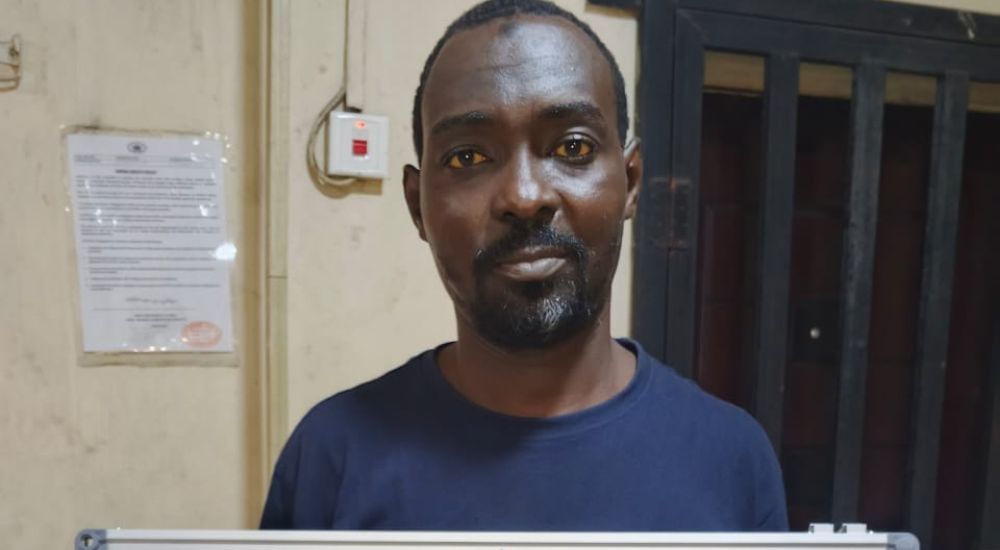
LAGOS — The National Agency for Food and Drug Administration and Control (NAFDAC) has uncovered a suspected illegal herbal product manufacturing facility in Agege, Lagos State, and arrested its manager over the alleged use of a falsified registration number on herbal products.
The agency disclosed the development on Wednesday, October 21, 2026, following an investigation triggered by a report published by The Guardian on October 10 concerning herbal products allegedly carrying fake NAFDAC registration numbers.
According to NAFDAC, its investigative team conducted surveillance before discovering three variants of Asheitu Adams Bitters bearing registration number A7-1827L.
However, checks through the agency’s NAFDAC Automated Product Administration and Monitoring System (NAPAMS) revealed that the registration number belonged to Greentol Cough Syrup, rather than the herbal bitters.
The agency said the discovery confirmed the fraudulent use of the registration number on the products.
During the operation, the company’s managing director and chief executive officer was reportedly absent, while the manager was arrested for further interrogation as investigations continued.
The Sun identified the arrested manager as 39-year-old Abdullazeez Saidu from Kano State. NAFDAC had not announced any court charges against him as of Wednesday.
READ ALSO:
- NELFUND Warns Schools: Student Loans Are Voluntary, Not Compulsory
- ‘I Never Asked Them to Abandon Loved Ones’ — Obi Clarifies Diaspora Remarks
- FG Confirms Ebola Case in Abuja, Identifies 44 Contacts
The agency urged members of the public to provide credible information about suspected illegal manufacturing activities to help strengthen enforcement efforts and protect consumers from potentially unsafe products.
NAFDAC provided the following channels for reporting suspected violations: its call centre numbers, 0800-1-623322 and 0700-1-623322, and the email address reforms@nafdac.gov.ng.
The discovery comes amid a series of enforcement operations by the agency against suspected counterfeit and adulterated products in Lagos and other parts of the country.
On October 14, NAFDAC reported uncovering a suspected facility at the International Trade Fair Complex in Lagos where expired alcoholic and non-alcoholic beverages were allegedly being repackaged for sale. The agency also reported seizures of suspected counterfeit alcoholic drinks in other operations.
The latest operation highlights concerns about the misuse of regulatory registration numbers, which consumers often rely on when assessing whether products have been registered for sale in Nigeria.
NAFDAC has repeatedly urged consumers to verify product registration details and report suspicious products or manufacturing activities.
The agency’s investigation into the Agege facility is ongoing, and further details about the products recovered, their distribution and any potential health effects have not been publicly disclosed.
NAFDAC Busts Illegal Herbal Factory in Lagos, Arrests Manager Over Fake Registration Number
Health
FG Confirms Ebola Case in Abuja, Identifies 44 Contacts

FG Confirms Ebola Case in Abuja, Identifies 44 Contacts
The Federal Government has confirmed a case of Ebola virus disease (EVD) in the Federal Capital Territory (FCT), Abuja, after laboratory tests returned positive for a woman who recently arrived in Nigeria from Uganda.
The Coordinating Minister of Health and Social Welfare, Professor Muhammad Ali Pate, announced the development on Tuesday, October 20, 2026, saying health authorities had identified 44 close contacts and commenced contact tracing to prevent further transmission.
According to the minister, the patient was admitted to a private hospital in Abuja, where she received medical attention for several days before the infection was confirmed. She is currently in isolation and receiving medical care.
The Federal Ministry of Health and Social Welfare is coordinating the response with the Nigeria Centre for Disease Control and Prevention (NCDC), the FCT Health Services Secretariat and other relevant authorities.
Public health teams are tracing and monitoring people who may have been exposed to the patient, including healthcare workers, other patients, caregivers and people who travelled with her.
The government said surveillance had been intensified, while the hospital where the woman received treatment was receiving support to strengthen infection prevention and control measures.
The minister urged public and private healthcare facilities across Nigeria to remain on high alert and promptly identify, isolate and report suspected cases to the appropriate public health authorities.
READ ALSO:
- Breaking: Afenifere Leader Pa Fasoranti Dies at 100
- Army Major, Soldiers Killed in ISWAP Ambush in Yobe State
- Chaos in Abeokuta as Algerian Fans Attack Coach, Vandalise Stadium After Rangers Defeat
Healthcare workers were also directed to maintain strict infection prevention and control practices to reduce the risk of exposure and protect patients and medical personnel.
Pate appealed to Nigerians to remain calm, vigilant and cooperative with health officials, stressing that early detection and prompt reporting were essential to containing the infection.
He noted that Nigeria had successfully contained an Ebola outbreak in 2014 and had experience and public health systems to respond to the current situation.
The government also urged anyone contacted during the tracing exercise, including passengers who may have travelled with the patient, to provide the necessary information and comply with official public health guidance.
Ebola virus disease is a serious illness that can spread through direct contact with the blood or other body fluids of an infected person who has developed symptoms, or through contaminated objects and materials.
Symptoms may include fever, severe weakness, headache, vomiting and diarrhoea. The incubation period ranges from two to 21 days.
Anyone who believes they may have been exposed and subsequently develops symptoms should contact public health authorities for guidance and avoid close contact with others while awaiting advice.
The NCDC operates a toll-free call centre on 6232, available 24 hours a day, seven days a week, for information and reports of suspected cases.
Nigeria’s latest case comes amid a wider Ebola outbreak affecting parts of Africa, including the Democratic Republic of the Congo and countries in East Africa. The NCDC had previously warned of the risk of imported infections and strengthened national preparedness measures.
The Federal Government said investigations and contact tracing were continuing, with further updates expected through the NCDC and the Presidential Task Force on Ebola Virus Disease.
Authorities have urged the public to rely on verified information, follow official health advice and avoid spreading unconfirmed reports as efforts continue to contain the infection.
FG Confirms Ebola Case in Abuja, Identifies 44 Contacts
-

 News3 days ago
EFCC Opens Recruitment for Nigerians, Sets Age Limits for Four Job Categories
-

 News3 days ago
41 Days in Bandits’ Den: Five Islamic Clerics Still Held After Tinubu Re-Election Prayer Trip
-

 Politics3 days ago
2027: Remi, Seyi Tinubu Reportedly Differ Over APC Youth Mobilisation
-

 Politics2 days ago
2027: APGA Chairman Says South-East Must Back Tinubu to Secure Igbo Presidency
-

 Politics3 days ago
Igbo Presidency: Soludo Tells South-East to Back Tinubu for Future Power Shift
-

 metro3 days ago
Police Arrest Suspect Eight Months After Retired Teacher’s Killing in Ogun
-

 metro2 days ago
Borno: Troops Kill 15 Terrorists in Midnight Air Strike
-

 Entertainment2 days ago
Tope Alabi Threatens Pastor With Lawsuit Over Toluwanisings’ Death Claims