

Business
Buhari wants bad fuel importers held accountable, lawmakers demand suspension of liable firms

President Muhammadu Buhari has ordered that those responsible for the off-spec petrol imported into the country recently must be held accountable.
He gave the directive in a statement issued on Thursday by Garba Shehu, his senior special assistant on media and publicity.
Mele Kyari, general managing director, Nigerian National Petroleum Company (NNPC) Limited, had Wednesday night said MRS, Oando, Emadeb Consortium and Duke Oil, a subsidiary of the NNPC, were the suppliers of the contaminated products.
Buhari insisted that those involved must “be held accountable for substandard services and or products sold by them.”
The President also directed the relevant government agencies to “take every step in line with the laws of the country to ensure the respect and protection of consumers against market abuses and social injustices.”
The statement said, “In a reaction to the issue of petroleum product shortages linked to the inadvertent supply of products of foreign origin into the Nigerian market, President Buhari said the protection of consumer interests is a priority of the present administration and is ready to take all necessary measures to protect consumers from hazardous products, loss or injuries from the consumption of substandard goods,” the statement reads in part.
“The President directed that in line with the law, service providers must make full disclosure of relevant information with respect to the consumption of their products and that dissatisfied consumers are entitled to a proper redress of their complaints.”
Minister of State for Petroleum Resources, Timipre Sylva, said on Wednesday that the Federal Government would investigate the supply of the adulterated petrol.
According to him, the decision to probe followed a briefing on the issue to President Muhammadu Buhari on Tuesday to get to the root of the matter.
Meanwhile, the House of Representatives has asked the NNPC to suspend the companies involved in the importation of methanol-blended petrol.
The lower chamber also asked the NNPC to provide the names of the companies to its committee for investigation.
The resolution was passed during the plenary session on Thursday following the adoption of a motion of urgent public importance sponsored by Mohammed Monguno.
Contributing to the motion, Onofiok Luke, a lawmaker from Akwa Ibom State, said the NNPC should be held responsible for the importation of adulterated fuel.
Luke asked the parliament to take action on the matter to ensure and restore the confidence of Nigerians.
Toby Okechukwu, the deputy minority leader, also said the NNPC had not done its duty well as a regulatory agency.






Business
Nigerians Pay N44 Extra Per Litre as Retailers Defy Falling Depot Prices – Full Report

Auto
Abuja Roars to Life as Jetour X50 Headlines Three-Day Motoring Experience
Abuja Roars to Life as Jetour X50 Headlines Three-Day Motoring Experience
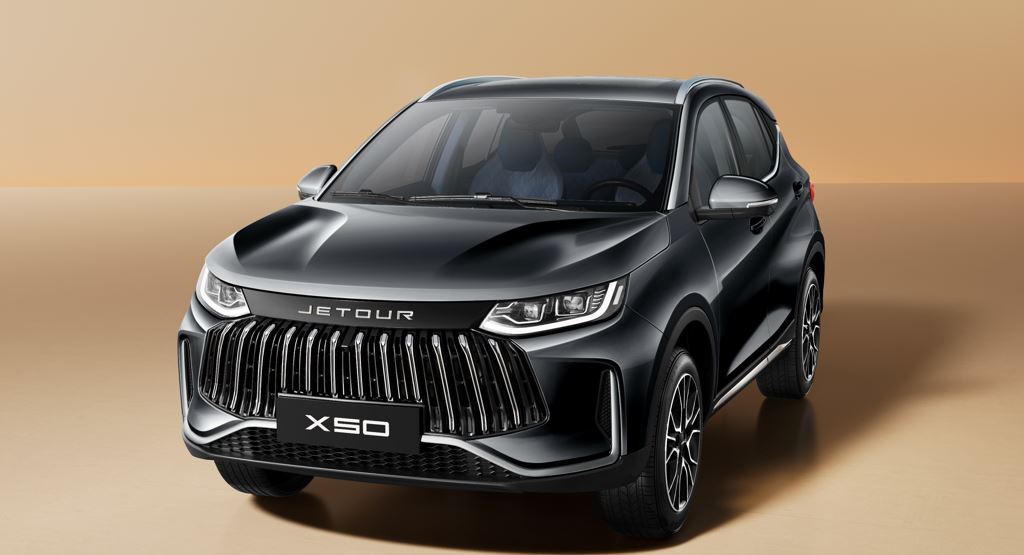
Abuja is gearing up for a major motoring spectacle as Jetour Nigeria brings its fast-growing brand experience to the Federal Capital Territory, with the stylish Jetour X50 set to take centre stage in a three-day showcase of performance, technology and automotive innovation.
Scheduled for September 22 to 24, 2026, the Jetour Experience Abuja will move beyond the conventional vehicle exhibition, giving motorists and prospective buyers the opportunity to test-drive the X50, interact with automotive specialists and experience a range of entertainment and interactive activities.
The Abuja activation follows the strong reception recorded during Jetour Nigeria’s recent Lagos experience and forms part of the automaker’s strategy to deepen customer engagement while expanding its footprint across Nigeria.
Backed by an expanding authorised dealer network comprising Elizade Nigeria Limited, Mandilas Autos, Germaine Auto Centre, Kojo Motors, R.T. Briscoe, Tab Autos and New Era AutoVehicle Services, Jetour is also strengthening access to vehicle sales, after-sales support, genuine spare parts and certified technical services nationwide.
At the heart of the Abuja experience will be the Jetour X50, a compact SUV designed to combine contemporary styling, performance and a technology-rich driving environment.
Powered by a 1.5-litre turbocharged engine paired with a dual-clutch transmission, the X50 has positioned itself as a strong contender in Nigeria’s competitive compact SUV segment.
Jetour has equipped the model with a range of premium features, including a 360-degree camera, Blind Spot Detection, 10.5-inch infotainment system with Apple CarPlay and Android Auto, wireless charging and leather upholstery.
The combination of technology, comfort and performance is part of Jetour’s strategy of offering premium motoring features at competitive price points.
The Abuja event also highlights Jetour’s aggressive expansion strategy in Nigeria, following the brand’s recognition with industry accolades including Fastest Growing Auto Brand and Auto Brand of the Year.
With its expanding dealer network providing nationwide sales and after-sales support, Jetour is seeking to deepen customer engagement while making its vehicles and ownership services more accessible to motorists across the country.
As Abuja prepares to welcome the Jetour Experience, the three-day activation is expected to provide motorists with an opportunity to see, feel and drive the X50 while experiencing first-hand what is driving the brand’s growing appeal in Nigeria.
Business
Dangote Refinery Sets ₦525 Per Share for Landmark IPO
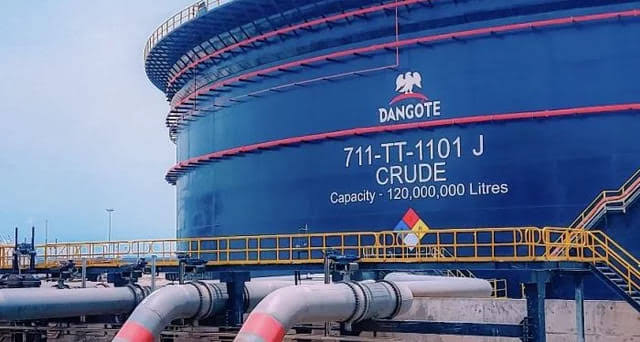
For ₦5,250, Nigerians could soon own a piece of the refinery that has reshaped the country’s fuel market.
-
 Auto2 days ago
Kaduna to Lead Govt Patronage of Local Vehicles as Sani Unveils Peugeot 5008
-
 metro1 day ago
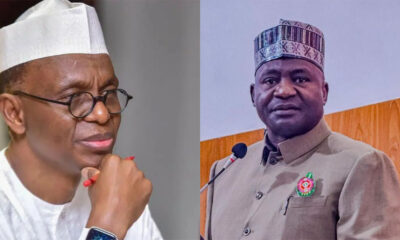
El-Rufai Demands ₦10bn from Defence Minister Over Southern Kaduna Killings Allegation
-
 metro1 day ago
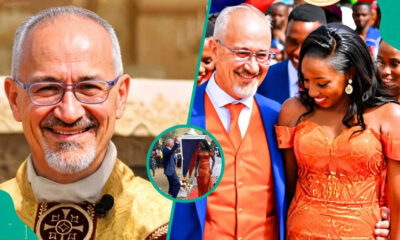
Catholic priest leaves priesthood, weds Kenyan woman after 12 years in Kenya
-
 metro2 days ago
Socialite Igho ‘Tiny’ Ubiribo Dies After Penis Enlargement Surgery
-
 Politics3 days ago
Demystifying the Political Monolith: Wike’s ‘See Finish’ Doctrine and Nigeria’s New Political Calculus
-
 Politics1 day ago
Why Did Peter Obi Attend Seyi Makinde’s Campaign Launch? Here’s What He Said
-
 metro1 day ago
No US Case Against Tinubu, Family Enjoy Unimpeded Transit for UNGA — Ambassador Ibrahim
-

 News1 day ago
Lagos Moves to Slash Agency Fees, Curb Rent Hikes With New Tenancy Bill