

Politics
Building bridges: Tinubu’s men hold closed-door meeting with Bode George

Building bridges: Tinubu’s men hold closed-door meeting with Bode George
As part of the efforts to build bridges and ward off the incessant attacks on the President-elect, Bola Tinubu, by the former Deputy National Chairman of Peoples Democratic Party (PDP), Bode George, the loyalists of the former Lagos State governor Saturday visited George in his Lugard Road, Ikoyi office to solicit support for the incoming President of Nigeria.
George, a fierce critic of Tinubu, had vowed to go into exile if the former Lagos State governor who was the presidential candidate of the All Progressives Congress (APC) emerged as Nigeria’s president in the 2023 general election.“I have not changed my mind, if he (Tinubu) is the president I will go.
“If Tinubu wins, by that time I will be 80 years old. What am I doing here? I will wish you people well,” George had told ARISE NEWS Channel in November 2022.
Speaking after Tinubu was declared the winner of the February 25 presidential election, the PDP chieftain said although he was yet to decide on his destination, his self-imposed exile remains in the works.
George added that he plans to retire to “anywhere in any part of the world” because Tinubu’s victory “might be a hell of a problem.
READ ALSO:
- Four dead in Akwa Ibom communal clash
- ‘Arrest Peter Obi, others if they oppose Tinubu’s inauguration,’ LP faction tells security agents
- Akwa Ibom State Polytechnic student’s body found floating in River
“That is still on my plan. If I decide on what to do, I wish you well. I’m not looking for a job, I have everything I want and how much can I eat? I also have my children and they are no longer kids,” he said.
“They are all mature so what am I looking for? My wife is there. She will take good care of me. I will stay in Nigeria depending on the outcome of this (post-election litigation) because I know there might be a hell of a problem.
“You know I am a military lord so I can go anywhere in any part of the world and I will be looking at you people.“I have even decided that having put 25 years each in the military and politics which is 50 years of my life in the public domain, I need rest so whatever I see at the end of this thing. I’m retiring from partisan politics and will be enjoying the rest of my life.”
But in an apparent move to ward off further criticism, Tinubu’s loyalists and leaders of the All Progressives Congress (APC) in Lagos yesterday met with George.The delegation was led by the chairman of the Governance Advisory Council (GAC), the foremost political platform in the state, Prince Tajudeen Olusi.
The GAC is an influential group comprising critical stakeholders of the APC in Lagos State.It determines who gets what in Lagos politics.
The Speaker of the House of Representatives, H Femi Gbajabiamila, who was supposed to be part of the delegation could not make it for undisclosed reasons.
READ ALSO:
- Subsidy removal: No additional loan outside World Bank’s $800m facility – FG
- Real Madrid prepare for Manchester City with narrow La Liga win over Getafe
- ‘He tried to kill me’ – Seun Kuti reacts to IGP’s arrest order
Also on the delegation is the Senior Special Assistant to the President on SDGs and former Deputy Governor of Lagos State, Mrs. Adoke Orelope-Adefulire.Though the meeting was closed-door, THISDAY was reliably informed that the APC leaders were seeking George’s support for Tinubu as he assumes power on May 29.
It was also gathered that the APC leaders were mounting pressure on George to cease further media attacks on Tinubu.
At the meeting, George said that he was happy that the delegation visited him and insisted that he had nothing personal against Tinubu.
Accompanied by former Deputy Governor, Mrs. Kofoworola Akerele-Bucknor, and Major General Tajudeen Olanrewaju (rtd), among others, George, however, made it clear that because of his position and membership of an opposition party, he would not congratulate Tinubu until after litigations related to the election are concluded.
George who expressed appreciation to the delegation, admitted that “we had detailed discussions on the unity of this great state of Lagos. I must say we established the fact that the culture of Lagos is to accept and accommodate all kinds of people and tribes. And if you get to Lagos State, there is no known tribe in Nigeria that does not reside here. That’s what makes Lagos the commercial nerve centre of the whole of West Africa.“Secondly, on the details of us working together, because a divided house cannot stand, we will work together on this. And I’ve said I have absolutely nothing personal between me and Tinubu,” George added.
Building bridges: Tinubu’s men hold closed-door meeting with Bode George
Thisday





Politics
Tinubu Reveals How Buhari Made Him APC Campaign Co-Chairman Despite Past Anger
Tinubu Reveals How Buhari Made Him APC Campaign Co-Chairman Despite Past Anger
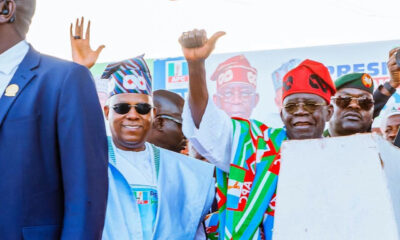
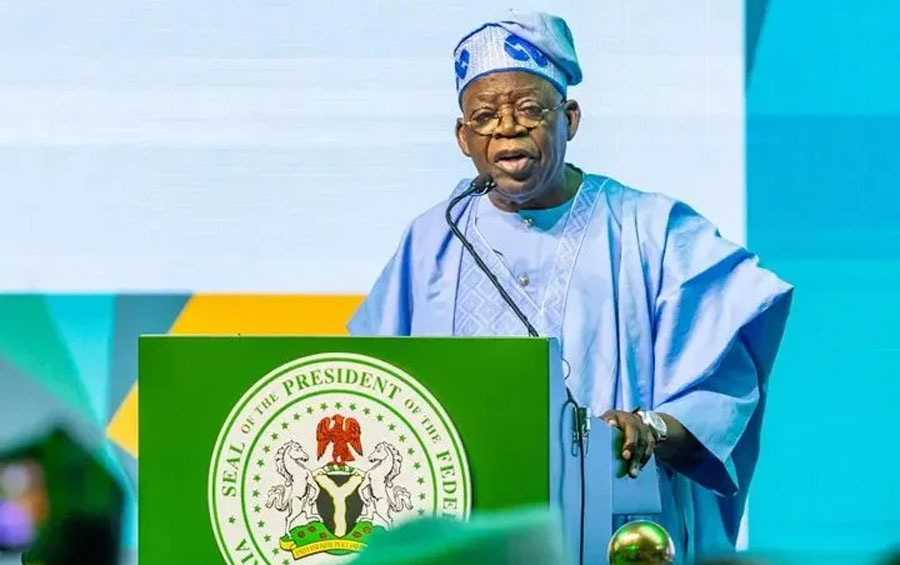
President Bola Ahmed Tinubu has recounted how he overcame personal grievances and anger during the administration of late former President Muhammadu Buhari, following his appointment as coordinator and co-chairman of the All Progressives Congress (APC) presidential campaign ahead of the 2023 general elections.
Tinubu made the revelation on Sunday while speaking at a special prayer session organised by his family at the historic Yoruba Tennis Club in Onikan, Lagos State.
Reflecting on the political disagreements and tensions that characterised the period between 2021 and 2022, the President admitted that he had been deeply hurt but eventually decided to put his grievances aside when Buhari entrusted him with a major responsibility in the party’s presidential campaign.
“In 2021–2022, I had my own anger and hurt feelings. When Muhammadu Buhari called me and said, ‘You are the Coordinator and Co-Chairman of the campaign,’ I was still angry, but I had to let it go; today, that’s in the past,” Tinubu said.
His remarks offered a glimpse into the political developments and internal disagreements that preceded his emergence as the APC presidential candidate and eventual victory in the 2023 presidential election.
The President also used the occasion to urge APC leaders and supporters to put aside personal differences, stressing the importance of unity as the ruling party prepares for the 2027 general elections.
Tinubu equally challenged political leaders and residents of Lagos State to intensify grassroots mobilisation and ensure increased voter participation in the forthcoming elections.
Expressing concern over what he described as poor voter turnout in Lagos despite the state’s large number of registered voters, he questioned why millions of registered voters had failed to translate into significantly higher votes during elections.
“For me, Lagos is a big deal. How can you have seven million voters registered and produce 100,000, 200,000 votes? That’s a failure. Even if you win, you have to generate the maximum,” he said.
He further urged residents who were dissatisfied with political developments, the media or other issues to express their feelings through participation in the electoral process rather than staying away from the polls.
“It’s not anger; anger will not do it. If you are angry with cinema or you are angry with the media, go and vote,” the President added.
The gathering attracted prominent political figures, community leaders, family members and other dignitaries, providing an opportunity for Tinubu to reflect on past political disagreements while rallying support ahead of the 2027 electoral contest.
The President’s comments have brought renewed attention to the relationship between him and Buhari during the period leading up to the 2023 presidential election, particularly the political tensions that preceded his emergence as the APC candidate.
Tinubu Reveals How Buhari Made Him APC Campaign Co-Chairman Despite Past Anger
Politics
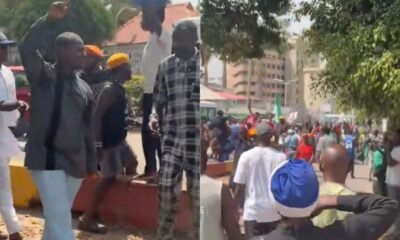
‘Tinubu Must Go’: Protesters Storm INEC HQ, Demand Electoral Accountability
‘Tinubu Must Go’: Protesters Storm INEC HQ, Demand Electoral Accountability
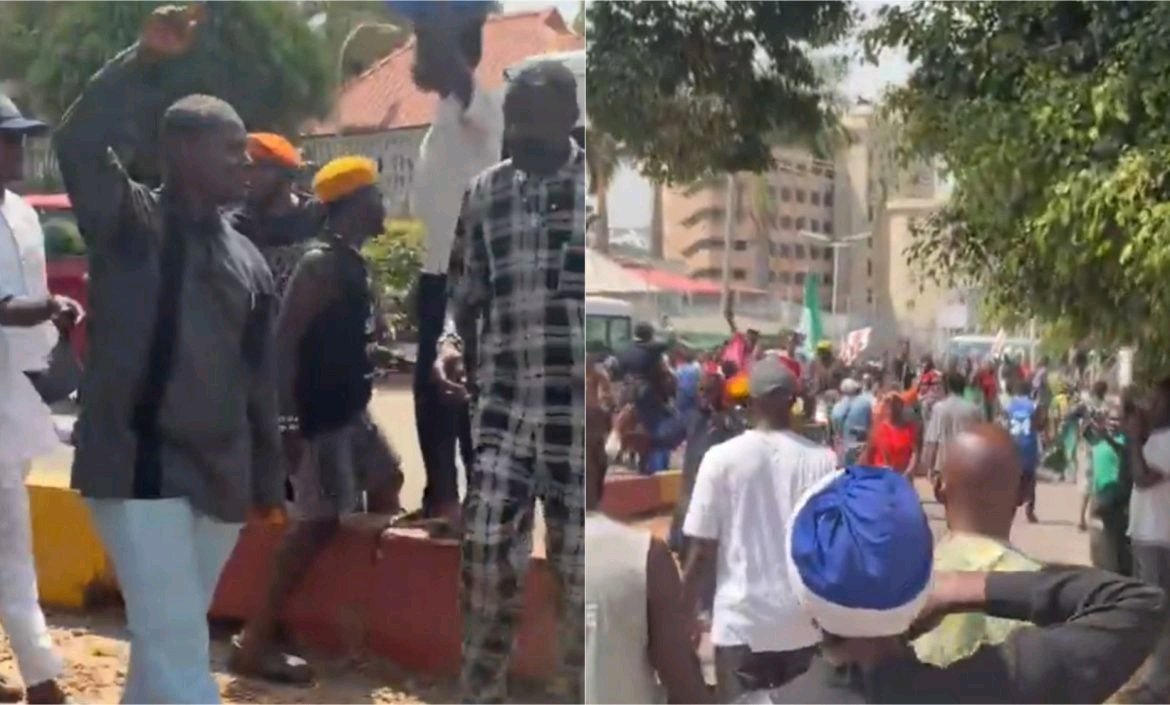
ABUJA, Nigeria — Tension mounted in Abuja on Monday, November 23, 2026, as Nigerian youths and opposition supporters staged a fresh protest at the national headquarters of the Independent National Electoral Commission (INEC), chanting “Tinubu Must Go” and demanding greater transparency ahead of the 2027 general elections.
The demonstrators, who reportedly gathered at Unity Fountain before marching towards the INEC headquarters, carried placards and chanted slogans including “Tinubu Must Go” and “Rig and Die” as they expressed concerns over the credibility of the forthcoming elections.
The protesters accused the electoral commission of taking decisions they believed could undermine the integrity of the 2027 polls and give President Bola Tinubu and the ruling All Progressives Congress (APC) an unfair advantage.
They insisted that INEC must demonstrate its independence and reassure Nigerians that their votes would count in the next general elections.
One of the protesters accused the commission of failing to release some Permanent Voter Cards (PVCs), while also raising concerns about the proposed use of artificial intelligence in the electoral process.
“INEC must be accountable. INEC has refused to release voters’ cards for people to vote. They are using AI to pollute the polling units,” the demonstrator alleged.
The protester further accused the commission of preparing an electoral process about which Nigerians were not adequately informed, insisting that the electoral body must be held accountable.
Human rights activist and African Action Congress (AAC) presidential hopeful, Omoyele Sowore, was also reported to have joined the demonstrators at the INEC headquarters, where he addressed protesters and participated in the anti-government chants.
The demonstration comes amid growing political disagreements between opposition parties and INEC over the commission’s handling of internal party leadership disputes, particularly the lingering crisis within the African Democratic Congress (ADC).
Opposition figures have accused the electoral body of taking steps that could weaken opposition parties ahead of the 2027 elections, allegations INEC has consistently rejected.
INEC Chairman, Professor Joash Amupitan, has maintained that the commission remains committed to conducting free, fair and credible elections, insisting that its decisions are guided by relevant laws and judicial pronouncements.
The latest demonstration has once again brought the electoral commission under public scrutiny, with protesters demanding transparency, accountability and assurances that the outcome of the 2027 elections will reflect the genuine choices of Nigerian voters.
As political activities gradually intensify ahead of the polls, the protest underscores growing pressure on INEC to address public concerns and strengthen confidence in the country’s electoral process.
‘Tinubu Must Go’: Protesters Storm INEC HQ, Demand Electoral Accountability
Politics
2027: Makinde Invokes 1966 Coup, Questions Obi-Kwankwaso Ticket
2027: Makinde Invokes 1966 Coup, Questions Obi-Kwankwaso Ticket
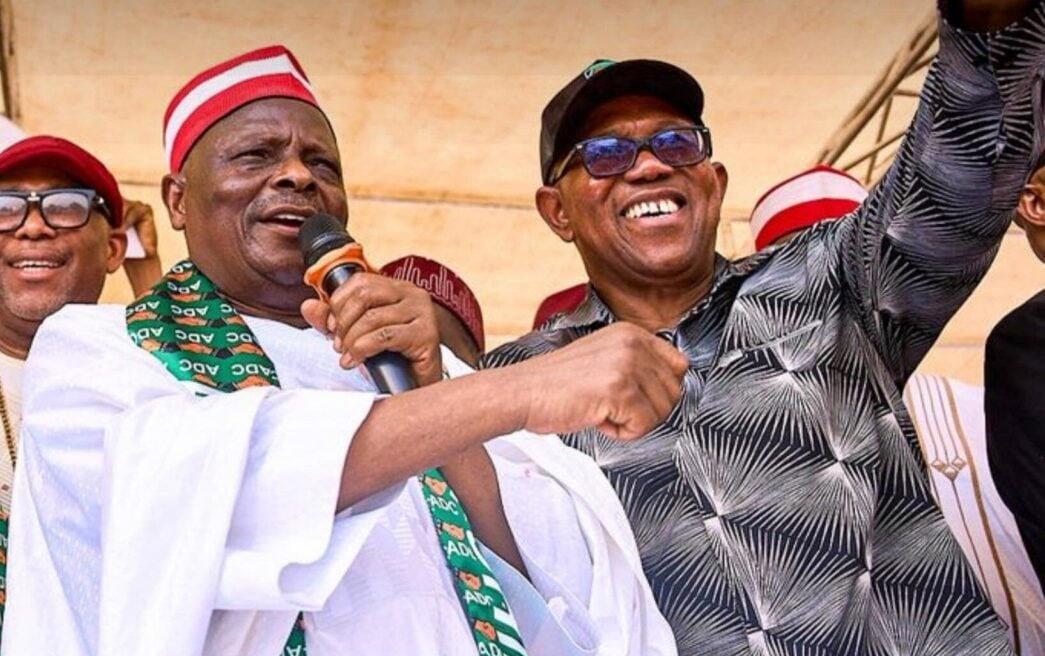
Oyo State Governor, Seyi Makinde, has questioned the suitability of the proposed presidential ticket involving Peter Obi and Rabiu Musa Kwankwaso ahead of the 2027 general elections, arguing that a traditional political alliance between the North and Southwest offers a stronger foundation for national stability.
Makinde made the remarks while defending his own presidential ambition and proposed ticket with former Director-General of the Department of State Services (DSS), Lawal Daura, under the platform of the Allied Peoples Movement (APM).
The governor spoke during an interview on The Rooftop, a political talk show hosted by Kayode Okikiolu, published on Sunday.
Asked why Nigerians should support his proposed ticket rather than the Obi-Kwankwaso combination, Makinde pointed to the historical relationship between the North and Southwest, insisting that cooperation between the two regions had played an important role in maintaining Nigeria’s stability during difficult periods.
“Well, apart from the traditional Southwest-North alliance, that alliance has always provided stability for Nigeria during times of crisis in the past,” he said.
Makinde further referenced the January 15, 1966 military coup, arguing that the deaths of prominent political and military leaders from the North and Southwest during the uprising demonstrated the historical roles played by the two regions in the country’s political development.
“If you go back to the first military coup in Nigeria, the people who were killed were largely from the North and Southwest because we have always been at the forefront of efforts to maintain stability in the country. That is what we have brought to the table,” the governor said.
The January 1966 coup, organised by a group of young military officers, resulted in the assassination of several prominent Nigerian leaders, including Prime Minister Abubakar Tafawa Balewa, Northern Premier Ahmadu Bello and Western Region Premier Samuel Ladoke Akintola.
READ ALSO:
- Military Kills 21 ISWAP Fighters in Borno Airstrikes, 26 Surrender
- Doctor Shortage: FG Increases Medical Student Admissions by 140%
- 2027: Tinubu Urges Oyo Voters to Stick With APC, Promises More Development
Other senior military officers and political figures were also killed during the uprising, which ended Nigeria’s First Republic and paved the way for military rule under Major General Johnson Aguiyi-Ironsi.
Makinde’s reference to the coup formed part of his argument for a political partnership between the North and Southwest, which he believes could provide a stabilising framework for Nigeria’s leadership.
Beyond the regional alliance argument, the governor also cited what he described as the youthful energy of his proposed ticket and the achievements of his administration in Oyo State as reasons Nigerians should consider his presidential ambition.
He maintained that his administration had documented its promises and commitments, making it possible for citizens to assess its performance and hold it accountable.
“There is also the youthful energy, what we have achieved in Oyo State, and the fact that we have reduced all these promises to black and white, making ourselves accountable,” he added.
The Oyo governor also used the interview to explain his proposal for a transitional government of national unity, which he said would address Nigeria’s political, economic and security challenges.
Makinde argued that the country required a new political arrangement capable of addressing its socio-political problems through broad-based cooperation rather than allowing individual ambitions to dominate national interests.
He said he was prepared to lead such a transitional arrangement but would not seek to benefit personally from its outcome.
According to him, removing himself from the benefits of the proposed transition would enable him to make decisions in the national interest without allowing personal political considerations to influence his judgment.
“Transitional in the sense that we know that we have to do something about our socio-political environment,” he said.
“I’m saying that I can lead it, but I will not be a beneficiary of the outcome, because if I’m looking at myself as benefiting from that outcome, it may cloud my judgment and also influence how I will take that decision.
“So, I’ve upfront removed myself and said, look, I will not be there now. I’m saying it for the record, even now,” Makinde stated.
He further argued that Nigeria’s security challenges were no longer restricted to particular regions and required a collective national response involving political leaders and stakeholders across the country.
Makinde’s comments come amid continuing political discussions among opposition figures over possible alliances and strategies for challenging President Bola Ahmed Tinubu and the ruling All Progressives Congress (APC) in 2027.
The proposed Obi-Kwankwaso ticket has featured prominently in discussions about opposition cooperation, following the emergence of Peter Obi as the presidential candidate of the Nigerian Democratic Congress (NDC) and Kwankwaso as his running mate.
However, disagreements over political platforms, leadership arrangements and presidential ambitions have continued to complicate efforts to establish a unified opposition front.
Makinde’s position introduces another perspective into the debate, with the governor making a case for his own North-Southwest political partnership rather than the proposed Obi-Kwankwaso combination.
As political consultations continue ahead of the 2027 elections, the competing alliance proposals are expected to remain important issues in discussions about opposition strategy, regional representation and Nigeria’s political future.
2027: Makinde Invokes 1966 Coup, Questions Obi-Kwankwaso Ticket
-
 metro3 days ago
Hoodlums Descend on Tinubu’s Praise Singer Rarara at Abuja Mosque, Tear His Clothes
-

 metro1 day ago
Chibok Girl Escapes After Eight Years in Boko Haram Captivity, Reveals 20 Classmates Still Held
-

 metro2 days ago
Jimmy Odukoya Sues Sister, Church Trustees Over Removal as Senior Pastor
-
 Education2 days ago
UNILAG Gets 10 CNG Buses as FG Expands Campus Transport Scheme to 60 Institutions
-

 Politics22 hours ago
Kwankwaso Made Me Swear on Qur’an to Join APC After Election Victory — Gov Yusuf Reveals Tinubu Deal
-
 Politics3 days ago
2027: Tinubu Urges Oyo Voters to Stick With APC, Promises More Development
-

 metro3 days ago
Tinubu’s Chicago University Row Deepens as Fresh Findings Cast Doubt on Pearse’s Lecturer Claims
-

 Politics2 days ago
‘Makinde Should Call Wike Uncle, Not Me’ – Ogun Fires Back