

metro
Christian Council opposes ₦50,000 fine for bus preaching, seeks Tinubu’s intervention
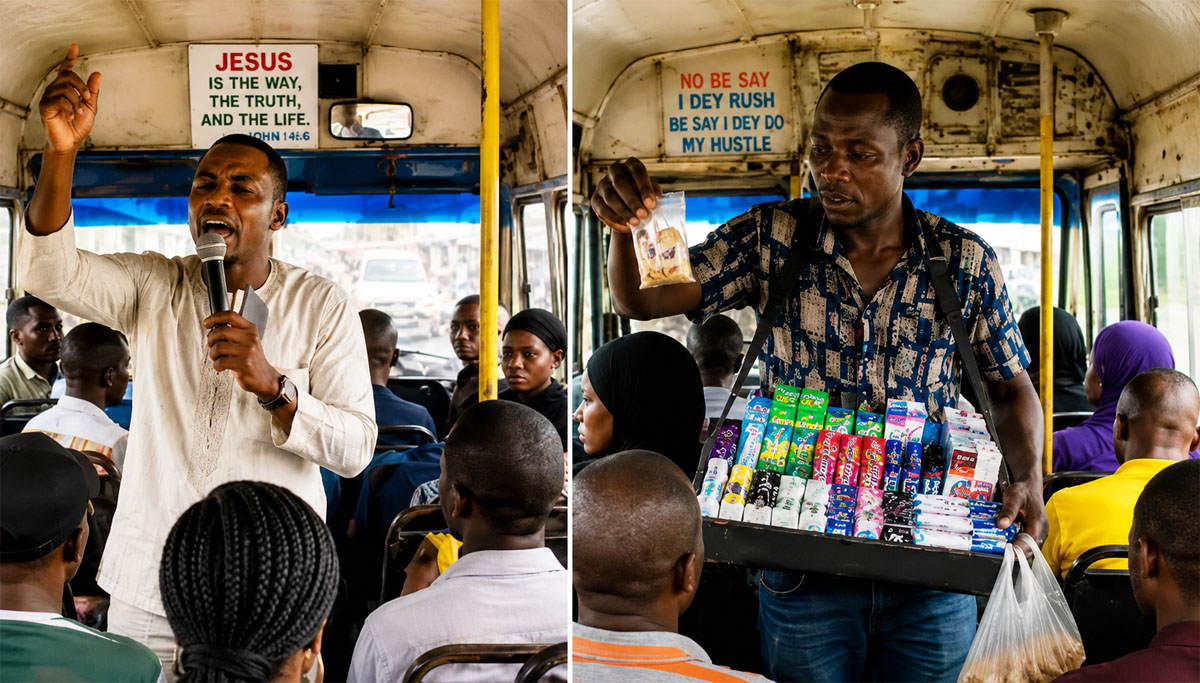
Christian Council opposes ₦50,000 fine for bus preaching, seeks Tinubu’s intervention
The Christian Council of Nigeria (CCN) has called on President Bola Ahmed Tinubu and the National Assembly (NASS) to review contentious provisions of the proposed Federal Road Safety Corps (FRSC) Act (Amendment) Bill, 2026, warning that parts of the legislation could infringe on constitutional rights and impose additional hardship on struggling Nigerians.
The appeal follows the passage of the FRSC Amendment Bill, 2026 by the Senate, which proposes a ₦50,000 fine for anyone found hawking, trading or preaching in commercial buses, as well as stiffer penalties for several traffic-related offences. The bill is awaiting presidential assent before it can become law.
In a statement signed by its General Secretary, Rt. Rev. Evans Onyemara, the council said it fully supports efforts aimed at improving road safety and reducing accidents on Nigerian roads but insisted that such measures must respect the constitutional rights of citizens.
According to the CCN, the inclusion of preaching alongside hawking and trading among prohibited activities raises legitimate concerns over the constitutional rights to freedom of religion and freedom of expression guaranteed under the 1999 Constitution.
The council argued that while government has a responsibility to ensure road safety, legislation should not inadvertently criminalise peaceful religious activities carried out without disrupting drivers or passengers.
It noted that commercial buses have, for decades, served as platforms where Christians share brief messages of hope, repentance, encouragement and prayers with willing listeners, adding that any attempt to prohibit such activities deserves careful constitutional scrutiny.
According to the council, restricting peaceful evangelism without adequate consultation could create the perception that Christian religious expression is being unfairly targeted.
READ ALSO:
- EFCC secures final forfeiture of 52 luxury Lekki homes in landmark court ruling
- 2027 Gombe election: Pantami secures major boost as PDP aspirant withdraws court case
- MURIC backs FRSC bill to ban preaching, hawking in commercial buses
The CCN further expressed concern over the proposed ₦50,000 fine for hawkers, describing the penalty as harsh and insensitive to the prevailing economic realities facing millions of Nigerians.
It argued that many citizens engage in hawking and informal trading due to unemployment, poverty, inflation and the rising cost of living, stressing that poverty should not be criminalised through heavy financial penalties.
Rather than relying on punitive sanctions, the council urged the Federal Government to address the root causes of street trading by creating more employment opportunities, expanding social intervention programmes and implementing sustainable economic empowerment initiatives.
It also recommended the establishment of designated trading areas and age-appropriate restrictions where necessary instead of imposing blanket penalties on vulnerable Nigerians trying to earn a living.
The Christian body appealed to President Tinubu, the National Assembly and the Federal Road Safety Corps to embark on wider consultations before the bill is signed into law.
It said the consultation process should include faith-based organisations, civil society organisations, transport unions, road safety experts, constitutional lawyers and representatives of vulnerable groups to ensure that the final legislation adequately balances public safety with fundamental human rights.
According to the CCN, Nigeria needs laws that are firm enough to protect lives on the highways but compassionate enough to avoid placing unbearable burdens on citizens already grappling with severe economic hardship.
The council maintained that legislation should promote national unity, protect fundamental freedoms and avoid creating perceptions of discrimination against any religious group.
The latest appeal comes amid growing public debate over the proposed amendment. While the Muslim Rights Concern (MURIC) has endorsed the provision seeking to prohibit preaching in commercial buses, arguing that it would reduce driver distraction and help curb road accidents, several Christian organisations have urged the government to review the proposal to safeguard constitutionally guaranteed religious freedoms.
Legal analysts say the controversy surrounding the bill underscores the need for lawmakers to strike a careful balance between strengthening road safety regulations and protecting citizens’ fundamental rights as enshrined in the Constitution.
With the legislation now awaiting presidential assent, stakeholders across religious, legal and civil society circles are expected to intensify advocacy over the bill before a final decision is taken by the Presidency.
Christian Council opposes ₦50,000 fine for bus preaching, seeks Tinubu’s intervention

metro
IBEDC Announces Major Power Outage in Ogun Region Over Network Load Restriction
IBEDC Announces Major Power Outage in Ogun Region Over Network Load Restriction
Abeokuta, Ogun State — Residents and businesses across major parts of Ogun State are bracing for a significant disruption in electricity supply following an official notice of power outage issued by the Ibadan Electricity Distribution Company (IBEDC).
In a statement released on Saturday, October 17, 2026, and signed by the Ogun Region office, the utility company attributed the impending blackout to load restrictions on the Ota/Papalanto/Abeokuta 132kV network. According to the management, this restriction is severely impacting the available power supply to their 33kV feeders serving the region.
The notice, which was directed to “Esteemed Customers,” indicates that the power rationing will affect a vast array of communities across the state.
Providing a comprehensive list of the affected areas, IBEDC stated that customers in Itele, Iyesi, Osuke, Lafenwa, Oju-Ore, Ilogbo, Ewupe, Singer, Jacross, Ore-Meta, Iju, and Iju Love will experience reduced power supply.
Other affected locations include Mopin, Ota Industrial Estate, Housing Estate, Afobaje, Olosun, Oke-Ola, Alishiba, GRA, The Bell, Igberen, Davol, Iyana-Iyesi, Olokuta, High Court, Oloko, Obasanjo, Ayetoro, Imeko, Ilaro, Ifo, Papalanto, Ijako, Idiroko, and Odeda.
The outage also extends to Owode-Egba, Kobape, Bisodun, Omu, Arigbawonwo, Siun, Asipa, Orile-Imo, New Makun City, Pentagon Estate, Lufuwape, Ibafo, Mowe, Lotto, Olowotedo, Orimerunmu, Ofada Town, Pakuro, Ogunrun, Asa-Bala, Mayegun, and the Christ Embassy Area.
Furthermore, residents in Ijagba, Akeja, Owode Ijako, Ibogun, Ajegunle, Ilepa, Ijako Onihale, Abeokuta, and its environs are equally expected to be affected by the load restriction.
IBEDC noted that it is actively monitoring the situation in collaboration with its value chain partners to resolve the issue and restore normal supply. The company promised to keep its customers updated on any new developments regarding the network.
“We sincerely apologize for the inconvenience,” the statement concluded, acknowledging the impact the reduced power supply will have on homes, industries, and commercial activities in the affected areas.
Customers experiencing prolonged outages or requiring further clarifications have been urged to contact the company via its customer care lines at 0805 500 9999 or 0915 500 9999, or through their official social media handles.
IBEDC Announces Major Power Outage in Ogun Region Over Network Load Restriction
metro
Gunmen Kill Two Policemen, Raze Station, Patrol Van in Daring Attack on Aba Police Division
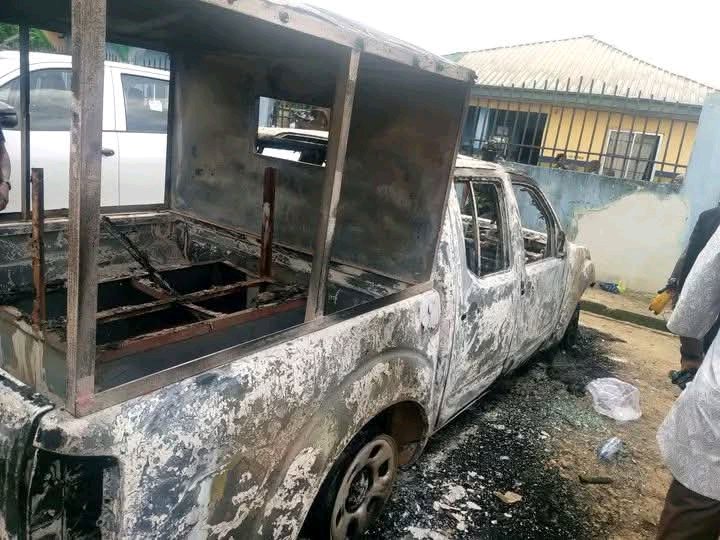
Gunmen Kill Two Policemen, Raze Station, Patrol Van in Daring Attack on Aba Police Division
ABA, ABIA STATE – A wave of grief and insecurity has gripped the commercial hub of Aba following a horrific attack by unknown gunmen on the Uratta Police Division, which left two police officers dead and properties worth millions of naira destroyed.
The brutal assault, which occurred in the early hours of Saturday, saw the assailants not only neutralize the officers on duty but also set the police station and a patrol vehicle ablaze in a display of brazen violence.
According to eyewitness accounts and confirmed by police authorities, the heavily armed hoodlums stormed the facility, firing sporadically to overwhelm the security architecture of the division. During the ensuing gun duel, two policemen paid the ultimate price, while several others sustained varying degrees of injuries.
Images from the scene of the incident, which have circulated online, depict a scene of devastation. A police operation van, parked within the premises, was completely incinerated, reduced to a charred metal shell. The attackers also torched parts of the station building before fleeing the scene, leaving a trail of panic among residents of the Uratta community.
Confirming the incident, the Police Public Relations Officer (PPRO) for the Abia State Command, assured the public that a manhunt has been launched to apprehend the fleeing suspects. The Command, in a statement, condemned the attack as a cowardly act and vowed that the perpetrators would be brought to book.
“The Command has lost two of its gallant officers in the line of duty. We are currently on the trail of the attackers, and we assure the public that normalcy has been restored to the area,” the PPRO stated.
Residents of the area have expressed deep concern over the recurring attacks on security formations in the South-East, calling on the government to intensify efforts to curb the rising tide of insecurity. The attack on the Uratta Division is the latest in a series of targeted assaults on police infrastructure in the region.
As of the time of filing this report, security has been beefed up around the affected division to prevent any further breakdown of law and order, while the remains of the deceased officers have been deposited at a mortuary.
Gunmen Kill Two Policemen, Raze Station, Patrol Van in Daring Attack on Aba Police Division
metro
COAS Storms Borno as Tinubu Orders Rescue of All Abductees, Destruction of Terrorist Camps
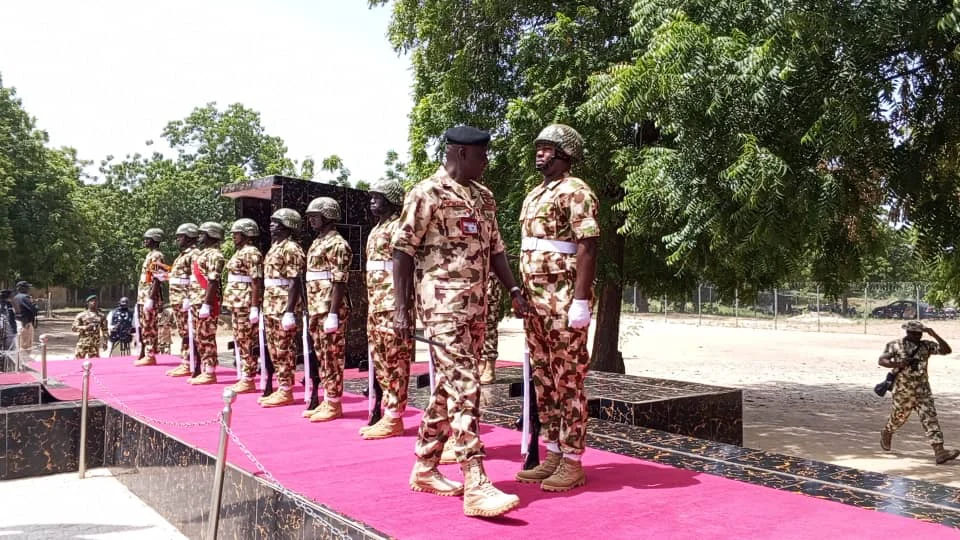
COAS Storms Borno as Tinubu Orders Rescue of All Abductees, Destruction of Terrorist Camps
MAIDUGURI — Chief of Army Staff, Lieutenant General Waidi Shaibu, has arrived in Borno State as the Nigerian military intensifies its security operations following President Bola Ahmed Tinubu’s directive to rescue all abducted persons and eliminate terrorist and bandit camps across the country.
Shaibu arrived in Maiduguri, the Borno State capital, at about 11 a.m. on Saturday, October 17, 2026, two days after Tinubu issued the directive to security chiefs during a meeting at the Presidential Villa in Abuja.
The army chief’s visit comes amid renewed pressure on security agencies to intensify counterterrorism operations, dismantle insurgent hideouts and secure the release of Nigerians being held captive by criminal groups.
Although it remains unclear whether the visit was directly triggered by the President’s order, Shaibu is expected to meet with theatre, field and unit commanders involved in military operations across the state.
His arrival at the headquarters of the North-East Joint Task Force, Operation Hadin Kai, at Maimalari Cantonment in Maiduguri signals continued military engagement in a region that has faced years of insurgency and attacks by armed groups.
Tinubu’s directive was disclosed on Thursday, October 15, by the Minister of Defence, General Christopher Musa (retd.), after a security meeting with the President and heads of security agencies.
According to Musa, the President ordered security agencies to intensify efforts to locate and rescue all abducted persons, regardless of where they were being held.
READ ALSO:
- Omoda, Jaecoo Storm Europe as Global Sales Surge 123% to 73,421
- 16-Year-Old Girl Recounts Horror of Hookup Encounter, Says Man Threatened Her With Knife, Acid
- Ex-Super Eagles Coach Westerhof Battles Colon Cancer in Critical Condition, Wife Seeks Help
“The directive from the President is: all of us must go all out to fish out and rescue all those that have been abducted, kidnapped, wherever they are,” the minister quoted Tinubu as saying.
The President also directed security chiefs to ensure that terrorist and bandit camps were dismantled across the country.
“There shouldn’t be any camp of any terrorists or bandits anywhere in Nigeria,” Musa said, relaying the President’s position.
The directive comes as the Federal Government faces continuing security challenges, including kidnappings, terrorist attacks and the activities of armed groups in parts of northern Nigeria.
Borno remains a major theatre of counterinsurgency operations against Boko Haram and Islamic State West Africa Province (ISWAP), which have carried out attacks on civilians, security personnel and communities in the North-East.
Military operations under Operation Hadin Kai have focused on confronting insurgents, disrupting their movements and restoring security to affected communities. The latest visit by the army chief is expected to provide an opportunity for engagements with commanders overseeing operations on the ground.
Tinubu has also directed security chiefs to ensure adequate security for Nigerians during the elections scheduled for January, according to the Defence Minister.
The President’s instructions place renewed emphasis on rescuing abductees, dismantling armed groups’ operational bases and improving the security environment ahead of the polls.
However, the army chief’s arrival in Maiduguri should not be interpreted as confirmation that all abductees have been rescued or that terrorist camps have been eliminated. No such outcome was established in the reports announcing his visit.
The military’s next steps and any operational results from the engagements in Borno are likely to be closely watched by families of abducted persons and communities affected by insurgency.
For now, the government’s stated objective remains clear: intensify security operations, rescue people held in captivity and dismantle the camps used by terrorists and bandits to carry out attacks across Nigeria.
COAS Storms Borno as Tinubu Orders Rescue of All Abductees, Destruction of Terrorist Camps
-

 metro2 days ago
₦130m Toyota Tundra Wrecked: Lagos Dealer Questions Police Over Suspect’s Release
-

 News2 days ago
₦200m Fake Alcohol Packaging Uncovered as NAFDAC Raids Aba Market
-

 metro3 days ago
Outrage as Residents Scoop Groundnut Oil From Lagos Tanker Crash Scene
-

 metro17 hours ago
Suspended Archbishop Ibezim Drags Anglican Primate to Court, Challenges Six-Month Leave
-

 metro3 days ago
Borno Woman Jailed Two Years for Sexual Exploitation of 16-Year-Old Girl
-

 Sports1 day ago
Real Madrid Demand Tebas’ Exit After Explosive Nazi Propaganda Row
-

 Politics3 days ago
Shettima Attacks Atiku Over Tinubu Remarks, Questions Subsidy Plan
-
 News3 days ago
Terrorists Storm Borno Military Post in Fierce Gun Battle, Soldiers Feared Dead