

metro
Court grants Blessing CEO N20m bail in alleged N69.15m property fraud case

Court grants Blessing CEO N20m bail in alleged N69.15m property fraud case
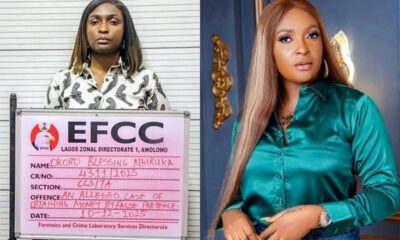
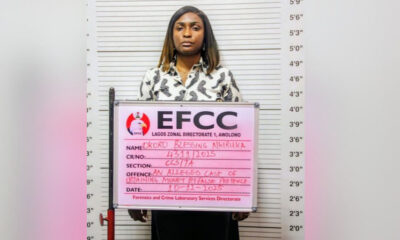
Social media personality and relationship coach Blessing Okoro, popularly known as Blessing CEO, has been granted N20 million bail by a Lagos State Special Offences Court sitting in Ikeja in her ongoing trial over an alleged N69.15 million property fraud.
Justice Rahman Oshodi, who presided over the case, admitted the defendant to bail with two sureties in like sum, ruling that although the Economic and Financial Crimes Commission (EFCC) did not oppose the application, the court was still required to independently evaluate the nature of the charges, the applicable law and the likelihood of the defendant standing trial before exercising its discretion.
In delivering the ruling, the judge also considered submissions by the defence regarding the whereabouts of Blessing CEO’s international passport after her legal team informed the court that the travel document had been misplaced and presented supporting evidence.
As part of the bail conditions, the court ordered that each surety must provide evidence of financial capacity, including a three-year bank statement or proof of fixed deposits valued at not less than N20 million. The defendant and her sureties are also required to undergo verification through the Lagos State Judiciary’s Bail Information Management System (BIMS) before the bail can be perfected.
Justice Oshodi further directed the Nigerian Immigration Service (NIS) to place the defendant on a travel watch list pending the determination of the case, effectively restricting her from leaving Nigeria without the court’s approval.
The matter was subsequently adjourned until October 12, 2026, for the continuation of trial.
The EFCC arraigned Blessing CEO on June 9, 2026, on a two-count charge bordering on obtaining money by false pretence and stealing, offences she allegedly committed in connection with a property transaction in Lagos. She pleaded not guilty when the charges were read to her.
READ ALSO:
- UN calls for urgent evacuation of 6,000 sailors stranded in Strait of Hormuz
- Petrol price hits N1,400 per litre as transport fares rise across Nigeria
- Dalung gives Mutfwang 72-hour ultimatum to withdraw apology to Igbos over civil war role
According to the anti-graft agency, Blessing CEO allegedly obtained N69.15 million from Hope Chiropractic Health Clinic Limited in March 2025 after allegedly representing that she could secure a five-year lease of a property located in Lekki, Lagos.
The prosecution alleged that the representation was false and that the money was dishonestly obtained under the guise of facilitating the property transaction.
The EFCC further argued that the alleged offences contravene Section 285 of the Criminal Law of Lagos State and Section 1(3) of the Advance Fee Fraud and Other Related Offences Act, 2006.
During the bail proceedings, the prosecution maintained that it was prepared to proceed with trial, while the defence urged the court to grant bail on liberal terms, arguing that the defendant had cooperated with investigators and remained willing to attend all court proceedings.
The court ultimately ruled that the constitutional presumption of innocence entitled the defendant to bail, provided adequate conditions were imposed to ensure her appearance throughout the trial.
The case has attracted widespread public attention because of Blessing CEO’s prominence on social media, where she has built a large following through relationship advice, celebrity commentary and lifestyle content.
The latest proceedings also come as the influencer continues to face another pending criminal matter before the Federal High Court in Ikoyi, where she is standing trial in a separate alleged fraud case involving about N36 million. Both cases remain before the courts, and no verdict has been delivered.
Legal analysts note that the outcome of the ongoing trial will depend entirely on the evidence presented by both the prosecution and the defence, while reiterating that under Nigerian law, every defendant is presumed innocent unless proven guilty beyond reasonable doubt.
Court grants Blessing CEO N20m bail in alleged N69.15m property fraud case








metro
Tinubu Support or Mosque Dispute? Bauchi Residents, NUJ Challenge ‘Imam’s Removal’ Report
Tinubu Support or Mosque Dispute? Bauchi Residents, NUJ Challenge ‘Imam’s Removal’ Report
Residents of Madina Quarters in Bauchi metropolis, the Nigeria Union of Journalists (NUJ), Bauchi State Council, and an Islamic scholar have challenged reports alleging that a man was removed as an imam for supporting President Bola Ahmed Tinubu’s re-election bid ahead of the 2027 general elections.
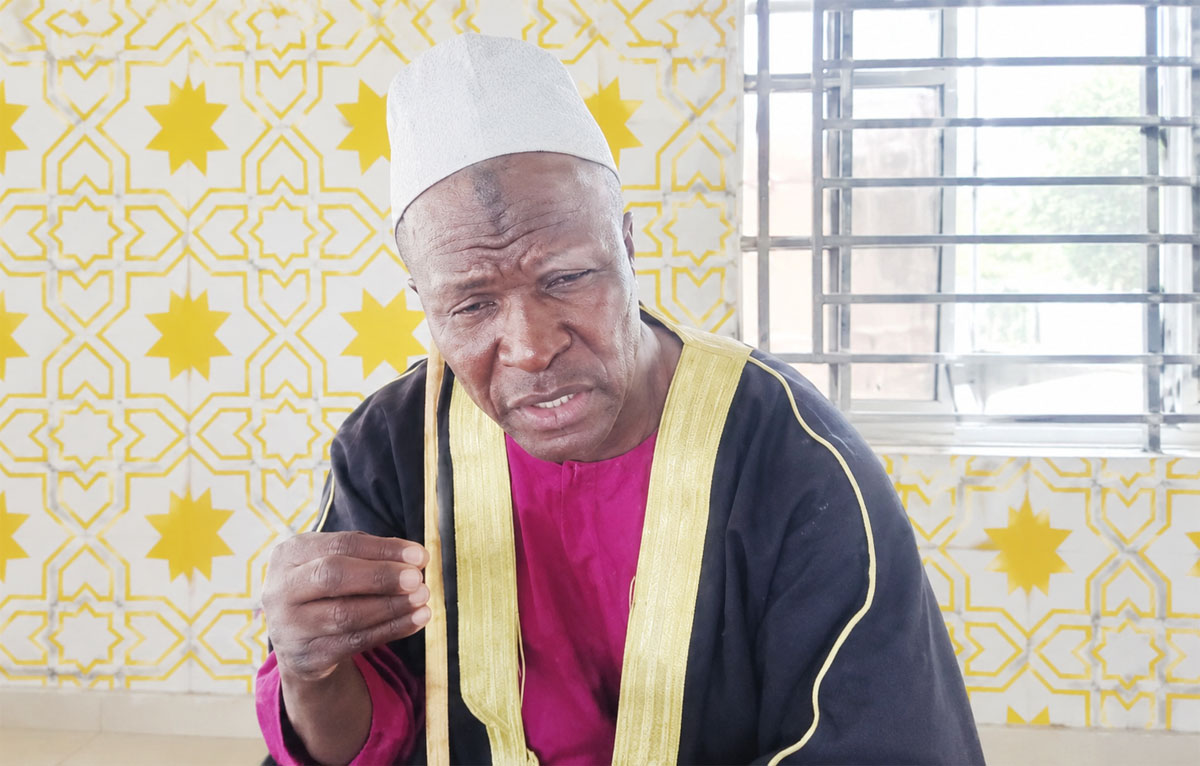
The controversy involves Dahiru Abubakar, popularly known as Jejiwe Danmalam, who claimed that his support for Tinubu and his sermons defending the President contributed to his removal from a neighbourhood mosque.
However, residents familiar with the matter have disputed his description as the mosque’s substantive imam, insisting that he only led prayers when the recognised religious leader was unavailable.
The Bauchi State Council of the NUJ has also questioned the verification of the reports, saying its preliminary inquiries found no evidence that Abubakar had been appointed or served as an imam in any mosque within Bauchi metropolis or elsewhere in the state.
Similarly, Islamic scholar Sheikh Dr Ibrahim Adam Disina said a social media post he intended as a joke contributed to the publication of reports about the alleged removal.
The differing accounts have raised questions about the circumstances surrounding the dispute and the accuracy of reports linking it directly to Abubakar’s support for Tinubu.
Some residents of Madina Quarters challenged Abubakar’s claim that he was removed from his position as imam, maintaining that he was not the mosque’s substantive religious leader.
A resident familiar with the matter, Ibrahim Muhammad, described Abubakar as a comedian and controversial figure who, according to him, had associated with politicians from different political parties.
Muhammad also alleged that Abubakar had previously criticised Tinubu and the ruling All Progressives Congress over economic hardship before recently declaring support for the President.
He questioned whether the disagreement was primarily about Abubakar’s political position, suggesting that the controversy might be connected to efforts to attract public attention as political activities ahead of the 2027 elections gather momentum.
However, no independent evidence was provided to establish that the controversy was deliberately created for publicity.
Another associate of Abubakar, who lives in the neighbourhood, also disputed the claim that he was the mosque’s substantive imam, saying he occasionally led prayers when the regular imam was absent.
Adamu Garba, another resident of the area who said he lived along the street near Barden Gabas School, where the mosque was reportedly located, also questioned the description of Abubakar as the mosque’s imam.
The residents urged journalists and members of the public to establish the facts before circulating reports involving religious institutions and political disagreements.
Despite the residents’ objections, Abubakar maintained that he was removed from the neighbourhood mosque because of his support for Tinubu.
He explained that the facility was a small neighbourhood mosque where he sometimes led prayers and delivered sermons, rather than a Jumu’ah mosque where Friday congregational prayers are held.
Abubakar said he had been urging worshippers to stop blaming Tinubu exclusively for Nigeria’s insecurity and economic difficulties.
According to him, his sermons emphasised the need for prayers, fear of Allah and improved personal conduct, while arguing that the country’s challenges could not be attributed entirely to the President.
He also said he had encouraged people to support Tinubu for another term in 2027.
Abubakar identified a proposal to rename the mosque after the President as another source of disagreement with members of the mosque’s management committee.
He said he had suggested changing the mosque’s name to “Sheikh Imam Bola Ahmed Tinubu Mosque”, a proposal that was rejected.
Abubakar maintained that his support for the President was genuine and denied suggestions that he was seeking financial benefits or publicity through his political position.
The chairman of the mosque committee, Imam Abubakar Jibrin, had earlier confirmed that the committee disagreed with Abubakar over his alleged involvement in political activities around the mosque.
Jibrin said the committee’s concerns extended beyond the man’s support for Tinubu to what he described as attempts to turn the mosque and its surroundings into a venue for political discussions.
According to the committee chairman, Abubakar had been cautioned against gathering people in front of the mosque and sometimes inside it to discuss politics.
He said the committee opposed the use of the mosque as a platform for political mobilisation, stressing that political activities should take place through political parties and at appropriate venues.
Jibrin also confirmed that the committee rejected the proposal to rename the mosque after Tinubu, arguing that the facility belonged to the community and that its identity should not be changed at the insistence of an individual.
He maintained that the committee was not opposed to Tinubu or any other political candidate, adding that its position was to preserve the mosque as a place of worship.
The committee’s account presents the dispute as involving the use and management of the mosque, while Abubakar maintains that his support for the President contributed to his removal.
Sheikh Dr Ibrahim Adam Disina, an Islamic scholar in Bauchi, also challenged the reports, saying a social media post he intended as a joke contributed to the controversy.
In a letter to media organisations that published the reports, Disina questioned their verification processes and criticised the publication of the allegation as established fact.
He argued that reports involving religious leaders and places of worship required careful investigation before publication.
The scholar expressed surprise that media organisations he expected to uphold professional standards had relied on information he said originated from social media without adequate verification.
Disina urged journalists to exercise caution when reporting sensitive matters involving religion and politics, warning against allowing unverified claims to mislead the public.
His position adds another dimension to the controversy, particularly concerning the circumstances in which the initial reports emerged and the extent to which the claim was independently verified.
The Bauchi State Council of the Nigeria Union of Journalists has also cautioned journalists against publishing unverified reports alleging that an imam was removed for campaigning for Tinubu’s re-election.
In a statement signed by its chairman, Isah Garba Gadau, and secretary, Isiyaka Ismail Wunti, the council said its preliminary inquiries found no evidence that Abubakar had been appointed or served as an imam in any mosque in Bauchi State.
The council also observed that the reports did not adequately identify the mosque authorities responsible for the alleged removal or establish the circumstances behind the purported decision.
It urged journalists to contact the relevant mosque leadership or management committee and seek independent confirmation before publishing claims of this nature.
The NUJ warned that unverified reports linking religion with partisan politics could fuel misunderstanding, heighten tensions and threaten public peace, particularly as political activities gather momentum ahead of the 2027 general elections.
It further stressed the need for journalists to distinguish verified facts from allegations, personal opinions and political claims.
The council reaffirmed its commitment to press freedom and responsible journalism, emphasising the importance of accuracy, fairness, objectivity and accountability.
The controversy has produced competing accounts of Abubakar’s role at the mosque and the reasons for the disagreement with its management committee. While Abubakar insists that his support for Tinubu contributed to his removal, some residents dispute his claim to the position of substantive imam. The mosque committee, meanwhile, says its objections included alleged political discussions on the premises and the proposed renaming of the community mosque.
Disina’s account of the social media post and the NUJ’s concerns have further highlighted the importance of establishing the origin and accuracy of information before presenting it as fact.
As political conversations surrounding the 2027 general elections intensify, the incident underscores the need for responsible reporting on disputes involving religious institutions and political affiliations. For now, the central claims remain contested, and the allegation that Abubakar was removed solely for supporting Tinubu should not be treated as an established fact.
Tinubu Support or Mosque Dispute? Bauchi Residents, NUJ Challenge ‘Imam’s Removal’Report
metro
Police Rescue Two Abducted Children in Suleja, Arrest Woman For Cutting Husband’s Manhood
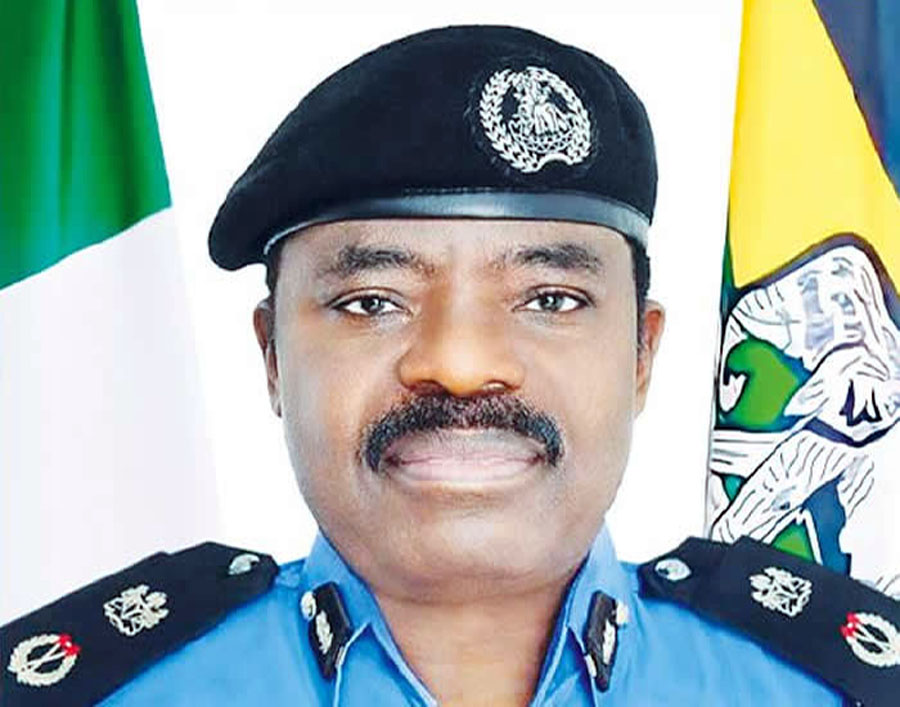
The Niger State Police Command has rescued two children, aged eight and 12, after they were allegedly taken along with their father’s vehicle in Suleja, while a separate case involving a woman accused of cutting her husband’s genitals during a domestic dispute has been brought before a court in Minna.
The two incidents were disclosed by the command’s spokesperson, SP Wasiu Abiodun, on Friday, October 23, 2026.
In the Suleja incident, the children were reportedly left inside their father’s vehicle while he went into a nearby shop to photocopy documents. When he returned, both the vehicle and the children were missing.
The father subsequently reported the incident at Maje Police Station, prompting officers to launch a search operation.
Police officers reportedly interviewed security personnel at a nearby school and ordered patrols along the Abuja–Kaduna highway. The vehicle was later found abandoned along the highway, with both children still inside.
READ ALSO:
- Farmer Arrested Over Plantain Theft Dies in Police Custody, Family Questions Suicide Claim
- State Police: 25 States Approve Bill as Nigeria Moves Closer to Decentralised Policing
- Messi Makes History as Barcelona, Inter Miami Celebrate Asturias Award
The children were rescued unharmed. They reportedly told investigators they had fallen asleep while waiting for their father to return. Police recovered the vehicle and said investigations into the incident were continuing.
In a separate case in Minna, 28-year-old Safiya Tukur was arraigned after allegedly inflicting a deep cut on her husband’s genitals during a domestic dispute.
According to the police, the incident occurred at the couple’s residence in the Darusalam area of Kpagungu on October 15, following a misunderstanding that escalated into a physical fight.
Abiodun said a complaint was received at Kpakungu Police Division after the incident. The woman was subsequently arrested, while her husband was taken to General Hospital, Minna, for treatment.
The police spokesperson said the suspect admitted during interrogation to injuring her husband during the altercation. She was charged to court and remanded, with proceedings in the case continuing.
The police did not provide further details about the husband’s medical condition.
The two cases highlight separate policing concerns in Niger State: the safety of children and the need for prompt responses to reports of abduction, as well as the investigation and prosecution of alleged domestic violence.
The command has said investigations into the children’s case are ongoing. Further details about the court proceedings in the domestic violence case were not immediately available.
Police Rescue Two Abducted Children in Suleja, Arrest Woman For Cutting Husband’s Manhood
metro
Farmer Arrested Over Plantain Theft Dies in Police Custody, Family Questions Suicide Claim
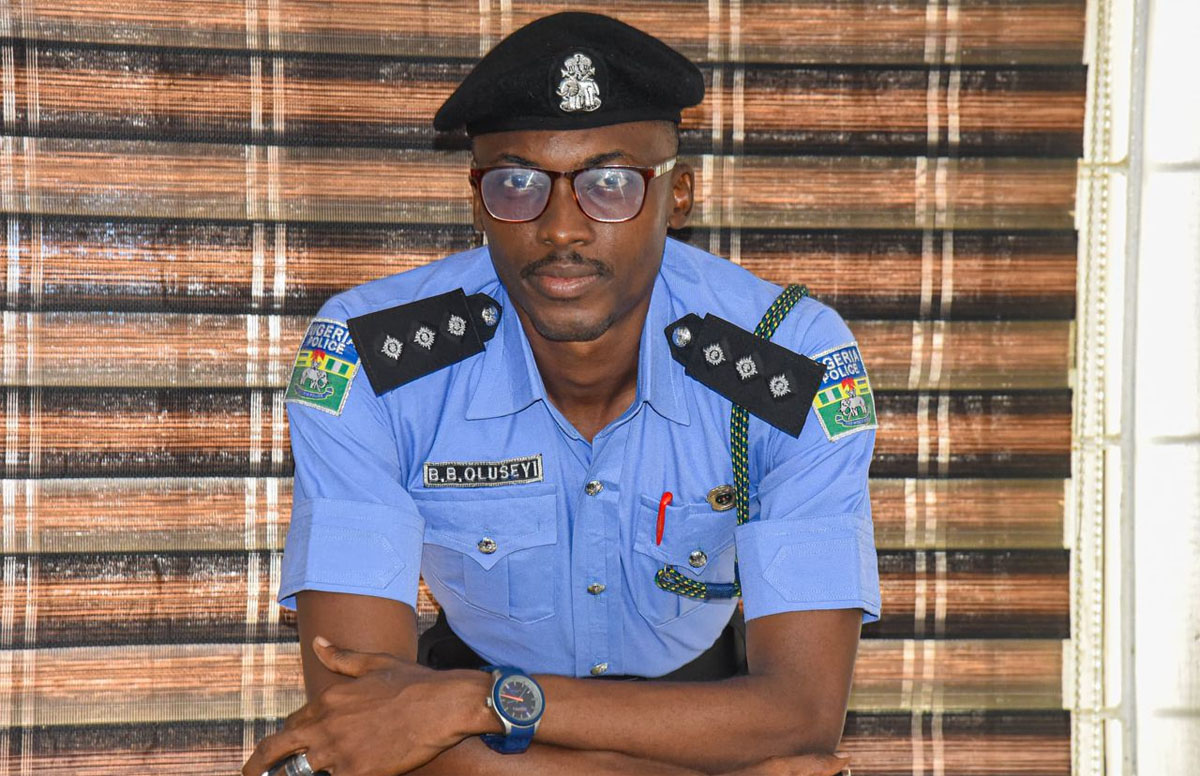
The death of a 25-year-old farmer, Peter Igbang, in police custody in Ipara, Remo North Local Government Area of Ogun State, has sparked outrage, with his family and community leaders demanding answers over the circumstances surrounding the tragedy.
Igbang was reportedly arrested on Saturday, October 17, 2026, over an allegation that he stole a bunch of plantain. Days later, his relatives learnt that he had died in police custody.
Police reportedly told the family that the young man had taken his own life by hanging himself in the cell with his clothes. However, his relatives and community representatives have questioned the explanation, citing what they described as inconsistencies in the account of his death and concerns about how he was detained.
The deceased’s mother, Gift Joseph, said she was not informed of her son’s arrest and only learnt about the incident on Tuesday, October 20, the day she was told of his death.
She said Igbang had gone to attend to his farm and was arrested while returning home. According to her, no police officer contacted the family to notify them that he was being held in custody.
The grieving mother, who described Igbang as her only son, said she struggled to understand how he could have died in the manner described by the police.
READ ALSO:
- State Police: 25 States Approve Bill as Nigeria Moves Closer to Decentralised Policing
- Messi Makes History as Barcelona, Inter Miami Celebrate Asturias Award
- Kane Beats Yamal to Win Major Football Award Ahead of Ballon d’Or Ceremony
Igbang was reportedly a former mechanic apprentice who later turned to farming after his family could not afford to establish a workshop for him. He cultivated cassava and plantain on a six-acre farm.
His elder sister, Juliet, said she received a call on the evening of October 20 informing her that her brother had died. She travelled to Ogun State the following day to seek clarification from the police.
According to Juliet, she was told that her brother had been arrested over the alleged theft of plantain and had subsequently died in the cell.
She questioned why the family had not been informed of his arrest and why they were only contacted after his death.
Juliet also challenged the explanation that her brother had hanged himself, saying she was shown a photograph in which he appeared to be fully dressed. She questioned how he could have reached a high window in the cell and was reportedly told that he had used a bucket as a platform.
The family has called for a detailed investigation to establish exactly what happened inside the cell and determine whether the circumstances of the death were properly documented.
Community leaders have also expressed concern over the incident.
Fidelis, a former chairman of the Ogoja community in Ipara, said he was contacted by the police only after the young man had died. He said he went to the station and saw the body in the cell.
The current community chairman, Joseph, questioned the circumstances of the detention and the police explanation for the death. He also raised concerns about the failure to notify the family promptly.
Another community member, Monday Philip, said he had approached the person who accused Igbang of stealing plantain to plead for leniency shortly after the arrest. He alleged that the complainant had indicated that he wanted the young man to be taught a lesson rather than face a prolonged punishment.
The family also raised concerns over reports that Igbang had complained of hunger and lack of water while in detention. A woman who reportedly visited him in the cell allegedly said he had asked that his relatives be contacted so they could arrange his release.
These claims have not, by themselves, established the cause of death or proved wrongdoing by any police officer. The circumstances require an independent and transparent investigation.
The case has renewed concerns about the treatment of suspects in police custody, access to legal assistance, notification of next of kin and the responsibility of authorities to safeguard the lives of detainees.
Under Nigeria’s criminal justice framework, suspects are entitled to due process and must not be subjected to torture or inhuman treatment. Any death in custody warrants a clear account of the circumstances and appropriate investigative scrutiny.
The family and community are demanding answers about the arrest, the period of detention, the circumstances in which Igbang was found dead and the decision to take his body to a morgue before relatives were present.
They want the relevant authorities to establish the facts, address any misconduct uncovered and ensure accountability where necessary.
As of the reports available, the family’s questions remain unresolved. The precise circumstances and cause of Igbang’s death should be established through a thorough investigation rather than assumptions.
Farmer Arrested Over Plantain Theft Dies in Police Custody, Family Questions Suicide Claim
-

 Auto3 days ago
Hyundai Unveils Mufasa, Grand Creta SUVs to Strengthen Nigeria Line-up (Updated)
-
 metro2 days ago
Horror in Sokoto: Bandits Intercept Vehicle, Massacre All Passengers Returning from City
-

 metro3 days ago
Nigerian Journalist Sentenced to 4 Years Over Facebook Post Criticising Police
-
 metro3 days ago
Fourth Gas Leak in Six Months: Over 100 Ogun Pupils Hospitalised, Schools Shut as Parents Panic
-
 metro3 days ago
Bauchi Mosque Removes Imam After Tinubu Campaign, Rejects Proposal to Rename Mosque
-
 metro3 days ago
Shettima Blasts States Over Power Woes, Says Govs Must Stop Waiting for Abuja
-
 International2 days ago
Two Killed, Eight Injured as Attack Hits Saudi Arabia Airport
-
 metro2 days ago
Police Arrest Man Over Fake Presidency Number Plate in Abuja