

Business
Dangote Defends Petrol Price Hikes as Pump Prices Near N1,400 Amid Crude Cost Controversy

Dangote Defends Petrol Price Hikes as Pump Prices Near N1,400 Amid Crude Cost Controversy
Refinery explains time lag between crude purchase and finished product pricing as marketers warn of business uncertainty
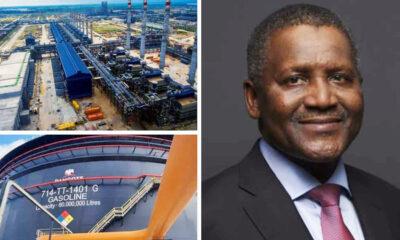
The Dangote Petroleum Refinery has strongly defended its recent series of petrol price increases, attributing the upward adjustments to the high cost of crude oil purchased weeks and months earlier, as well as the lengthy and complex process involved in securing, shipping and delivering crude to the refinery. The explanation comes as the price of Premium Motor Spirit (PMS) — commonly known as petrol — continues to climb across Nigeria, with the product now selling between N1,310 and N1,400 per litre, depending on the location and distance from supply depots.
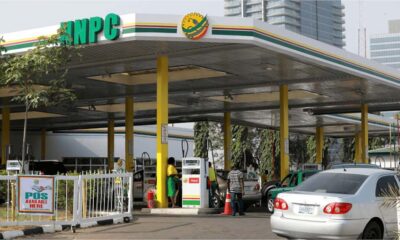
In Lagos and Ogun states, petrol is currently retailing at about N1,310 per litre, while consumers in northern states and other regions farther from the coastal refinery are paying N1,350 or more. In some remote locations, the price is approaching N1,400 per litre, reflecting the high cost of transportation and logistics involved in distributing the product across the country’s vast geography.
The latest round of increases followed the refinery’s decision to raise its gantry price — the price at which marketers purchase the product directly from the refinery — by N65 per litre, from N1,200 to N1,265, effective August 29, 2026. This marked the third price hike announced by the refinery in just eight days, bringing the total adjustment to N100 per litre since August 21, representing an increase of approximately 8.6 per cent. The refinery first increased its gantry price from N1,165 to N1,185 per litre on August 21. Five days later, it raised the price by another N15 to N1,200 per litre, effective August 26. On Saturday, August 29, it announced the latest N65 increase, taking the price to N1,265 per litre. The cumulative effect has pushed the refinery’s coastal PMS price from N1,582,380 to N1,669,545 per metric tonne.
Critics have been quick to point out that these price hikes occurred even as global crude prices were experiencing a decline. Brent crude closed at $88 per barrel on Friday, representing a 5 per cent drop from earlier levels, despite ongoing geopolitical tensions between Iran and the United States. However, a senior executive of the Dangote refinery, who spoke with The PUNCH on condition of anonymity because he was not authorised to speak publicly on the matter, explained that the prevailing international crude price could not be used as the sole basis for determining the cost of petrol being produced from crude already purchased by the refinery.
READ ALSO:
- Sokoto bandit attack: Eight farmers killed, five injured in alleged reprisal
- Nigerian Army X account hit in second military cyber breach in two weeks
- Nigerian ex-carer jailed for eight years in UK after robbing vulnerable elderly victims
The executive outlined the extensive timeline involved in crude procurement, asking a series of rhetorical questions to illustrate the point: “If you want to buy crude at today’s price, when do you think you will complete the actual transaction to purchase the crude? When will you get a laycan? When can you get a ship chartered and a charter party agreement signed? When will the ship go to load the crude and secure the laycan for discharge? When is the sailing time before the crude eventually gets into your tank?” He further questioned how the refinery would account for large volumes of crude purchased earlier when prices were higher, adding, “And what will happen to the huge quantities of expensive crude that you bought long ago and stored in the tanks? These are the factors determining the change in prices, not an immediate crude price change.”
The refinery’s position is supported by data revealing the scale of its crude procurement operations. The company recently disclosed that it spent $4.48 billion importing crude** over a two-month period, with **40.40 million barrels of crude** imported between May and June 2026. The refinery explained that crude purchases are typically made weeks or months in advance under contracts linked to **monthly average prices** rather than spot market rates. According to records, the refinery imported 21.47 million barrels of crude in May at a landed cost of $2.68 billion, before bringing in another 18.93 million barrels worth $1.80 billion in June. The average landed cost of crude fell from **$124.80 per barrel in May to $95.25 per barrel in June, reflecting softer global crude prices, lower freight costs and changes in the mix of crude grades purchased. Despite this decline, the refinery noted that both monthly averages remained well above the current international benchmark, meaning much of the fuel currently being supplied was produced from more expensive crude inventories.
Energy experts have weighed in on the pricing debate, backing Dangote’s position. Energy analyst Dan Kunle argued that fluctuations in global crude oil prices, inventory costs and market realities make it impossible for petrol prices to fall immediately whenever international oil prices decline. He explained, “The crude cargoes delivered in May and June were ordered and paid for as far back as February and March. In international crude marketing, you cannot take delivery immediately. It takes about one to one-and-a-half months before the cargo arrives, meaning you have inventory on the high seas, inventory in storage and inventory feeding into the refinery.” Kunle added that several operational expenses significantly increase refining costs, with freight, handling charges, demurrage and delays at Nigerian export terminals all contributing to the final price.
READ ALSO:
- Bruno Fernandes hat-trick inspires Man United to thrash Ipswich 5-2
- Fuel subsidy removal: Falana demands accountability over N15.8tr resources, warns against ‘scam’ era
- Tinubu takes South Africa xenophobic attacks against Nigerians to AU
The issue is particularly significant for Dangote because the refinery does not rely entirely on Nigerian crude. Reports indicate that between 30 and 40 per cent of the refinery’s crude feedstock is being imported. According to the Nigerian Midstream Downstream Petroleum Regulatory Authority (NMDPRA) , oil producers in Nigeria supplied about 80 per cent of the crude oil processed by domestic refineries, while refiners imported about 20 per cent between January and July this year. The refinery sources crude from across Africa and beyond, purchasing Nigerian grades such as Bonny Light, Qua Iboe, Escravos, Forcados, Amenam and Agbami alongside international blends including Libya’s El Sharara, Angola’s Cabinda and other regional grades. The refinery also recently imported crude from the United Arab Emirates for the first time, highlighting its growing flexibility in securing feedstock as global supply patterns evolve.
The refinery has also stated that it deliberately absorbed part of the higher crude procurement costs instead of passing them entirely to consumers, arguing that doing so helped cushion inflationary pressures and improve price stability in Nigeria’s downstream market. It also said domestic refining has strengthened Nigeria’s energy security by reducing dependence on imported petroleum products and easing pressure on the country’s foreign exchange reserves. Looking ahead, the company said consumers could benefit from further reductions in fuel prices as cheaper crude purchased in recent weeks gradually replaces higher-cost inventories, provided global oil market conditions remain supportive.
The latest price hikes have, however, heightened concerns among petroleum marketers, who have warned that the volatility is making it difficult to plan their businesses. The National Publicity Secretary of the Independent Petroleum Marketers Association of Nigeria (IPMAN) , Chinedu Ukadike, said marketers were dealing with several factors that could push up the cost of petrol. “We are facing the challenges of the volatility in the market. There are policies of the government, policies of the international market, and exchange rates. These are inherent dispositions to the increase in pump prices. We are not refiners to be able to determine the price of petroleum products.” He, however, acknowledged that Dangote had previously reduced its petrol price in response to movements in the international market. “But, I also believe that Dangote has been consistent in terms of reducing its price in line with the international market rate. With this situation now, we cannot, at this particular point in time, structure our business. It’s going to be too difficult for us to structure our business.”
Ukadike also warned that continued tensions between Iran and the United States could worsen price irregularities. “The more the Iran and United States crisis continues to persist, the more we’ll be having these irregularities in price,” he added. The IPMAN official said the price fluctuations were already being reflected in the cost of petrol across the country. “Also, bear in mind that the price of crude oil is determined by the international market. So, for all the independent marketers, we will continue to strive. Prices have been fluctuating, and we are still loading. The price of petrol will continue to be volatile as long as the price of crude is not stable and other factors relating to the financial situation.”
The impact of the latest adjustment is already being felt in the retail market, with petrol now selling at about N1,310 per litre in Lagos and Ogun and N1,350 or more in parts of the North and other distant markets. In some locations, the product is approaching N1,400 per litre. The difference in pump prices across locations is partly linked to the cost of moving petrol from the coastal refinery and depots to distant markets, with transportation and other distribution expenses adding to the cost of the product. This is one of the reasons the Dangote refinery plans to extend its free distribution scheme across the country. IPMAN has welcomed Dangote’s decision to deliver petroleum products free to states such as Imo and Anambra, but urged the company to extend the programme to northern states to achieve uniform pump prices and ease widespread operational strain.
Data contained in the Major Energies Marketers Association of Nigeria’s Energy Bulletin for August 27 showed Dangote Refinery’s PMS gantry price at N1,200 per litre on August 27, with the estimated spot import-parity price of petrol into tanks standing at N1,222.32 per litre, meaning Dangote’s N1,200 gantry price was N22.32 below the spot import-parity estimate. However, two days later, the refinery raised its gantry price to N1,265 per litre, putting the new price N42.68 above the August 27 spot import-parity estimate. The crude market has remained volatile amid geopolitical tensions involving Iran and the United States and uncertainty over crude flows through the Strait of Hormuz.
The latest development comes amid renewed volatility in the global oil market, with the ongoing United States-Iran conflict adding to uncertainty in the international energy market. This is also coming at a time when the presidential candidate of the African Democratic Congress, former Vice President Atiku Abubakar, said he would reintroduce fuel subsidies to reduce hardship and the cost of living. Ukadike said marketers and consumers were ultimately bearing the consequences of the price movements, and the frequent changes in the cost of petrol were creating uncertainty for marketers and consumers, as the cost of replacing products could change substantially within a short period.
Dangote Defends Petrol Price Hikes as Pump Prices Near N1,400 Amid Crude Cost Controversy







Aviation
Fani-Kayode Counters Keyamo, Defends Atiku Over Nigeria Airways Collapse
Fani-Kayode Counters Keyamo, Defends Atiku Over Nigeria Airways Collapse
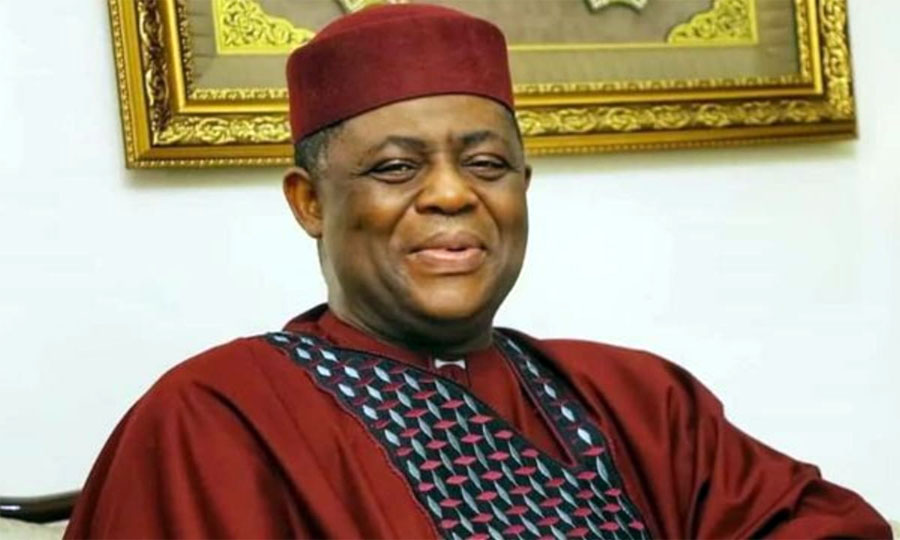
Former Minister of Aviation, Femi Fani-Kayode, has challenged the criticism of former Vice-President Atiku Abubakar by the Minister of Aviation and Aerospace Development, Festus Keyamo, over the liquidation of Nigeria Airways and the non-payment of pension arrears owed to its former workers.
Fani-Kayode, who served as Minister of Aviation in 2006, argued that the defunct national carrier’s collapse resulted from years of mismanagement, corruption, mounting debts and operational failures that predated the return of former President Olusegun Obasanjo to democratic rule in 1999.
He made the remarks in a response to Keyamo’s statement on October 14, 2026, in which the aviation minister accused Atiku of hypocrisy over the airline’s liquidation in 2004 and the subsequent failure to pay its former employees their pensions and gratuities.
Keyamo had said President Bola Tinubu approved and released ₦36 billion to settle outstanding pension liabilities owed to former Nigeria Airways workers, adding that beneficiaries had begun receiving payment alerts.
In his response, Fani-Kayode acknowledged the Tinubu administration’s efforts to settle the outstanding liabilities but maintained that the history of the airline’s collapse required a broader examination of events preceding its liquidation.
According to him, Nigeria Airways was already in a critical state before Obasanjo returned to office in 1999.
Fani-Kayode recalled that when Obasanjo left office as military head of state in 1979, Nigeria Airways had 32 functional aircraft, experienced pilots and crew members, a competent management team and an accountable board of directors.
He said the airline was then regarded as a source of national pride but had deteriorated considerably over the following two decades.
By the time Obasanjo returned as elected president in 1999, Fani-Kayode claimed, only one aircraft remained, and it was not operational. He attributed the airline’s deterioration to years of alleged corruption, poor management and the disappearance of company assets.
He maintained that the liquidation process, which was completed in 2004, followed years of financial insolvency, operational collapse and unsuccessful attempts to rescue the airline.
Fani-Kayode also cited the withdrawal of the International Finance Corporation from privatisation-related efforts as part of the difficulties encountered in attempts to revive the company.
He said Obasanjo’s administration had little choice but to liquidate the airline rather than continue committing public funds to an organisation he described as having become practically irredeemable.
The former minister, however, acknowledged that the liquidation left thousands of former employees and their families facing prolonged financial hardship because their pension entitlements remained unpaid.
Recounting his own involvement in the matter, Fani-Kayode said a committee chaired by the then Head of the Civil Service of the Federation, Yayale Ahmed, recommended the release of funds to pay the pensioners.
He said that, as aviation minister in 2006, he presented a memorandum to the Federal Executive Council seeking approval for the payment of the outstanding entitlements and argued that settling the liabilities was the right thing to do.
However, according to him, the proposal was rejected after some members of the cabinet opposed it on the grounds that former management teams and boards of Nigeria Airways had contributed to the airline’s destruction.
Fani-Kayode said he disagreed with that position but acknowledged that those who supported payment were outnumbered during the deliberations.
He added that the issue was revisited under the late President Umaru Musa Yar’Adua, whose administration paid a substantial number of the pensioners. The administration of former President Muhammadu Buhari also made further payments, he said.
Commending Keyamo for the latest intervention, Fani-Kayode said he was pleased that the remaining pension liabilities had finally been addressed, while expressing regret that the payments had taken so many years.
He described the suffering endured by the former workers as immense and reiterated that paying their entitlements had always been the appropriate course of action.
On Atiku’s role in the Federal Executive Council deliberations, Fani-Kayode said he knew the position the former vice-president had taken during the debate but declined to disclose it publicly.
He argued that the eventual decision was a collective responsibility of the administration, adding that members of the government had to share the consequences of the outcome.
Fani-Kayode’s intervention has added another dimension to the political disagreement surrounding Nigeria Airways’ collapse, the handling of its former workers’ pension entitlements and the responsibilities of successive administrations.
While Keyamo credited the Tinubu administration with clearing the outstanding pension arrears, Fani-Kayode’s account focused on the airline’s long decline, the difficulties surrounding earlier efforts to pay its former employees and the involvement of successive governments in addressing the liabilities.
The dispute has also renewed attention on the fate of former Nigeria Airways workers, many of whom endured years of uncertainty while awaiting their retirement benefits.
Fani-Kayode Counters Keyamo, Defends Atiku Over Nigeria Airways Collapse
Auto
OMAA Unveils Three CNG, Electric Buses, Offers 48-Month Vehicle Finance
OMAA Unveils Three CNG, Electric Buses, Offers 48-Month Vehicle Finance
…Introduces ₦890,000 monthly payment plan as Nigerian mobility firm marks sixth anniversary
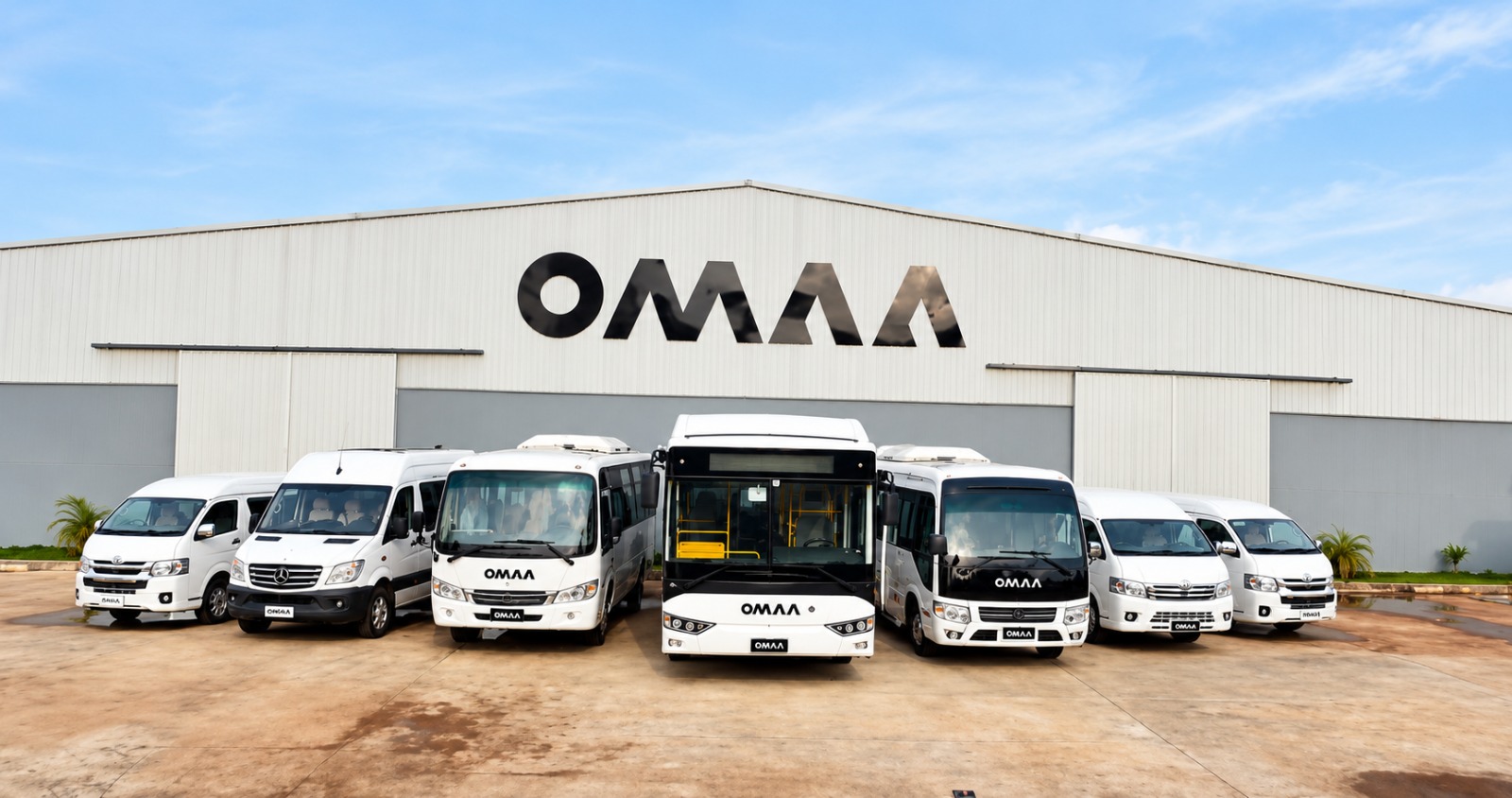
Nigerian vehicle and energy company, OMAA, has unveiled three passenger vehicle models in compressed natural gas (CNG) and battery-electric variants, alongside a financing scheme offering repayment periods of up to 48 months to help transport operators and corporate organisations expand their fleets.
The new models — OMAA U3 minibus, K7 bus and V12 high-capacity city bus — are designed to serve different segments of the passenger transport market, from urban shuttles and institutional transport to large-scale mass transit operations.
The announcement, which coincides with the company’s sixth anniversary, also marks the introduction of OMAA Finance, a programme developed in partnership with Nigerian financial institutions to ease the burden of upfront vehicle acquisition costs.
Under the scheme, advertised monthly payments start from ₦890,000 for the OMAA U3 minibus, with an initial deposit of 10%. Financing terms, however, will depend on eligibility requirements, repayment tenure and the customer’s equity contribution.
The company has also opened pre-orders for the three models, giving prospective buyers the option of choosing between CNG and battery-electric powertrains according to their routes, operating costs and access to the necessary energy infrastructure.
Speaking on the development, OMAA’s Managing Director, Chinedu Oguegbu, said the launch reflected the company’s commitment to local automotive manufacturing and the expansion of cleaner, more affordable transport solutions.
“Six years ago, we set out to demonstrate that commercial vehicles could be assembled in Nigeria and powered by cleaner, more affordable energy. Today, the introduction of the OMAA U3, K7 and V12 in both CNG and electric variants, alongside our vehicle financing programme, represents another significant step towards that vision,” Oguegbu said.
He explained that the company’s objective extended beyond supplying vehicles to helping operators manage running costs, access after-sales support and build sustainable transport businesses.
“By combining locally supported servicing, parts availability and structured financing, we are creating opportunities for schools, hospitals, corporate organisations and mass transit operators to expand their fleets with greater confidence,” he added.
Three models target different market segments
The new lineup covers a broad range of passenger transportation needs.
The OMAA U3 is a 12-to-15-seater minibus designed for urban and intercity transport operators, institutional shuttle services and businesses requiring compact passenger vehicles.
The K7, with a capacity of 23 to 30 passengers, targets staff transportation, school bus services, corporate fleets and medium-capacity passenger routes.
The V12, the largest of the three models, is configured to accommodate between 43 and 70 passengers. It is designed for mass transit operators and businesses serving routes with high passenger demand.
All three models are offered in CNG and battery-electric configurations, allowing fleet owners to evaluate alternative powertrains based on fuel or electricity costs, vehicle utilisation, maintenance requirements and access to refuelling or charging facilities.
The dual-powertrain strategy comes as transport operators increasingly explore ways to manage energy expenses and improve the economics of commercial vehicle operations.
Special-purpose vehicles broaden applications
Beyond passenger buses, OMAA is offering special-purpose vehicle configurations based on the same platforms.
The options include cargo vans, ambulances, VIP transport vehicles and airport shuttles, extending the potential applications of the company’s vehicle range to logistics, healthcare, corporate mobility and airport transportation.
The use of common vehicle platforms could also help fleet owners streamline maintenance, spare-parts management and technical training, particularly where organisations operate different vehicle configurations.
Finance scheme targets high acquisition costs
OMAA Finance is a central component of the company’s strategy to lower the barriers to commercial vehicle ownership.
By spreading acquisition costs over repayment periods of up to four years, the programme is intended to help operators preserve working capital while expanding or renewing their fleets.
The advertised starting monthly payment of ₦890,000 for the U3, subject to a 10% initial deposit, provides an entry point for prospective buyers. The actual cost of financing will depend on the applicable terms, including the vehicle price, deposit, interest and other charges, where applicable.
The company is also promoting a total cost of ownership (TCO) approach, which considers not only the purchase price but also energy consumption, servicing, spare parts and other expenses incurred throughout a vehicle’s operating life.
According to OMAA, the combination of structured financing, local servicing support and spare-parts availability is intended to help customers plan operating expenses and make more informed fleet investment decisions.
However, the potential savings will vary according to the vehicle selected, financing conditions, energy prices, mileage, maintenance costs and the availability of suitable CNG refuelling or electric charging infrastructure.
Six years of operations
Headquartered in Umunya, Anambra State, with offices in Lagos, Abuja and Accra, OMAA operates in Nigeria and Ghana, serving fleet operators, institutions and businesses.
The latest launch builds on the company’s six-year operating history and its efforts to combine local vehicle assembly, alternative energy solutions and financing options in the commercial mobility market.
For transport operators contending with rising operating expenses and the high cost of fleet expansion, the new models and financing arrangements offer additional options for acquiring passenger vehicles.
The initiative’s long-term impact, however, will depend on the vehicles’ performance under local operating conditions, the accessibility and affordability of financing, reliable after-sales support and the availability of the infrastructure required to sustain CNG and electric mobility.
With the latest unveiling, OMAA is seeking to position itself beyond vehicle supply, offering an integrated commercial mobility proposition that combines vehicle acquisition, alternative energy choices, maintenance support and financing.
Auto
FG Moves to Expand CNG Vehicle Production, Targets Cheaper Transport Fares
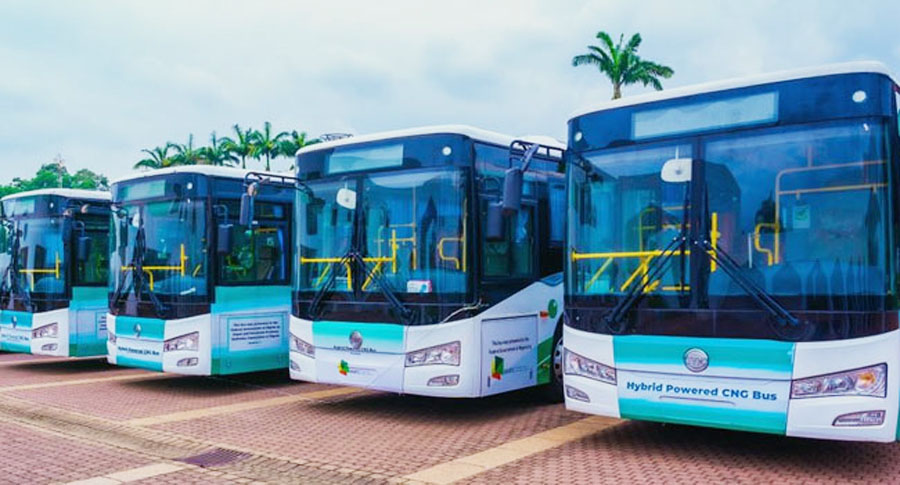
FG Moves to Expand CNG Vehicle Production, Targets Cheaper Transport Fares
The Federal Government has stepped up efforts to strengthen Nigeria’s automotive industry and promote more affordable transportation through collaboration with local vehicle manufacturers, following visits to two manufacturing facilities in Anambra State.
Board members of the National Automotive Design and Development Council (NADDC) inspected the facilities of Innoson Vehicle Manufacturing (IVM) in Nnewi and Kojo Motors Auto Assembly in Umunya to assess their production capacity, identify operational challenges and explore ways to support indigenous manufacturers.
The visit comes amid the Federal Government’s drive to expand the use of compressed natural gas (CNG) and electric vehicles as alternatives to petrol-powered transportation, with the aim of reducing operating costs and making public transport more affordable.
The manufacturers welcomed the government’s new policy directing ministries, departments and agencies (MDAs) to patronise locally manufactured vehicles, saying it could increase demand for their products and strengthen domestic production.
Secretary to the Government of the Federation, George Akume, had issued a circular directing government establishments to purchase vehicles from local manufacturers.
Managing Director of Innoson Vehicle Manufacturing, Chief Innocent Chukwuma, said he was encouraged by the government’s emphasis on CNG, describing the fuel as an important option for sustaining Nigeria’s automotive industry amid rising petrol and diesel costs.
Chukwuma disclosed that the company had dedicated its newest large-scale facility to producing CNG-powered trucks and electric vehicles.
READ ALSO:
- 2027: Adeleke’s Camp Promises 1.5 Million Votes for Tinubu in Osun
- APC Expands Tinubu’s Campaign Council, Names Wike, Adeleke, Soludo
- 2027: Tompolo Unveils 57 Tinubu Campaign Vehicles, Warns Lagosians Against 2023 Repeat
He said wider adoption of CNG could help lower transportation and operating costs while supporting local industrial growth and creating employment opportunities.
The industrialist also called for stronger backward integration in the automotive sector, arguing that manufacturers should focus on producing components that Nigeria has the capacity to manufacture competitively.
At the Umunya facility, the executive director of Kojo Motors, Chinedu Oguegbo, said the company was concentrating on commercial vehicles designed for Nigeria’s transport needs.
He said the company had begun benefiting from the government’s local vehicle procurement policy but had faced challenges arising from the sharp depreciation of the naira and exchange-rate fluctuations.
Oguegbo added that the company was developing its natural gas facility, which he expected to become operational in the future. He also expressed optimism that the company’s Omma Bus brand could eventually be exported to international markets.
NADDC Director-General Oluwemimo Joseph said the inspection was intended to give the council first-hand knowledge of the challenges confronting local vehicle manufacturers.
He explained that the council was reviewing existing policies and working on proposed legislation to improve the operating environment for the industry.
According to him, information gathered during the visits would help the council develop measures to address manufacturers’ concerns and identify vehicle components that could be produced locally.
Joseph said Nigeria had numerous small and medium-sized enterprises capable of supplying components to the automotive industry, adding that stronger partnerships could create new business opportunities and reduce dependence on imported parts.
He also acknowledged concerns about the effect of imported used vehicles on local manufacturers, noting that the council was considering measures to address the competitive disadvantages faced by domestic producers.
NADDC Chairman, Chief Emma Eneukwu, said the council was advocating legislation to protect local vehicle manufacturers from the influx of imported used cars.
He argued that local producers needed a more supportive policy environment to compete effectively and expand production.
The Federal Government’s broader CNG and electric mobility programme is designed to reduce transport costs by encouraging the deployment of vehicles powered by alternative energy sources. However, the impact on passenger fares will depend on the availability of vehicles, refuelling infrastructure, operating costs and the extent to which transport operators pass savings on to commuters.
The Anambra visits form part of efforts to strengthen local manufacturing, encourage investment and improve the availability of vehicles for Nigeria’s public transportation system. While the collaboration could support cheaper transport over time, the visits did not announce a specific new fare reduction or implementation timetable.
FG Moves to Expand CNG Vehicle Production, Targets Cheaper Transport Fares
-

 metro3 days ago
Oyo School Kidnappings: How ANSARU Allegedly Used Children to Pressure FG
-
 metro3 days ago
Tragedy in Ibadan as Truck Kills Female Corps Member, Injures Others
-

 metro3 days ago
Drama as Dutch Police Use Batons, Dogs to Shut Down Nigerian Wedding; Two Arrested
-
 International3 days ago
French Students Return to Streets as Anger Over School Conditions Grows
-

 metro3 days ago
VIDEO: Outrage as Indian National Assaults Nigerian Truck Drivers in Lagos
-
 News3 days ago
Obasanjo Backs Higher Oil Derivation, Says 13% Is Only the Beginning
-

 metro3 days ago
LAWMA Deploying CCTV Cameras to Hunt Down Illegal Dumpers, says MD
-

 metro2 days ago
Money Rituals: Four Arrested in Kwara Over Suspected Human Parts