

Business
Debt Management Office to auction ₦150bn FG bonds Wednesday

The Debt Management Office (DMO) has announced that on Wednesday, February 16, 2022, it will auction N150 billion in Federal Government bonds to investors.
This was announced in a circular obtained from the agency’s website.
A bond is a fixed-income investment instrument that represents a loan made by an investor to a borrower, typically a corporation or the government.
The bond will be issued in two tranches of N75 billion each, according to the circular.
The first tranche is a 10-year, 12.5 percent FGN Jan 2026 re-opening bond, and the second is a 20-year, 13% FGN 2042 re-opening bond.
It stated that the bonds are sold for N1,000 per unit, with a minimum subscription of N50,001,000 and subsequent multiples of N1,000.
The DMO stated that the bond issuance will be settled on February 18, 2022.
The agency specified that successful bidders must pay a price corresponding to the yield-to-maturity bid that clears the volume being auctioned, plus any accrued interest on the instrument, for re-openings of previously issued bonds (where the coupon is already set).
It stated that interest on the bonds would be paid “semi-annually,” with bullet payments made on the maturity date.
According to the DMO, the bonds are securities in which trustees can invest under the Trustee Investment Act.
“Qualifies as Government securities under the Company Income Tax Act (“CITA”) and the Personal Income Tax Act (“PITA”) for Tax Exemption for Pension Funds and other investors,” according to the circular.
“Listed on the Nigerian Exchange Limited as well as the FMDQ OTC Securities Exchange.” All FGN Bonds are considered liquid assets for the purposes of calculating banks’ liquidity ratios.”
The debt management agency assured investors that all bonds are backed by the federal government of Nigeria’s full faith and credit and are charged against Nigeria’s general assets.








Business
Dangote Sets 40-Month Deadline for $16bn East Africa Refinery in Kenya
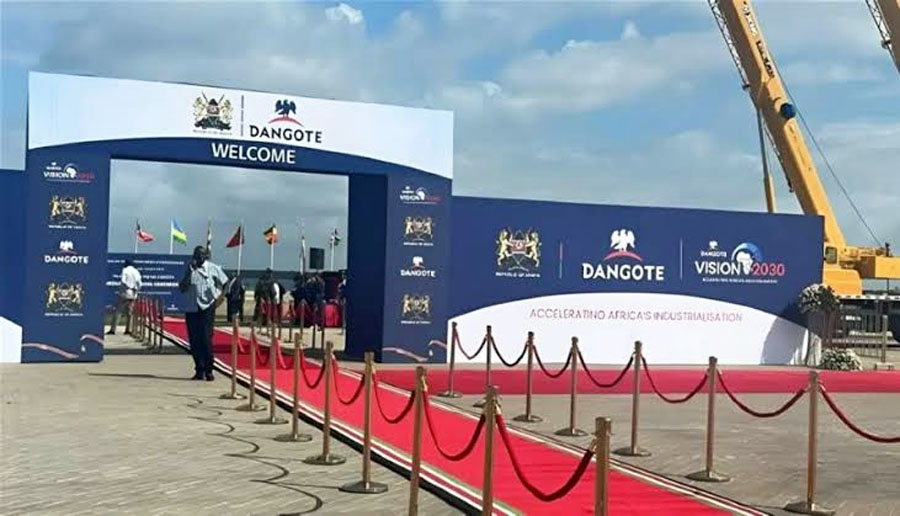
Dangote Sets 40-Month Deadline for $16bn East Africa Refinery in Kenya
Nigerian industrialist Aliko Dangote has set a 40-month completion target for his planned $16 billion East Africa refinery in Lamu, Kenya, following the official groundbreaking of the project.
Dangote and Kenyan President William Ruto broke ground for the 700,000-barrel-per-day (bpd) refinery on Wednesday, September 30, 2026, with the facility designed to supply refined petroleum products to Kenya and other countries across the region.
Dangote said the refinery would be commissioned within 40 months.
“We will come back here and commission this refinery in 40 months from today,” he said at the ceremony.
The Dangote East Africa Petroleum Refinery and Petrochemicals Complex is expected to process about 700,000 barrels of crude oil daily, making it one of the largest refining projects in Africa and, when completed, potentially the world’s largest single-train refinery.
The project is expected to produce petrol, diesel, jet fuel, polypropylene and base oil, with the products targeted at Kenya and wider East African markets. Dangote has also said part of the refinery’s jet-fuel output could be supplied to Europe and the United Kingdom.
The facility will also include a planned 1,000-megawatt power plant, which Dangote said would provide electricity for the wider industrial complex.
READ ALSO:
- Zimbabwe Tycoon Wicknell Chivayo, Wife Among Six Killed in Helicopter Crash
- 2027: Amaechi Recalls How APC Defeated PDP, Orders ADC Mobilisation
- Adeyanju Faults Okpebholo’s Governance, Commends Edo Anti-Kidnapping Efforts
Beyond refining, the billionaire said the project would create an industrial ecosystem covering petrochemicals, logistics, engineering, marine services, manufacturing, technology and small and medium-sized enterprises.
Dangote also announced plans for a training school that would prepare 1,000 Kenyan engineering graduates for opportunities associated with the project. The wider development is expected to generate thousands of jobs across the refinery and related industries.
The project has attracted major international engineering and technology partners, with Honeywell Technologies providing process technologies, licensing, engineering services, catalysts, equipment and digital solutions.
The use of established designs and experience from Dangote’s Nigerian refinery is expected to shorten the development schedule compared with a typical new refinery.
Engineers India Limited is also involved in the project under a major engineering and project-management contract.
Dangote’s Kenyan project is modelled partly on the experience of his 650,000-bpd refinery in Lagos, with the new facility expected to draw on technology and engineering experience gained from the Nigerian plant.
The refinery is expected to source crude from Uganda and other African producers, while serving a market extending beyond Kenya to countries including Uganda, Rwanda, Tanzania, Ethiopia and South Sudan.
Regional leaders who attended the groundbreaking included Ugandan President Yoweri Museveni and Ethiopian Prime Minister Abiy Ahmed, alongside other African leaders and former Nigerian President Olusegun Obasanjo.
President Ruto described the project as an investment in energy security, industrialisation and regional integration, while stressing the importance of ensuring that Kenyan citizens benefit from the employment and training opportunities created by the refinery.
Dangote has also proposed allowing governments in the region to take a combined 30 per cent stake in the refinery, potentially giving participating countries an opportunity to benefit financially from the project.
However, the project faces a legal challenge over the land on which it is being developed. A Kenyan court ordered parties to maintain the status quo over a disputed parcel in Lamu after residents challenged the development, citing ancestral land claims and other concerns.
Environmental concerns have also been raised over the potential impact of the project on the coastal ecosystem and the wider Lamu area.
Despite the legal and environmental issues, Dangote has said the project will proceed.
Once completed, the $16 billion Kenya refinery is expected to increase refining capacity in East Africa, reduce dependence on imported petroleum products and support the region’s broader industrialisation drive.
Dangote Sets 40-Month Deadline for $16bn East Africa Refinery in Kenya
Business
Dangote Draws Battle Lines as Fuel Import Fight Heads Back to Court
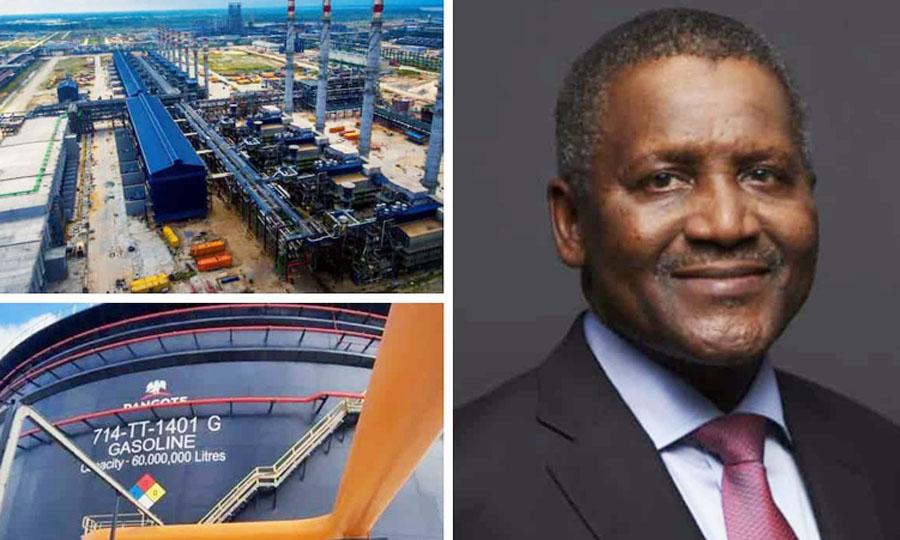
Dangote Draws Battle Lines as Fuel Import Fight Heads Back to Court
Aliko Dangote, President of Dangote Industries Limited, has said he is prepared to face legal challenges as the dispute over fuel imports, domestic refining and import licences intensifies in Nigeria.
Dangote spoke amid renewed litigation involving the Dangote Petroleum Refinery and the Nigerian Midstream and Downstream Petroleum Regulatory Authority (NMDPRA) over the continued importation of refined petroleum products into Nigeria.
The latest development followed a Federal High Court ruling in Abuja directing the NMDPRA to continue granting, extending or renewing fuel import licences for Matrix Energy, A.A. Rano and AYM Shafa, provided the companies meet the relevant legal and regulatory requirements.
Justice Inyang Ekwo ruled that the regulator’s handling of the companies’ applications did not comply with provisions of the Petroleum Industry Act (PIA). The court also held that the NMDPRA has a responsibility to promote competition in the midstream and downstream petroleum sectors.
The ruling did not give the three companies unrestricted authority to import petroleum products. Their operations remain subject to applicable regulatory and statutory requirements.
READ ALSO:
- Tinubu Returns After 30 Days in Europe, Says ‘I’m Healthy and Ready to Work’
- NMDPRA Moves Against Fuel Pump Fraud, Threatens Licence Revocation
- $2.1m Land Suit: Court Orders Wike’s Son to Produce American Passport
The judgment has added fresh momentum to a wider dispute over whether Nigeria should continue granting petrol import licences as domestic refining capacity expands.
The Dangote Refinery, which has a stated capacity of 650,000 barrels per day, has challenged the continued issuance or renewal of some import licences in a separate case.
The refinery’s position is that continued imports should be restricted where domestic refining capacity is available to supply the local market. The case remains before the court.
The NMDPRA, however, has continued to approve import permits, citing the need to safeguard petroleum supply and energy security.
The regulator approved permits covering about 830,000 metric tonnes of petrol for several marketers for the fourth quarter of 2026. The beneficiaries included Matrix Energy, A.A. Rano, AYM Shafa, NIPCO, Pinnacle Oil and Gas and Bono Energy.
The development has intensified debate over competition in Nigeria’s downstream oil sector, particularly as the Dangote Refinery expands its contribution to domestic fuel supply.
Dangote’s comments also came as his business interests face other legal challenges outside Nigeria.
In Kenya, a court has ordered the preservation of the existing status quo over land earmarked for Dangote’s proposed 700,000-barrel-per-day refinery in Lamu, following a dispute involving residents who claim ancestral rights over part of the proposed project site.
Dangote has maintained that he is prepared to defend his investments through the legal process.
The businessman has also said Africa could largely eliminate its dependence on imported refined petroleum products by 2030, as new refineries come on stream across the continent.
In Nigeria, the continuing dispute places domestic refining, fuel imports, competition, petroleum regulation and energy security at the centre of an increasingly significant legal and commercial battle.
The competing positions have not been finally resolved, with the various court cases still ongoing.
Dangote Draws Battle Lines as Fuel Import Fight Heads Back to Court
Business
NNPC Profit Rises to N7.2tn Despite Revenue Decline

NNPC Profit Rises to N7.2tn Despite Revenue Decline
The Nigerian National Petroleum Company Limited (NNPC Ltd) recorded a N7.2 trillion profit after tax in 2025, representing a 33.3 per cent increase from the N5.4 trillion it reported in 2024, despite a significant decline in revenue.
NNPC Group Chief Executive Officer, Bayo Ojulari, disclosed the figures on Tuesday while presenting the company’s audited financial results for the 2025 financial year in Abuja.
The company recorded N34.5 trillion in revenue in 2025, down from N45.1 trillion reported for 2024. Despite the revenue decline, profit increased as NNPC attributed the stronger bottom-line performance to improved operational efficiency and financial discipline.
Ojulari said lower international crude oil prices and reduced petroleum product sales, following changes in the downstream petroleum market, put pressure on revenue during the year.
However, improved operational performance helped cushion the impact, allowing NNPC profit to rise to N7.2 trillion.
The company also reported N22.33 trillion in taxes, royalties and other remittances to the Federal Government, representing a 39 per cent increase compared with the previous year.
The results also showed stronger production performance across the company’s upstream operations.
According to NNPC, crude oil and condensate production reached an average peak of 1.77 million barrels per day in 2025, the company’s highest level in five years.
READ ALSO:
- Hamzat Clarifies Lagos Traffic ‘Lifestyle’ Remark After Backlash
- US Judge Blocks Trump From Tying Counterterrorism Grants to Election Rules
- School Attack: 13-Year-Old Student Kills Teacher, Injures Two
Domestic gas supply also rose to a three-year high of 7.2 billion standard cubic feet per day, reflecting increased gas production and supply to the Nigerian market.
NNPC said the financial performance demonstrated the impact of efforts to improve asset management, increase production and strengthen efficiency across its businesses.
The company’s latest results come as Nigeria continues to seek higher crude oil production, increased domestic gas supply and greater investment across the petroleum value chain.
NNPC, which became a commercial company under the Petroleum Industry Act (PIA) in 2022, has been pursuing a strategy focused on increasing oil and gas output, expanding gas monetisation and strengthening its downstream operations.
The company said its future growth strategy would require continued investment in infrastructure, workforce development and operational capabilities.
NNPC also highlighted investments in digital capabilities and artificial intelligence as part of efforts to improve efficiency and strengthen its workforce.
More than 1,000 newly recruited professionals joined the company in 2025 and underwent a one-year internship and training programme before being deployed across its operations.
The company also reported that women now occupy more than 23 per cent of its leadership positions, compared with an industry average of 17 per cent.
The 2025 results come against the backdrop of major changes in Nigeria’s petroleum sector, including the removal of petrol subsidy and increased private-sector participation in fuel supply.
NNPC said the improved profitability had strengthened its capacity to invest in operations, contribute to government revenue and support Nigeria’s energy security.
The company’s performance will continue to be closely watched as Nigeria seeks to raise oil production, expand gas utilisation and increase the economic contribution of the oil and gas sector.
NNPC Profit Rises to N7.2tn Despite Revenue Decline
-
 metro1 day ago
Workers to Begin Nationwide Warning Strike Over Petrol Price, Wage Award
-

 metro3 days ago
$2.1m Land Suit: Court Orders Wike’s Son to Produce American Passport
-

 metro3 days ago
Osogbo Food Bonanza: Angry Customers Loot Warehouse After Operators Vanish
-

 News3 days ago
Tinubu Returns After 30 Days in Europe, Says ‘I’m Healthy and Ready to Work’
-

 metro3 days ago
Two Nigerians Jailed 15 Years Over $2.4m US Cyber Fraud
-
 metro3 days ago
Flood Cuts Off Part of Agbarho-Ughelli Road, Strands Commuters in Delta
-
 Business2 days ago
Dangote Sets 40-Month Deadline for $16bn East Africa Refinery in Kenya
-
 Business3 days ago
Dangote Draws Battle Lines as Fuel Import Fight Heads Back to Court