

Politics
El-Rufai fires Peter Obi, Amaechi on one-term presidency

El-Rufai fires Peter Obi, Amaechi on one-term presidency
Former Kaduna State governor, Nasir el-Rufai, has advised politicians to desist from making promises of serving only one term in office, insisting such commitments are unrealistic and lack credibility.
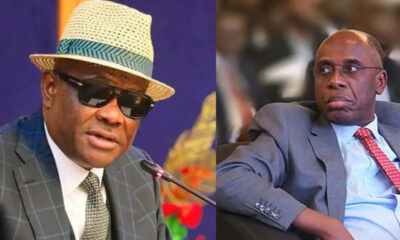
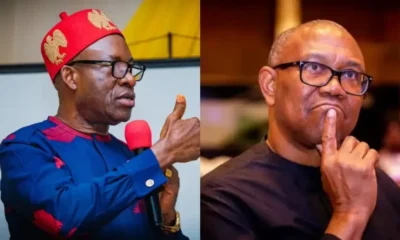
El-Rufai made the remarks on Sunday during an appearance on Sunday Politics, a Channels Television programme, where he reacted to recent pledges made by Labour Party’s 2023 presidential candidate, Peter Obi, and former transport minister, Rotimi Amaechi.
Obi has repeatedly said that if elected president in 2027, he would serve just a single four-year term, arguing that purposeful leadership is defined by impact rather than longevity in power. Amaechi, who is seeking the presidential ticket of the African Democratic Congress (ADC), has also declared his readiness to step down after one term to promote stability and power rotation.
But el-Rufai dismissed such assurances, describing them as impractical.
READ ALSO:
- Simon Ekpa’s 6-year jail term landmark win against terrorism – FG
- BREAKING: Simon Ekpa gets six-year imprisonment for terrorism
- Prodiva set to celebrate Nigeria’s prosperity in diversity on Independence Day
“Now, on the question of people coming out and saying, ‘I will do one term’, I don’t think anyone believes that,” he said. “I don’t think it is right. You should not constitutionally give up what is yours. And frankly, as someone who has been governor for eight years, and Amaechi and Peter Obi have both been governors, they know the time it takes to make meaningful change in government. Four years is not enough.”
He further argued that politicians who enter office with one-term promises often renege once confronted with the realities of governance.
“So, I want to appeal to everyone to stop making these commitments of ‘I will do four years’ or ‘I will do eight years’, because nobody believes you,” he added.
El-Rufai also reflected on the 2023 general election, revealing that his support for power shift to the south was the outcome of a gentleman’s understanding reached among leaders of the All Progressives Congress (APC) when the party was formed.
He explained that he and other northern governors rallied behind the decision without paying attention to what the Peoples Democratic Party (PDP) was planning.
According to him, zoning remains a political tool deployed by parties to strengthen their chances during elections.
“The ADC is still forming,” the former minister noted. “When the party is fully formed, the leadership and founders will sit and decide on zoning. I am not privy to that discussion yet.”
El-Rufai fires Peter Obi, Amaechi on one-term presidency









Politics
Adeleke, Oyetola in Focus as Report Reveals Osun APC Power-Sharing Plan
Adeleke, Oyetola in Focus as Report Reveals Osun APC Power-Sharing Plan
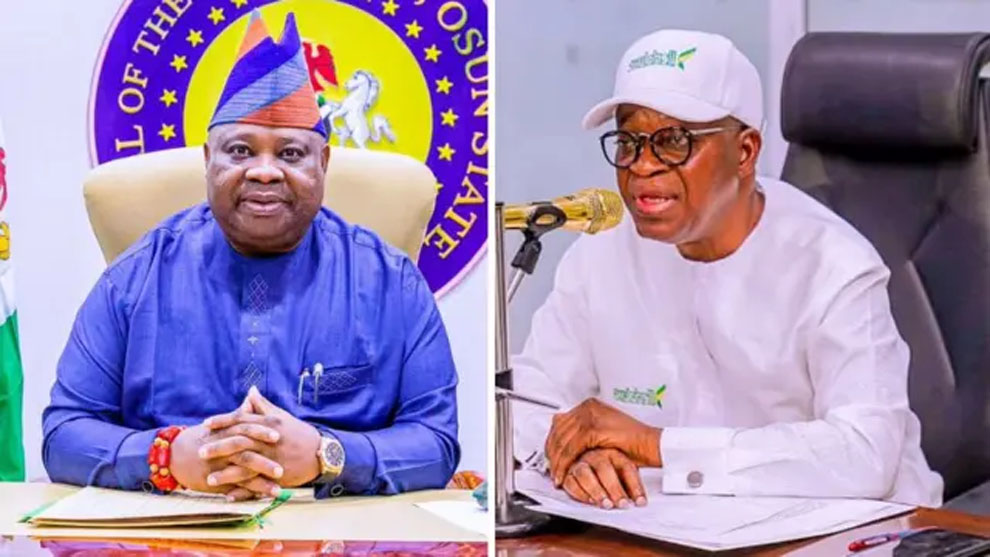
President Bola Ahmed Tinubu’s reported decision to place Osun State Governor Ademola Adeleke at the centre of his 2027 re-election campaign in the state has triggered a fresh power struggle within the All Progressives Congress (APC), amid reports of a proposed political arrangement that could reshape the party’s leadership and distribution of appointments.
According to a report by Leadership, negotiations allegedly brokered by Femi Gbajabiamila, Chief of Staff to the President, have produced a proposed power-sharing arrangement involving Adeleke, former Osun governor Gboyega Oyetola, APC National Secretary Ajibola Basiru and former party national secretary Iyiola Omisore.
Under the reported arrangement, Adeleke would coordinate Tinubu’s re-election campaign in Osun and secure greater influence over political appointments and party affairs, despite remaining a member of the Accord Party, which he joined after leaving the Peoples Democratic Party (PDP).
The report also suggested that Adeleke could defect to the APC in 2027 after the elections, potentially bringing his political loyalists with him. However, no formal defection announcement has been established, and the alleged agreement should not be treated as a concluded deal.
The reported negotiations represent a potential shift in the balance of power within Osun APC, where Oyetola has exercised considerable influence over party leadership and candidate selection.
Oyetola, who currently serves as Minister of Marine and Blue Economy, was a central figure in the party’s political structure before the latest developments. His influence extended to the selection of the APC’s candidates for the August 15, 2026, Osun governorship election and other elective positions.
The APC candidate, Bola Oyebamiji, lost the election to Adeleke, who contested on the Accord Party platform. The Independent National Electoral Commission declared Adeleke the winner with 511,067 votes against Oyebamiji’s 444,815, a margin of 66,252 votes.
READ ALSO:
- Police Rescue Two Abducted Children in Suleja, Arrest Woman For Cutting Husband’s Manhood
- Farmer Arrested Over Plantain Theft Dies in Police Custody, Family Questions Suicide Claim
- State Police: 25 States Approve Bill as Nigeria Moves Closer to Decentralised Policing
The result strengthened arguments among some APC stakeholders that the governor’s electoral standing and grassroots support could be important to Tinubu’s efforts to improve the party’s performance in Osun in 2027.
Under the reported power-sharing proposal, Adeleke would nominate chairpersons in 20 of the state’s 30 local government areas, while Oyetola, Omisore and Basiru would share influence over the remaining 10. The proposed arrangement would also cover the nomination of councillors in the affected local government areas.
The report said the proposed distribution would reduce Oyetola’s previous influence while giving Basiru and Omisore a larger role in the party’s political arrangements.
Another sensitive issue reportedly addressed during the negotiations is the prolonged dispute over control of Osun’s local governments. The proposed understanding would see the parties explore an out-of-court settlement, subject to the appropriate court process and approval of any terms reached.
The reported negotiations have not, however, established that the parties have concluded a binding agreement on the local government dispute or that any proposed settlement has received judicial approval.
Basiru has reportedly urged members of his Alubarika political group to cooperate with Adeleke in coordinating Tinubu’s re-election campaign. At a meeting in Osogbo, he was quoted as saying that the President had chosen the governor for the assignment and that party members should put aside personal ambitions in support of Tinubu’s second-term bid.
Basiru’s reported position has added weight to the emerging arrangement, although the extent to which all APC factions will accept the proposed distribution of influence remains uncertain.
The governor’s inauguration of a 344-member campaign council for Tinubu’s re-election bid has also exposed disagreements among party stakeholders. Oyetola and Oyebamiji were among prominent figures reported absent from the event, alongside APC State Chairman Tajudeen Lawal and other party leaders.
The Osun APC had complained that it was not adequately consulted before the inauguration, raising concerns about the process through which the campaign structure was established.
Nevertheless, several prominent political figures attended the event, including former governor Adebisi Akande, Basiru and Omisore. Akande reportedly said the party had lacked direction until Adeleke stepped in to coordinate the presidential campaign.
Basiru also defended the arrangement, urging party members to respect Tinubu’s choice of campaign coordinator and work together towards the 2027 election.
READ ALSO:
- Messi Makes History as Barcelona, Inter Miami Celebrate Asturias Award
- Kane Beats Yamal to Win Major Football Award Ahead of Ballon d’Or Ceremony
- Police Arrest Suspect Eight Months After Retired Teacher’s Killing in Ogun
The development has generated mixed reactions among political stakeholders. Some have welcomed Adeleke’s appointment as an opportunity to unite rival political camps behind Tinubu, while others have called for wider consultation to prevent the new structure from deepening existing divisions.
Adeleke’s position is particularly notable because he remains an Accord Party governor while coordinating the re-election campaign of the APC’s presidential candidate. His support for Tinubu predates the latest reported negotiations.
After his August 2026 governorship victory, Adeleke publicly expressed support for Tinubu’s second-term ambition, citing the President’s regional background and the need to complete major federal infrastructure projects in the South-West.
The governor has previously denied that his support resulted from a political agreement with Tinubu. He said his position was motivated by his desire to see federal projects in the region completed.
His campaign team has also rejected claims of a secret political pact with the Presidency, maintaining that the governor’s support was based on his assessment of Tinubu’s performance and policies.
The distinction is important as the reported negotiations involve claims about political appointments, local government influence and the future leadership of the Osun APC that have not all been independently confirmed.
Other political stakeholders have urged the emerging coalition to avoid sidelining existing party leaders. Some have argued that the campaign council should provide space for rival factions to participate without allowing disagreements over appointments or political ambitions to undermine the shared objective of supporting Tinubu.
The coalition’s effectiveness will depend on how the participating groups manage their differences and whether the proposed arrangements translate into practical cooperation beyond the campaign.
For now, Adeleke’s appointment as Tinubu’s Osun campaign coordinator is a reported political development, while the broader claims of a secret power-sharing deal and a future defection to the APC remain subject to confirmation.
The unfolding negotiations could significantly alter Osun’s political alignments ahead of the 2027 general election, but the final terms, the position of Oyetola’s camp and Adeleke’s long-term party affiliation remain unresolved.
Adeleke, Oyetola in Focus as Report Reveals Osun APC Power-Sharing Plan
Politics
2027: Remi, Seyi Tinubu Reportedly Differ Over APC Youth Mobilisation
2027: Remi, Seyi Tinubu Reportedly Differ Over APC Youth Mobilisation
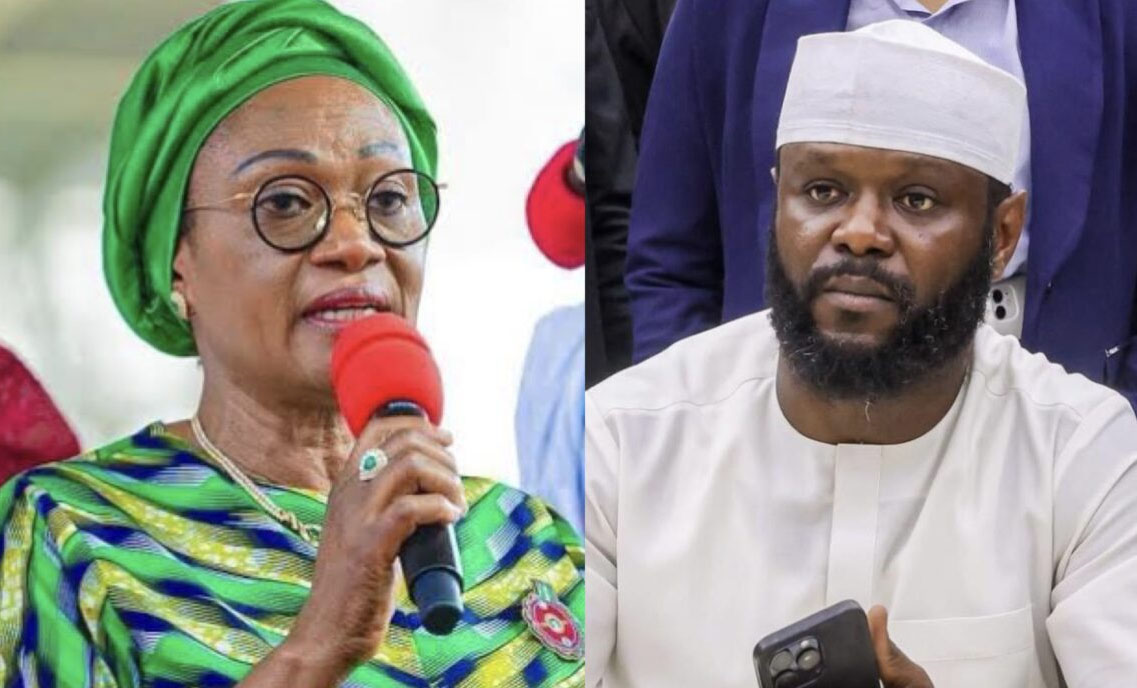
A reported disagreement between First Lady Oluremi Tinubu and President Bola Tinubu’s son, Seyi Tinubu, has drawn attention to competing political mobilisation networks within the ruling All Progressives Congress (APC) ahead of the 2027 presidential election.
The reported tension centres on the leadership of the APC Presidential Campaign Council’s youth mobilisation directorate and the activities of two support groups associated with the President’s family: Seyi Tinubu’s CityBoy Movement and the Mummy’s Men Movement, which is associated with the First Lady.
According to reports published on October 22 and 23, 2026, the latest development followed changes to the campaign council’s leadership structure, including appointments to its youth mobilisation directorate.
In the reshuffle announced by the campaign council, Imo State Governor Hope Uzodimma, who serves as the council’s secretary, named Minister of Youth Development Ayodele Olawande as director of youth mobilisation, while APC National Youth Leader Dayo Israel was appointed his deputy.
However, an unnamed source cited in the reports claimed that the arrangement displeased the First Lady, who allegedly preferred Israel to lead the directorate. The source further alleged that Olawande was perceived by the First Lady’s camp as being aligned with Seyi Tinubu and his CityBoy Movement.
READ ALSO:
- Igbo Presidency: Soludo Tells South-East to Back Tinubu for Future Power Shift
- 41 Days in Bandits’ Den: Five Islamic Clerics Still Held After Tinubu Re-Election Prayer Trip
- EFCC Opens Recruitment for Nigerians, Sets Age Limits for Four Job Categories
The reports suggested that the appointments had exposed competing interests over the direction of youth mobilisation for President Tinubu’s anticipated re-election campaign. However, the claims about the motivations behind the appointments have not been independently established.
The alleged disagreement also draws attention to the growing visibility of the CityBoy Movement, which Seyi Tinubu founded to mobilise young Nigerians in support of his father’s political ambitions.
The group has organised political activities and established support networks in different parts of the country ahead of the 2027 elections. President Tinubu has publicly praised his son and members of the movement for engaging young people and building a political support structure.
During a meeting with the group at the State House, the President commended Seyi and his associates for their efforts, saying they had invested their time in organising young people without demanding official positions or titles.
The President’s public endorsement of the movement has been cited in reports about the alleged tensions, although claims that it angered the First Lady remain allegations attributed to unnamed sources.
The Mummy’s Men Movement, meanwhile, emerged as another platform promoting support for the President’s second-term ambition. Dayo Israel has been associated with the initiative and announced its formation in August, describing it as a movement inspired by the First Lady.
Israel said the initiative was open to women, young people and Nigerians across different age groups.
A report by Peoples Gazette also cited an unnamed source alleging that the movement was established partly to counter the influence of the CityBoy Movement. The report further carried claims about an alleged attempt to restrict CityBoy members’ attendance at an event in Abeokuta, Ogun State, in August. These claims have not been independently verified.
The reported dispute comes amid wider concerns within the APC about internal disagreements and competing interests as the party prepares for the 2027 general elections.
Senator Ali Ndume recently warned that internal divisions and personal interests among party members could pose a challenge to the APC’s electoral preparations. Vice-President Kashim Shettima has also cautioned party members against undermining one another while publicly professing support for the President.
Although the reports have described the situation as a struggle for influence within Tinubu’s political camp, there has been no publicly established confirmation that the President’s wife and son are personally at war over the campaign structure.
The developments nevertheless highlight the importance of youth mobilisation and internal coordination as the APC works to consolidate support for Tinubu’s second-term bid.
2027: Remi, Seyi Tinubu Reportedly Differ Over APC Youth Mobilisation
Politics
Igbo Presidency: Soludo Tells South-East to Back Tinubu for Future Power Shift
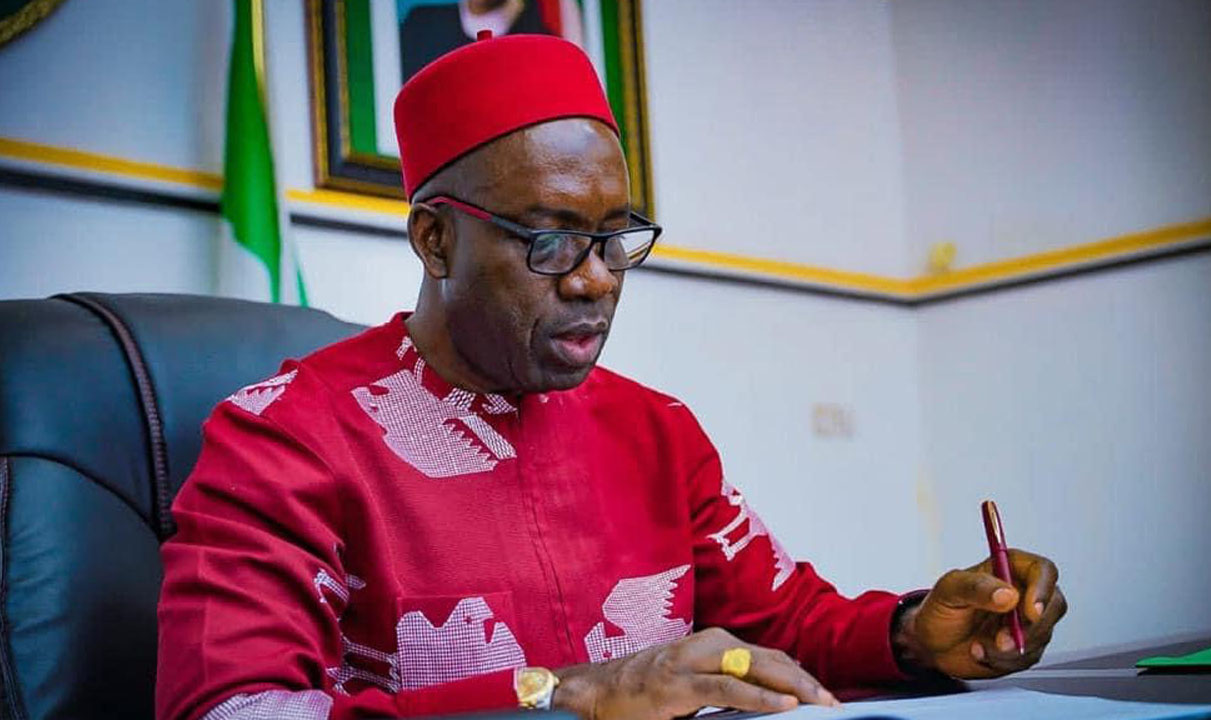
Anambra State Governor, Chukwuma Soludo, has urged the South-East to support President Bola Tinubu, arguing that political alliances with the South-West could improve the region’s chances of producing Nigeria’s president in the future.
Soludo said presidential power in Nigeria is shaped by political negotiations, agreements and cooperation between regions, suggesting that the South-East should adopt a strategic approach rather than rely solely on demands for an Igbo presidency.
The governor made the remarks while speaking in Igbo at a recent event, according to reports published on Friday, October 23, 2026.
“Presidency is about discussion and agreement. Now that President Tinubu, from the South-West, is in power, if we in the South-East support him, then when power returns to the South after going to the North, the South-West will support an Igbo presidency,” Soludo was quoted as saying.
The governor’s position comes as political activities gather momentum ahead of the 2027 general elections, with competing parties and regional interest groups seeking support for their preferred presidential candidates.
Soludo, who belongs to the All Progressives Grand Alliance (APGA), has repeatedly advocated political cooperation between the South-East and the Tinubu administration, maintaining that strategic alliances could help the region secure greater political and economic benefits.
READ ALSO:
- 41 Days in Bandits’ Den: Five Islamic Clerics Still Held After Tinubu Re-Election Prayer Trip
- EFCC Opens Recruitment for Nigerians, Sets Age Limits for Four Job Categories
- Saudi Executions: Truth Behind Viral Kissing Claim
- MURIC petitions Oyo police over 2019 murder of Muslim cleric in Fiditi
In March, during his second-term inauguration, the governor urged people in the South-East to support Tinubu in the 2027 presidential election, arguing that the region should prioritise political partnerships capable of advancing its interests.
He also called for a shift from what he described as the “politics of lamentations” to an alliance focused on progress and prosperity.
In June, Soludo reiterated his position at a pro-Tinubu rally in Abakaliki, Ebonyi State, where he called on political leaders across the country to unite behind the President.
The governor has also praised Tinubu over federal government approvals for the design and procurement processes for two major road projects linking Anambra with neighbouring states, describing the projects as important to the development of the South-East.
Soludo has maintained that cooperation between APGA, the ruling All Progressives Congress (APC) and the Federal Government can deliver practical benefits for the region, despite differences in party affiliation.
However, support for Tinubu is not unanimous across the South-East. The Igbo Agenda Dialogue recently endorsed Peter Obi and his running mate, Rabiu Musa Kwankwaso, for the 2027 presidential election, dismissing endorsements of Tinubu by Soludo and other political figures as positions that do not necessarily represent the choices of all Igbo voters.
The competing positions highlight the political debate within the South-East over whether supporting the incumbent President could improve the region’s prospects of producing a future Nigerian leader or whether backing an alternative candidate would better serve its interests.
Soludo’s latest remarks place renewed emphasis on political bargaining and regional alliances as key factors in the debate over an Igbo presidency.
Igbo Presidency: Soludo Tells South-East to Back Tinubu for Future Power Shift
-

 Auto3 days ago
Hyundai Unveils Mufasa, Grand Creta SUVs to Strengthen Nigeria Line-up (Updated)
-

 metro3 days ago
Horror in Sokoto: Bandits Intercept Vehicle, Massacre All Passengers Returning from City
-

 metro3 days ago
Nigerian Journalist Sentenced to 4 Years Over Facebook Post Criticising Police
-

 metro3 days ago
Fourth Gas Leak in Six Months: Over 100 Ogun Pupils Hospitalised, Schools Shut as Parents Panic
-
 metro3 days ago
Bauchi Mosque Removes Imam After Tinubu Campaign, Rejects Proposal to Rename Mosque
-
 metro3 days ago
Shettima Blasts States Over Power Woes, Says Govs Must Stop Waiting for Abuja
-

 International2 days ago
Two Killed, Eight Injured as Attack Hits Saudi Arabia Airport
-

 metro2 days ago
Police Arrest Man Over Fake Presidency Number Plate in Abuja