

News
#EndSARS: We’re sorry, Osinbajo begs Nigerians

Vice President Yemi Osinbajo has apologised to Nigerians, especially the youth who have been victims of police brutality mostly exhibited by some elements within the disbanded Special Anti-robbery Squad unit.
The VP said Nigerians were right to be angry at the government’s silence on issue in Nigeria over time, adding that “we could’ve moved faster and for this we are sorry.”
Osinbajo stated this Friday in a series of tweet on his verified Twitter account.
The tweets read, “Dear Nigerians, I know that many of you are angry, and understandably so. We could’ve moved faster and for this we are sorry. I fully understand how many young people feel. Many feel that we have been too silent and have simply not done enough. These feelings of frustration are justified.
There are far too many people who have been brutalised at the hands of the police and this is unacceptable. We must take responsibility for protecting young people, even sometimes from those who are paid to protect them.
“Over the past week, we have been following themes protests, and I have had a number of discussions with key people in the administration that you deserve to be informed about. Transparency, after all, is a key tenet of government.
Several meetings have been held with: the @SPLawan, @femigbaja, the Chief of Staff to @MuhammaduBuhari, Chairman of the @PoliceServiceC2, the IG of @PoliceNG (IGP), the Executive Secretary of @NHRCNigeria, and governors.
We understand that you want to see action from us and I’m here to tell you that work is ongoing. I chaired a meeting of 36 state governors and the minister of the FCT (NEC), where we resolved to set up judicial panels of inquiry so we can see justice served, and fast; the reason being that only state governors, by law, can set up judicial inquiries in their states. The hearings will be public.
With Mr. President’s approval, SARS has been completely disestablished, and none of its former members will feature in any police tactical units.
I am sending my deepest condolences to the families of Jimoh Isiaq, and all those who have lost their lives at the hands of wayward police officers. To those injured, I wish a full and speedy recovery.
We have proposed that each state government set up a Victims’ Support Fund, which @NigeriaGov will support. This is the least that we can do to compensate for the injustice suffered at the hands of errant officers.
We also understand that the issues that you’re raising are bigger than just SARS. They’re deep and systemic and we’re undertaking comprehensive measures that will revamp the police by addressing issues of welfare, service conditions and training.
On Monday, Mr President also reiterated his commitment to these extensive police reforms.
We will continue to update and engage with you all on these action steps and the ones to come, in the spirit of transparency, so that you can hold us accountable. We are, after all, here to serve you and we owe you a duty to win back your trust.”









News
2027: Rufai Oseni Tackles Segun Sowunmi Over Media Decorum, Press Freedom

2027: Rufai Oseni Tackles Segun Sowunmi Over Media Decorum, Press Freedom
A fresh war of words has erupted between Arise News presenter Rufai Oseni and Peoples Democratic Party (PDP) chieftain Segun Sowunmi over press freedom, journalistic independence and the conduct of media practitioners ahead of the 2027 general elections.
Oseni reportedly fired back at Sowunmi following comments concerning the need for journalists to maintain professional decorum while engaging political figures, accusing politicians of applying double standards when confronted with critical questions from the media.
The exchange, which has generated discussions in political and media circles, comes amid growing political activities and realignments ahead of the 2027 general elections.
According to reports published on Monday, November 16, 2026, Oseni questioned what he considered an inconsistency in Sowunmi’s position on media conduct, arguing that political actors should not demand restraint from journalists while expecting favourable treatment or seeking to limit critical scrutiny.
2027: Rufai Oseni Tackles Segun Sowunmi Over Media Decorum, Press Freedom
News
Tinubu Unveils 5-Year Plan to End Insecurity, Approves Recruitment of 78,000 Soldiers, Police Officers
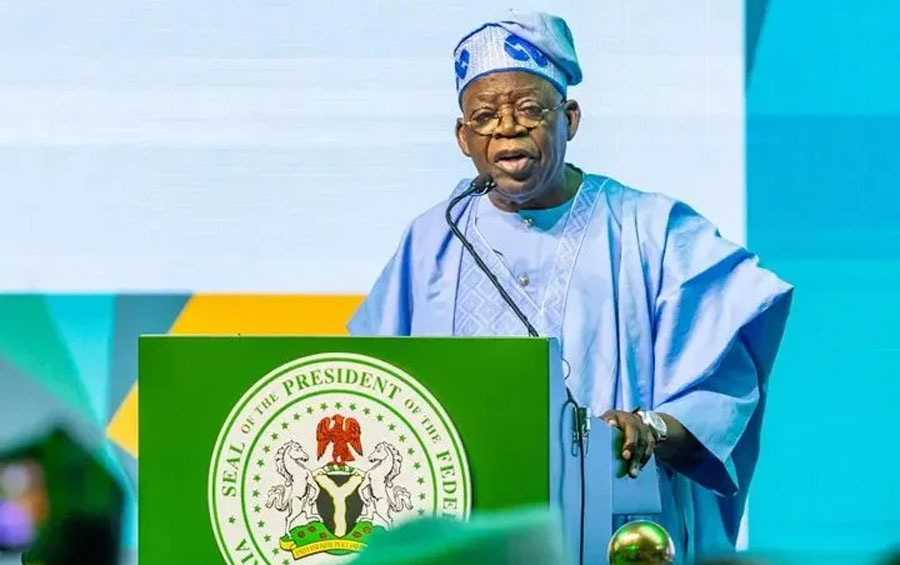
ABUJA – President Bola Ahmed Tinubu is preparing to implement a comprehensive five-year strategic defence operations plan aimed at tackling terrorism, banditry, kidnapping and other security threats across Nigeria.
The All Progressives Congress (APC) Presidential Campaign Council (PCC) announced on Sunday, November 15, 2026, that the Five-Year Strategic Defence Operations Plan was ready, describing it as a major component of the administration’s efforts to strengthen national security and improve the operational capacity of security agencies.
The council’s spokesperson, Dele Alake, disclosed this in a statement, explaining that the proposed framework would provide a long-term strategy for aligning defence priorities, military requirements, equipment acquisition, personnel development and government expenditure with Nigeria’s security challenges.
According to Alake, the plan is designed to promote a more coordinated, intelligence-led, technology-enabled and prevention-oriented approach to addressing insecurity.
He said the initiative would strengthen the country’s security architecture and improve the ability of the military and other security agencies to respond to emerging threats.
Alake also claimed that military operations conducted across the country over the past three years had resulted in the elimination of more than 15,000 Boko Haram terrorists and bandits.
He further claimed that over 130,000 Boko Haram fighters and their dependants had surrendered through Operation Safe Corridor, the Federal Government’s rehabilitation programme for former insurgents.
The figures, according to the campaign council, demonstrate the administration’s combination of military operations and non-military interventions in addressing insecurity.
Expansion of Army Divisions, Recruitment of 28,000 Soldiers
As part of efforts to strengthen military operations, Tinubu has approved the creation of four additional Nigerian Army divisions and the restructuring of existing military formations.
Alake said the reforms were intended to expand operational coverage, decentralise military activities and enable troops to respond more quickly to security threats in different parts of the country.
READ ALSO:
- 2027: How We’ll Defeat Tinubu — Amaechi Reveals ADC’s Strategy
- 2027: Suspected Thugs Attack Kwankwaso’s Convoy in Kano, Injure Supporters
- Eight Dead in New York Building Collapse as Nigerian Landlord’s Troubling Past Emerges
The President has also approved the establishment of two additional Army depots in Osogbo, Osun State, and Amasiri-Edda, Ebonyi State, to increase the military’s recruitment and training capacity.
Each facility is designed to accommodate 6,000 recruits at a time, giving the two depots a combined capacity of 12,000 trainees.
According to Alake, 5,210 recruits are already undergoing training at the Osogbo facility.
The council also disclosed that Tinubu had approved the recruitment of an additional 28,000 soldiers to increase the military’s manpower and strengthen its presence in areas facing security challenges.
The expansion is expected to address manpower shortages, improve deployment capacity and enable the military to respond more effectively to attacks by terrorists, bandits and other criminal groups.
50,000 Additional Police Officers Approved
Beyond the military, the administration is also planning a significant expansion of the Nigeria Police Force.
Alake disclosed that Tinubu had approved the recruitment of 50,000 additional police officers as part of broader efforts to strengthen internal security and improve policing across the country.
The proposed recruitment, alongside the additional soldiers, represents an intended expansion of 78,000 personnel across the military and police.
The campaign council said the initiative would improve security coverage, reinforce law enforcement and strengthen the country’s capacity to tackle kidnapping, armed robbery, terrorism and other criminal activities.
New Military Barracks, Improved Welfare
The five-year security strategy also places emphasis on military infrastructure, accommodation and personnel welfare.
One of the projects highlighted by the council is a proposed 700-unit military barracks in Ikere-Ekiti, Ekiti State.
The facility is designed to provide accommodation and operational support for military personnel, with the broader objective of improving their working and living conditions.
Alake said the administration recognises that investments in equipment and manpower must be supported by adequate infrastructure, training and welfare provisions to improve the effectiveness of security personnel.
He added that the expansion of military training facilities would help accelerate recruitment and ensure more soldiers are available for deployment.
Technology, Intelligence to Drive Security Operations
Another major component of the proposed five-year defence plan is the use of intelligence, surveillance and modern technology to improve security operations.
According to Alake, the administration intends to ensure that defence spending and operational decisions are guided by identified threats, national security priorities and clearly defined military requirements.
The approach is expected to strengthen intelligence gathering, improve coordination among security agencies, enhance combat readiness and address gaps in military capabilities.
The campaign council said the strategy would also promote better utilisation of available resources and reduce unnecessary expenditure in the defence sector.
The proposed framework is intended to address multiple security threats, including terrorism, banditry, kidnapping and other forms of organised criminality.
Tinubu Reaffirms Commitment to Defeating Insecurity
The announcement comes amid persistent security challenges in several parts of Nigeria, including attacks on rural communities, mass kidnappings, killings and displacement.
Tinubu had earlier reaffirmed his administration’s determination to overcome insecurity while addressing supporters at an APC political gathering in Dutse, Jigawa State, on November 10.
The President said his administration was strengthening the armed forces and police to improve their ability to protect lives and property.
He also promised to improve the welfare of security personnel, irrespective of their backgrounds or deployment locations.
“We will conquer insecurity. We’ve been through many wars. We will defeat our enemies. Enemies of unity, enemies of stability. Enemies of hope. I assure you that we are doing that,” Tinubu said.
The announcement of the five-year strategic defence plan provides further details of the administration’s proposed approach to tackling the country’s security challenges.
However, the success of the initiative will depend on effective implementation, adequate funding, improved intelligence coordination, accountability and the ability of security agencies to translate the proposed reforms into measurable improvements in public safety.
The APC Presidential Campaign Council said the plan would strengthen Nigeria’s defence architecture and provide a coordinated framework for responding to both existing and emerging security threats.
Tinubu Unveils 5-Year Plan to End Insecurity, Approves Recruitment of 78,000 Soldiers, Police Officers
News
Chatham House Protest: UK-Based Lawyer Alleges Anti-Amupitan Demonstrators Were Paid Actors
Chatham House Protest: UK-Based Lawyer Alleges Anti-Amupitan Demonstrators Were Paid Actors
LONDON — Fresh controversy has emerged over the protest against the Chairman of the Independent National Electoral Commission (INEC), Professor Joash Amupitan, outside Chatham House in London, following allegations by a United Kingdom-based Nigerian lawyer, Otunba Dayo Babalola, that the demonstrators were allegedly paid to stage the confrontation.
Babalola dismissed the demonstration as an attempt by a small group of individuals to create a misleading impression about the position of Nigerians living in the United Kingdom on the leadership of the electoral commission.
The controversy followed Amupitan’s engagement at Chatham House, where he reportedly discussed electoral reforms and measures being considered by INEC to strengthen the credibility and integrity of Nigeria’s electoral process ahead of the 2027 general elections.
However, shortly after the engagement, a group of protesters reportedly confronted the INEC chairman outside the venue, surrounding his vehicle, chanting slogans and demanding his resignation over allegations of compromised electoral integrity.
The demonstrators, estimated by eyewitnesses to number between 10 and 15, reportedly attempted to block the chairman’s movement as they expressed dissatisfaction with his leadership of the electoral commission.
Reacting to the incident, Babalola argued that the demonstration should not be presented as the collective position of Nigerians in the United Kingdom.
According to him, nearly 200 Nigerian stakeholders and members of the diaspora attended the formal engagement inside Chatham House, making it misleading to portray the actions of a relatively small group outside the venue as representative of the wider Nigerian community.
The lawyer further alleged that the protesters were not necessarily acting out of genuine civic concerns but had allegedly been mobilised and paid to disrupt the event and attract public attention.
He also reportedly drew attention to political memorabilia worn by some of the demonstrators, suggesting that their appearance raised questions about possible political affiliations and the motivation behind the protest.
Babalola maintained that the formal engagement inside Chatham House and the demonstration outside the building were two separate events which should not be conflated.
He warned against using the actions of a handful of protesters to suggest that the wider Nigerian diaspora had collectively rejected the INEC chairman.
The allegations, however, have not been independently established, and the protesters’ account of the circumstances surrounding the demonstration remains important to a complete understanding of the incident.
The confrontation comes amid growing political disagreements over the preparedness of INEC for the 2027 general elections, particularly concerning the credibility of the voters’ register, electoral transparency, institutional independence and the security of the voting process.
Opposition figures and other critics have continued to scrutinise the commission’s activities, while INEC and its supporters have maintained that the electoral body should be allowed to carry out its constitutional responsibilities without undue political interference.
The London protest has consequently added another dimension to the debate over public confidence in Nigeria’s electoral institutions.
As of the time of filing this report, no independent evidence had been presented to establish Babalola’s allegation that the demonstrators were paid, while no formal response from the protest organisers addressing the claim was available.
The incident has also generated renewed discussions about the role of Nigerians in the diaspora in holding public institutions accountable and the need to distinguish genuine civic protests from demonstrations allegedly organised for political purposes.
Chatham House Protest: UK-Based Lawyer Alleges Anti-Amupitan Demonstrators Were Paid Actors
-

 Politics2 days ago
Peter Obi, NDC in Fresh Storm as Keyamo Gives Dickson 48 Hours Over Old National Anthem, Raises Secession Alarm
-

 metro2 days ago
Kwankwaso’s Daughter, Kano Governor’s Wife, Files for Divorce, Offers to Refund Dowry
-

 metro2 days ago
“I Cheated Because I’m Human Too” — Divorced Restaurant Owner Accuses Ex-Husband of Sleeping With Over 16 Women
-

 Business2 days ago
OPay Faces ₦994m Regulatory Fines Over Money Laundering, Terrorism Financing Breaches
-

 metro1 day ago
Tragedy: “I Suffered With This Man When He Had Nothing” — Woman Who Begged Alleged Rival To Leave Her Family Dies At 39
-

 metro2 days ago
Pastor Remanded Over Viral Video of Toluwanisings’ Corpse After Failed Attempt to Raise Singer From Dead
-

 metro2 days ago
Zamfara Bloodbath: 53 Killed as Vigilantes Ambush Bandits After Kidnapping Spree
-
 metro1 day ago
Zamfara Attack: Bandits Kill Governor Dauda Lawal’s Aide While Observing Fajr Prayer
You must be logged in to post a comment Login