

Business
FG Blames Drop in Electricity Generation on Shutdown of Critical Gas Plant
– Targets 1,000MW from reactivated 14 solar projects
– Tasks gas operators on the accuracy of dispensing instruments
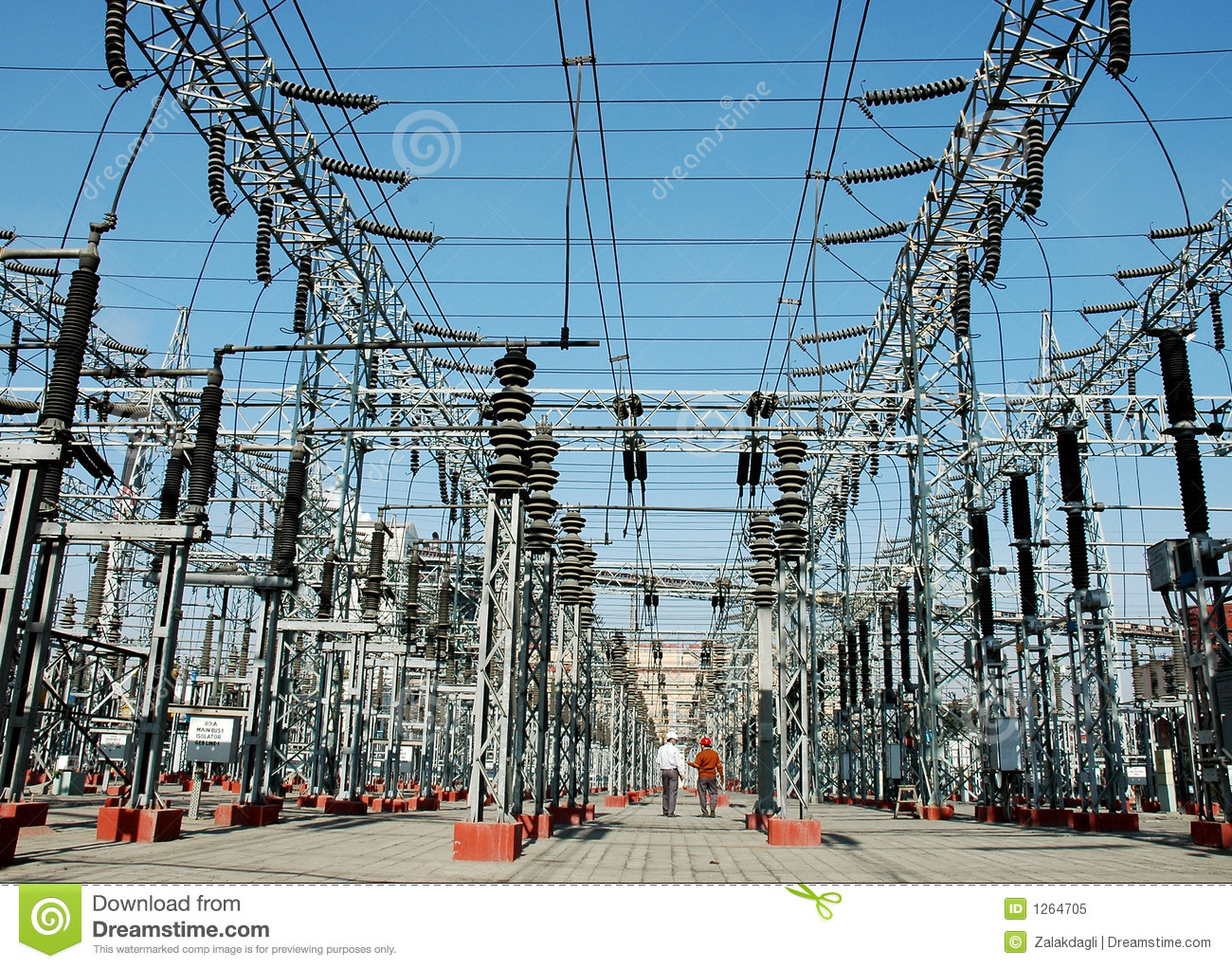
The federal government yesterday explained that the drop in electricity generation was a result of the partial shutdown of the Oben gas plant for the repair of critical gas processing equipment.
It has also disclosed that the 14 reactivated independent power plants (IPP) across the country will produce off-grid electricity of 1,000 megawatts.
A statement by the Federal Ministry of Power disclosed that Seplat Energy Plc had mobilised equipment, material, and personnel to the site to expedite the restoration of normal gas supply to the affected power plants.
The statement read: “We wish to notify the general public that the current dip in electricity generation is a result of the partial shutdown of the Oben gas plant to address the repair of critical gas processing equipment.”
“The incident, unfortunately, occurred at a time when other power plants on other gas sources are undergoing planned maintenance and capacity testing.
“We wish to notify the public that Seplat Energy Plc has mobilised equipment, material, and personnel to the site to expedite the restoration of normal gas supply to the affected power plants.
“We have been assured that the repair work would be concluded this weekend and normalcy will be restored. While pleading with electricity consumers with the current state of supply, we wish to assure the general public that efforts are being made for a sustained improvement of supply across the country.”
Meanwhile, the Minister of Power Abubakar Aliyu has disclosed that the 14 reactivated IPP across the country will produce off-grid electricity of 1,000 MW.
Aliyu disclosed the maiden three-day Nigeria-African Natural Resource and Energy Investment Summit hosted by the Ministry of Mines and Steel Development in collaboration with other stakeholders in Abuja.
The maiden event has the theme: “Towards a Greener Africa” which ended at the weekend.
READ ALSO:
- Police confirm death of 2 gallant officers from bullet wounds in Enugu
- Ahead Of APC Primary: Buhari Pushes For Consensus As Northern Govs Back Southern Presidency
- NAHCON Announces 2022 Hajj Fares
The minister said, “government has reactivated 14 IPP Solar Projects across the country. These IPPs, which are currently undergoing Technical and Financial Evaluation, shall contribute 1000MW off-grid. 10 state governments are enabling solar projects in their states that will deliver 100MW each contributing 1,000MW off-grid.
“The 10MW Katsina Wind Farms already contributing to the grid and is being considered for a solar hybrid that will optimise its availability to 20MW. Once we stabilise the base load through the hydropower plants at various stages of completion, we shall integrate all the off-grid structures to the national grid, increasing our energy mix.”
He noted that African governments must be proactive and responsive to the course collectively as that is a prerequisite for achieving a cleaner energy future, adding “It is only by this can Africa actualise its green transition”.
Speaking further on international partnership toward greener energy, Aliyu said, “Countries, like Nigeria, have made commitments to achieve their Nationally Determined Contributions (NDCs) in line with the Paris Agreement on Climate Change and the COP26 Agreement in Glasgow.
“To achieve this, we have to scale up our Solar, Wind, hydropower, and even the new hydrogen opportunities, including other new clean technologies.
Africa needs to focus on proven approaches, as well as the mobilisation of resources to take advantage of carbon-neutral energy sources.
FG Tasks Gas Operators on Accuracy of Dispensing Instruments
In a related development, the federal government has directed operators in the Liquefied Petroleum Gas (LPG) sector to install deadweight at their premises to test the accuracy of weighbridges used for dispensing bulk gas to retailers.
The government also insisted that henceforth, the use of weighbridges should be the norm at depot terminals when loading LPG products rather than the use of gas meters to ensure that the product being dispensed is accurate since LPG is retailed by weight.
The resolution came against the backdrop of persistent complaints of under-dispensing of products at LPG depot terminals as well as retail outlets across the country.
The federal government’s position was contained in a communiqué issued at the end of a one-day stakeholders engagement organised by the Weights and Measures Department of the Federal Ministry of Industry, Trade and Investment, with the Nigerian Association of Liquefied Petroleum Gas Marketers (NALPGAM) and Liquefied Petroleum Gas Depot Owners (LPGDO) on the application of legal metrology in the oil and gas sectors in Nigeria.
THISDAY gathered that the outcome of the meeting had already been approved by the Minister of Industry, Trade, and Investment, Mr. Niyi Adebayo for immediate implementation.
READ ALSO:
- Man who shares video of himself having sex online was PDP delegate + Video, photo
- Yerima: There was no agreement to hand over Presidency to Tinubu after Buhari
- Bandits kidnap 14 in attack on Kaduna community
The communiqué, which was obtained by THISDAY further, directed that henceforth, tankers used for loading and transporting LPG should ensure that they gauge their tank pressures to conform with safety standards before loading to avoid incurring shortages due to excessive gas in their tanks during loading.
It also pointed out that as a matter of urgent necessity, the weights and measures department should embark on periodic inspections of the LPG depot terminals to ascertain their level of compliance with operational guidelines.
It was also agreed that the existing skill gaps noticeable in weighbridges installation should be addressed adding that the quality of gas in the market should be of a high standard with less propane and which should be enforced by the Nigerian Midstream and Downstream Petroleum Regulatory Authority (NMDPRA).
The federal government however warned that depot terminal operators found to be under-dispensing the Liquefied Petroleum Gas (LPG) as well as marketers to consumers will be penalised and urged the weights and measures department to strengthen its oversight functions of the numerous LPG retail outlets across the nooks and crannies of the country.
Moreover, on the issue of overlapping duties between the department and NMDPRA, the stakeholders resolved that the activities of the department revolved around the verification and certification of measuring equipment which is statutorily backed by existing legislation while the former dwelled on the issuance of licenses to petroleum product dealers.
The Director, Weights and Measures Department, Mr. Hassan Ejibunu, however, told THISDAY, “We’ve been receiving complaints from NALPGAM that whatever they buy in bulk from the terminals, maybe 33,000 litres of LPG, but by the time it gets to the final destination you’ll find out it is less than 33,000 litres – may be what is left is about 30,000 litres or less than that.
“We equally received complaints from members of the public that if they go to the retail outlets to buy let’s say 12.5 KG cylinder of LPG, what they’ll get is not up to that.”
He said the stakeholder’s engagement was convened to address the underlying issues and to ensure that consumers of gas get value and accuracy for every purchase they make.
THISDAY









Auto
Omoda, Jaecoo Storm Europe as Global Sales Surge 123% to 73,421

Omoda, Jaecoo Storm Europe as Global Sales Surge 123% to 73,421
Chinese automotive brands strengthen foothold in UK, Spain, Italy and France as new-energy vehicles drive growth
Omoda and Jaecoo are accelerating their European expansion, buoyed by surging demand in key markets and a growing appetite for electrified vehicles, as the automotive brands recorded a 123 per cent year-on-year increase in global sales to 73,421 units in September 2026.
The latest performance underscores the brands’ growing international reach, with cumulative sales for the first nine months of the year reaching 587,846 units, according to figures released by the company.
The United Kingdom emerged as a major growth driver, with the brands recording 22,296 registrations in September, more than double their performance in the corresponding period of 2025. The volume translated into a 6.37 per cent market share and second place among automotive brands in the country for the month.
A standout performer was the Jaecoo 7, which recorded 10,813 registrations in the UK during September to become the country’s best-selling new-car model for the month. Its cumulative registrations for the first nine months of the year stood at 39,473 units.
The model’s performance highlights the growing competitive presence of the Chinese automotive brands in a market traditionally dominated by established European, Japanese and South Korean manufacturers.
READ ALSO:
- 16-Year-Old Girl Recounts Horror of Hookup Encounter, Says Man Threatened Her With Knife, Acid
- Ex-Super Eagles Coach Westerhof Battles Colon Cancer in Critical Condition, Wife Seeks Help
- NRC Denies Ticket Racketeering, Says Abuja-Kaduna Rail Demand Exceeds Seats by 10-Fold
Beyond sales, Omoda and Jaecoo are also deepening their long-term commitment to the UK through plans to establish a research and development centre at UTAC Millbrook in Bedfordshire. The proposed facility will focus on areas such as chassis tuning and advanced driver-assistance systems, enabling the brands to tailor their vehicles more closely to European driving conditions and customer expectations.
Spain, Italy and France also delivered strong performances, reinforcing the brands’ broader European growth strategy.
In Spain, September registrations increased by 91.5 per cent year-on-year to 4,010 units, lifting the brands’ market share to a record 4.3 per cent. Electrified vehicles accounted for 98 per cent of their sales in the country, highlighting the importance of alternative-powertrain models to their European strategy.
Italy recorded 4,678 registrations in September, giving the brands a 3.31 per cent market share. Their cumulative registrations between January and September rose by 256.23 per cent to 32,945 units, reflecting a rapid expansion in one of Europe’s important automotive markets.
France, another market in which the brands are building their presence, recorded combined September registrations of 3,003 units. Jaecoo contributed 2,589 units, an impressive showing approximately six months after its entry into the French market.
The gains across these countries point to an increasingly coordinated European push, with Omoda and Jaecoo seeking to translate their expanding product portfolios into stronger market positions.
Electrification drives global growth
New-energy vehicles (NEVs) remained a major contributor to the brands’ worldwide performance, with sales reaching 53,957 units in September, representing an 184 per cent increase year-on-year.
The volume accounted for approximately 73.5 per cent of total monthly sales, underlining the growing contribution of electrified models to the brands’ global business.
The figures suggest that electrification is becoming central to Omoda and Jaecoo’s expansion, particularly in markets where consumers are increasingly considering hybrid and other electrified powertrains alongside conventional petrol vehicles.
With rising registrations in major European markets, expanding technical development plans and strong demand for the Jaecoo 7, the brands are seeking to consolidate their position in an increasingly competitive automotive landscape.
Sustaining the momentum will depend on their ability to maintain product appeal, strengthen dealer and after-sales networks, and respond to the differing regulatory requirements and consumer preferences across Europe.\
Omoda, Jaecoo Storm Europe as Global Sales Surge 123% to 73,421
Railway
NRC Denies Ticket Racketeering, Says Abuja-Kaduna Rail Demand Exceeds Seats by 10-Fold
NRC Denies Ticket Racketeering, Says Abuja-Kaduna Rail Demand Exceeds Seats by 10-Fold
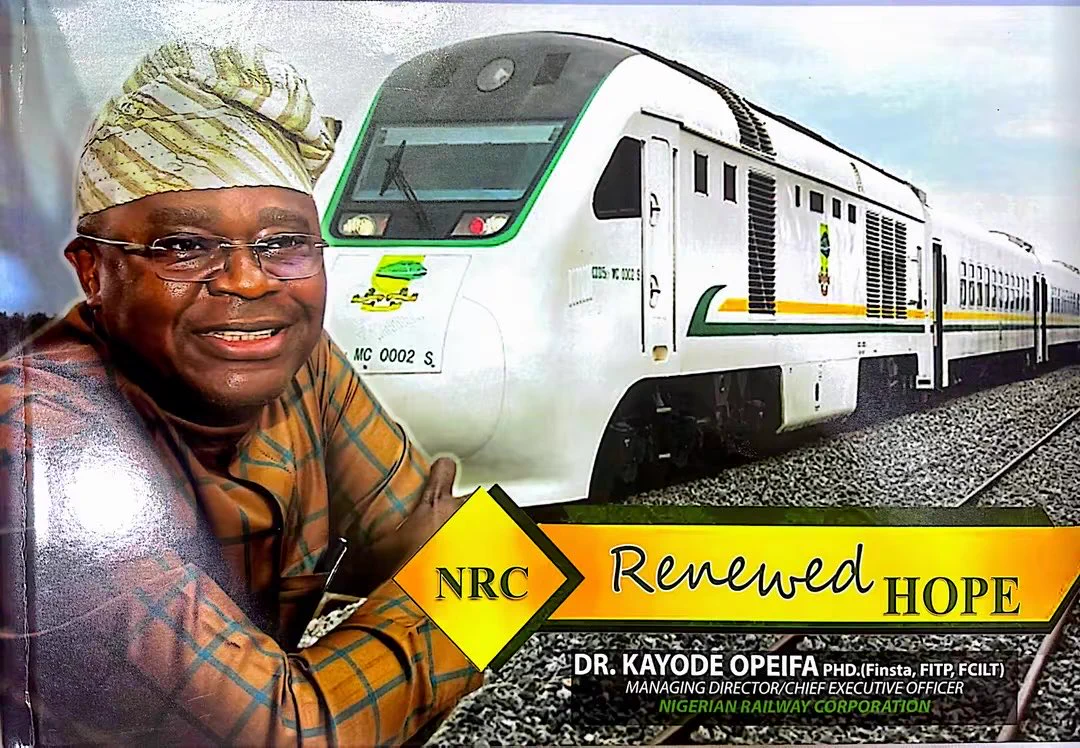
The Nigerian Railway Corporation has denied allegations that it deliberately creates artificial scarcity of tickets on the Abuja-Kaduna Train Service to facilitate their resale at exorbitant prices, blaming the persistent shortage on surging passenger demand and the activities of ticket touts exploiting the system.
The corporation, in a statement signed by its Chief Public Relations Officer, Callistus Unyimadu, said demand for rail services on the corridor had exceeded available capacity by more than 10 times, creating a severe imbalance between the number of passengers seeking tickets and the limited seats available.
The clarification followed a viral social media video by Instagram blogger Faizah Raji, operating under the handle @wearegst, who accused the NRC of withholding tickets from its official electronic booking platform and reselling them through unnamed agents at prices reportedly twice the approved fares.
However, the NRC described the allegations as misleading, insisting that the corporation neither buys nor sells train tickets but facilitates passenger access to the railway service through approved ticketing arrangements.
According to the management, Raji had acknowledged in her account that the corporation warned passengers to purchase tickets exclusively through authorised platforms but subsequently bought a ticket from an agent after failing to secure one through the official portal.
The NRC said while her experience might be genuine, patronising unofficial ticket sellers despite repeated warnings did not establish the corporation’s involvement in the alleged racket.
It warned passengers that tickets obtained through unauthorised agents, particularly those purchased with another person’s identification details, could be invalid and expose travellers to financial losses or denial of boarding.
The corporation explained that electronic ticketing across its standard-gauge railway operations was handled by private concessionaires under public-private partnership arrangements approved by the Infrastructure Concession Regulatory Commission and the Federal Executive Council before 2023.
READ ALSO:
- FG Draws Red Line on Fuel Subsidy, Warns of Naira Crisis if Reforms Are Reversed
- NRC Denies Ticket Racketeering, Says Abuja-Kaduna Rail Demand Exceeds Seats by 10-Fold
- Tinubu Reappoints INEC Commissioner, Nominates Six Others Ahead of 2027 Elections
It identified SecureID/TPS as the ticketing service provider for the Abuja-Kaduna Train Service, Global Software Digital Solutions for the Lagos-Ibadan Train Service, and Fane Warri-Itakpe Ticketing Solutions Limited for the Warri-Itakpe Train Service.
NIN verification introduced to combat ticket fraud
The NRC traced the growing challenge of ticket racketeering to fraudulent practices that persisted despite measures introduced to strengthen passenger identification and railway security.
It said the government introduced the use of the National Identification Number as a condition for purchasing train tickets following the 2022 train attack, partly to curb ticket racketeering.
However, according to the corporation, fraudsters subsequently devised ways of obtaining multiple NINs to purchase tickets in bulk for resale to unsuspecting passengers.
To tackle the practice, the NRC introduced an additional verification procedure in 2025, modelled on the system used at the Murtala Muhammed International Airport Terminal 2 in Lagos.
Under the arrangement, passengers’ NIN details are checked against the information used to purchase their tickets, while personal identification cards are also required before boarding.
The corporation said its verification system at Idu and Kubwa in Abuja, as well as Rigasa in Kaduna, is integrated with the National Identity Management Commission database, enabling officials to retrieve the photograph associated with the NIN used for a ticket purchase.
This, it explained, helps officials identify passengers attempting to travel with tickets purchased using another person’s identity.
The NRC, however, acknowledged that security challenges at the Rigasa station, which it described as having been hurriedly adopted, had occasionally made enforcement difficult because of limitations in its access-control infrastructure.
NRC vows crackdown on racketeering
Despite the challenges, the corporation declared zero tolerance for ticket racketeering, warning that any employee found participating in or colluding with fraudulent ticket sellers would face summary disciplinary action.
It also said the electronic ticketing concessionaires had been directed to improve the accessibility and ease of use of their booking platforms to ensure passengers could obtain tickets more conveniently while complying with established procedures.
The management maintained that the growing preference for train travel among Nigerians had placed considerable pressure on available capacity, reinforcing the need for passengers to use only approved booking channels.
It described the purchase of tickets through third parties using another person’s NIN or name as unacceptable and an act of economic sabotage that undermines the integrity of the railway system.
The corporation assured passengers that it remained committed to improving customer service, strengthening security and ensuring that rail travel became a preferred alternative for Nigerians.
It reiterated its commitment to providing safe, affordable, reliable and convenient train services across the country’s railway corridors while intensifying efforts to prevent criminal activities and protect the corporation’s reputation.
NRC Denies Ticket Racketeering, Says Abuja-Kaduna Rail Demand Exceeds Seats by 10-Fold
Auto
Naija Driver 2026: Online CBT Screening Holds today

Naija Driver 2026: Online CBT Screening Holds today
LAGOS, NIGERIA — The race to identify Nigeria’s safest and most skilled drivers enters a decisive phase today, Saturday, October 17, as registered candidates nationwide prepare for the 11am online computer-based test (CBT) screening of the inaugural Nigerian Drivers Challenge, Naija Driver 2026.
The organisers have urged candidates to log in prepared, with a functional laptop or desktop computer, webcam and reliable internet connection, warning that smartphones and tablets will not be supported for the 20-minute, 40-question examination.
-

 metro2 days ago
₦130m Toyota Tundra Wrecked: Lagos Dealer Questions Police Over Suspect’s Release
-

 News2 days ago
₦200m Fake Alcohol Packaging Uncovered as NAFDAC Raids Aba Market
-

 metro1 day ago
Suspended Archbishop Ibezim Drags Anglican Primate to Court, Challenges Six-Month Leave
-
 Sports2 days ago
Real Madrid Demand Tebas’ Exit After Explosive Nazi Propaganda Row
-

 Entertainment2 days ago
ToluwaniSings’ Final Hours: Aide Reveals Desperate Search Across 8 Hospitals
-

 metro1 day ago
Imodi-Ijebu Muslim Community Bets on 20 Chiefs to Drive Education, Economic Growth
-
 Politics2 days ago
2027: Kwankwaso Signals Fuel Subsidy Comeback as NDC Vows to Crash Petrol Prices
-

 metro1 day ago
NAPTIP Raises Alarm as Parents Allegedly Trade Children for Sex, Arrests Woman in Abuja