

News
FG considers privatisation of Ajaokuta Steel, TBS, refineries, airports, other enterprises
FG considers privatisation of Ajaokuta Steel, TBS, refineries, airports, other enterprises
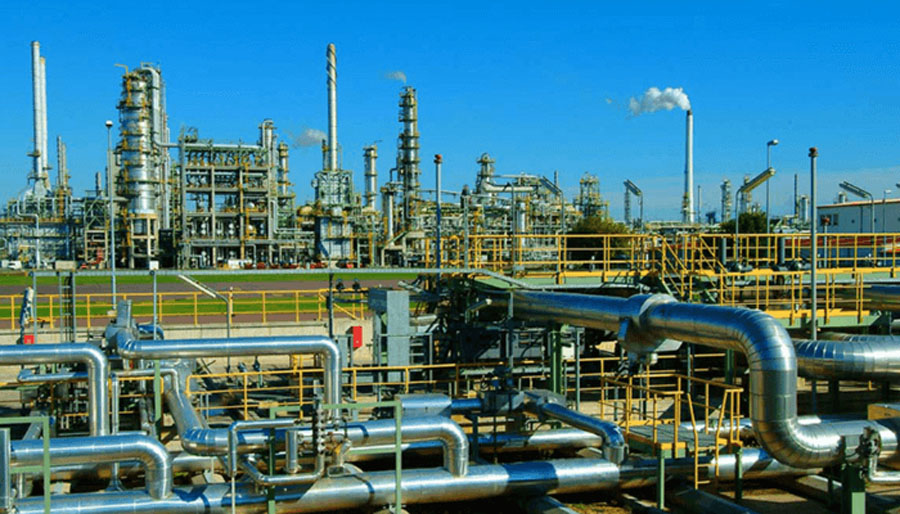
The Federal Government has announced plans to privatise or concession at least 91 state-owned enterprises, including the Ajaokuta Steel Company, Tafawa Balewa Square (TBS), Lagos Trade Fair Complex (TFC), the country’s four refineries, and five international airport terminals.
Director-General of the Bureau of Public Enterprises (BPE), Mr. Ayodeji Ariyo Gbeleyi, disclosed this yesterday in Abuja, noting that each transaction would undergo a rigorous and transparent process, with input from technical, financial, and legal experts.
“We expect, from the 91 enterprises, it will be subject to a very rigorous exercise. One transaction at a time. You take them sectorally,” Gbeleyi explained.
“For example, if we are talking about the five international airport terminals, of course, we will engage the Ministry of Aviation and Aerospace Development. It is the business case or the pre-feasibility study that will say to you what you can expect in terms of concession fee from terminal operators.”
The BPE boss stressed that the bureau cannot arbitrarily fix values or terms for the enterprises until expert advisers have completed feasibility studies.
“We can’t sit here and determine that. That is why we bring in advisers to assist us—whether as a financial adviser, whether as a legal adviser to review the legal regulatory framework, or as technical consultants to review the operational realities of the infrastructure and the business case.
READ ALSO:
- Benue govt bans graduation parties in basic schools
- Stop giving money to miscreants, Lagos warns celebrities, influencers
- Court remands 18-year-old man for allegedly raping two-year-old in Ekiti
It is that business case that will determine the structure and the nature of the transaction. Some transactions may lend themselves to a different structure, while another one will lend itself to another structure. And until you start, you cannot get to the nitty-gritty of what value and what to expect,” he said.
Using the stock exchange as an example, Gbeleyi explained the process further:
“If you want to enlist your entity on the stock exchange, you will engage investment bankers, you will engage lawyers, you will engage technical advisers. And based on their work, they will come up with a financial range and say to you that based on our analysis, this is the range of price you want to achieve. So, until we get to that phase for each of the transactions, we’ll now be able to tell you what to expect.”
Gbeleyi highlighted the impact of past reforms in key sectors, noting the transformation in telecommunications, pensions, ports, and aviation.
According to him, the telecom sector now boasts 169.3 million subscribers with a teledensity of 78.11 percent, contributing 14.4 percent to Nigeria’s GDP. Broadband subscriptions have reached 104.1 million, while internet users stand at 138.7 million. The e-commerce market, he added, was valued at $15 billion in 2023 and is projected to hit $33 billion by 2026.
On pension reforms, Gbeleyi revealed that the sector has amassed 10.79 million contributors and assets worth N24.63 trillion.
He also pointed to successes in port reforms, which led to the leasing of 26 terminals and attracted over $2.5 billion in investments, reducing cargo dwelling time to between four and seven days.
READ ALSO:
- WAEC set to fully adopt computer-based WASSCE by 2026
- It’s illegal to block roads to collect revenue – Kogi boss
- Fire breaks out at Oyo varsity, radio equipment destroyed
“Of course, the Nigerian Ports Authority (NPA) revenue profile is also growing as a result of this exercise—taxes, duties, and associated revenues are also increasing, with throughput improving and also improving contribution to the treasury,” he added.
In aviation, Gbeleyi cited remarkable growth in ground handling companies. NAHCO’s turnover, he said, rose from N3.25 billion in 2006 to N53.5 billion in 2024, while SAHCO’s turnover jumped from N2.31 billion in 2009 to N28.9 billion in 2024.
“These reforms and data points underscore the BPE’s strategic initiatives to enhance Nigeria’s economic landscape, addressing challenges and setting a trajectory for future growth. The discussions highlighted the importance of maintaining momentum in these sectors to ensure continued progress and economic stability,” Gbeleyi said.
With the planned privatisation and concessioning, the government aims to unlock value from state-owned enterprises, attract fresh investments, and boost efficiency across critical sectors of the economy.
FG considers privatisation of Ajaokuta Steel, TBS, refineries, airports, other enterprises








News
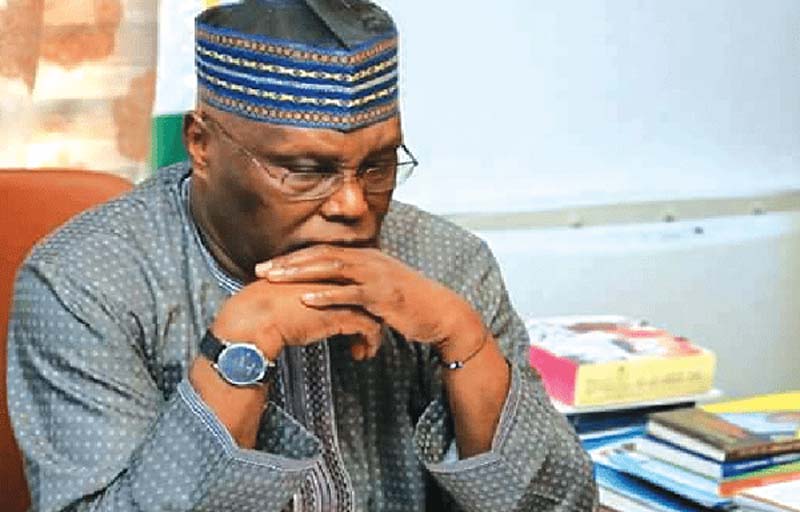
Atiku’s Fuel Subsidy Plan Unrealistic, Destructive, Says Presidency
Atiku’s Fuel Subsidy Plan Unrealistic, Destructive, Says Presidency
The Presidency has criticised former Vice-President Atiku Abubakar’s proposal to restore petrol subsidy if elected president, describing the policy as fiscally unsustainable, retrogressive and incompatible with the changes that have taken place in Nigeria’s petroleum sector.
The Special Adviser to President Bola Tinubu on Information and Strategy, Bayo Onanuga, made the position known in a statement on Thursday titled, “Restoring Petrol Subsidies: Atiku’s Volte-Face and Desperation for Power.”
Onanuga said Atiku’s position represented a departure from his previous stance against petrol subsidy, arguing that the former vice-president had now embraced the policy for political reasons ahead of the 2027 presidential election.
According to him, Atiku had previously advocated the removal of fuel subsidy but had now “opportunistically recanted” the position in an attempt to appeal to Nigerians facing economic hardship.
The presidential aide, however, said Atiku had the constitutional right to propose alternative policies, but insisted that Nigerians were entitled to know how a renewed subsidy regime would be funded and implemented.
He explained that petrol subsidy was not money sitting in government coffers for distribution to motorists, but rather the difference between the regulated pump price and the actual cost of supplying the product.
Onanuga said restoring the old system would require a new legal, fiscal and administrative framework, particularly because the Petroleum Industry Act had provided for the removal of petrol subsidy by the end of June 2023.
READ ALSO:
- Former MFM Pastor Femi Jimoh Dies After Years of Detention, Legal Dispute
- North Korea Fires 10+ Missiles Hours After Trump Signals Fresh Kim Summit
- 40 Feared Dead as Overloaded Boat Carrying Farmers and Children Capsizes in Sokoto
He argued that President Tinubu merely accelerated the implementation of a reform already contemplated under the PIA by announcing the subsidy removal in May 2023.
The presidential aide also said Nigeria’s petroleum industry had changed significantly since the removal of subsidy, particularly with the emergence of large-scale domestic refining capacity.
He cited the Dangote Refinery as a major development that had altered the dynamics of the downstream petroleum sector, arguing that the country was gradually moving away from dependence on imported refined products.
Onanuga warned that returning to a subsidised petrol regime could undermine investments in local refining and reverse the gains recorded in domestic production.
He further argued that subsidy restoration would raise questions about who would bear the financial burden of selling petrol below its economic cost.
“If petrol is sold below its economic cost, someone must absorb the difference,” he said, noting that the burden would ultimately fall on public finances through reduced allocations, increased borrowing, higher public debt or reduced spending on infrastructure and social services.
The Presidency also rejected claims that the removal of subsidy had created a N30tn windfall for the Federal Government, describing such a figure as inaccurate.
Onanuga said the government had instead benefited from reduced fiscal pressure following the discontinuation of petrol price discounts and reforms in the foreign exchange market.
He added that the three tiers of government shared about N3tn from the Federation Account in July, describing the development as evidence of improved government revenues.
According to him, the country’s transition towards domestic refining and locally processed petroleum products could conserve foreign exchange, strengthen energy security, create jobs and support industrial development.
The presidential aide acknowledged that the removal of subsidy had increased the cost of living and placed considerable pressure on households and businesses.
He said the Tinubu administration was pursuing alternative measures to reduce the impact of high energy costs, including the promotion of Compressed Natural Gas, which he described as significantly cheaper than petrol for transportation.
Onanuga urged political actors to provide Nigerians with detailed fiscal calculations whenever they proposed policies such as subsidy restoration.
He asked Atiku to explain the annual cost of the proposed subsidy, the revenue source that would finance it, whether the government would borrow to fund it and whether amendments to existing petroleum-sector laws would be required.
He also questioned how any new subsidy regime would be monitored to prevent the abuses and corruption associated with the previous system.
The Presidency maintained that Nigeria needed sustainable solutions to the rising cost of living rather than a return to what it described as an opaque and financially burdensome petroleum pricing system.
It called for a broader debate on economic policy, but insisted that such discussions must take into account the realities of Nigeria’s current petroleum market and the country’s growing domestic refining capacity.
“Political promises must be backed by fiscal arithmetic,” Onanuga said, urging all political actors, including Atiku, to present Nigerians with the full fiscal and legal implications of any proposal to restore petrol subsidy.
Atiku’s Fuel Subsidy Plan Unrealistic, Destructive, Says Presidency
News
Abel Enitan Replaces Walson-Jack as Head of Civil Service as Tinubu Lauds Outgoing HOS

Abel Enitan Replaces Walson-Jack as Head of Civil Service as Tinubu Lauds Outgoing HOS
News
Tinubu orders transfer of EFCC cash recoveries, N242bn unclaimed dividends to NELFUND

Tinubu orders transfer of EFCC cash recoveries, N242bn unclaimed dividends to NELFUND
President Bola Tinubu has directed that eligible liquid funds recovered by the Economic and Financial Crimes Commission (EFCC) be transferred to the Nigerian Education Loan Fund (NELFUND) as part of efforts to strengthen the long-term financing of Nigeria’s student loan programme.
The President also approved the transfer of unclaimed dividends held under the Capital Market Trust Fund and the Dormant Account Trust Fund to NELFUND.
Minister of Education, Dr Tunji Alausa, disclosed the decisions on Wednesday while briefing State House correspondents after the Federal Executive Council (FEC) meeting presided over by Tinubu at the Presidential Villa in Abuja.
The meeting was the Council’s first sitting since June 29.
Alausa said the President had directed the transfer of EFCC recoveries to NELFUND to enable the Fund to meet its growing financial obligations.
“The President has now directed that all funds recovered by the Economic and Financial Crimes Commission be diverted to NELFUND to continue to support its funding,” the minister said.
He clarified, however, that the directive applies specifically to liquid cash recoveries and does not include seized properties or other non-cash assets.
“Not seized properties, or recovered looted funds, but liquid funds, from the EFCC will now be transferred to NELFUND,” Alausa said.
The minister further explained that the government would not transfer money that remains subject to legal disputes. Only funds that have been cleared, are unencumbered and are legally available for use will qualify.
“Every single fund that is still subject to a legal challenge will not be part of the money that will be transferred to NELFUND,” he said.
The directive could provide a significant additional funding stream for NELFUND, which has experienced increasing demand since the Federal Government introduced its student loan programme.
The EFCC has recovered substantial sums from financial crimes over the years. The agency reported recovering more than N566 billion and $411 million in monetary assets between October 2023 and September 2025, in addition to other foreign currencies and non-monetary assets.
However, the entire recovery figure will not automatically be transferred to NELFUND because the President’s directive is limited to eligible liquid and legally cleared funds.
READ ALSO:
- Palace Chaos: Police Say Cultists Targeted Davido, Not Gov Adeleke, in Deadly Osogbo Shooting
- Lagos declares Thursday work-free for 2026 Isese Day celebration
- South African Consulate Denies Visa Restrictions on Nigerians
The government is also targeting Nigeria’s growing pool of unclaimed dividends, currently estimated at approximately N242 billion.
Unclaimed dividends have accumulated over the years due to factors including outdated shareholder information, unresolved estate matters involving deceased investors and difficulties linking some shareholder records with bank accounts.
Alausa said Tinubu had directed Attorney-General of the Federation and Minister of Justice, Lateef Fagbemi (SAN), to work with the Ministries of Finance and Education and the Debt Management Office (DMO) to establish the legal framework for moving the unclaimed funds to NELFUND.
The officials are expected to review the laws governing the relevant trust funds and determine how the transfer can be carried out without violating existing legal provisions.
The proposed transfer does not mean legitimate owners of unclaimed dividends will lose their rights. Eligible shareholders can still make claims through the procedures established by the relevant regulatory authorities.
The move comes as NELFUND continues to expand its support for students in Nigerian public tertiary institutions.
Alausa said more than 1.2 million Nigerian students were already benefiting from the Fund, while NELFUND had disbursed more than N93 billion in student stipends and over N250 billion in institutional fees to public institutions across the country.
The latest figures published on NELFUND’s platform indicate that the programme has continued to grow, with more than 1.39 million students registered and more than 1.69 million loan applications recorded.
The student loan scheme is intended to reduce financial barriers to higher education by providing eligible students with access to funding for institutional charges and upkeep.
Beyond student financing, the Federal Executive Council approved an Entrepreneurship, Innovation and Business Incubation Certification Programme for 14 federal universities.
The initiative is designed to equip students with practical skills in entrepreneurship, innovation, business incubation and enterprise development, while providing digital certification, mentorship and incubation support.
READ ALSO:
- 2027: Peter Obi lost his chance when he left ADC for NDC – Fayose
- Electric Vehicles: Six-point blueprint to drive mass adoption, by Metropolitan CEO
- New Mercedes-Benz Atego’s technology, performance raise benchmark in Nigeria’s truck business
The 14 universities selected for the initial phase are Ahmadu Bello University, Bayero University Kano, Nnamdi Azikiwe University, Obafemi Awolowo University, University of Abuja, University of Benin, University of Ibadan, University of Ilorin, University of Jos, University of Lagos, University of Maiduguri, University of Nigeria, Nsukka, University of Port Harcourt and Usmanu Danfodiyo University.
According to Alausa, the programme had previously been tested at the University of Lagos, where it was found to improve students’ capacity to develop businesses, innovate and create employment.
The Council also approved additional funding for the completion of the long-delayed National Library of Nigeria headquarters complex in Abuja.
The National Library project was initiated in April 2006 with an original two-year completion timeline, but construction stalled in October 2008.
Alausa said Tinubu had directed the government to find funding to revive the project, including support from TETFund.
He also disclosed that First Lady Senator Oluremi Tinubu had directed that gifts received for her last birthday be channelled towards the National Library project, helping to raise about N25 billion.
The total augmentation approved for the project is approximately N155 billion, comprising about N118.309 billion for construction works and roughly N37 billion for furnishing.
The minister said the government expected construction work to resume within the next few months.
The Council also approved the establishment of the Academy for Gifted and Talented Children, transforming the existing Suleja Academy into an autonomous institution with its own governing board and council.
The academy was originally established to identify and nurture gifted Nigerian children but had subsequently operated largely as a conventional federal government college.
Under the new arrangement, the academy will have multiple funding sources, including government appropriations, endowments and donations.
Alausa said the objective was to identify exceptionally talented children across Nigeria and provide them with the specialised education and support needed to develop their abilities.
The Attorney-General has been directed to prepare an executive bill for transmission to the National Assembly to establish the necessary legal framework for the academy.
The decisions announced after Wednesday’s FEC meeting reflect the Federal Government’s broader focus on higher education financing, student loans, entrepreneurship, infrastructure and specialised education.
For NELFUND, the proposed access to eligible EFCC cash recoveries and unclaimed funds could significantly broaden its financing base and provide additional resources to support students as demand for the loan programme continues to rise.
The government will now have to work out the legal and administrative mechanisms for the transfers while ensuring that funds under litigation are excluded and the rights of legitimate beneficiaries of unclaimed dividends remain protected.
Tinubu orders transfer of EFCC cash recoveries, N242bn unclaimed dividends to NELFUND
-

 metro3 days ago
Palliative Care, Not Abandonment: Doctor Clears the Air on Ogogo’s Stage-Four Cancer Treatment
-

 Insurance2 days ago
NAICOM revokes Universal Insurance licence over ₦15bn capital shortfall
-

 Education3 days ago
WAEC 2026 results: Schools raise alarm over alleged grading anomalies
-

 Entertainment3 days ago
Veteran Nollywood Actor Ogogo Battles Stage-4 Cancer as Daughters Beg for Treatment
-

 metro3 days ago
Lagos Pensioners Give Sanwo-Olu 19-Day Ultimatum: Implement Wage Award or Face ‘Mother of All Protests’
-
 Politics3 days ago
‘No Electoral Agreement with ADC’ – Adeleke Rejects Collaboration Claims, Credits God
-
 metro3 days ago
Over 50 Killed, Scores Injured as Gunmen Attack Mangu Communities in Plateau
-
 International3 days ago
Trump Threatens to Bomb Oman Over Strait of Hormuz as US-Iran Deadline Expires