

metro
FG Renames Lagos-Calabar Coastal Highway After Tinubu, Approves Multiple Infrastructure Projects
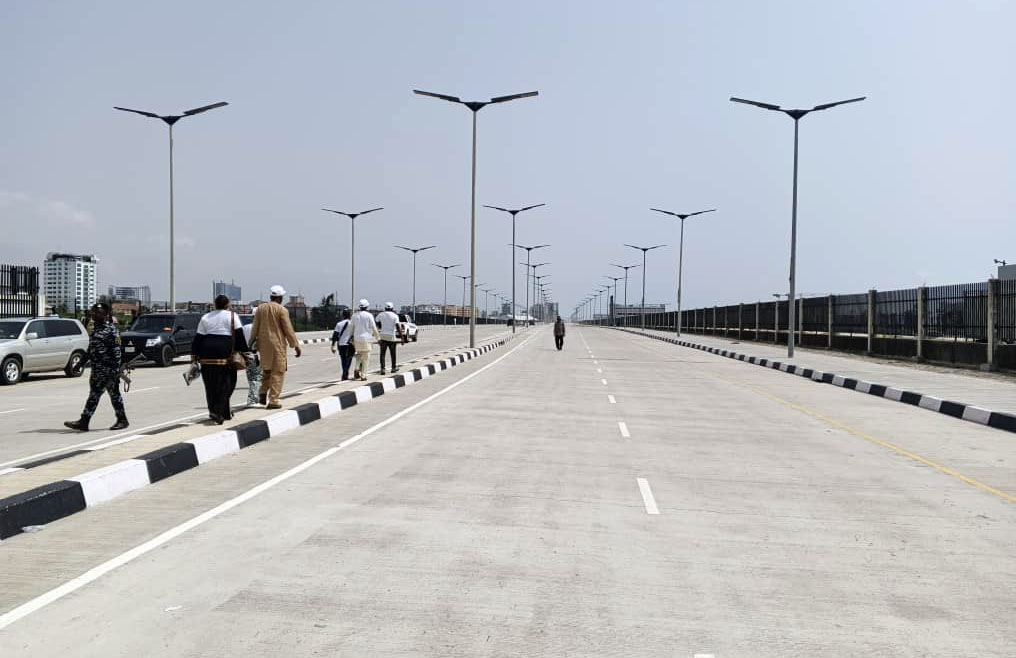
FG Renames Lagos-Calabar Coastal Highway After Tinubu, Approves Multiple Infrastructure Projects
- Minister Umahi says 750km coastal highway renamed to honour President’s 27-year vision, as Tinubu greenlights Fourth Legacy Highway extension and Lagos-Ibadan Expressway reconstruction
The Federal Government has officially renamed the Lagos-Calabar Coastal Highway after President Bola Ahmed Tinubu, describing the multi-trillion-naira infrastructure project as the fulfilment of a vision the President conceived nearly three decades ago while serving as Governor of Lagos State. Minister of Works David Umahi announced the decision on Thursday during a media briefing in Abuja, stating that the Ministry of Works arrived at the decision after extensive consultations with the ministry’s leadership. The 750-kilometre coastal highway, estimated to cost about ₦15 trillion upon completion, will now be known as the President Bola Ahmed Tinubu Coastal Highway.
“That highway is named President Bola Ahmed Tinubu Coastal Highway. By the powers conferred on me as Minister of Works, in consultation with my Permanent Secretary, the Minister of State, directors and staff of the ministry, we decided to name it after him because of his dream for it,” Umahi declared. According to the minister, Tinubu first conceived the idea of the coastal highway about 27 years ago while serving as Governor of Lagos State. “He had that dream about 27 years back as governor of Lagos State. It is one thing to dream and another thing to have the grace of God to actualise that dream. This is one man who dreams and has the grace and divine mandate to actualise that dream,” Umahi said.
READ ALSO:
- BREAKING: Hamzat Didn’t Know Running Mate Until APC Picked Her
- Court Strips FRSC of Powers to Operate on State, Local Government Roads
- Trump limits Nigerian, other foreign students to four-year US stay under new visa rule
Umahi described the first section of the 750-kilometre highway, stretching from Victoria Island to Lekki, as a landmark infrastructure milestone. He noted that the 47.47-kilometre six-lane carriageway features a 25-metre-wide median reserved for a future railway line. Providing an update on the Lagos-Calabar Coastal Highway, Umahi said construction was progressing across several sections of the project. He said the first phase, stretching from Victoria Island to Eleko Village in Lagos, is serving as a benchmark for modern highway construction, while the second section, from Eleko to the Lagos-Ogun boundary, is about 60 per cent complete and expected to be substantially delivered by November. According to him, construction is also ongoing in Cross River, Akwa Ibom, Ogun and Ondo states.
During the same briefing, Umahi announced that President Tinubu had approved several other significant infrastructure projects across the country. The President approved an additional 400-kilometre extension to the Fourth Legacy Highway, expanding the project from about 700 kilometres to 1,100 kilometres. The highway, originally designed to link Akwanga in Nasarawa State to Maiduguri in Borno State through Jos, Bauchi, Gombe and Biu, will now extend into Taraba State. “The greatest story is that yesterday President Bola Tinubu approved the addition of 400 kilometres to our Fourth Legacy Road. That is an 800-kilometre road now extended to 1,100 kilometres, and that is unprecedented,” Umahi said.
Additionally, Tinubu approved the reconstruction of the Lagos-Ibadan Expressway using reinforced concrete pavement, a decision Umahi said was driven by the road’s deteriorating condition despite recent repairs. The 135-kilometre dual carriageway has begun to fail despite being less than five years old, and the ministry believes reinforced concrete roads can last between 50 and 100 years with minimal maintenance. The President also approved the completion of the abandoned Ibi Bridge in Taraba State, the construction of the 5.76-kilometre Lau Bridge across the Benue River, and the dualisation of another 400 kilometres of the East-West Road. Umahi stated that these road development approvals across the country would promote connectivity, strengthen national integration, and stimulate economic activity nationwide.
Since construction commenced in March 2024, the Lagos-Calabar Coastal Highway has generated widespread public debate. Critics have questioned the project’s cost, procurement process, and alignment, with concerns also raised over the demolition of properties along parts of the route. The Federal Government, however, has consistently defended the project, maintaining that all due processes were followed and insisting that the long-term economic benefits outweigh the initial challenges associated with its execution. Government officials have argued that the road will reduce travel time, improve connectivity and unlock investment opportunities along Nigeria’s coastline. The coastal highway is designed to connect Lagos to Calabar, traversing several coastal states and providing a major transportation corridor expected to boost economic activities, tourism, trade and regional integration. The project is regarded as one of the Tinubu administration’s flagship legacy initiatives, with sections of the highway already nearing completion.
FG Renames Lagos-Calabar Coastal Highway After Tinubu, Approves Multiple Infrastructure Projects








metro
Terrorists Abduct Catholic Priest in Benue as Police Launch Rescue Operation
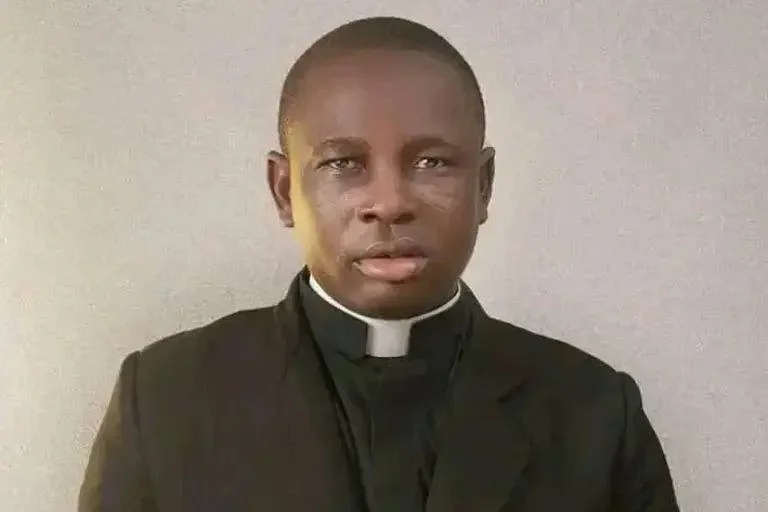
A Catholic priest, Reverend Father John Inalegwu Otache, has been abducted by unidentified gunmen along the Otobi Amejo-Ajegbe Road in Ohimini Local Government Area of Benue State, prompting a police investigation and efforts to secure his release.
Otache, the parish priest of St Margaret’s Catholic Parish, Ajegbe-Awume, was reportedly kidnapped on Tuesday, October 13, 2026, while returning home from Otukpo.
The Catholic Diocese of Otukpo confirmed the incident in a statement signed by its Diocesan Chancellor, Reverend Father Joseph Itodo, expressing sadness over the abduction and appealing for prayers for the priest’s safe return.
The Bishop of Otukpo Diocese, Most Reverend Michael Ekwoyi Apochi, was said to be deeply distressed by the development and called on priests, religious members, Catholic faithful and other well-meaning Nigerians to pray for Otache’s speedy and safe release.
READ ALSO:
- 2027: Kwankwaso Signals Fuel Subsidy Comeback as NDC Vows to Crash Petrol Prices
- NAF Deploys Pumps in Desperate Push to Recover Submerged Aircraft After Crash Killed 25
- Rivers Police Remove DPO as Suspected Cultists’ Outpost Renovation Sparks Probe
The diocese also appealed for prayers for other people being held by kidnappers across the country.
Confirming the incident on Friday, the Benue State Police Command said it had commenced a full investigation into the abduction.
The police spokesperson, DSP Aondogu Orchia, said efforts were ongoing to locate the priest and secure his release.
As of Friday, October 16, there had been no official announcement confirming that Otache had been rescued.
Reports also indicated that this was the second time a priest serving at St Margaret’s Parish in Ajegbe-Awume had been abducted, raising further concerns about the safety of clergy and other residents in the area.
The latest incident comes amid wider security concerns in Benue State, where communities have faced attacks, kidnappings and other violent incidents. The Catholic Diocese of Gboko recently ordered the closure of several church-run institutions in Ihugh following repeated security threats.
Although the developments have heightened concern over the safety of religious personnel and church institutions in the state, authorities have not established a connection between the separate incidents.
The police have urged the public to support lawful efforts to address insecurity as the investigation and search for the abducted priest continue.
Terrorists Abduct Catholic Priest in Benue as Police Launch Rescue Operation
metro
NAF Deploys Pumps in Desperate Push to Recover Submerged Aircraft After Crash Killed 25
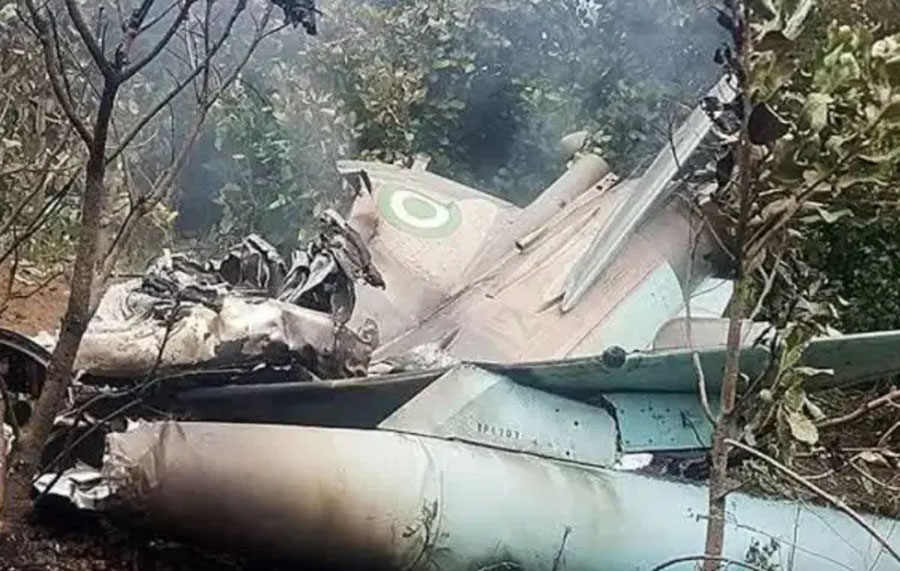
The Nigerian Air Force (NAF) has deployed multiple pumping machines to drain water around the submerged wreckage of its ATR 42-500 aircraft in Igbokoda, Ondo State, as recovery teams intensify efforts to reach the main body of the plane that crashed on October 5, killing all 25 people on board.
The operation has been complicated by the depth of the wreckage, heavy mud and difficult underwater terrain in the swampy area of Ilaje Local Government Area, where the aircraft went down during a routine mission from Benin City, Edo State, to Lagos.
In a statement issued on Friday, October 16, and signed by Air Commodore Ehimen Ejodame, Director of Public Relations and Information at NAF Headquarters, the Air Force described the deployment of pumping equipment as a significant step towards accessing the main wreckage and advancing recovery operations.
The military said the aircraft remained deeply embedded in the riverbed, making it difficult for recovery personnel to reach the submerged sections and retrieve the remaining wreckage safely.
The pumping operation is part of a wider, multi-agency effort involving the NAF, specialist divers from the Nigerian Navy and the Nigerian Safety Investigation Bureau (NSIB). The teams have also employed hydrographic surveys, satellite-based search imagery and mud excavation to identify and access areas of interest.
Additional aircraft components have already been recovered, but the authorities have not announced the complete recovery of the main fuselage or all materials required for the ongoing investigation.
READ ALSO:
- Rivers Police Remove DPO as Suspected Cultists’ Outpost Renovation Sparks Probe
- Osun Murder: Three Arrested as Police Recover Weapons, Link Suspect to Earlier Killings
- Adeleke, Davido Face Backlash Over Tinubu’s 2027 Re-election Bid
The aircraft, designated NAF 931, crashed near the Nigerian Navy’s Forward Operating Base in Igbokoda after air traffic controllers lost contact with it at about 9:13am on October 5.
The NAF subsequently confirmed that all 25 people aboard — five crew members and 20 passengers — died in the accident. President Bola Ahmed Tinubu ordered a thorough investigation into the circumstances surrounding the crash.
The prolonged recovery operation has also heightened concerns among residents of Igbokoda about the possible environmental impact of the crash site, particularly the safety of local water sources.
Community members have complained about a persistent foul smell around the area, while local leaders have expressed fears that decomposing remains and possible aviation fuel contamination could affect the river system used by residents.
The traditional ruler of Igbokoda, Afolabi Odidiomo, has called for urgent environmental intervention, warning that the river system is connected to a water treatment facility in Aboto, about seven kilometres away.
The concerns have added urgency to calls for the recovery of the remaining wreckage and appropriate environmental checks. However, the extent of any contamination has not been conclusively established in the reports available.
The Air Force said Air Officer Commanding, Tactical Air Command, Air Vice Marshal MC Ekwueme, visited Igbokoda on the directive of the Chief of the Air Staff, Air Marshal Sunday Kelvin Aneke, to engage community leaders and residents over their concerns.
During the visit, Ekwueme acknowledged the complaints and assured residents that the NAF would work to address the issues through appropriate channels.
The service also thanked community members for their patience and cooperation as personnel and partner agencies continue working under difficult conditions.
The Chief of the Air Staff has also reaffirmed the Air Force’s commitment to supporting the families of those who died in the crash.
According to the NAF statement, applicable entitlements, including benevolent funds, scholarships for eligible children and other approved welfare benefits, would be processed for affected families.
The service said it remained in contact with the bereaved families and had established a dedicated helpline at its headquarters to provide information about the incident and available support.
Meanwhile, the recovery teams are expected to continue working to retrieve the remaining wreckage and relevant materials that could help investigators establish the circumstances surrounding the tragedy.
The NAF pledged to sustain the operation, support affected families and provide verified updates as significant developments emerge.
NAF Deploys Pumps in Desperate Push to Recover Submerged Aircraft After Crash Killed 25
metro
Rivers Police Remove DPO as Suspected Cultists’ Outpost Renovation Sparks Probe

The action followed the circulation of a viral video showing individuals suspected of belonging to a cult group celebrating at the renovated Abuloma Police Outpost in Port Harcourt alongside some police officers.
The incident has triggered an investigation into who financed the renovation, whether the project received the necessary approval and whether any police personnel breached professional standards by associating with the individuals involved.
The Rivers State Commissioner of Police, Olugbenga Adepoju, ordered a full investigation into the controversy, according to a statement by the command’s spokesperson, ASP Blessing Agabe.
The two affected officers were reportedly queried and relieved of their duties pending the outcome of the investigation. The action is an administrative measure and does not, by itself, establish wrongdoing by either officer.
READ ALSO:
- Osun Murder: Three Arrested as Police Recover Weapons, Link Suspect to Earlier Killings
- Adeleke, Davido Face Backlash Over Tinubu’s 2027 Re-election Bid
- Nigerian Universities Producing Certificate Holders, Not Problem-Solvers, Says Ojuolape
The controversy intensified after footage circulated online showing several individuals at the renovated facility. Some were reportedly wearing white shirts and black trousers, with red fez caps and black berets, while taking photographs with police officers and chanting slogans.
The online anti-cultism platform Naija Confra also circulated footage and photographs purportedly showing the gathering. Reports suggested that the event coincided with the anniversary of the Vikings confraternity, although the identities and affiliations of those involved have not been conclusively established by the police.
The investigation is expected to determine who organised and funded the renovation, which officers authorised the work and whether the individuals involved had any improper relationship with police personnel.
The command is also examining whether the incident compromised the integrity of the Nigeria Police Force or created the impression that suspected criminal groups could gain influence within law enforcement institutions.
The development has raised concerns about public confidence in policing and the safeguards required when private individuals or organisations contribute to the renovation of police facilities.
The police command clarified that it does not prohibit legitimate donations or community assistance for improving police infrastructure. However, such contributions must comply with established procedures and must not compromise police independence, security or professional standards.
The command cited Section 26(1)(d) of the Nigeria Police Act 2020, which provides for gifts and contributions to the Police General Fund, while stressing that assistance to police facilities must be handled transparently and in accordance with the law.
It warned that financial contributions or infrastructure support would not exempt anyone from investigation if evidence of criminal conduct emerged.
The command further stated that any officer found culpable would face appropriate disciplinary action, while evidence of criminal wrongdoing would be handled in accordance with the law.
The investigation is expected to establish the circumstances surrounding the renovation and determine whether any individual or officer violated established rules.
The police urged residents to remain calm and provide credible information that could assist the investigation and support security operations across Rivers State.
Rivers Police Remove DPO as Suspected Cultists’ Outpost Renovation Sparks Probe
-

 metro9 hours ago
₦130m Toyota Tundra Wrecked: Lagos Dealer Questions Police Over Suspect’s Release
-

 metro2 days ago
Money Rituals: Four Arrested in Kwara Over Suspected Human Parts
-

 News2 days ago
2027 Elections: INEC Reveals Why Pantami, Adebutu, Others Were Excluded
-

 metro2 days ago
Osogbo Cultism Crackdown: Six Suspects Arrested as Police Recover Drugs, Charms
-

 Politics3 days ago
2027: Tompolo Unveils 57 Tinubu Campaign Vehicles, Warns Lagosians Against 2023 Repeat
-

 Politics2 days ago
2027: Adeleke’s Camp Promises 1.5 Million Votes for Tinubu in Osun
-

 metro1 day ago
Borno Woman Jailed Two Years for Sexual Exploitation of 16-Year-Old Girl
-

 News3 days ago
Shell Exits Nigeria’s Gas Distribution Business, Sells Stake to Vaaris Energy