

News
FG to release of 58,500 metric tonnes of rice for market stabilisation

FG to release of 58,500 metric tonnes of rice for market stabilisation
The federal government is planning the release of around 58,500 metric tonnes of milled rice to the market as a measure to stabilise the market.
This was disclosed by the Minister of Agriculture, Sen. Abubakar Kyari in a message to Nigerians over the prevailing hardship in the country.
According to the Minister, the Ministry is in partnership with NEMA and the DSS to ensure the earlier approved 42,000 metric tons of grains is distributed fairly across the 36 states of the federation and the FCT.
He disclosed that the distribution will begin this week and promised to ensure those in need get it.
- He stated, “We shall commence the distribution of 42,000 metric tons of grains, as approved by Mr. President, across the 36 states of the federation as one of the programs to be rolled-out this week.
- “We are working hand in hand with NEMA and the DSS to ensure that the grains get to the right people in the right packages and quantities. Furthermore, 58,500 metric tons of milled rice from mega rice millers will also be released into the market for stabilization”
READ ALSO:
- Breaking: Exchange rate gains for third straight day on official market
- Hardship: Buhari sold Nigerians’ future, left bad economy for Tinubu – PDP gov Muftwang
- General’s wife donates mosque to Ansar-ud-deen society
Backstory
In the past few weeks, there have been reports of protests over hardship and incidences of members of the public breaking into both private and public warehouses as well as attacking food trucks. This is occasioned by the spike in inflation at 29.90% with food inflation at 35.41% as of February 2024.
- President Bola Tinubu through the Ministry of agriculture had earlier promised as a measure to increase supply of grains in the market and stabilise prices release 42,000 metric tonnes of grains across the 36 states of the country.
- The price of grains especially rice have increased significantly since the beginning of the year necessitating major off takers like Olam and Flour Mills to stop purchase. According to a survey by Nairametrics, the price of a bag of rice in touched N88,000- a 22% increase when compared with a similar survey earlier in the month.
- Around last year, there were projections detailing the increase in the price of grains especially rice in 2024 mainly due to climatic factors like the El Nino winds, insecurity especially in Nigeria, geopolitical conflicts in Europe etc. A study by AFEX exchange stated that the price of rice will surge by 32% in 2024 and the reality is already being witnessed.
FG to release of 58,500 metric tonnes of rice for market stabilisation











News
₦200m Fake Alcohol Packaging Uncovered as NAFDAC Raids Aba Market
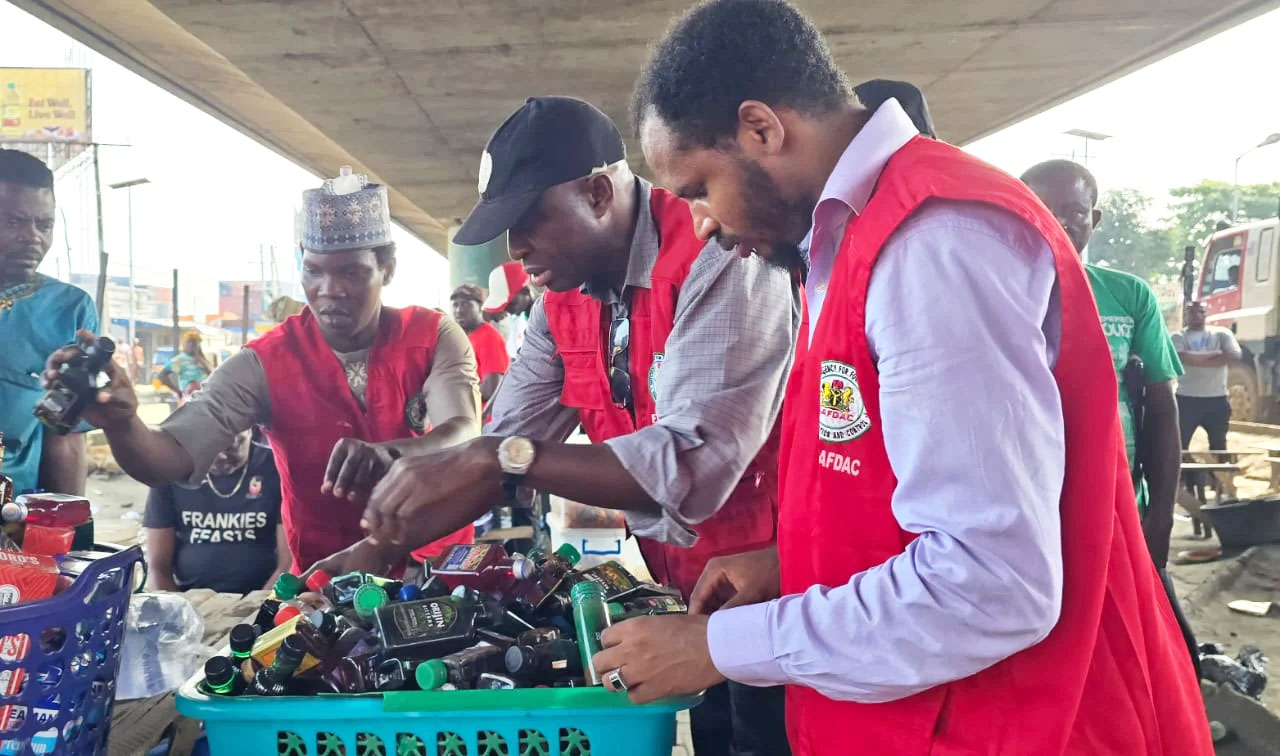
₦200m Fake Alcohol Packaging Uncovered as NAFDAC Raids Aba Market
The National Agency for Food and Drug Administration and Control (NAFDAC) has uncovered counterfeit packaging materials bearing the names of popular alcoholic beverage brands, including Jameson and Glenfiddich, during a raid on five shops at Old Court Road Market in Aba, Abia State.
The agency said the seized materials were worth more than ₦200 million, raising concerns about the production and distribution of counterfeit packaging that could be used to make fake products appear genuine.
The operation targeted shops suspected of producing and supplying counterfeit packaging materials for alcoholic beverages and other consumer products. NAFDAC said its Investigation and Enforcement operatives carried out the raid following credible intelligence.
In a statement shared on Wednesday, October 14, the agency disclosed that the operation uncovered fake labels, corks, packs and outer packaging materials bearing the names of several well-known brands.
Apart from Jameson and Glenfiddich, the recovered materials reportedly carried the names of Four Cousins, Lord’s Dry Gin, Imperial Blue, Goya Oil, Chelsea, Squadron and Seaman’s Aromatic Schnapps.
The agency estimated the value of the counterfeit packaging materials at more than ₦200 million. However, its disclosure focused on packaging materials bearing the brands’ names and did not establish that finished bottles of all the affected brands were recovered during the operation.
NAFDAC said its enforcement team encountered threats and resistance from some traders during the raid, making it difficult to evacuate the seized materials. The owners of the five shops were reportedly absent when the operatives arrived.
READ ALSO:
- ₦130m Toyota Tundra Wrecked: Lagos Dealer Questions Police Over Suspect’s Release
- Fani-Kayode Counters Keyamo, Defends Atiku Over Nigeria Airways Collapse
- Former Senator Bello Mandiya Found Dead in Bathroom Three Days After Fall
To prevent interference with the materials left behind, the agency said the affected premises were placed on hold while steps were taken to secure them. NAFDAC subsequently invited the chairman of the market union, who reportedly pledged to ensure the security of the premises and assist in identifying and presenting the shop owners to the authorities.
The agency did not publicly identify the owners of the affected shops in its account of the operation. The identities of the individuals behind the suspected counterfeiting activity, the sources of the materials and their intended destinations remain unclear.
The seizure has renewed concerns about the risks posed by counterfeit packaging in Nigeria’s alcoholic beverage market. Fake labels, bottle closures and outer packaging can make it difficult for consumers to distinguish genuine products from counterfeit goods, particularly when imitation packaging closely resembles that of established brands.
Where such materials are used to package adulterated or unregulated drinks, consumers may have no reliable way of determining the contents or the conditions under which the products were manufactured. The consumption of counterfeit or adulterated alcoholic beverages can expose people to dangerous substances and serious health complications.
NAFDAC has previously conducted enforcement operations against suspected counterfeit beverage production in Aba. In December 2023, the agency announced a separate operation at Eziukwu Market, also known as Cemetery Market, targeting shops allegedly used to produce counterfeit and adulterated beverages and other consumer goods.
The agency reported that the earlier operation involved more than 240 shops and resulted in the destruction of over 1,500 cartons of fake and substandard products, with the confiscated and destroyed goods valued at approximately ₦750 million. That operation was separate from the latest raid at Old Court Road Market.
NAFDAC is responsible for regulating the manufacture, importation, exportation, distribution, advertisement and sale of regulated products in Nigeria, including food, medicines and beverages. Through its Investigation and Enforcement Directorate, the agency conducts operations against counterfeit, adulterated, substandard and unregistered products.
The latest seizure highlights the importance of enforcement efforts targeting not only fake finished products but also the packaging materials that can facilitate counterfeiting. Consumers are advised to purchase alcoholic beverages from reputable retailers and remain alert to suspicious packaging, broken seals, unusual product appearances and prices that are significantly lower than normal.
However, the presence of a familiar label alone does not establish that a drink is genuine. Effective regulatory oversight, supply-chain monitoring and product traceability remain important safeguards against counterfeit goods.
NAFDAC said steps were being taken to secure the affected premises and identify the shop owners. The full extent of the suspected counterfeiting operation, including whether the recovered materials had already been used to package fake products, has not been established in the information released by the agency.
₦200m Fake Alcohol Packaging Uncovered as NAFDAC Raids Aba Market
News
Osun Orders Weekly Sanitation, Directs Businesses to Clean Premises Every Thursday

Osun Orders Weekly Sanitation, Directs Businesses to Clean Premises Every Thursday
OSOGBO — The Osun State Government has introduced a weekly environmental sanitation exercise, directing traders, shop owners, artisans and other business operators to clean their premises every Thursday between 8am and 10am.
The directive, which takes immediate effect, is aimed at curbing indiscriminate refuse disposal, enforcing environmental regulations and preventing disease outbreaks across the state.
The government announced the measure in a press release dated October 14, 2026, issued by the Office of the Head of Service, Office of the Governor, Osogbo.
According to the statement, the state government recently constituted an Environmental Sanitation Task Force to tackle the dumping of refuse and other forms of environmental infractions in unauthorised locations.
Under the new arrangement, Thursdays have been designated as Environmental Sanitation Day, during which markets, shops, malls, offices and other business premises are expected to be cleaned.
The government directed market operators, shop owners, artisans and owners of business premises to be physically present during the exercise to ensure that their surroundings are properly cleaned and the directive is fully implemented.
The two-hour exercise is expected to promote environmental responsibility among residents and business operators while addressing poor waste disposal practices that could pose health risks to the public.
The government also clarified the role of law enforcement agents who would be present during the sanitation exercise, saying their deployment was intended to support the clean-up effort rather than arrest offenders.
It stressed that the presence of enforcement personnel was meant to complement the efforts of market operators, shop owners and other business stakeholders in maintaining a clean environment.
The government urged residents and business operators to cooperate with the Environmental Sanitation Task Force to ensure the success of the initiative.
The measure forms part of the state’s efforts to improve public hygiene, maintain cleaner communities and reduce the risk of diseases associated with poor environmental sanitation.
Business owners and other affected stakeholders are expected to comply with the directive every Thursday between 8am and 10am, beginning immediately.
Osun Orders Weekly Sanitation, Directs Businesses to Clean Premises Every Thursday
News
Terrorists Storm Borno Military Post in Fierce Gun Battle, Soldiers Feared Dead

Suspected Boko Haram terrorists have attacked a military post in Mairari community, Guzamala Local Government Area of Borno State, triggering a prolonged gun battle in which several soldiers were feared killed.
The attack reportedly occurred around midnight on Tuesday, October 13, 2026, when the insurgents launched an assault on the military formation. The confrontation was said to have lasted more than two hours, with heavy gunfire raising tension in the community.
Although reports indicated that the military suffered casualties, the exact number of soldiers killed or injured had not been officially confirmed at the time of reporting. Some local sources reportedly put the death toll at seven soldiers, but the figure remained unverified.
The Chairman of Guzamala Local Government Area, Umar Sheriff, confirmed the attack, saying the terrorists had targeted the military post. He disclosed that no civilian deaths had been reported and that troops had repelled the attackers.
READ ALSO:
- School Turns Death Trap as Roof Collapse Claims 22 Lives
- Outrage as Residents Scoop Groundnut Oil From Lagos Tanker Crash Scene
- Shettima Attacks Atiku Over Tinubu Remarks, Questions Subsidy Plan
Sheriff described the incident as an unusually severe assault in the area in recent times. He also indicated plans to visit the community to assess the situation following the attack.
The latest incident underscores the continuing security challenges in Borno State, the epicentre of Nigeria’s more than decade-long insurgency involving Boko Haram and the Islamic State West Africa Province (ISWAP). Both groups have repeatedly attacked military formations and communities across the North-East, particularly in remote areas where security personnel face difficult operating conditions.
Military positions have remained targets for insurgents seeking to disrupt security operations, seize weapons and undermine the presence of government forces. Such attacks have also raised concerns about the safety of troops stationed in isolated communities.
However, as of the time of filing this report, the military had not publicly confirmed the casualty figures from the Mairari military post attack. The reported death toll should therefore be treated as unverified pending an official statement.
Further details are expected as security authorities assess the incident and provide information about casualties and the circumstances surrounding the assault.
Terrorists Storm Borno Military Post in Fierce Gun Battle, Soldiers Feared Dead
-

 metro2 days ago
Money Rituals: Four Arrested in Kwara Over Suspected Human Parts
-

 metro2 days ago
Osogbo Cultism Crackdown: Six Suspects Arrested as Police Recover Drugs, Charms
-

 Politics3 days ago
2027: Tompolo Unveils 57 Tinubu Campaign Vehicles, Warns Lagosians Against 2023 Repeat
-

 Politics2 days ago
2027: Adeleke’s Camp Promises 1.5 Million Votes for Tinubu in Osun
-

 News2 days ago
2027 Elections: INEC Reveals Why Pantami, Adebutu, Others Were Excluded
-

 metro5 hours ago
₦130m Toyota Tundra Wrecked: Lagos Dealer Questions Police Over Suspect’s Release
-

 metro2 days ago
IPOB Denies Monday Sit-at-Home Return, Challenges Police to Produce Evidence
-

 metro1 day ago
Borno Woman Jailed Two Years for Sexual Exploitation of 16-Year-Old Girl