
Business
FG unveils ambitious transport, marine overhaul to drive economic growth
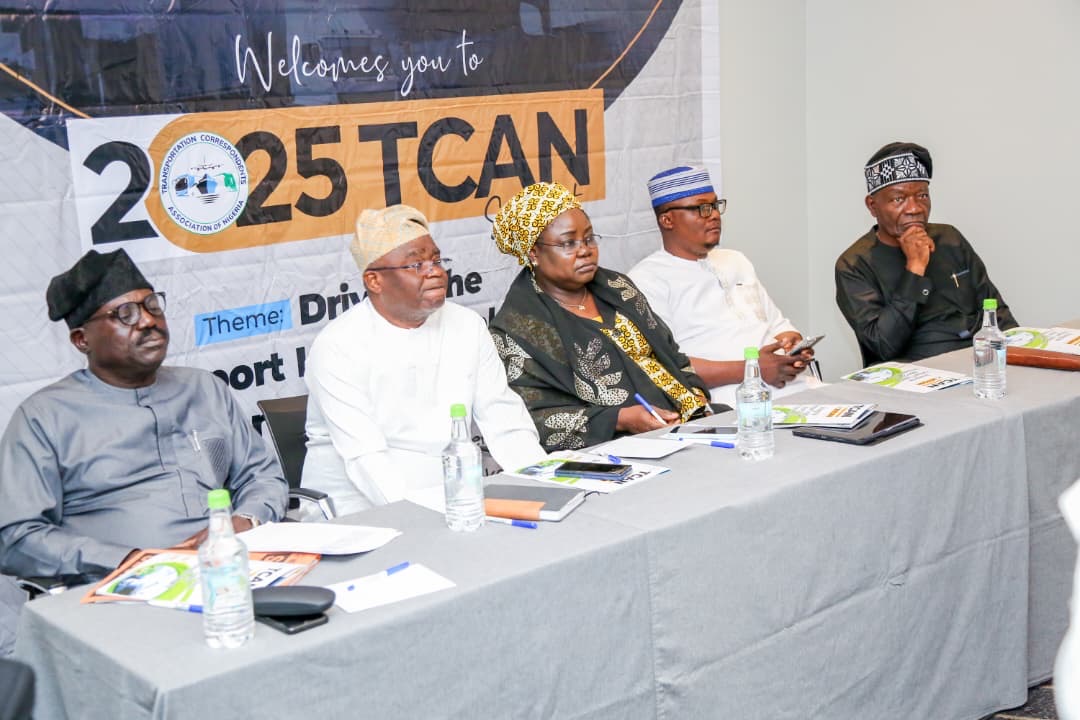
FG unveils ambitious transport, marine overhaul to drive economic growth
The Federal Government has reaffirmed its commitment to overhauling Nigeria’s transport and marine sectors through a bold infrastructure drive, strategic policy reforms, and manpower development initiatives.
Speaking at the 2025 Nigeria Transport Sector Summit in Ikeja, Lagos, the Minister of Transportation, Senator Sa’idu Ahmed Alkali, and the Minister of Marine and Blue Economy, Adegboyega Oyetola, outlined a series of transformative projects aimed at unlocking the country’s economic potential and improving connectivity nationwide.
Organised by the Transport Correspondents Association of Nigeria (TCAN), the summit had as its theme: “Driving the Transport Logistics Value Chains for Economic Growth.”
Alkali: Transport Reforms Reshaping Mobility
Transportation Minister Alkali praised President Bola Ahmed Tinubu for prioritising transport reforms under the Renewed Hope Agenda, crediting the administration for laying the foundation of a safer, more integrated, and efficient transport system.
“The President has provided clear direction and commitment to making public transportation efficient, safe, integrated, and affordable,” Alkali said. “This administration is already reshaping Nigeria’s mobility landscape.”
Represented by the Managing Director of the Nigeria Railway Corporation, Dr Kayode Opeifa, the minister described ongoing railway projects as “critical to unlocking the nation’s economic potential and driving inclusive growth.”
Alkali highlighted progress on key rail projects, including:
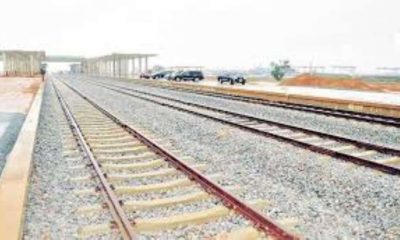
The Port Harcourt–Maiduguri rail line, with the Port Harcourt–Aba segment completed and operational.
The Kaduna–Kano and Kano–Maradi lines, which have now reached over 50% and 60% execution levels, respectively—up from just 5–15% when the administration took office.
He also announced plans for a High-Speed Rail network connecting Lagos, Abuja, Kano, and Port Harcourt—envisioned to revolutionise long-distance travel in Nigeria.
“At the current pace, the Kano–Maradi line will reach Katsina by December 2025 and be fully completed by March 2027,” Alkali revealed.
Oyetola: New Marine Policy to Drive Investment and Integration
Speaking on behalf of Minister Oyetola, Dr. Mercy Ilori, Director of Maritime Services at the Ministry of Marine and Blue Economy, unveiled a new National Marine and Blue Economy Policy designed to:
Cut logistics costs,
Boost trade competitiveness, and
Attract private sector investment.
The policy emphasises intermodal integration, linking road, rail, barge, and pipelines to transform Nigeria into a logistics hub for West and Central Africa.
“We are lowering the cost of doing business, improving turnaround times, and creating an enabling environment for private capital,” Oyetola said. “This positions Nigeria as a preferred logistics destination in Africa.”
Ongoing Projects and Strategic Interventions
The Marine and Blue Economy Ministry also highlighted several projects already making an impact:
Operationalisation of the Lagos–Ibadan Standard Gauge rail for cargo evacuation,
Expansion of barge operations at Lagos and Onne ports,
Completion of the Apapa–Oshodi Expressway,
Commissioning of the 27km Lekki Port Access Road,
Development of inland dry ports in Ibadan, Kaduna, Kano, and Funtua to decongest seaports and spur regional growth.
Oyetola emphasized that success hinges on collaboration among stakeholders, including shipping lines, terminal operators, freight forwarders, investors, and regulators.
He also stressed the need for digitalisation, green logistics, and climate-resilient infrastructure to ensure Nigeria’s long-term competitiveness.
Calls for Reform and Innovation
Earlier in his welcome address, TCAN Chairman Mr. Tola Adenubi warned that Nigeria’s transport ecosystem remains dangerously skewed, with over-dependence on road transport contributing to deteriorating highways and avoidable safety risks.
“At 65, Nigeria still lacks a comprehensive national transport protocol,” Adenubi lamented, citing issues such as frequent container falls, inland waterway mishaps, and underutilised barge systems.
He called for urgent enforcement of the 2023 Inland Waterways Transportation Code and increased investments in safer, multimodal transport alternatives.
The summit drew participation from key industry stakeholders, including representatives from:
LASWA, NIWA, Nigerian Shippers’ Council, Nigerian Railway Corporation, SIFAX Group, Dangote Group, CIOTA, ATBOWATON, TTP, Niger Dock, NSIB, NPA, LACVIS, and the Lagos Ministry of Transportation.









Business
Imo Economic Summit: Aliko Dangote Vows to Become State’s Largest Investor
Imo Economic Summit: Aliko Dangote Vows to Become State’s Largest Investor
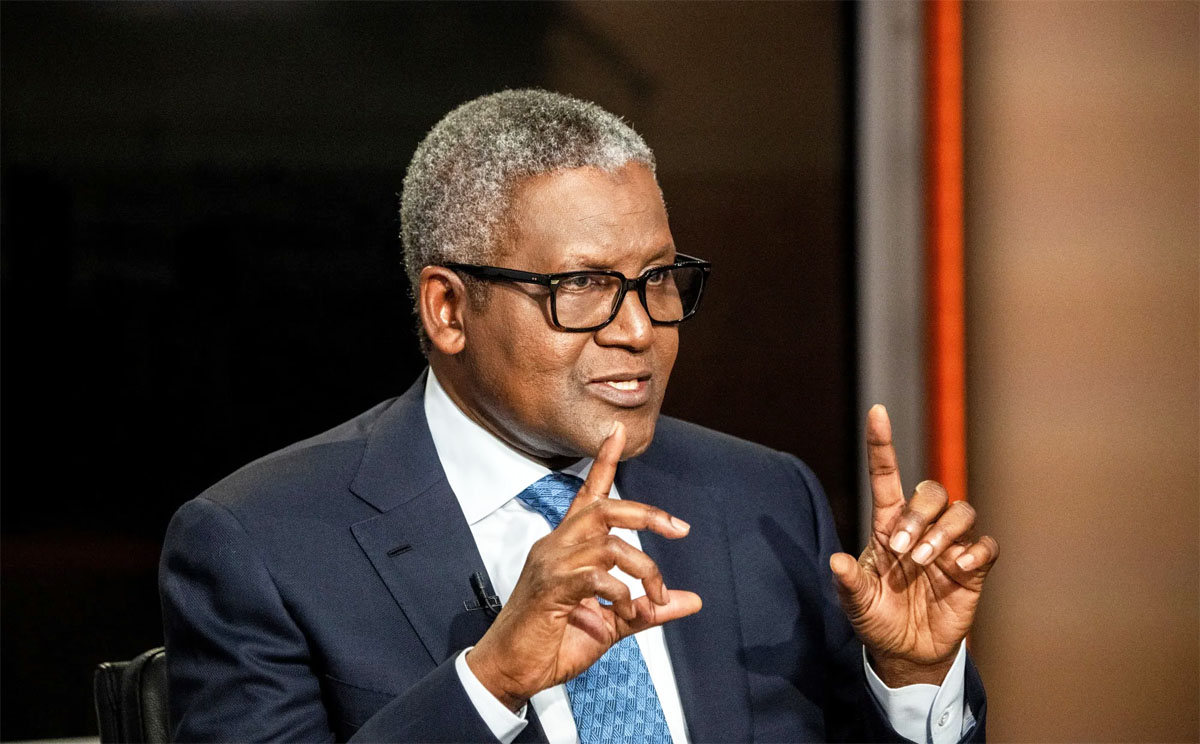
OWERRI — Africa’s richest man, Aliko Dangote, has assured Imo State Governor Hope Uzodimma that the Dangote Group is prepared to become one of the biggest investors in Imo State, reaffirming the conglomerate’s commitment to expanding its footprint in Nigeria.
Speaking on Thursday during the opening session of the Imo Economic Summit 2025, Dangote called on the state government to specify key sectors requiring investment, promising immediate action once directives are given.
Dangote, who described Governor Uzodimma as a long-time friend, commended him for fostering an enabling environment for business and economic growth in the state.
READ ALSO:
- NSCDC rejects VIP protection requests from senators as demand surges after police withdrawal
- Edo Assembly Moves to Arrest Obaseki, Others Over MOWAA, Radisson Hotel Probe
- Three Top Contenders to Replace William Troost-Ekong as Super Eagles Captain
“We will be one of your biggest investors in Imo. So please tell me the area to invest and we will invest,” he said.
The African industrialist also encouraged Nigerian entrepreneurs to focus on developing their home regions, stressing that sustainable economic growth cannot depend on foreign capital alone.
“What attracts foreign investors is a domestic investor. Africa has about 30 percent of the world’s minerals. We are blessed,” he noted.
Dangote further highlighted progress at the Dangote Refinery, announcing that the facility is on track to achieve a 1.4 million barrels-per-day production capacity, making it the largest single-train refinery in the world.
The assurance marks a significant boost for Imo State’s investment outlook as the government continues efforts to strengthen its economy and attract large-scale private sector participation.
Imo Economic Summit: Aliko Dangote Vows to Become State’s Largest Investor
Auto
Court of Appeal Affirms Ruling Barring VIO from Seizing Vehicles or Fining Motorists
Court of Appeal Affirms Ruling Barring VIO from Seizing Vehicles or Fining Motorists
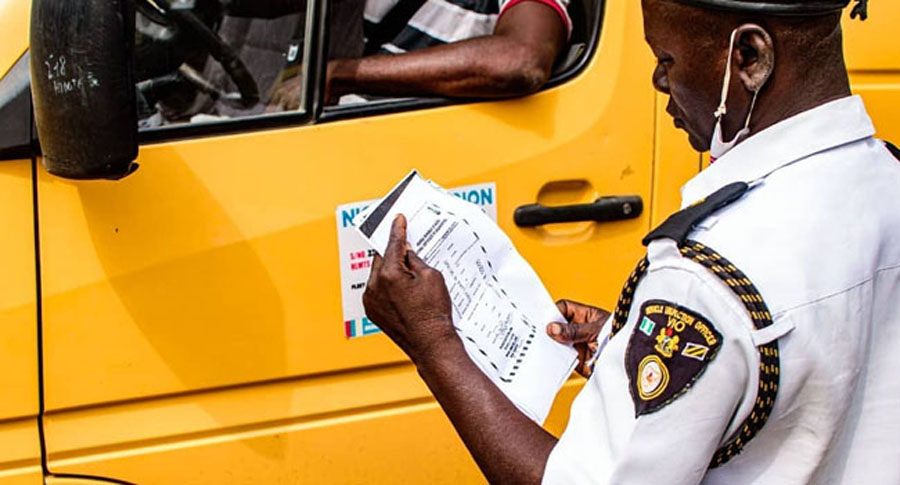
The Court of Appeal, Abuja, on Thursday, upheld a previous Federal High Court judgment prohibiting the Vehicle Inspection Officers (VIO) and the Directorate of Road Traffic Services (DRTS) from confiscating vehicles or imposing fines on motorists without lawful authority.
A three-member panel of appellate justices, led by Justice Oyejoju Oyewumi, dismissed the appeal filed by the VIO, describing it as lacking merit and affirming the October 16, 2024 ruling of the high court.
The original suit, marked FHC/ABJ/CS/1695/2023, was filed by public interest lawyer Abubakar Marshal, who alleged that he was unlawfully stopped and had his vehicle confiscated by VIO officials at Jabi District, Abuja, on December 12, 2023. He contended that the action was a violation of his fundamental rights.
READ ALSO:
- FG secures release of three Nigerians detained in Saudi Arabia
- Groups Reject Senator’s Call for Removal of NSA Nuhu Ribadu
- US authorities arrest Nigerian CEO Cashmir Chinedu Luke for alleged $7m VA fraud
Justice Nkeonye Maha of the Federal High Court had declared that no law empowers the VIO to stop, seize, impound, or fine motorists, and granted a perpetual injunction restraining the agency and its agents from further violating citizens’ freedom of movement, presumption of innocence, and right to own property.
The court held that only a court of competent jurisdiction can impose fines or sanctions on motorists. It further ruled that the actions of the Respondents violated Section 42 of the 1999 Constitution and relevant articles of the African Charter on Human and Peoples’ Rights.
Although the applicant had sought N500 million in damages and a public apology, the court awarded him N2.5 million. Respondents included the Director of the Directorate of Road Traffic Services, the Abuja Area Commander, the team leader, and the Minister of the Federal Capital Territory.
The appellate court’s decision confirms that the VIO and DRTS cannot legally harass motorists, reinforcing citizens’ constitutional rights on the road.
Court of Appeal Affirms Ruling Barring VIO from Seizing Vehicles or Fining Motorists
Business
BREAKING: CBN Removes Cash Deposit Limits, Raises Weekly Withdrawal

BREAKING: CBN Removes Cash Deposit Limits, Raises Weekly Withdrawal
The Central Bank of Nigeria (CBN) has announced sweeping changes to its cash-handling regulations, removing all limits on cash deposits and increasing the weekly cash withdrawal limit across all channels to N500,000, up from N100,000.
The changes were detailed in a circular titled “Revised Cash-Related Policies,” issued to all banks and signed by Dr. Rita Sike, Director of the Financial Policy & Regulation Department.
According to the apex bank, the revised framework is part of ongoing efforts to reduce the rising cost of cash management, strengthen security, and address money laundering concerns linked to Nigeria’s heavy dependence on cash transactions. The CBN noted that previous cash-related policies were introduced to discourage excessive cash usage and promote electronic payment systems, but evolving realities necessitated an update.
Effective January 1, 2026, several major adjustments will take effect. The cash deposit limit has been completely removed, and charges on excess deposits have been scrapped. Weekly withdrawal limits have also been increased to N500,000 for individuals and N5 million for corporate entities, with withdrawals beyond these levels attracting prescribed excess charges.
READ ALSO:
- U.S imposes visa restrictions on Nigerians over mass killings, alleged violence against Christians
- NDIC Warns Nigerians Against Ponzi Schemes, Urges Savings Only in CBN-Licensed Banks
- Nigeria Urged to Prioritize Citizenship, Social Harmony Amid Rising Conflict, Insecurity
The special monthly authorisation, which previously allowed individuals to withdraw N5 million and corporates N10 million once a month, has been discontinued.
For ATM withdrawals, the daily limit remains N100,000 per customer, with a maximum of N500,000 weekly, forming part of the overall withdrawal limit applicable to all channels, including POS transactions.
Excess withdrawals above approved thresholds will attract fees of 3% for individuals and 5% for corporate customers, shared between the CBN and the operating bank in a 40:60 ratio.
Banks have also been instructed to load all currency denominations in ATMs. The cap on over-the-counter encashment of third-party cheques remains fixed at N100,000, and such payments will count toward the cumulative weekly withdrawal limit.
Furthermore, financial institutions are required to submit monthly compliance reports to supervisory departments, including the Banking Supervision Department, Other Financial Institutions Supervision Department, and Payments System Supervision Department.
The circular clarified that revenue-generating accounts of federal, state, and local governments, as well as accounts held by microfinance and primary mortgage banks, are exempt from the new rules. However, long-standing exemptions previously granted to embassies, diplomatic missions, and aid-donor agencies have now been removed.
BREAKING; CBN Removes Cash Deposit Limits, Raises Weekly Withdrawal

-

 News3 days ago
Defence Minister Unveils New Security Strategy, Orders Troops to Shoot Armed Bandits on Sight
-

 metro3 days ago
Team Justice accuses authorities of attempting to exclude Mohbad’s father from DNA test process
-
 metro2 days ago
Senate Launches Emergency Probe into Widespread Lead Poisoning in Ogijo, Lagos/Ogun
-
 International3 days ago
Meta to Block Under-16s from Instagram, Facebook, Threads ahead of Australia’s World-First Youth Social Media Ban
-

 metro3 days ago
Shocking confession: Boyfriend admits luring FRSC officer, child to death in Osun ritual murder
-

 Sports3 days ago
Leeds United Stun Chelsea 3-1 at Elland Road to Climb Out of Relegation Zone
-
 News3 days ago
BREAKING: Tinubu Sends Fresh Ambassadorial Nominations to Senate, Names Ibas, Ita Enang, Dambazau
-
 News3 days ago
Ember-months safety: Carloha, FRSC intensify campaign against distracted driving