
Education
FG unveils digital portal for teachers’ registration
FG unveils digital portal for teachers’ registration
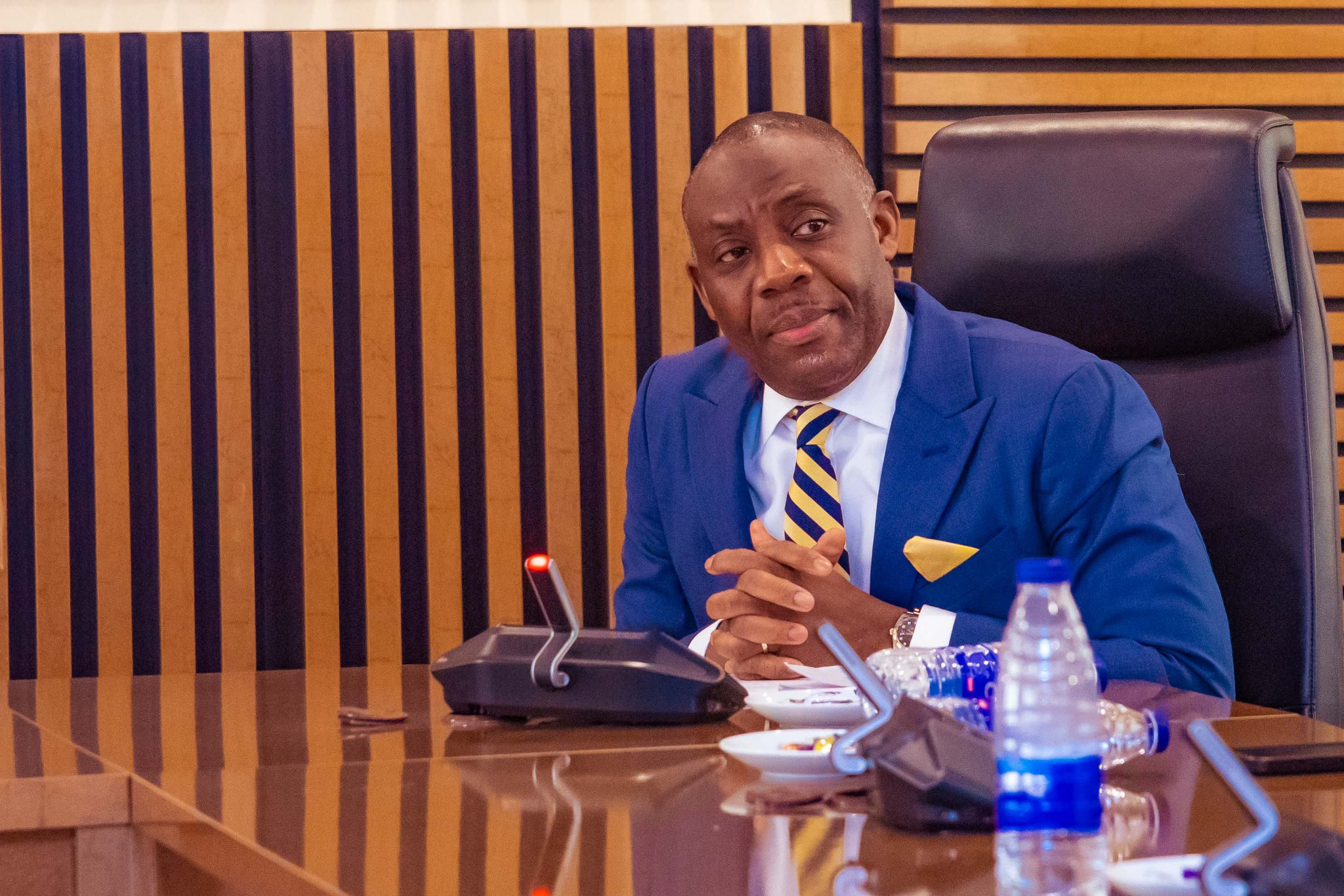
The federal government has unveiled a digital portal designed to ease teachers’ registration, certification, and professional development in line with its vision to strengthen educational standards in the country.
Speaking at the unveiling and strategic vision for Nigerian teachers in Abuja on Monday, the Minister of Education, Tunji Alausa, said the portal and vision framework were designed to reposition education.
Mr Alausa noted that no nation could rise above the quality of its teachers, adding that the unveiling was not merely about technology but a renewal of collective commitment to teachers, their dignity, growth, and future.
According to him, the TRCN portal will serve as a comprehensive platform to facilitate seamless registration, licensing, and renewal of teachers nationwide.
“It will also enable examination scheduling and professional development tracking as well as serve as a national database for teachers’ performance and career progression,” he said.
The minister explained that, beyond technology, the unveiling also marked the rollout of a strategic vision for teachers, anchored on five pillars: professionalisation, digitalisation, accountability, equity, and global alignment.
He said the framework would ensure that teachers were duly registered and continuously developed to leverage technology for wider access to learning.
READ ALSO:
- Thousands evacuated as typhoon ravages Vietnam
- Five journalists among 20 killed in Israeli strike
- 2027: MURIC demands Muslim governors in South West
Mr Alausa also announced the introduction of a mandatory Teacher Ethics and Criminal Record Verification Framework, stressing that no teacher would henceforth be employed in public or private schools without undergoing ethical screening and a criminal background check.
He said private school owners would also be mandated to verify TRCN registration and ethical clearance of their teachers, with the new portal integrating a secure verification system.
”This is not punitive; it is protective. It is about safeguarding our children and upholding the moral integrity of our classrooms,” he said.
Earlier in her remarks, the registrar of the Teachers Registration Council of Nigeria (TRCN), Ronke Soyombo, said the initiative was part of her 100-day action plan to digitise the council’s operations.
Ms Soyombi explained that the portal would improve data management and address long-standing complaints about delays in processing teachers’ certificates and licences.
”With this portal, teachers across Nigeria can conveniently register, access their results, and print their certificates from the comfort of their homes without visiting state offices,” she said.
She added that the TRCN had introduced a service level agreement to ensure that results of the professional qualifying examination (PQE) were released within one week, after which successful candidates could immediately access their certificates.
The registrar also said the reform would enhance transparency, expand coverage, and promote efficiency in teachers’ professional development.
”Every parent can now verify online if their child’s teacher is duly registered with TRCN. Our website also hosts resources for teachers, including study materials ahead of the PQE and access to accredited trainers.
“The TRCN has streamlined the PQE curriculum from 23 subjects to five core areas, such as foundational mathematics, literacy, digital literacy, safeguarding, and pedagogy,” she said.
Ms Soyombo disclosed that by October, the council would launch an artificial intelligence (AI)-powered lesson plan generator to provide teachers with simulated and contextualised instructional materials to make learning more engaging for pupils.
She explained that the initiative would lead to a 50 per cent increase in TRCN-certified teachers, improve child protection, and lead to a global benchmark.
Also speaking, Mohammed Isa, Senior Special Assistant to President Bola Tinubu on Special Needs and Equal Opportunities, said the initiative must incorporate accessibility features such as screen readers, sign language support, and digital braille to align with the administration’s Renewed Hope Agenda.
FG unveils digital portal for teachers’ registration
(NAN)









Education
FG Clarifies WAEC Subject Selection, Says Students Free to Choose Across All Fields

FG Clarifies WAEC Subject Selection, Says Students Free to Choose Across All Fields
The Federal Government has issued a clear explanation on subject selection under the revised Senior Secondary School Curriculum as registration for the West African Examinations Council (WAEC) continues nationwide.
In a joint statement released on Saturday, the Minister of Education, Maruf Tunji Alausa, and the Minister of State for Education, Sa’id Suwaiba Ahmad, clarified that there is no restriction or exclusion attached to the choice of any approved subject.
“All subjects remain fully open for students to choose from, provided such choices are properly guided by the school authority, parents, or a certified school counsellor,” the ministers stated.
They explained that science students are free to pick subjects traditionally grouped under the arts or social sciences, while arts and social science students may also select science-based subjects. According to the ministers, the revised curriculum was designed to be flexible, student-centred, and supportive of diverse academic interests and career pathways.
READ ALSO:
- Court Orders Wike to Respond to Tonye Cole’s ₦40bn Defamation Suit
- CAC to Begin Nationwide Crackdown on Unregistered PoS Operators by January 2026
- Studies show menopause can reduce women’s memory, concentration by 40%
The government also clarified that the subject previously known as Information and Communication Technology (ICT) has now been renamed Digital Technology, stressing that the adjustment is only a change in nomenclature. The curriculum content remains intact, and students who offered ICT are fully qualified to register for Digital Technology in both internal and external examinations.
Addressing concerns over trade subjects, the Ministry noted that six have been officially approved.
“A student may register for any of these subjects if the school offers them and the student has been taught the subject. However, there is no obligation to register for a trade subject where a student has not been exposed to any of the six approved options,” the statement added.
Reaffirming its commitment to smooth and accurate examination processes, the Ministry urged parents, school owners, counsellors and examination bodies to rely on verified information and ensure proper guidance to all candidates.
The Federal Government assured that it will continue to promote seamless, well-coordinated WAEC registration across the country.
FG Clarifies WAEC Subject Selection, Says Students Free to Choose Across All Fields
Education
NECO grants full accreditation to schools in Burkina Faso to conduct SSCE, BECE exams
NECO grants full accreditation to schools in Burkina Faso to conduct SSCE, BECE exams
The National Examinations Council (NECO) has expanded its international operations with the accreditation of schools in Burkina Faso to conduct its flagship examinations, the Senior School Certificate Examination (SSCE) and the Basic Education Certificate Examination (BECE).
In a statement released in Abuja on Sunday, the council’s Acting Director of Information and Public Relations, Mr. Azeez Sani, confirmed that NECO granted full approval after a comprehensive assessment of selected institutions in the West African nation.
According to Sani, a NECO accreditation team evaluated the schools’ infrastructure and readiness by inspecting classrooms, laboratories, libraries, computer labs, workshops, examination halls, sports facilities and overall security architecture. The team also reviewed Continuous Assessment (CA) records, staffing levels, and the general learning environment before issuing approval.
“Following a thorough and detailed evaluation, the schools were granted full accreditation to host the SSCE and BECE,” Sani said.
READ ALSO:
- Four Dead, Ten Injured in Mass Shooting at Child’s Birthday Party in California
- White House Shooting: Suspect Once Worked With CIA as US Opens Full Terrorism Probe
- Nigerian army rescues 12 teenage girls abducted by Boko Haram in Borno state
He added that NECO’s expansion into Burkina Faso reflects its growing commitment to providing quality education assessment services across Africa. With this development, the council strengthens its goal of becoming a leading continental examination body serving both Nigerian and foreign students.
Sani further recalled that NECO recently established an examination centre in London, United Kingdom, adding to existing centres in Togo, Benin Republic, Niger Republic, Equatorial Guinea, Côte d’Ivoire, and Saudi Arabia.
Nigeria’s Ambassador to Burkina Faso, Amb. M.D. Galadima, applauded the development, describing it as a major relief for Nigerian families in the country. He noted that parents previously had to take their children to Saki, Oyo State, to register and sit for NECO exams — a process that posed security risks and imposed heavy financial burdens.
“With this accreditation, those risks are eliminated, and families can now save significant costs,” Galadima said, urging Nigerians in Burkina Faso to seize the opportunity by enrolling their children for NECO examinations.
Leader of the accreditation team, Dr. Uche Ezenwanne, said the approval now allows Nigerian students residing in Burkina Faso to write the SSCE and BECE without travelling back home.
NECO grants full accreditation to schools in Burkina Faso to conduct SSCE, BECE exams
Education
Study Permit Reform: Canada Exempts Postgraduate Students From PAL/TAL in 2026

Study Permit Reform: Canada Exempts Postgraduate Students From PAL/TAL in 2026
The Government of Canada has unveiled major reforms to its study permit system, announcing a more streamlined process for international postgraduate students beginning January 2026. Under the new policy, master’s and doctoral candidates enrolled in public Designated Learning Institutions (DLIs) will no longer be required to submit Provincial or Territorial Attestation Letters (PAL/TAL).
The policy shift forms part of a broader federal plan to simplify pathways for highly skilled students while maintaining firm control over overall international student intake.
The PAL/TAL system, introduced to help provinces regulate student numbers, has improved oversight but also increased processing times and administrative workload. The 2026 exemption is expected to significantly speed up permit approvals for postgraduate applicants and reduce paperwork.
Despite easing requirements for advanced degree programs, Canada will continue enforcing a national cap on international students. Under the 2026–2028 Immigration Levels Plan, Ottawa intends to issue up to 408,000 study permits in 2026—comprising 155,000 new permits and 253,000 extensions. This marks a 7% drop from 2025 and 16% below 2024 levels. However, the government says it remains committed to attracting top-tier researchers and graduate talent.
READ ALSO:
- Kano Insecurity: Barau Challenges Govt to Produce Evidence of Alleged Incitement
- Ganduje fires back as Kano Govt demands his arrest over alleged incitement, militia support
- Troops repel major Boko Haram/ISWAP attack in Chibok, kill scores in NAF airstrikes
Under the revised rules, PAL/TAL exemptions will apply to:
- Master’s and PhD students at public DLIs
- K–12 learners
- Certain federal priority and vulnerable groups
- Current study permit holders applying for extensions at the same level and institution
Of the 309,670 study permit spaces allocated under the 2026 cap, an estimated 180,000 applicants will still require PAL/TALs, allowing provinces to retain oversight on enrolment levels.
Master’s and PhD candidates will also be removed from the national study permit cap, ensuring they are not subject to annual limits. Additionally, PhD applicants will benefit from expedited 14-day processing, part of Canada’s strategy to remain globally competitive in research recruitment.
Federal targets for new international student entries remain:
- 2026: 155,000 (range: 150,000–160,000)
- 2027: 150,000 (range: 145,000–155,000)
- 2028: 150,000 (range: 145,000–155,000)
These targets apply to students entering academic programs longer than six months at approved DLIs.
The reforms highlight Canada’s dual-track approach: maintaining tighter control over total enrolment while incentivising high-level research, innovation, and postgraduate education. By removing administrative barriers and offering faster processing for top applicants, Canada aims to strengthen its position as a leading destination for skilled and ambitious international students.
Study Permit Reform: Canada Exempts Postgraduate Students From PAL/TAL in 2026

-

 News3 days ago
Defence Minister Unveils New Security Strategy, Orders Troops to Shoot Armed Bandits on Sight
-

 metro3 days ago
Team Justice accuses authorities of attempting to exclude Mohbad’s father from DNA test process
-
 metro2 days ago
Senate Launches Emergency Probe into Widespread Lead Poisoning in Ogijo, Lagos/Ogun
-

 International3 days ago
Meta to Block Under-16s from Instagram, Facebook, Threads ahead of Australia’s World-First Youth Social Media Ban
-

 metro3 days ago
Shocking confession: Boyfriend admits luring FRSC officer, child to death in Osun ritual murder
-

 Sports3 days ago
Leeds United Stun Chelsea 3-1 at Elland Road to Climb Out of Relegation Zone
-

 News2 days ago
BREAKING: Tinubu Sends Fresh Ambassadorial Nominations to Senate, Names Ibas, Ita Enang, Dambazau
-
 News3 days ago
Ember-months safety: Carloha, FRSC intensify campaign against distracted driving