•ISWAP, others using Ondo as litmus test to attack Yorubaland -Investigation
•FG under fire over Tompolo’s contract, non-support for Amotekun
•‘It’s unfair to allow Tompolo’s men to bear sophisticated weapons while denying Amotekun of same’
A litmus test, according to Merriam Webster dictionary, figuratively refers to something that can be used to make a judgment about whether someone or something is acceptable or not.
This definition aptly captures the rationale behind the incessant violent attacks on Ondo State in the South West of Nigeria by bandits in recent times. It is believed in parts of the South-West that terrorists and bandits have been using Ondo State as a litmus test to probably assess the capacity, preparedness and readiness of the Federal Government and the South West, to curb their activities, before attacking the other five states in the geo-political zone.
The most deadly attack on Ondo State was the invasion of Saint Francis Catholic Church, Owo, in June, this year, where about 50 worshipers were massacred by gunmen. Ondo State governor and Chief of Defence Staff, Gen Lucky Irabor, announced recently that some of the masterminds of the attack on the cathedral have been arrested.
Few weeks after the attack on the church, gunmen suspected to be bandits also killed some workers at a building site in the same Owo, the country home of Governor Akeredolu. Before the attack on the church, herdsmen were reported to have killed a reigning king of one of the communities in the state. Mrs. Funke Olakunrin, daughter of Pa Reuben Fasoranti, a chieftain of Afenifere, was kidnapped and killed in the same Ondo State.
In the first week of September 2022, about 32 people travelling from Edo State in a coastal bus to Ondo State were reportedly kidnapped by gunmen along Ifon/Benin Expressway and taken to the bush. The victims, as gathered, attended a burial ceremony in Benin City and were returning to Ondo when they were intercepted by the gunmen. It was reported that they were taken to the Benin-Ifon to Owo forest. Gunmen also kidnapped Chief Mukaila Bello, the traditional head of Iku quarters in Ikare in Akoko North East Local Government Area of Ondo State. He was abducted alongside three other persons – Messrs Adeniran Adeyemo, Bashiru Adekile and Gbafinro. The victims, according to sources, were kidnapped at Ago Panu area of Owo-Ikare expressway, while travelling from Akure to Ikare. The driver of their car was reportedly shot while trying to escape.
Also, the Ondo State branch of Operation Amotekun Corps intercepted no fewer than 151 people said to be illegal immigrants along Sango-Iju Road in Akure North Local Government Area of the state recently, during a stop-and-search operation. The arrest was believed to have foiled what could have been serious security breaches in the South West. The 151 people were alleged to be bandits on a mission to some states of the region, namely Ondo and Osun. The suspects included five women who were reportedly hidden at the back of bags of beans and rice inside trailers when Amotekun operatives intercepted them.
Though there have been pockets of kidnapping cases and invasion of some communities in Ekiti, Osun, Oyo, Ogun and Lagos States in the recent time, the frequency of attacks on Ondo State has, however, become a matter of concern to the people in the South West. In a bid to complement the efforts of the Federal Government in tackling the rising insecurity in the Yorubaland, the six governors in the South West, convened security summits, and eventually set up a security network, known as Amotekun Corps in each state of the zone.
Investigation revealed that the Amotekun operatives have been working assiduously to tackle crimes and criminalities in their states. But they do not have the approval of the Federal Government to carry sophisticated weapons to face the bandits, who are believed to carry out their nefarious activities with firearms, such as AK-47 and sub machine guns (SMGs). As gathered, Amotekun operatives have only been using dane guns and native intelligence to wage war against banditry, armed robbery and kidnapping.
Saturday Sun was reliably informed that efforts by the leadership of Amotekun and their governors to get approval from the Inspector-General of Police (IGP) to procure sophisticated weapons have not yielded positive results.
The Oodua People’s Congress (OPC) under the leadership of the Aare Ona Kakanfo of Yorubaland, Iba Gani Adams, has said it has the capacity to wipe out banditry, being perpetrated by foreign mercenaries in the entire South West within three month or thereabouts. Adams also raised the alarm that bandits have occupied forests in many states in the South West.
In the same vein, the Leader of Apapo Egbe Alaabo Ile Oodua (Homeland Defence and Security Initiative), Dr. Victor Taiwo, said if the group could have the backing of the government, it would see to the end of banditry in the South West within few weeks. In order to forestall any plan by any group or individuals to endanger lives and property in Yorubaland, the leadership of Amotekun Corps, during recent encounters with journalists expressed their readiness to tackle any form of security challenge in any of the six states that make up the region.
According to them, their operatives are adequately equipped to tackle bandits and Fulani herdsmen that may want to strike in any part of the region. Also, the Commander of the Amotekun Corps in Ondo State, Chief Adetunji Adeleye, said the corps is prepared to fight insecurity in all parts of the state. The Field Commander of the Amotekun Corps in Osun State, Amitolu Shittu, said the Amotekun corps has all it takes to guarantee security of lives and property of the people of the region, with the active collaboration of other registered conventional security agencies.
Speaking further on the rising insecurity, Dr Olajide said the alarm raised by the Aare Ona Kakanfo of Yorubaland, Iba Gani Adams that bandits have occupied forests in many states in the South West frightened him. He called on Yorubas to be vigilant. Though he noted that the primary assignment of every government is the protection and welfare of its people, he warned that rising insecurity in the country does not mean that the Federal Government has failed totally. The Commander of Amotekun Corps in Oyo State, Col Olayinka Olayanju (retd), assured residents of the state that proactive steps are being taken independently and jointly by security agencies in the state to ensure adequate security of lives and property.
In the midst of the governors in the South West, asking for the backing of the Federal Government to reduce insecurity rocking the geo-political zone to the barest minimum, and some groups in the zone calling for government backing to end banditry in the South West, the Federal Government within the past few weeks took an an action that attracted criticisms from some grassroots and influential Nigerians, especially from the South West.
The President Muhammadu Buhari-led administration awarded a multi-billion naira pipeline security contract to a former armed militant, Mr. Government Ekpemupolo, fondly called Tompolo.Governor Akeredolu, the Chairman of the South West Governors’ Forum, whose state has been in the eyes of the storm, took the Federal Government to the cleaners on the action. He spoke on behalf of the other governors in the zone in his reaction, entitled: ‘Who Actually Needs Weapons?’
He said: “The news concerning the purported award of pipeline contracts to some individuals and private organisations by the Federal Government has been unsettling. More disquieting is the barely disguised hostility displayed against either the idea or the actual establishment of security outfits by some state governments to fill the widening gaps in the scope of security coverage noticeable nationally.
“The Federal Government, through the Office of the National Security Adviser, has been consistent in its refusal to accede to the request by some states in the federation to strengthen the complementary initiatives adopted to protect lives and property. This is done in spite of the knowledge that the very issues which necessitated the creation of these outfits support providing adequate weaponry.
“All attempts to persuade the Federal Government to look, critically, into the current security architecture have been rebuffed despite the manifest fundamental defects engendered by over-centralisation.
“It is, therefore, shocking to read that the Federal Government has maintained the award of the contract to ‘protect’ the country’s pipeline from vandals to private organisations. This story, if true, leaves a sour taste in the mouth.
“The NSA will, obviously, not advise the President to approve the award of a contract of such magnitude if the operators have not displayed sufficient capacity to checkmate the criminal activities of equally powerful groups.
“Consequently, it is safe to conclude that the Federal Government has, impliedly, permitted non-state actors to bear heavy assault weapons, while denying same privilege to the states, the federating units.
“The award of contract to private organisations to protect vandalisation of pipelines raises fundamental questions on the sincerity of the advisers of the government on security issues. The open and seeming enthusiastic embrace of this oddity, despite the constant and consistent avowal of the readiness by the security agencies in particular, the Navy to contain the pervasive and deepening crises of breaches and threats to lives and property, attracts the charge of insincerity bordering, deplorably, on dubiety.
“If the state governments, which are keenly desirous of protecting their citizens, establish ancillary security outfits and there has been pronounced reluctance, if not outright refusal, to consider permitting them to bear arms for the sole purpose of defence, granting private individuals and or organisations unfettered access to assault weapons suggests, curiously, deep-seated suspicion and distrust between the Federal Government and the presumed federating units.
“The engagement of private organisations to handle serious security challenges reinforces the belief that the whole defence architecture in the country needs an urgent overhaul. The Federal Government cannot be seen to be playing the Ostrich in this regard.”
But the decision to award the pipeline contract to Tompolo has been defended by the Nigeria National Petroleum Company (NNPC). The oil company said it was a ‘right decision’ because Nigeria has been suffering huge losses from pipeline destruction by vandals.
The opinion poll conducted for some Yoruba elders also revealed that they are not on the same page with the Federal Government. According to one of them, who did not want his name mentioned in print: “Bandits are kidnapping, raping, and killing us in Yorubaland, and our governors established Amotekun Corps. The Federal Government did not allow the Amotekun to carry sophisticated weapons. But the pipeline security contract, which the FG awarded to Tompolo, what will Tompolo use to tackle vandals and protect the oil pipelines? Is he going to use dane guns like Amokun Corps? We need to fear God in this country. And we are watching.”
Massacre in Taraba: Death Toll Soars to 48 as Fleeing Villagers Drown in Desperate Escape
JALINGO, Taraba State — A horrific wave of bloodletting has swept through Binnari village in Taraba State, leaving at least 48 people dead in its wake, police confirmed on Sunday. The grim discovery followed a terrifying four-hour rampage by gunmen that forced panicked residents into a nearby river, where dozens drowned in a desperate bid to escape the slaughter.
The death toll has continued to climb as search parties comb through the surrounding bushes and riverbanks, with rights group Amnesty International warning that as many as 52 people may have been killed in the attack on the Karim Lamido area community.
According to the Taraba State Police Command, the nightmare unfolded shortly after midday prayers on Friday when a heavily armed gang swooped into the remote village. The assailants—reportedly riding a convoy of about 50 motorcycles—unleashed terror, looting shops and setting homes ablaze during an orgy of violence that lasted up to four hours.
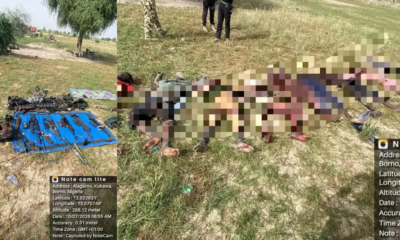
Taraba State Police spokesperson, Assistant Superintendent Victor Mshelizah, confirmed the escalating toll on Sunday. He revealed that while the initial recovery yielded 10 bodies bearing gunshot wounds, the weekend search uncovered a far more macabre scene. Mshelizah stated that several victims, including women and children, had drowned in a nearby river while frantically trying to outrun the attackers, while others were found executed in the surrounding undergrowth.
“The attackers were very familiar with the terrain, which made immediate pursuit difficult,” Mshelizah said, noting that police were only able to disperse the gunmen after they had already fled the scene.
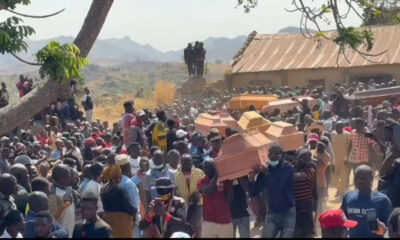
However, the official police account conflicts sharply with the chilling testimonies of survivors and the findings of human rights organizations. Amnesty International’s Nigeria director, Isa Sanusi, stated that the organization had independently verified 52 deaths, adding that 37 victims had already been hurriedly buried in a mass funeral by grieving families.
Community leader Malam Abubakar Saifullahi described the sheer scale of the assault, revealing that the bandits, traveling two per motorcycle, methodically looted shops for cash and foodstuffs before seizing the motorcycles abandoned by fleeing residents.
The most harrowing accounts come from those who survived the chaos. Resident Bashir Mamuda Musa provided a devastating timeline of the recovery effort: “On Friday, we found seven bodies after the bandits attacked our community. The following day, Saturday, we discovered another 43 bodies in the river, bringing the total to 50.”
Survivor Isiyaku Musa recounted the sheer panic that drove villagers toward the water. “People were running in different directions to escape the attack. Nobody knew where it was safe to go,” he said. The mass drowning occurred as dozens of terrified residents fled toward the river, only to be mercilessly pursued into the water by the advancing gunmen.
The brutal massacre has drawn fierce condemnation from rights groups, who accuse authorities of systemic failure. In a blistering post on X, Amnesty International stated: “The consistent failure of the authorities to bring the suspected perpetrators to justice is clearly emboldening impunity.”
The Binnari bloodbath underscores the worsening security crisis plaguing Nigeria’s rural heartlands. Criminal gangs—locally known as bandits—continue to operate with devastating impunity across regions bordering the northeast and central zones, leaving a trail of death, abduction, and destruction.
As security forces continue to comb the grim landscape, authorities have warned that the final death toll may rise even further once all missing persons are accounted for.
Massacre in Taraba: Death Toll Soars to 48 as Fleeing Villagers Drown in Desperate Escape
Court Sentences POS Operator to Death for Role in Kidnap That Killed 83-Year-Old Man, Driver
An Imo State High Court has sentenced a 28-year-old point-of-sale (POS) operator, Isaac Okorie, to death by hanging for his role in the kidnapping and murder of an 83-year-old man, Chief Alexander Chukwuma Okoli, and his driver, Daniel Sarki, despite the payment of ransom by the victims’ family.
Justice Matthew Ijezie, sitting at the High Court in Urualla, within the Orlu Judicial Division, delivered the judgment on Tuesday, October 20, 2026, after finding Okorie guilty on six counts bordering on armed robbery, hostage-taking and murder.
The court held that the prosecution had proved its case beyond reasonable doubt through the evidence presented during the trial.
According to the judgment, the incident occurred on October 14, 2023, at Isiekenesi in Ideato South Local Government Area of Imo State, when Okoli and his driver were abducted by members of an armed criminal gang.
The court heard that Okorie conspired with other members of the gang, who were armed with guns, to seize the two men and take them into a bush.
The kidnappers also reportedly stole Okoli’s gold-coloured Toyota Corolla, with registration number AAH 989 RM.
The gang subsequently demanded a ransom of ₦100 million from the victims’ family in exchange for their release.
However, the family eventually paid ₦2.515 million, but the payment did not secure the safe return of the two men.
According to the court’s account, the gang killed both victims despite receiving the money and later sent photographs of their lifeless bodies to the family.
The remains of Okoli and his driver had yet to be recovered as of the time the judgment was reported, leaving their family members without the opportunity to give them a proper burial.
During the trial, the court heard that police investigations identified Okorie’s role in the criminal operation as receiving ransom payments from the families of kidnapping victims.
The evidence linking him to the operation formed part of the prosecution’s case, which the court found sufficient to establish his guilt on all six counts.
Following the conviction, the court gave Okorie an opportunity to plead for leniency before sentencing, a procedure known as allocutus.
Okorie reportedly appealed to the court for mercy, but Justice Ijezie proceeded to sentence him to death by hanging.
Reacting to the judgment, Ikenna Obi, a senior state counsel with the Imo State Ministry of Justice who prosecuted the case, described the ruling as significant.
Obi said the judgment would provide some measure of relief to the victims’ family, despite the continuing uncertainty surrounding the whereabouts of their remains.
He expressed hope that the conviction would deter individuals involved in kidnapping, armed robbery and other violent crimes, while discouraging others from joining criminal gangs.
The prosecutor also commended the judge for delivering what he described as a well-considered judgment in accordance with the law.
Amanda, the daughter of one of the victims, also reportedly expressed relief that the court had punished the convict.
She, however, said the family remained deeply distressed by the failure to recover the bodies of her father and his driver.
Although the judgment offered the family some comfort, she expressed hope that security agencies would intensify efforts to locate the remains and arrest other suspects who were still at large.
The conviction marks a significant development in the case, which began with the abduction of the elderly man and his driver nearly three years before the judgment.
However, the family’s search for closure remains incomplete, as the recovery of the victims’ remains and the prosecution of any outstanding suspects remain unresolved.
Court Sentences POS Operator to Death for Role in Kidnap That Killed 83-Year-Old Man, Driver
MURIC Applauds Army as Mogadishu Cantonment Mosque Reopens After Week-Long Closure
The Muslim Rights Concern (MURIC) has commended the Nigerian Army Headquarters and the commandant of Mogadishu Cantonment for reopening a mosque used by Muslim soldiers and their families in Abuja after a week-long closure.
The Islamic human rights organisation said the mosque, which serves Muslim personnel and their families residing in military accommodation within the cantonment, was reopened on Tuesday, October 20, following an appeal by the group.
MURIC’s Executive Director, Professor Ishaq Akintola, disclosed this in a press statement issued on Sunday, October 25, 2026, describing the reopening as a welcome development that demonstrated the importance of dialogue and cooperation in resolving religious concerns.
According to Akintola, the mosque had been closed since October 12, preventing Muslim soldiers and their families living within the military facility from using it for their daily prayers.
He said MURIC had earlier appealed to the Army Headquarters and the cantonment authorities to explain the reason for the closure and restore access to the mosque for worshippers.
The organisation expressed concern over the disruption of daily prayers and urged the military authorities to address the matter.
Akintola said the mosque’s reopening on October 20, the same day MURIC publicly raised the issue, brought relief to the organisation and affected worshippers.
He described the development as an indication that concerns raised through dialogue and peaceful engagement could receive prompt attention from relevant authorities.
MURIC said it appreciated the response of the Army Headquarters and the cantonment commandant, praising what it described as the professionalism of the military leadership and its respect for the rule of law.
The organisation also expressed optimism that the resolution of the matter would strengthen public confidence in the military and encourage constructive engagement between religious communities and security institutions.
According to Akintola, cooperation between the military and Muslim communities is particularly important in addressing terrorism, insurgency and other security challenges facing the country.
He argued that mutual understanding and goodwill between the armed forces and civilians would help strengthen collective efforts to combat insecurity.
MURIC therefore urged Muslims across Nigeria to cooperate fully with military personnel and other security agencies, stressing the importance of public support in the fight against crime and insurgency.
The organisation maintained that peaceful engagement remained essential to resolving disagreements and preventing issues involving religious practice from escalating into wider disputes.
Although MURIC welcomed the reopening of the mosque, its statement did not disclose the reason for the initial closure or whether the Army Headquarters had issued a separate explanation.
The development followed MURIC’s earlier public appeal to the military authorities to explain the closure and reopen the facility.
The organisation’s latest statement focused on appreciating the authorities for restoring access to the mosque and encouraging continued cooperation between Muslims and the military.
MURIC, which advocates the protection of Muslim rights and promotes dialogue as an alternative to violence, said the outcome offered encouragement that concerns could be addressed through peaceful and constructive engagement.
The organisation concluded by urging Nigerians to support security agencies in their efforts to maintain peace and reduce crime across the country.
MURIC Applauds Army as Mogadishu Cantonment Mosque Reopens After Week-Long Closure