
News
FULL TEXT: Buhari’s Last New Year Message to Nigerians as President

President Muhammadu Buhari, addressing Nigerians in his last new year speech as president, has urged Nigerians to continue to uphold the tenets of democracy.
In a media address shared and signed by Femi Adeshina, Special Adviser to the President on Media and Publicity, Buhari stated that his personal commitment as his administration neared its end would be to ensure that the desire of Nigerians were fulfilled.
Full Text:
My Fellow Countrymen and Women. I wish all of you a very happy and prosperous New Year.
1. First, I would like to thank and honour the Almighty who saw us through the year 2022 and has given us the opportunity to see another year. Each New Year is an opportunity to reflect on the past year, reposition, and move forward with the New.
2. As we celebrate the opportunity to be alive in this year 2023, we must also acknowledge the passing away of our brothers and sisters who didn’t make it into this new year. May their souls rest in perfect peace.
3. This year is particularly important to me because this message is in essence valedictory. After having the honour of serving you, my compatriots, for the last seven plus years, my tenure as your President in the most revered tradition of our ongoing and maturing democracy must necessarily come to an end. In the next five months we would have gone to the polls and elected a new president along with new governors and a host of other elected officials at both the national and state levels.
READ ALSO:
- Regulator vows to sanction petrol marketers breaching official prices, shuts down 7 defaulting depots
- PDP crisis: Ayu fights back; blocks G5 govs’ nominees for poll duties
- Anti-cult member rapes 15-year- old girl, chases father with gun
4. These democratic principles are working in concert because of the belief, beyond partisan politics, of you the great citizens of Nigeria. In addition is my personal commitment and executive promise to see to the letter that the 2023 elections being diligently conducted by INEC will be free and fair. The collective electoral will and votes of Nigerians will be fulfilled, even in the twilight moments of my watch.
5. Reflecting on year 2022 allows us as a government to examine our legacies of successes and challenges. As we celebrate our wins and review obstacles, we all must understand that governance is a continuum, which still places a transitional responsibility on this administration to provide for the incoming government a non-partisan and objective roadmap for 2023. We as Nigeria; one country united under the will of God and actively growing as an indivisible entity, have been enabled year after year, decade after decade, to weather all stormy waters and emerge stronger and better where others have fallen and disintegrated. This has made us a unique nation across the globe and our continent.
6. In the year 2023, Nigerians go to the polls to exercise our right to vote and elect a new Administration; it is an important year for our country to ensure that we have another smooth transition of government, to whoever the people have decided upon. This administration’s landmark Amended Electoral Act will ensure that we have free and fair elections across the nation. We as Nigerians must also take responsibility to ensure we participate in ensuring that the 2023 elections are free and fair by not engaging in anti-state activities and other nefarious acts that may affect the run of the polls. We must also resist every attempt to be used by politicians to create unrest in any form to disrupt the elections. We, as government will ensure such activities are met with the full force of the law.
READ ALSO:
- God will not allow those who will sell off Nigeria to be in power, Wike replies Okowa
- Mysterious fire burns two siblings to death in Akwa Ibom
- Presidency to broadcast documentary on Buhari’s life, mind and philosophy
7. As our security agencies continue to make the country proud, we must continue to assist our patriotic forces by providing the much needed community intelligence. It is our collective responsibility to ensure that Nigeria remains safe and peaceful for us all. Therefore, we have a duty and obligation to support our troops and intelligence agencies by being alert and reporting anything suspicious. The fight against insurgency in the North-East region has continually recorded very clear wins in the past year. The Federal Government, and the Borno State government, have started the journey of returning internally displaced persons to their ancestral homes earlier taken by the insurgents. Also, over 82,000 insurgents with their families have surrendered to the Nigerian military. A number of surrendered insurgents are currently being processed by the rehabilitation (Operation Safe Corridor) programme. The fight against banditry, kidnapping and other crimes in the North-West and other regions is gaining momentum and showing very clear results. One of which is the resumption of Train Service along the Kaduna to Abuja corridor.
8. In the aftermath of the #EndSARS, our administration took heed and instituted the ongoing Police Reform programme based on a new Presidential Vision for Policing in Nigeria. This new vision is framed in a clear road map that transcends the tenure of this administration and it is predicated on six principles: a) Building Trust and Legitimacy b) Leadership, Accountability and Oversight c)Technology and digital media d) Community Policing and Crime Reduction e) Officers Training and Education f) Funding, Officers’ Welfare, Wellness and Safety.
9. This reform programme is very much in its foundational phase but has recorded noteworthy successes in improving police welfare and their emoluments. Other gains have been the ongoing training of 500 police cadet trainers to enable a better training regimen for the 2022 first batch of the 10,000 new cadets with an additional 10,000 set for 2023. In support of these reforms has been the provisioning of new material for the Nigeria Police to steadily improve on its constitutional responsibility to enforce law and order, protect lives and property as well as street level peace and security. This reform programme is very much in its foundational phase but has recorded noteworthy successes in improving police welfare and their emoluments. Other gains have been the ongoing training of 500 police cadet trainers to enable a better training regimen for the 2022 first batch of the 10,000 new cadets with an additional 10,000 set for 2023. In support of these reforms has been the provisioning of new material for the Nigeria Police to steadily improve on its constitutional responsibility to enforce law and order, protect lives and property as well as street level peace and security.
READ ALSO:
- APC kicks as Adeleke suspends Oyetola appointees
- Nollywood actress, Nkiru Sylvanus engaged to be married for the Second time at 37
- Tinubu denies meeting PDP G5 governors in London
10. Despite the ongoing global economic crisis, we have been able to weather the storms. Inflation across the globe is at its highest, the Federal Government has been resolute through its economic interventions to remain above water during this period. 2022 brought a combined impact from ongoing wars and aftereffects of COVID-19. Though creating its own fiscal challenges, we have continued to subsidise our energy costs to buffer households from inflationary pressure of high energy costs. In 2023, we are focused on building on our Gross Domestic Product and sustain the huge surge in the non-oil GDP growth.
11. The Nigerian Start up Bill has been passed as an Act. This is considered a huge step in lowering our unemployment figures by boosting job creation and supporting the entrepreneurial drive of our youths. If you recall in my 2021 New Year speech, I had mentioned the need to secure the future of our youth recognizing that our young people are our most valuable natural resource, at home and abroad. In this regard, we worked with the legislature to develop an enabling law to turn their passions into ideas that can be supported, groomed and scaled across regions. 2023 will see the implementation of the Nigerian Start Up Act nationwide.
12. The year 2023 would, indeed, be a time when we would work to solidify on delivering key strategic priorities under our “SEA” – (Security, Economy and Anti-Corruption) Agenda. Some of the key priority areas we would direct our attention and strengths to include:
a. Focus on SECURITY; we will continue to engage, push back and dismantle the operations of both internal and external extremist and criminal groups waging war against our communities across the Nation. We will also focus on ensuring that free and fair elections would be held come February 2023. Our security forces are working in partnership to ensure the wins we have got in war against insurgency, banditry, secession and other crimes are sustained and more wins acquired.
b. For the ECONOMY; our focus would be on maintaining and building economic growth through the national economic diversification agenda that supports the goal of national food self-sufficiency and growth in non-oil sources. The ongoing infrastructure revolution by our administration will see us deliver the key projects across the Nation in power, rail, roads, ports and technology.
c. ANTI-CORRUPTION: On the anti-corruption drive of our administration, we have created new records in this fight, growing from 117 convictions in 2017 to 3,615 convictions as at December 2022. We as a government are committed to ridding our nation of all forms of corruption, through the collaboration with all the arms of Government to effectively prosecute this fight.
13. As we welcome the New Year, let us look with hope to 2023, a year to move forward as a nation towards unity, progress and prosperity. I offer my own personal felicitations, mindful of the various opinions and interpretations of our executive legacies. I welcome and accept both the accolades and criticisms in equal measure secure in the conviction that I did my best to serve our dear country Nigeria and I pray that the next President will also pick up the baton and continue the race to make Nigeria one of the leading countries of the world by the end of this century.
14. Long Live the Nigerian spirit of oneness, togetherness, and unity. Long Live the Federal Republic of Nigeria. A happy and prosperous New Year.
God bless you.









News
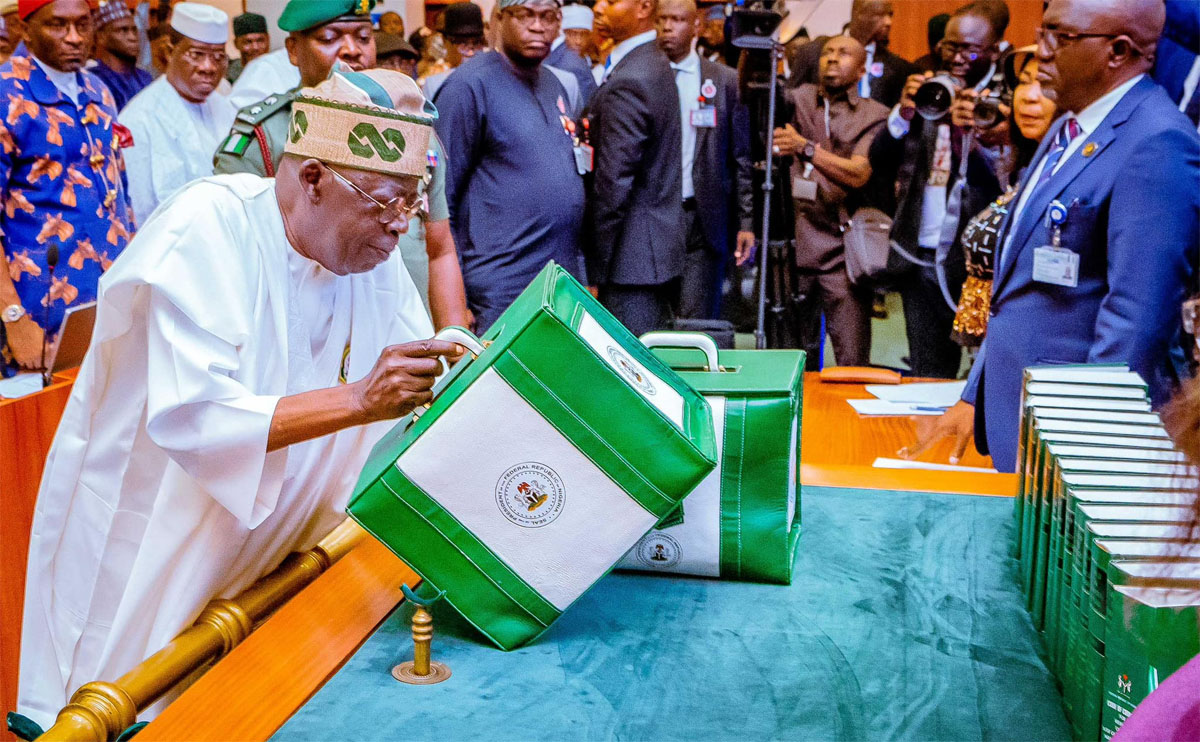
Senate Passes ₦68.32trn 2026 Budget, Increases Tinubu’s Proposal
Senate Passes ₦68.32trn 2026 Budget, Increases Tinubu’s Proposal
The Senate on Tuesday passed Nigeria’s ₦68.32 trillion 2026 Appropriation Bill, marking a sharp increase from the ₦58.47 trillion initially presented by Bola Ahmed Tinubu in December 2025.
The upper chamber approved the revised figure following a formal request by the President, who sought an upward review of the budget to reflect additional fiscal realities, legacy obligations, and priority national projects.
The spending plan, themed “Budget of Consolidation, Renewed Resilience and Shared Prosperity,” is aimed at sustaining macroeconomic reforms, boosting economic growth, job creation, and poverty reduction, while strengthening social protection for vulnerable Nigerians.
The approved total of ₦68,323,309,818,667 includes ₦4.8 trillion for statutory transfers, ₦15.81 trillion for debt servicing, ₦15.43 trillion for recurrent expenditure, and ₦32.29 trillion for capital expenditure, with the capital component taking the largest share to drive infrastructure and development.
A major driver of the increase is the inclusion of about ₦7.71 trillion to settle outstanding capital projects rolled over from the 2025 fiscal year, alongside an additional ₦2 trillion earmarked for new priority interventions across sectors. Lawmakers noted that a significant number of 2025 projects could not be completed due to revenue constraints, necessitating their rollover.
READ ALSO:
- FG Raises Gas Price to $2.18/MMBtu, Signals Fresh Economic Pressure for Nigerians
- Court Orders Final Forfeiture of Jeremiah Useni’s UK Property to FG
- Senate approves Tinubu’s $6bn loan request
The Senate also approved key strategic interventions, including ₦478.6 billion as equity contribution for presidential legacy rail projects in Lagos, Kano, Kaduna, and Ogun states, as well as feasibility studies for urban rail systems in Enugu and Maiduguri. It further cleared ₦8.96 billion for feasibility studies covering the Calabar–Maiduguri corridor and the Maiduguri–Sokoto superhighway, underscoring a renewed focus on nationwide connectivity.
In the health sector, the budget provides ₦482.76 billion for critical interventions tied to Nigeria’s bilateral and multilateral commitments, while the judiciary received significant allocations. These include ₦98.5 billion for the Court of Appeal, ₦36.7 billion for the Supreme Court, and ₦268.54 billion to strengthen judicial capacity, particularly ahead of the 2027 general elections.
On the revenue side, the fiscal framework is supported by an upward adjustment of the oil benchmark, projected to generate an additional ₦2.59 trillion, alongside increased non-oil revenue expectations. Lawmakers highlighted improved performance in the telecommunications sector, projecting about ₦724 billion in company income tax from MTN Nigeria and ₦150 billion from Airtel Nigeria.
To finance the deficit, the government proposed additional borrowings of about ₦6.16 trillion, reflecting ongoing reliance on debt to support budget expansion amid revenue limitations.
The bill underwent extensive legislative scrutiny, including committee reviews, engagements with the President’s economic team, and a public hearing involving Ministries, Departments and Agencies (MDAs), civil society organisations, and other stakeholders.
The Senate Committee on Appropriations explained that the adjustments were necessary to “regularise outstanding legacy capital commitments” and prevent the 2026 budget from being weighed down by unresolved obligations. It also noted that nearly 70 per cent of capital projects were rolled over due to revenue shortfalls in 2025.
Lawmakers expressed concerns over delays in fund releases during the previous fiscal year and warned against bureaucratic bottlenecks that could hinder implementation. They called for stronger coordination between the executive and legislature, alongside strict oversight to ensure that budgetary allocations translate into tangible development outcomes.
In a related resolution, the Senate approved the extension of the 2025 Appropriation Act implementation period to June 30, 2026, to allow completion of ongoing projects.
Speaking after the passage, Senate President Godswill Akpabio said the revised budget would ensure adequate funding for critical sectors and accelerate national development. He added that the harmonised work between both chambers eliminated the need for a conference committee and expressed optimism that increased revenue—particularly from ongoing tax reforms—would support effective implementation.
The passage of the 2026 budget signals the Federal Government’s continued push to balance economic reforms, infrastructure expansion, and social investment, even as concerns persist over rising debt levels and fiscal sustainability.
Senate Passes ₦68.32trn 2026 Budget, Increases Tinubu’s Proposal
News
Senate approves Tinubu’s $6bn loan request
Senate approves Tinubu’s $6bn loan request
The Senate on Tuesday approved President Bola Ahmed Tinubu’s request to secure external loans totalling $6bn to finance key infrastructure projects and support budget implementation.
The approval followed the consideration of a report presented by the Chairman of the Senate Committee on Local and Foreign Debts, Aliyu Wamakko, shortly after the President’s request was read on the floor by Senate President Godswill Akpabio.
The loan request was transmitted to the upper chamber in two separate letters. In the first, the President sought approval to obtain up to $5bn through a structured financing arrangement with First Abu Dhabi Bank to address funding gaps in the 2026 budget, meet existing financial obligations, and support priority projects.
In the second request, Tinubu asked the Senate to approve a $1bn loan facility backed by UK Export Finance and arranged by Citibank, London, for the rehabilitation of the Lagos Port Complex and Tin Can Island Port.
READ ALSO:
- US Warns Iran Against Closing Strait of Hormuz, Cites “Severe Consequences”
- China Thanks ‘Relevant Parties’ as Ships Cross Strait of Hormuz Amid Tensions
- Osimhen Among Highest-Paid African Footballers in 2026 — See Full List
According to the President, the port rehabilitation projects are expected to enhance operational efficiency, improve safety standards, and strengthen Nigeria’s competitiveness as a regional maritime hub.
Presenting the committee’s report, Wamakko said the proposed loans were in line with existing laws and necessary to fund critical infrastructure and stimulate economic growth.
The Senate subsequently approved the requests after deliberations, signalling legislative backing for the Federal Government’s plan to bridge fiscal deficits through external borrowing.
The approval underscores the government’s continued reliance on foreign loans to support development projects amid mounting fiscal pressures.
Senate approves Tinubu’s $6bn loan request
News
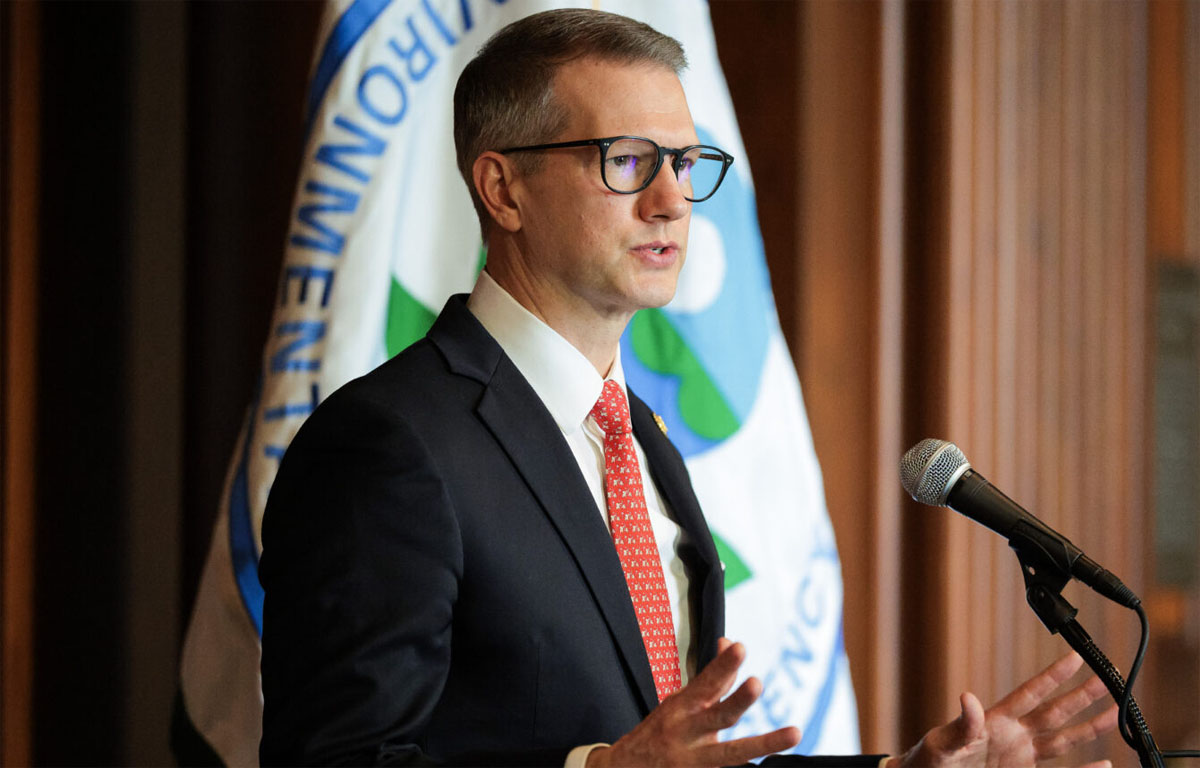
Plateau Palm Sunday Massacre: US Lawmaker Warns Nigeria
Plateau Palm Sunday Massacre: US Lawmaker Warns Nigeria
The United States lawmaker, Riley Moore, has issued a strong warning to Nigerian authorities following a deadly Palm Sunday attack in Jos, Plateau State, describing it as part of a disturbing pattern of attacks on Christians during religious observances. Moore, reacting via his X handle, stated that at least 10 Christians were killed in Jos, adding: “Radical Islamic terrorists opened fire on the Christians before hacking them to pieces with machetes. This is sickening and unacceptable, but it’s not surprising.”
He warned that such incidents are increasingly recurrent. “This tragedy follows a pattern of radical Islamic terrorists massacring Christians on Holy Days. In fact, terrorists have attacked Christians in Nigeria on every single holy day in recent memory,” he said. The lawmaker urged the Nigerian government to take immediate and decisive action, saying, “Abuja knows this pattern and they must massively ramp up security for the Triduum and Easter. If they don’t take this threat seriously and mobilise to defend our brothers and sisters in Christ, blood of these martyrs will be on their hands, and there will be significant consequences for Nigeria’s relationship with the United States.”
READ ALSO:
- Cars Torched as South Africans Protest Alleged Nigerian ‘Igbo King’ Coronation
- AI Facial Recognition Error: Grandmother Wrongfully Jailed for Five Months
- El-Rufai Alleges Plot to Arrest Brother to Force Negotiation
The violence took place on March 29, 2026, in Gari Ya Waye, Angwan Rukuba, Jos North Local Government Area, when suspected gunmen on motorcycles opened fire on residents. Eyewitnesses described chaos and panic, with families fleeing as the assailants moved through crowded streets, targeting civilians, traders, and passersby. State authorities confirmed that 27 people were killed and many others injured in the attack. Following the tragedy, Plateau State Governor Caleb Mutfwang imposed a 48-hour curfew in affected areas and directed security agencies to intensify efforts to apprehend the perpetrators.
The attack prompted widespread outrage, with residents defying the curfew to protest and demand improved security. Civic groups and community leaders condemned the killings, calling for urgent action to protect civilians. The Christian Association of Nigeria (CAN) decried the attacks, demanding accountability and highlighting the repeated targeting of Christian communities during religious holidays.
Moore’s warning underscores the international attention on security challenges in Nigeria’s Middle Belt, where violence from armed groups and communal conflicts remains a persistent threat. Analysts say attacks like the Palm Sunday killings risk eroding confidence in Nigeria’s ability to protect its citizens and could strain diplomatic relations with key allies such as the United States.
Plateau Palm Sunday Massacre: US Lawmaker Warns Nigeria

-

 Entertainment2 days ago
Funke Akindele, Toyin Abraham Spark Reactions Over Alleged Snub at Iyabo Ojo’s Premiere
-
 metro2 days ago
Jos Attack: Plateau Govt Declares 48-Hour Curfew After Deadly Assault
-
 Education23 hours ago
WAEC Releases 2026 WASSCE Timetable for School Candidates
-

 Auto19 hours ago
Lagos NURTW Chairman Sego Distributes Exotic Cars, Luxury Items to Cabinet Members (Video)
-
 News2 days ago
UK Raises Visa Costs, Tightens Immigration Rules From April 8
-
 International2 days ago
Iran Threatens US-Linked Universities in Middle East Amid Escalating Tensions
-

 metro22 hours ago
Cars Torched as South Africans Protest Alleged Nigerian ‘Igbo King’ Coronation
-

 Auto2 days ago
Motoring World marks 30 years, set to rally industry leaders in Lagos