
Business
Governors should lead investment drive in their states, says NIPC boss

Yewande Sadiku, executive secretary of the Nigerian Investment Promotion Commission (NIPC), says governors should spearhead investment drive in their states.
Speaking on Thursday during a programme on Arise TV, she explained that investments are mostly generated at state level due to the relative autonomy of states.
Noting that encouraging investment is a “great” responsibility of the federal government, she said the nation would get more investments if all 36 governors are actively involved in the process.
“In my view, investment promotion is most effective when state governors see themselves as the chief investment promoter and the person who heads the investment promotion agency (IPA) is your first assistant,” she said.
“Some governors do it brilliantly. They push the envelope when it comes to attracting investments to their states. The person who acts as the head of the IPA needs to have direct access to the principal. When there are issues that require resolution and knots that require being undone, it gets attention immediately and quickly.
“Nigeria will only succeed at this game if across all 36 states, all the governors gets it.”
Sadiku listed insecurity and corruption as the major drawbacks to attracting investments into the country.
“Increasingly, there is also policy volatility. That is, the speed and the rate at which policy changes happen and the immediacy of those changes,” she added.
“There is regulatory arbitrariness which they have long talked about. Even when things are in writing about how policies should be applied, they are applied in reality somewhat differently.”
Recently, the agency announced that investment in Nigeria rose to $8.41 billion in the first quarter of 2021 (Q1 2021), adding that Balyesa and Delta states emerged top investment destinations during the period.






Business
New inflation figures: Food prices jolt Nigerians as hunger bites

New inflation figures: Food prices jolt Nigerians as hunger bites
Just when Nigerian households began to catch their breath, the cost of putting food on the table has surged again—signalling a troubling return of pressure on already strained wallets.
After six consecutive months of easing, food inflation made an abrupt comeback in February, exposing the fragile nature of recent price stability and raising fresh concerns about the cost-of-living outlook.
Latest data from the National Bureau of Statistics (NBS) show that annual food inflation climbed sharply to 12.12 per cent in February from 8.89 per cent in January. On a month-to-month basis, the shift was even more dramatic, swinging from a -6.02 per cent decline in January to a 4.69 per cent increase in February.
Behind the spike is a familiar story: rising prices of staple foods that form the backbone of everyday meals. Items such as beans, yam flour, cassava tuber, crayfish, millet flour and ogbono recorded notable increases, effectively pushing food costs higher across markets.
The rebound paints a stark contrast to the broader inflation picture. While headline inflation edged down marginally to 15.06 per cent in February from 15.10 per cent in January, the relief appears superficial as month-on-month figures reveal a renewed acceleration in price growth.
In practical terms, this means that although inflation is slowing on paper compared to last year, Nigerians are once again paying more for goods—especially food—than they did just a month ago.
A deeper look at regional data underscores the uneven burden. Kogi State emerged as the hardest hit, recording the highest food inflation rate at 26.91 per cent, followed by Adamawa and Benue. At the other end, states like Katsina, Bauchi and Imo posted relatively slower increases, offering limited pockets of relief.
The reversal in food inflation trend raises critical questions about supply stability, market dynamics and the sustainability of recent gains. For millions of households, however, the implications are immediate and personal: the brief respite at the market may already be over.
As food prices climb again, the struggle to afford basic meals is tightening its grip—reminding policymakers that the battle against inflation is far from won.
Business
Dangote, China’s GCL Sign $4.2bn Gas Deal to Power Ethiopia Fertiliser Megaproject
Dangote, China’s GCL Sign $4.2bn Gas Deal to Power Ethiopia Fertiliser Megaproject
Dangote Industries Limited (DIL) has sealed a US$4.2 billion, 25‑year natural gas supply agreement with China’s GCL Group, marking one of the most significant China–Africa industrial partnerships in recent years. The deal will supply natural gas to Dangote Group’s upcoming 3‑million‑tonne-per-year urea fertiliser complex in Gode, Somali Region, Ethiopia, a project expected to transform East Africa’s fertiliser landscape.
The fertiliser plant, valued at US$2.5 billion, is being developed under a 60:40 equity partnership between Dangote Group and Ethiopian Investment Holdings (EIH). Scheduled to begin operations in 2029, it will become the largest modern fertiliser hub in East Africa, meeting Ethiopia’s current urea import demand while supplying neighbouring markets. Analysts say the project will reduce dependence on imports, strengthen regional food security, and support local industrial growth.
The natural gas required for the project will be sourced from the Calub Gas Field in Ethiopia’s Ogaden Basin and transported via a dedicated 108-kilometre pipeline directly to the fertiliser complex. This integrated approach links upstream gas extraction, midstream transport, and downstream fertiliser production, creating a closed-loop “gas-to-fertiliser” value chain.
READ ALSO:
- Trump’s Claim of Former President Regret Over Iran Denied by Aides
- Oil Prices Jump as Strait of Hormuz Crisis Intensifies
- Maiduguri Horror: 23 Dead, 108 Injured in Coordinated Bomb Attacks
Speaking on the deal, Aliko Dangote, President and CEO of Dangote Industries, said: “Africa cannot continue exporting raw materials while importing finished products. Through strategic cooperation with GCL, we will achieve a seamless energy-to-food industrial chain, advancing Africa’s industrial autonomy and food security.”
Zhu Gongshan, Chairman of GCL Group, highlighted the partnership’s broader impact, noting that it will expand energy, chemical, and food security sectors in Ethiopia and advance a mutually beneficial industrial ecosystem. He also commended the Ethiopian government for facilitating the project.
Industry experts note that the project carries multiple strategic benefits. It is expected to create thousands of direct and indirect jobs, stimulate infrastructure development in the Somali Region, and support low-carbon industrialisation by using natural gas as feedstock. The initiative also aligns with broader continental goals of building integrated energy-to-food systems, leveraging local resources, and enhancing industrial value chains.
The partnership is also considered a flagship initiative under China’s Belt and Road framework, demonstrating how industrial cooperation can combine energy development with agricultural advancement to strengthen food security and regional economic resilience.
By integrating Chinese technological expertise with Africa’s resource endowment, the project sets a benchmark for large-scale, resource-driven industrial projects on the continent, positioning East Africa as a hub for modern fertiliser production and signalling a new era of Africa–China industrial collaboration.
Dangote, China’s GCL Sign $4.2bn Gas Deal to Power Ethiopia Fertiliser Megaproject
Business
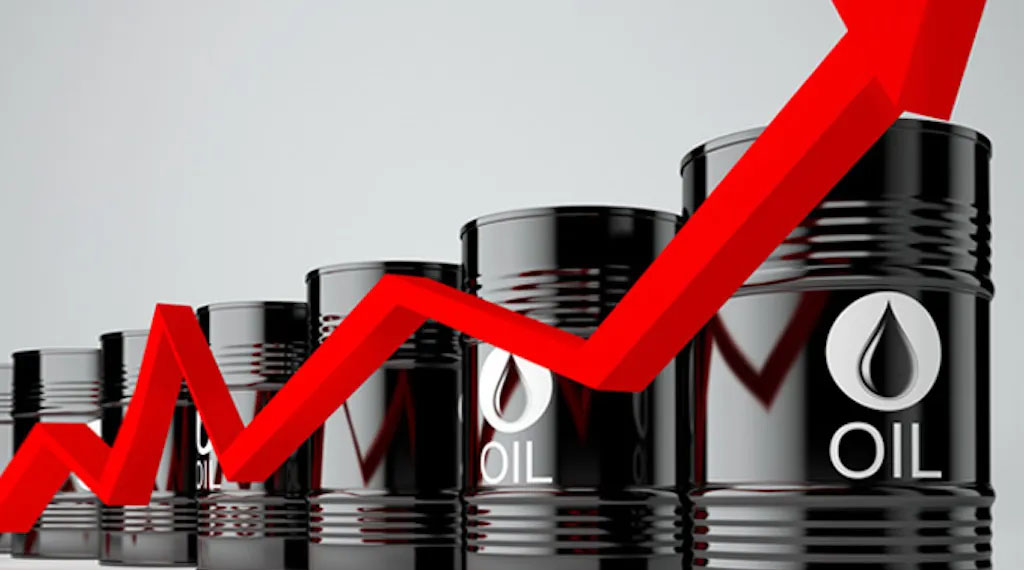
Oil Prices Jump as Strait of Hormuz Crisis Intensifies
Oil Prices Jump as Strait of Hormuz Crisis Intensifies
Global oil prices climbed sharply on Tuesday as escalating tensions around the Strait of Hormuz raised fears of major supply disruptions. The strategic waterway, through which nearly 20% of the world’s seaborne oil passes, has effectively been restricted by Iran, intensifying geopolitical uncertainty and driving crude prices higher.
Both Brent crude and West Texas Intermediate (WTI) rose more than 2%, hovering around $100 per barrel, partially offsetting losses recorded the previous day after the International Energy Agency (IEA) suggested that additional stockpiles could be released to stabilize supply. Analysts warn that continued disruption in the strait could lead to further volatility in energy markets.
U.S. President Donald Trump urged European and allied nations to assist in reopening the Strait of Hormuz over the weekend, describing it as a shared global responsibility. However, many countries resisted involvement: Germany’s Chancellor Friedrich Merz stated that the issue is not a NATO matter, while Britain, Spain, Poland, Greece, Sweden, Australia, and Japan declined participation. Trump warned that inaction could affect NATO’s credibility and postponed a planned summit with Xi Jinping due to the escalating situation.
READ ALSO:
- Maiduguri Horror: 23 Dead, 108 Injured in Coordinated Bomb Attacks
- Nigeria-UK Relations in Focus as Tinubu Begins Landmark State Visit
- Maiduguri Horror: 23 Dead, 108 Injured in Coordinated Bomb Attacks
The crisis has been worsened by attacks on energy infrastructure across the region. Drone strikes targeted major facilities in the United Arab Emirates and Iraq, while Israel conducted extensive strikes in Tehran and against Hezbollah positions in Beirut. Additionally, a combined drone and rocket attack struck the U.S. embassy in Baghdad, heightening regional instability.
Despite the surge in oil prices, global equities extended gains from Monday, supported by strong performances in technology stocks. Nvidia projected it could generate at least $1 trillion in revenue by 2027, boosting investor confidence. Asian markets including Tokyo, Hong Kong, Shanghai, Sydney, Seoul, Singapore, Taipei, and Manila all recorded increases, following positive closes on Wall Street.
Reports from Marine Traffic indicated that a Pakistani oil tanker successfully passed through the Strait of Hormuz with its tracking system active — the first non-Iranian vessel to do so recently — signaling a minor easing of shipping risk, though analysts caution that instability in the region remains high.
Experts say the combination of geopolitical uncertainty, supply disruptions, and rising crude prices could drive inflationary pressures and impact global economic growth. Traders are closely monitoring central bank policies, with interest rate adjustments expected as governments seek to mitigate the economic effects of the energy shock.
Oil Prices Jump as Strait of Hormuz Crisis Intensifies

-

 Railway1 day ago
BREAKING: Several Passengers Injured as Abuja–Kaduna Train Derails After Collision
-

 metro1 day ago
Court Screens Video Showing NDLEA Allegedly Helping Cocaine Smugglers at Enugu Airport
-

 International2 days ago
Iran–Israel Conflict Escalates As IRGC Threatens To Kill Netanyahu
-
 metro1 day ago
Tinubu Orders Nationwide Free Rice Distribution for Ramadan, Lent Support
-
 International2 days ago
Netanyahu dispels death rumours, appears in video from Coffee Shop
-

 News9 hours ago
Maiduguri Bombings: Shocking Trump–Tinubu Claim Goes Viral — Fact or Fabrication?
-

 Education2 days ago
Students expelled as police probe viral assault at Igbinedion School
-

 metro3 days ago
Lagos reintroduces monthly sanitation as waste, flood risks mount