
metro
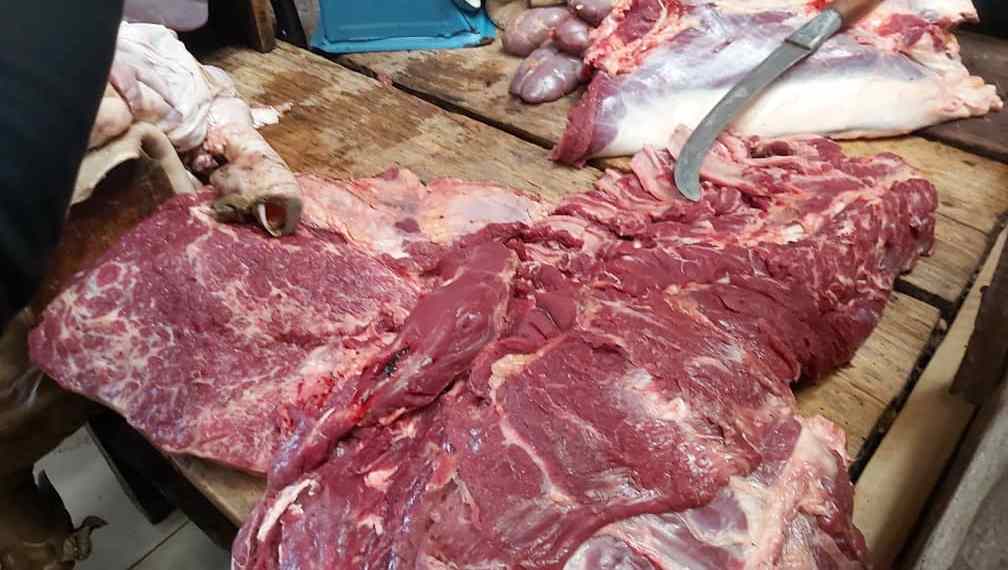
Govt intervenes as alleged poisoned cow meat unsettles Ilorin residents
Govt intervenes as alleged poisoned cow meat unsettles Ilorin residents
The Kwara State Government has commenced investigation into alleged sale of poisoned cow meat at the Mandate Market, Ilorin, the state capital.
Already, a team of government officials has visited the market and seized all the cow meat suspected to have been poisoned.
The government in a statement on Sunday appealled to the people to remain calm while trying to establish the veracity of the claims.
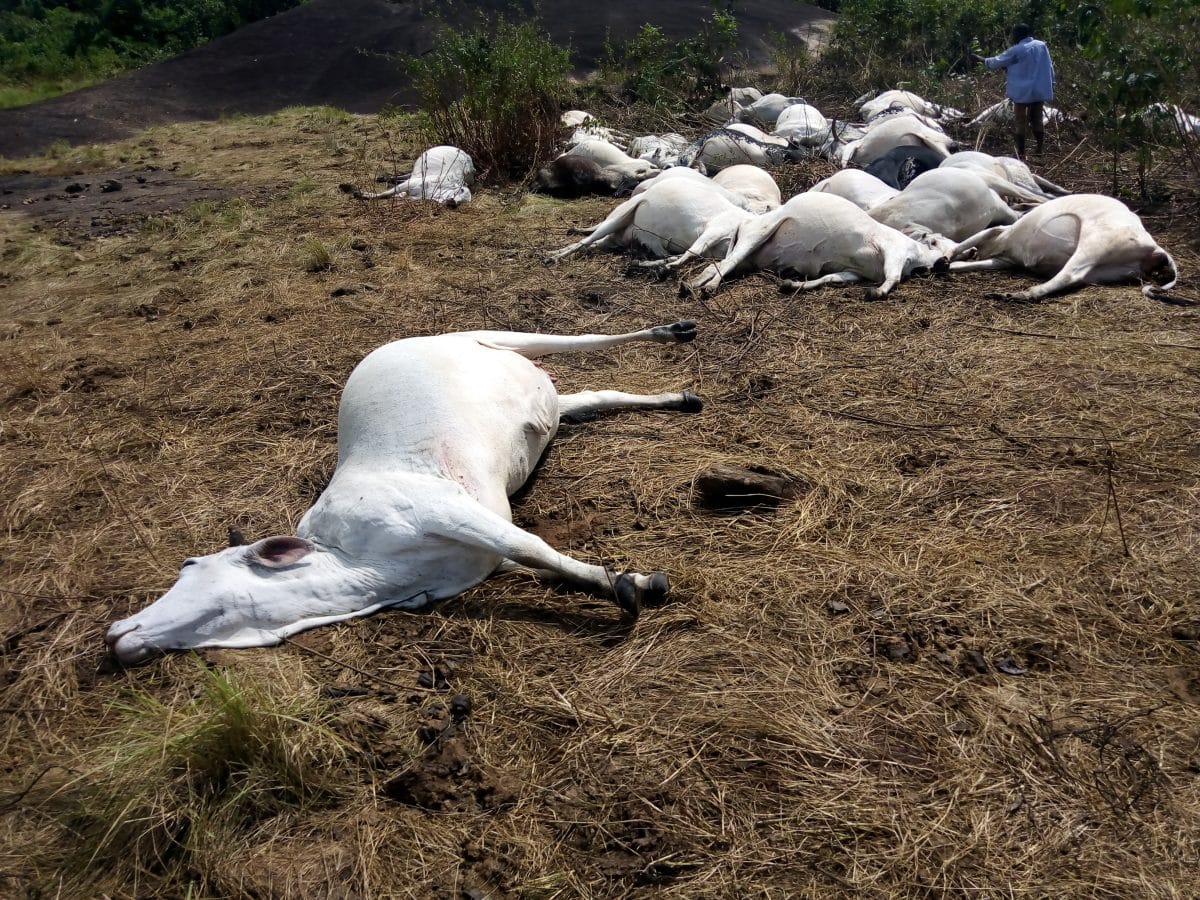
It was earlier reported that 33 cows had died as a result of poison and the meat sent to the market for sale.
The investigation followed an alarm raised by the Kwara Monitoring Group (KMG) in a statement on Sunday, April 21, 2024, calling for an immediate action to prevent the poisoned meat from being sold to unsuspecting people.
The group said, “Over 33 cows were suspected to be poisoned and died immediately but surprisingly, the dead animals were slaughtered and distributed out to butchers to be sold.
“It happened along Atere Road (that leads to Al Hikma campus) right inside College of Arabic and Islamic Studies, Ilorin.
“It is our prayer that the concerned ministry and agency take appropriate action as nobody knows whose family the poisoned meat could be sold out to in the market.”
In a reaction, the statement government issued a statement titled “Kwara govt team arrives Mandate market, confiscates suspected beef” jointly signed by the Commissioners for Health, Dr Amina El-Imam, and that of agriculture, Toyosi Thomas Adebayo. It said the government team had moved in.
The statement read, “Kwara State Government officials and experts have arrived at the Mandate Market in Ilorin to activate measures to protect the public amid rumours of poisoned cow meat.
“On the team were the Commissioner for Agriculture and Rural Development, Toyosi Thomas-Adebayo; Commissioner for Health Dr. Amina Ahmed El-Imam; officials from the Ministry of Environment, including the Executive Secretary of the Kwara State Environmental Protection Agency, Mrs Folorunsho Idayat, and officials from the Ministry of Health including the Permanent Secretary, Alhaja Afusat Ibrahim, and the Director of Public Health Dr. Oluwatosin Fakayode, among others.
“The government has immediately confiscated all the suspected meats for laboratory tests and confirmation of claims after initial engagements with the Mandate Market stakeholders.
“Further information will be given as may become necessary.
“The government urges members of the public to be calm while the team establishes the truth of the rumour of poisoned meat.”



metro
Sham Marriage, Tax Fraud: Kazeem Faces Denaturalisation in US

Sham Marriage, Tax Fraud: Kazeem Faces Denaturalisation in US
The administration of Donald Trump has initiated moves to denaturalise Nigerian-born Oluwatosin Kazeem, convicted of orchestrating a $12 million tax fraud scheme, despite a sentence commutation previously granted by Joe Biden.
The United States Department of Justice is seeking to revoke Kazeem’s U.S. citizenship, arguing that it was obtained through fraud, deception, and sham marriages.
Kazeem was investigated, tried, and convicted between 2015 and 2017, before being sentenced to 15 years imprisonment in June 2018 by a U.S. District Court in Baltimore, Maryland. However, his sentence was commuted to six years in December 2024, a move that reduced his jail term but did not erase his conviction.
According to U.S. prosecutors, Kazeem ran a large-scale identity theft and tax fraud operation, using stolen personal data of thousands of Americans to file fraudulent tax returns.
READ ALSO:
- PDP Crisis Deepens as Party Suspends Wike-Aligned Chairman
- Diplomatic Rift: Spain Withdraws Ambassador from Israel
- Pentagon Seeks Over $200bn to Fund Iran War as US Military Costs Surge
Investigations by the Internal Revenue Service (IRS) revealed that:
- He purchased over 90,000 stolen identities from a foreign hacker
- Attempted to fraudulently claim up to $91 million in tax refunds
- Successfully obtained between $11 million and $12 million between 2012 and 2015
The case first came to light in 2013 after an Oregon couple reported that fraudulent tax returns were filed using their personal information, triggering a federal probe that exposed the wider scheme.
Authorities said Kazeem also trained accomplices, including his younger brother, on how to exploit stolen personal identifiable information (PII) to bypass IRS security systems.
Further investigations uncovered that Kazeem laundered proceeds of the fraud into assets in both the United States and Nigeria, including:
- A planned $6 million luxury hotel project in Lagos
- A $200,000 deposit for a home in Maryland
- Another property worth $175,000 in Maryland
In an attempt to evade authorities, he allegedly transferred ownership of properties to his sister in Nigeria, but was arrested shortly after and later convicted on 19 counts, including mail fraud, wire fraud, aggravated identity theft, and conspiracy.
In addition to financial crimes, the Justice Department said Kazeem entered into sham marriages with two U.S. citizens solely to obtain permanent residency and eventual citizenship — a key factor now being used to justify his denaturalisation.
“U.S. citizenship is a privilege, and we will continue to ask courts to revoke a status that was obtained through fraud and deceit,” said Brett A. Shumate.
Legal analysts note that while Biden’s commutation reduced Kazeem’s prison sentence, it does not prevent civil proceedings such as denaturalisation or possible deportation.
If the court grants the request, Kazeem could lose his citizenship and face removal from the United States after completing his sentence.
The case highlights a broader push by the Trump administration to tighten enforcement against immigration fraud and financial crimes, particularly involving individuals who obtained citizenship under false pretences.
Sham Marriage, Tax Fraud: Kazeem Faces Denaturalisation in US
metro
Recovered Funds: EFCC Hands Over ₦3.9bn Linked to Oil Sector Fraud
Recovered Funds: EFCC Hands Over ₦3.9bn Linked to Oil Sector Fraud
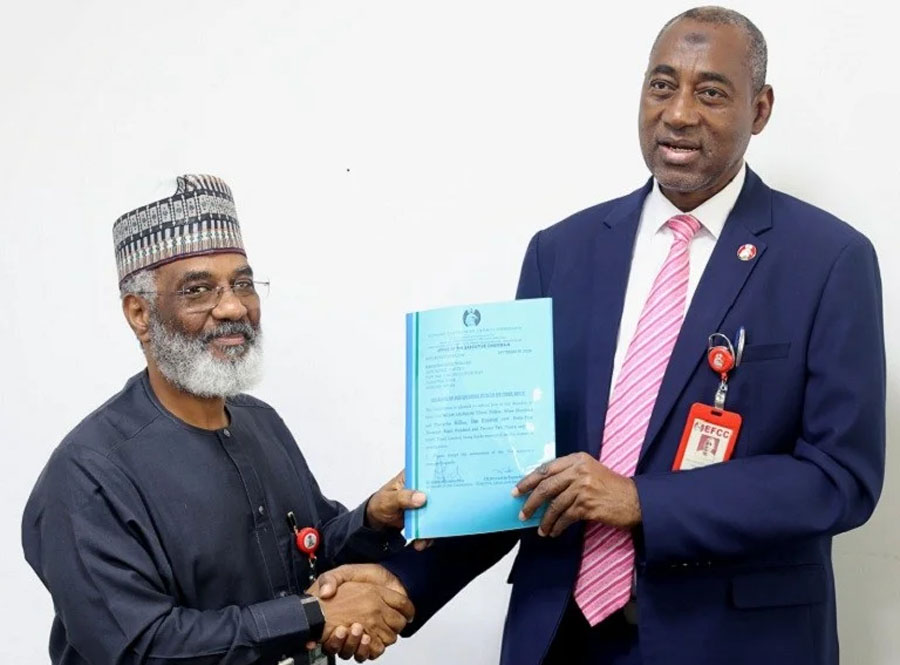
The Economic and Financial Crimes Commission (EFCC) has formally handed over ₦3,936,145,822 in recovered funds to the Nigerian National Petroleum Company Limited (NNPCL), reinforcing ongoing efforts to combat corruption and improve transparency within Nigeria’s oil and gas sector.
The official presentation took place on March 18, 2026, at the EFCC headquarters in Abuja, where the funds were handed over on behalf of EFCC Chairman Ola Olukoyede by the Commission’s Secretary, Mohammed Hammajoda.
According to the EFCC, the recovered sum was linked to fraudulent activities involving individuals connected to NNPCL, uncovered through extensive investigations. The agency noted that the recovery forms part of its broader mandate to trace, seize, and return proceeds of financial crimes to affected institutions and the Nigerian state.
Hammajoda reiterated the commission’s commitment to fighting financial and economic crimes, emphasizing that the EFCC remains dedicated to protecting public resources despite operational challenges. He stressed that sustained enforcement actions and recoveries are critical to strengthening governance and deterring corrupt practices.
READ ALSO:
- AU Rallies African Nations Against Terrorism as CDS Warns of ‘Enemies Within’
- Trump Says Israel Will Halt Further Strikes on Iran’s Gas Field
- 9 Things King Charles III Said About Nigeria
The handover highlights the importance of asset recovery, anti-corruption enforcement, and institutional accountability in safeguarding Nigeria’s economic resources, particularly in strategic sectors such as oil and gas.
Receiving the funds on behalf of NNPCL, Mumuni Dagazau, Executive Vice President (Downstream), described the development as a significant milestone in the company’s reform process. He said the collaboration between NNPCL and the EFCC reflects growing institutional synergy aimed at addressing internal vulnerabilities and improving oversight mechanisms within the national oil company.
Dagazau further reaffirmed NNPCL’s commitment to transparency, accountability, and compliance with governance standards. He added that continued cooperation with anti-graft agencies will help strengthen internal controls, enhance operational efficiency, and reduce financial leakages across the organization.
The recovery and return of the funds also align with broader government efforts to ensure that proceeds of corruption are recovered and reinvested into the economy. Authorities maintain that such actions are essential for improving public trust, strengthening institutions, and promoting responsible management of national resources.
Analysts say that sustained collaboration between agencies like the EFCC and major public enterprises such as NNPCL is vital for tackling systemic corruption, improving financial discipline, and ensuring that Nigeria’s revenue-generating sectors operate with greater accountability and transparency.
Recovered Funds: EFCC Hands Over ₦3.9bn Linked to Oil Sector Fraud
metro
AU Rallies African Nations Against Terrorism as CDS Warns of ‘Enemies Within’
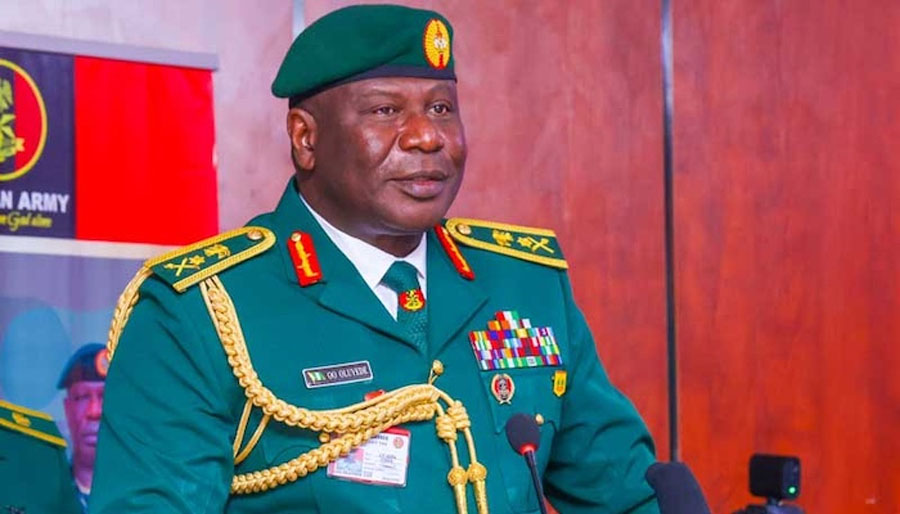
AU Rallies African Nations Against Terrorism as CDS Warns of ‘Enemies Within’
African Union has intensified efforts to strengthen collective security across the continent, calling on member states to deepen cooperation in intelligence sharing and regional defense as Nigeria’s Chief of Defence Staff, General Olufemi Oluyede raised concerns over internal collaborators aiding terrorist groups.
Speaking at a high-level security engagement, the AU urged African countries to improve border security, enhance military coordination, and expand intelligence-sharing networks to effectively counter the growing threat of terrorism in regions such as the Sahel and West Africa. The organisation stressed that coordinated action among member states remains critical to addressing the transnational nature of extremist violence.
The renewed push comes amid persistent insecurity across parts of Africa, where armed groups continue to exploit weak governance, porous borders, and socioeconomic challenges to expand their influence. Analysts note that the evolving tactics of terrorist organisations require equally adaptive and unified responses from governments and regional bodies.
Nigeria’s Chief of Defence Staff, General Olufemi Oluyede, warned that beyond external threats, the country faces significant risks from “enemies within”—individuals and networks operating domestically who support insurgent activities. According to him, these internal actors provide logistics, intelligence, and safe havens that enable terrorist operations and complicate military efforts.
READ ALSO:
- Trump Says Israel Will Halt Further Strikes on Iran’s Gas Field
- 9 Things King Charles III Said About Nigeria
- Barcelona Crush Newcastle 7-2 to Reach UCL Quarter-Finals
He explained that such internal collaboration undermines ongoing counterterrorism operations by weakening intelligence gathering and increasing operational uncertainty. Oluyede emphasized the need for stronger internal monitoring, improved inter-agency coordination, and strict accountability within the security system to address the threat effectively.
The CDS also called on citizens to play an active role in supporting national security by remaining vigilant and reporting suspicious activities to authorities. He noted that community cooperation is essential in identifying early warning signs and disrupting terrorist networks before they can execute attacks.
The AU echoed similar sentiments, highlighting the importance of community engagement as part of its broader continental strategy to combat terrorism. It urged governments to involve local populations in security awareness initiatives and encourage timely reporting of unusual activities.
Security experts at the engagement stressed that terrorism in Africa has become increasingly sophisticated, with groups forming cross-border alliances and leveraging modern communication tools. They argued that beyond military action, long-term solutions must include investments in education, economic opportunities, and governance reforms to address the root causes of radicalization.
The AU further encouraged the adoption of regional frameworks, particularly in high-risk zones such as the Lake Chad Basin and the Sahel, where multiple countries face interconnected security challenges. Coordinated regional strategies, experts say, will help close operational gaps exploited by terrorist groups.
As threats continue to evolve, both the African Union and Nigeria’s military leadership maintain that sustained cooperation, robust intelligence systems, and active citizen participation will be key to strengthening Africa’s overall counterterrorism strategy and ensuring long-term stability across the continent.
AU Rallies African Nations Against Terrorism as CDS Warns of ‘Enemies Within’

-

 metro2 days ago
Just In: Federal Govt Announces Public Holidays for Eid-el-Fitr
-
 News17 hours ago
Eid‑el‑Fitr in Nigeria Confirmed for Friday, March 20, 2026
-

 metro22 hours ago
BREAKING: Eid-el-Fitr Date Confirmed in Saudi Arabia, Nigeria Awaits Sultan’s Decision
-

 metro2 days ago
Zakatul Fitr: Rules, Amount, Timing and Distribution Before Eid al-Fitr
-

 metro3 days ago
Court Screens Video Showing NDLEA Allegedly Helping Cocaine Smugglers at Enugu Airport
-

 News2 days ago
Maiduguri Bombings: Shocking Trump–Tinubu Claim Goes Viral — Fact or Fabrication?
-

 metro22 hours ago
Court Confirms Nigerians’ Right to Record Police During Stop-and-Search Operations
-

 Sports3 days ago
Manchester United Confirms Casemiro Will Leave at Season’s End Despite Stellar Form