

metro
Gumi Questions FG’s Refusal To Dialogue With Bandits, Boko Haram, Cites Niger Delta Precedent
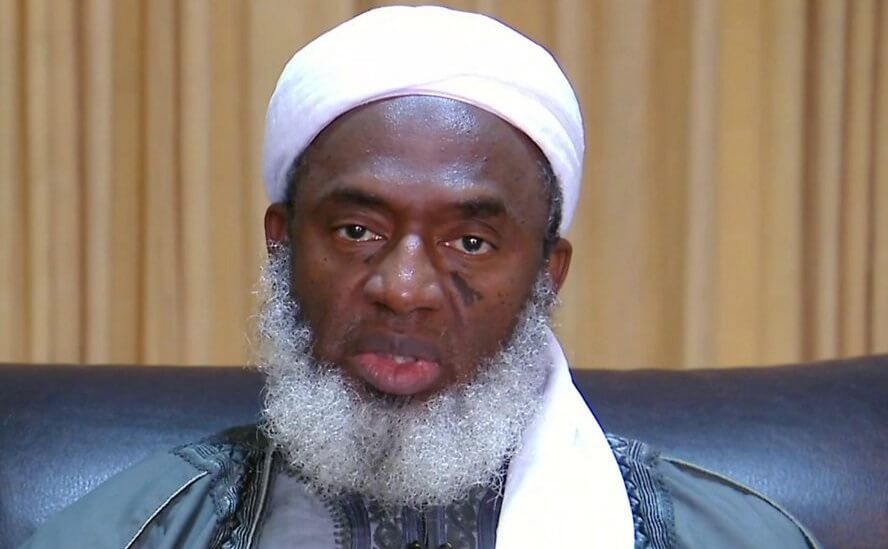
Gumi Questions FG’s Refusal To Dialogue With Bandits, Boko Haram, Cites Niger Delta Precedent
Controversial Islamic cleric, Sheikh Ahmad Gumi, has questioned why the Federal Government has not adopted dialogue with Boko Haram insurgents and armed bandits, drawing comparisons with peace efforts that helped end militancy in the Niger Delta. In a Facebook post on Saturday, Gumi recalled that former President Goodluck Jonathan and former Vice President Yemi Osinbajo engaged Niger Delta militants through visits to their camps as part of efforts to restore peace in the region. According to him, those engagements paved the way for programmes that significantly reduced militancy in the oil-producing region, demonstrating that dialogue could be an effective tool in resolving conflicts that seemed intractable. “The former President Jonathan visited delta militants in the creeks, so also the former vice president Osinbajo. They all came up with a program to tame the militants,” Gumi wrote, emphasising that the Nigerian government had successfully used engagement strategies in the past and could replicate such approaches in the current context. He wondered why a similar strategy has not been extended to armed groups operating in northern Nigeria, asking: “Who is going to visit BH and Bandits to tame them without fools castigating them?” , expressing frustration that those who advocate for dialogue are often met with public condemnation rather than constructive engagement.
Gumi has repeatedly advocated dialogue and rehabilitation as part of efforts to tackle insecurity in the North-West and North-East, positioning himself as a bridge between armed groups and the government. Over the years, he has visited bandit camps, particularly in Zamfara State, arguing that negotiations can complement military operations in achieving lasting peace, and that a purely kinetic approach has failed to yield the desired results. He has consistently maintained that the approach used to address the Niger Delta crisis should also be considered in tackling insecurity in northern Nigeria, pointing to the amnesty programme as a successful model of conflict resolution. The cleric has previously criticised the Federal Government’s classification of bandits as terrorist organisations, warning that the move could escalate insecurity and eliminate opportunities for dialogue, effectively closing the door on peaceful resolution. According to Gumi, some bandit groups had previously shown a willingness to negotiate and should not have been labelled terrorists, as such designations push them further into criminality and make engagement nearly impossible. “We don’t want to push them into terror beyond what they are doing now because it can get worse,” Gumi said in a viral video, cautioning that the government’s approach could backfire. He argued that some bandits in Zamfara State had in the past apprehended members of Boko Haram and handed them over to security agencies, suggesting that not all armed groups were aligned with extremist ideologies. The cleric further lamented that the designation has effectively shut down channels for engagement between clerics and armed groups, stating that “the only door that is remaining is for us clergy to go in and negotiate with them; that is closed permanently” , leaving little room for alternative pathways to peace.
READ ALSO:
- Police deny IGP Olatunji Disu issued shoot-on-sight order for illegal firearm carriers
- 2026 Ballon d’Or: Kane, Yamal lead race for football’s biggest prize
- Houthis Launch Missile at Saudi Arabia as Regional Tensions Escalate Amid US-Iran Strikes
His approach has remained controversial, drawing both praise and sharp criticism from various quarters of Nigerian society. While some have credited his interventions with facilitating the release of kidnapped victims, critics argue that engaging armed groups risks legitimising those responsible for killings, kidnappings and other violent crimes, potentially encouraging more criminal activity. The cleric has consistently denied supporting terrorism, insisting that his contacts with bandits and insurgents are solely aimed at ending violence through peaceful negotiations, and that his primary concern is the safety and well-being of ordinary Nigerians caught in the crossfire. In a statement issued in May 2026, Gumi expressed concern over what he described as persistent misrepresentation of his views, stating unequivocally that any suggestion of support for banditry or terrorism does not emanate from him, and urging the public to separate his advocacy for dialogue from endorsement of criminal activity.
The Federal Government introduced the Niger Delta Amnesty Programme in 2009 under the late President Umaru Musa Yar’Adua, marking a significant shift in how the state addressed the militancy crisis in the oil-producing region. The initiative, which was continued by former President Jonathan, encouraged thousands of militants to surrender their weapons in exchange for training, stipends and reintegration, contributing to a significant decline in attacks on oil facilities and restoring relative peace to the region after years of devastating conflict. Jonathan had previously visited militant camps in the Niger Delta while serving as vice president, saying the engagements helped lay the groundwork for the amnesty programme, and that direct interaction with the militants was essential to understanding their grievances and finding a path forward. According to former Niger Delta Minister Elder Godsday Orubebe, Jonathan undertook a perilous mission into the creeks, defying resistance from security chiefs who refused to allow the Vice President to visit the militants, demonstrating the political will required to pursue peace through unconventional means. Osinbajo also met militants, community leaders and traditional rulers during visits to the region as acting president in 2017, maintaining that dialogue should complement security operations in addressing the region’s challenges, and that the government must be willing to listen to all citizens regardless of their past actions. He defended the meetings, saying those in the region were Nigerian citizens with genuine grievances that deserved attention, and that ignoring their concerns would only perpetuate the cycle of violence.
Gumi has also called for a shift from a purely military approach to tackling insecurity, arguing that Nigeria has relied predominantly on military force since 2009, yet insecurity has continued to spread, indicating that the current strategy is not yielding the desired results. He advocated a broader rehabilitation framework involving engagement with armed groups, dislodging them from forests, enrolling their children in schools and creating pathways for surrender through amnesty arrangements, addressing the root causes of banditry rather than merely its symptoms. The cleric’s latest remarks add to the ongoing national debate over the most effective strategy for addressing the prolonged insurgency and widespread banditry affecting several northern states, with opinions sharply divided between those who favour military action and those who believe dialogue offers a viable alternative. While some stakeholders have advocated military action as the primary response, others have argued that dialogue and non-military measures could also play a role in ending the violence, pointing to the Niger Delta experience as evidence that engagement can work. As of the time of this report, the Federal Government had not issued an official response to Gumi’s latest comments, leaving the debate unresolved and the security situation in northern Nigeria continuing to deteriorate.
Gumi Questions FG’s Refusal To Dialogue With Bandits, Boko Haram, Cites Niger Delta Precedent









metro
Court Sentences POS Operator to Death for Role in Kidnap That Killed 83-Year-Old Man, Driver

Court Sentences POS Operator to Death for Role in Kidnap That Killed 83-Year-Old Man, Driver
An Imo State High Court has sentenced a 28-year-old point-of-sale (POS) operator, Isaac Okorie, to death by hanging for his role in the kidnapping and murder of an 83-year-old man, Chief Alexander Chukwuma Okoli, and his driver, Daniel Sarki, despite the payment of ransom by the victims’ family.
Justice Matthew Ijezie, sitting at the High Court in Urualla, within the Orlu Judicial Division, delivered the judgment on Tuesday, October 20, 2026, after finding Okorie guilty on six counts bordering on armed robbery, hostage-taking and murder.
The court held that the prosecution had proved its case beyond reasonable doubt through the evidence presented during the trial.
According to the judgment, the incident occurred on October 14, 2023, at Isiekenesi in Ideato South Local Government Area of Imo State, when Okoli and his driver were abducted by members of an armed criminal gang.
The court heard that Okorie conspired with other members of the gang, who were armed with guns, to seize the two men and take them into a bush.
The kidnappers also reportedly stole Okoli’s gold-coloured Toyota Corolla, with registration number AAH 989 RM.
The gang subsequently demanded a ransom of ₦100 million from the victims’ family in exchange for their release.
However, the family eventually paid ₦2.515 million, but the payment did not secure the safe return of the two men.
According to the court’s account, the gang killed both victims despite receiving the money and later sent photographs of their lifeless bodies to the family.
The remains of Okoli and his driver had yet to be recovered as of the time the judgment was reported, leaving their family members without the opportunity to give them a proper burial.
During the trial, the court heard that police investigations identified Okorie’s role in the criminal operation as receiving ransom payments from the families of kidnapping victims.
The evidence linking him to the operation formed part of the prosecution’s case, which the court found sufficient to establish his guilt on all six counts.
Following the conviction, the court gave Okorie an opportunity to plead for leniency before sentencing, a procedure known as allocutus.
Okorie reportedly appealed to the court for mercy, but Justice Ijezie proceeded to sentence him to death by hanging.
Reacting to the judgment, Ikenna Obi, a senior state counsel with the Imo State Ministry of Justice who prosecuted the case, described the ruling as significant.
Obi said the judgment would provide some measure of relief to the victims’ family, despite the continuing uncertainty surrounding the whereabouts of their remains.
He expressed hope that the conviction would deter individuals involved in kidnapping, armed robbery and other violent crimes, while discouraging others from joining criminal gangs.
The prosecutor also commended the judge for delivering what he described as a well-considered judgment in accordance with the law.
Amanda, the daughter of one of the victims, also reportedly expressed relief that the court had punished the convict.
She, however, said the family remained deeply distressed by the failure to recover the bodies of her father and his driver.
Although the judgment offered the family some comfort, she expressed hope that security agencies would intensify efforts to locate the remains and arrest other suspects who were still at large.
The conviction marks a significant development in the case, which began with the abduction of the elderly man and his driver nearly three years before the judgment.
However, the family’s search for closure remains incomplete, as the recovery of the victims’ remains and the prosecution of any outstanding suspects remain unresolved.
Court Sentences POS Operator to Death for Role in Kidnap That Killed 83-Year-Old Man, Driver
metro
MURIC Applauds Army as Mogadishu Cantonment Mosque Reopens After Week-Long Closure
The Muslim Rights Concern (MURIC) has commended the Nigerian Army Headquarters and the commandant of Mogadishu Cantonment for reopening a mosque used by Muslim soldiers and their families in Abuja after a week-long closure.
The Islamic human rights organisation said the mosque, which serves Muslim personnel and their families residing in military accommodation within the cantonment, was reopened on Tuesday, October 20, following an appeal by the group.
MURIC’s Executive Director, Professor Ishaq Akintola, disclosed this in a press statement issued on Sunday, October 25, 2026, describing the reopening as a welcome development that demonstrated the importance of dialogue and cooperation in resolving religious concerns.
According to Akintola, the mosque had been closed since October 12, preventing Muslim soldiers and their families living within the military facility from using it for their daily prayers.
He said MURIC had earlier appealed to the Army Headquarters and the cantonment authorities to explain the reason for the closure and restore access to the mosque for worshippers.
The organisation expressed concern over the disruption of daily prayers and urged the military authorities to address the matter.
Akintola said the mosque’s reopening on October 20, the same day MURIC publicly raised the issue, brought relief to the organisation and affected worshippers.
READ ALSO:
- Atiku Condemns Attack on Edo Comedian Over Refusal to Support Tinubu
- US Declares Two Nigerians Wanted Over $3.1m Medicare Fraud, Drug Offences
- Tibet in Mourning: 7.0 Quake Kills 16, Injures 76 as Rescue Teams Race Against Time in Nagqu
He described the development as an indication that concerns raised through dialogue and peaceful engagement could receive prompt attention from relevant authorities.
MURIC said it appreciated the response of the Army Headquarters and the cantonment commandant, praising what it described as the professionalism of the military leadership and its respect for the rule of law.
The organisation also expressed optimism that the resolution of the matter would strengthen public confidence in the military and encourage constructive engagement between religious communities and security institutions.
According to Akintola, cooperation between the military and Muslim communities is particularly important in addressing terrorism, insurgency and other security challenges facing the country.
He argued that mutual understanding and goodwill between the armed forces and civilians would help strengthen collective efforts to combat insecurity.
MURIC therefore urged Muslims across Nigeria to cooperate fully with military personnel and other security agencies, stressing the importance of public support in the fight against crime and insurgency.
The organisation maintained that peaceful engagement remained essential to resolving disagreements and preventing issues involving religious practice from escalating into wider disputes.
Although MURIC welcomed the reopening of the mosque, its statement did not disclose the reason for the initial closure or whether the Army Headquarters had issued a separate explanation.
The development followed MURIC’s earlier public appeal to the military authorities to explain the closure and reopen the facility.
The organisation’s latest statement focused on appreciating the authorities for restoring access to the mosque and encouraging continued cooperation between Muslims and the military.
MURIC, which advocates the protection of Muslim rights and promotes dialogue as an alternative to violence, said the outcome offered encouragement that concerns could be addressed through peaceful and constructive engagement.
The organisation concluded by urging Nigerians to support security agencies in their efforts to maintain peace and reduce crime across the country.
MURIC Applauds Army as Mogadishu Cantonment Mosque Reopens After Week-Long Closure
metro
US Declares Two Nigerians Wanted Over $3.1m Medicare Fraud, Drug Offences
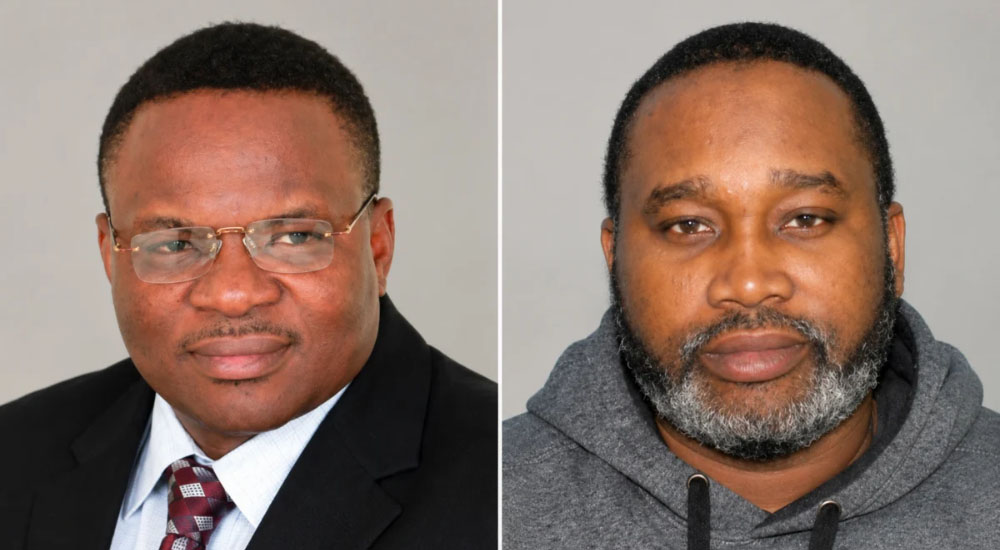
US Declares Two Nigerians Wanted Over $3.1m Medicare Fraud, Drug Offences
The United States government has listed two Nigerian men, Ezechukwu Joshua Ohaka and Tayo Muyiwa Olukoya, as wanted over separate allegations involving healthcare fraud and drug-related offences.
The two men were listed by different US federal law enforcement agencies, with Ohaka accused of participating in a scheme involving more than $3.1 million in fraudulent Medicare claims, while Olukoya is wanted over an alleged conspiracy to distribute controlled substances.
According to information released by the US Department of Health and Human Services Office of Inspector General, Ohaka, 57, allegedly worked with co-conspirators through his Houston-based company, Luant & Odera, Inc., to submit fraudulent claims for durable medical equipment.
The equipment included power wheelchairs, motorised scooters and wheelchair accessories that investigators alleged were medically unnecessary or were not supplied to beneficiaries.
The agency said the alleged scheme involved more than $3.1 million in claims, with approximately $1.08 million in proceeds reportedly obtained.
READ ALSO:
- Tibet in Mourning: 7.0 Quake Kills 16, Injures 76 as Rescue Teams Race Against Time in Nagqu
- Tope Alabi Threatens Pastor With Lawsuit Over Toluwanisings’ Death Claims
- Borno: Troops Kill 15 Terrorists in Midnight Air Strike
Investigators also alleged that Ohaka presented himself as a medical doctor under the name “Dr Joshua Ohaka” and targeted Medicare beneficiaries who had lived in areas affected by hurricanes Katrina and Rita.
The authorities further alleged that kickbacks were paid to recruit beneficiaries into the scheme.
The allegations concern possible fraud against Medicare, the US government-funded health insurance programme that primarily serves people aged 65 and older and certain younger people with qualifying disabilities or medical conditions.
In a separate case, the US Drug Enforcement Administration (DEA) listed Olukoya, 57, also known as “Uncle”, as wanted over an alleged conspiracy to possess controlled substances with the intention of distributing them and to distribute the substances.
The DEA’s Chicago Division announced that it was seeking information about Olukoya, whose case is associated with the Southern District of Indiana.
Olukoya had previously been named among defendants in a marijuana trafficking case announced by the US Attorney’s Office for the Southern District of Indiana in May 2022. Prosecutors at the time alleged that the wider operation involved the distribution of large quantities of marijuana across several US states between 2016 and 2022.
However, the latest DEA wanted notice does not, by itself, establish that the allegations have been proven in court.
The two cases involve separate investigations, and there is no indication in the available reports that Ohaka and Olukoya were connected.
US authorities have called for information that could help locate the wanted men. The agencies have not established in the cited announcements that either man is currently in Nigeria.
The development comes amid continued efforts by US law enforcement agencies to pursue people accused of healthcare fraud, drug trafficking and other federal offences.
Both men are presumed innocent unless proven guilty in court.
US Declares Two Nigerians Wanted Over $3.1m Medicare Fraud, Drug Offences
-

 News2 days ago
EFCC Opens Recruitment for Nigerians, Sets Age Limits for Four Job Categories
-
 News2 days ago
41 Days in Bandits’ Den: Five Islamic Clerics Still Held After Tinubu Re-Election Prayer Trip
-
 Politics2 days ago
2027: Remi, Seyi Tinubu Reportedly Differ Over APC Youth Mobilisation
-
 Politics2 days ago
Igbo Presidency: Soludo Tells South-East to Back Tinubu for Future Power Shift
-
 Politics13 hours ago
2027: APGA Chairman Says South-East Must Back Tinubu to Secure Igbo Presidency
-
 metro2 days ago
Police Arrest Suspect Eight Months After Retired Teacher’s Killing in Ogun
-
 metro1 day ago
State Police: 25 States Approve Bill as Nigeria Moves Closer to Decentralised Policing
-

 Entertainment3 days ago
BREAKING: Veteran Nollywood Actor Francis Duru Dies at 57 After Brief Illness