

metro
Gunmen Kill Couple During Night Church Attack in Niger

Gunmen Kill Couple During Night Church Attack in Niger
A couple have been killed after armed attackers stormed a church in southwest Niger, firing shots into the air and triggering panic among worshippers, local sources told AFP on Friday.
The attack occurred late Wednesday night in Mailo village, located in the Dosso region, a volatile area of the Sahel nation of Niger that has endured years of violence linked to armed groups associated with Al-Qaeda and the Islamic State.
According to a local resident who spoke on condition of anonymity, the incident happened at about 11:00 pm while Christians were attending a church service.
“Armed individuals entered the church and began firing into the air. People panicked and ran,” the source said. “A man and his wife fled and hid in their house, but the attackers followed them and killed them.”
READ ALSO:
- Police Arrest Notorious Bandit Kingpins, Recover AK-47, Ransom Cash in Kwara Operation
- No Proof Nigeria Approved U.S. Airstrike – Rafsanjani
- Sheikh Gumi Warns: US Airstrikes Threaten Nigeria’s Sovereignty, Security
Another resident confirmed that several worshippers fled to neighbouring villages, while others escaped into nearby bushes to avoid the attackers. The assailants were also reported to have stolen cattle before leaving the area.
Niger has been grappling with escalating insecurity for over a decade, particularly in its western and southeastern regions. According to the Armed Conflict Location and Event Data Project (ACLED), nearly 2,000 people have been killed by conflict-related violence in Niger this year alone.
Despite the attack, relations between Christians and Muslims in Niger remain largely peaceful, observers say. However, suspected jihadist groups have previously been blamed for attacks on churches in the Tillaberi region between 2018 and 2021, as well as the killing of 111 Muslim worshippers in Tillaberi earlier this year.
Security forces have yet to issue an official statement on the Dosso incident, as residents continue to call for increased protection of rural communities facing persistent threats from armed groups.
Gunmen Kill Couple During Night Church Attack in Niger











metro
[UPDATED] 20 NYSC Prospective Corps Members Freed After Seven Days in Captivity
![[UPDATED] 20 NYSC Prospective Corps Members Freed After Seven Days in Captivity](https://newstrends.ng/wp-content/uploads/2026/10/20-NYSC-Prospective-Corps-Members-Freed-After-Seven-Days-in-Captivity.jpg)
[UPDATED] 20 NYSC Prospective Corps Members Freed After Seven Days in Captivity
Twenty prospective National Youth Service Corps (NYSC) members abducted in Imo State have regained their freedom after spending one week in captivity, with security agencies intensifying efforts to track down those responsible.
The victims were rescued on Wednesday, October 7, following a sustained and coordinated operation involving the Nigeria Police Force, military and Department of State Services (DSS).
The prospective corps members were travelling from Ibadan, Oyo State, to orientation camps in Abia and Akwa Ibom states when gunmen attacked two buses along the Owerri-Onitsha Expressway in Imo State on October 1.
The attack occurred at about 6:30am around Umunoha in Mbaitoli Local Government Area, where the buses were intercepted by the gunmen.
The Imo State Police Command initially reported that 10 victims had been rescued at the scene, while efforts continued to establish the exact number of people taken away.
The remaining victims were subsequently confirmed to include the 20 prospective corps members.
The Force Public Relations Officer, CSP Ani Iniedu, confirmed that all 20 prospective corps members had been rescued at Amakohia Ubi Village in Imo State on Wednesday.
READ ALSO:
- 2027 Election Cases: CJN Warns Tribunal Judges, Says Conduct Will Be Monitored
- NSCIA Rejects Genocide Claims, Demands Urgent Security Overhaul
- Abuja: 33-Year-Old Nabbed While Writing FCT Promotion Exam For Father
He said the rescue followed sustained search-and-rescue operations involving the police and other security agencies.
The victims were subsequently taken for medical assessment and necessary care.
The operation also resulted in the rescue of another civilian who had reportedly been abducted alongside the prospective corps members.
The rescued victims were taken to a DSS medical facility in Owerri, where they received attention following their ordeal in captivity.
The NYSC Director-General, Brigadier General Olakunle Oluseye Nafiu, visited the rescued victims at the DSS facility in Owerri. He was accompanied by the Imo State Commissioner of Police, the state DSS director and the commander of the 34 Artillery Brigade.
The rescue brought an end to a week-long ordeal that had triggered growing anxiety among the victims’ families and renewed concerns over the safety of young Nigerians travelling to NYSC orientation camps.
Before the rescue, security agencies had intensified efforts to locate the abductors and their victims. Imo State Commissioner of Police Audu Bosso had earlier disclosed that security operatives tracked the suspected kidnappers to a location in the bush using intelligence and drone surveillance.
The operation was reportedly complicated by intelligence that the suspected camp had been mined with improvised explosive devices (IEDs), prompting security agencies to adopt a cautious approach.
Earlier reports had also contained conflicting figures over ransom demands. Some families reportedly said the abductors demanded ₦50 million per victim, amounting to ₦1 billion for the 20 prospective corps members. However, there was no official confirmation that any ransom was paid before the victims were rescued.
The Inspector-General of Police, Tunji Disu, had deployed Deputy Inspector-General of Police Shehu Umar Nadada, in charge of Operations, to coordinate the security response in Imo State.
With the victims now safe, security agencies have shifted their focus to identifying and arresting the suspected kidnappers.
No arrests had been officially announced in connection with the abduction as of Wednesday night, but coordinated operations were continuing to apprehend those responsible.
The incident has renewed concerns about the safety of prospective corps members travelling long distances to their orientation camps, particularly along routes affected by kidnapping and other violent crimes.
The successful rescue of the 20 prospective corps members is expected to ease pressure on their families while placing renewed attention on security arrangements for young Nigerians travelling to NYSC camps across the country.
[UPDATED] 20 NYSC Prospective Corps Members Freed After Seven Days in Captivity
metro
2027 Election Cases: CJN Warns Tribunal Judges, Says Conduct Will Be Monitored

2027 Election Cases: CJN Warns Tribunal Judges, Says Conduct Will Be Monitored
Chief Justice of Nigeria (CJN), Justice Kudirat Kekere-Ekun, has warned judges who may serve on 2027 Election Petition Tribunals to maintain strict impartiality and ensure that their conduct does not create any perception of political bias.
The CJN said judges handling politically sensitive election cases must remain detached and allow the law, rather than political considerations or public pressure, to guide their decisions.
Kekere-Ekun issued the warning in Abuja during the 2026/2027 legal year ceremony of the National Industrial Court of Nigeria, where she stressed the importance of protecting public confidence in the judiciary ahead of the 2027 general elections.
She said judges could come under intense scrutiny while handling election-related disputes and urged them to be mindful of their conduct both inside and outside the courtroom.
According to her, judges must ensure that their associations, public engagements and other activities do not give the impression that they have taken sides in political disputes.
“Whether sitting in this Court or performing a Tribunal assignment, you must remain conscious that your conduct will be closely scrutinised,” she warned.
READ ALSO:
- NSCIA Rejects Genocide Claims, Demands Urgent Security Overhaul
- Abuja: 33-Year-Old Nabbed While Writing FCT Promotion Exam For Father
- FG Releases Eight-Month Arrears After SSANU Strike Threat
The CJN urged judges to base their decisions strictly on the Constitution, electoral laws, binding judicial precedents and established principles of law.
She also cautioned lawyers and litigants against forum shopping and filing parallel cases in different courts in an attempt to obtain conflicting orders.
Kekere-Ekun said such practices could undermine the administration of justice and damage public confidence in the judiciary.
She further called for restraint in public commentary on ongoing judicial proceedings, warning against personal attacks on judges, deliberate misrepresentation of court proceedings and attempts to influence judicial decisions through public pressure.
The CJN said individuals with genuine complaints about judicial conduct should use the appropriate institutional channels rather than resorting to public campaigns.
Kekere-Ekun also raised concerns about the growing use of artificial intelligence (AI) in legal research, warning lawyers that some AI systems could produce fabricated cases, citations and quotations.
She reminded legal practitioners that they remained professionally responsible for verifying every authority presented before a court.
The warning comes as political parties, candidates and other stakeholders intensify preparations for the 2027 elections, with several pre-election disputes already expected to test the Nigerian judiciary.
The courts are likely to play a crucial role in resolving disputes arising from the electoral process, making judicial independence, impartiality and public confidence particularly important as the country approaches the polls.
2027 Election Cases: CJN Warns Tribunal Judges, Says Conduct Will Be Monitored
metro
NSCIA Rejects Genocide Claims, Demands Urgent Security Overhaul
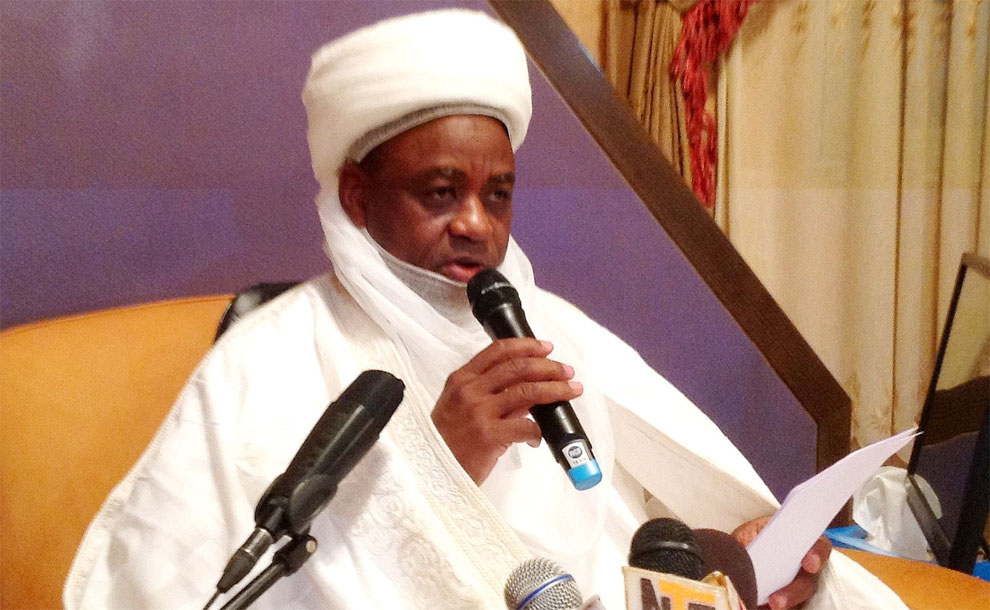
NSCIA Rejects Genocide Claims, Demands Urgent Security Overhaul
The Nigerian Supreme Council for Islamic Affairs (NSCIA) has rejected claims that Christians or any other religious community is facing genocide in Nigeria, saying the country’s insecurity affects citizens regardless of their faith.
The council, however, demanded an urgent and comprehensive reform of Nigeria’s security architecture, while supporting decentralised policing subject to constitutional safeguards, professionalism, impartiality, accountability, adequate funding and respect for fundamental rights.
The position was contained in a communiqué issued after the NSCIA General Assembly held at the Abuja National Mosque on October 1, 2026, under the theme, “Nigerian Muslims and the Imperative of Nation-building.”
The assembly was presided over by the Sultan of Sokoto and NSCIA President-General, Muhammad Sa’ad Abubakar, with Islamic scholars, traditional rulers, Chief Imams, leaders of major Islamic organisations and delegates from across the 36 states and the Federal Capital Territory in attendance.
On the country’s security challenges, the council said insecurity affects all Nigerians regardless of faith, rejecting attempts to frame the crisis as an attack on one particular religious group.
It urged the Federal Government to undertake a comprehensive review of the security system and improve coordination between federal and state security institutions.
The NSCIA backed state or decentralised policing, but stressed that any such arrangement must be built around professionalism, impartiality, accountability, sustainable funding, constitutional safeguards and protection of fundamental human rights.
READ ALSO:
- Abuja: 33-Year-Old Nabbed While Writing FCT Promotion Exam For Father
- FG Releases Eight-Month Arrears After SSANU Strike Threat
- Yobe: 9-Year-Old Boy Burns Stepmothers, Brothers To Death In Revenge Attack
The council’s position comes amid continuing national debate over proposals to amend Nigeria’s constitutional framework to allow more decentralised policing.
Beyond security, the NSCIA urged the government to accelerate measures to reduce the rising cost of food and transportation, saying ordinary Nigerians were still facing significant economic hardship.
The council acknowledged efforts to revive the economy but called for faster action to ease the burden on households.
The Islamic body also cautioned against using religion to promote hatred, violence and division.
It urged Muslim scholars to resolve disagreements through internal mechanisms rather than publicly attacking one another, while encouraging Muslims to verify information before circulating allegations or claims that could damage individuals or deepen social tensions.
On religious rights, the council called on government institutions to respect the right of Muslim women and girls to wear the hijab, including female students, NYSC members, security personnel and Muslim women working in other organisations.
The NSCIA also criticised what it described as hostile positions by the University of Ibadan, Obafemi Awolowo University and the University of Lagos concerning Supreme Court judgments on hijab use in their international schools.
It urged the institutions to comply with the relevant court decisions and adopt more inclusive policies.
The council further called on the Rivers State Government and the management of Rivers State University to implement a Supreme Court judgment concerning the construction of a mosque for Muslim students at the institution.
Ahead of the 2027 general elections, the NSCIA urged Muslims to obtain their National Identification Numbers (NINs) and Permanent Voter Cards (PVCs) and participate actively in choosing leaders at all levels.
It said civic participation was part of the responsibility of citizens and encouraged Muslims to contribute positively to nation-building.
The council also encouraged Muslim organisations to promote economic independence through lawful investments and stronger administration of Zakat and Waqf as tools for sustainable poverty reduction.
On education, it called for greater emphasis on quality learning that combines Islamic knowledge with Science, Technology, Engineering, Arts and Mathematics (STEAM).
The General Assembly also adopted the 2026 report of the National Hajj Commission of Nigeria (NAHCON) and endorsed its recommendations for repositioning the Hajj industry.
The NSCIA additionally honoured its Secretary-General, Professor Is-haq Oloyede, for his contributions to education and national development during his tenure as JAMB Registrar from August 2016 to July 2026.
The council’s resolutions come amid continuing debate over religious violence, insecurity and allegations of persecution in Nigeria.
By rejecting a religious-genocide framing while demanding broad security reforms, the NSCIA said the country’s security crisis should be addressed as a national challenge affecting Nigerians across religious lines.
NSCIA Rejects Genocide Claims, Demands Urgent Security Overhaul
-

 metro3 days ago
Tragedy Strikes FMC: Medical Director Loses Two Daughters—A Doctor and a Pharmacist—Within 48 Hours
-

 metro3 days ago
Transporters Urge IGP Disu to Arrest Illegal Highway Tax Collectors
-

 Politics3 days ago
2027: Soludo Govt Accuses Peter Obi Of Plot To Destroy APGA
-
 metro3 days ago
Army, DSS, Amotekun Kill ISWAP Commander Planning Attacks in Southern Nigeria
-
 News3 days ago
BREAKING: Many Feared Dead as Helicopter Crashes in Ondo Community
-

 metro3 days ago
Grand Chief Imam of Oyoland Urges Rabitah 1964 to Regulate ‘Yorubaland’ Islamic Titles
-
 metro2 days ago
Ondo Air Tragedy: Soldiers, Families Among 32 Killed In NAF Crash
-

 metro3 days ago
Ex-APC Women Leader Found Dead With Throat Slit in Bauchi