

metro
How Yahoo boys befriend, bribe policemen, soldiers to evade justice
• Scammers joining police to cover tracks –Sources
In this report, Afeez Hanafi and Percy Ani write about tactics internet fraudsters, otherwise known as yahoo boys employ to perpetuate their illicit act under the watch of security agents
Peter Onyeiwu was driving home with his friends from Oniru Beach – a relaxation spot uptown Lagos – when his car was flagged down by some policemen. Immediately they ordered him and his friends to alight from the car, he sensed trouble was looming. He had yet to wipe off receipts of his last ‘deal’ that fetched him about N5m from his email.
Using a dating site to pull off romance scams by posing as a woman, Onyeiwu solicited financial favours from unsuspecting men and sometimes, women, promising love relationships in exchange.
He had plans to spend his latest windfall during Yuletide and feared the policemen could demand a huge cut from it.
After searching through his phones for a few minutes, the cops found the dating app 27-year-old Onyeiwu used for fleecing unwitting foreigners. To further nail him, they saw a handful of bank transactions he could not defend.
READ ALSO:
- Policeman commits suicide, asks colleagues to use funeral contributions in settling his debts
- Lobby if you want presidency, ACF tells South-East leaders
- Suspected Delta ritualist rapes 13-year -old girl to death, flees
After almost an hour of grilling that clearly exposed his criminal act, Onyeiwu and his two friends resorted to begging the cops who threatened fire and brimstone.
They eventually gave him two options: “pay N500,000 to get off the hook or risk going to jail if prosecuted.”
Knowing what was at stake for him and his two friends, who were accomplices, Onyeiwu jumped at the first option, but negotiated for a reduced fee of N100,000.
After much pleading, the team leader reportedly agreed to his bargain and asked one of the policemen to lead him to the nearest Automated Teller Machine to make withdrawals.
They were driving around, looking for an ATM when the policeman received a call from his superior, asking him to return to the checkpoint with Onyeiwu immediately.
He recalled, “I thought the policemen had changed their minds and decided to take us to their station. When we got back to the checkpoint, I saw two men dressed in military uniforms discussing with my friends. My friends appeared relaxed so I walked up to them.
“Before I could ask what happened, I heard the men dressed in military uniform thanking the policemen for their cooperation. They asked me to get in the car and that was how I went home with my friends. On our way, I asked my friends how he got the soldiers to intervene. One of them said while I was negotiating with the policemen, he secretly sent an SOS text to a soldier who usually helps him out on such occasions.”
Onyeiwu said since his friend introduced him to the officer two years ago, the fear of being subjected to the full weight of the law if caught had waned drastically.
He added, “Since I met him in 2019, I’ve sought his help more than twice, and he always came through for me. All I was required to do was pay a small percentage to him whenever I made money from my ‘hustle.’”
Fraudsters emboldened by security operatives
In recent years, there has been a rising spate of cybercrime in Nigeria. While the crime is prevalent among young men, more females have also been indulging in it for a living.
With youths making up about 42.5 per cent of Nigeria’s population, there is an air of restiveness across the country, worsened by the high level of unemployment and poverty.
READ ALSO:
- New converts stab RCCG pastor to death in Lagos church
- COVID-19 Worst Crisis for Children in 75 years History, Says UNICEF
- PDP to Obaseki: Prove you gave us money for your governorship ticket
In the fourth quarter of 2020, youth unemployment jumped to 53.40 per cent from 40.80 per cent in the second quarter of the same year, according to the National Bureau of Statistics.
Coupled with the endemic get-rich-quick syndrome, more youths now turn to a life of cybercrime. Armed with a laptop/smart phone and internet connection, all the tools to swindle unsuspecting individuals are readily available to them.
Bolstered by law enforcement agents’ backing, several youths now flaunt their ill-gotten wealth with impunity and live an opulent life undeterred by arrest and prosecution.
Like Onyeiwu, Peter Obasogie (pseudonym) has found a comforting enabler in a policeman, whose back he always has whenever his illegal financial dealings go sour.
He had hooked up with the cop sometime 2020 while returning from a nightclub in Benin City, Edo State, where he had gone to celebrate with a friend who recently ‘cashed out’ – a street lingo used by fraudsters after a successful scam.
The policeman and two others had accosted him and after searching his phone, they arrested him and took him to their station.
He recalled, “I spent the entire night locked up in a cell, where some criminals beat me all through the night. It was the most dreadful night I have ever had. The next morning, the officer in charge of my case called me into his office and said if I wanted my problem solved, I knew what to do.
“I understood what he meant and quickly agreed to his offer. After giving him N100,000 he demanded, he ordered that my clothes, phones, and car key be returned and I was freed.”
Before he left, the policeman extended a hand of friendship to him – an offer too juicy for Obasogie to decline.
He stated, “I agreed to have him as a helper whenever I get arrested by other law enforcement agents. A few months ago, I was arrested by some policemen in Benin City, and I lied to them that I wanted to place a call to a friend who would help bring the money they asked for.
“I called my protector (the policeman) instead and who requested to speak to his colleagues. They asked why I hadn’t told them he was my friend. They just collected N30,000 from me and freed me. As a sign of gratitude, I sent N20,000 to my police friend and introduced my friends who are also in the ‘business’ with meto him.”
In August 2020, residents of Effurun in the Uvwie council area of Delta State were greeted with shock when suspected internet fraudsters, numbering about 10, stormed the area in several vehicles on Jakpa Road escorted by six cops.
Witnesses claimed that the youths, said to be in their 20s, drove recklessly in the presence the armed escort, who ensured they were not challenged by aggrieved residents.
Worrying trend of cyber fraud in Nigeria
According to the Centre for Strategic and International Studies, “close to $600bn is lost to cybercrime each year.”
In a 2020 report by the Global Cybersecurity Index on the snapshot of cyber security measures taken by countries, Nigeria ranked 47th out of 182 countries, globally and fourth in Africa after Mauritius, Tanzania, and Ghana.
Nigerians lost about N159bn to cybersecurity threats in 2013, according to global payment giant, Paypal.com and since 2014, the country has been losing N90bn to cybercrime yearly. In December 2015, it ranked as the 17th most attacked nation globally based on threat intelligence collated from Check Point Software Technologies.
Cybercrime in Nigeria surged at the onset of the COVID-19 pandemic and the attendant lockdowns, the Institute for Security Studies noted.
Using the pandemic as bait to impersonate brands and mislead employees and customers, cybercriminals gained access to technological devices of unsuspecting individuals and corporate organisations, especially offshore firms.
Recently, the Nigerian Communications Commission alerted Nigerians to Flubot, a malware targeted at stealing banking details from Android users by requesting “fake security updates and app installations.”
READ ALSO:
- COVID-19 Worst Crisis for Children in 75 years History, Says UNICEF
- BREAKING: Gunshots as hunters nab ‘kidnappers’ in Kogi forest
- I sold human head for N25,000, says suspect
It was reported that in 2018, commercial banks in the country lost about N15bn to electronic fraud and cybercrime while over 17,600 bank customers lost N1.9bn to cyber fraud in the same year.
Worse still, the Nigeria Consumer Awareness and Financial Enlightenment Initiative projected a $6trn loss to cybercrime within and outside Nigeria by 2030.
In September 2021, the Economic and Financial Crimes Commission expressed worry that the Lekki area of Lagos State had become the hotbed of cybercrime in Nigeria, adding that 402 suspects were arrested for the crime in three months in the area.
The agency’s data specifically identified Ajah, Badore, Victoria Garden City, Sangotedo and Oniru areas of Lekki as having many internet fraudsters in the state, with many of the arrested fraudsters aged between 25-34 years.
Analysis of the data from the Cyber Crime Section further shows that the dominant form of internet crime is dating scam/romance scam with 64 per cent of individuals arrested involved it.
“The 64% involved in the dating scam benefitted to the tune of N8,310,000; $349,290 USD; £ 900; €10 and cryptocurrency 0.17513.
“Other typologies of fraud identified include forgery, possession of fraudulent documents, spamming, credit card fraud, impersonation, rental scam, loan fraud, business email compromise, hacking, stealing, cheque scam, phishing, and money laundering,” the EFCC’s statement said.
The data further revealed that gift cards, aaccounted for about 39 per cent of the method employed by the suspects to access their illicit funds. Cryptocurrency and bank transfer scams made up about 27 per cent and 21 per cent of their scamming methods respectively while “a total of $12, 512.49USD was recovered from the e-wallet accounts of four suspects within the period.”
In November, EFCC operatives arrested 60 suspected internet fraudsters during an award ceremony at a hotel in Abeokuta, Ogun State.
According to the commission, an investigation revealed that the event tagged ‘Peer Youths Awards,’ was organised to reward high-level internet fraudsters.
Items recovered from the suspects at the point of arrest include exotic cars, electronic devices, laptop computers and mobile phones.
Getting out of the woods
Another internet fraudster, who identified himself simply as Adesoji, told Saturday PUNCH how he frequently ran into trouble with security agents and coughed up huge sums to bribe his way before he sought help from his more experienced friends.
He disclosed, “They (my friends) first laughed at me for being naïve all these while. The next evening, my friends took me to a bar where I met a police officer. They told me he was the one who helped them out whenever they got into messy situations with the law.”
After that meeting, Adesoji’s worries disappeared like rainbows. The next time he was apprehended by another set of policemen on the road, he called the officer whose intervention prevented him from paying an exorbitant bribe or being detained.
In return, all that was expected of the young man was to remain loyal to ‘his benefactor’ by giving him a cut of his proceeds whenever he made money from his illicit deals.
He added, “The officer also provides cover for other boys and he is not the only one doing such a thing. I have friends in other states who tell me how security agents shield them. Most of them are poorly paid, so forging a relationship with us is an easy way for them to make money.”
Sources confirm sordid relationships
Several security sources, who confided in Saturday PUNCH, confirmed the shoddy relationship between yahoo boys and some policemen.
A police inspector attached to a police formation in Lagos claimed that although he had never involved in such an unprofessional act, some of his colleagues benefited from cybercrime proceeds.
He stated, “When policemen arrest them (yahoo boys) the first time and they are released, the next time they are arrested by the same policemen, they will be treated as allies. Having become friends, some yahoo boys will even ask policemen to accompany them to some places such as banks because they don’t want any security agent to disturb them.
“If another set of policemen arrest them, they will call their police friends to get soft-landing and facilitate their bail. A police friend in Ibadan (Oyo State) called me about a month ago and said EFCC officials arrested some yahoo boys in Lekki and he wanted me to intervene.
“He promised that the boys would pay me N1m if they are freed. I declined but he called another policeman who agreed. Many policemen know them.”
An officer at a police unit in the Federal Capital Territory, Abuja, also affirmed that some cops “relate well with yahoo boys and most times, end up as friends.”
He said the amount charged for bail depended on the class and status of an arrested internet fraudster.
The source added, “Yahoo boys get grades. Some are local; others are top class, so the bail money collected depends on the level of the yahoo boy. Some may pay N100,000, N200,000 or N500,000. Others, who are ‘rich,’ pay as much as N5m to be freed. It all depends on the status of the suspect and the money found in their bank accounts.”
Another cop, who once served at an anti-fraud unit, disclosed that yahoo boys fraternise with both junior and senior officers as well as military men freely. He cited a case where policemen arrested cybercriminals at a hotel in Lekki together with some soldiers backing them.
The officer said, “The policemen took them to the station and were demanding N3m for their release. That was over a year ago. Yahoo boys deal with senior officers too who act as their godfathers. At times, if junior officers arrest those guys, the senior officers will order that they should be released.”
Policemen learn fraud tactics
Beyond bribery, Saturday PUNCH investigation also revealed that some policemen learn tactics of internet fraud from yahoo boys after establishing a cordial relationship with them.
“At this point, the yahoo boy may stop giving his police friend returns. However, some policemen learn it from yahoo boys to know all the intricacies and apply the skill to nail any suspect they arrest,” a police source said.
“There was a time we raided a spot in Offa (Kwara State) where yahoo boys normally gathered. Surprisingly, it was a police constable who led those boys to where we were for dialogue. We later found out that the policeman also deals in internet fraud,’’ he added.
‘Yahoo boys joining police to cover tracks’
“Let me shock you,” the source declared, shaking his head in disgust.
He continued, “Some Yahoo boys now join the police to cover their tracks. There is a yahoo boy we had arrested a couple of times. When I saw him last year, he was in a police uniform.
“I told him he only joined the Force to cover his criminal escapades and he laughed. I know another one who even joined as a commissioned officer (Assistant Superintendent of Police). The logic behind it is that many of them are tired of giving out huge bribes.
“Some soldiers also work with yahoo boys. They use soldiers as guards when they are going out. A soldier will sit in front of the car so that when police stop them, they would use the soldier as a cover.
“But policemen who are bold will arrest them and even threaten to drag the soldier into it. At that point, the soldier will advise them to ‘settle’ because his job is also at stake.”
We’ll investigate, punish any cops working with criminals – Police
When briefed on Saturday PUNCH’s findings, the Force Public Relations Officer, CP Frank Mba, insisted that it was hypothetical to say policemen shield yahoo boys and engage in unethical relationship with them.
He, however, said any policeman found culpable of dealing with criminals would be punished accordingly irrespective of their rank.
He said the Force had recorded major breakthroughs in recovering illicit funds from yahoo boys, adding that failure of most victims to appear in court during prosecutions was a challenge to the police.
He said, “What you have done is an over-generalisation. If you can give me specific instances where a particular police officer has compromised with yahoo boys, name the police officer, the yahoo boys and the location, I will take it up and will be able to answer you on that basis.
“The cybercrime unit of the Force Headquarters is doing a lot of job. We have recovered several monies that have been returned to the victims through their embassies in Abuja. We had a major breakthrough in COVID-19 scam where we recovered thousands of euros from yahoo boys that scammed a pharmaceutical company based in Germany.
“If any police officer is found conniving with any kind of criminals irrespective of their rank, we do not hesitate to name and shame them. We do not hesitate to investigate them and owe them accountable. We do not hesitate to even charge them if there is sufficient evidence to sustain prosecution.”
On Yahoo boys joining the police in order to have ‘some immunity,’ the FPRO said background checks were carried out on intending recruits to ensure that best candidates are chosen.
He also urged members of the public to assist in building a decent society by reporting those who are of questionable characters wanting to join the police.
Mba stated, “When we do our recruitments, we do them publicly. We also conduct a lot of background checks. Beyond that, respectable members of society are supposed to sign for the intending recruits (as referees). We also have a whistle-blowing system that permits members of the public to alert the police if they discover that somebody with a bad past wants to join the police.
“Even after we have recruited you, while you are on training, the processes continue because you can be thrown out of the force any moment. Even when you graduate, you’re still on probation and when you’re fully confirmed, you can still be thrown out anytime. I am sure you know a number of them that we have thrown out.
“Aside from digital screening, we also do physical screening. We do everything possible to make sure we select the best. However, we can only select the best among those that have applied. We don’t do conscription into the Nigeria Police Force.”
Call by one of our correspondents to the line of the Director, Army Public Relations, Brig. Gen. Onyema Nwachukwu, on Tuesday and Wednesday rang out while calls to his line on Thursday and Friday didn’t go through. He had yet to reply to text message sent to him on the alleged collusion between soldiers and yahoo boys as of press time.
Curbing cybercrime, conspiracies
A Professor of Criminology and Criminal Justice Administration, Sam Smah, noted that the growing trend of cybercrime and its dimensions could be resolved if the government was committed to taking decisive actions.
He said, “Most times you find security agencies in Nigeria raiding and parading these suspected internet fraudsters and afterwards, you hear nothing else. The government cannot claim to be oblivious to this collusion between internet fraudsters and certain members of security agents. A while ago, it was alleged that the now-imprisoned Internet fraudster, Hushpuppi, was in collusion with a high-ranking police officer, (DCP) Abba Kyari. It shows so much of what goes on underground. Refusal to cooperate with some of these security agents could mean getting exposed and facing the law.
“There is so much conspiracy between many security agents and these internet fraudsters. You even have cases of missing case files. The situation is disheartening and worrisome to say the least. So, there won’t be any success in the fight against internet fraud until the government takes the front foot in fighting these corrupt officials.
“If the government sends out spies to monitor and arrest internet fraudsters, then it is only right that they also send out another set of spies to monitor the conduct of the first group sent out. This can help to check errant behaviours among security agents.”
Smah stated that an internal cleansing of officials as well as criminal prosecution processes must be carried out by the government to tackle the challenges encountered in the fight against internet fraud in the country, adding that safer cyberspace would attract more investments.
Commenting on the issue, a constitutional lawyer and Senior Advocate of Nigeria, Mike Ozekhome, said the major problem plaguing Nigeria was not a lack of laws, but poor enforcement.
He stated, “There are many laws, but very little enforcement. There are laws that cover aiding and abetting criminals. Since these law enforcement agents aid and abet these internet fraudsters, they are participants in their crime.
“The system has become so rotten that police officers are allegedly making returns to their superiors, who in turn make returns to their higher bosses. This creates a huge question: Who will police the police? Nigeria has become so corrupt that internet fraudsters have taken over even universities, where they are respected for their ill-gotten wealth. There is a serious need for social and ethical re-orientation.”
In a recent interview with Sunday PUNCH, a software engineer and tech content creator, Adora Nwodo, called for cybersecurity training for every individual and corporate organisation to enable them detect and prevent different forms of security threats. She noted that cyber security should be taken seriously to guide against data theft and corruption as well as scam.
She added, “We also need to educate other Nigerian citizens through TV, radio or social media communications about not sharing passwords, using secured Wi-Fi, controlling who has access to their computers and more.”
Punch










metro
UCH CMD: After Decades Without Muslim, Agunbiade Demands Fair Chance

UCH CMD: After Decades Without Muslim, Agunbiade Demands Fair Chance
‘Let Merit, Not Religion, Decide Next Appointment’
IBADAN — A Muslim stakeholder, Mallam Ibrahim Agunbiade, has called for a transparent and merit-driven process in the appointment of the next Chief Medical Director (CMD) of the University College Hospital (UCH), Ibadan, saying a qualified Muslim candidate should be given a fair chance to lead the institution.
Agunbiade, in a statement on Monday, argued that the leadership history of the premier teaching hospital showed that Muslims had not occupied the position of Chief Medical Director for decades.
He said the situation deserved serious consideration as the process for selecting a successor to the incumbent CMD, Prof. Jesse Abiodun Otegbayo, gets underway.
According to him, Otegbayo, who became CMD in 2019, was reappointed for a second term in 2023.
Agunbiade said the succession of UCH chief executives had included Prof. E. O. Akande (1978–1984), Prof. A. O. K. Johnson (1984–1985), Prof. B. O. Osuntokun (1986–1990), Prof. O. O. Ajayi (1990–1998), Prof. M. O. Olatawura (1998–2003), Prof. A. O. Ilesanmi (2003–2011), Prof. T. O. Alonge (2011–2019) and Otegbayo.
He stressed that his intervention was not intended to question the professional records or achievements of the past CMDs.
Rather, he said, the issue was whether a qualified Muslim professional should continue to be excluded from the highest executive position at the institution.
“How long should a qualified section of the institution’s community wait before it sees one of its own given a genuine opportunity to lead?”
Agunbiade said the question was particularly important because UCH was a federal teaching hospital with a national mandate, serving Nigerians irrespective of religion, ethnicity or background.
‘Not Asking For Religious Favour’
The stakeholder rejected the suggestion that his position amounted to a demand for religious preference.
READ ALSO:
- Troops Take Down Zamfara Bandit Kingpins Baban Love, Mai Zamani, Three Others
- FG Gives N250m To Families Of 37 Miners Who Died In NSCDC Custody
- Tompolo’s PBAT Movement Suspends Campaign Over Ondo Military Crash
He said his argument was that merit and representation should work together, rather than treating them as opposing principles.
“The demand, therefore, is not that UCH should appoint a Muslim because he is Muslim,” he said.
“The demand is that if a Muslim candidate is professionally qualified, experienced, competent and suitable, his religion must not become an invisible barrier to his appointment.”
He noted that the advertised position carried stringent requirements, including medical registration, post-qualification experience, specialist fellowship, consultancy experience, integrity and administrative competence.
According to him, once a candidate meets the professional requirements and emerges as the best person through a credible selection process, religion should not disqualify the candidate.
‘Muslim CMD Will Serve All Nigerians’
Agunbiade also dismissed the notion that appointing a Muslim as CMD would change the character of UCH.
He said the successful candidate would remain the head of a federal institution responsible for providing healthcare to Nigerians of all faiths.
“A Muslim CMD will not turn UCH into a Muslim hospital. He will remain the Chief Medical Director of a federal institution serving every Nigerian who walks through its doors,” he said.
He argued that religious identity should not be an obstacle to professional service.
“Just as a Christian CMD can serve Muslim patients without difficulty, a Muslim CMD can serve Christian patients with the same professionalism,” he added.
‘Let Credentials Decide’
Agunbiade urged the authorities to ensure that all qualified candidates are subjected to the same standards during the selection process.
He called for candidates’ academic and professional credentials, experience, integrity, administrative competence and vision to be carefully assessed.
“Let every qualified candidate compete. Let credentials be examined. Let professional experience be assessed. Let integrity and vision determine the outcome,” he said.
He also referred to wider concerns about religious representation in the leadership of institutions linked to UCH and the University of Ibadan, saying the issue had generated concerns among Muslim stakeholders.
He, however, warned against turning the matter into a religious confrontation.
“This is not a call for religious confrontation. It is not an attack on Christians. It is not a rejection of merit. It is a call for inclusion within merit,” he said.
Agunbiade maintained that if a Muslim candidate emerged as the strongest candidate through a transparent and credible process, his faith should not count against him.
He said giving a qualified Muslim a genuine opportunity after decades without a Muslim CMD would send a powerful message about inclusion and equal opportunity in Nigeria’s public institutions.
According to him, UCH belongs to all Nigerians, and its leadership selection should reflect that principle.
UCH CMD: After Decades Without Muslim, Agunbiade Demands Fair Chance
metro
Troops Take Down Zamfara Bandit Kingpins Baban Love, Mai Zamani, Three Others
Troops Take Down Zamfara Bandit Kingpins Baban Love, Mai Zamani, Three Others
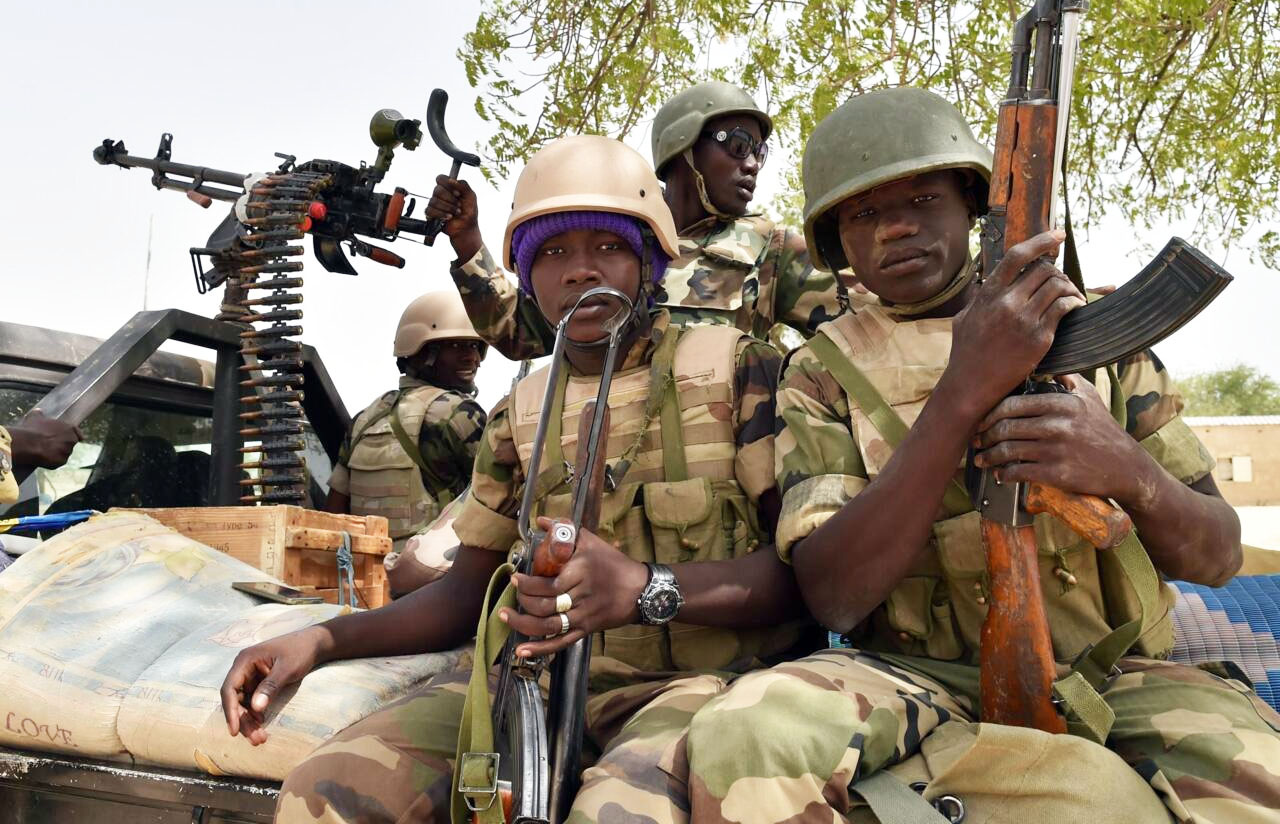
Troops of Operation FANSAN YANMA have killed at least five suspected bandits, including two notorious figures identified as Baban Love and Mai Zamani, during a gun battle in Tsafe Local Government Area of Zamfara State.
The operation reportedly took place in the western axis of Tsafe LGA, where armed groups have maintained a presence and carried out attacks on communities and travellers.
Security sources said Baban Love, who was reportedly operating around Gunja, mobilised members of his gang before they encountered the troops, leading to a fierce exchange of gunfire.
The troops eventually overpowered the armed group, killing at least five suspected bandits, according to reports on the operation.
Mai Zamani was also identified among those killed. He was reportedly the younger brother of Idi Mai Randa, another suspected bandit kingpin who was killed about five months ago.
READ ALSO:
- FG Gives N250m To Families Of 37 Miners Who Died In NSCDC Custody
- Tompolo’s PBAT Movement Suspends Campaign Over Ondo Military Crash
- FULL LIST: NAF Releases Names Of 25 Victims Killed In Ondo Crash
Residents of Kwarin Ganuwa were said to have celebrated the reported deaths of the two bandit leaders, while vehicles belonging to the group were reportedly recovered after the encounter.
Security sources said efforts were ongoing to identify the other suspected bandits killed during the operation and assess the weapons and other items recovered from the scene.
The latest operation is part of intensified military operations in Zamfara State aimed at disrupting the activities of armed groups and restricting their movement across the state’s forests and communities.
Zamfara has continued to experience attacks and abductions despite sustained military operations. Governor Dauda Lawal said on Monday that the state government was working to improve security response time, particularly in areas such as Tsafe, where notorious bandit leader Ado Alero and his gang have been active.
The governor said poor road access in some areas had affected the ability of security personnel to respond quickly to attacks, while the government was also deploying technology, including drones, to improve surveillance.
The military has yet to publicly release a detailed official statement on the reported killing of Baban Love, Mai Zamani and the other suspected bandits.
Troops Take Down Zamfara Bandit Kingpins Baban Love, Mai Zamani, Three Others
metro
FG Gives N250m To Families Of 37 Miners Who Died In NSCDC Custody
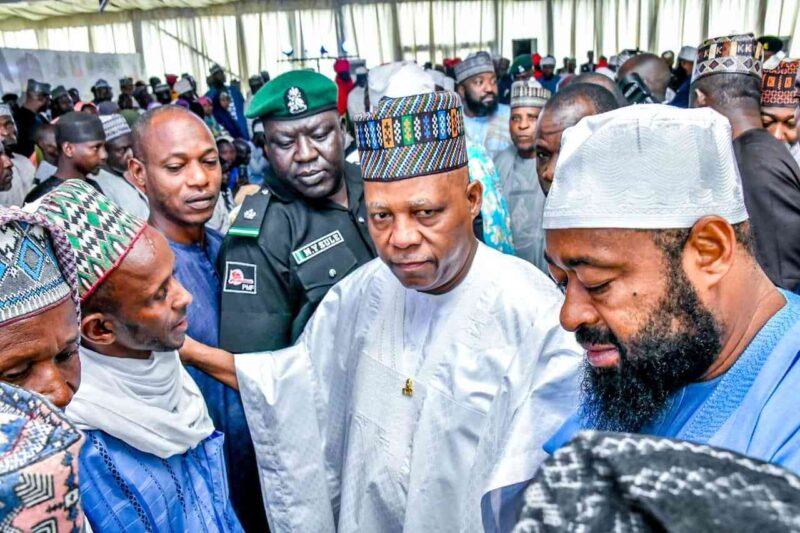
FG Donates N250m To Families Of 37 Miners Who Died In NSCDC Custody
The Federal Government has donated N250 million to the families of 37 suspected illegal miners who died while in the custody of the Nigeria Security and Civil Defence Corps (NSCDC) in Niger State.
Vice President Kashim Shettima announced the financial support on Monday during a condolence visit to Minna, where he conveyed President Bola Ahmed Tinubu’s sympathies to the bereaved families, the Niger State Government and the people of the state.
The 37 men died after they were arrested during an NSCDC operation against suspected illegal mining in Minna earlier in September. The circumstances surrounding their deaths remain under investigation.
Shettima said the Federal Government was determined to establish what happened and ensure that anyone found culpable was held accountable in accordance with the law.
He said the deaths of citizens while in government custody raised serious questions that could not be ignored, stressing that every person deprived of liberty remained entitled to the protection of the state.
“The death of 37 young men in the custody of the Nigeria Security and Civil Defence Corps calls for initial questions,” Shettima said, adding that grief alone could not answer the questions being asked by the victims’ families.
READ ALSO:
- Former NADECO Leader Ralph Obioha Dies At 80
- Imo NYSC Abduction: CUPP Faults Security Strategy, INC Seeks Vigilantes’ Role In Rescue
- Three Dead, Eight Injured As Gunmen Strike Plateau Communities
The Vice President assured the families that the Federal Government would get to the root of the tragedy and provide answers on the circumstances that led to the deaths.
He also urged Nigerians not to politicise the incident or use it to demonise Niger State Governor Umaru Bago, noting that the NSCDC is a Federal Government agency.
The Federal Government had earlier constituted a 10-member independent investigative committee to establish the identities of the deceased, investigate their arrest and detention, determine the cause and manner of death through medical and forensic examinations, and establish whether negligence, misconduct or other breaches of duty occurred.
Several NSCDC officers, including the Niger State Commandant, were also suspended pending the outcome of the investigation.
The committee, inaugurated by the Minister of Interior, Olubunmi Tunji-Ojo, was given two weeks to complete its assignment and recommend appropriate action, including compensation where applicable.
Meanwhile, the Niger State Government has reportedly put the overall death toll connected to the incident at 38, with one additional person said to have been killed by gunfire during the unrest that followed the deaths. The 37 victims covered by the Federal Government’s N250 million support were those who died in NSCDC custody.
Governor Bago thanked the Federal Government for the intervention and said the state government would continue to cooperate with the investigative committee.
He also announced additional financial support for the affected families, while calling for stronger regulation of the mining sector and the creation of safer and lawful economic opportunities for young people.
The cause of the 37 miners’ deaths has not been conclusively established. The ongoing investigation is expected to determine what happened to the detainees and whether any individuals or institutions should be held responsible.
The Federal Government said the families deserve both justice and answers over the deaths.
FG Gives N250m To Families Of 37 Miners Who Died In NSCDC Custody
-

 metro2 days ago
‘I Thought I Was Dead’ — Hairstylist’s Daring Escape From Kidnappers After Benin-Ore Ambush
-

 metro3 days ago
Tension as Kidnappers Threaten to Kill Abducted Oyo Corps Members
-

 metro23 hours ago
Tragedy Strikes FMC: Medical Director Loses Two Daughters—A Doctor and a Pharmacist—Within 48 Hours
-

 International3 days ago
Nigerian-Born Ex-Professor Jailed 78 Months Over $1.3m US Student Aid Fraud
-

 metro1 day ago
Transporters Urge IGP Disu to Arrest Illegal Highway Tax Collectors
-

 metro2 days ago
Court Restricts Osun Accounts Over $13.9m Arbitration Award
-

 Politics1 day ago
2027: Soludo Govt Accuses Peter Obi Of Plot To Destroy APGA
-

 Entertainment2 days ago
“Sometimes, I Wonder Why I Married My Husband” — Omotola