

metro
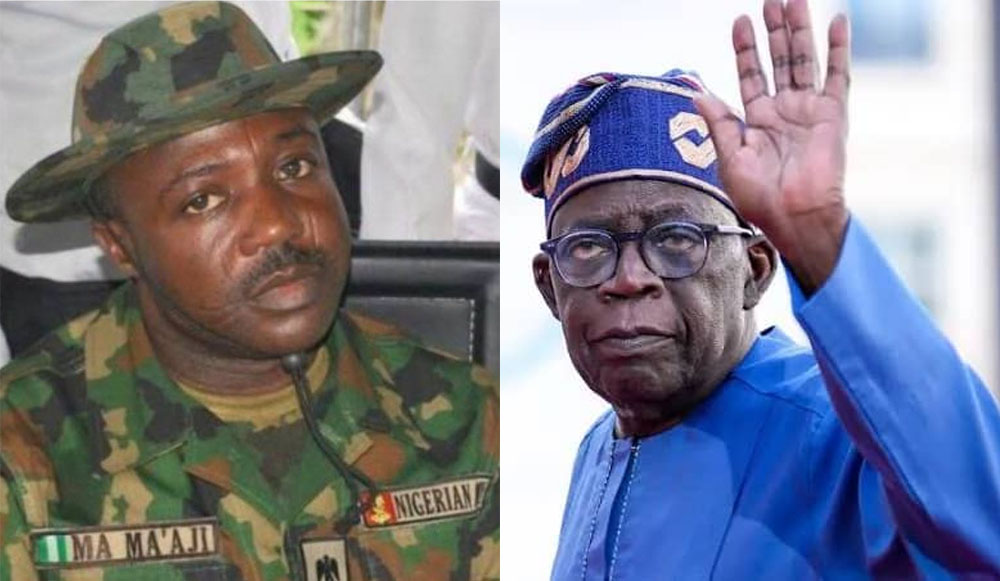
‘I Acted Out of Patriotism’ — Army Colonel Ma’aji Breaks Silence, Explains Why He Plotted Coup Against Tinubu




metro
‘Miracle’ Turns Sour as Visiting Pastor Vanishes with Congregants’ Phones During Crusade in Edo

‘Miracle’ Turns Sour as Visiting Pastor Vanishes with Congregants’ Phones During Crusade in Edo
By NewsTrends Correspondent
UROMI, EDO STATE – Worshippers in Uromi, Edo State, have reportedly been left devastated after a visiting pastor allegedly disappeared with their mobile phones during a prayer programme.
The incident, which reportedly occurred over the weekend, has sparked outrage and widespread reactions on social media after videos showing some of the affected worshippers crying over their losses emerged online.
According to reports, the visiting cleric instructed participants at the religious gathering to surrender their mobile phones and place them at the altar before the commencement of prayers.
The worshippers reportedly complied with the directive, apparently trusting the pastor’s instructions.
However, the situation allegedly took a dramatic turn when the cleric disappeared with the devices during the programme, leaving the congregation shocked and confused.
Videos circulating online show some of the affected worshippers, particularly women, visibly distressed and lamenting the disappearance of their belongings.
One of the women was heard expressing her frustration and concern over how she would cope without her mobile phone.
The circumstances surrounding the incident have generated widespread criticism, with many Nigerians questioning why worshippers were persuaded to surrender their personal belongings to a visiting religious leader.
The identity of the pastor, the exact number of phones allegedly taken and his whereabouts had yet to be established as of the time of filing this report.
Meanwhile, The Sun Nigeria reported that the Edo State Police Command had not confirmed the incident as of Monday, November 9.
The development has renewed calls for caution among religious worshippers against surrendering valuable personal belongings to individuals under the guise of spiritual instructions.
Miracle’ Turns Sour as Visiting Pastor Vanishes with Congregants’ Phones During Crusade in Edo

metro
‘You’re Peter Obi’s Unofficial Spokesman’ – Bwala Accuses Arise TV’s Rufai Oseni

‘You’re Peter Obi’s Unofficial Spokesman’ – Bwala Accuses Arise TV’s Rufai Oseni
ABUJA, Nigeria – Presidential spokesperson Daniel Bwala has accused Arise Television presenter Rufai Oseni of acting as an unofficial spokesperson for former Anambra State Governor and Nigeria Democratic Congress (NDC) presidential candidate, Peter Obi.
Bwala made the allegation on Monday, November 9, 2026, in a post on X while reacting to Obi’s criticism of President Bola Tinubu over his administration’s handling of public resources and governance.
The presidential spokesman alleged that Oseni drafted a recent social media post by Obi to enable the former Anambra governor to amplify his criticism of the Federal Government during the Arise Television morning programme.
In the post, Bwala questioned why the broadcaster would not openly acknowledge his alleged political relationship with Obi.
“That tweet of @PeterObi was drafted to him by Rufai Oseni so he (Rufai) would amplify on their morning show. Check the pattern and flow as revealed to me by my sources in their camp.
“What is wrong with openly acknowledging that he is Obi’s unofficial spokesman? Hypocrites,” Bwala wrote.
What Triggered Bwala’s Outburst?
Bwala’s accusation followed a post by Obi titled, “Good Day, Mr President: Nigerians Deserve Accountability,” in which the NDC presidential candidate challenged Tinubu to account for funds saved from the removal of petrol subsidy, government borrowings and increased government revenue.
Obi also questioned the administration’s achievements in addressing poverty, out-of-school children, inadequate healthcare, poor electricity supply and insecurity.
Reacting to the post, Bwala suggested that Oseni was behind its composition and intended to use his television platform to give Obi’s criticism wider publicity.
However, the presidential spokesman did not provide evidence to substantiate his allegation that the Arise Television presenter drafted Obi’s post.
Political Tensions Ahead of 2027 Elections
The latest exchange comes amid growing political disagreements between supporters of the Tinubu administration and opposition figures ahead of the 2027 general elections.
Oseni has become a prominent voice in public discussions on governance, frequently interrogating politicians and challenging public officials on issues affecting Nigerians.
Bwala, on the other hand, has been actively defending the Tinubu administration against criticism from opposition politicians and other public commentators.
The allegation has again brought attention to the relationship between political communication, media independence and the responsibility of journalists to hold public officials accountable.
While Bwala has questioned Oseni’s perceived neutrality, his allegation that the broadcaster authored Obi’s post remains unsubstantiated based on the information contained in his public statement.
‘You’re Peter Obi’s Unofficial Spokesman’ – Bwala Accuses Arise TV’s Rufai Oseni
metro
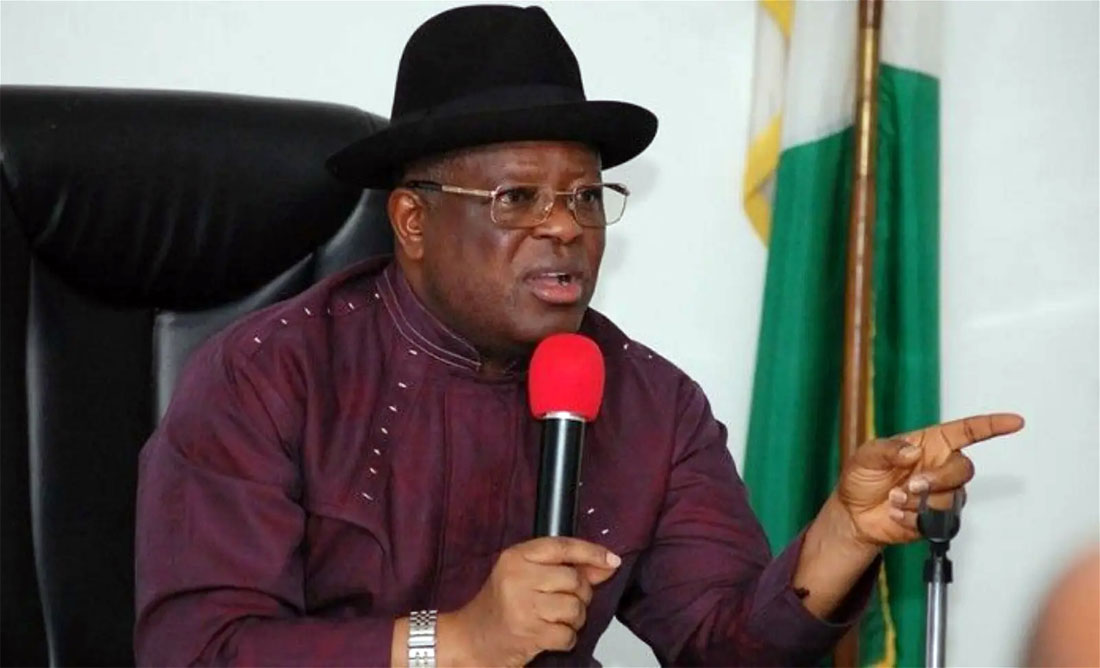
Umahi, Cubana Chief Priest Trade Fresh Blows as Minister Asks ‘How Much Money Do You Have?’
Umahi, Cubana Chief Priest Trade Fresh Blows as Minister Asks ‘How Much Money Do You Have?’
Minister of Works, David Umahi, and popular socialite and businessman, Pascal Okechukwu, popularly known as Cubana Chief Priest, have reignited their public feud, exchanging sharp words over wealth, political influence and development in the South-East.
The latest exchange began after Umahi questioned the socialite’s repeated declaration that “money na water”, challenging him to demonstrate the impact of his wealth through meaningful contributions to society.
Cubana Chief Priest, however, responded by describing the minister as the “Pharaoh of our time” and demanding that he allow the people of the South-East to enjoy meaningful development.
The controversy has attracted considerable attention on social media, particularly as both men have brought the region’s political interests and infrastructure development into the dispute.
Umahi fired his latest salvo during a recent public engagement, where he criticised what he described as excessive public display of wealth.
Taking a swipe at Cubana Chief Priest’s popular “money na water” catchphrase, the minister questioned how much money the businessman actually possessed and challenged him to demonstrate what he had achieved with his wealth.
“We have become very noise-making. Every time, money na water. How much do you have? Have you ever seen water that have money? Have you ever seen children that say I have money?” Umahi queried.
The former Ebonyi State governor argued that genuinely wealthy individuals do not constantly advertise their financial status, citing prominent Nigerian business figures such as Aliko Dangote, Femi Otedola and Abdul Samad Rabiu of BUA Group.
According to him, wealth should be measured not merely by public declarations but also by its positive impact on society.
“Money speaks for itself. Money speaks for itself, not to say money na water. Every time, money na water with your small bar business. What have you done with the money? How many people are on scholarship through you?” he asked.
Umahi’s remarks came after Cubana Chief Priest publicly criticised his performance as Minister of Works, describing him as the second-worst minister the South-East had ever produced.
The businessman questioned the benefits the region had derived from having one of its indigenes occupy the strategic position of Minister of Works.
He also called on President Bola Tinubu to replace ministers he considered ineffective, arguing that the South-East had little to show for Umahi’s appointment.
His comments generated reactions among social media users, with some supporting his assessment and others questioning his qualifications to evaluate the minister’s performance.
Responding to Umahi’s latest remarks, Cubana Chief Priest returned with another blistering attack, describing the minister as a modern-day Pharaoh and demanding that he stop making political promises on behalf of the South-East without tangible development to show for them.
In a video recorded aboard a boat, the businessman challenged Umahi to identify projects he had delivered in the region.
He also accused the minister of making promises to President Tinubu about securing votes from the South-East ahead of the 2027 general elections without doing enough to convince the people through infrastructure development.
“Honourable Minister of Works, Pharaoh of our time. Please let the people of the South-East go. Stop giving Mr President fake promises on votes,” he said.
Cubana Chief Priest further questioned Umahi’s alleged political succession plans in Ebonyi State, accusing him of positioning his son to succeed the incumbent governor, Francis Nwifuru.
He criticised what he described as attempts to turn governance into a family affair, questioning whether the minister was satisfied with the level of development in Ebonyi State and the wider South-East.
The allegation about the minister’s son’s political ambition has not been independently established.
Beyond the political succession controversy, Cubana Chief Priest also challenged Umahi over infrastructure development in the South-East, alleging that a bridge in the region had deteriorated following the minister’s intervention.
“Our bridge is no longer bridging since you touched it. Let us go,” he said.
The businessman insisted that the people of the region deserved visible development rather than political promises and repeated assurances of support for the Tinubu administration.
The latest confrontation has once again brought attention to the relationship between political officeholders and influential social media personalities, particularly over the performance of public officials and the expectations of their constituencies.
With the 2027 general elections approaching, the exchange has also added another dimension to the debate over political representation, infrastructure delivery and the South-East’s relationship with the Federal Government.
Umahi, Cubana Chief Priest Trade Fresh Blows as Minister Asks ‘How Much Money Do You Have?’
-

 Sports2 days ago
BREAKING: Flamingos Make History, Defeat Japan 2–1 to Win First FIFA U-17 Women’s World Cup
-

 Entertainment3 days ago
Mohbad: Court-Supervised DNA Samples Collected From Singer’s Remains, Son Liam
-
 News2 days ago
Power Outage: Tegbe Gives Nigerians 72-Hour Timeline as FG Moves to Restore Electricity
-
 International3 days ago
US Offers $20m Reward, Relocation for Information on Iran’s Nuclear Programme
-

 Africa3 days ago
Shakahola Massacre: Kenyan Court Jails Doomsday Pastor 200 Years Over 191 Deaths
-

 Politics3 days ago
‘Stop Blaming Us’, APC Tells Atiku, ADC Over Court Judgment
-

 Entertainment3 days ago
Nasarawa Murder: Two Arrested as Police Recover Burnt Body from Dry Well
-
 Politics3 days ago
Atiku to Tinubu: You Cannot Use Courts to Escape Nigerians’ Verdict