

Politics
I Will Deliver Tinubu/Shettima Presidential Project In 2023 – Lalong

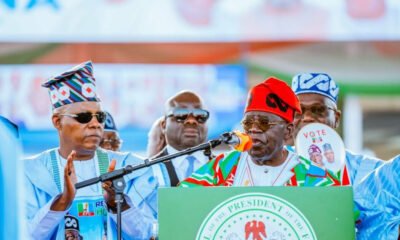
The Plateau State governor, Simon Lalong, has declared that he is determined to deliver the Tinubu/Shettima presidential election victory in 2023.
Lalong gave the assurance at the Yakubu Gowon International Airport, Jos on arrival from Abuja, where he was appointed as the director-general of the Tinubu/Shettima Presidential Campaign Organisation.
READ ALSO:
- Why President Muhammadu Buhari must resign immediately — NADECO
- Woman sleeps with 40 men to mark her 40th birthday + Video
- Oyetola, APC submit 1,240-page petition
Lalong, who was received by a mammoth crowd said, “I consider my appointment as the director-general of the All Progressives Congress (APC) presidential campaign for the 2023 elections as an honour done to the entire Plateau State. And I vow not to allow the confidence reposed on me to be abused.
Daily Trust






Politics
Kwankwaso Made Me Swear on Qur’an to Join APC After Election Victory — Gov Yusuf Reveals Tinubu Deal
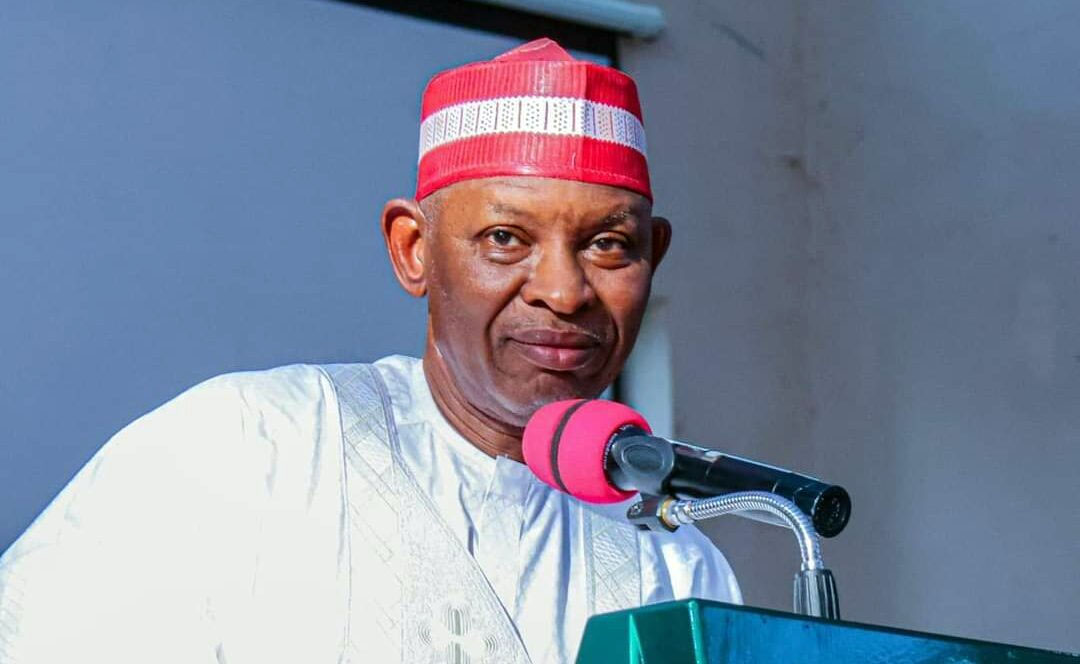
Kwankwaso Made Me Swear on Qur’an to Join APC After Election Victory — Gov Yusuf Reveals Tinubu Deal
KANO, Nigeria — Kano State Governor, Abba Kabir Yusuf, has revealed fresh details of an alleged political agreement involving President Bola Ahmed Tinubu, his former political benefactor, Senator Rabiu Musa Kwankwaso, and his eventual defection to the ruling All Progressives Congress (APC).
Yusuf disclosed that Kwankwaso personally instructed him to approach President Tinubu after the 2023 governorship election and assure the President that they would return to the APC if the legal battle challenging his electoral victory was resolved in his favour.
In a startling revelation, the governor said Kwankwaso also made him swear on the Holy Qur’an to demonstrate his commitment to the agreement.
He made the disclosures during an interview with **BBC Hausa**, in which he spoke extensively about his political fallout with the former Kano governor and leader of the Kwankwasiyya movement.
The revelation offers a different account of the circumstances surrounding Yusuf’s January 2026 defection, which generated considerable controversy within Kano’s political establishment.
According to Yusuf, the arrangement was reached after the 2023 governorship election, when APC candidate Nasiru Yusuf Gawuna challenged his victory in court.
The governor explained that the understanding was that Tinubu would allow the judicial process to run its course without interference, while Kwankwaso and his political associates would eventually reunite with the APC if Yusuf retained his mandate.
He said Kwankwaso personally sent him to meet the President and communicate the commitment.
Yusuf further claimed that the discussions went beyond a one-time meeting, alleging that Kwankwaso held several meetings with Tinubu and repeatedly dispatched delegations to discuss the proposed political realignment.
He maintained that the agreement involved the former Kano governor, himself, elected representatives and their supporters returning to the APC.
The Kano governor alleged that Kwankwaso subsequently abandoned the arrangement despite having initiated the negotiations and insisted that he take an oath on the Qur’an.
Yusuf said he fulfilled his own part of the understanding by communicating the commitment to Tinubu and eventually returning to the APC.
He also dismissed suggestions that his defection was a carefully orchestrated political drama designed to deceive the public or weaken opposition forces.
According to him, meetings involving Kwankwaso, lawmakers and local government chairmen had taken place with the knowledge of the former governor.
He attributed the eventual breakdown of the arrangement partly to comments allegedly made by Kwankwaso after he had already communicated their commitment to Tinubu.
Addressing accusations that he betrayed the man who helped him become governor, Yusuf insisted that his decision to leave the NNPP should not be interpreted as disloyalty.
Rather, he argued that he had fulfilled an earlier commitment which Kwankwaso himself had failed to honour.
The governor also acknowledged that internal disagreements within the NNPP contributed to the deterioration of their political relationship.
Yusuf formally defected from the NNPP to the APC on January 26, 2026, less than three years after winning the Kano governorship election on the platform of the former party.
The latest revelations contrast with Kwankwaso’s earlier public comments following Yusuf’s defection.
In an interview with BBC Hausa in January 2026, the former Kano governor described the development as shocking, saying he struggled to understand how his political protégé could leave the NNPP.
Kwankwaso also expressed disappointment over Yusuf’s decision to align with the APC political camp associated with former Kano governor Abdullahi Ganduje.
He subsequently maintained that Yusuf and those who followed him would eventually regret leaving the NNPP.
The latest interview has therefore brought renewed attention to the political relationship between the two former allies, particularly as political realignments gather momentum ahead of the 2027 general elections.
However, the alleged agreement with Tinubu and the account of the Qur’an oath remain claims made by Governor Yusuf in the BBC interview. The account does not, by itself, establish independent confirmation from Kwankwaso or the Presidency.
Kwankwaso Made Me Swear on Qur’an to Join APC After Election Victory — Gov Yusuf Reveals Tinubu Deal
Source: BBC Hausa interview.
Politics
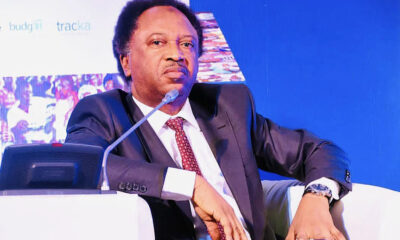
Shehu Sani Warns Northerners Against Celebrating Abuja Attack on Tinubu, Fears Ethnic Reprisals
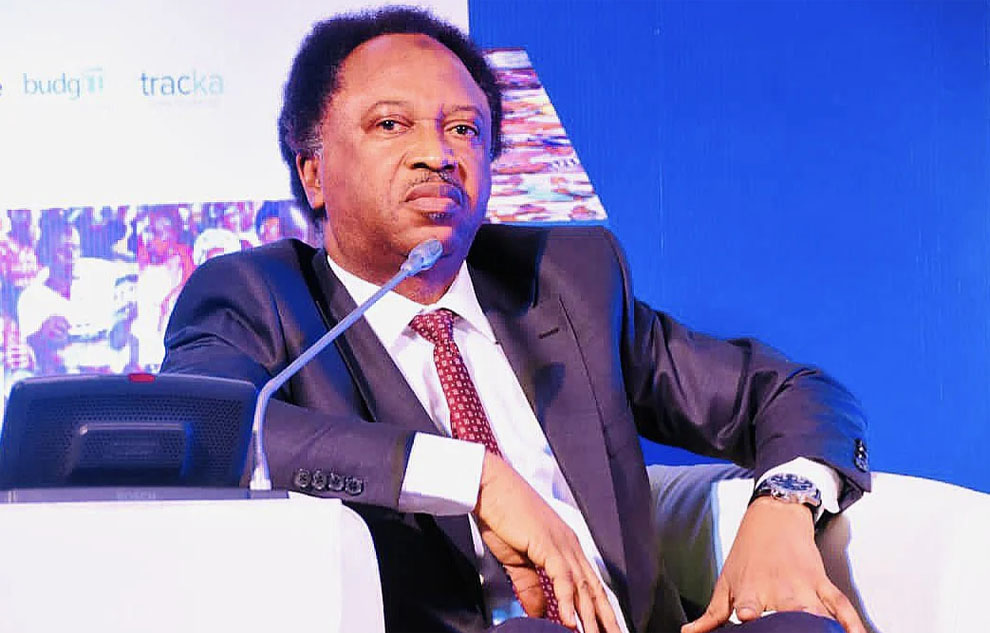
Shehu Sani Warns Northerners Against Celebrating Abuja Attack on Tinubu, Fears Ethnic Reprisals
ABUJA — Former Kaduna Central Senator, Shehu Sani, has cautioned Northerners against celebrating, justifying or encouraging attacks on President Bola Ahmed Tinubu, warning that similar incidents involving Northern political leaders in Southern Nigeria could trigger dangerous ethnic tensions and possible reprisals.
Sani said Nigerians should consider the consequences of allowing political disagreements to degenerate into hostility against leaders on the basis of their regional or ethnic backgrounds.
The former lawmaker gave the warning in a statement posted on his official X handle on Saturday, November 21, 2026, while drawing comparisons between attacks involving two Southern Nigerian presidents and a hypothetical situation in which a Northern presidential candidate or sitting president was subjected to similar treatment in the South.
Recalling the attack on former President Goodluck Jonathan’s campaign convoy in Bauchi State in January 2015 and the recent incident involving President Tinubu’s motorcade in Abuja, Sani observed that neither incident plunged the country into widespread ethnic unrest.
He, however, questioned whether Nigerians would demonstrate the same restraint if a Northern leader experienced similar hostility in a Southern state.
“Former President Goodluck was once reportedly pelted in Bauchi and the country was calm. President Tinubu was reportedly pelted in Abuja and the country is calm.
“Will there be the same calmness in the country if a Presidential candidate from the North or a future president from the North is pelted in Enugu or Ekiti?” he asked.
Warns Against Ethnic Reprisals
Sani expressed concern that an attack on a Northern political leader in the South could provoke angry reactions among youths in the North, potentially worsening the country’s already delicate ethnic and political relationships.
He illustrated the danger by asking whether Northern youths would take to the streets chanting provocative slogans such as “Shege Biafra” or “Shege Oduduwa” if a Northern presidential candidate or president were attacked in the South-East or South-West.
The former senator’s remarks appeared to be a warning against the dangerous consequences of normalising political violence and celebrating attacks on public officials simply because they belong to a different region.
He urged Northerners to demonstrate the same tolerance and restraint they would expect from other Nigerians if a political leader from their region became the target of public hostility.
“For those of us from the North, let’s not support, applaud or encourage what we can NEVER tolerate when the table turns,” he stated.
How Tinubu’s Abuja Motorcade Was Attacked
Sani’s intervention comes against the backdrop of the November 13 incident involving President Tinubu’s motorcade shortly after he attended Juma’at prayers at the Shehu Shagari Central Mosque in Area 1, Garki, Abuja.
As the presidential convoy departed the mosque, some youths reportedly gathered around the area, chanting anti-government slogans in Hausa, including “Ba ma yi, ba ma so”, meaning “We don’t want it; we don’t accept it”.
Videos circulated on social media also appeared to show some individuals throwing stones and other objects towards the presidential convoy.
The incident initially generated conflicting accounts, with presidential aide O’Tega Ogra dismissing some circulating videos as misleading.
However, the Federal Capital Territory Police Command subsequently confirmed that the motorcade had come under attack, disclosing that vehicles were damaged and some security operatives sustained injuries.
The police also announced the arrest of 78 suspects in connection with the incident.
President Tinubu subsequently directed the police to caution and release the detained suspects.
Political Tensions Mount Ahead of 2027 Elections
The Abuja incident has further heightened political tensions as Nigeria approaches the 2027 general elections.
The ruling All Progressives Congress (APC) has accused opposition interests, particularly the African Democratic Congress (ADC) and the Nigeria Democratic Congress (NDC), of being behind the incident. Both opposition parties have rejected the allegations.
The controversy has added to growing concerns about political intolerance, regional divisions and the possibility of violence as political activities intensify ahead of the next general elections.
Sani’s intervention has therefore brought renewed attention to the need for political maturity and restraint across the country’s diverse regions.
His central message is that political opposition should never become an excuse for violence, just as attacks on leaders should not be applauded simply because they belong to a different political party, ethnic group or geographical region.
With the 2027 elections approaching, the former senator’s warning underscores the importance of protecting Nigeria’s political stability from the dangers of ethnic hostility and retaliatory violence.
Shehu Sani Warns Northerners Against Celebrating Abuja Attack on Tinubu, Fears Ethnic Reprisals
Politics
‘Makinde Should Call Wike Uncle, Not Me’ – Ogun Fires Back

‘Makinde Should Call Wike Uncle, Not Me’ – Ogun Fires Back
A former member of the House of Representatives and chieftain of the Nigeria Democratic Congress (NDC), Sergius Ogun, has dismissed suggestions that Oyo State Governor Seyi Makinde should regard him as an elder political figure, insisting that he is senior to the governor.
Ogun made the remark while reacting to a reported comment involving Makinde and the Minister of the Federal Capital Territory (FCT), Nyesom Wike.
In a pointed response, the former lawmaker said he had heard that Makinde should be addressing Wike as “Uncle”, but maintained that such a description did not apply to his relationship with the Oyo governor.
“I heard he said Makinde should be calling him Uncle Wike. I’m senior to him. He’s not uncle to me,” Ogun was quoted as saying.
The exchange comes against the backdrop of the prolonged political disagreement between Makinde and Wike, which has repeatedly exposed divisions within the Peoples Democratic Party (PDP) and generated debate over political loyalty, seniority and influence.
READ ALSO:
- Gombe: Three Killed, 13 Injured as Alleged Military Shooting Sparks Outcry
- Jimmy Odukoya Sues Sister, Church Trustees Over Removal as Senior Pastor
- UNILAG Gets 10 CNG Buses as FG Expands Campus Transport Scheme to 60 Institutions
The disagreement intensified after Makinde accused Wike of promising President Bola Tinubu that he would help retain control of the PDP ahead of the 2027 general elections. Wike subsequently criticised Makinde, warning him against engaging in a political battle he might not be able to sustain.
Makinde and Wike, who were once political allies within the PDP, have since found themselves on opposing sides of the party’s leadership crisis and the emerging political alignments ahead of the 2027 elections.
Ogun’s intervention adds another voice to the increasingly heated political exchanges surrounding the two prominent politicians.
‘Makinde Should Call Wike Uncle, Not Me’ – Ogun Fires Back
-
 metro3 days ago
FG’s ₦100,000 Family Grant: Eligibility, How to Apply and Payment Procedure Revealed
-
 Sports3 days ago
Ex-Super Eagles Captain Segun Odegbami Survives Death as Three Assailants Machete Him in Abeokuta Home
-

 metro3 days ago
Cleveland Girl, 11, Gets 7-Year Juvenile Sentence Over Rape, Attempted Murder of 5-Year-Old
-
 metro2 days ago
Hoodlums Descend on Tinubu’s Praise Singer Rarara at Abuja Mosque, Tear His Clothes
-

 metro3 days ago
Honesty Cost Lagos Taxi Driver His Job, Marriage After Returning ₦21,000 Passenger Left in His Cab
-

 metro3 days ago
Bandits Storm Rival Kidnappers’ Hideout, Free Abducted Victims in Shocking Video
-

 Politics3 days ago
Just in: Court Sacks Ribadu, Orders INEC to Restore Suleiman as Adamawa ADC Candidate
-

 Politics3 days ago
Tinubu Personally Asked Me to Fight Governor’s Impeachment, Warned Democracy Could Collapse – Olanipekun