

metro
ICYMI: How to Apply for 2026 FRSC Recruitment Successfully
ICYMI: How to Apply for 2026 FRSC Recruitment Successfully
The Federal Road Safety Corps (FRSC) has officially commenced its 2026 recruitment exercise, opening applications for qualified Nigerians seeking employment in the Corps across the Officer, Marshal Inspectorate (MI) and Road Marshal Assistant (RMA) cadres.
The recruitment portal opened on Friday, July 3, 2026, and applications will remain open for four weeks through the official FRSC recruitment portal.
The Corps has emphasised that the recruitment exercise is completely free, warning applicants against paying money to individuals or organisations claiming to offer employment or recruitment assistance.
Prospective applicants are advised to carefully read the eligibility criteria and prepare all required documents before beginning the online registration process.
Who is eligible for the 2026 FRSC recruitment?
To qualify for the 2026 FRSC recruitment, applicants must satisfy the Corps’ general entry requirements.
Applicants must:
- Be Nigerian citizens by birth.
- Be medically, physically and psychologically fit.
- Be of good character and free from any criminal conviction.
- Not belong to any secret cult or fraternity.
- Possess a valid National Identification Number (NIN).
- Meet the minimum height requirement of 1.65 metres for males and 1.58 metres for females.
- Possess the minimum academic qualification required for the cadre they intend to apply for.
Applicants who fail to meet these requirements may be disqualified during screening.
READ ALSO:
- Falana Slams Police Over Arrest of Alleged PFIPC Boss’ Father, Calls Action Illegal
- Ibadan: Police Arrest Masquerade Over Alleged Killing of 24-Year-Old Resident
- Bauchi: Suspected Political Thugs Kill Islamiyya Teacher Over Poster Dispute
Cadres available in the 2026 FRSC recruitment
The Corps has opened recruitment into three major categories.
Officer Cadre
This category is designed for graduates and professionals with qualifications such as B.Sc., BA, HND, MBBS, LLB, B.Pharm, B.Eng. and other recognised degrees.
Applicants must possess a valid NYSC discharge or exemption certificate and be between 18 and 35 years of age.
Marshal Inspectorate (MI) Cadre
Candidates with ND, NCE, Registered Nurse (RN), Registered Midwife (RM), Community Health Extension Worker (CHEW) and other recognised health-related qualifications are eligible.
Applicants must be 18 to 30 years old.
Road Marshal Assistant (RMA) Cadre
The Road Marshal Assistant category is open to applicants with WAEC, NECO or NABTEB qualifications.
Candidates are expected to possess between three and five O’Level credits, depending on the position, including English Language and Mathematics where required.
Drivers, riders and artisans—including mechanics, electricians, welders, plumbers, tailors and other skilled workers—may also apply provided they possess the relevant trade certificates and valid driver’s licence where applicable.
Heavy-duty truck drivers may be considered up to 40 years of age.
Documents required for FRSC recruitment
Before beginning the application, applicants should have the following documents ready:
- National Identification Number (NIN)
- Birth Certificate or Declaration of Age
- Local Government Certificate of Origin
- Primary and secondary school certificates
- Tertiary institution certificates (where applicable)
- NYSC discharge or exemption certificate
- Professional licences (where applicable)
- Trade Test Certificate (for artisans)
- Valid driver’s licence (for drivers)
- Recent passport photograph
- Valid email address
- Active mobile phone number
Step-by-step guide to apply for 2026 FRSC recruitment
Step 1: Visit the official recruitment portal
Go to the official FRSC recruitment portal at:
https://recruitment.frsc.gov.ng
Applicants are advised to avoid unofficial websites and recruitment agents.
READ ALSO:
- Deregulation or Exploitation? FG Warns Fuel Marketers on Excessive Petrol Pricing
- Elumelu to exit UBA board after 12 years as Emmanuel Nnorom takes over as chairman
- UEFA condemns FIFA’s Balogun suspension reversal
Step 2: Create an account
Register using your:
- Email address
- Phone number
- National Identification Number (NIN)
Create a secure password for your account.
Step 3: Verify your email
After registration, check your email inbox and click the activation link sent by the FRSC to verify your account.
Step 4: Complete the online application form
Log into the portal and provide accurate information, including:
- Personal details
- Educational qualifications
- Employment history (where applicable)
- Contact information
- Next-of-kin details
- Referee information
Applicants are advised to ensure all details correspond with their official documents.
Step 5: Upload required documents
Upload scanned copies of all requested credentials and a recent passport photograph.
Ensure the documents are clear, readable and meet the portal’s upload specifications.
Step 6: Review and submit your application
Carefully review every section of the application before submission.
Once satisfied, click the Submit button.
Step 7: Print your acknowledgement slip
Immediately print your completed application form and acknowledgement slip after submission.
The documents will be required during the Computer-Based Test (CBT), physical screening and credential verification for shortlisted candidates.
FRSC warns against recruitment fraud
The Federal Road Safety Corps has reiterated that the recruitment exercise is entirely free of charge.
Applicants have been advised not to pay money to anyone claiming to facilitate employment into the Corps.
The FRSC also urged candidates to use only their personal email addresses and telephone numbers throughout the recruitment process, as all official notifications—including CBT invitations, screening schedules and shortlisting updates—will be communicated through the contact details provided during registration.
Prospective applicants are encouraged to complete their applications before the portal closes and regularly monitor the official recruitment portal for updates.
ICYMI: How to Apply for 2026 FRSC Recruitment Successfully








metro
MURIC Accuses OAU International School of Restricting Hijab-Wearing Students
MURIC Accuses OAU International School of Restricting Hijab-Wearing Students
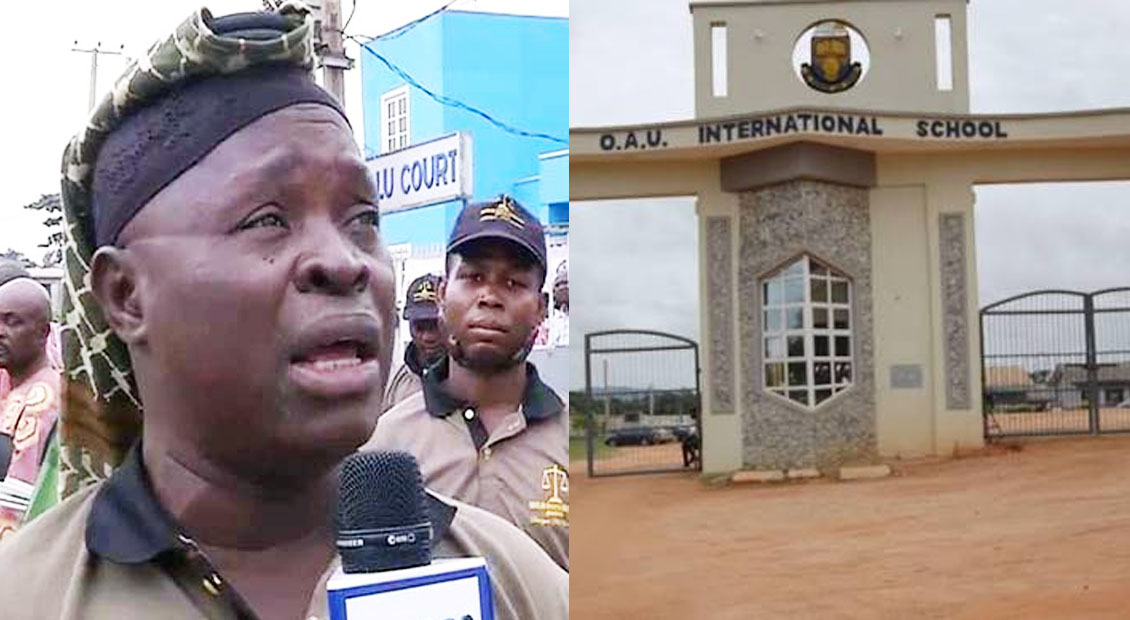
The Muslim Rights Concern (MURIC) has accused the management of the International School, Obafemi Awolowo University (OAU), Ile-Ife, Osun State, of restricting hijab-wearing Muslim students from accessing the school premises.
MURIC alleged that female Muslim students were locked out of the school for several days after authorities reportedly insisted that they remove their hijabs before being allowed into the compound.
The organisation condemned the alleged action and called for the immediate lifting of what it described as a restriction on the use of hijab by Muslim students.
In a statement issued on Monday, October 5, 2026, MURIC Executive Director, Professor Ishaq Akintola, said the affected students eventually returned to school without their hijabs after they were allegedly informed that the matter would not be considered until the next meeting of the university council in December.
Akintola described the development as discriminatory and argued that it raised concerns about religious freedom, girl-child education and the rights of Muslim students.
READ ALSO:
- Israeli Forces Reportedly Destroy School, Burn Homes in Southern Lebanon
- Nine Zamfara Lawmakers Dump APC for ADC Ahead of 2027
- Temi Nkem Wins N160m BBNaija Season 11 Grand Prize
He cited Section 38 of the Nigerian Constitution, which guarantees freedom of thought, conscience and religion, and argued that school regulations should not be applied in a manner that violates constitutionally protected religious rights.
“The argument that the use of hijab violates the school’s rules does not hold any water,” Akintola said, maintaining that Muslim students should be allowed to observe their faith while pursuing their education.
MURIC also questioned the reported circumstances surrounding the restriction and urged OAU and the International School authorities to clarify the policy governing religious attire at the institution.
The organisation further expressed concern about the effect of the dispute on the affected students, who it described as underage girls, and their parents.
According to MURIC, preventing students from attending school over their religious attire could undermine efforts to reduce the number of out-of-school children in Nigeria.
The group also rejected what it said could be the argument that the school’s internal rules supersede constitutional protections, insisting that institutional regulations must conform to the country’s laws.
MURIC called on the OAU authorities to address the dispute through dialogue and respect for religious diversity, warning that continued disagreement over the issue could create tension between the university community and residents of Ile-Ife.
The organisation alleged that the action could amount to discrimination against Muslim students, but those allegations have not been independently established.
MURIC therefore demanded that any restriction on hijab-wearing students at OAU International School be lifted immediately and that the affected students be allowed to attend classes without being required to abandon their religious attire.
The group said resolving the matter in a manner that protects the students’ rights would help preserve peaceful coexistence and OAU’s reputation as a major Nigerian educational institution.
MURIC Accuses OAU International School of Restricting Hijab-Wearing Students
metro
Ex-APC Women Leader Found Dead With Throat Slit in Bauchi

Ex-APC Women Leader Found Dead With Throat Slit in Bauchi
A former APC Women Leader in Bauchi South, Jemimah Dutse, has been found dead inside her residence in Bauchi State, with her throat allegedly slit by unidentified assailants.
Dutse was discovered in a pool of blood at her residence in Muazu New Layout, Yelwa, Bauchi, on Saturday, October 3, 2026.
The Bauchi State Police Command said the incident was reported at about 2:07pm by a 49-year-old man, following which detectives visited the residence and documented the scene.
Her body was subsequently evacuated to Abubakar Tafawa Balewa University Teaching Hospital (ATBUTH), Bauchi, for medical examination and autopsy.
The Commissioner of Police, Sani-Omolori Aliyu, directed that the case be transferred to the Homicide Section of the State Criminal Investigation Department (SCID) for a discreet and thorough investigation.
READ ALSO:
- Supreme Court Ruling: INEC Moves to Clarify Fate of 2027 Candidates
- Omokri Defends Tinubu Over Pension Record, Faults Linking President to 89-Year-Old’s Death
- Tantita Operations Push Oil Export Earnings to $9.39bn in Q2
The police said the investigation is focused on establishing the circumstances surrounding Dutse’s death and identifying the person or persons responsible.
The motive for the killing remains unknown, and authorities have not established any link between the death and Dutse’s previous political activities.
The command has appealed for calm and expressed condolences to Dutse’s family, friends and political associates, while assuring them that efforts are underway to unravel the circumstances surrounding her death.
The incident has also generated concern among residents and groups in Bauchi, with calls for a comprehensive investigation and improved security in the area.
The Take-It-Back Movement, Bauchi chapter, condemned the killing and called on security agencies to intensify efforts to identify and arrest those responsible.
The group also urged the authorities to conduct a high-powered investigation into the incident and strengthen security measures across Bauchi metropolis and surrounding communities.
Police said further developments would be communicated as the investigation progresses.
Ex-APC Women Leader Found Dead With Throat Slit in Bauchi
metro
Kidnappers torture abducted corps members, slash ransom to N100m

Kidnappers torture abducted corps members, slash ransom to N100m
Relatives of 20 abducted corps members have raised fresh concerns over the safety of the victims, alleging that kidnappers have subjected them to physical torture while reducing their ransom demand to N100 million.
The prospective National Youth Service Corps (NYSC) members were reportedly travelling from Ibadan, Oyo State, to orientation camps in Abia and Akwa Ibom states when gunmen attacked two buses along the Owerri–Onitsha Road in Umunoha, Mbaitoli Local Government Area of Imo State, on October 1.
The abductors initially reportedly demanded N50 million from each victim, putting the total ransom at N1 billion.
However, relatives said the kidnappers have now reduced the demand to N5 million per victim, bringing the total to N100 million.
The families also alleged that the abducted corps members were being beaten in captivity, including female victims, raising fears over their physical condition as the rescue operation continues.
A relative of one of the victims, Alimot Akande, said the situation had become increasingly frightening, appealing to the authorities to intensify efforts to secure the victims’ safe release.
According to the relatives, the abductors have maintained contact with some families through the phones of the captives and have used the communication to demand ransom.
READ ALSO:
- Family seeks N10m to free kidnapped newlywed, other victims
- Trump launches ‘Super Intelligence Force’ to keep US ahead in AI race
- NDLEA intercepts N5bn worth of drugs at ports, arrests Milan-bound businessman
The families had earlier appealed to the Olubadan of Ibadanland, Oba Rashidi Ladoja, for intervention after the kidnappers reportedly demanded the initial N1 billion ransom.
Meanwhile, security agencies have intensified efforts to locate the kidnappers’ hideout and rescue the victims.
The Imo State Police Command said its operatives had traced the suspected kidnappers to a location in the bush. However, the operation has reportedly been complicated by intelligence that the area may have been planted with improvised explosive devices (IEDs).
The police said drone surveillance was used to identify the suspected location of the captives, with plans underway to deploy additional operational equipment to safely access the area.
The Inspector-General of Police, Olatunji Disu, has also deployed the Deputy Inspector-General of Police in charge of Operations, Shehu Umar Nadada, to Imo State to coordinate the rescue operation.
Nadada subsequently reviewed the security deployment and directed additional tactical resources towards efforts to rescue the abducted corps members.
Police authorities have assured the families that efforts are ongoing to locate the victims and bring them home safely.
There have also been varying reports over the exact number of people abducted and those already rescued. The police initially reported that some victims had been rescued after the attack, while relatives continued to maintain that 20 prospective corps members remained affected by the abduction.
The two buses involved in the incident have reportedly been recovered as security agencies continue operations around the area.
The Oyo State Government has also joined efforts to secure the release of the victims, maintaining contact with the Imo State Government and security agencies.
The incident has renewed concerns about the safety of prospective corps members travelling to NYSC orientation camps, particularly along major highways where kidnapping remains a persistent security challenge.
For the affected families, the immediate priority remains the safe return of their loved ones as security agencies work to overcome the reported explosives threat and reach the suspected kidnappers’ hideout.
Kidnappers torture abducted corps members, slash ransom to N100m
-

 metro2 days ago
NYSC Kidnap: Abductors Demand N950m for 19 Prospective Corps Members in Imo
-

 Politics2 days ago
2027: Oshiomhole Dares Opposition Over ₦500 Petrol Promise, Says APC Will Take Argument to Nigerians
-

 Entertainment3 days ago
Olu Jacobs Laid to Rest in Lagos as Dignitaries, Nollywood Stars Honour Screen Icon
-

 metro2 days ago
N500 Petrol, Wage Award: Public Sector Workers Begin Warning Strike
-

 metro2 days ago
Amaechi: Tinubu’s Policies Made My Mother’s Drugs Unaffordable
-

 metro1 day ago
‘I Thought I Was Dead’ — Hairstylist’s Daring Escape From Kidnappers After Benin-Ore Ambush
-

 Entertainment2 days ago
Less Than Four Months After Wedding, Jarvis Threatens Peller With Lawsuit Over Second-Wife Plan
-

 metro2 days ago
Tension as Kidnappers Threaten to Kill Abducted Oyo Corps Members