
International
Iran, allies ready Israel response as funerals held for militant leaders

Iran, allies ready Israel response as funerals held for militant leaders
TEHRAN: Iran and its regional allies vowed retaliation on Thursday for the deaths of Hamas and Hezbollah leaders, raising regional tensions as mourners filled Tehran’s city center calling for revenge.
A public funeral was held for Hamas’s political chief Ismail Haniyeh in the Iranian capital where he was killed early Wednesday in an attack which Israel has not commented on.
Haniyeh’s body was then flown to Qatar, where he had resided and where he is to be laid to rest on Friday, when his group called for a “day of furious rage” in the Palestinian territories and across the region.
Hezbollah chief Hassan Nasrallah, addressing the funeral of the Lebanese group’s top military commander, said Israel and “those who are behind it must await our inevitable response” to Fuad Shukr’s and Haniyeh’s killings within hours of each other.
“You do not know what red lines you crossed,” Nasrallah said, addressing Israel, a day after Shukr was killed in a strike in south Beirut.
Israel, which said Shukr’s assassination was a response to deadly rocket fire last week on the annexed Golan Heights, warned its adversaries on Thursday they would “pay a very high price” for any “aggression.”
“Israel is at a very high level of preparation for any scenario, both defensive and offensive,” Prime Minister Benjamin Netanyahu said in a statement.
“Those who attack us, we will attack in return.”
A source close to Hezbollah told AFP that Iranian officials met in Tehran on Wednesday with representatives of the so-called “axis of resistance,” a loose alliance of Tehran-backed groups hostile to Israel, to discuss their next steps.
“Two scenarios were discussed: a simultaneous response from Iran and its allies or a staggered response from each party,” said the source who had been briefed on the meeting, requesting anonymity to discuss sensitive matters.
The leader of Yemen’s Iran-backed Houthi rebels vowed a “military response” to Israel’s “major escalation.”
READ ALSO:
- Commercial activities shut down as protesting groups clash in Lagos, others
- 14 killed in nationwide protests, state govts, police respond
- BREAKING: Six youths killed as protest turned violent in Niger
Analysts told AFP that the retaliation would be measured to avoid a wider conflagration.
Iran and the groups it backs “will more than likely try to avert a war, while also strongly deterring Israel from continuing with this new policy, this targeted shock and awe,” said Amal Saad, a Hezbollah researcher and lecturer at Britain’s Cardiff University.
In Tehran, Iran’s supreme leader Ayatollah Ali Khamenei led prayers for Haniyeh having earlier threatened “harsh punishment” for his killing.
Crowds, including women shrouded in black, carried posters of Haniyeh and Palestinian flags in a procession and ceremony that began at Tehran University, an AFP correspondent reported.
Senior Iranian officials, including President Masoud Pezeshkian and Revolutionary Guards chief General Hossein Salami, attended the ceremony, state television images showed.
Iran’s Revolutionary Guards announced the day before that Haniyeh and a bodyguard were killed in a pre-dawn strike Wednesday on their accommodation in Tehran.
The New York Times however reported, citing anonymous sources including two Iranian officials, that the blast was caused by an explosive device planted several months ago.
When asked about the report, Israeli military spokesman Daniel Hagari told reporters “there was no other Israeli aerial attack… in all the Middle East” on the night of Shukr’s killing.
Qatar-based Haniyeh had been visiting Tehran for Pezeshkian’s swearing-in on Tuesday.
Pezeshkian said Iran “will continue to support with firmer determination the axis of resistance,” the official IRNA news agency said.
Qatar-based network Al Jazeera reported that the plane carrying Haniyeh’s body had landed in Doha, where the Palestinian leader is to be buried following prayers at the Qatari capital’s largest mosque.
Hamas called in a statement for a day of protests on Friday.
“Let roaring anger marches start from every mosque,” it said.
READ ALSO:
- Lagos: Police keep peace at Lekki tollgate protest
- Just in: 24-hour curfew declared in Kano over violent protest, massive looting
- Protesters angry over inclusion of Adeleke’s name on placards in Osun
Turkish President Recep Tayyip Erdogan called Haniyeh a “martyr” and announced a national day of mourning on Friday “in solidarity with the Palestinian cause.” Pakistan too announced a national day of mourning.
The international community has called for calm and a focus on securing a ceasefire in the Gaza Strip — which Haniyeh had accused Israel of obstructing.
United Nations chief Antonio Guterres said the strikes in Tehran and Beirut represented a “dangerous escalation.”
In a phone call, the foreign ministers of Jordan and Egypt blamed Israel for rising tensions and called for “de-escalation,” Jordan’s official Petra news agency reported.
US Secretary of State Antony Blinken reiterated appeals for an end to fighting and said achieving peace “starts with a ceasefire.”
But the prime minister of key ceasefire broker Qatar said Haniyeh’s killing had thrown the whole Gaza war mediation process into doubt.
“How can mediation succeed when one party assassinates the negotiator on the other side?” Sheikh Mohammed bin Abdulrahman Al-Thani said on social media site X.
US President Joe Biden will speak to Netanyahu later on Thursday, the White House said.
The killings are the latest of several major incidents that have inflamed regional tensions during the Gaza war which has drawn in Iran-backed militant groups in Syria, Lebanon, Iraq and Yemen.
Beyond Gaza, clashes continued on Thursday with Lebanese authorities reporting four Syrians killed in an Israeli strike, followed by Hezbollah announcing a barrage of “dozens” of rockets at Israel.
Israel has vowed to destroy Hamas in retaliation for its October 7 attack that resulted in the deaths of 1,197 people, mostly civilians, according to an AFP tally based on official Israeli figures.
Militants also seized 251 hostages, 111 of whom are still held captive in Gaza, including 39 the military says are dead.
Concern over the fate of those still held has grown among Israelis, who demonstrated demanding a deal to free them in Tel Aviv on Thursday, marking the war’s 300th day.
Israel’s retaliatory campaign against Hamas has killed at least 39,480 people in Gaza, according to the Hamas-run territory’s health ministry, which does not give details of civilian and militant deaths.
Iran, allies ready Israel response as funerals held for militant leaders
ARAB NEWS









International
EU, UK Reject Trump’s Call for Military Action to Secure Strait of Hormuz
EU, UK Reject Trump’s Call for Military Action to Secure Strait of Hormuz
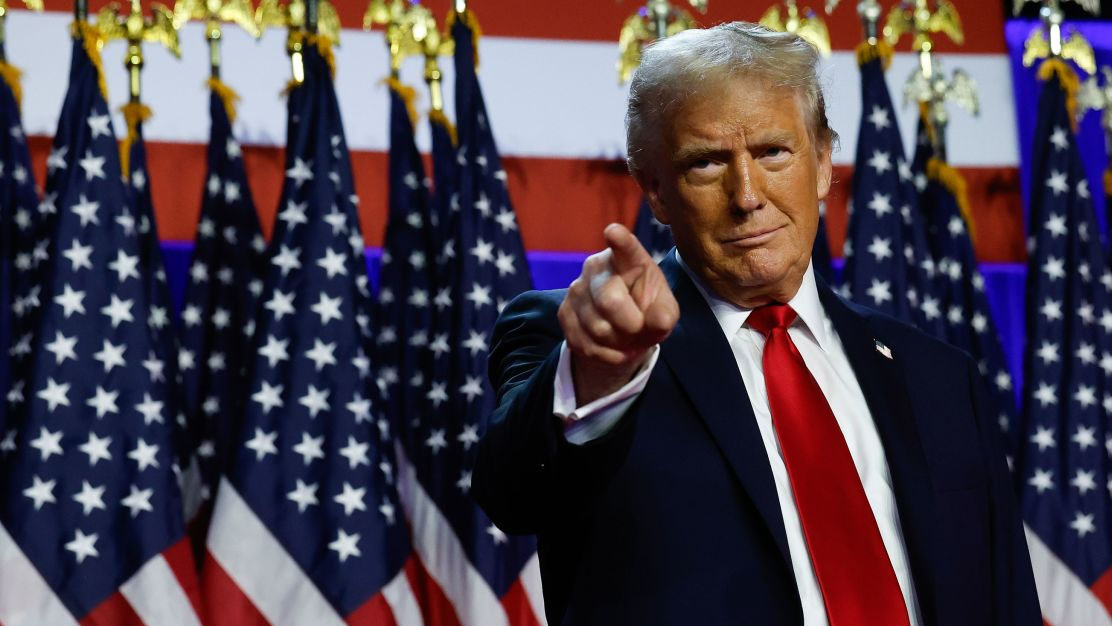
European and NATO allies have firmly rebuffed U.S. President Donald Trump’s demand for military assistance to secure the Strait of Hormuz, even as the strategic waterway remains effectively blocked amid the U.S.–Israeli war on Iran and global oil prices surge above $100 per barrel. The standoff highlights deep divisions among Western allies over how to respond to the crisis and underscores the challenges of securing international cooperation in the face of intensified regional tensions.
In a series of statements by European defence and foreign ministers, leaders made clear that military involvement in the Strait of Hormuz is not an option for most EU states, pointing instead to diplomatic engagement, strategic clarity, and wider de‑escalation as necessary prerequisites before any coordinated action can be considered.
“What does … Trump expect a handful or two handfuls of European frigates to do in the Strait of Hormuz that the powerful U.S. Navy cannot do?” German Defence Minister Boris Pistorius said in Berlin. “This is not our war. We have not started it.”
Similarly, Greek government spokesman Pavlos Marinakis stated that Greece would not participate in any military operations in the Strait of Hormuz, while Italian Foreign Minister Antonio Tajani confirmed that Italy would not extend its naval missions into the contentious waterway.
READ ALSO:
- Dangote, China’s GCL Sign $4.2bn Gas Deal to Power Ethiopia Fertiliser Megaproject
- Trump’s Claim of Former President Regret Over Iran Denied by Aides
- Oil Prices Jump as Strait of Hormuz Crisis Intensifies
Other European foreign ministers emphasised the need for more strategic clarity from Washington before any allied military support could be considered. Estonian Foreign Minister Margus Tsahkna said US allies wanted to understand Trump’s overall “strategic goals” and his plan for the wider conflict, while Polish Foreign Minister Radek Sikorski said that a formal NATO request would be required for his country’s participation.
“If there is a request via NATO, we will, of course, out of respect and sympathy for our American allies consider it very carefully,” Sikorski said, indicating that any European involvement would likely need to follow collective defence protocols.
In contrast, Danish Foreign Minister Lars Løkke Rasmussen urged EU member states to keep an open mind about helping ensure freedom of navigation through the strait, even if Europe does not endorse the US‑Israeli military campaign. “We must face the world as it is, not as we want it to be,” Rasmussen said, stressing that any engagement should prioritise de‑escalation.
The United Kingdom reiterated its commitment to working with allies to devise a collective strategy to reopen the Strait of Hormuz and restore freedom of navigation, but made clear it would not be drawn into a wider war. Prime Minister Keir Starmer said Britain was coordinating with partners on a plan aimed at securing maritime routes while avoiding expansion of the conflict.
Meanwhile, EU foreign policy chief Kaja Kallas told reporters in Brussels that EU leaders would focus on what member states are willing and able to contribute to efforts aimed at reopening the strait. “Of course, the need to open the Strait of Hormuz is there right now,” she said, noting that the closure — which has propelled oil prices above $100 per barrel — was inadvertently benefiting Russia’s war on Ukraine by boosting Moscow’s energy revenues.
Energy Market Response and IEA Actions
Amid political stalemate and pressure on oil markets, the International Energy Agency said it stands ready to release additional strategic oil reserves if needed, describing the current situation as “the largest supply disruption in the history of the global oil market.”
Last week, the IEA authorised a record release of 400 million barrels of oil to help cushion the immediate impact of the strait’s effective blockade. IEA Executive Director Fatih Birol noted that while recent decline in oil prices showed some relief, the release of reserves is not a lasting solution without assured access through the strait.
“The volume of oil supply offline is already higher than any previous disruption, including the oil crisis of 1973,” Birol said, while confirming that the agency still holds over 1.4 billion barrels in reserve, which could be deployed in future if necessary.
EU, UK Reject Trump’s Call for Military Action to Secure Strait of Hormuz
International
Israel to Extend Military Strikes on Iran for At Least Three More Weeks
Israel to Extend Military Strikes on Iran for At Least Three More Weeks
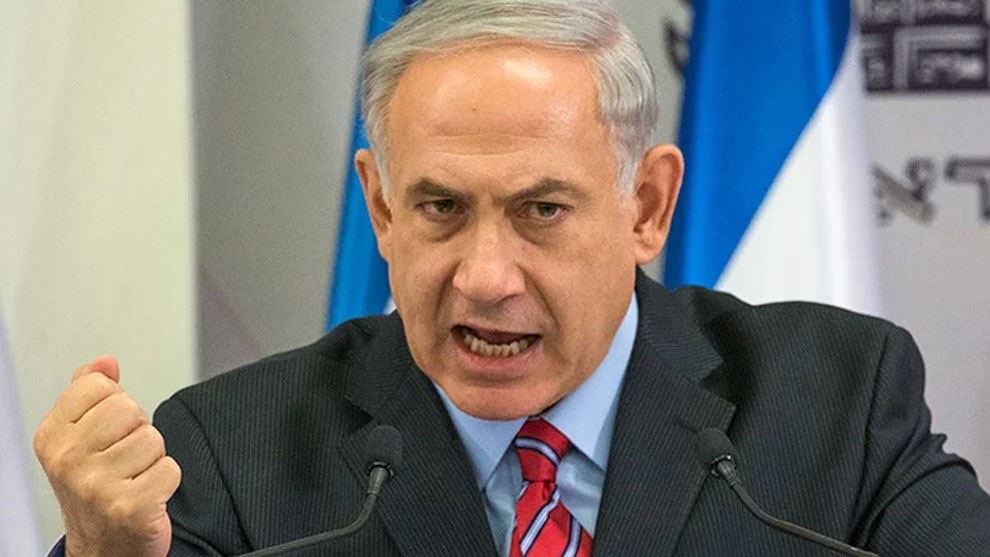
Israel has officially announced plans to continue its military campaign against Iran for at least three more weeks, as its forces sustain strikes on strategic Iranian targets. The announcement comes amid escalating tensions in the Middle East following Iranian drone attacks that temporarily shut Dubai International Airport and hit major oil facilities in the UAE, highlighting the conflict’s wider regional impact.
Lieutenant Colonel Nadav Shoshani, spokesperson for the Israel Defense Forces (IDF), confirmed that detailed operational plans have been drawn for the coming weeks, along with contingency strategies extending beyond that timeframe. The campaign is aimed at weakening Iran’s ability to threaten Israel, focusing on ballistic missile systems, nuclear infrastructure, and security apparatus, with thousands of targets reportedly still on the list.
Over 110,000 Israeli reservists have been mobilized to support the operations. The military emphasizes that its objectives are strictly defensive and strategic, targeting only facilities tied to Iran’s military and security network. Shoshani said, “We want to make sure that they are as weak as possible, this regime, and that we degrade all their capabilities, all parts and all wings of their security establishment.”
READ ALSO:
- Tinubu Swears in Taiwo Oyedele as Minister of State for Finance
- Nursery Worker Jailed 24 Years for Raping, Abusing Toddlers
- Court Screens Video Showing NDLEA Allegedly Helping Cocaine Smugglers at Enugu Airport
The conflict’s escalation has had serious repercussions for global energy markets, particularly at the Strait of Hormuz, through which roughly 20% of the world’s oil and liquefied natural gas passes. The Iranian strikes have disrupted key infrastructure, prompting fears of prolonged supply shortages and rising energy prices worldwide.
This ongoing crisis stems from a joint U.S.–Israel military operation launched on February 28, 2026, in response to Iran’s regional activities, including ballistic missile development and support for proxy groups. Airstrikes have targeted cities including Tehran, Shiraz, and Tabriz, while limited ground operations in southern Lebanon have also been reported, targeting Iran-backed Hezbollah positions.
Iran has retaliated with missile and drone attacks against U.S. and Israeli positions, with civilian infrastructure in Gulf countries affected. International observers warn that unless diplomatic measures are taken, regional instability may worsen, further impacting energy markets and global security.
Global responses remain mixed. The United States and allied nations have urged de-escalation and efforts to secure critical maritime routes. Meanwhile, humanitarian concerns rise as civilian casualties and infrastructure damage continue. Analysts say the ongoing military campaign could have lasting implications for Middle East stability, global energy security, and international relations.
Israel to Extend Military Strikes on Iran for At Least Three More Weeks
International
Nursery Worker Jailed 24 Years for Raping, Abusing Toddlers

Nursery Worker Jailed 24 Years for Raping, Abusing Toddlers
A nursery worker in Bristol, England, has been sentenced to 24 years in prison for raping and sexually abusing young children in his care, a case that has shocked families and renewed calls for stronger child safeguarding measures.
Nathan Bennett, 30, was convicted on multiple charges, including two counts of rape, four counts of sexual assault, and two counts of assault by penetration. The offences involved five boys aged two to three years at the Partou King Street Nursery, which closed in December 2025 following the revelations. Bennett had previously admitted 13 related sexual offences against four of the children.
The abuse came to light in February 2025 after CCTV footage showed Bennett putting his hands down a child’s trousers, prompting the nursery to alert police. Prosecutors described his actions as “every parent’s worst nightmare,” emphasizing that he betrayed the trust of parents and exploited his position of authority over vulnerable children.
During the trial, disturbing evidence emerged that Bennett behaved territorially with toddlers, often sitting them on his lap for long periods, and wore trousers with holes in the crotch area. Video interviews of two victims, identified as Child A and Child E, revealed the harrowing experiences of the children, including how they described the abuse to their parents.
READ ALSO:
- Court Screens Video Showing NDLEA Allegedly Helping Cocaine Smugglers at Enugu Airport
- Manchester United Confirms Casemiro Will Leave at Season’s End Despite Stellar Form
- Atiku Has Less Than 1% of Tinubu’s War Chest — Dele Momodu
Passing sentence, Judge William Hart called Bennett an “incorrigible and dangerous paedophile”, stating that it was impossible to predict if he would ever cease posing a risk to children. The judge said Bennett prioritized his sexual gratification over the safety and wellbeing of the toddlers and highlighted the long-lasting impact his crimes would have on the victims and their families.
Bennett will serve 24 years in prison with an additional six years on licence and will be placed on the Sex Offenders Register for life, alongside an indefinite Sexual Harm Prevention Order restricting contact with children and childcare settings.
Families affected described the profound psychological and emotional toll of the abuse. In victim impact statements, parents spoke of betrayal, guilt, and lasting trauma, while other families associated with the nursery said they were devastated by the horrific acts despite their children not being abused.
Child protection advocates emphasized the case highlights gaps in safeguarding within childcare settings and called for improved screening, supervision, and CCTV monitoring to prevent similar incidents in the future. Legal representatives for the families have indicated they may pursue civil action against the nursery group to hold it accountable.
The case has renewed discussions on the urgent need for stricter child protection policies, better training of childcare staff, and swift investigation of early warning signs to ensure the safety of vulnerable children.
Nursery Worker Jailed 24 Years for Raping, Abusing Toddlers

-

 Railway23 hours ago
BREAKING: Several Passengers Injured as Abuja–Kaduna Train Derails After Collision
-

 metro20 hours ago
Court Screens Video Showing NDLEA Allegedly Helping Cocaine Smugglers at Enugu Airport
-
 International2 days ago
Iran–Israel Conflict Escalates As IRGC Threatens To Kill Netanyahu
-

 International3 days ago
Old Dominion University Shooting: Terrorism Suspect Had Links to Nigeria-Based ISIS
-

 metro1 day ago
Tinubu Orders Nationwide Free Rice Distribution for Ramadan, Lent Support
-
 International2 days ago
Netanyahu dispels death rumours, appears in video from Coffee Shop
-

 Sports3 days ago
Nigeria’s ex-Super Eagles player, 1980 AFCON hero Henry Nwosu, dies
-

 metro3 days ago
Lagos reintroduces monthly sanitation as waste, flood risks mount