

International
ISIS claims responsibility for attack at Moscow-area concert venue that left at least 60 dead
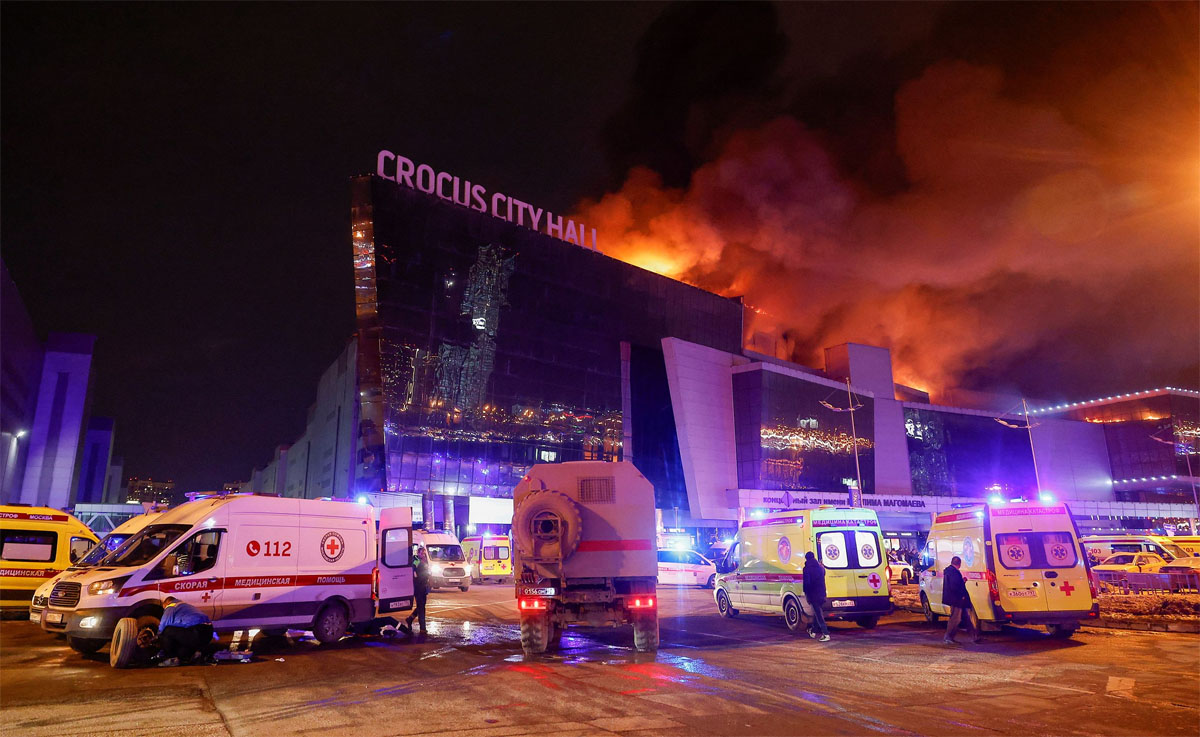
The terror group took responsibility for the attack in a short statement published by ISIS-affiliated news agency Amaq on Telegram on Friday. It did not provide evidence to support the claim.
Video footage from the Crocus City Hall shows the vast complex, which is home to both the music hall and a shopping center, on fire with smoke billowing into the air. State-run RIA Novosti reported the armed individuals “opened fire with automatic weapons” and “threw a grenade or an incendiary bomb, which started a fire.” They then “allegedly fled in a white Renault car,” the news agency said.
The fire had been brought largely under control more than six hours later. “There are still some pockets of fire, but the fire has been mostly eliminated,” Moscow governor Andrey Vorobyov said on Telegram.
The deadliest terror attack on Moscow in decades, Friday’s assault came less than a week after President Vladimir Putin won a stage-managed election by an overwhelming majority to secure another term in office, tightening his grip on the country he has ruled since the turn of the century.
READ ALSO:
- Delta killings: Troops recover decomposing hearts of killed soldiers
- Amotekun arrest two kidnappers in Osun
- Those claiming 2024 budget was padded don’t understand arithmetic – Tinubu
The carnage broke out before a concert by the band Picnic, according to Russia 24.
“Unidentified people in camouflage broke into Crocus City Hall and started shooting before the start of the concert,” the Prosecutor General’s Office said, cited by TASS.
Video footage showed panic as the attack unfolded, with crowds of people huddling together, screaming and ducking behind cushioned seats as gunshots started echoing in the vast hall. One group sheltering next to a large wall of windows outside the concert venue were forced to break them to escape the gunfire, video obtained by CNN shows.
Footage geolocated by CNN shows an armed individual starting at least one fire inside the venue. The individual is seen carrying something in their hand and, as they walk off-screen, a bright flash of light from a large flame is seen in the video.
A SWAT team was called to the area and more than 70 ambulance teams and doctors assisted victims.
One hundred and forty-five people have been hospitalized, TASS reported. Sixty people are in a “serious condition.”
According to the Kremlin, Putin was informed about the attack and is being kept updated on measures on the ground.
The president on Saturday wished those injured in the attack a speedy recovery, the state-run RIA-Novosti news agency said. He also “conveyed his gratitude to the doctors,” RIA added.
Around 100 people were evacuated from the building by firefighters, TASS reported.
Moscow Mayor Sergei Sobyanin called the attack a “terrible tragedy.”
“My condolences to the loved ones of the victims. I gave orders to provide all necessary assistance to everyone who suffered during the incident,” Sobyanin said in a statement.
Sobyanin said on Telegram that he was canceling all sports, cultural and other public events in Moscow this weekend.
Picnic’s manager told state media that the performers were unharmed.
Shaman, the band’s singer, said he would pay for the funerals of the victims and treatment for those injured.
“We are all one big family. And in a family there is no such thing as somebody else’s grief,” the singer, known for his nationalistic views, said in a video posted on the Russian social media network Vkontakte to his more than 600,000 followers.
“My people, any troubles and misfortunes have always united our country. They have made Russia tougher and stronger. It will not be possible to frighten and break us this time either.”
ISIS claims responsibility for attack at Moscow-area concert venue that left at least 60 dead









International
Houthis Launch Missile at Saudi Arabia as Regional Tensions Escalate Amid US-Iran Strikes
International
166,000 Evacuated as Unprecedented Wildfires Rage Across France, Spain
166,000 Evacuated as Unprecedented Wildfires Rage Across France, Spain
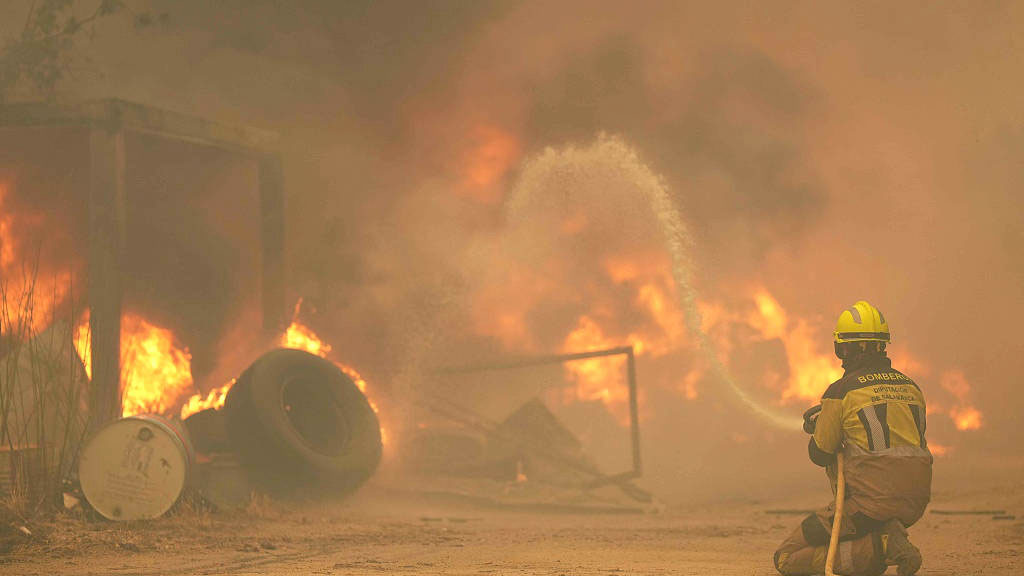
More than 166,000 people have been forced to flee their homes and holiday destinations as unprecedented wildfires, fueled by extreme heat, drought, and strong winds, continue to ravage vast areas across France and Spain. The blazes have threatened major cities, including Bordeaux and Madrid, destroyed hundreds of homes, and prompted the deployment of military personnel and European Union emergency assistance. French President Emmanuel Macron has ordered the army to mobilise in response to what officials have described as the worst wildfire France has ever seen, while Spanish authorities have declared a national emergency for only the second time in the country’s history as flames approach the capital, Madrid.
In southwestern France, more than 141,000 people have been evacuated as wildfires tear through the Gironde and Landes regions. The Gironde blaze, described by local prefect Sophie Brocas as an “XXL fire”, has burned through more than 19,000 hectares of forest and destroyed approximately 80 homes. Around 44,000 people fled the up-market Cap Ferret peninsula south of Bordeaux, where the only road was threatened by flames. Hundreds were evacuated by boat, while others drove off the peninsula, known for its millionaire residences. More than 50 houses there have been destroyed. Authorities ordered the evacuation of towns near Bordeaux “as a precaution” against the approaching inferno, while traffic information website Bison Futé urged drivers to avoid roads in the area to free up access for emergency services.
French Interior Minister Laurent Nunez said the country had never before seen such fires on this scale and pledged to “do everything” to protect Bordeaux. “We are going to reorganise our response so we can fight it from the ground and prevent it from advancing toward Bordeaux,” Nunez told French broadcaster TF1, warning that the fire was “self-sustaining” and changing direction. Prime Minister Sebastien Lecornu called a crisis meeting of key ministers late Friday and said a total of 1,000 military personnel would be deployed to confront the flames. In addition, “1.5 million FFP2 masks will be delivered as of tonight to Gironde in order to protect the personnel involved and the populations exposed to smoke that is harmful to health,” he said on X. About 40 of the 1,000 firefighters battling the Cap Ferret blaze have been injured, authorities confirmed. Three firefighters have died in wildfires in France and Italy this week.
READ ALSO:
- PFICP scandal: How ₦1.3bn ‘fake agency’ traced to Buhari’s government entered 2026 budget
- INEC urges eligible Nigerians to complete Continuous Voter Registration as deadline ends Sunday
- Court grants Blessing CEO N20m bail in alleged N69.15m property fraud case
The situation in Spain is equally dire, with at least 25,000 people evacuated in the Madrid region and another 40,000 told to lock themselves indoors. Spain’s government has declared a national emergency for only the second time in the country’s history, allowing the central government to assume overall command and coordinate national and regional emergency resources. Carlos Novillo, the Madrid regional government’s emergency management chief, said the wildfire near the capital was “at its peak and is currently beyond the capacity of firefighters to contain”. “It’s not possible to attack the fire in that area, so defensive measures are being taken,” he added.
Two of the three major wildfires west of Madrid have merged into one, threatening suburban towns. The fire is heading towards Navas del Rey, around 50 kilometres from the capital, and officials fear the blaze could combine with another wildfire in the neighbouring Castilla y Leon region, creating an even larger catastrophe. Madrid’s regional president Isabel Díaz Ayuso described it as the “worst fire in the history of the region”, with the area facing a “perfect storm” of high temperatures, relentless wind, and merging fire fronts. The Military Emergency Unit has been mobilised to try to halt the advance of the flames, with its main focus protecting areas near the town of El Escorial. “The smoke was incredibly thick,” Jose Cobos, who fled his home southwest of Madrid with his wife and three dogs, told Antena 3 television. “You couldn’t breathe.” In the village of Chapinería, 33-year-old Joaquin Espinosa told The Associated Press: “All around the town was smoke and fire, I was scared. Everything was fire and smoke, people were nervous.”
Madrid and Paris have called in EU emergency assistance as flames whipped up by strong winds and drought tore through tinder-dry forests. Following appeals for assistance, the European Commission said it was sending four water-bombing planes to Spain and three to France. Macron said France would receive reinforcements including two Croatian Canadair firefighting aircraft, two Portuguese Air Tractor aircraft, and two heavy-lift Black Hawk helicopters from the Czech Republic and Slovakia. Spanish Interior Minister Fernando Grande-Marlaska said Italy and Greece are each sending two Canadair water-dumping aeroplanes. Emergency shelters were set up in schools and gymnasiums in southwestern France for tourists and residents left wondering what they would return to. In the village of Andernos, Maria Lalanne, a 90-year-old from Lege Cap Ferret, sat on a camp bed in a gym without her glasses or hearing aid, which she had left behind. “I have heart disease, high blood pressure and problems with my eyes,” she said. “I don’t know how long all this will last. I don’t know how my house is, whether it has burnt.”
Some European regions have suffered at least two heatwaves since May. Drought blamed on human-fuelled climate change has heightened the threat from wildfires this year, the World Weather Attribution group said in a study published this week. Southern Europe has seen multiple large fires this summer, with Europe being the world’s fastest-warming continent, with temperatures increasing twice as quickly as the global average since the 1980s. Spain’s Prime Minister Pedro Sánchez has called for a pact between political parties to fight climate change, which he said is key to adapting to a more fire-prone climate. So far this year, 44,000 hectares have been burned in France, more than the average, Nunez said. In Spain, more than 1,140 square kilometres have already burned this year, more than five times the burned terrain through the first half of 2025. The unprecedented scale of these wildfires serves as a stark reminder of the growing impact of climate change on Europe’s fire seasons, with experts warning that such extreme events are likely to become more frequent and severe in the coming years.
166,000 Evacuated as Unprecedented Wildfires Rage Across France, Spain
International
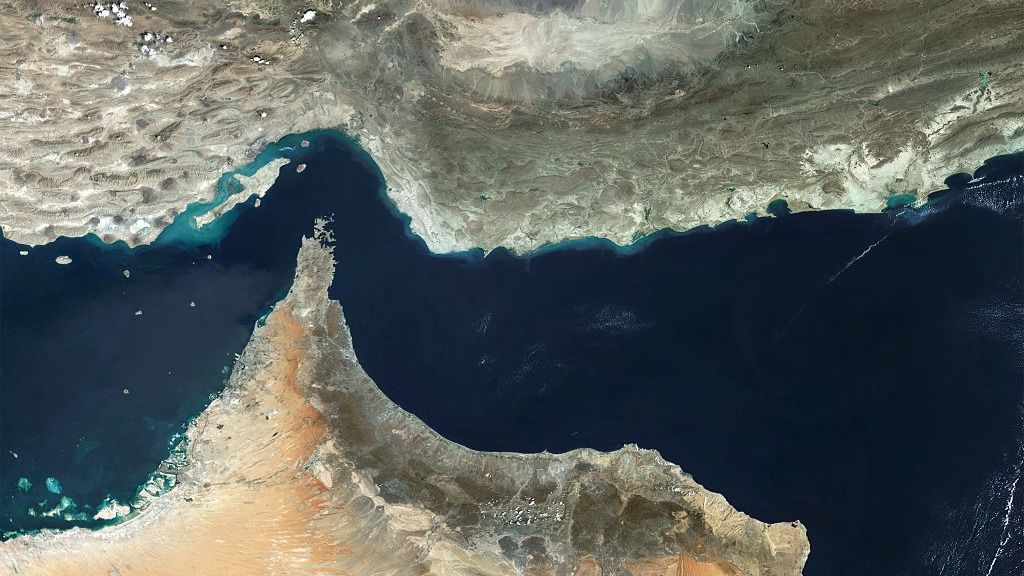
UN calls for urgent evacuation of 6,000 sailors stranded in Strait of Hormuz
UN calls for urgent evacuation of 6,000 sailors stranded in Strait of Hormuz
The United Nations has called for the urgent evacuation and repatriation of about 6,000 sailors stranded aboard commercial vessels in the Strait of Hormuz, warning that the prolonged crisis poses serious humanitarian, human rights and maritime safety concerns as conflict in the Middle East continues to threaten one of the world’s busiest shipping lanes.
The appeal was made by UN High Commissioner for Human Rights Volker Türk, who urged all parties involved in the conflict to prioritise the safety of civilian seafarers and facilitate their immediate evacuation. He stressed that thousands of crew members have remained trapped aboard vessels for weeks despite the announcement of a ceasefire, with many unable to disembark or safely return home because of persistent security threats.
Speaking in Geneva, UN human rights spokeswoman Shabia Mantoo said estimates from the International Maritime Organization (IMO) indicate that approximately 6,000 seafarers remain stranded on hundreds of ships operating in or around the Strait of Hormuz.
She said all parties to the conflict must urgently ensure safe passage for the affected crews, guarantee access to essential humanitarian supplies and respect international humanitarian law, which prohibits attacks on civilian vessels.
According to the UN, stranded sailors require immediate access to food, clean water, medical care, communication facilities, mental health support and consular assistance while arrangements are made for their evacuation and repatriation.
Türk also appealed to governments, shipping companies, flag states and international maritime organisations to work together to protect seafarers whose safety has been endangered by the escalating regional conflict.
READ ALSO:
- Petrol price hits N1,400 per litre as transport fares rise across Nigeria
- Dalung gives Mutfwang 72-hour ultimatum to withdraw apology to Igbos over civil war role
- Counterterrorism: Military says air strikes kill 23 suspected ISWAP fighters in Borno
The humanitarian appeal comes amid renewed military tensions involving the United States, Iran and Iran-backed Houthi fighters following attacks on commercial oil tankers and other merchant vessels operating in the Red Sea and surrounding waters.
Although U.S. military officials have maintained that the Strait of Hormuz remains open to international commercial shipping, security risks have continued to disrupt maritime operations, forcing several shipping companies to suspend or reroute voyages while others delay sailings until the security situation improves.
The renewed conflict has also triggered sharp increases in global oil prices, with Brent crude climbing above $100 per barrel, raising fresh concerns about global energy supplies, inflation and the cost of international freight.
Industry analysts say the rising geopolitical tension has led to higher war-risk insurance premiums, increased shipping costs and greater uncertainty for global supply chains that depend heavily on uninterrupted maritime trade through the Gulf.
The Strait of Hormuz, located between Iran and Oman, remains one of the world’s most strategically important maritime chokepoints. Before the latest escalation, nearly 20 per cent of the world’s oil supply and significant volumes of liquefied natural gas passed through the narrow waterway each day, making any disruption a major threat to international energy markets and global commerce.
The International Maritime Organization has repeatedly warned that civilian seafarers should never become casualties of armed conflicts, stressing that shipping crews perform essential services that keep global trade moving and deserve protection regardless of geopolitical disputes.
Maritime labour organisations have also expressed concern over the welfare of stranded crews, reporting that many sailors have remained onboard far beyond the expiration of their employment contracts while facing shortages of supplies, delayed crew changes and growing psychological stress caused by prolonged uncertainty.
The International Transport Workers’ Federation (ITF) has urged governments to accelerate diplomatic efforts to secure humanitarian corridors that would allow stranded crews to leave the conflict zone safely.
Shipping experts warn that prolonged instability in the Strait of Hormuz could have far-reaching economic consequences, including higher fuel prices, increased transportation costs, supply chain disruptions and inflationary pressures across many economies.
The UN has reiterated that protecting civilian shipping remains a legal obligation under international law and urged all parties to exercise maximum restraint to prevent further escalation while ensuring the safe evacuation of thousands of sailors caught in the conflict.
UN calls for urgent evacuation of 6,000 sailors stranded in Strait of Hormuz
-

 Politics3 days ago
2027 election: Atiku accuses Obasanjo of reviving false allegations to favour preferred candidate
-

 metro2 days ago
NDLEA intercepts ₦10bn worth of cocaine, Loud, opioids in Lagos
-

 Sports2 days ago
Super Falcons recover stolen cash after hotel theft suspect confesses
-

 Sports3 days ago
Anthony Joshua stuns Kristian Prenga with dramatic knockout to revive career
-

 metro3 days ago
Al-Mustapha Fires Back: Ex-DSS Officer’s Account of Abacha’s Death Is a Lie, I Have CCTV Evidence
-

 News3 days ago
INEC Chairman assures Nigerians every vote will count in 2027 general election
-
 metro3 days ago
ISWAP finance chief surrenders to Nigerian troops with two children in Borno
-

 metro3 days ago
Is Nigeria’s Electricity Tariff Going Up? FG Finally Breaks Silence