

International
Israel attacks western Syria despite recent indirect talks

Israel attacks western Syria despite recent indirect talks
Israel has struck western Syria, the Israeli military and Syrian state media have reported, in the first such aerial attack on the country in almost a month, the day after the United States envoy to Damascus said conflict between the neighbouring countries is “solvable”.
Syrian state media reported late Friday that one person was killed and three others injured by an Israeli air strike on the coastal city of Latakia.
The SANA news agency said earlier that the Israeli military targeted three sites in the countryside of the Latakia and Tartous governorates.
The Syrian Observatory for Human Rights also reported that jets likely to be Israeli struck military sites on the outskirts of Tartous and Latakia, on the Mediterranean coast.
The Israeli strike follows Syria acknowledging indirect talks with Israel earlier this month to calm tensions.
The Israeli military claimed responsibility for the strike, saying it had “struck weapon storage facilities containing coastal missiles that posed a threat to international and Israeli maritime freedom of navigation, in the Latakia area of Syria”.
READ ALSO:
- WAEC night exams: House of Reps rejects delegation, insists on head
- US S’Court upholds Trump’s decision to revoke status of 530,000 migrants
- Special forces eliminate Boko Haram commander with N100m bounty
“In addition, components of surface-to-air missiles were struck in the area of Latakia,” it said, adding that it would “continue to operate to maintain freedom of action in the region, in order to carry out its missions and will act to remove any threat to the State of Israel and its citizens”.
The Israeli strike came a day after US envoy to Syria Thomas Barrack’s visit to Damascus aimed at rebuilding ties under Syria’s new administration, during which he said the conflict between Israel and Syria is “solvable” and needed to start with “dialogue”.
“I’d say we need to start with just a non-aggression agreement, talk about boundaries and borders,” Barrack told journalists on Thursday.
The two countries have technically been at war since the first Arab-Israeli war in 1948. A state of heightened tension and deep enmity between Israel and Syria accelerated during the 1967 war, which also drew in Egypt and Jordan, and Israel’s subsequent occupation of the Syrian Golan Heights.
Israel has carried out frequent attacks in Syria both during the Bashar al-Assad rule and since his ouster.
Shortly before the fall of al-Assad’s regime, Israel seized more Syrian territory near the border, claiming it was concerned about President Ahmed al-Sharaa’s interim administration, which it has dismissed as “jihadist”.
During a meeting between US President Donald Trump and al-Sharaa in Riyadh, Saudi Arabia, earlier in May, the US leader urged al-Sharaa to normalise relations with Israel.
While al-Sharaa has not commented on possible normalisation with Israel, he has stated his support for returning to the terms of a 1974 ceasefire agreement that created a United Nations buffer zone in the Golan Heights.
Israel attacks western Syria despite recent indirect talks
Source: Al-jazeera/News Agencies











International
Iran Unveils Twin-Missile Launcher, Sends Fresh Warning To US
Iran Unveils Twin-Missile Launcher, Sends Fresh Warning To US
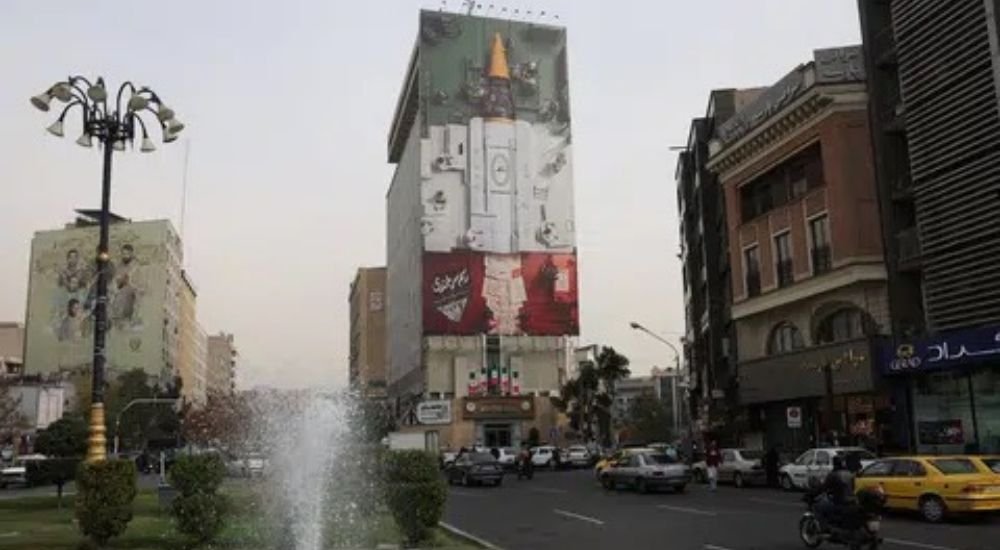
Iran has showcased a new dual-missile launcher capable of firing two missiles simultaneously, while its military commanders issued fresh warnings to the United States amid escalating tensions and concerns over a possible renewal of hostilities.
The newly displayed weapon, reportedly designed to launch two liquid-fuelled missiles at the same time, was unveiled during an inspection of an underground missile facility by senior commanders of Iran’s Islamic Revolutionary Guard Corps (IRGC).
Iranian state television broadcast footage of IRGC Commander-in-Chief Ahmad Vahidi and Aerospace Force commander Seyed Majid Mousavi touring the underground installation, where several missile systems, launchers and other military equipment were displayed.
The unveiling is seen as part of Tehran’s efforts to demonstrate that its military capabilities and missile infrastructure remain operational despite previous attacks targeting its weapons facilities.
During the visit, Vahidi issued a defiant warning to Iran’s adversaries, suggesting that the consequences of confronting the country were only beginning.
Mousavi also claimed that Iran had significantly expanded its military capabilities between recent periods of conflict, with the development of new weapons and systems designed to strengthen its defence and deterrence capabilities.
READ ALSO:
- Gombe: Three Killed, 13 Injured as Alleged Military Shooting Sparks Outcry
- Jimmy Odukoya Sues Sister, Church Trustees Over Removal as Senior Pastor
- UNILAG Gets 10 CNG Buses as FG Expands Campus Transport Scheme to 60 Institutions
The commanders’ remarks accompanied footage of missile launchers, military equipment and extensive underground tunnels, highlighting Iran’s efforts to protect its weapons infrastructure from potential airstrikes.
Iranian state media described the newly displayed launcher as an advancement in the country’s missile development programme, although detailed technical information about its range, accuracy and operational capabilities was not independently established.
Reports surrounding the unveiling also highlighted improvements in Iranian missile guidance technology, including systems designed to operate without relying entirely on the United States-developed Global Positioning System (GPS).
The latest demonstration comes amid continuing tensions between Iran and the United States, particularly over Tehran’s military activities, nuclear programme and regional influence.
Iran has repeatedly warned that any renewed military attack against its territory would attract retaliation, while the United States has maintained pressure on Tehran over issues relating to regional security and nuclear proliferation.
The unveiling also follows previous Iranian announcements showcasing underground missile installations containing ballistic and cruise missile systems.
Tehran has increasingly presented these underground facilities as an important component of its military strategy, arguing that they provide protection for weapons stockpiles and launch systems against aerial attacks.
The latest display appears intended to reinforce Iran’s message that it retains the military capacity to respond to external threats, even after previous attacks on its defence infrastructure.
However, the actual performance and combat effectiveness of the newly displayed dual-missile launcher remain unclear, as the technical claims made by Iranian authorities have yet to receive independent verification.
The development is likely to attract further international attention as Washington and Tehran continue to navigate a tense relationship, with concerns that another military confrontation could have wider consequences for security across the Middle East.
Iran Unveils Twin-Missile Launcher, Sends Fresh Warning To US
International
FBI Investigates Apparent Hack of Criminal Database Containing Sensitive Law Enforcement Records

FBI Investigates Apparent Hack of Criminal Database Containing Sensitive Law Enforcement Records
The United States Federal Bureau of Investigation (FBI) is investigating an apparent cyberattack on its National Crime Information Center (NCIC), a nationwide database used by federal, state and local law enforcement agencies to share sensitive criminal justice information.
The suspected intrusion, reportedly discovered in recent days, has raised concerns about the security of confidential law enforcement records, including information relating to arrest warrants, criminal histories and background checks.
According to a report by CNN, citing two people briefed on the investigation, the FBI is examining the apparent breach of the database, which serves as a major information-sharing platform for law enforcement agencies across the United States.
The FBI had not publicly commented on the latest incident as of Friday, November 20, when the reports emerged.
The NCIC database plays a critical role in criminal investigations and routine police operations by enabling authorised law enforcement personnel to access information about wanted fugitives, outstanding warrants and other criminal justice records.
Its nationwide reach means that any unauthorised access could potentially have implications for multiple law enforcement agencies and their investigations.
However, investigators have not publicly established the identity of those responsible for the suspected intrusion or disclosed whether confidential information was stolen, altered or exposed.
The latest incident represents another cybersecurity challenge for the FBI, following a separate breach involving its recruitment website in September 2026.
READ ALSO:
- Nigerian Student Lures Canadian Teen on TikTok, Demands $2,000 Over Nude Photos
- UNIABUJA Used Just 12% of Land in 38 Years, Wike’s Aide Fires Back at Unions
- Tinubu’s Chicago University Row Deepens as Fresh Findings Cast Doubt on Pearse’s Lecturer Claims
That earlier attack was linked to a digital extortion group known as ShinyHunters, which reportedly accessed sensitive personal information belonging to current and former FBI employees.
A Canadian cybersecurity researcher and author was subsequently arrested and charged in connection with the September breach.
The latest suspected intrusion is also drawing attention because of the importance of the NCIC database to public safety and the administration of criminal justice across the country.
A former FBI official who led investigations into cybercriminal groups warned CNN that compromising the accuracy of information contained in the database could pose serious risks to law enforcement officers and members of the public.
The concern goes beyond the possible exposure of confidential records. Any unauthorised alteration of information about outstanding warrants, wanted individuals or criminal histories could potentially affect decisions made by officers during investigations and routine police checks.
The suspected breach comes amid growing concerns about cybersecurity vulnerabilities affecting critical American institutions and infrastructure.
Recent disruptions have affected several public and private sector systems, including banking services, air travel and national security infrastructure, although authorities have not established that all the incidents were connected to cyberattacks.
FBI Director Kash Patel appeared on Fox News on Thursday, where he discussed the bureau’s cybersecurity efforts and an initiative known as Operation Winter Shield, which encourages organisations to strengthen their digital security systems and prevent cyber intrusions.
Patel did not publicly address the suspected NCIC breach during the appearance.
The FBI’s investigation is expected to establish the extent of the suspected intrusion, the systems potentially affected and whether sensitive information was compromised.
The incident has renewed questions about the protection of government databases, particularly those containing information that could expose individuals, compromise investigations or undermine public confidence in law enforcement institutions.
FBI Investigates Apparent Hack of Criminal Database Containing Sensitive Law Enforcement Records
International
Saudi-Led Coalition Destroys 60 Houthi Targets in Yemen Airstrikes, 17 Killed

SANAA, Yemen – A Saudi-led military coalition has launched a major wave of airstrikes against Houthi rebel positions across Yemen, with at least 17 people reportedly killed and several others injured, according to the Houthi-run health ministry.
The airstrikes, launched on Tuesday, November 17, 2026, targeted areas controlled by the Iran-backed Houthi movement, including the capital, Sanaa, and the provinces of Amran, Saada and Hodeida.
The coalition said its forces destroyed 60 military targets during the operation, including underground tunnels leading to mountain warehouses containing ballistic missiles and facilities used to assemble and store drones.
Coalition spokesman, Major General Turki al-Malki, said the operation was designed to weaken the Houthis’ missile and drone capabilities.
The military action represents a major escalation in the conflict between the Saudi-led coalition and the Houthi movement, which controls significant parts of northern Yemen.
Anees al-Asbahi, a spokesman for the Houthi-run health ministry, said the attacks caused casualties in three locations, with the highest number of deaths recorded in Hodeida.
According to him, an airstrike hit a sponge factory in Hodeida, killing at least 15 people and injuring several others.
Another strike in the Kitaf district of Saada province reportedly killed two people and wounded four others.
In Sanaa, at least nine people were reportedly injured when an airstrike hit a shoe factory.
READ ALSO:
- Islam Set to Overtake Christianity as World’s Largest Religion by 2035
- 2027: Sowore Fires Back at Fashola, Promises Free Education, Vows to Scrap NELFUND
- ADC Crisis: INEC Explains Why Atiku’s Name Remains on 2027 Presidential Candidates’ List
The casualty figures were provided by Houthi authorities and have not been independently verified. The Saudi-led coalition has not released an official casualty assessment.
Following the airstrikes, the Houthis reportedly fired cruise missiles towards Riyadh, the Saudi Arabian capital.
Coalition spokesman Al-Malki said Saudi air defence systems intercepted and destroyed two missiles launched towards the city on Wednesday.
Saudi authorities also issued security alerts in three cities in the southern part of the country, close to the Yemeni border, although officials later said the immediate danger had passed.
The latest military escalation comes amid intensifying fighting in Yemen, where Saudi-backed government forces and the Houthi movement have been engaged in a prolonged conflict.
The situation has also heightened concerns over security around the Bab el-Mandeb Strait, a strategic maritime passage connecting the Red Sea to the Gulf of Aden and an important route for international commercial shipping.
The latest developments followed the withdrawal of Saudi-backed forces from areas around the strategic waterway, a move that reportedly strengthened the Houthis’ position in the surrounding region.
The conflict has continued to attract international attention because of Yemen’s strategic location, its proximity to major oil-producing countries and the potential consequences of further instability for global shipping and regional security.
The latest airstrikes and reported missile interceptions underscore the growing risk of further military confrontation between the Saudi-led coalition and the Houthis.
Saudi-Led Coalition Destroys 60 Houthi Targets in Yemen Airstrikes, 17 Killed
-

 metro3 days ago
Hoodlums Descend on Tinubu’s Praise Singer Rarara at Abuja Mosque, Tear His Clothes
-

 metro2 days ago
Chibok Girl Escapes After Eight Years in Boko Haram Captivity, Reveals 20 Classmates Still Held
-

 Education3 days ago
UNILAG Gets 10 CNG Buses as FG Expands Campus Transport Scheme to 60 Institutions
-

 metro3 days ago
Jimmy Odukoya Sues Sister, Church Trustees Over Removal as Senior Pastor
-

 Politics1 day ago
Kwankwaso Made Me Swear on Qur’an to Join APC After Election Victory — Gov Yusuf Reveals Tinubu Deal
-

 Politics3 days ago
2027: Tinubu Urges Oyo Voters to Stick With APC, Promises More Development
-

 metro3 days ago
Tinubu’s Chicago University Row Deepens as Fresh Findings Cast Doubt on Pearse’s Lecturer Claims
-

 metro17 hours ago
‘I Paid My Ex-Husband Before He Slept With Me’ – Islamic Preacher Kaola Makes Shocking Revelation