

International
Israel strikes Iranian prison, Fordo site, as Putin condemns US bombing
Israel strikes Iranian prison, Fordo site, as Putin condemns US bombing
Israel has launched a series of powerful airstrikes deep into the Iranian capital, Tehran, targeting what it described as “regime strongholds and repression institutions,” including the notorious Evin Prison, widely known for holding political prisoners.
In a statement on Monday, the Israel Defense Forces (IDF) confirmed it also bombed access routes leading to the Fordo nuclear facility, which had already sustained damage during earlier U.S. strikes.
The move, according to Israeli officials, was intended to block further access to the sensitive site. Among the other sites struck were command centers linked to Iran’s Islamic Revolutionary Guard Corps (IRGC), including the headquarters of the Basij militia and the Alborz Corps, both critical to Iran’s internal security operations.
Israeli Defence Minister Israel Katz defended the operation, describing it as a response to sustained Iranian missile attacks.
“We will continue to hit regime targets in the heart of the Islamic Republic until the threats stop,” he said.
Footage verified by BBC shows an explosion at the entrance of Evin Prison, confirming Israel’s account.
Iran’s judiciary later acknowledged the facility was struck, reporting damage but insisting that the situation remains under control. Iranian state media dismissed reports of chaos as “rumors spread by Mossad media.”
READ ALSO:
- US urges China to stop Iran from closing Strait of Hormuz
- Iran’s Supreme Leader Khamenei fires message to Putin
- Final year student commits suicide in Ondo, police launch investigation
Meanwhile, the IRGC claimed it had launched the “21st wave” of retaliatory missile and drone attacks, continuing its counteroffensive against both Israeli and American positions.
Satellite imagery from June 22 reveals what analysts believe to be fresh impact craters at the Fordo site, likely from U.S. bunker-busting munitions used in previous strikes.
However, nuclear experts caution that Iran’s enrichment capabilities may remain partially intact.
“It’s much better than expected,” said Sima Shine, a former Mossad official and Iran analyst, speaking on the U.S.-led attacks.
“But I doubt this is the end of the program. Iran likely has alternative sites or stockpiles hidden,” Shine said.
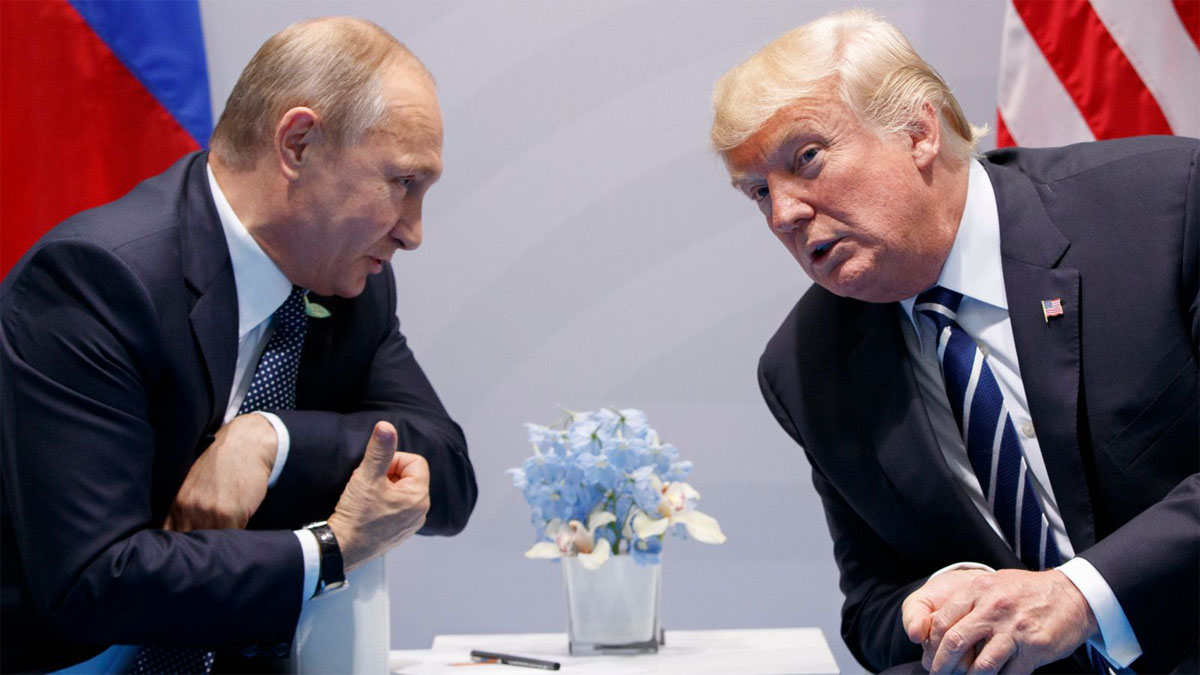
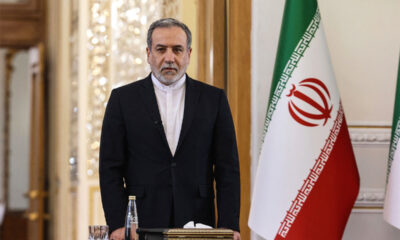
Meanwhile, Russian President Vladimir Putin met with Iranian Foreign Minister Abbas Araghchi in Moscow, where he openly condemned the American strikes.
Speaking in a live televised broadcast, Putin labelled the attacks “unprovoked aggression” and reaffirmed Russia’s strategic support for Iran.
“I am very pleased you are in Moscow today. It gives us an opportunity to think together and find a way out of this dangerous escalation,” Putin told Araghchi.
The Iranian minister described the strikes by the U.S. and Israel as violations of international law.
He also reaffirmed the strength of Iran’s alliance with Russia, which he described as “strategic in nature.”
Israel strikes Iranian prison, Fordo site, as Putin condemns US bombing










International
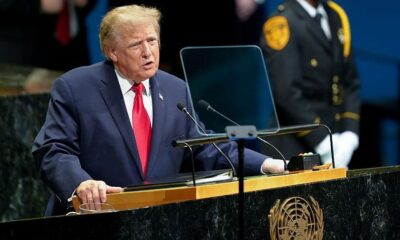
Saudi-Led Coalition Destroys 60 Houthi Targets in Yemen Airstrikes, 17 Killed

SANAA, Yemen – A Saudi-led military coalition has launched a major wave of airstrikes against Houthi rebel positions across Yemen, with at least 17 people reportedly killed and several others injured, according to the Houthi-run health ministry.
The airstrikes, launched on Tuesday, November 17, 2026, targeted areas controlled by the Iran-backed Houthi movement, including the capital, Sanaa, and the provinces of Amran, Saada and Hodeida.
The coalition said its forces destroyed 60 military targets during the operation, including underground tunnels leading to mountain warehouses containing ballistic missiles and facilities used to assemble and store drones.
Coalition spokesman, Major General Turki al-Malki, said the operation was designed to weaken the Houthis’ missile and drone capabilities.
The military action represents a major escalation in the conflict between the Saudi-led coalition and the Houthi movement, which controls significant parts of northern Yemen.
Anees al-Asbahi, a spokesman for the Houthi-run health ministry, said the attacks caused casualties in three locations, with the highest number of deaths recorded in Hodeida.
According to him, an airstrike hit a sponge factory in Hodeida, killing at least 15 people and injuring several others.
Another strike in the Kitaf district of Saada province reportedly killed two people and wounded four others.
In Sanaa, at least nine people were reportedly injured when an airstrike hit a shoe factory.
READ ALSO:
- Islam Set to Overtake Christianity as World’s Largest Religion by 2035
- 2027: Sowore Fires Back at Fashola, Promises Free Education, Vows to Scrap NELFUND
- ADC Crisis: INEC Explains Why Atiku’s Name Remains on 2027 Presidential Candidates’ List
The casualty figures were provided by Houthi authorities and have not been independently verified. The Saudi-led coalition has not released an official casualty assessment.
Following the airstrikes, the Houthis reportedly fired cruise missiles towards Riyadh, the Saudi Arabian capital.
Coalition spokesman Al-Malki said Saudi air defence systems intercepted and destroyed two missiles launched towards the city on Wednesday.
Saudi authorities also issued security alerts in three cities in the southern part of the country, close to the Yemeni border, although officials later said the immediate danger had passed.
The latest military escalation comes amid intensifying fighting in Yemen, where Saudi-backed government forces and the Houthi movement have been engaged in a prolonged conflict.
The situation has also heightened concerns over security around the Bab el-Mandeb Strait, a strategic maritime passage connecting the Red Sea to the Gulf of Aden and an important route for international commercial shipping.
The latest developments followed the withdrawal of Saudi-backed forces from areas around the strategic waterway, a move that reportedly strengthened the Houthis’ position in the surrounding region.
The conflict has continued to attract international attention because of Yemen’s strategic location, its proximity to major oil-producing countries and the potential consequences of further instability for global shipping and regional security.
The latest airstrikes and reported missile interceptions underscore the growing risk of further military confrontation between the Saudi-led coalition and the Houthis.
Saudi-Led Coalition Destroys 60 Houthi Targets in Yemen Airstrikes, 17 Killed
International
Islam Set to Overtake Christianity as World’s Largest Religion by 2035
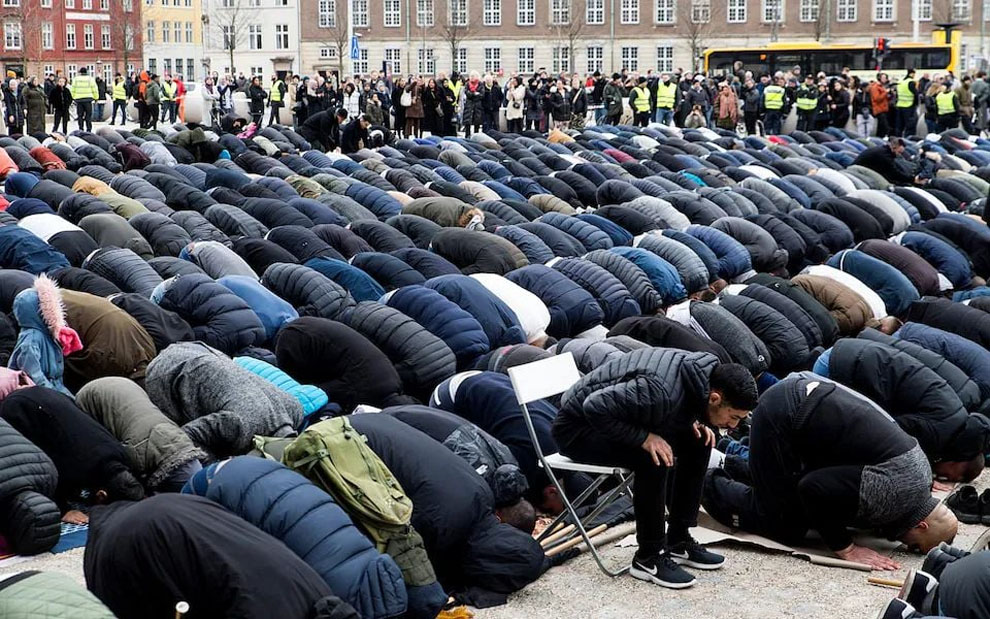
NEW YORK – Islam is projected to overtake Christianity as the world’s largest religion by 2035, with the global Muslim population expected to reach 2.57 billion, slightly exceeding the projected 2.52 billion Christians, according to a new report by the Pew Research Center.
The projection marks a significant shift in the global religious landscape, where Christianity has remained the world’s largest religious group for centuries.
Pew Research released the findings on Wednesday, November 18, 2026, in a comprehensive study titled The Future of World Religions: Population Growth Projections, 2020–2070.
The study examines how the populations of seven major religious groups are expected to change across 201 countries and territories, based on demographic trends, including fertility rates, age distribution, migration, mortality and religious switching.
According to the report, the world’s Muslim population stood at approximately 2.02 billion in 2020, compared with 2.27 billion Christians. However, the projected figures for 2035 show Muslims moving ahead with 2.57 billion adherents against 2.52 billion Christians.
The researchers stressed that both religions will continue to grow in absolute numbers, but the Muslim population is expected to expand at a faster rate.
A major factor behind the projected change is the difference in fertility rates between the two religious groups.
READ ALSO:
- 2027: Sowore Fires Back at Fashola, Promises Free Education, Vows to Scrap NELFUND
- ADC Crisis: INEC Explains Why Atiku’s Name Remains on 2027 Presidential Candidates’ List
- Adeleke Rejects Proposed Naming of Osogbo Stadium After Him, Orders Removal of Signpost
Pew estimated that Muslim women had an average of 3.1 children between 2020 and 2025, compared with 2.5 children among Christian women. Women belonging to other religious groups recorded an average of 1.6 children during the same period.
The younger age profile of Muslim populations also contributes to their faster growth, as a larger proportion of Muslims are entering their childbearing years.
The report explained that population growth, rather than mass conversion from Christianity to Islam, accounts for much of the projected difference.
The demographic trend is also expected to reshape the geographical distribution of religious communities, particularly in sub-Saharan Africa, which is projected to become increasingly influential in the future growth of both Christianity and Islam.
Pew estimates that the global Muslim population will reach approximately 3.64 billion by 2070, representing about 36 per cent of the world’s population. The Christian population is projected to rise to approximately 2.96 billion, accounting for about 29 per cent.
The report attributes the faster growth of Islam to its relatively young population and higher fertility rates. It also considers migration and religious switching, although these factors are not expected to account for as much of the projected increase as natural population growth.
For Christianity, the study projects a significant geographical shift towards Africa. By 2070, more than half of the world’s Christians are expected to live in sub-Saharan Africa, reflecting population growth in the region.
The Democratic Republic of Congo is also projected to overtake the United States as the country with the largest Christian population.
Nigeria features prominently in the projections for Islam. The country, which had an estimated 120 million Muslims in 2020, is expected to become the world’s third-largest Muslim-population country by 2070, behind Pakistan and India.
Pakistan is projected to overtake Indonesia as the country with the largest Muslim population, with an estimated 461 million Muslims by 2070. India is expected to rank second, with approximately 334 million.
The study also examined the projected growth of other religious groups. The global Hindu and Jewish populations are expected to increase in absolute numbers but decline as shares of the world’s population. Buddhism, meanwhile, is projected to decline in both population size and global share.
The proportion of people identifying as religiously unaffiliated is also projected to fall from 24 per cent in 2020 to 17 per cent by 2070.
Pew emphasised that the findings are demographic projections rather than guaranteed outcomes. They are based on existing trends in fertility, mortality, migration, age distribution and religious identification.
The researchers cautioned that unexpected developments, including wars, epidemics, natural disasters and changes in economic or social conditions, could alter the projected figures.
The findings provide fresh insight into how population changes could reshape the global religious landscape over the next five decades, with Islam projected to become the world’s largest religious group by 2035 while Christianity continues to expand in population.
Islam Set to Overtake Christianity as World’s Largest Religion by 2035
International
Canada: Eight Nigerians Among 12 Arrested in $4.5m Auto Theft Bust, 96 Vehicles Recovered

Canada: Eight Nigerians Among 12 Arrested in $4.5m Auto Theft Bust, 96 Vehicles Recovered
TORONTO, CANADA – Eight Nigerians are reportedly among 12 people arrested by Peel Regional Police in Canada over an alleged organised vehicle theft and export operation involving stolen cars worth approximately 4.5 million Canadian dollars.
The operation, which also involved the recovery of 96 stolen vehicles, including luxury sport utility vehicles (SUVs) and pickup trucks, was uncovered following a months-long investigation conducted in partnership with the Canada Border Services Agency (CBSA).
The investigation, code-named Project Cadetta, focused initially on a warehouse in Brampton, Ontario, allegedly used as a collection and storage point for stolen vehicles before they were concealed in shipping containers and prepared for export to West Africa.
Peel Regional Police announced the arrests and recovery on Monday, November 16, 2026, saying investigators had filed 231 charges against the 12 suspects.
According to a report by The Guardian Nigeria, eight of those arrested are Nigerians. The nationalities of all 12 suspects, however, were not specified in the police announcement.
READ ALSO:
- Viral Video Claims Late Pastor Will Rise From Dead On Seventh Day As Church Holds Vigil
- 2027: Tinubu Has Already Won, Fayose Declares, Says Political System Favours Incumbent
- Makinde Has No Right to Demand Tinubu’s Resignation, Reuben Abati Declares
Police said the investigation began in March 2026 after officers identified the Brampton warehouse as a major staging location for stolen vehicles.
Further investigations reportedly uncovered a wider criminal network operating across the Greater Toronto Area and surrounding jurisdictions, with alleged links to vehicle theft, transportation, identification-number alteration and overseas shipment.
Investigators alleged that five principal suspects coordinated the theft, movement and export of the vehicles, while other members of the network provided support through loading sites, container movements and transportation arrangements.
The recovered vehicles included luxury SUVs, pickup trucks and other high-value automobiles concealed inside shipping containers.
Canada: Eight Nigerians Among 12 Arrested in $4.5m Auto Theft Bust, 96 Vehicles Recovered
-

 metro1 day ago
Viral Video: Nigerian Army Explains Why Soldiers, DSS Operatives Met Bandits In Kwara Forest
-

 International3 days ago
Canada: Eight Nigerians Among 12 Arrested in $4.5m Auto Theft Bust, 96 Vehicles Recovered
-

 International12 hours ago
Islam Set to Overtake Christianity as World’s Largest Religion by 2035
-

 News2 days ago
BREAKING: Fountain Of Life Crisis Deepens As Trustees Reaffirm Jimmy Odukoya’s Removal, Appoint Interim Leader
-

 metro2 days ago
Reports Claim Fountain Of Life Church Removes Jimmy Odukoya As Senior Pastor Over Succession Dispute
-

 Business4 hours ago
NNPCL, MRS, Other Marketers Slash Petrol Prices Across Nigeria As Motorists Get Fresh Relief
-

 Politics3 days ago
2027: Tinubu Has Already Won, Fayose Declares, Says Political System Favours Incumbent
-

 Sports2 days ago
Super Eagles Stumble Against Tanzania As Nigeria Settle For Goalless Draw In AFCON Qualifier