

metro
JTF Troops Repel ISWAP Attack, Neutralize 38 Terrorists in North East
JTF Troops Repel ISWAP Attack, Neutralize 38 Terrorists in North East
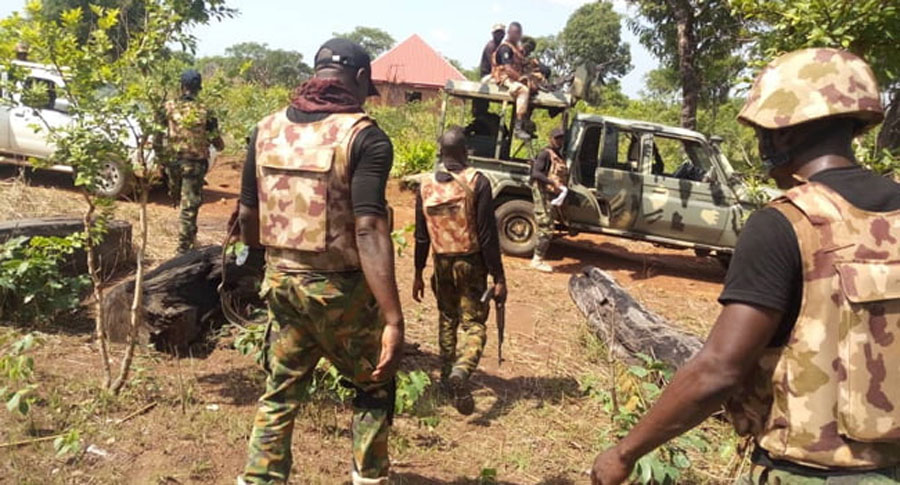
MAIDUGURI, NIGERIA — Troops of the Operation HADIN KAI have successfully repelled an attack by ISWAP on FOB Mandaragirau in the North East, the military said on Saturday.
In a statement issued by its Media Information Officer, Lieutenant Colonel Sani Uba, the JTF said the assault was decisively countered through well-coordinated ambushes and a combined offensive-defensive response, forcing the terrorists into a disorderly retreat. The Air Component of Operation HADIN KAI provided close air support and intelligence surveillance, which enhanced precision in targeting fleeing insurgents.
“Subsequent operations along the terrorists’ withdrawal routes inflicted further heavy losses,” the statement added.
According to the JTF, a total of about 38 terrorists were neutralized, with 8 bodies recovered within the immediate engagement area. Human intelligence from locals confirmed over 30 additional bodies and weapons scattered along the Garin Mallum–Garin Gajere axis into the Timbuktu Triangle. Evidence of the engagement included blood trails and abandoned equipment.
Troops recovered 7 AK-47 rifles, 8 magazines, 4 RPG bombs, and assorted ammunition. While one MRAP vehicle was hit by RPG fire, personnel sustained injuries that were promptly treated, and no fatalities were recorded among JTF forces.
The statement noted that the scale of enemy losses has brought widespread jubilation among local communities and demonstrated the continued dominance of Operation HADIN KAI troops in denying terrorists freedom of movement.
Further exploitation operations are ongoing along the Garin Mallum–Garin Gajere axis to recover additional bodies and consolidate the gains made.
JTF Troops Repel ISWAP Attack, Neutralize 38 Terrorists in North East








metro
$155m Left Behind, $750m Liabilities: Anambra Govt Opens Fresh Obi Files
$155m Left Behind, $750m Liabilities: Anambra Govt Opens Fresh Obi Files
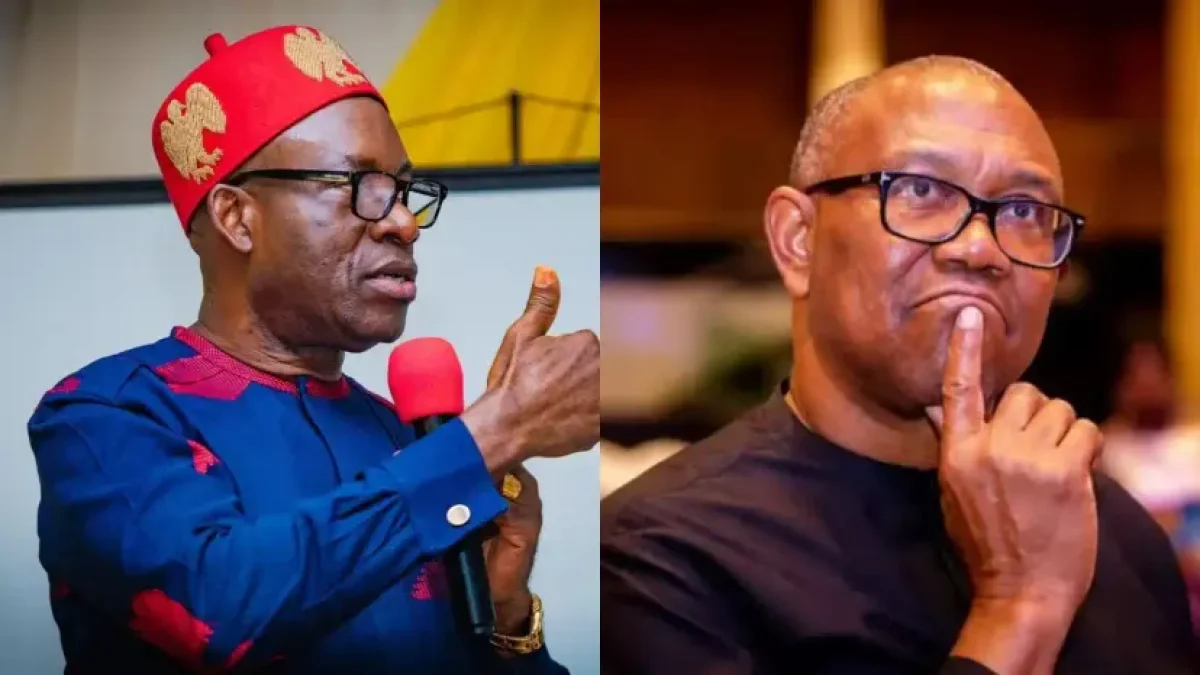
The Anambra State Government has acknowledged that former Governor Peter Obi left about $155 million in foreign-currency investments when he handed over power in 2014, while maintaining that his administration also left substantial financial commitments, including liabilities associated with road projects.
The fresh disclosure has deepened the continuing disagreement between Obi and the administration of Governor Chukwuma Soludo over the financial position of Anambra State when Obi left office.
The dispute centres on how the state’s assets, debts, development financing and outstanding project commitments should be calculated and attributed.
The Anambra Government recently released details of eight external financing facilities linked to development projects undertaken during the Obi administration.
According to the figures cited by the government, the facilities had a combined contracted value of about $123.77 million, with approximately $92.35 million outstanding as of June 30, 2026.
Obi has disputed the description of the facilities as conventional loans incurred by his administration.
The former governor has maintained that he did not borrow commercially or issue bonds during his tenure and that several of the facilities were concessionary development programmes arranged through the Federal Government and international development institutions.
Obi has also repeatedly pointed to the $155 million in foreign investments he said he left for his successor.
He argued that the funds constituted a significant financial asset of the state and should be considered when assessing the financial position of Anambra at the end of his administration.
According to Obi, the investments could also have generated substantial returns if they had remained invested.
The former governor has therefore challenged the presentation of the outstanding financing facilities as simply “debts left by Peter Obi”, insisting that the distinction between approved facilities, actual drawdowns and outstanding balances must be properly established.
READ ALSO:
- MURIC Blasts Nigeria Over UNGA Stance on Palestine, Netanyahu
- Why I Accept My Daughters’ Same-Sex Relationships — Charly Boy
- Katsina: Troops Rescue 14 Kidnap Victims, Arrest Three Terrorist Couriers With N2.7m
The Anambra Government, however, says the financial commitments inherited from the Obi administration went beyond the external financing facilities.
It has put the value of liabilities associated with road contracts and other project commitments at about $750 million.
The figure includes obligations connected to road projects awarded during the period, with the government maintaining that subsequent administrations had to contend with unpaid commitments arising from projects initiated under Obi.
The issue of inherited road liabilities has featured in previous exchanges between former Anambra governors.
Former Governor Willie Obiano, who succeeded Obi in 2014, had previously alleged that he inherited 101 road projects from the Obi administration and substantial financial obligations attached to them.
Obiano said at the time that his administration subsequently completed a number of the projects.
The latest dispute has, however, brought the issue back into focus as the Soludo administration seeks to establish its own account of the state’s financial position over successive administrations.
The controversy is complicated by the distinction between cash and investments held by the state and liabilities arising from projects and financing arrangements.
While Obi’s supporters have pointed to the foreign investments as evidence of the assets he left behind, the current administration has argued that the existence of those investments does not eliminate outstanding contractual or financing obligations.
The government has also released records relating to inherited salary arrears involving workers, pensioners and other beneficiaries of the defunct Anambra State Water Corporation and the Anambra State Environmental Protection Agency (ANSEPA).
The records reportedly show an obligation of about N363.38 million, with the state government saying it had been addressing the arrears under an agreement reached with the affected workers.
Obi has consistently maintained that his administration left office after settling salaries, pensions and other verified obligations that were due and certified.
He has also challenged successive administrations to provide documentary evidence for liabilities being attributed to his tenure and to clearly distinguish between obligations that were incurred, amounts actually paid and balances that remained outstanding.
At the centre of the disagreement is therefore not simply whether Anambra had assets or liabilities when Obi left office, but how those assets and obligations should be valued and classified.
The state government’s figures and Obi’s account present different interpretations of the financial records from the period, making the documentation surrounding the $155 million investments, the $123.77 million external financing facilities and the alleged $750 million project liabilities central to resolving the dispute.
The latest development is expected to keep the debate over Peter Obi’s administration, Anambra State’s debt profile and inherited liabilities alive as both sides continue to rely on financial records and handover documents to support their positions.
$155m Left Behind, $750m Liabilities: Anambra Govt Opens Fresh Obi Files
metro
Unexplained Wealth: Obasanjo, Osinbajo, Others for Shittu’s Book Launch
Unexplained Wealth: Obasanjo, Osinbajo, Others for Shittu’s Book Launch
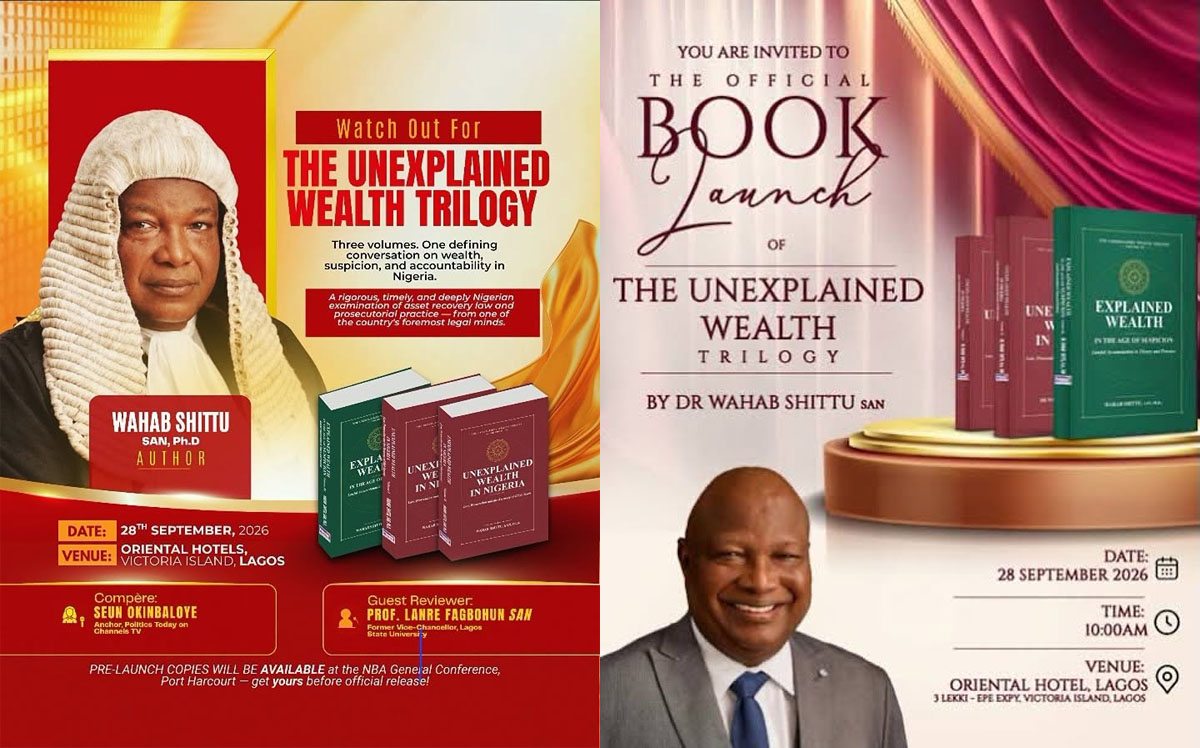
Former President Olusegun Obasanjo will chair the public presentation of a three-volume legal work by Senior Advocate of Nigeria (SAN), Dr Wahab Kunle Shittu, focusing on unexplained wealth, asset recovery and anti-corruption enforcement in Nigeria.
The trilogy, titled “Unexplained Wealth in Nigeria,” is scheduled for public presentation on Monday, September 28, 2026, at the Oriental Hotel in Victoria Island, Lagos.
The 54-chapter work examines the legal, institutional and societal dimensions of unexplained wealth while proposing reforms aimed at strengthening accountability and asset recovery and protecting the rights of individuals whose legitimately acquired wealth comes under official scrutiny.
Obasanjo accepted the invitation to chair the event and described the project as relevant to issues of transparency, rule of law and institutional reform.
The first volume, titled “Law, Prosecution and the Recovery of Illicit Assets,” examines the constitutional and international foundations of unexplained wealth enforcement. It also addresses prosecution, asset recovery and the evidential challenges involved in establishing whether wealth was acquired unlawfully.
The second volume, “Sectoral Manifestations, Governance and Reform,” examines the issue across several areas of Nigeria’s economy and public sector, including foreign exchange, capital markets, taxation, healthcare, elections, terrorist financing, public institutions, the power sector and the petroleum industry.
It also considers broader economic and governance issues associated with unexplained wealth, including capital flight, public debt, currency reforms and fuel subsidy removal, as well as the relationship between wealth accumulation, election integrity and public accountability.
READ ALSO:
- MURIC Blasts Nigeria Over UNGA Stance on Palestine, Netanyahu
- Why I Accept My Daughters’ Same-Sex Relationships — Charly Boy
- Katsina: Troops Rescue 14 Kidnap Victims, Arrest Three Terrorist Couriers With N2.7m
The third volume, “Explained Wealth in the Age of Suspicion: Legal Accountability in Theory and Practice,” shifts attention to people whose assets come under official investigation.
The volume examines how individuals can establish that their wealth was legitimately acquired while balancing anti-corruption enforcement, constitutional rights, economic freedom and due process.
One of the major proposals in the trilogy is a Three-Tier Test for Explained Wealth, based on the lawful source of wealth, documentary coherence and proportionality.
The work also proposes an Anti-Weaponisation Framework, which is intended to address concerns about the possible misuse of anti-corruption mechanisms against individuals.
According to details of the publication, the author argues for a balance between effective enforcement against illicit wealth and protection for citizens whose assets were lawfully acquired.
The trilogy contains proposed legislative interventions, including a draft Nigeria Antigraft Commission (Establishment) Bill, a draft law on Unexplained Wealth Orders and an executive summary proposing a Presidential Committee on Lifestyle Audit.
Shittu’s work on the subject was partly informed by his professional engagements with Nigeria’s anti-corruption institutions.
He delivered a paper on the prosecution of unexplained wealth at an Economic and Financial Crimes Commission (EFCC)/National Judicial Institute capacity-building workshop for judges in 2023.
He subsequently presented another paper on asset seizure and forfeiture under Nigeria’s anti-corruption laws at an Independent Corrupt Practices and Other Related Offences Commission (ICPC) workshop for judges.
Shittu said the trilogy developed from those professional engagements, combined with further research and his experience in financial crime litigation. (NPO Reports)
The September 28 event is expected to bring together personalities from Nigeria’s legal, political, academic and traditional institutions.
Former Vice-President Yemi Osinbajo is scheduled to deliver the reflective remarks, while Professor Olanrewaju Fagbohun, former Vice-Chancellor of Lagos State University and SAN, is billed as the book reviewer.
The Olofa of Offa, Oba Mufutau Gbadamosi Esuwoye II, is listed as the Royal Father of the Day, while Channels Television presenters Seun Okinbaloye and Shola Soleye are expected to anchor the event.
The presentation comes at a time of renewed public discussion about corruption, illicit wealth, asset recovery and accountability in Nigeria.
Recent investigations have also continued to draw attention to the movement of wealth allegedly linked to politically exposed persons into foreign assets. A September 2026 investigation by the Platform to Protect Whistleblowers in Africa and the Anti-Corruption Data Collective, for instance, identified 284 United States properties valued at nearly $271 million as linked to 61 current and former Nigerian politically exposed persons, their relatives, associates and affiliated entities. The report said its findings were not a verdict of wrongdoing against the individuals identified.
Against this background, Shittu’s trilogy is positioned as a legal and policy contribution to the debate over how Nigeria can strengthen financial crime enforcement and asset recovery while preserving due process and property rights.
The September 28 presentation is therefore expected to provide a forum for legal practitioners, policymakers, judges, academics and anti-corruption stakeholders to examine the proposals contained in the three-volume work.
Unexplained Wealth: Obasanjo, Osinbajo, Others for Shittu’s Book Launch
metro
Why I Accept My Daughters’ Same-Sex Relationships — Charly Boy
Why I Accept My Daughters’ Same-Sex Relationships — Charly Boy
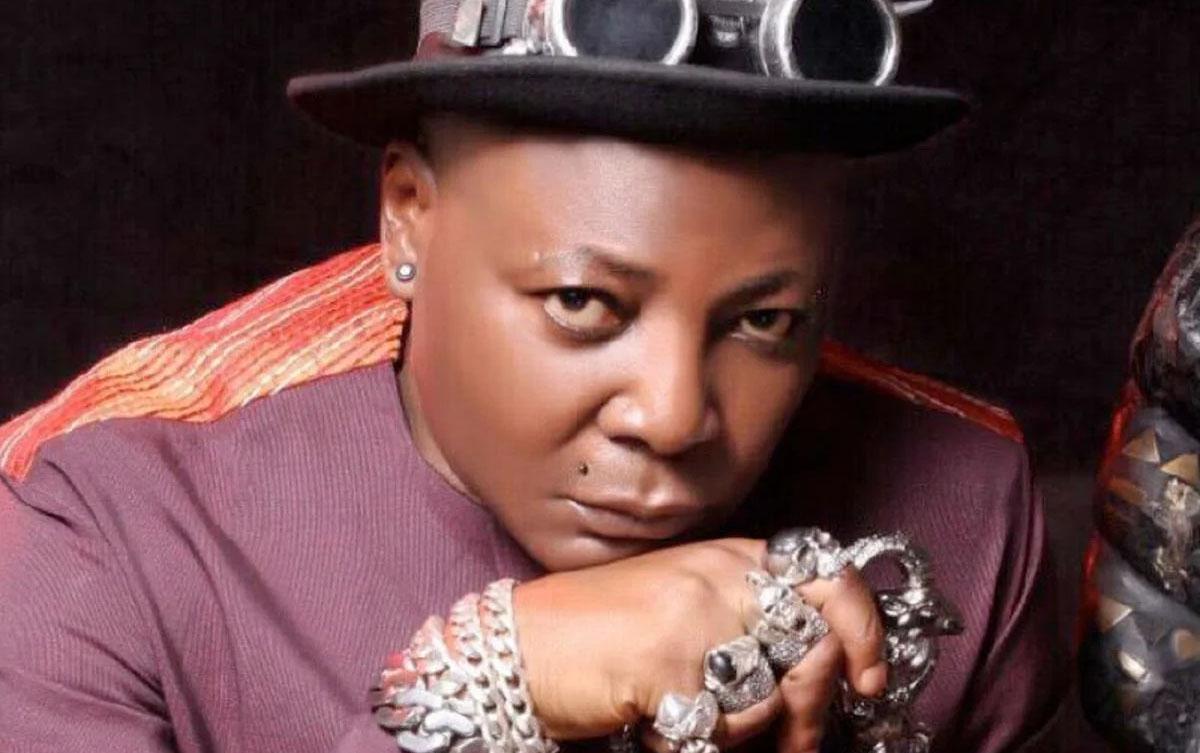
Veteran Nigerian entertainer Charles Oputa, popularly known as Charly Boy, has said his adult daughters do not need his approval to identify as lesbians, explaining that his role as a father is to support them while allowing them to make decisions about their own lives.
Charly Boy made the remarks while discussing the sexual orientation of his daughters and the recent engagement of his daughter, Adaeze Oputa, to a woman.
The entertainer said his two daughters identify as lesbians and explained that he had initially found it difficult to process the development before eventually accepting their choices.
According to him, becoming a parent does not give him control over every decision made by his adult children.
Charly Boy said his priority was for his daughters to be happy and able to live their lives without their relationship with him being damaged by disagreements over their personal choices.
His comments came shortly after he publicly celebrated Adaeze’s engagement to her female partner.
Charly Boy shared a video from the engagement on Instagram and described the couple as his “beautiful Princess and her Husband”, while asking his followers to wish them well. Adaeze also announced the engagement on Instagram, writing that they were engaged and expressing excitement about their future together.
The public celebration attracted mixed reactions on social media, with some users congratulating the couple and others criticising the relationship and Charly Boy’s response.
READ ALSO:
- Katsina: Troops Rescue 14 Kidnap Victims, Arrest Three Terrorist Couriers With N2.7m
- 2027: Fayemi Denies Galadima’s Claim He Is Coordinating Opposition Group Against Tinubu
- Appeal Court Upholds Two-Year Jail Term for Ex-UNICAL Dean Ndifon
Charly Boy has previously spoken publicly about his younger daughter, Dominique “Dewy” Oputa, and her relationship with a woman. In earlier interviews, he discussed the difficulty he initially experienced after learning about her sexuality before explaining how he came to accept her.
His latest remarks suggest that his approach has evolved from trying to understand his daughters’ choices to accepting that they are adults capable of making decisions for themselves.
The entertainer also acknowledged that parents can have personal expectations for their children. However, he maintained that such expectations do not necessarily give parents the right to dictate the lives of their adult children.
The development has attracted particular attention because same-sex relationships remain a highly sensitive issue in Nigeria, both socially and legally.
Nigeria’s Same Sex Marriage (Prohibition) Act, 2013 prohibits same-sex marriage and civil unions and provides penalties for conduct covered by the legislation. Same-sex marriages or civil unions are also not legally recognised as marriages under Nigerian law.
The distinction is important in reporting Adaeze’s announcement: available reports confirm an engagement, not a legally recognised same-sex marriage in Nigeria.
Adaeze’s engagement has also renewed interest in her personal history. She was previously married to a man in 2018, according to reports, but that relationship later ended in divorce. Current reports focus on her engagement to her female partner.
Charly Boy’s public response has consequently placed his family at the centre of a wider conversation about parental acceptance, sexuality, family relationships and personal autonomy.
For the veteran entertainer, however, the issue is primarily a family matter. His comments indicate that while he may have had personal expectations for his children, he does not believe those expectations should determine the choices made by his adult daughters.
The latest development also reflects Charly Boy’s longstanding willingness to discuss controversial personal and social issues publicly, often generating strong reactions from Nigerians with differing cultural, religious and personal perspectives.
For Adaeze, the engagement represents a personal milestone that she chose to announce publicly. For Charly Boy, his response has reinforced his stated position that his relationship with his daughters should not depend on whether he agrees with every decision they make.
Why I Accept My Daughters’ Same-Sex Relationships — Charly Boy
-

 metro2 days ago
Lagos Arrests Man Over Viral Video of Toddler Being Flogged
-
 metro2 days ago
Police Probe Alleged Self-Kidnapping of Adeleke’s Aide in Osun
-

 Sports2 days ago
Former Super Eagles Captain Troost-Ekong Embraces Islam, Recites Shahadah in Doha
-
 metro2 days ago
Tinubu, Fani-Kayode Face Proposed $36m US Lawsuit Over Alleged Threats
-

 Politics2 days ago
Osun APC Warns Adeleke Govt Over Alleged Victimisation of Local Govt Workers
-

 News1 day ago
Anambra Releases ₦473m Salary Arrears Document as Obi’s Debt Claim Sparks Fresh Dispute
-
 metro2 days ago
Kwara Police Deny Shooting Motorcyclist at Oyun Bridge, Explain Viral Video
-
 metro1 day ago
EFCC Chairman Raises Alarm Over Alleged Theft of Nigeria’s Public Funds