

metro
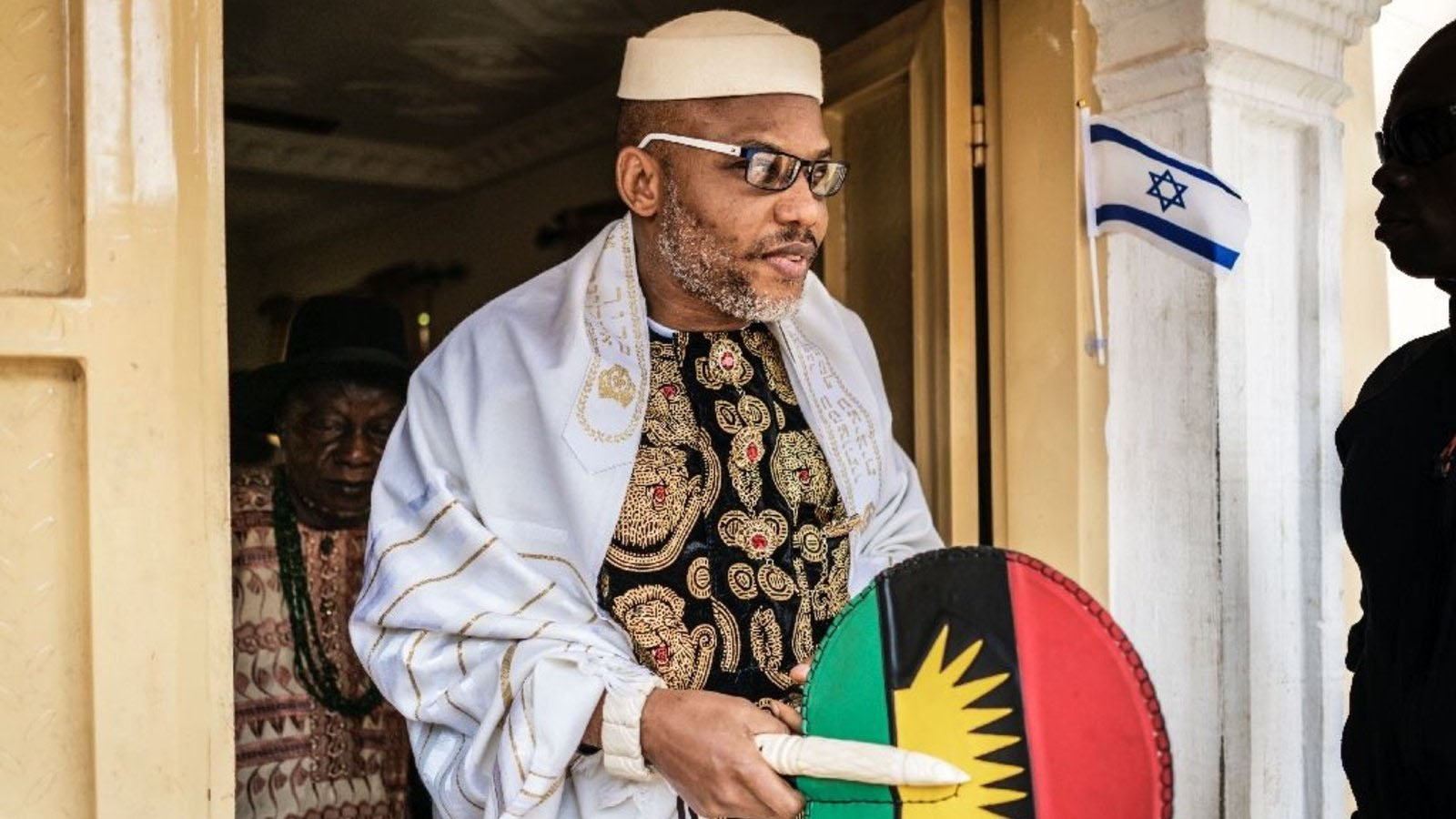
Kanu Expels Ex-IPOB Leader, Nine Others Over Alleged Misconduct
Kanu Expels Ex-IPOB Leader, Nine Others Over Alleged Misconduct
The leader of the Indigenous People of Biafra (IPOB), Nnamdi Kanu, has announced the indefinite expulsion of former senior official Chika Edoziem and nine other members of the dissolved third administration of the movement’s Directorate of State (DOS), accusing them of violating the organisation’s code of conduct and undermining its leadership.
The decision, contained in a statement dated June 21, 2026, comes just days after the Edoziem-led faction announced Kanu’s purported suspension as IPOB leader over what it described as “unguarded utterances” and allegations of misconduct. IPOB’s Media and Publicity Secretary, Emma Powerful, had earlier dismissed the suspension as unconstitutional, insisting that the third Directorate of State had already been dissolved and no longer possessed the authority to take decisions on behalf of the movement. (The Eagle Online)
In the latest development, Kanu, who is serving a life sentence on terrorism-related charges, announced the indefinite expulsion of Edoziem, Tony Nzurumike, Austin Agbanyim, Chukwudi Oforma, Isaiah Ubah, Collins Chinedu, Chinasa Nworu, Fidelis Ejiogu, Chidinma Nworu (also known as Juliet Edward Filatro), and Keke Uda.
According to the statement, the affected individuals “are hereby expelled from IPOB indefinitely” and “no longer represent, speak for, or act in any capacity on behalf of the Indigenous People of Biafra.”
Kanu explained that he appointed the third administration of the Directorate of State from detention in March 2017, giving it an initial six-month tenure that expired on September 16, 2017, but allowed members to continue serving at his discretion.
He maintained that while the dissolution of the administration was an administrative decision, the latest expulsions were disciplinary actions prompted by what he described as repeated violations of the IPOB Code of Conduct.
READ ALSO:
- INEC By-Elections: APC Sweeps Four States, PDP Holds Rivers South-East Seat
- Trump Warns Iran: ‘Close Hormuz and You Won’t Have a Country’ as Geneva Talks Open
- Lagos Declares War on Roadside Waste, Unveils ‘Waste Police’
“The Indigenous People of Biafra is governed by its Code of Conduct, which remains the supreme governing instrument of the movement. Every officer, coordinator, representative and member is bound by its provisions without exception,” the statement said.
Kanu further asserted that the power to appoint, suspend, remove or expel officers of the movement resides exclusively in the office of the Supreme Leader.
The expelled officials were accused of abandoning him during his detention by allegedly failing to provide adequate legal representation, welfare and medical support. They were also accused of ignoring his directive for pro-Biafra groups, including AVID, Rising Sun and Ambassadors for Self-Determination, to raise funds for his medical treatment while he was in the custody of the Department of State Services (DSS).
Other allegations levelled against the former officials include undermining his legal team, attacking his lawyers, making allegations against members of his family, spreading what he described as false narratives about the circumstances surrounding his continued prosecution after the Court of Appeal judgment of October 13, 2022, and repeatedly disregarding his directives.
The statement also accused the expelled members of claiming that President Bola Tinubu would only facilitate his release if he abandoned the Biafra agitation, circulating what it described as fabricated claims that two African countries advised them to abandon him, removing officers he had appointed without authorisation, altering the IPOB oath of office and engaging in activities allegedly aimed at weakening the organisation.
“Their repeated violations of the IPOB Code of Conduct and refusal to heed repeated warnings have necessitated this disciplinary action,” the statement added.
Kanu also warned that any individual, group or organisation that associates with or recognises the expelled members as IPOB representatives would be regarded as acting against the interests of the movement and the Biafra cause.
He directed members and supporters worldwide to recognise and support the fourth administration of the Directorate of State headed by Chris Nwaogu, insisting that IPOB “remains resolute, focused and united” under its current leadership.
The latest expulsions deepen an ongoing leadership dispute within IPOB, which intensified after the Edoziem-led Directorate of State announced Kanu’s purported suspension earlier in the week. The faction had argued that no individual possesses the authority to dissolve the Directorate of State, while the Kanu-backed leadership maintains that the body had already been dissolved before it issued the suspension notice. (The Eagle Online)
Kanu Expels Ex-IPOB Leader, Nine Others Over Alleged Misconduct








metro
[ICYMI] Lagos Summons DisCos, Regulators Over Persistent Power Outages, Seeks 24-Hour Electricity

Lagos Summons DisCos, Regulators Over Persistent Power Outages, Seeks 24-Hour Electricity
By Newstrends Correspondent
The Lagos State Government has summoned electricity regulators, distribution companies (DisCos), power resellers and suppliers to a major energy summit aimed at addressing persistent electricity shortages and finding lasting solutions to the state’s unreliable power supply.
The initiative is part of efforts to develop a roadmap towards achieving reliable, round-the-clock electricity across Lagos State, amid growing complaints from residents and businesses over frequent power outages.
The Commissioner for Energy and Mineral Resources, Biodun Ogunleye, disclosed this on Thursday during a press briefing ahead of the 2026 Lagos Energy Summit.
The summit, themed “Lagos Energy Evolution: Transforming the Future,” is scheduled for November 10 and 11, while a technical tour will take place on November 12 at selected energy infrastructure facilities.
Ogunleye said the gathering would bring together critical stakeholders across the electricity value chain to examine structural challenges affecting the sector and develop practical solutions capable of improving electricity supply.
He explained that discussions would focus on electricity sector reforms, energy efficiency, renewable energy, metering solutions and alternative sources of power.
According to the commissioner, the government intends to move beyond policy declarations and ensure that the summit produces practical outcomes that can improve electricity access and strengthen Lagos’ energy infrastructure.
The ministry’s Permanent Secretary, Ibilola Kasumu, said the summit would adopt a different approach from conventional industry gatherings by placing actual problems before experts for possible solutions.
She explained that the objective was to bring stakeholders together to identify challenges within the electricity value chain and develop workable strategies for addressing them.
Kasumu added that the government hoped to establish a framework for reliable electricity supply that could eventually serve as a model for other states.
Ogunleye also disclosed that the Lagos State Government was engaging the Federal Government on issues surrounding their respective regulatory responsibilities and the need to strengthen the state’s control over its electricity infrastructure.
The discussions are expected to cover the development of renewable energy, alternative power sources and other initiatives that could reduce dependence on conventional electricity generation.
The summit will also showcase clean-energy innovations by young Nigerians, including projects and prototypes developed by secondary school students.
The development comes amid persistent complaints by Lagos residents over erratic electricity supply, which has continued to affect households, commercial activities and small businesses across the state.
The Lagos government says achieving a more reliable energy system is essential to supporting economic growth, attracting investment and advancing its ambition of building a 24-hour economy.
However, residents will be watching closely to see whether the summit produces concrete measures capable of addressing the electricity challenges affecting communities across Lagos.
Lagos Summons DisCos, Regulators Over Persistent Power Outages, Seeks 24-Hour Electricity
metro
Afenifere Crisis: ‘There Is Only One Afenifere’, Secretary Insists Amid Breakup Allegations

Afenifere Crisis: ‘There Is Only One Afenifere’, Secretary Insists Amid Breakup Allegations
The General Secretary of Afenifere, Chief Ademola Folarin, has dismissed suggestions that the pan-Yoruba socio-political organisation is heading for a fresh split, insisting that there is only one Afenifere despite disagreements over leadership and political affiliations.
Folarin said members of the organisation remained committed to reconciliation, adding that efforts were ongoing to bring aggrieved members together under one umbrella.
He spoke in an interview with Vanguard, in which he addressed the leadership dispute, alleged plans to establish another group, the process of choosing a successor to the late leader, Pa Reuben Fasoranti, and Afenifere’s political position ahead of the 2027 general election.
The Afenifere secretary acknowledged that disagreements existed within the organisation but argued that they should not be interpreted as evidence that the group had broken apart.
According to him, members had recognised the need for unity and understood that the organisation would be more effective if its different tendencies worked together.
Folarin said reconciliation efforts had gained fresh momentum before Fasoranti’s death, disclosing that the late leader had invited some members, including Oba Oladipo Olaitan, to a meeting as part of efforts to resolve the disagreements.
He said the proposed meeting was postponed because of arrangements for Fasoranti’s burial, but stressed that the reconciliation process had not been abandoned.
The secretary maintained that Afenifere would continue working towards bringing everyone back together, noting that patience and dialogue were necessary to achieve a peaceful resolution.
On the question of succession, Folarin criticised discussions about who should take over the leadership of the organisation before the burial of Fasoranti, describing such conversations as disrespectful to the memory of the late leader.
He cited the position of Chief Olu Falae, who had reportedly advised that discussions on succession should wait until after the burial.
READ ALSO:
- Illicit Donations: Adeboye Orders RCCG to Refund Billions Traced to Church Projects
- Woman Arrested Over Alleged Poisoning Of Co-Wife’s Children In Niger, One Dies
- U-17 WWC: Umejiaku Wins Golden Ball As FIFA Announces Full List Of Award Winners
Folarin also dismissed suggestions that there was an existing plan to install former Ogun State Governor, Otunba Gbenga Daniel, as the next Afenifere leader.
He said there was no such arrangement, although he acknowledged that individuals were free to express interest in the position.
According to him, the next leader would emerge through a gathering of elders and leaders of the organisation rather than through an ordinary election.
He explained that Afenifere was not a political party and that its leadership process involved consultation among respected elders and leaders.
Folarin said anyone aspiring to lead the organisation must demonstrate a record of commitment to its ideals, particularly unity and service to the Yoruba people, rather than personal or partisan interests.
He also rejected the suggestion that an individual’s political influence or ambition should automatically qualify them for the leadership position.
The Afenifere secretary further addressed reports that some members were considering the formation of a group to be known as Afenifere Independent, amid the lingering disagreements.
While the interview raised the issue, Folarin’s broader position was that the organisation should remain united and that efforts to reconcile members should continue.
On Afenifere’s political position ahead of the 2027 presidential election, Folarin confirmed that the organisation under his leadership had endorsed President Bola Ahmed Tinubu for a second term.
He said Afenifere supported Tinubu in the 2023 election and saw no reason to reverse its position, arguing that the president’s experience and record in government informed the endorsement.
Folarin, however, acknowledged that members of the organisation were free to support other candidates, describing Afenifere as a democratic organisation in which individuals could hold different political opinions.
He also defended the late Fasoranti’s decision to endorse Tinubu in 2023, despite earlier political disagreements between the former Lagos governor and some Afenifere leaders.
Folarin contrasted Fasoranti’s approach with that of the late Afenifere leader, Chief Ayo Adebanjo, whom he accused of endorsing Labour Party presidential candidate Peter Obi in the 2023 election without first consulting other leaders of the organisation.
He argued that Fasoranti placed greater emphasis on collective decision-making and consultation, describing him as a unifying figure who respected the views of other members.
Folarin also maintained that political differences should not be allowed to destroy the organisation’s longstanding role in promoting Yoruba interests and national unity.
He urged members to put aside their disagreements and embrace reconciliation, insisting that Afenifere’s future depended on its ability to remain united.
Afenifere Crisis: ‘There Is Only One Afenifere’, Secretary Insists Amid Breakup Allegations
metro
Illicit Donations: Adeboye Orders RCCG to Refund Billions Traced to Church Projects

Illicit Donations: Adeboye Orders RCCG to Refund Billions Traced to Church Projects
The General Overseer of the Redeemed Christian Church of God (RCCG), Pastor Enoch Adeboye, ordered the immediate refund of billions of naira traced to church projects after the Economic and Financial Crimes Commission (EFCC) linked the funds to proceeds of alleged financial crimes.
EFCC Chairman, Ola Olukoyede, disclosed that Adeboye directed church officials to return the money within 24 hours after the commission informed him of the findings of its investigation.
Olukoyede made the revelation on Saturday, November 7, 2026, while addressing pastors, ministers and other workers of the RCCG at the Redemption City of God, Simawa, Ogun State.
The meeting followed the church’s monthly Holy Ghost Service and was organised to discuss ethical standards, financial propriety and the need for transparency in religious institutions.
Recounting the incident, the EFCC chairman said an individual under investigation for alleged financial crimes had made substantial donations to RCCG projects. However, investigations by the commission subsequently traced some of the funds to the church.
According to Olukoyede, the individual was involved in financial transactions running into tens of billions of naira, with some of the money eventually traced to RCCG projects.
He said he personally approached Adeboye to explain the commission’s findings, after which the cleric immediately instructed church officials to return every amount traced to the individual.
READ ALSO:
- Woman Arrested Over Alleged Poisoning Of Co-Wife’s Children In Niger, One Dies
- U-17 WWC: Umejiaku Wins Golden Ball As FIFA Announces Full List Of Award Winners
- How Buhari’s Promise Cost Me 2022 APC Presidential Ticket – Amaechi
Olukoyede said Adeboye was visibly displeased when he learnt about the source of the funds and gave the church officials 24 hours to return the money.
The EFCC chairman said the funds were subsequently returned to government coffers, commending the cleric for his response and describing it as an example of accountability.
He did not disclose the identity of the donor, the exact amount returned or the specific RCCG projects that received the funds.
Using the incident to warn religious organisations against questionable financial transactions, Olukoyede urged church leaders to investigate the sources of substantial donations before accepting them.
He cautioned that religious institutions must not become channels through which proceeds of crime are concealed or legitimised, stressing that religious status should not shield anyone from investigation or prosecution.
The EFCC boss also expressed concern about cases involving religious leaders allegedly implicated in financial misconduct, including questionable transactions and irregularities surrounding contracts for church projects.
He recalled a separate case involving another church allegedly linked to a Ponzi scheme, saying its leader initially resisted the commission’s intervention but eventually refunded a substantial amount after the EFCC threatened legal action.
Olukoyede did not identify the church or provide further details about the case.
He further warned against the growing influence of materialism, unhealthy competition and struggles for leadership positions in religious organisations.
The EFCC chairman raised concerns about reports of individuals allegedly offering money to secure ordination, promotion or leadership positions within the RCCG.
He described the offering or receiving of money in exchange for such positions as bribery, warning that both parties could be held accountable under the law.
Olukoyede also cautioned pastors against giving undue recognition to individuals whose wealth is suspected to be linked to financial crimes. He said churches should welcome people without using religious platforms to celebrate or promote questionable sources of wealth.
Responding to the EFCC chairman’s remarks, Adeboye reportedly assured him that the RCCG would not protect anyone found involved in financial wrongdoing.
The cleric also urged pastors and church workers to maintain proper financial records and ensure that their activities were free from corruption.
Olukoyede, who is also a senior pastor in the RCCG, said the fight against financial crimes must apply to everyone, irrespective of religious affiliation, position or influence.
He urged religious leaders to uphold transparency and accountability, warning that corruption within faith-based institutions could undermine public trust and the moral authority of religious organisations.
Illicit Donations: Adeboye Orders RCCG to Refund Billions Traced to Church Projects
-

 metro2 days ago
NNPCL Slashes Petrol Price By Up To ₦80, Sells At ₦1,325 Per Litre In Abuja
-
 News2 days ago
ADC Heads to Appeal, Insists Mark, Aregbesola Remain Party Leaders Despite Court Ruling
-

 News2 days ago
Tinubu’s Visit: One Feared Dead, Several Injured as APC Women’s Bus Collides With Security Vehicle in Uyo
-

 Sports15 hours ago
BREAKING: Flamingos Make History, Defeat Japan 2–1 to Win First FIFA U-17 Women’s World Cup
-

 metro2 days ago
Niger Police Arrest Five Over Alleged Plot to Sacrifice Biological Children for Wealth
-

 metro3 days ago
Dogo Gide Throws Spanner in Islamic State’s Expansion Plans, Forces Terrorists to Retreat in North-West Nigeria
-

 Politics2 days ago
Aisha Yesufu Fires Warning At INEC After Rufai Oseni Hails Americans For Voting Out Tyranny
-

 News2 days ago
Sex Trafficking: ‘They Took Us To Native Doctor, Shaved Our Private Parts Before Leaving Edo’ – Survivor