

Railway
Lagos blue rail to begin commercial operation next month

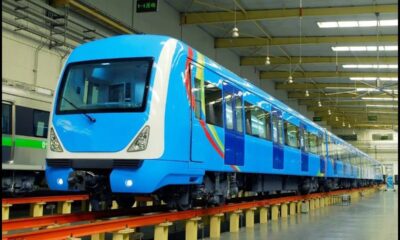
The just completed Lagos light rail also known as the Blue Line will be put to commercial operation in January, the state governor Babajide Sanwo-Olu, has said.
He also said said the construction of the second phase of the rail line, covering 14-kilometre from Mile 2 to Okokomaiko, would be launched immediately after the inauguration of the first phase next month.
According to Gboyega Akosile, the governor’s chief press secretary, exactly 1.31pm on Wednesday, history was recorded in Lagos as Governor Sanwo-Olu formally stepped into the coach of the newly completed Lagos Blue Line and took the first trip aboard the electric-powered rail infrastructure.
The governor led his deputy, Dr Obafemi Hamzat, Speaker of Lagos State House of Assembly, Mudashiru Obasa, members of the state executive council, journalists and select members of the public on a ride from the National Theatre Station to the iconic Marina Station.
The trip took approximately 10 minutes.
For the first time, a rail infrastructure traverses the western part of the state and the Lagos Island.
The first passenger trip marked the completion of civil infrastructure work on the Lagos Rail Mass Transit (LRMT) being constructed by Lagos Metropolitan Area Transport Authority (LAMATA).
The completed tracks, spanning 13 kilometres in the first phase, extend from Mile 2 to Marina, covering five stations. The construction started in 2010 under the administration of Governor Babatunde Raji Fashola. It experienced some delays in the succeeding administration, before the current government continued from 2019.
Sanwo-Olu, excited about the development, declared the end of construction on the Blue Rail Line project, keeping to the December 2022 deadline.
The rail infrastructure, he said, is now ready for commissioning in January by President Muhammadu Buhari.
The governor said the milestone was a culmination of “impactful reforms” initiated in the State’s transport ecosystem, which started at the beginning of the fourth republic under the administration of his predecessor, Asiwaju Bola Ahmed Tinubu.
Sanwo-Olu described the moment as “historic”, saying Lagos became the first sub-national government in Africa to fund and deliver a rail system from the state’s balance sheet.
He said, “The completion of the infrastructure for the first phase of the Lagos Blue Line rail is a strong testimony of our commitment to building on the legacies of past administrations, and the pioneering vision of Asiwaju Bola Ahmed Tinubu.
“This milestone in the development of the Lagos Rail Mass Transit (LRMT) is the culmination of several impactful reforms in the transport ecosystem of Lagos, starting in 1999.
“The Tinubu administration developed the Strategic Transport Master Plan (STMP), which laid out the foundation for a network of robust and modern transport infrastructure befitting the 21st century city.
“The master plan has six rail lines and one monorail, 14 Bus Rapid Transit (BRT) corridors, over 20 water routes and a number of major new roads. Central to the implementation of the transport master plan is LAMATA established in 2002.
“Over the last two decades, that master plan has been faithfully implemented by successive administrations. Today, we are making history with the completion of historic rail line, which is the first phase of the Blue Line.
“The road to the completion of this project, no doubt, has had an interesting story of delays, which were not due to a lack of enthusiasm or commitment on the part of the state government. Now, we have put the challenges behind us; from now on, we will focus on the benefits of this project for our people.”
After commissioning, Sanwo-Olu said passenger operations would not commence until the project undergoes necessary test-run and proper security measures put in place along the rail corridor.
The governor said the state had already taken the delivery of the three sets of wagons that would be used for passenger operations.
The completed rail infrastructure, he said, has the capacity to move 250,000 passengers daily.
When the second phase is completed, he said the entire project would take 500,000 people daily.
Sanwo-Olu said his administration’s vision for an integrated transport system, as enunciated in the T.H.E.M.E.S agenda, was beginning to be a reality, stressing that the transportation plan of his government was a multimodal approach that would bring road, rail and waterways together for seamless mobility.
The governor acknowledged the effort of his predecessor, Babatunde Fashola, toward bringing the vision to life.
He also thanked the leadership of the Central Bank of Nigeria for allowing Lagos to access its differentiated cash reserves, which was disbursed through three financial institutions – Access Bank, Sterling Bank and Fidelity Bank – that created innovative funding model for the Blue Line project.
He said, “To the good people of Lagos, this project is for you and your families. It is about your livelihood and sustenance. We promised to make your life better by this project, which will help you to commute from one part of the city to another in a safe and secure manner. We gave you this commitment and now, we have kept our promises.
“We thank you for your patience and for bearing with us in the face of all the inconveniences thrown up by the implementation of the light rail network. This project is for you; ensure you safeguard it. Bear in mind that this rail system is powered by electricity; there must not be a trespass on it in any way. Crossing the tracks is no longer an option. Anyone who attempts vandalism on the track put his life at great risk. Pedestrian bridges have been provided to enable pedestrian crossings.”
LAMATA Managing Director, Engr. Abimbola Akinajo, said the development marked a new chapter for Lagos.
The completion of the rail infrastructure, she said, manifested the audacious mind of the Governor, stressing that the development signified the importance the Sanwo-Olu administration accorded to the delivery of integrated transportation system for the State and traffic management.
Akinajo said the Blue Line is one of the six rail lines articulated in the state’s Strategic Transportation Master Plan, noting that the construction was funded from the Lagos State’s Internally Generated Revenue (IGR).
This, she said, was unprecedented in the history of rail construction across the world.
She said, “Construction of the Blue Line has been one of the most challenging projects undertaken by Lagos Government, given many hitches that had to be overcome.
“To get to the point of completion, we have had disturbances and delays in the relocation of submarine cables, gas pipelines and removal of shipwrecks. This made the construction of submarine pillar extremely difficult.
“Today, the story has changed. We are taking the first ride in the train, which marks the beginning of our testing phases for the Blue Line. Passengers will use the state’s unified electronic payment system known as Cowry card currently being used for BRT and regulated ferry services.
“The completion of civil infrastructure work is the manifestation of the audacious mind and courage of the Governor.”
Lagos State Commissioner for Transportation, Dr Frederic Oladeinde, said the development attested to the governor’s passion to change the transportation narrative of the State and ensure rapid mobility in Lagos.
The rail project, the Commissioner said, will enhance rapidity in movement and unlock more economic prosperity for the State.
“Lagosians now trust you because you are a man of your word and integrity. Mr. Governor, you will be remembered for the commitment you deployed to ensure this infrastructure is completed and becomes a reality,” Oladeinde said.
Chairman of China Civil Engineering Construction Company (CCECC), Mr. Zhang Zhichen, said the project was delivered with standard and quality, noting that completion of the Blue Line would write a new chapter for mass transportation in Lagos.




Railway
Fire Scare at Abuja Train Station as Electrical Fault Sparks Blaze, NRC Assures Passengers
Fire Scare at Abuja Train Station as Electrical Fault Sparks Blaze, NRC Assures Passengers
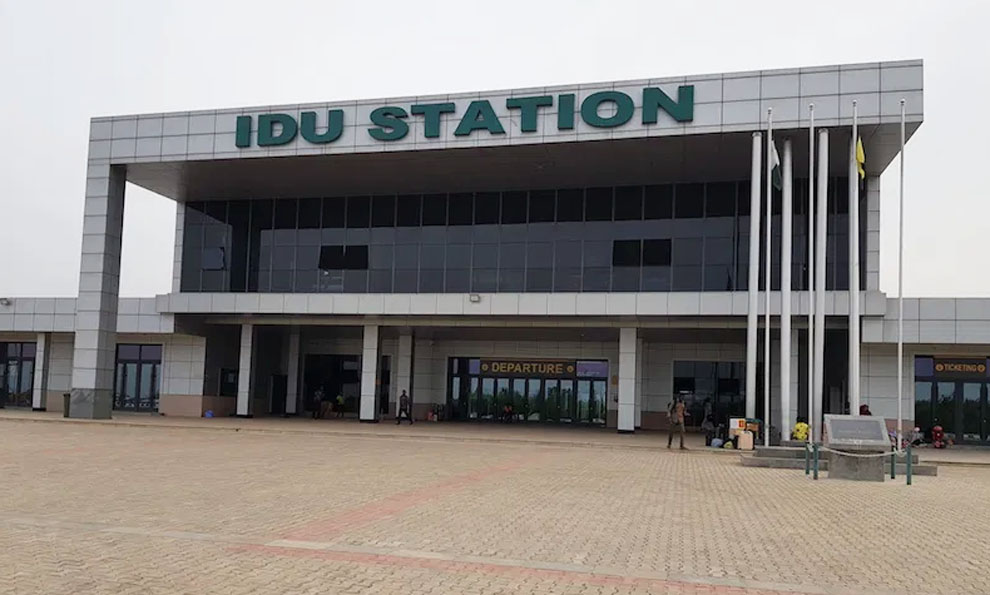
A minor fire caused by an electrical fault broke out at the Idu Train Station in Abuja on Wednesday night, but the incident did not disrupt operations on the Abuja–Kaduna train route, the Nigerian Railway Corporation (NRC) has said.
The fire, which occurred in the station’s low-voltage electrical room, was detected at about 8:30 p.m. and was quickly brought under control by maintenance personnel.
A preliminary inspection showed that some electrical supply cables connected to the station’s control panels were damaged in the incident.
READ ALSO:
- Veteran Nollywood Actress Cries Out for Financial Help Over Cervical Cancer Battle
- MURIC Raises Alarm Over Alleged Religious Imbalance in NDA 78RC Admission
- Agunbiade fires back at Deji Yesufu: Don’t mistake Boko Haram for Islam
However, the NRC said the station’s solar power system was not affected, while power had been temporarily restored to the lifts and escalators.
According to the Corporation’s Chief Public Relations Officer, Callistus Unyimadu, all the lifts and escalators are currently operational except Lift 1.
The NRC stressed that the incident had no impact on Abuja–Kaduna train services, assuring passengers that scheduled operations would continue as normal.
The Corporation said its technical team was conducting a detailed assessment to establish the cause of the electrical fault and permanently restore the affected installations.
It added that appropriate safety measures had been put in place while the assessment and remedial work continued.
Fire Scare at Abuja Train Station as Electrical Fault Sparks Blaze, NRC Assures Passengers
Railway
Nine Oxygen Cylinders Recovered as NRC, NSCDC Thwart Rail Vandalism in Osogbo
Nine Oxygen Cylinders Recovered as NRC, NSCDC Thwart Rail Vandalism in Osogbo
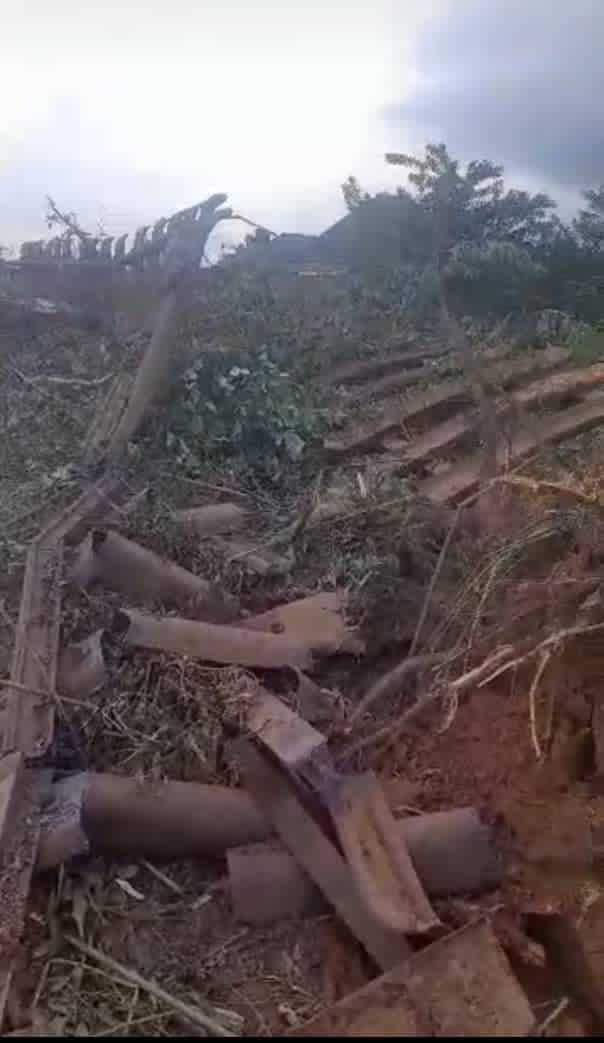
Suspected railway vandals fled for their lives after security operatives swooped on a railway siding serving the Dangote Steel Rolling Mills in Osogbo, Osun State, recovering nine oxygen gas cylinders allegedly deployed for the illegal operation.
The recovery operation, carried out by the Nigerian Railway Corporation (NRC) in collaboration with the Nigeria Security and Civil Defence Corps (NSCDC), followed a report of vandalisation of railway track materials at the siding, currently not in operation.
According to a statement issued by the NRC Chief Public Relations Officer, Callistus Unyimadu, and signed for the management, the Principal Track Officer (PTO), Osogbo, received a report on Friday, August 28, 2026, concerning the ongoing vandalisation of railway track materials at the location.
Following the report, the PTO proceeded to the site with security personnel, including officers of the NSCDC Railway Command. On sighting the operatives, the suspected vandals reportedly fled the scene.
A subsequent search of the area led to the recovery of nine oxygen gas cylinders, which were allegedly being used in the illegal operation.
The recovered railway materials and the surrounding area have since been secured by security personnel, the NRC said.
READ ALSO:
- DSS moves to halt Sowore’s cybercrime trial until after 2027 election
- Kogi Abduction: Kidnappers Demand ₦20m Ransom for Each NYSC Member
- Deadly Ikola clash: Lagos demolishes shanties beneath high-tension lines
Reacting to the development, NRC Managing Director and Chief Executive Officer, Dr Kayode Opeifa, commended the security personnel for their vigilance and timely intervention, describing the operation as another significant success in the sustained efforts to protect railway infrastructure from vandals and economic saboteurs.
Opeifa directed security operatives to intensify surveillance and enforcement at the Dangote Steel Rolling Mills siding and other railway corridors nationwide.
He also urged security formations across the railway network to strengthen collaboration with relevant agencies to prevent the vandalisation and theft of railway assets.
The NRC boss appealed to members of the public, particularly communities located along railway corridors, to promptly report suspicious activities around railway tracks, stations and other railway facilities.
He stressed that railway infrastructure constitutes critical national assets whose protection is essential to the safety of rail operations, sustainability of services and the economic development of the country.
Opeifa further assured that the NRC would continue to provide necessary support to security agencies in the collective effort to stamp out vandalism and other acts capable of undermining railway operations across the country.
The statement said the NRC remains committed to strengthening collaboration with security agencies to safeguard railway infrastructure nationwide.
Nine Oxygen Cylinders Recovered as NRC, NSCDC Thwart Rail Vandalism in Osogbo
Railway
NRC graduates 31 locomotive pilots to power rail expansion, freight reforms
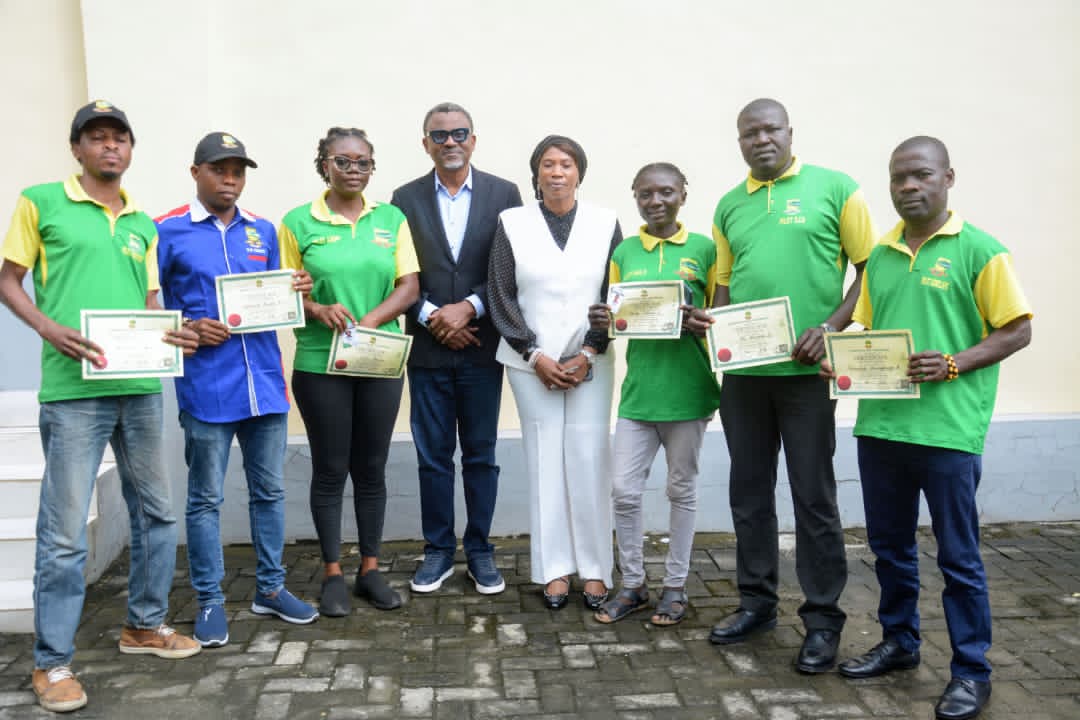
NRC graduates 31 locomotive pilots to power rail expansion, freight reforms
The Nigerian Railway Corporation (NRC) has strengthened its drive to reposition rail transportation with the graduation of 31 newly trained locomotive pilots, declaring that a new generation of skilled operators will be at the heart of the Federal Government’s railway expansion and freight revolution.
Speaking at the graduation ceremony, the Managing Director of the NRC, Dr. Kayode Opeifa, described locomotive pilots as the “driving force” behind the corporation’s ongoing reforms, stressing that the graduates would play a pivotal role in improving safety, efficiency and reliability across Nigeria’s rail network.
Represented by the Director of Administration and Human Resources, Dr. Monsurat Omotayo, Opeifa said the graduates had completed more than one year of rigorous classroom and practical training, reflecting the corporation’s commitment to professionalism and operational excellence.
He said the pilots would be central to the expansion of railway operations nationwide, particularly as the Federal Government pursues partnerships with state governments to develop rail infrastructure and provide affordable, reliable transportation.
According to him, the corporation’s Track Access Policy and freight transportation reforms remain top priorities.
“As locomotive pilots, you will be at the centre of these initiatives and the future of railway transportation in Nigeria,” Opeifa said.
He assured the graduates—including two women—that the corporation would continue to invest in their professional development through exposure to global best practices aimed at enhancing operational safety and efficiency.
Earlier, the Assistant Director, Motive Power, Mr. Abiodun Olokun, disclosed that 45 employees drawn from different operational departments were selected for the training programme conducted at the NRC Training Schools in Lagos and Zaria, Kaduna State.
He explained that while 31 trainees successfully completed the programme, 11 were retained for further practical training to strengthen their competence. Two others did not meet the required performance standard, while one trainee was unable to complete the programme after being involved in a road accident. The three were returned to their respective departments.
Olokun said the trainees underwent three months of intensive classroom instruction, followed by six months of practical exposure across operational departments and simulator training in Zaria.
“The programme was designed to expose the trainees not only to locomotive operations but also to the entire railway operating environment,” he said.
Chief Locomotive Instructor Mr. Godwin Edet described the graduates as exceptional in both theory and practical performance, expressing confidence that they could compete favourably with locomotive operators anywhere in the world.
The Technical Adviser to the Managing Director on Railway Operations and Services, Mr. Adeife Olukolade, urged the graduates to strictly adhere to the operational rule book, noting that discipline and compliance with safety procedures remain the best safeguards against accidents.
Also speaking, the Director of Operations, Mr. Akin Osinowo, reminded the new pilots that they would be responsible for the safety of hundreds of passengers and the movement of freight, an area receiving renewed government attention.
The Director of Civil Engineering and New Lines, Engr. Adekunle Ayeni, described the graduation as a sign of renewed hope for the corporation and called for the recruitment and training of younger engineers to replace ageing personnel.
Similarly, the Deputy Director, Mechanical, Electrical, Signals and Telecommunications, Engr. Habeeb Olakunle Alaka, urged the graduates to collaborate closely with engineers by providing operational feedback that would improve equipment performance and overall efficiency.
Speaking on behalf of the graduating class, Amina Oden thanked the management for investing in their development and pledged that the graduates would uphold the highest standards of professionalism, discipline and dedication in the discharge of their duties.
The ceremony ended with the presentation of souvenirs to the NRC Managing Director, Dr. Kayode Opeifa, and the Director of Operations, Mr. Akin Osinowo, by the graduating locomotive pilots.
-

 News2 days ago
ECOWAS Biometric Card Expands as Seven Countries Begin Rollout
-

 Sports3 days ago
Ballon d’Or 2026: Mbappe Responds to Yamal’s Bold Claim
-
 metro2 days ago
FG Suspends Niger NSCDC Commandant As 37 Suspected Illegal Miners Die In Custody
-

 Politics2 days ago
Toyin Abraham Rejects Lagos APC Campaign Council Inclusion
-
 International3 days ago
Ninth Body Discovered in South Africa: Nigeria Issues Urgent Safety Alert to Nationals
-

 Politics2 days ago
2027: Sowore Says He’d Rather Die Than Travel Abroad For Medical Treatment
-
 International2 days ago
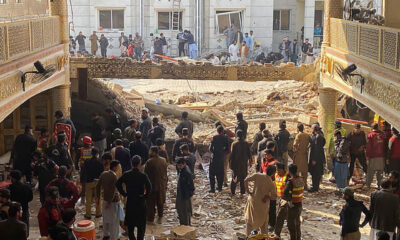
BREAKING: Bloodbath at Pakistan Mosque as Suicide Blast Kills 21, Injures 103
-
 metro1 day ago
Niger Miners’ Deaths: Families Demand Compensation, Justice for Victims